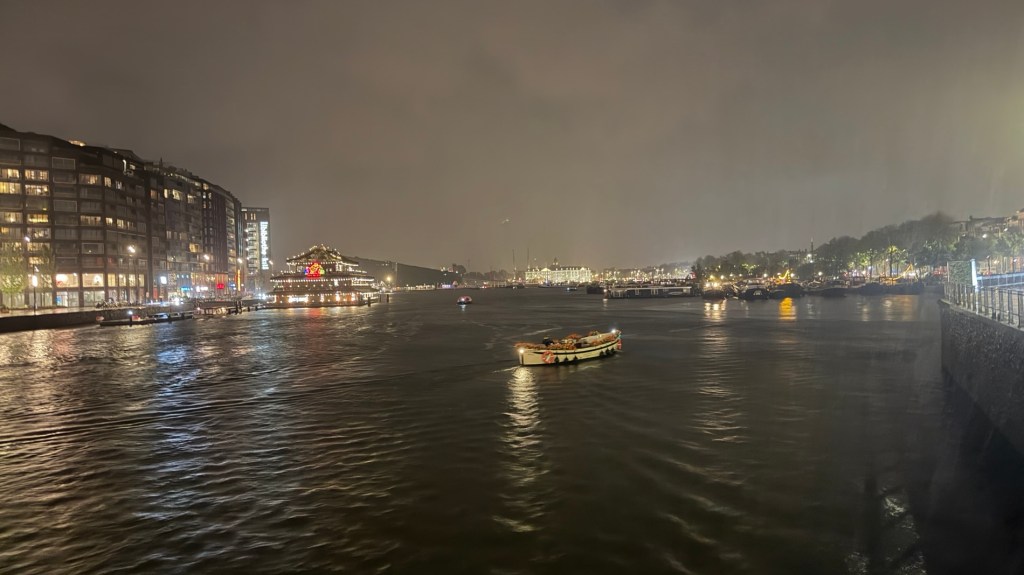
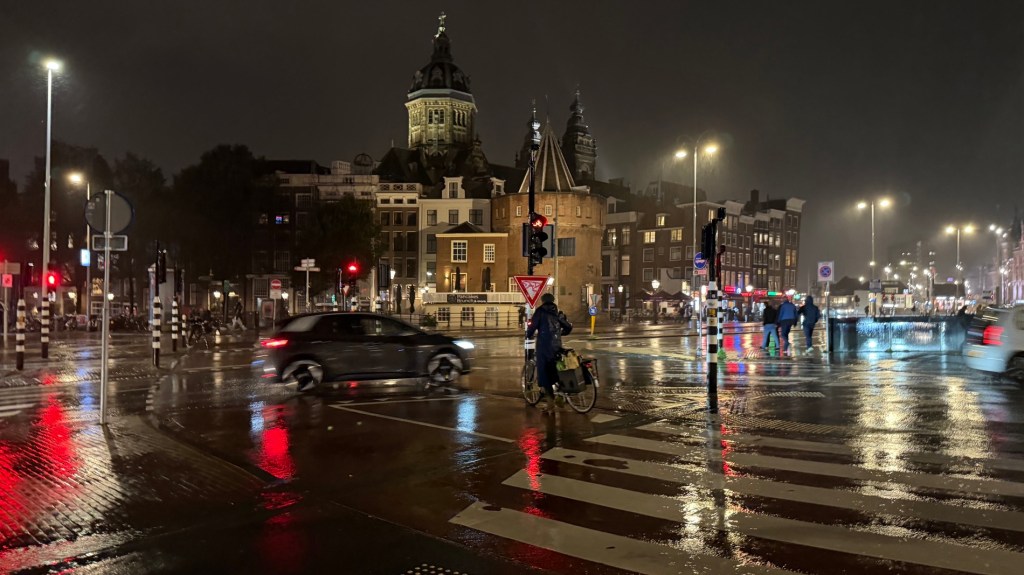
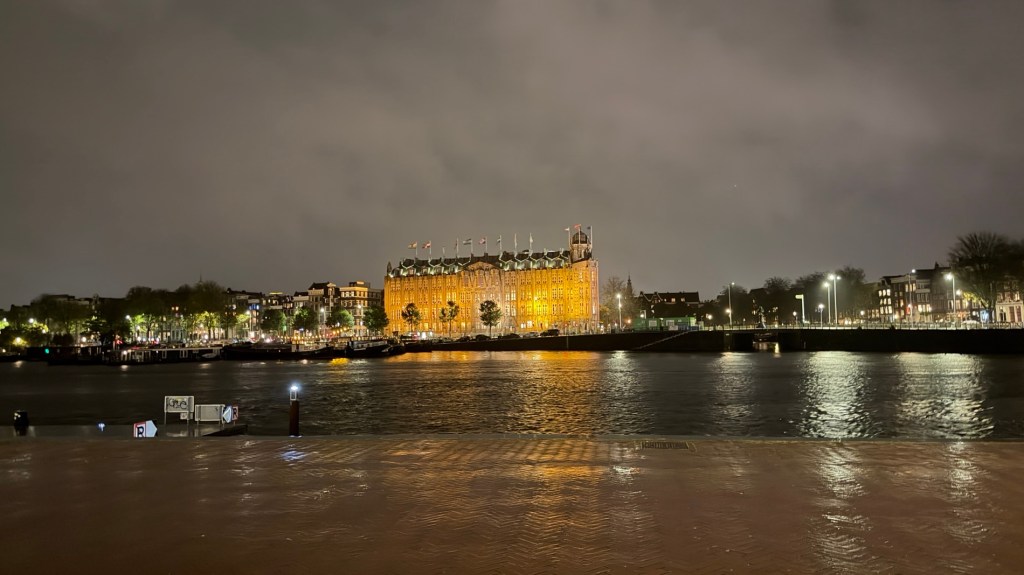
£££please if you comment, leave your name as mostly I can’t identify who is making comment.£££
WARNING: lots of arty detail today. Feel free to skip the detail in the captions. So much to see and take in at TWO museums today – head is spinning!!
I could hear the rain dripping this morning. So we got a Bolt to Rijksmuseum then walked to find something for breaky.
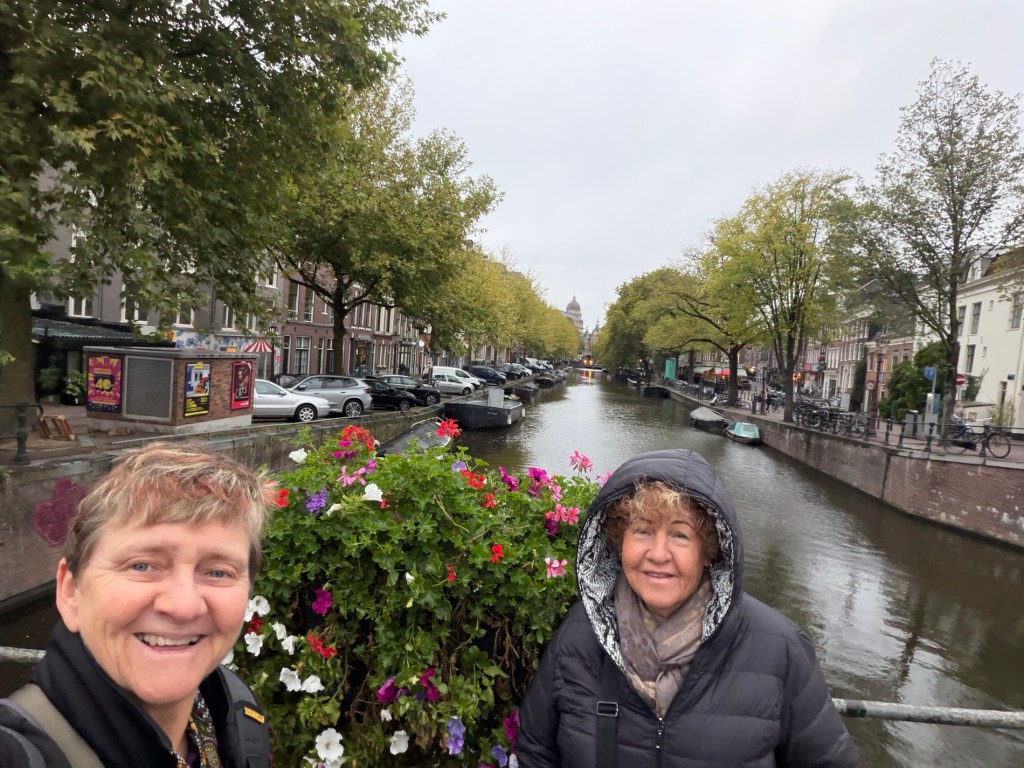
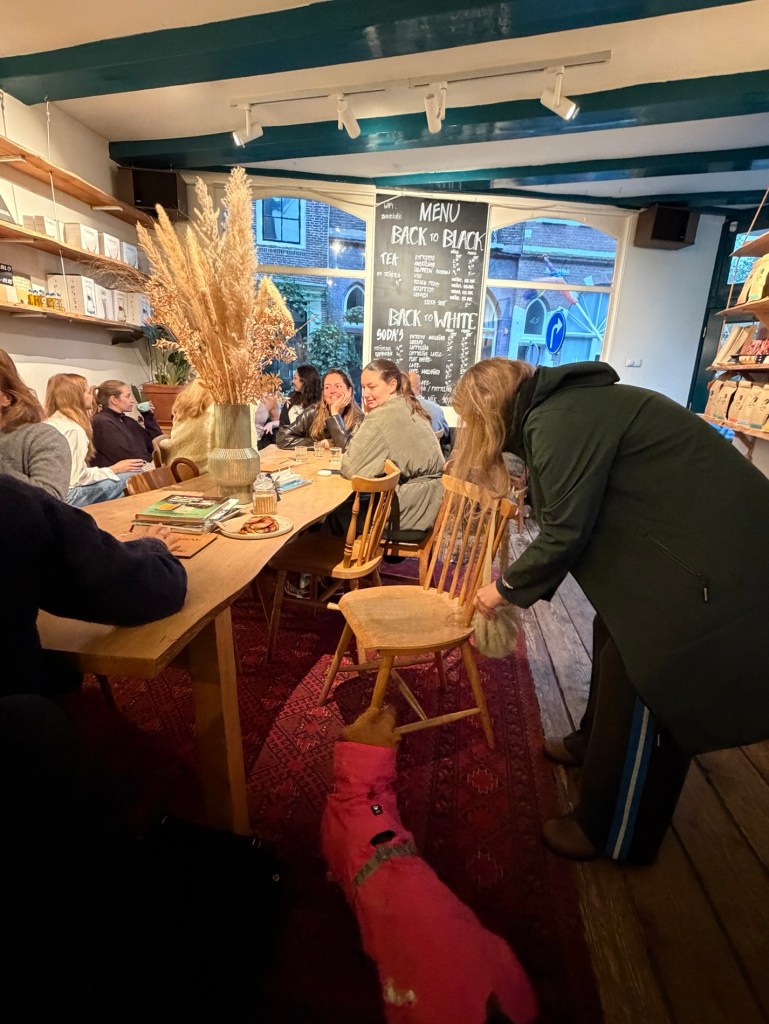
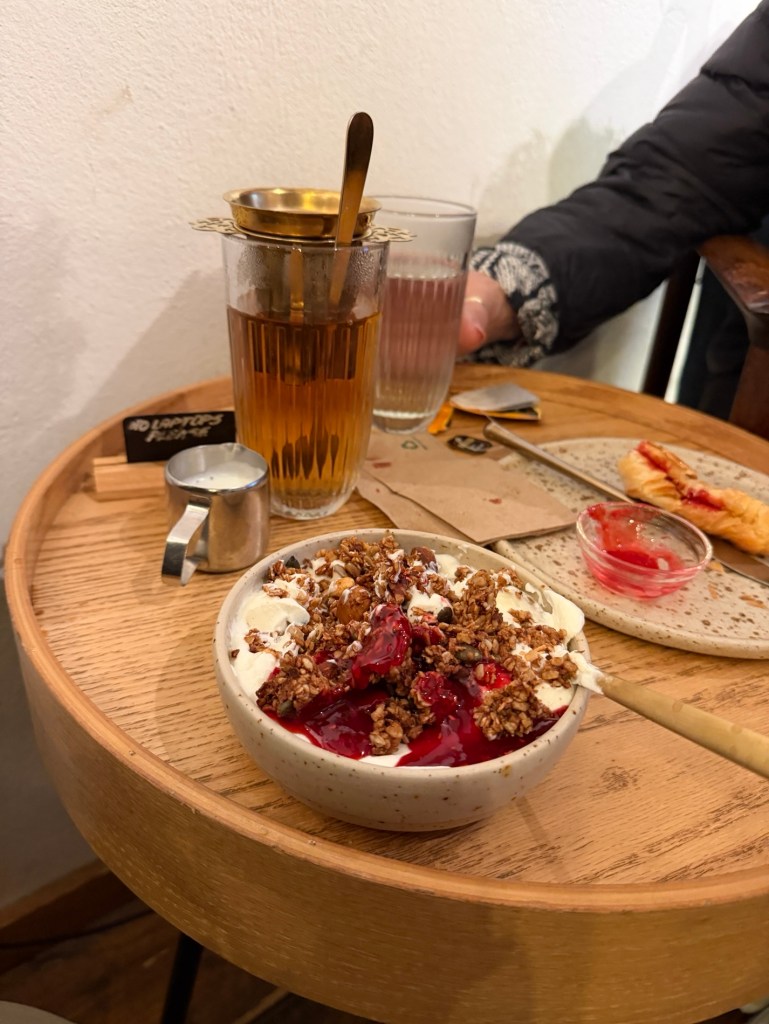
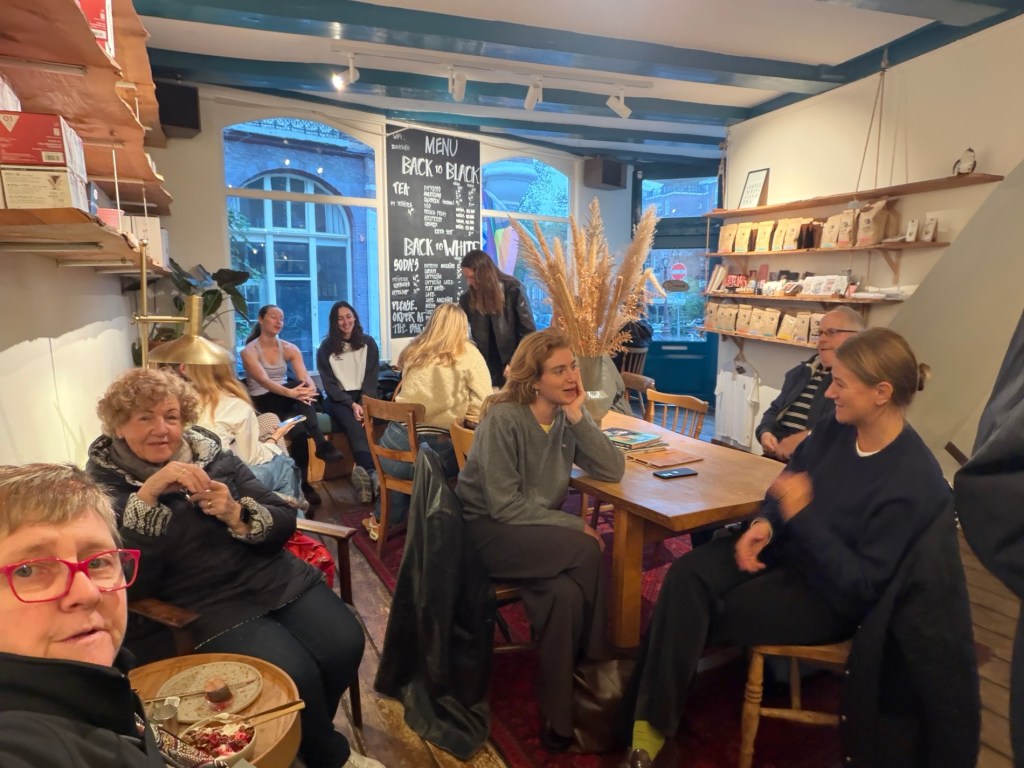
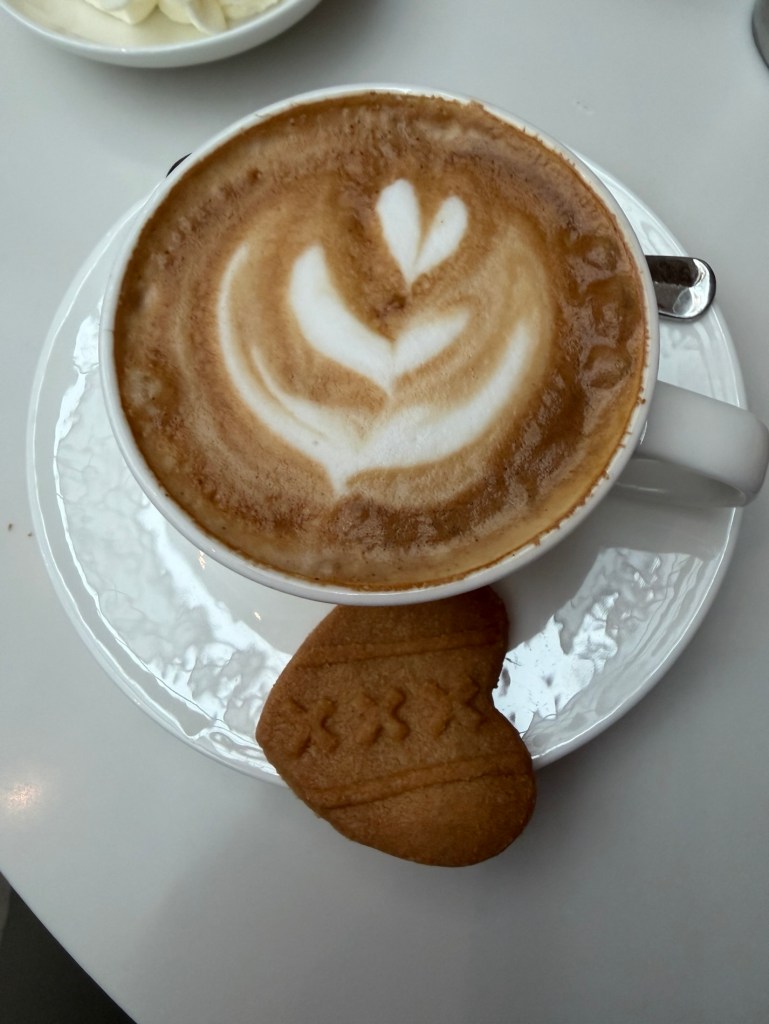
Found a ‘jumping’ little cafe Back to Black and snagged a table too. Had a little rain coated Dachshund walk in with his owner which never gets old just how open to dogs all places are. I got a yummy granola with yogurt and berry compote – so good after a day of sweet stuff yesterday. Hard to find things open early – so this was a good fluke – we’ve had a few!!!
Then to the Rijksmuseum.
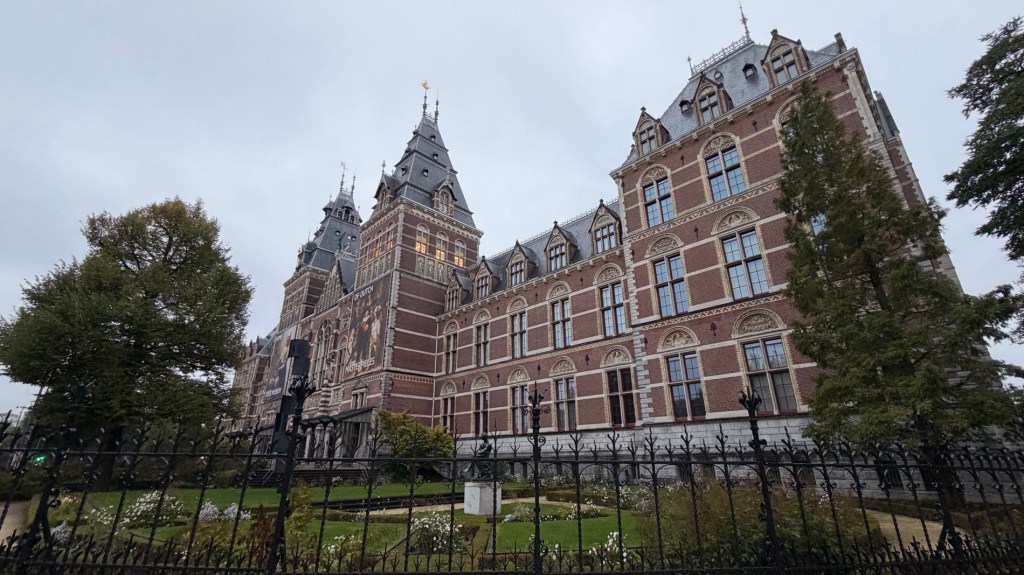
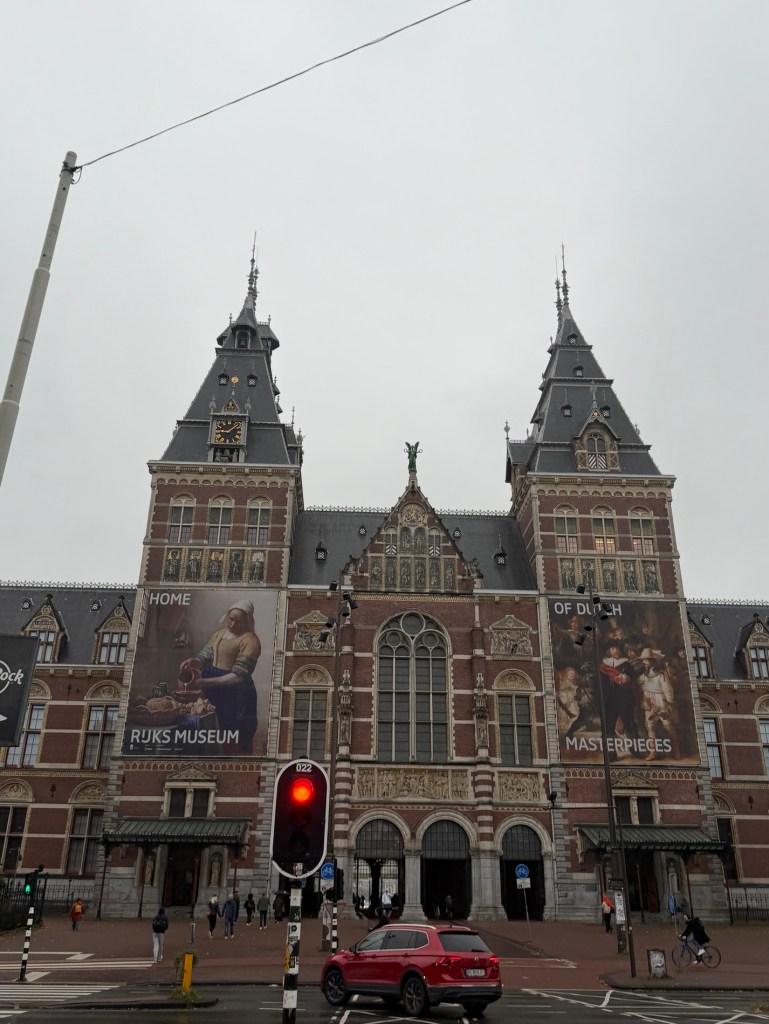
Thankfully we were booked at 9:00, boy did it get busy. Sue and I went our separate ways.
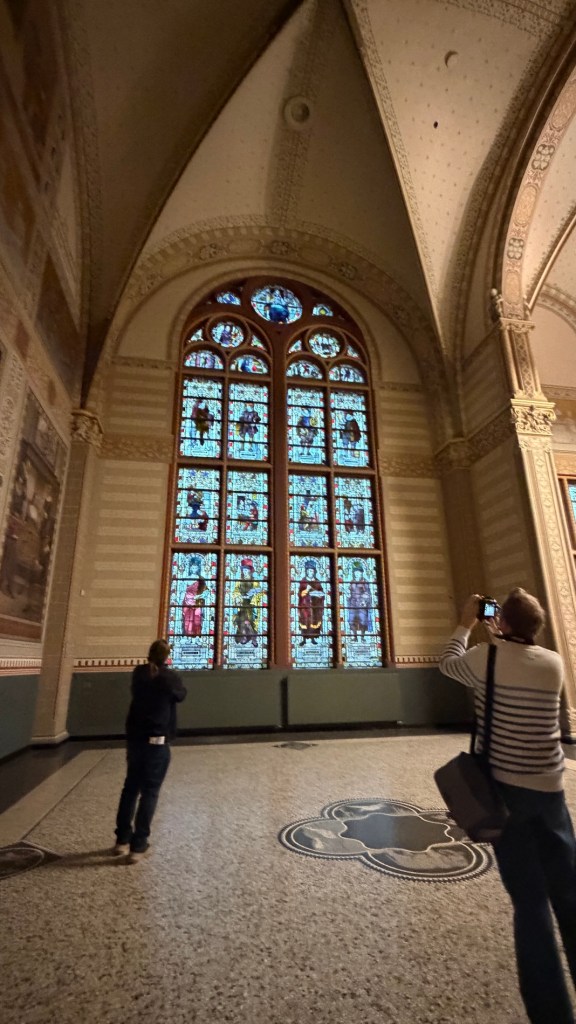
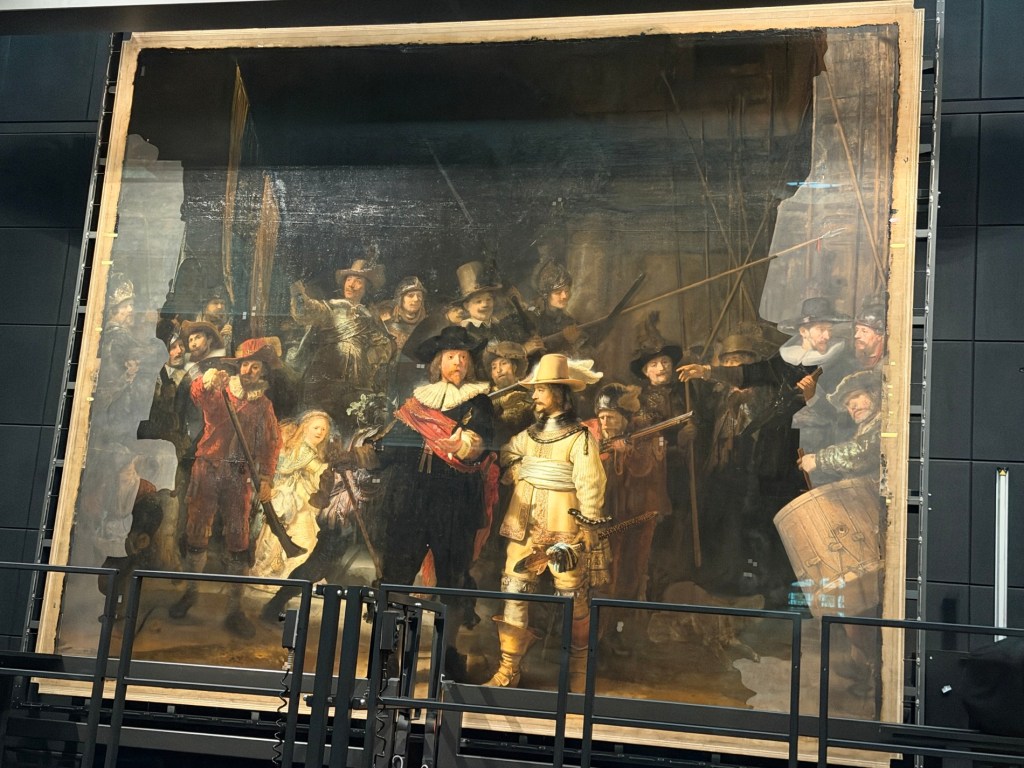
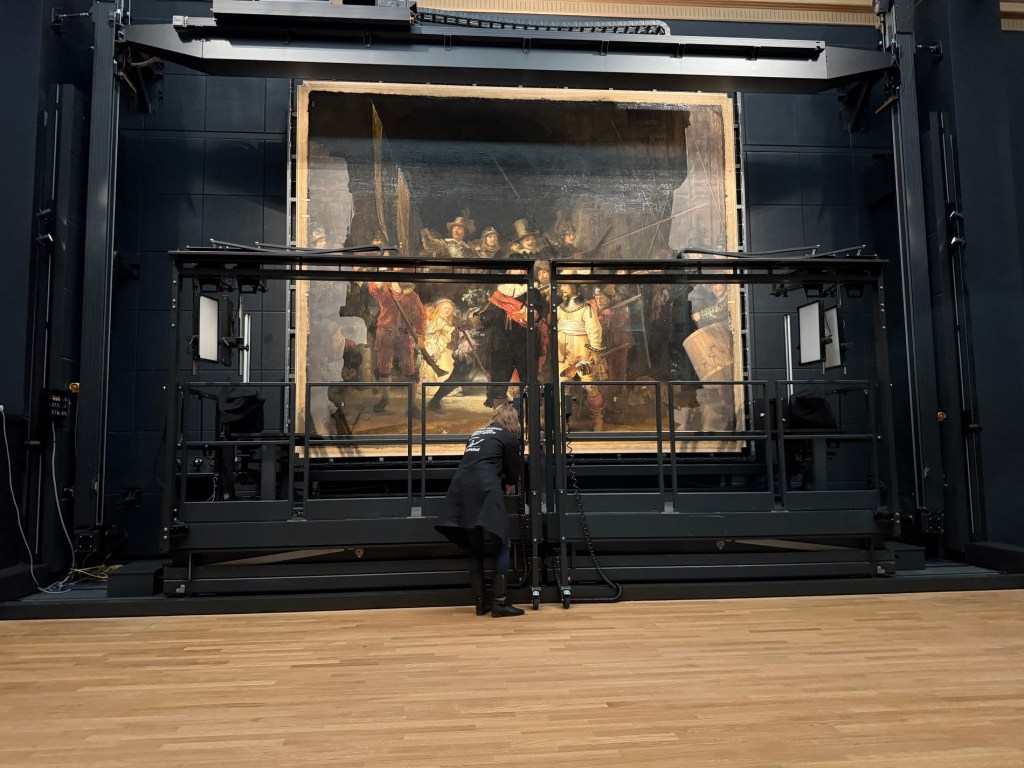
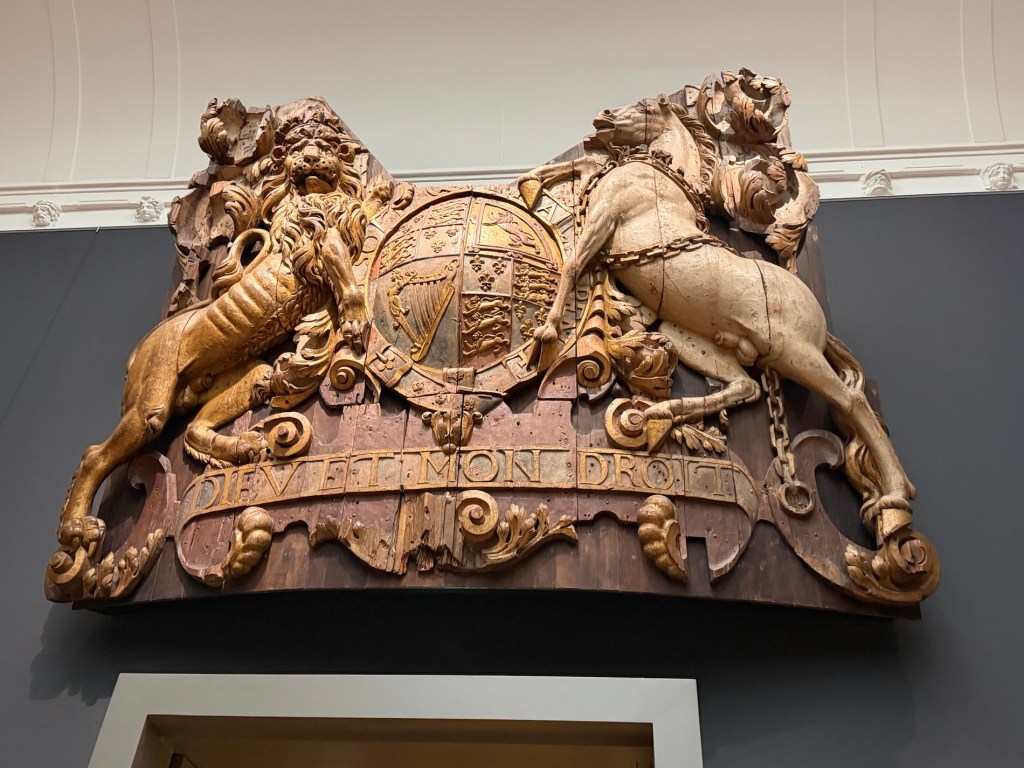
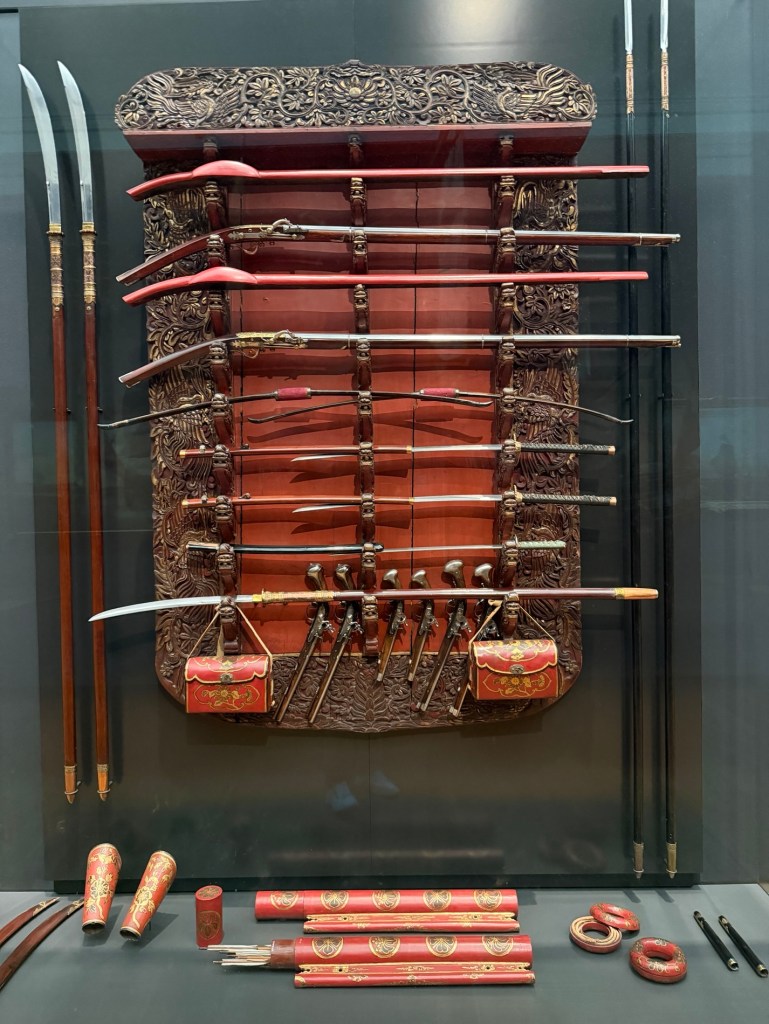
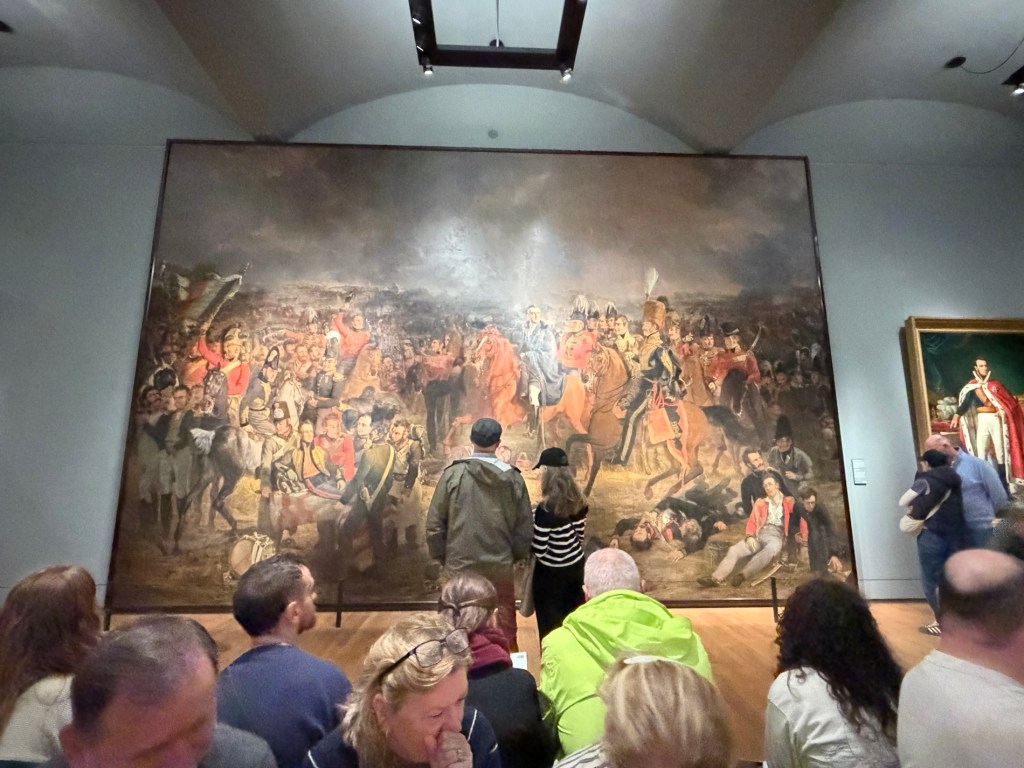
Cornelis Tromp received this rack, complete with weapons, in 1680. It was a gift from a childhood friend who worked at the Fort in Batavia (now Jakarta). Tromp gave the rack a prominent place in his house on the Herengracht, adding several Dutch pistols to this display.
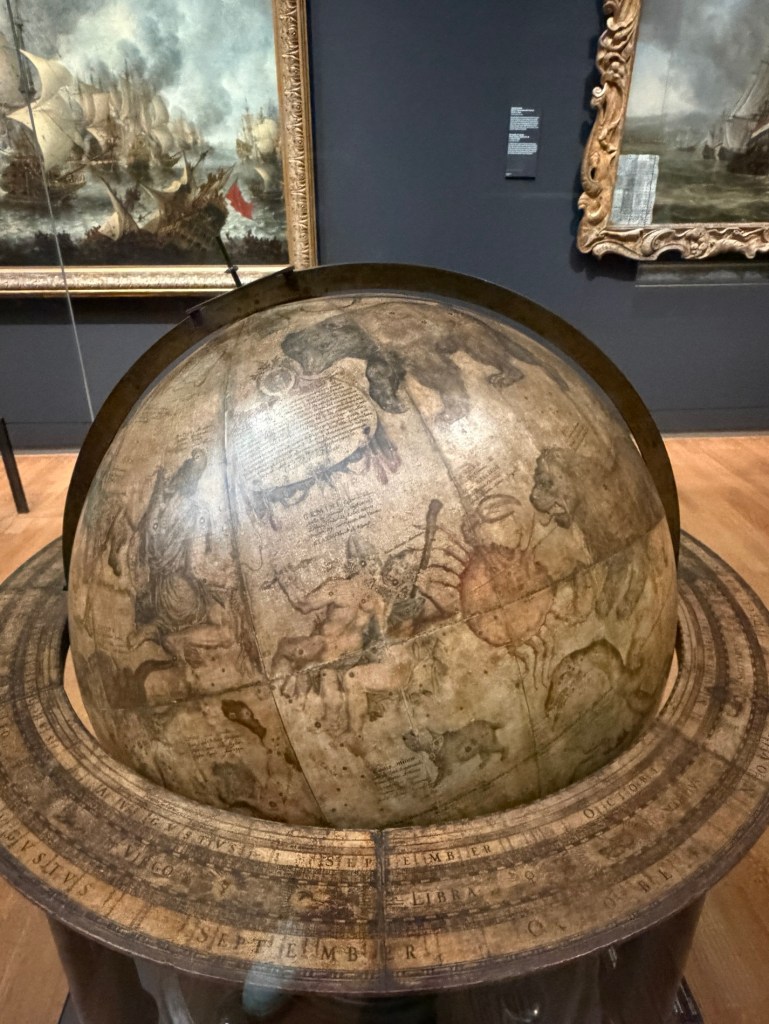
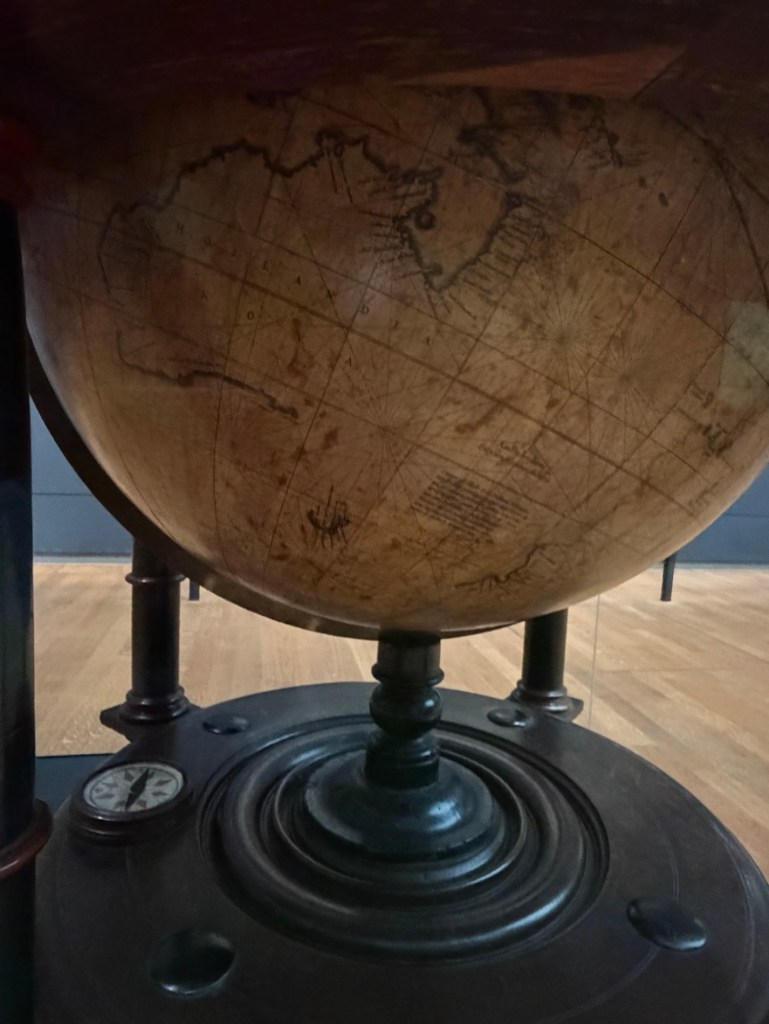
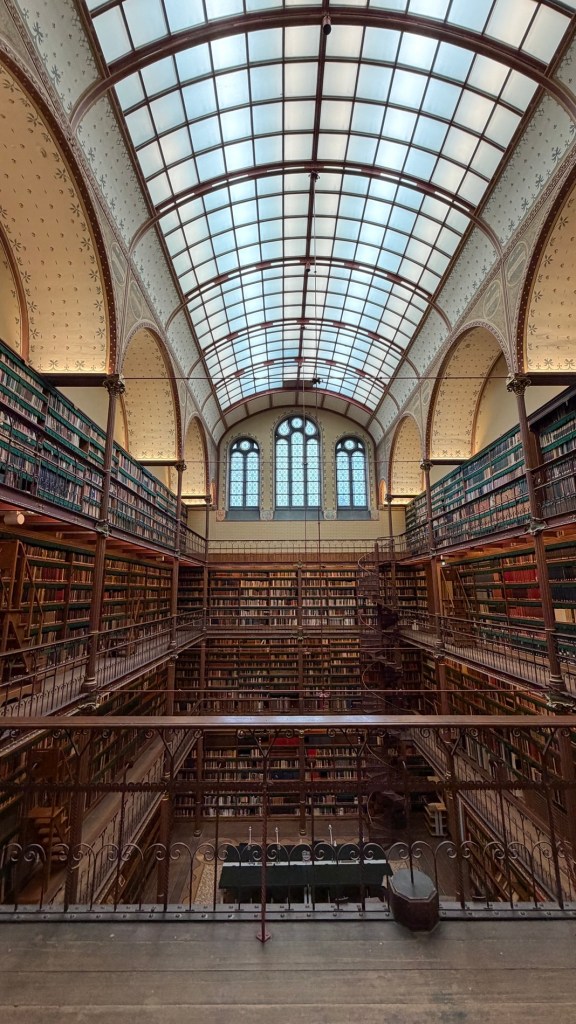
“You have two eyes and but one mouth.
Let this be a signal and take heed,
not to talk here but to read.”
I started at the Delft collection – little did I know the family connection!!!! Here’s an extract from the audio tour on the flower pots (vases) and Mary Stuart.
~~~~~~~~~~~~~~~~~~~~~~~~~~~
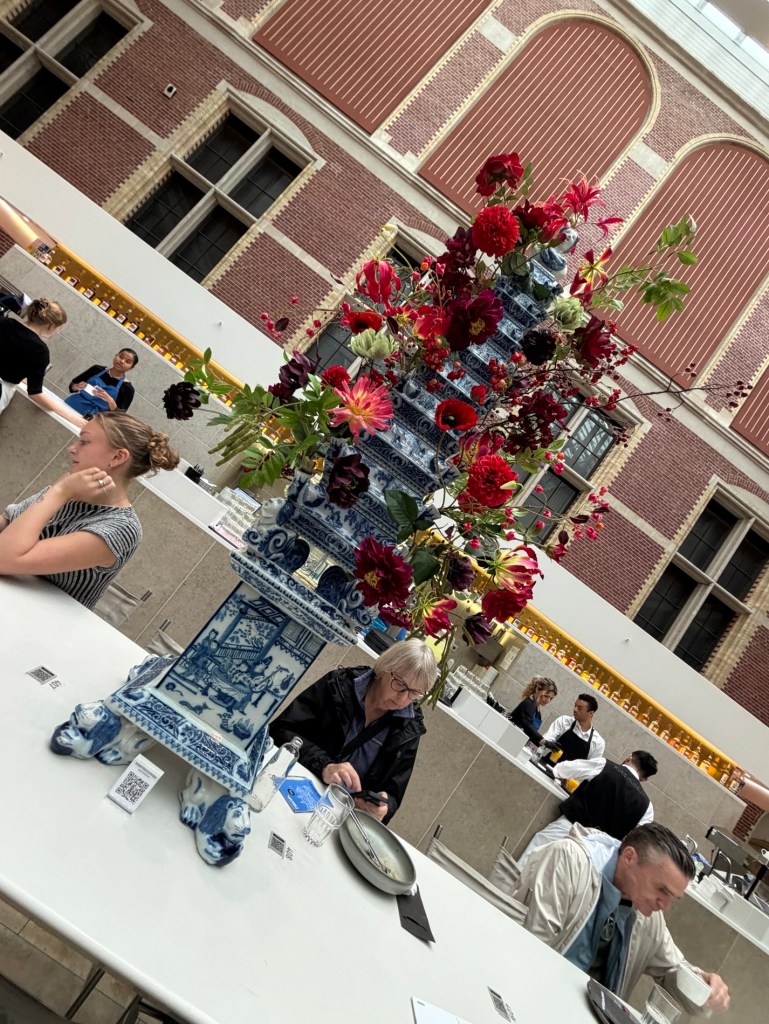
‘De Metale Pot’, Flower pyramids, c. 1692-1700
Introduction
Mary Stuart, the English wife of Stadtholder William III, was crazy about Delftware pottery, and about flowers. Her enthusiasm proved infectious and contributed to the brief, but wild popularity of these tall, stacked vases among members of the Dutch – and later English – aristocracy around the court of William and Mary.
These vases may look like Chinese porcelain, but appearances can be deceiving. In reality, they are earthenware produced by Delft potters, who were masters in imitating expensive oriental porcelain. The decorative style, too, is quintessentially Chinese. Scenes and figures are freely painted in blue tones on a white ground in a manner so fine as to almost surpass Chinese artistry. What gives the Dutch manufacture away are the busts of the female figures on top and the sphinxes and recumbent lions at the base. These were made by a modeller at the Delftware factory where the vases were produced – the famous ‘De Metalen Pot’.
~~~~~~~~~~~~~~~~~~~~~~~~~~~
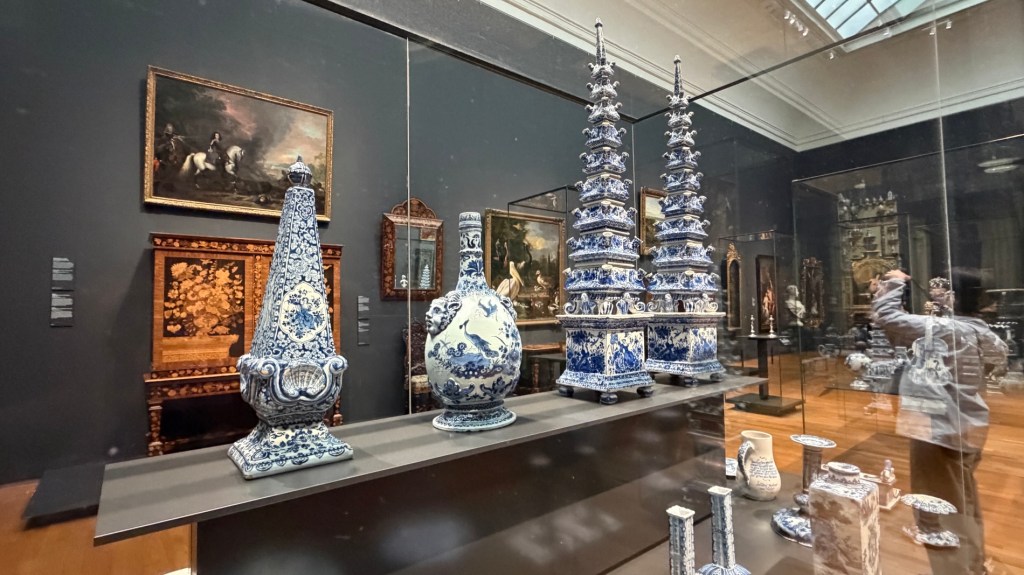
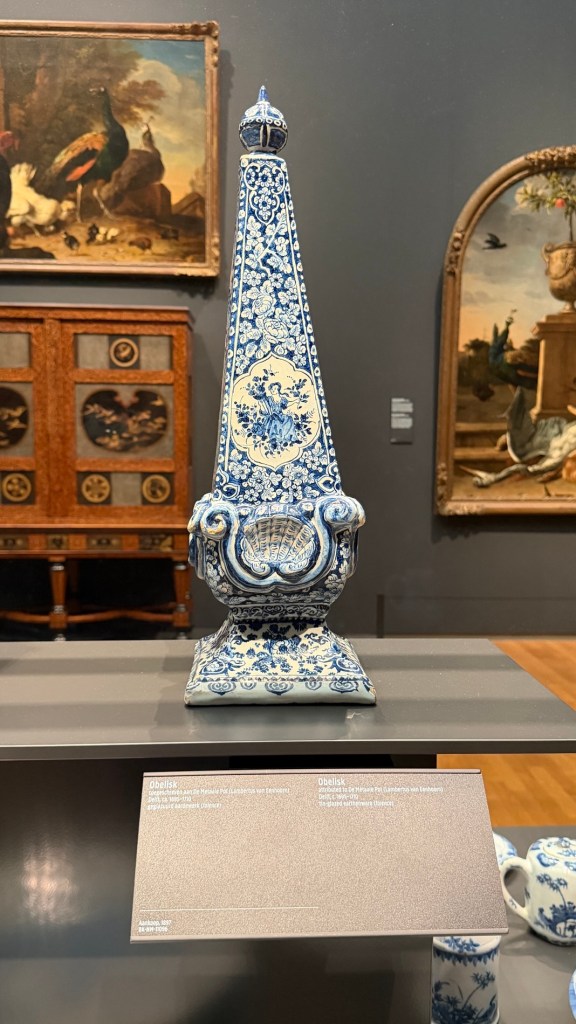
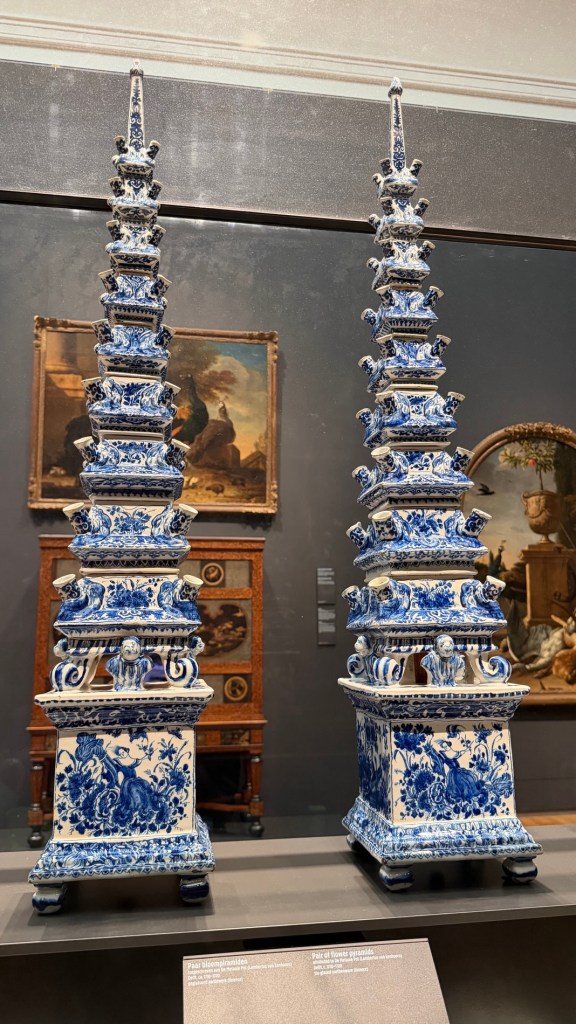
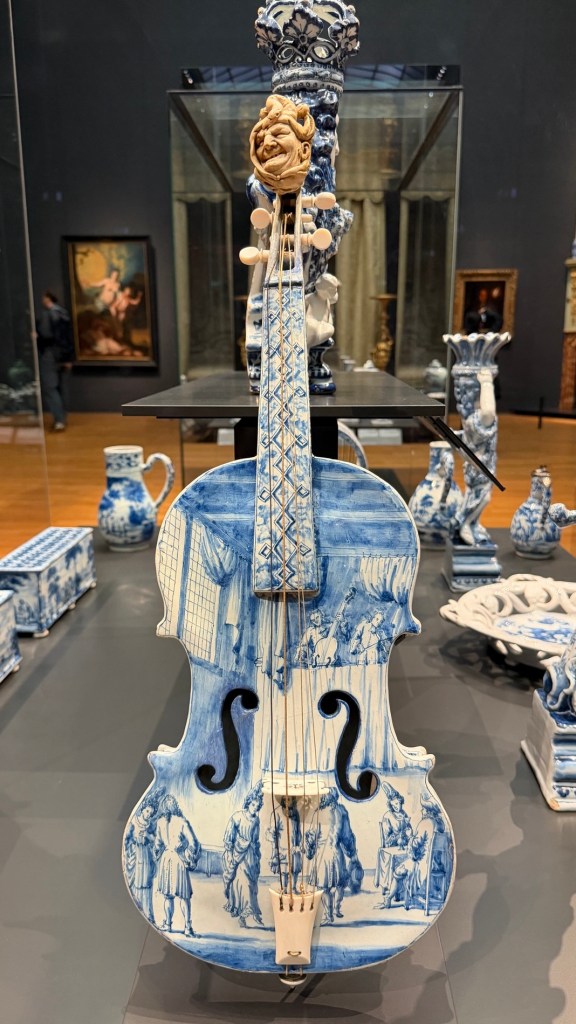
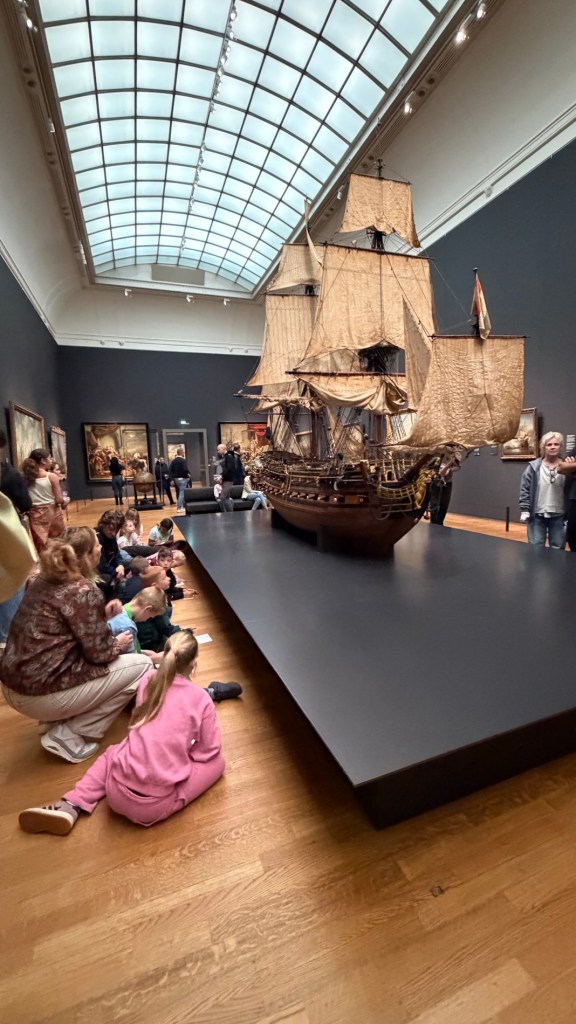
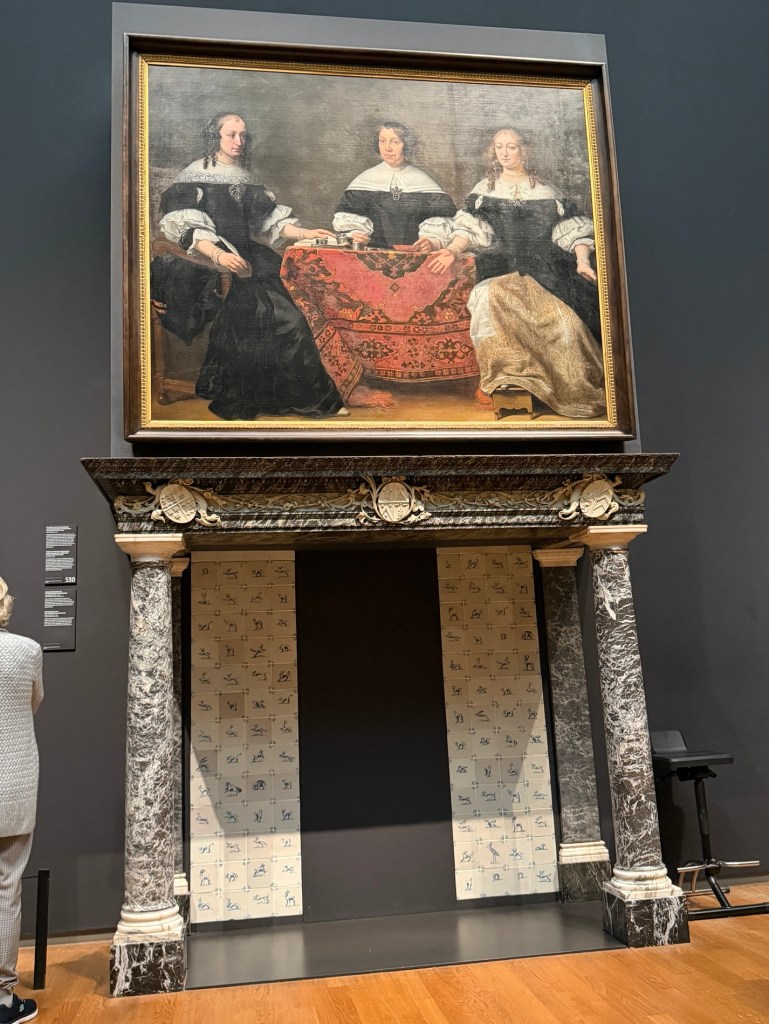
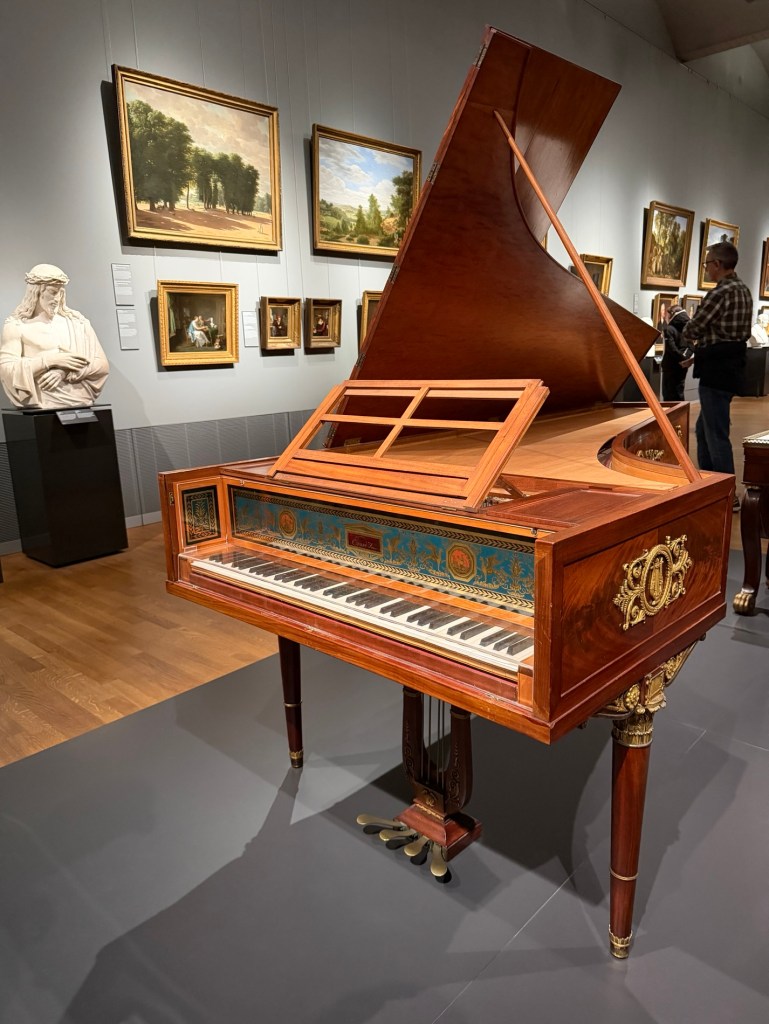
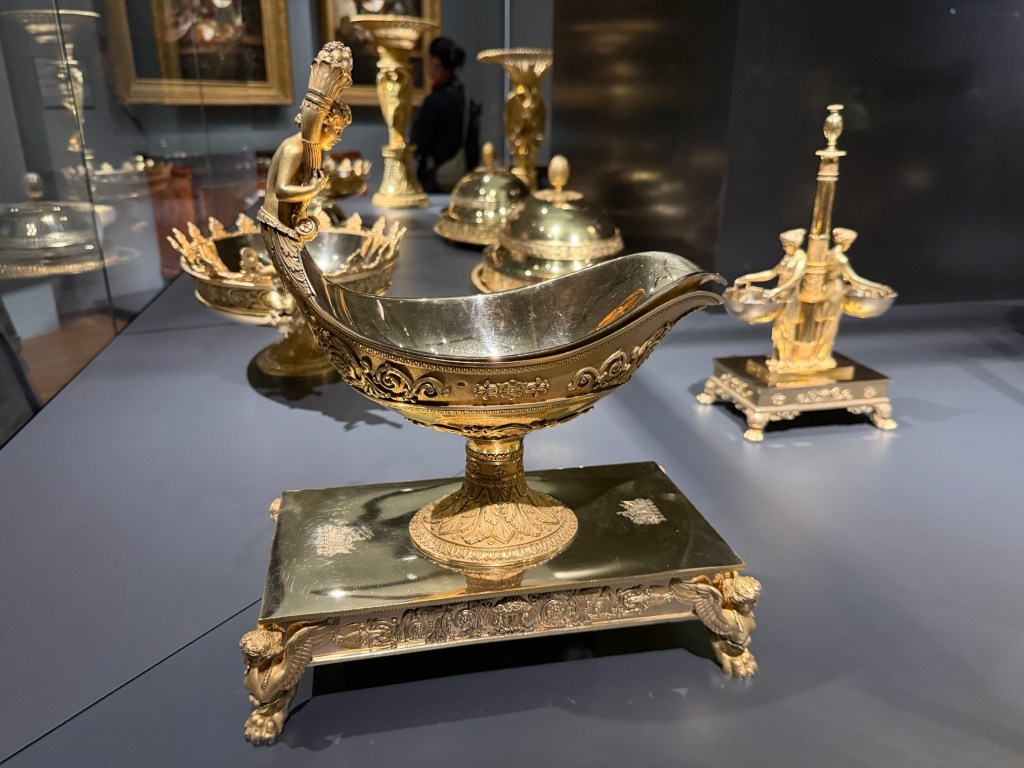
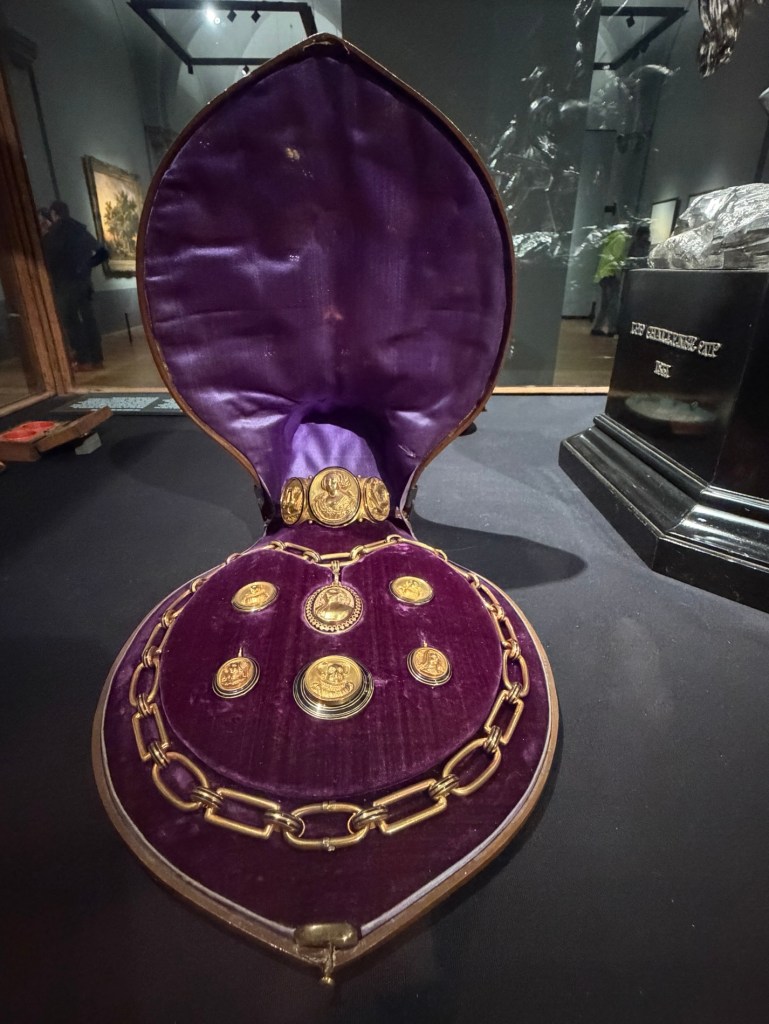
Saw lots of interesting art, artefacts and stuff on the way. I have included long descriptions in the captions, but you can just look at the pictures.
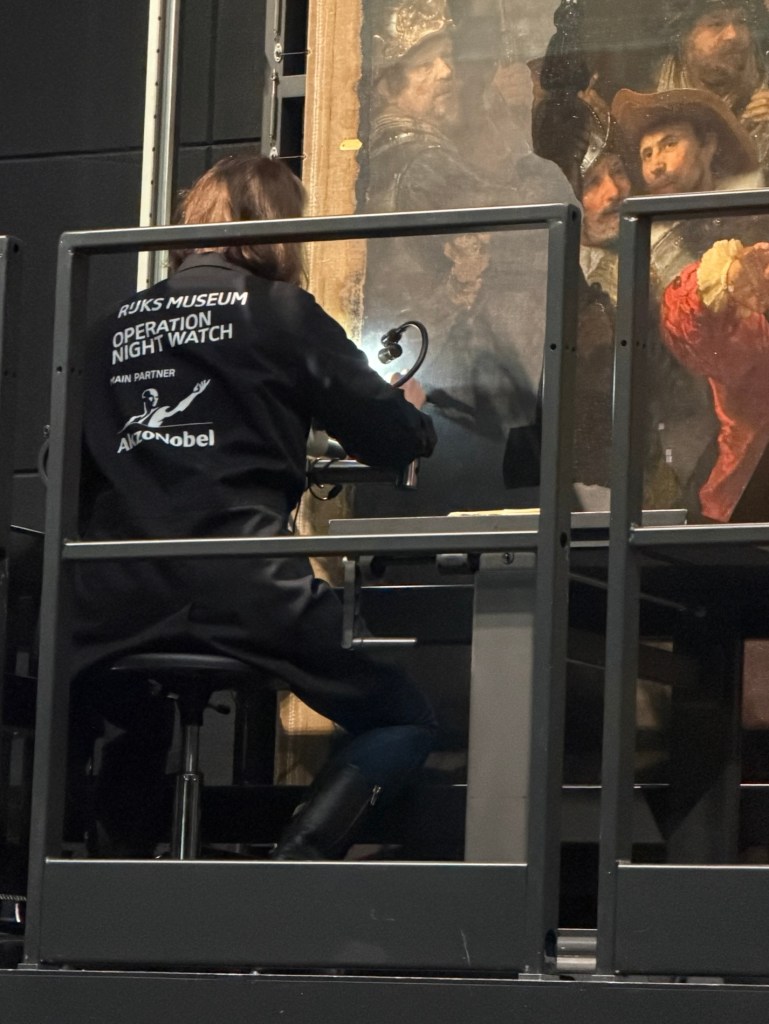
Then started highlights tour using their app. I’ve included my highlights, not just those the app suggests. Again saw and read lots along the way. Almost 2 and bit hours of full on looking, admiring, reading etc. I will post a few that took my fancy. Often it was the stories that went with them that made them more engaging.
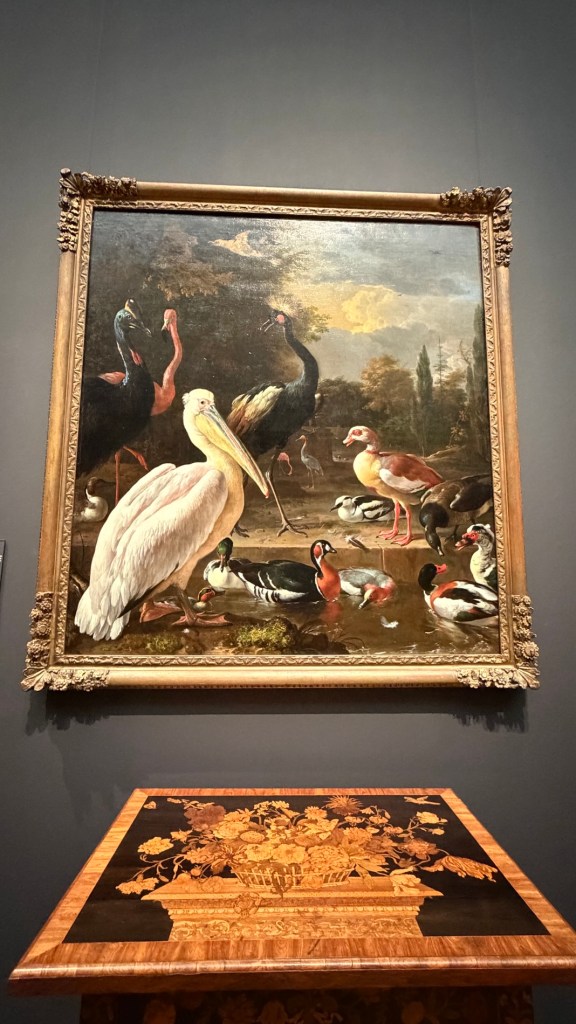
Melchior d Hondecoeter (1636-1695).
He made this regal bird scene for Het Loo, the palace of William and Mary. It features a pelican in the fore-ground, a cassowary behind it at the left, a flamingo and a black crowned crane. Water birds congregate in and around a basin, and a feather floats on the water’s surface.
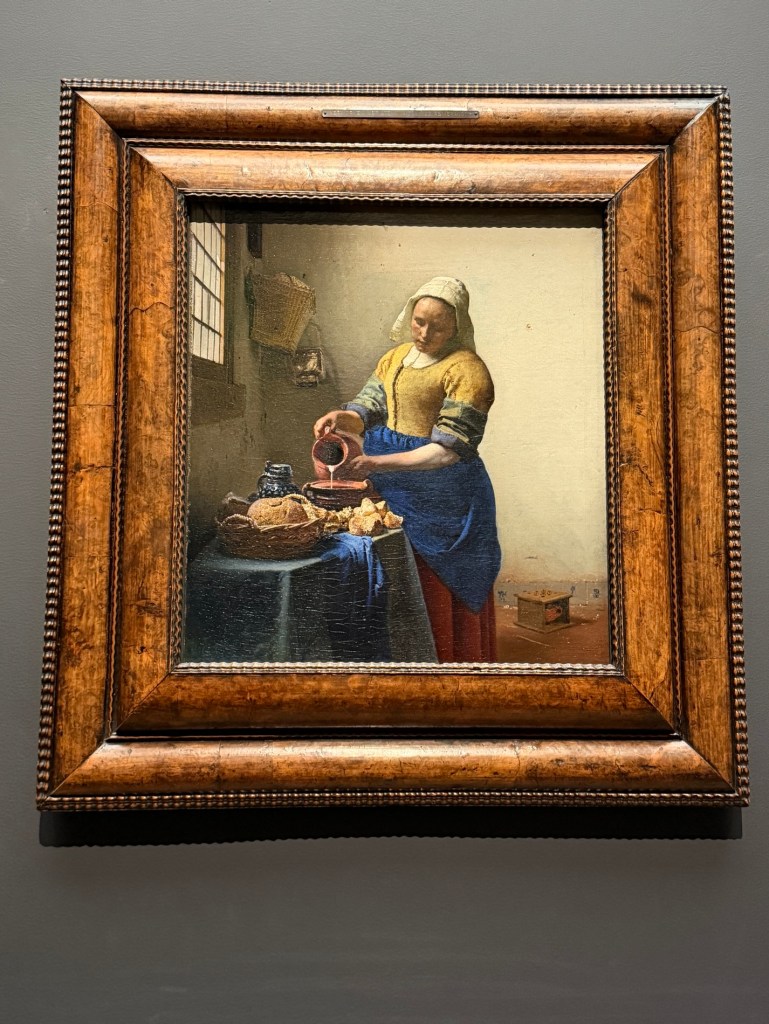
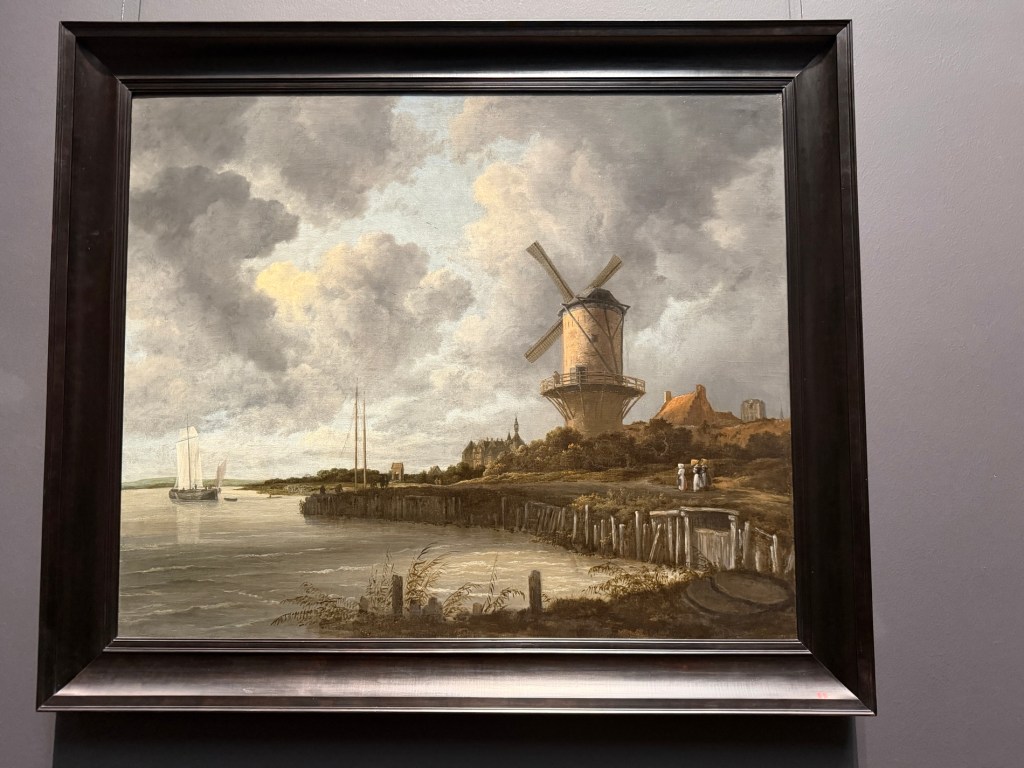
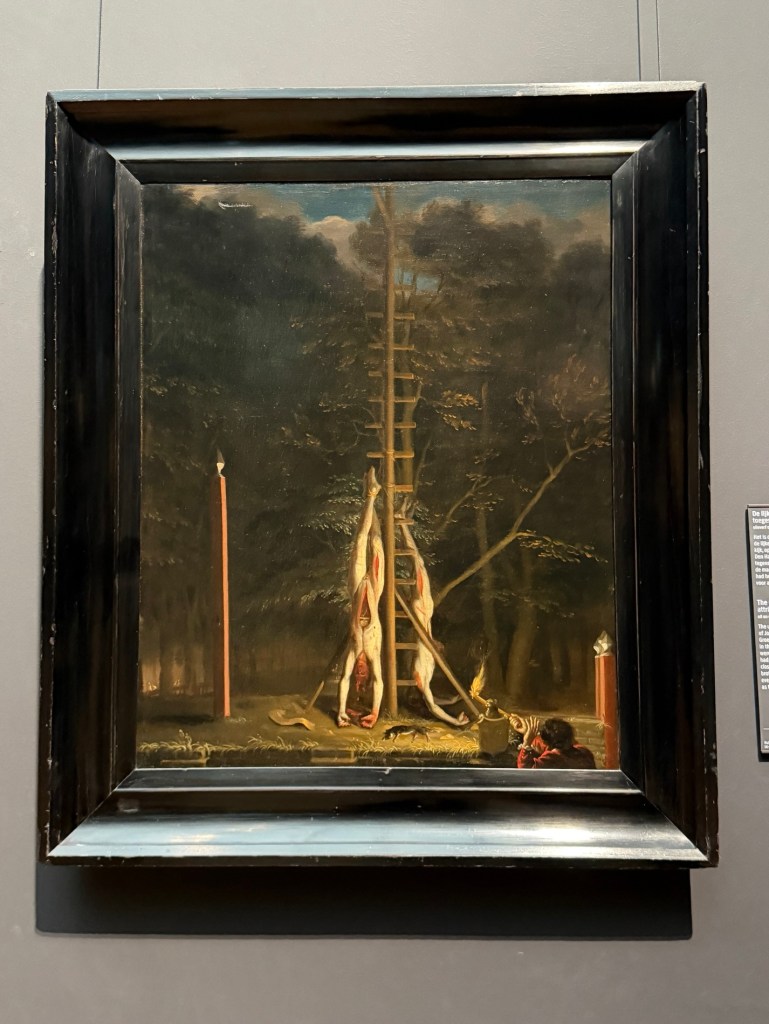
The ultimate humiliation: the nude, flayed corpses of Johan and Cornelis de Witt on public display in the Groene Zoodje, the execution ground in the middle of The Hague. On 20 August 1672 they were assassinated by their political opponents. Johan had been the most powerful man in the Republic for close to twenty years, steadfastly supported by his brother Cornelis. But they were held responsible for everything that went wrong in the year 1672, known as the “Year of Disaster.”
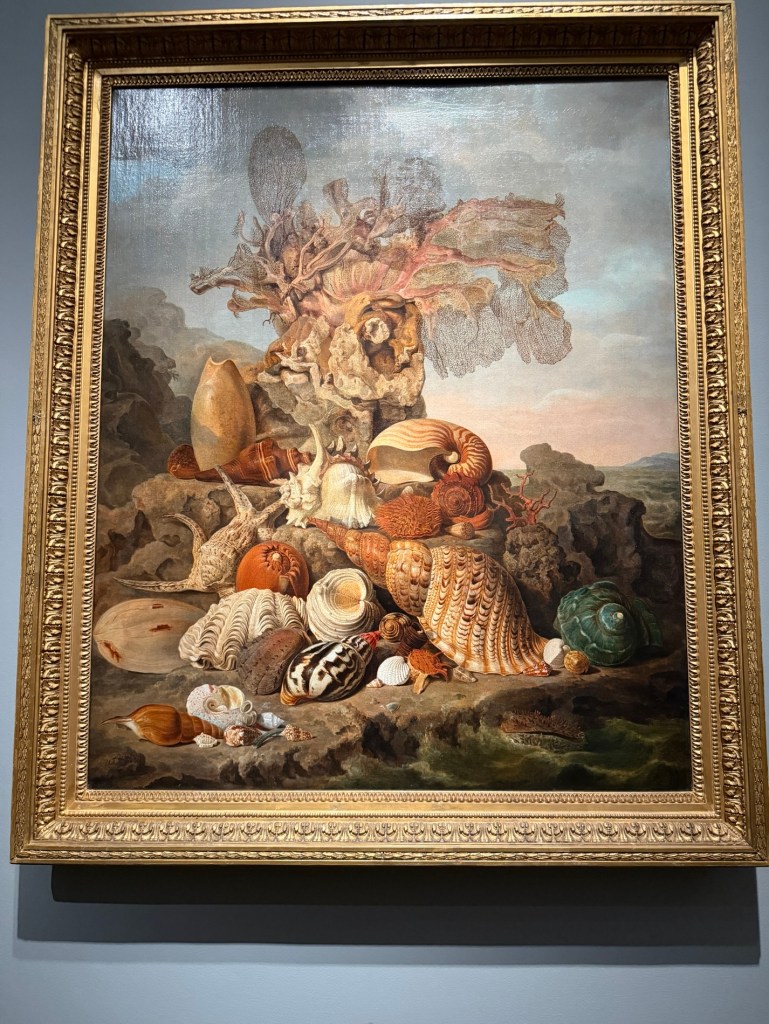
Henricus Franciscus Wiertz (1784-1858)
oil on canvas, 1809
Wiertz was a versatile artist, equally adept at painting historical scenes, landscapes, and still lifes. Here, shells, coral, and sea creatures are part of a rugged, desolate mountain landscape. In the early 19th century, collecting shells was a popular hobby, and Wiertz had studied many specimens at the home of a private collector. Most of these marine creatures and plants came from Asia.
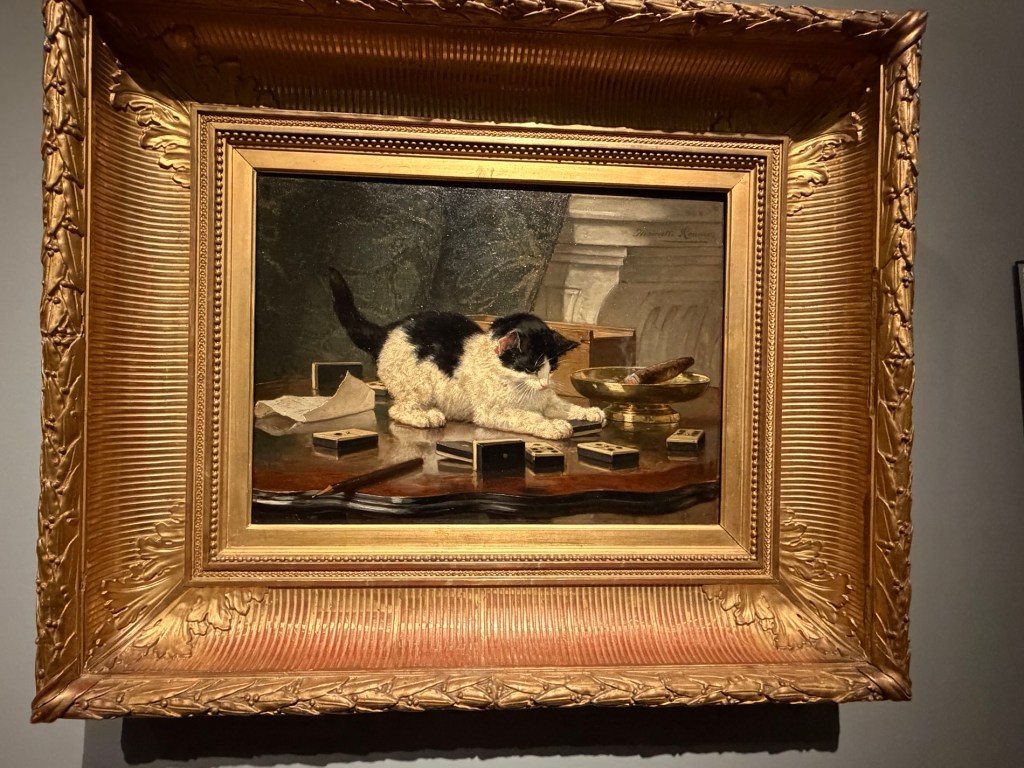
People have enjoyed watching cats play for hundreds of years: this painting is a kind of 19th-century cat video, endearing and funny.
At the height of her career, around 1880, Henriette Ronner-Knip could sell one of her cat paintings for 2,000 guilders. This was comparable to what the Hague School painters received for works of the same size.
Ronner-Knip came from a family of artists: her grandfather, father and brother were painters as well. While she painted mostly landscapes and livestock pieces at first, she later began to specialise in animals, especially cats. She kept dogs and cats in enclosures in her garden so that she could paint the animals ‘from life’.
When her father lost his sight, Ronner-Knip took over as breadwinner of the parental family. She supported her own household financially as well. And she taught all five of her children how to paint. She was very successful, exhibited regularly and became the first working female member of the Amsterdam artists’ society Arti & Amicitiae.
Cats became increasingly common as pets during the 19th century, as people saw the joy such an animal could bring. Ronner-Knip capitalised on that feeling with her narrative cat scenes. In the process, she manages to bring tension to the picture: will that ashtray holding a lit cigar be shattered?
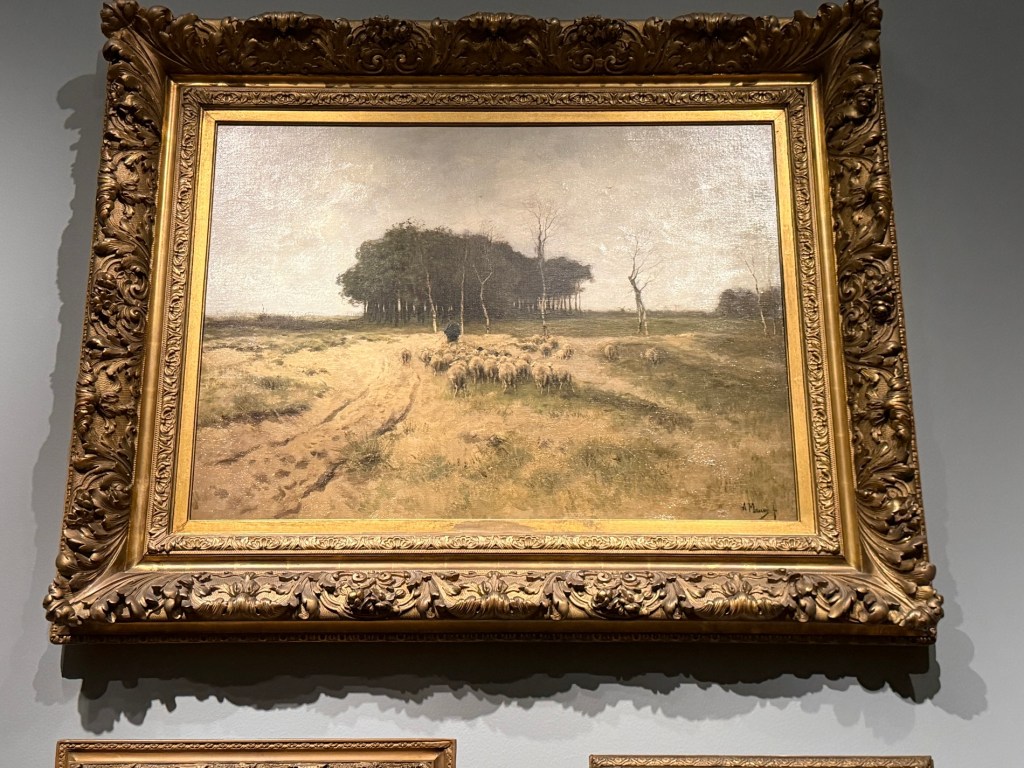
On the Heath near Laren Anton Mauve (1838-1888)
From 1882 Mauve painted in Laren, a village located in barren heathlands, with only the occasional tree and shrub. Flocks of sheep on the heath were a popular subject. In his atelier Mauve incorporated the studies he had made en plein air into large compositions.
These were popular on the English and American markets. His name became synonymous with ‘sheep paintings.
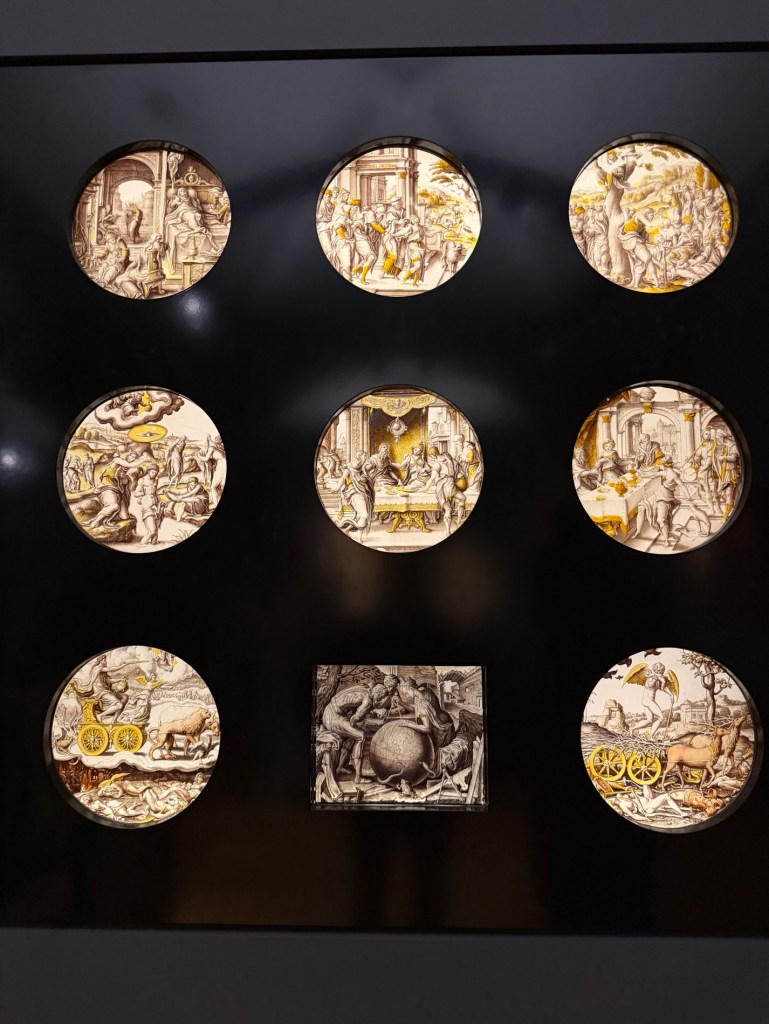
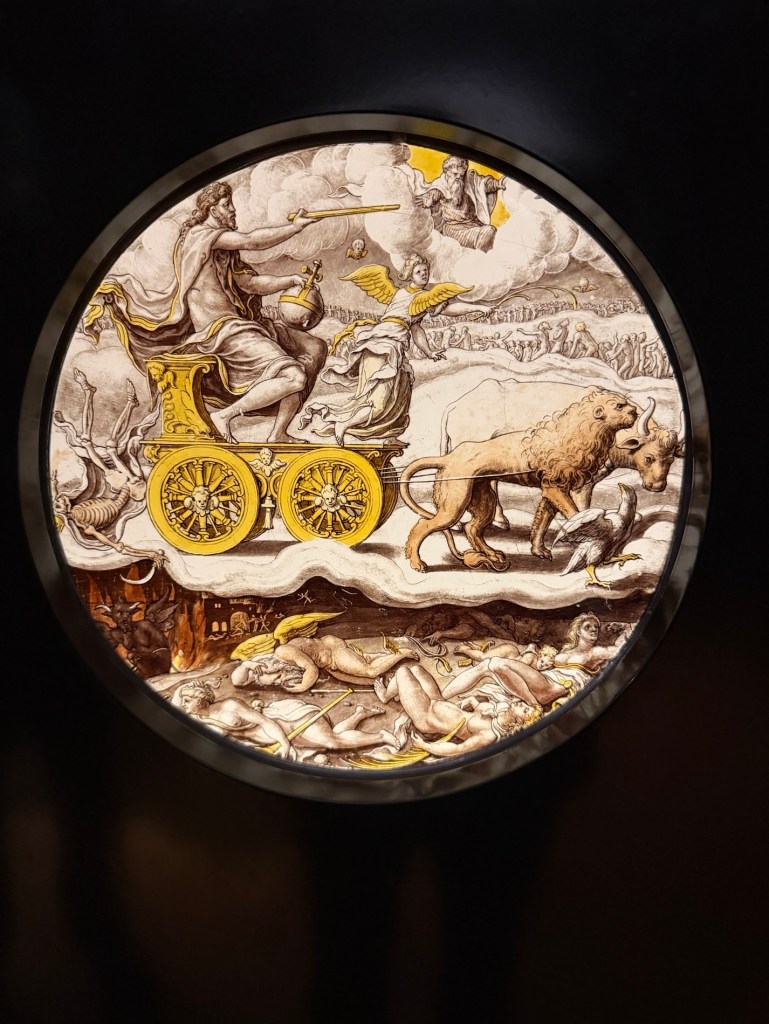
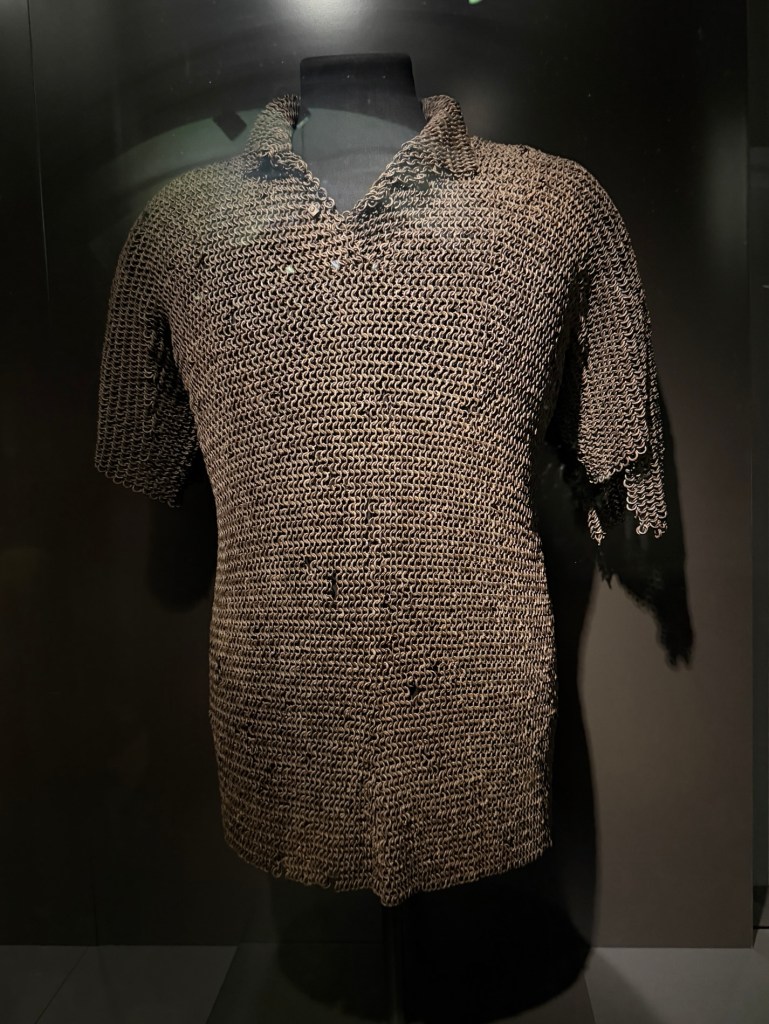
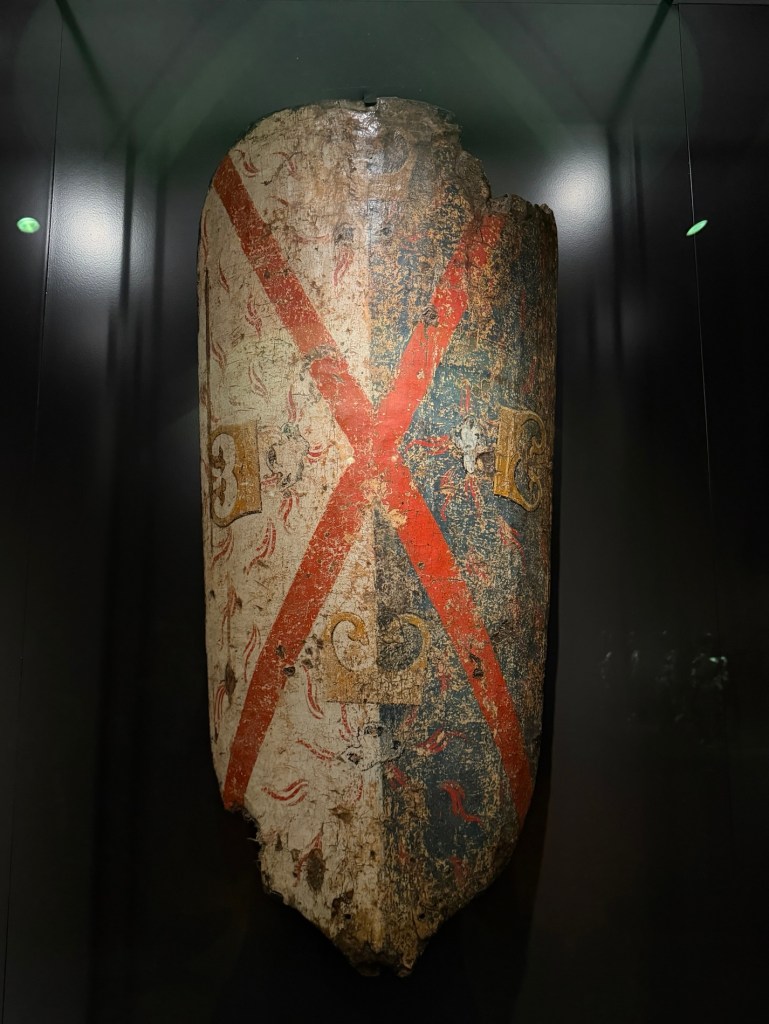
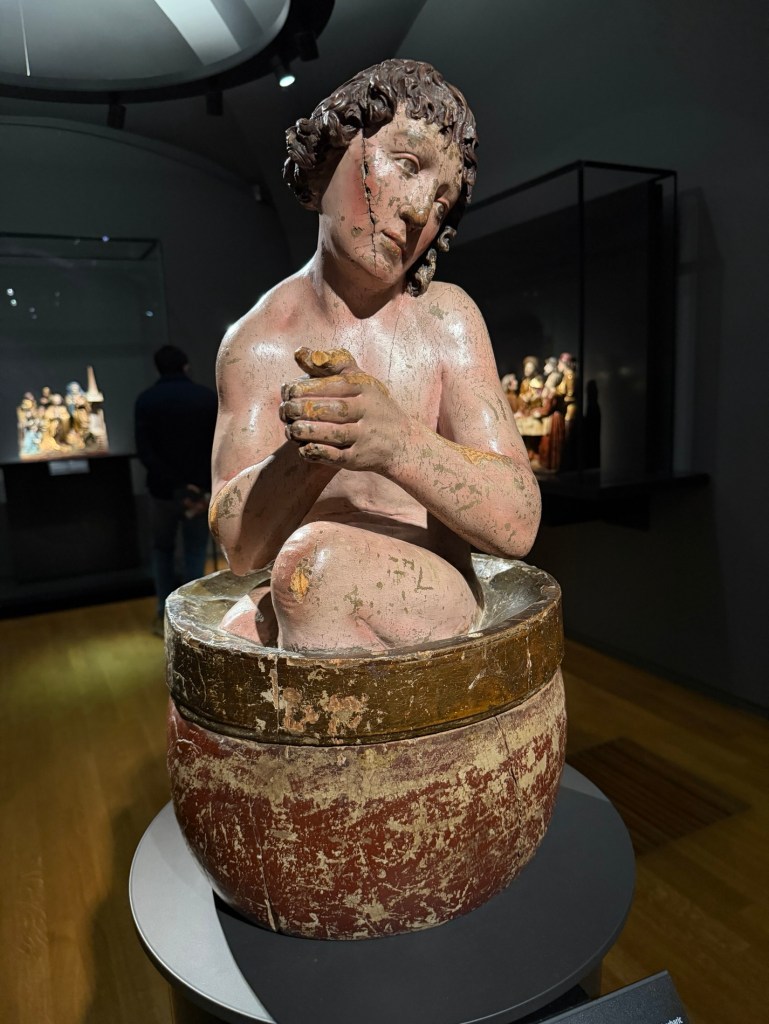
This poor bugger was being boiled in oil.
Vitus was a 4th-century Sicilian boy who endured barbaric forms of torture after his conversion to Christianity.
The cruellest was to be boiled, aged twelve, in a cauldron of oil, resin and pitch. Miraculousy, he survived, thanks to his unwavering faith. Depicting Vitus in a cauldron was very popular during the Middle Ages, especially in southern Germany.
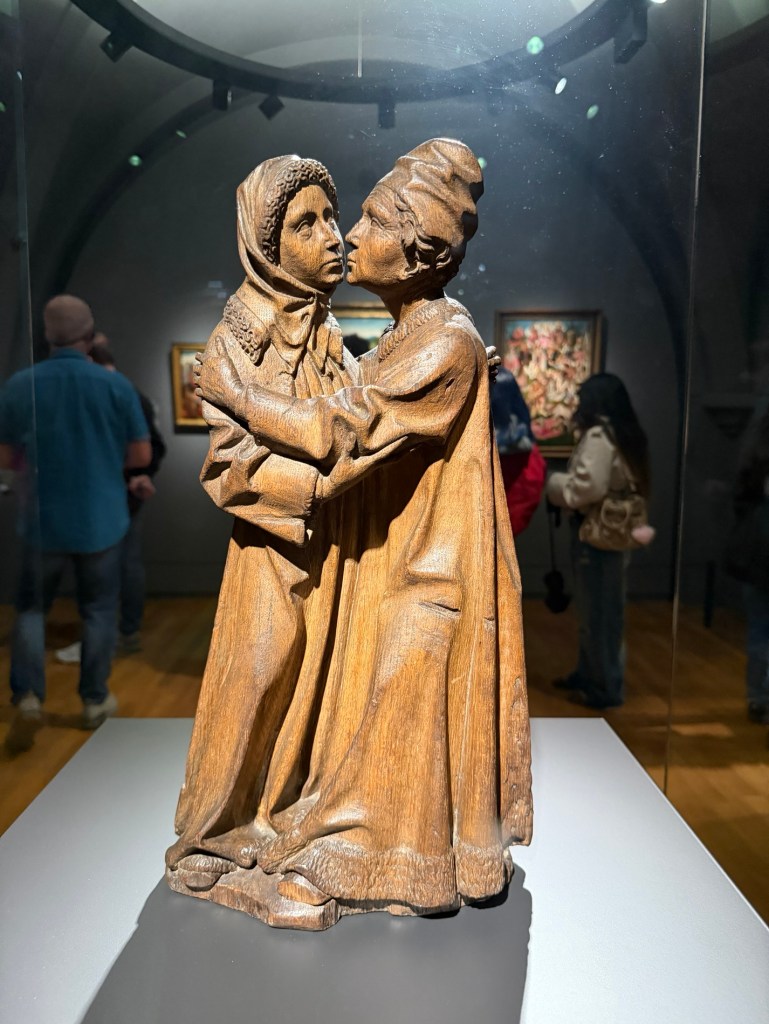
Joachim and Anna had long been childless, until one day Anna’s prayers were answered and she miraculously became pregnant with the Virgin Mary. Overjoyed by this news, the couple embraces each other tenderly.
This intimate, almost timeless statue was once part of a large altar dedicated to the life of the Virgin.
Sue had finished a little earlier than me and secured a highly sought after spot in the cafe. I started to queue for my backpack when we texted and swapped places. Thanks Sue for taking the queueing jobs this morning. (I’m beginning to write this while I await my coffee order.)
Next we battled wind and rain for a short walk across the way to be at the Van Gogh Museum by 12:30. The rain was pretty heavy and the queue was IN the rain. I had my brolly so I queued and Sue found some shelter.
It wasn’t quite as busy as the Rijks. Conquered the lockers and got our audio tour and off we went.

I found it very interesting to see Van Gogh’s earlier work and lots of pieces I would never have attributed to him. It was also good to learn more about his life and family along the way and his relationships with other artists. So much more than Sunflowers, Starry Night and a bloke who cut of his ear)
Finally his sad ending and as with so many artists his success and influence after his death by suicide (he shot himself in the chest and succumbed to his wounds two days later with his brother, Theo, at his side). Here’s a selection of those that struck me for some reason or another.
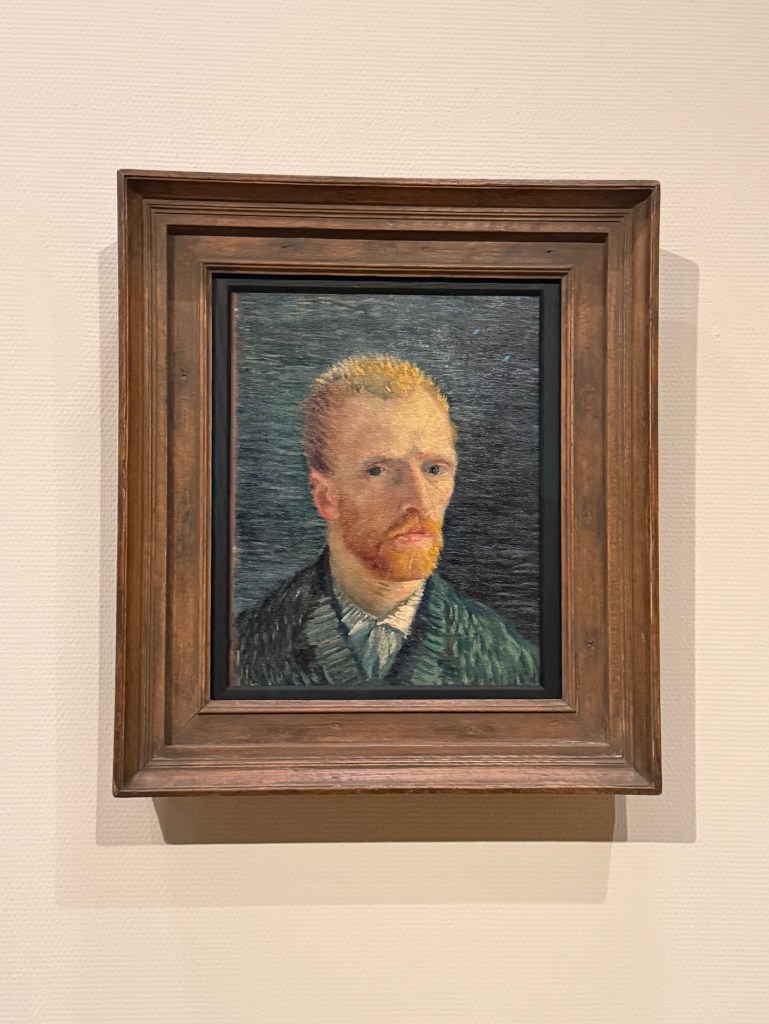
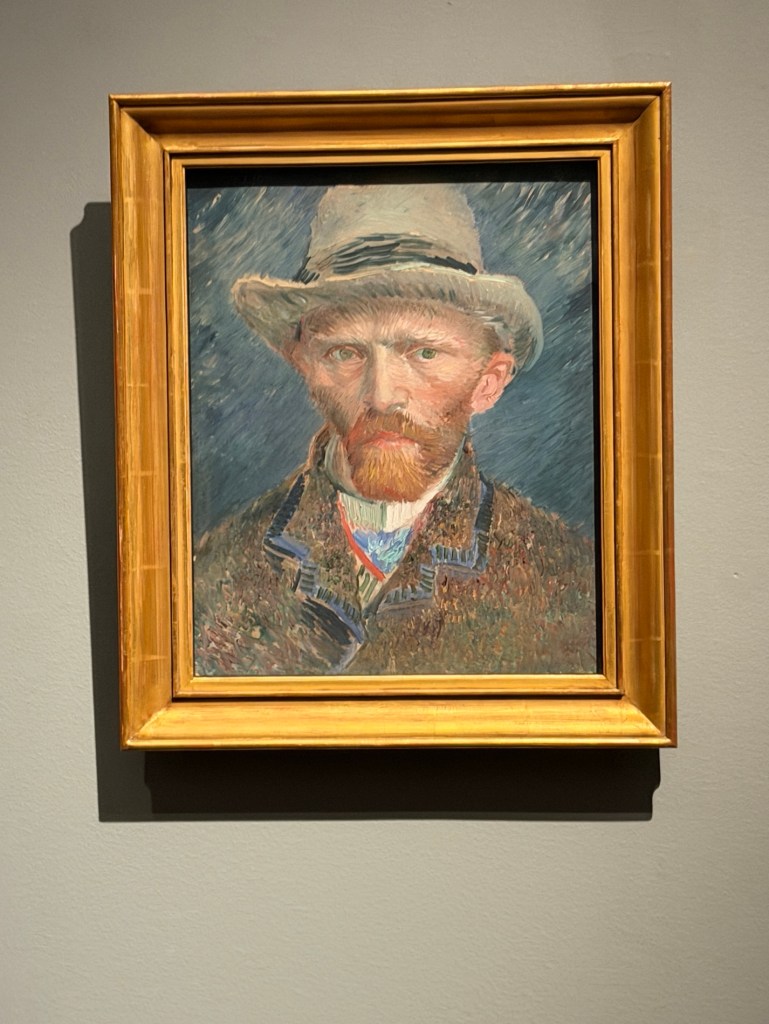
Self portrait
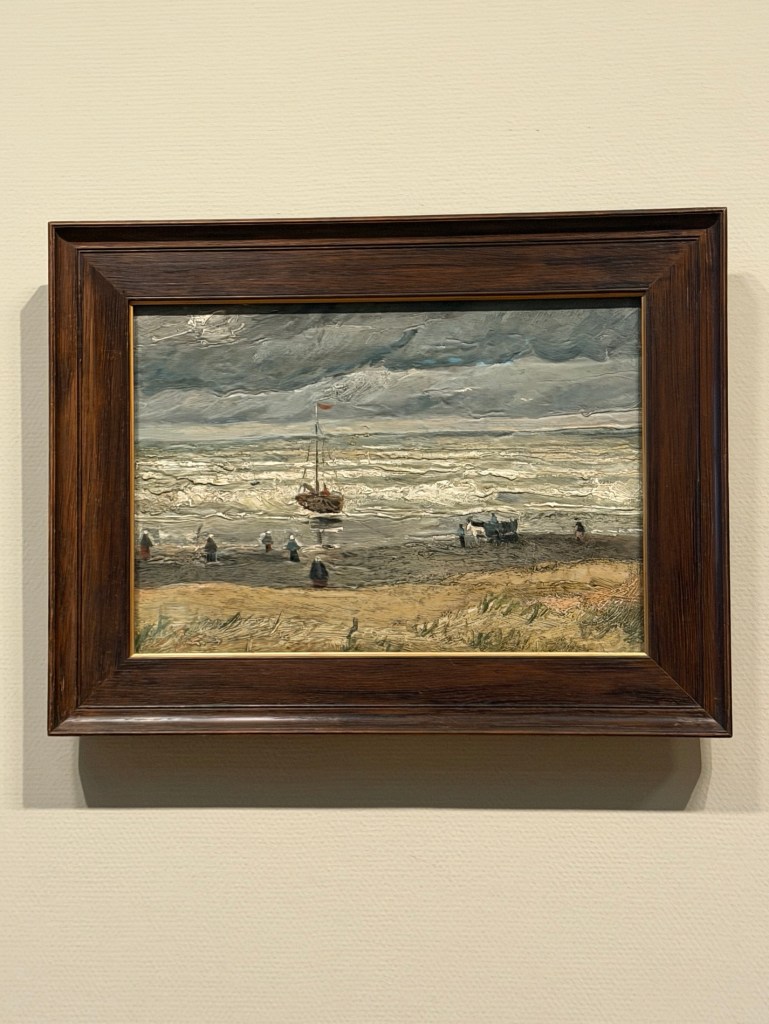
View of the Sea at Scheveningen
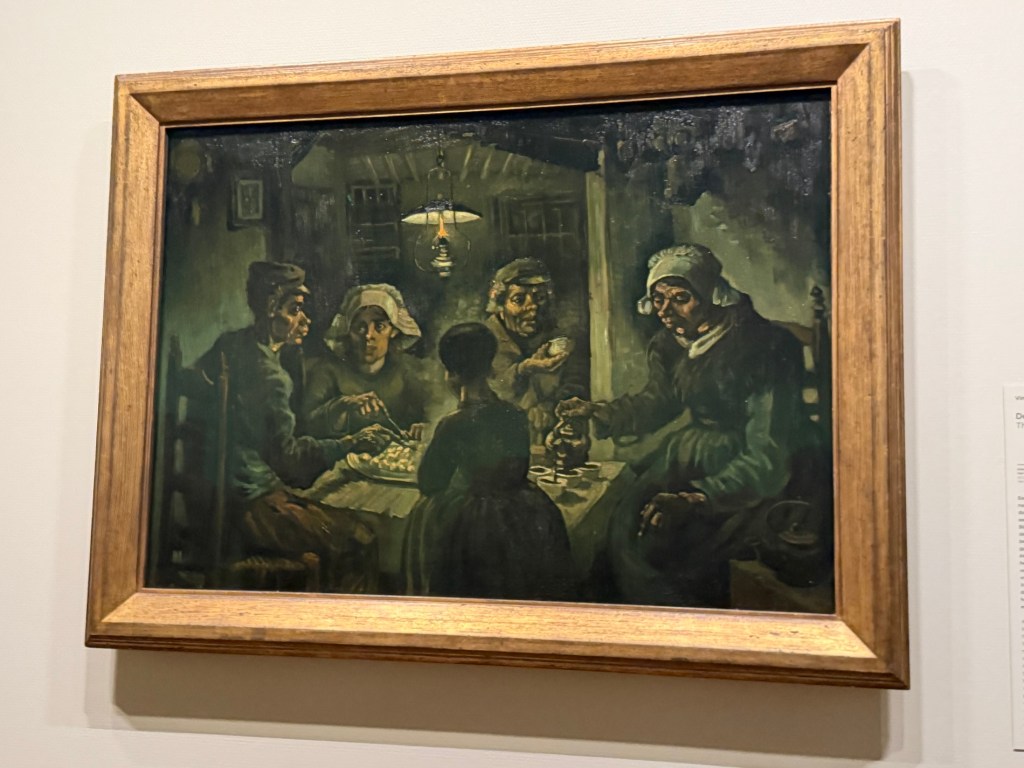
The Potato Eaters.
A true peasant painting, according to Van Gogh, ought to smell of bacon, smoke, and steaming potatoes, and that is just what The Potato Eaters appears to do.
Steam rises from the platter of potatoes, the simple meal shared by the entire family. Van Gogh saw the very essence – and primarily also the tragedy – of life in these poor peasants. He wanted to render them in their roughness and gave them corse features and bony calloused hands. For his colour scheme he chose dark ashen tones that matched the dusty land. He prepared his final composition with many studies. Still, with no less than five figures the picture proved to be a ‘formidable fight.’ In the end, however, Van Gogh was very pleased with the final result. He hoped that his brother Theo, an art dealer in Paris, would exhibit the painting, but he found it much too sombre.
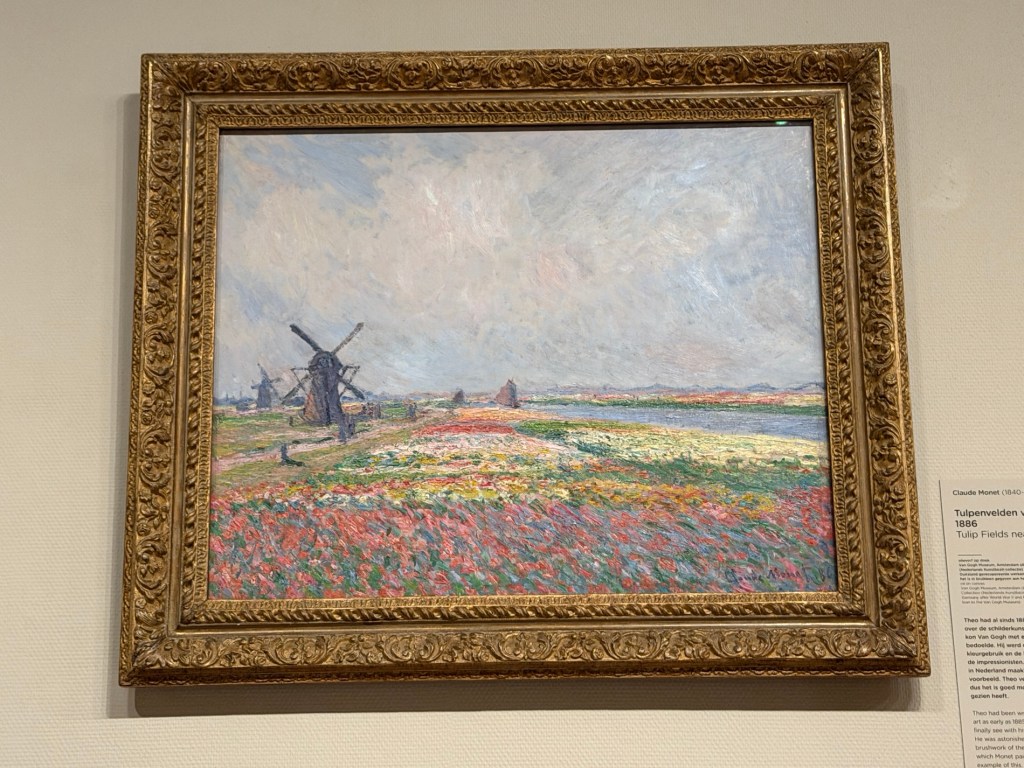
Tulips near The Hague.
Theo had been writing full of admiration about Monet’s art as early as 1885. It was only in Paris that Vincent could finally see with his own eyes what his brother meant.
He was astonished by the bright palette and loose
brushwork of the Impressionists. This landscape – which Monet painted in the Netherlands – is a beautiful example of this. Theo sold this painting in 1886, and so it is possible that Van Gogh could have seen it.
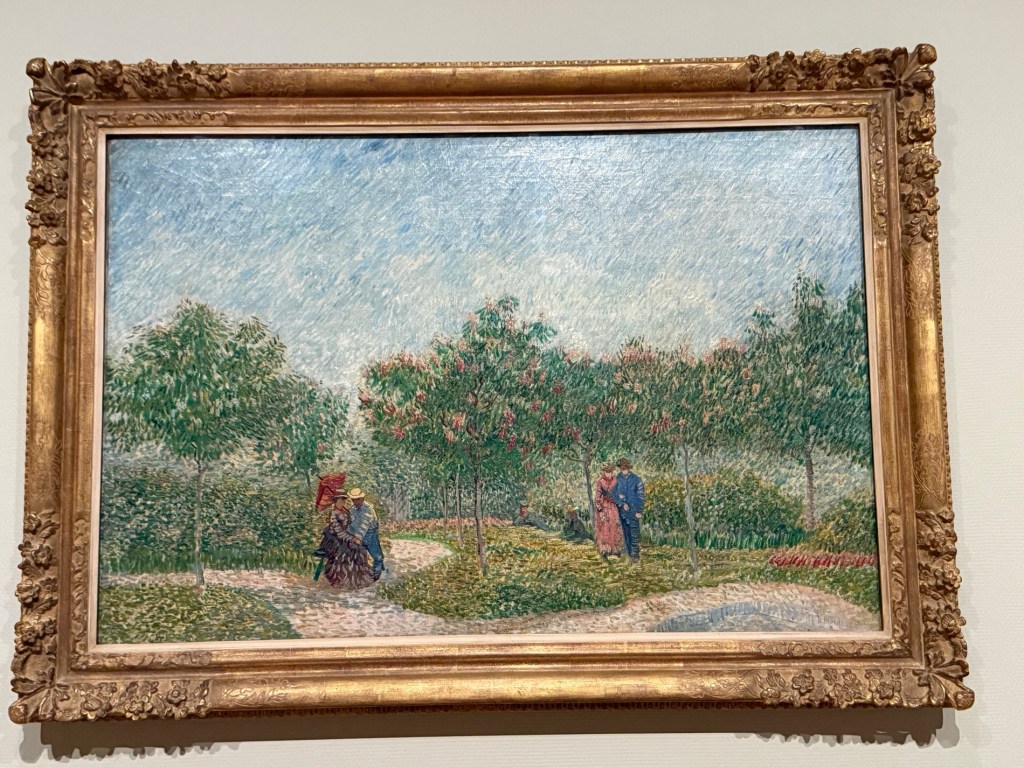
Garden with Courting Couples. Square St Pierre.
Van Gogh himself called this sun-drenched park view
‘the painting of the garden with lovers. Amorous couples stroll beneath young chestnut trees or sit along the winding paths. Van Gogh took liberties with the Pointillist technique of coloured dots, setting airy streaks next to rapid daubs of paint. He succeeded in rendering the effect of a dazzling spring day, which in turn reinforces the sense of young love and intimacy that Van Gogh wished to express here. He too longed for a wife and a family, but he had ‘the most impossible love stories’ He ultimately resigned himself to this situation; after all, he was devoted to his art.
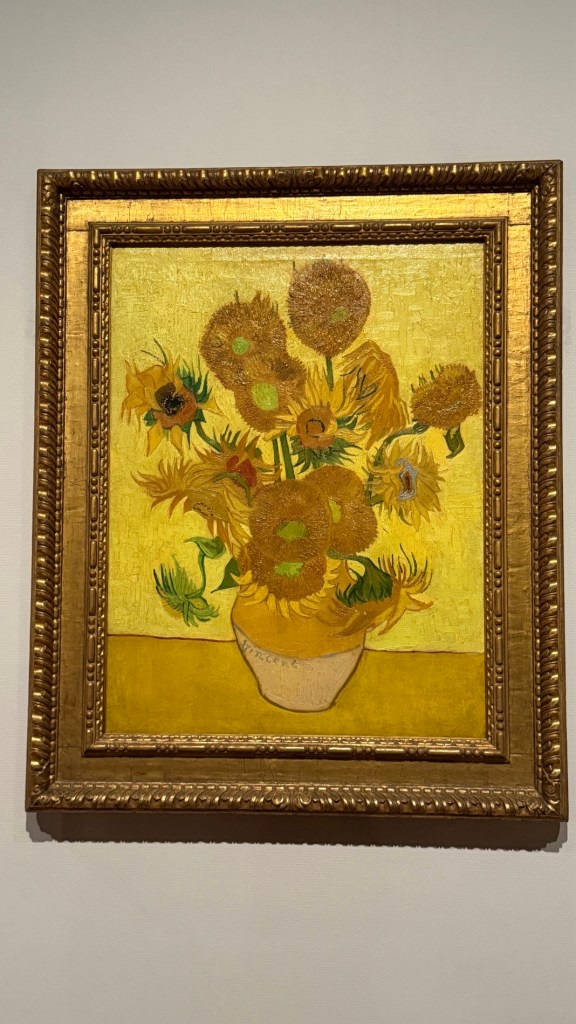
1889
Sunflowers.
In August 1888 Van Gogh painted a bunch of
sunflowers in a vase. In spite of – or perhaps thanks to – the simplicity of the subject and the style he created a true masterpiece. With nothing more than three tints of yellow he achieved a colour harmony that shimmers like a vision. In a letter, Theo praised ‘the effect of a piece of fabric embroidered with satin and gold.’ Van Gogh, too, realised that he had made a remarkable picture and described just how deep he had had to dig in order to achieve it. He had used all of his energy and concentration ‘to sufficiently catch fire’ Proud of the result, he proclamed himself the painter of sunflowers. He would ultimately paint five versions, every single one an icon of modern art.
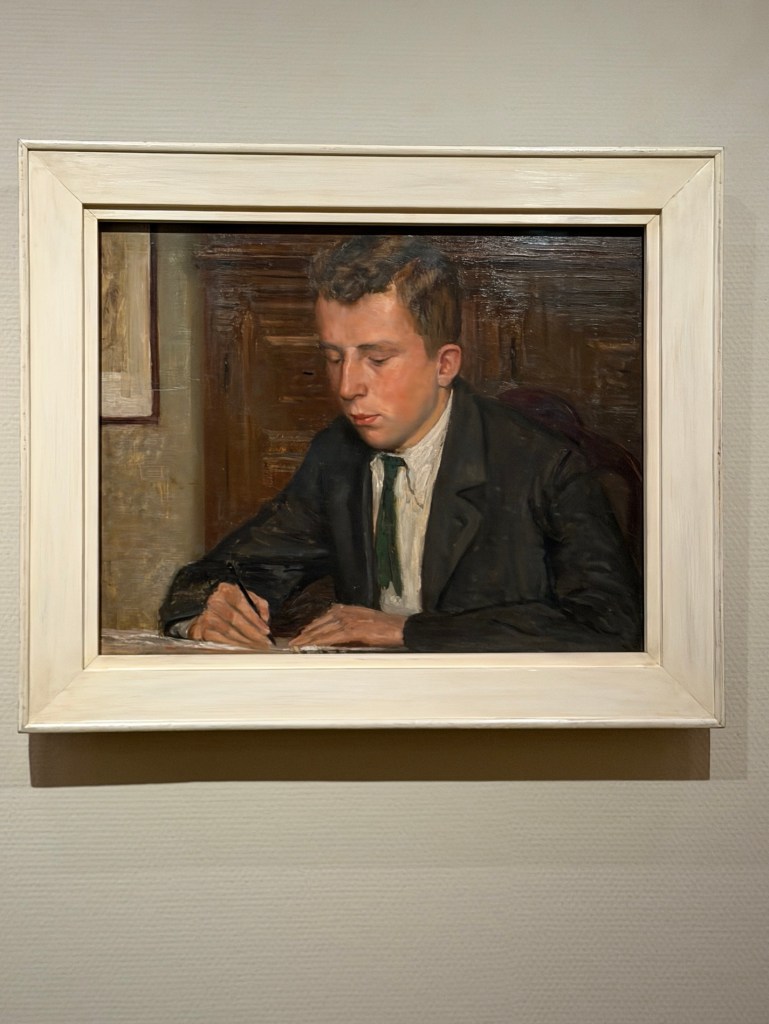
Vincent Van Gogh
Vincent, the son of Theo and Jo, grew up surrounded by Van Gogh’s art. When his mother died in 1925, he became responsible for his now world-famous uncle’s estate. He would emerge as the driving force behind the foundation of the Van Gogh Museum. This is where the family collection has been on display for all to see since 1973.
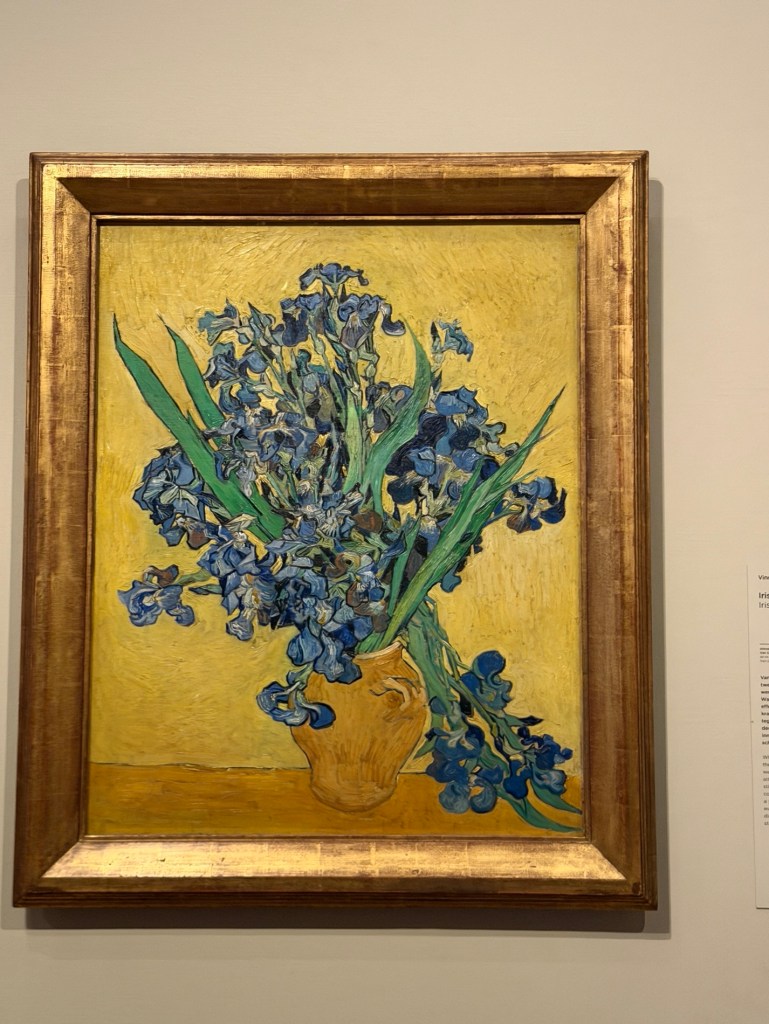
1890
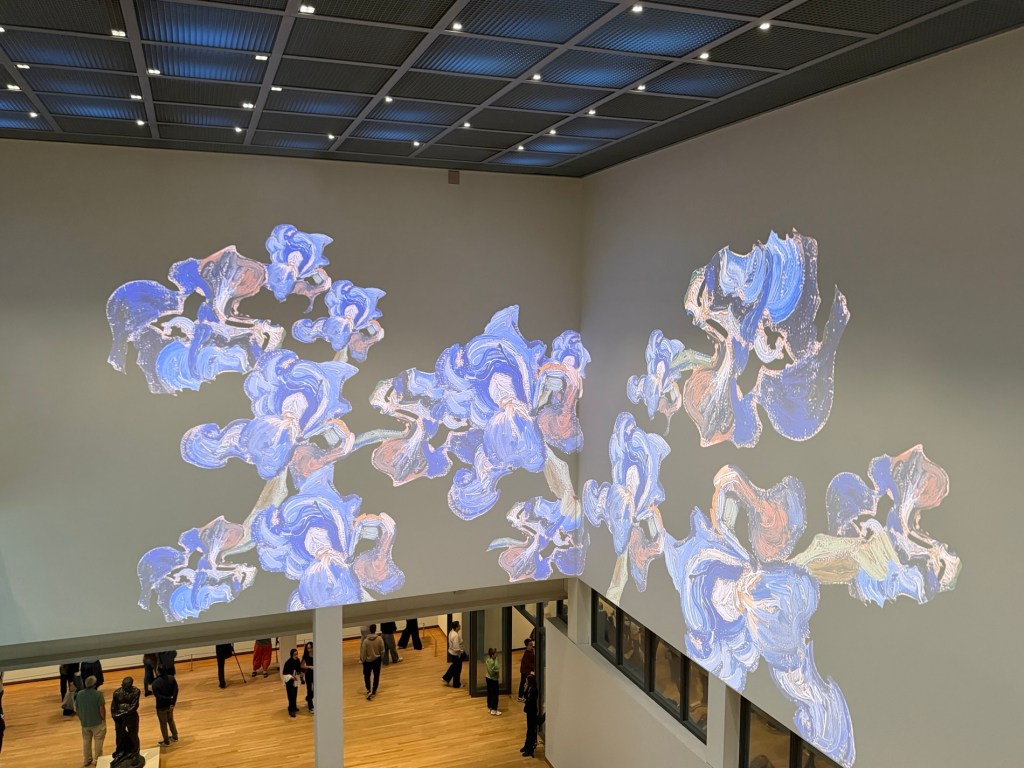
Irises.
While in the psychiatric institution Van Gogh painted the same glorious bouquet of irises twice. Both works were in the first place a study in colour. While he attempted to create a soft pastel effect in the other still life, here he was seeking the most intense colour contrast possible. By setting the purple flowers against a yellow background the decorative forms stood out even more vividly. In the meantime, the irises have discoloured from purple to blue, yet the beauty of this still life remains unsurpassed.
1890
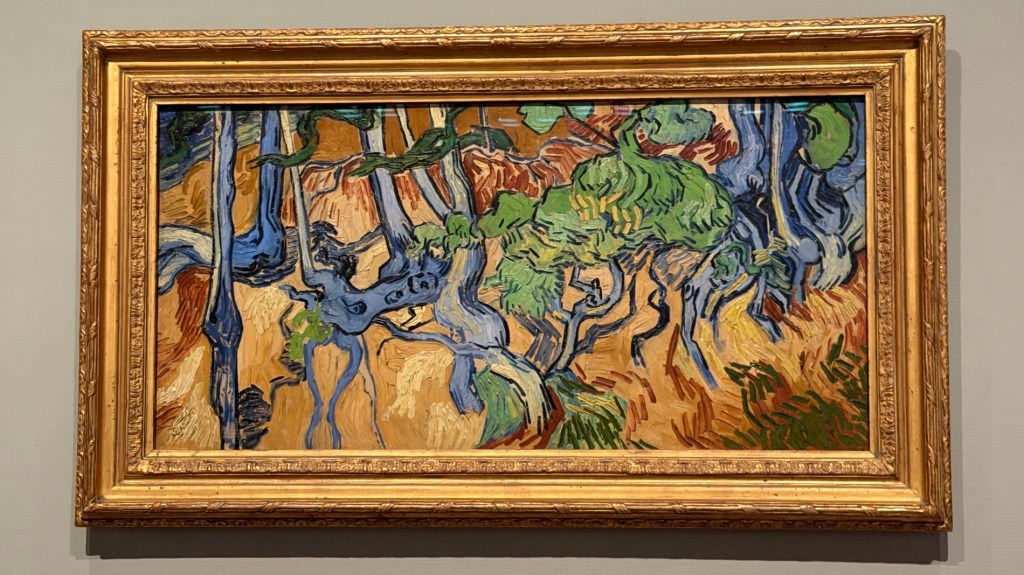
Tree Roots.
Van Gogh painted this landscape on the outskirtsof the village of Auvers. He depicted the tree roots from very close up, whereby the composition lacks a horizon and sense of depth.
As a result, the painting makes an almost abstract impression. Van Gogh rendered the jagged tree trunks and roots, as well as the light falling on them in bold brushwork. The painting remained unfinished; he shot himself in the chest that very afternoon.
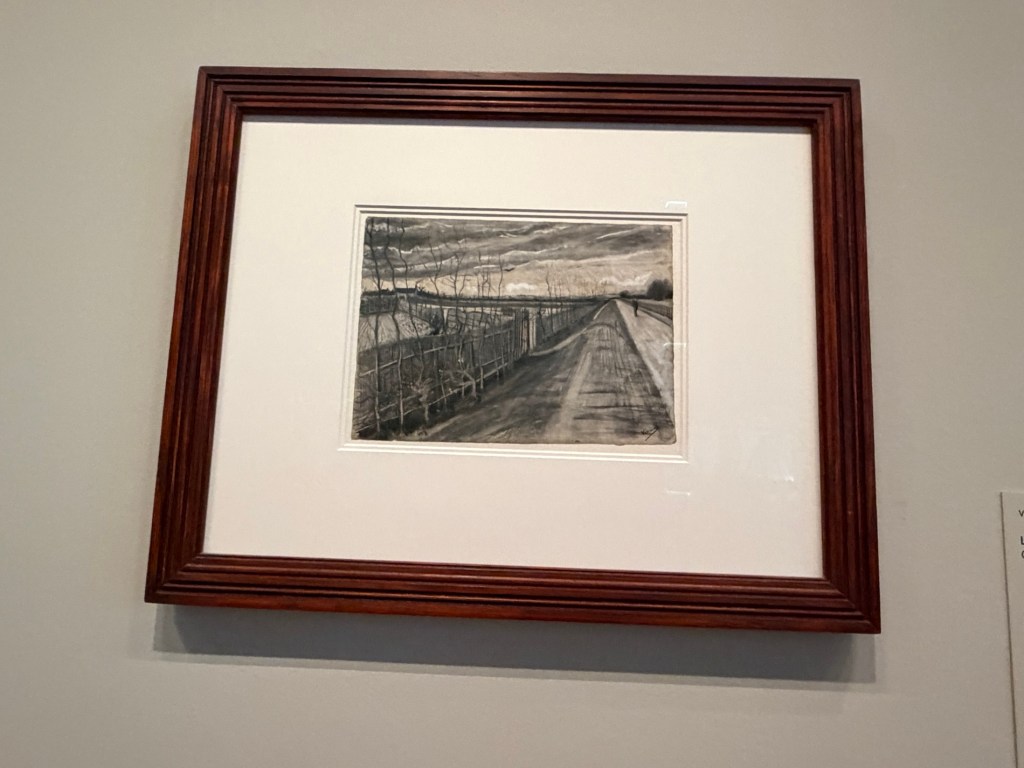
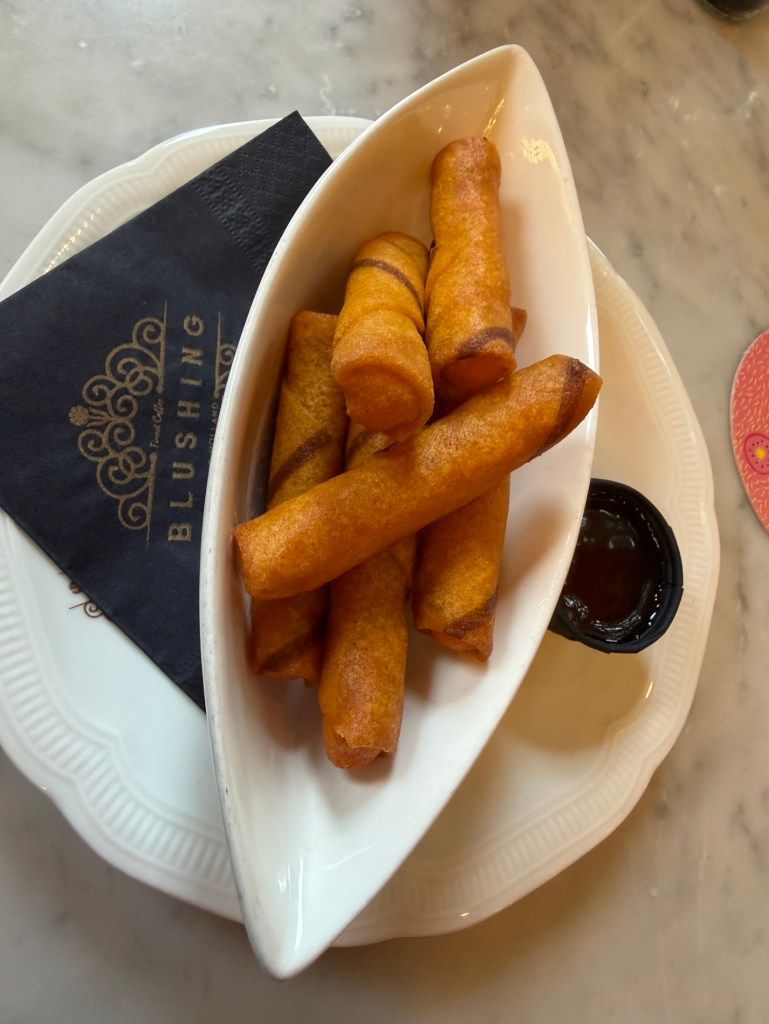
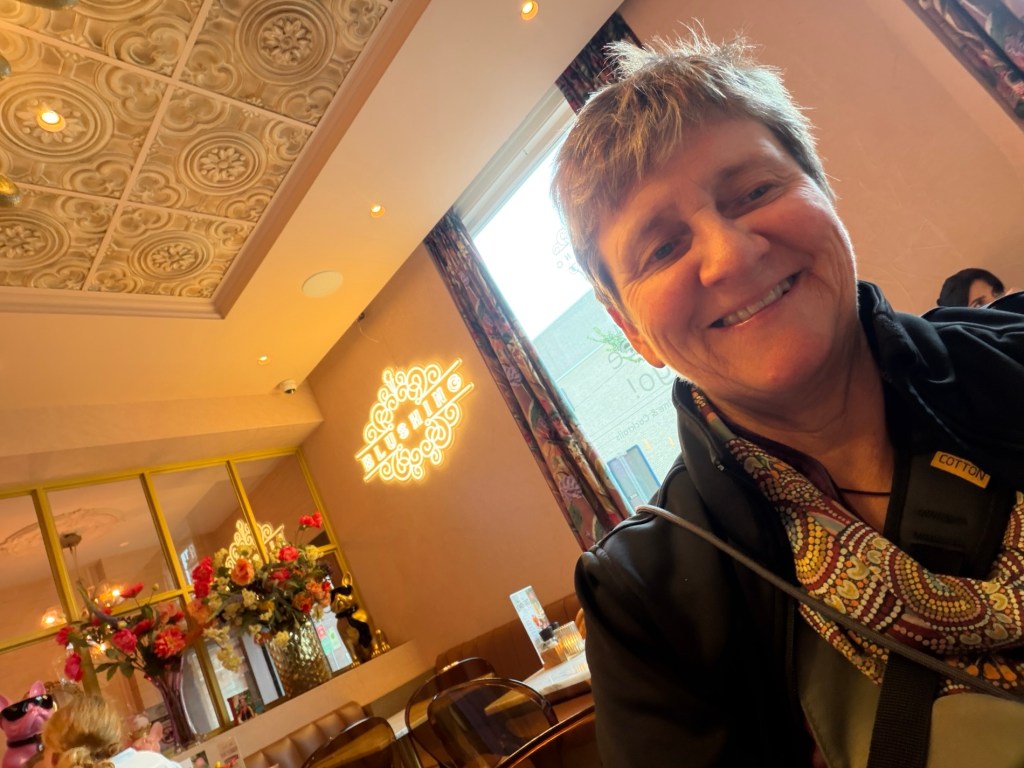
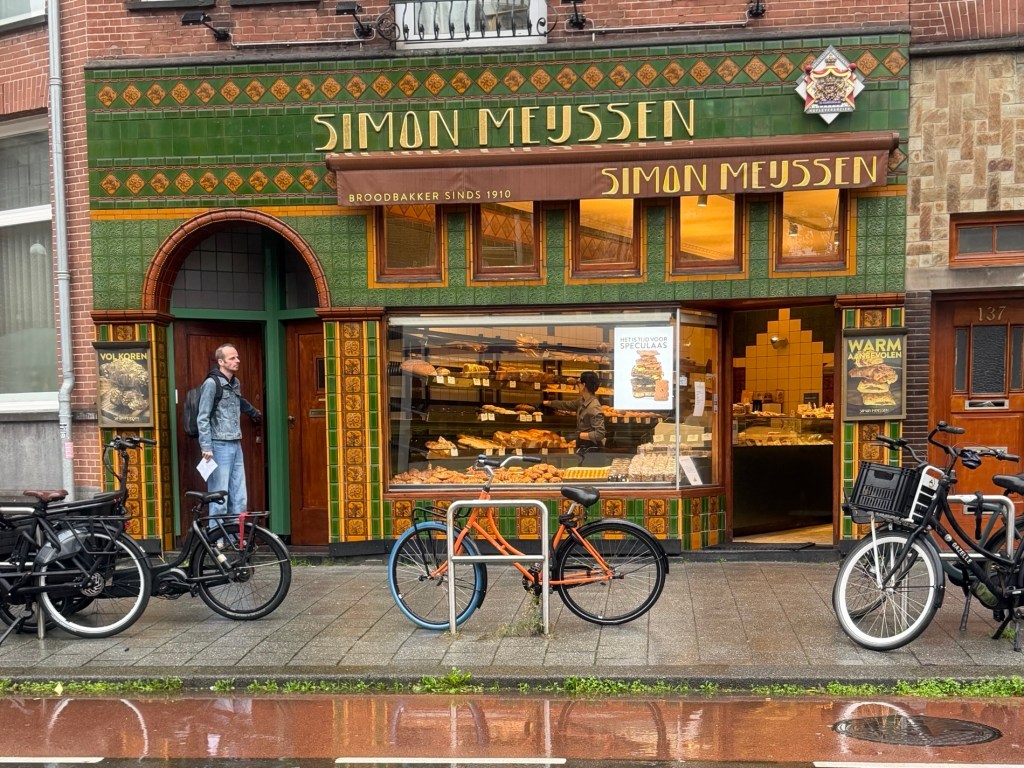
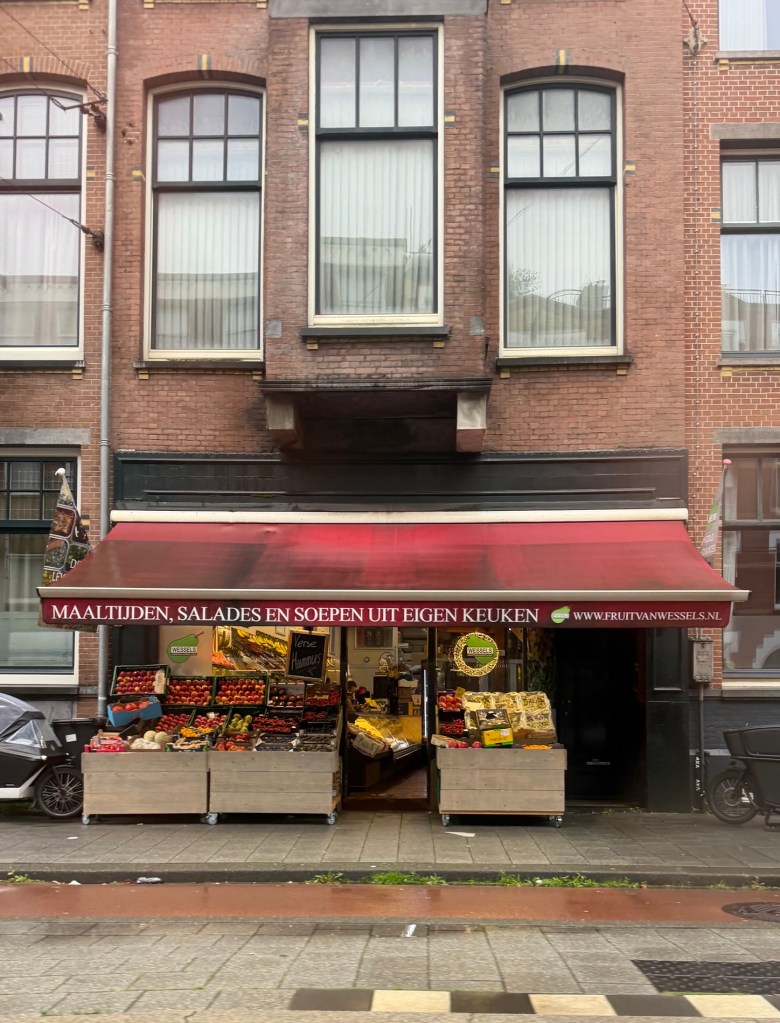
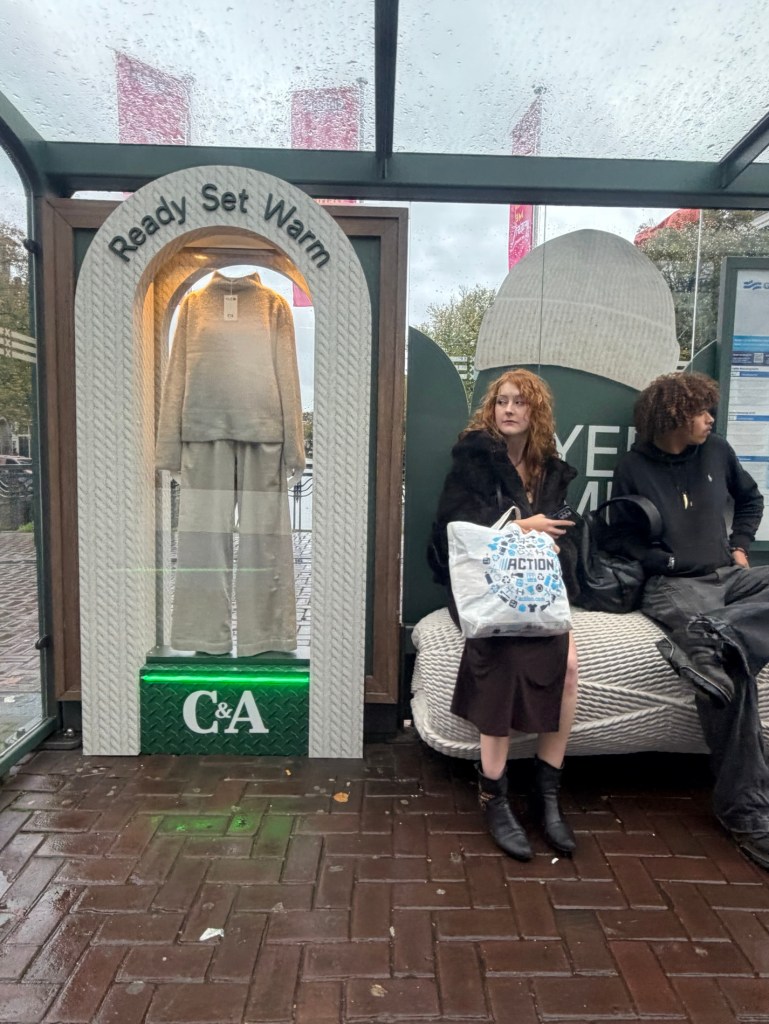
We had planned to visit Albert Cuyp Market, but the weather was not in our favour. So we found somewhere for a light lunch – Blushing, then we caught the Number 2 Tram and did some sightseeing. Mainly out into the suburbs and back through the city to Centraal Station.

A bit of chill time at the hotel, before heading up to the 11th Floor roof top bar – Luminair – for a drink and some views across the city.
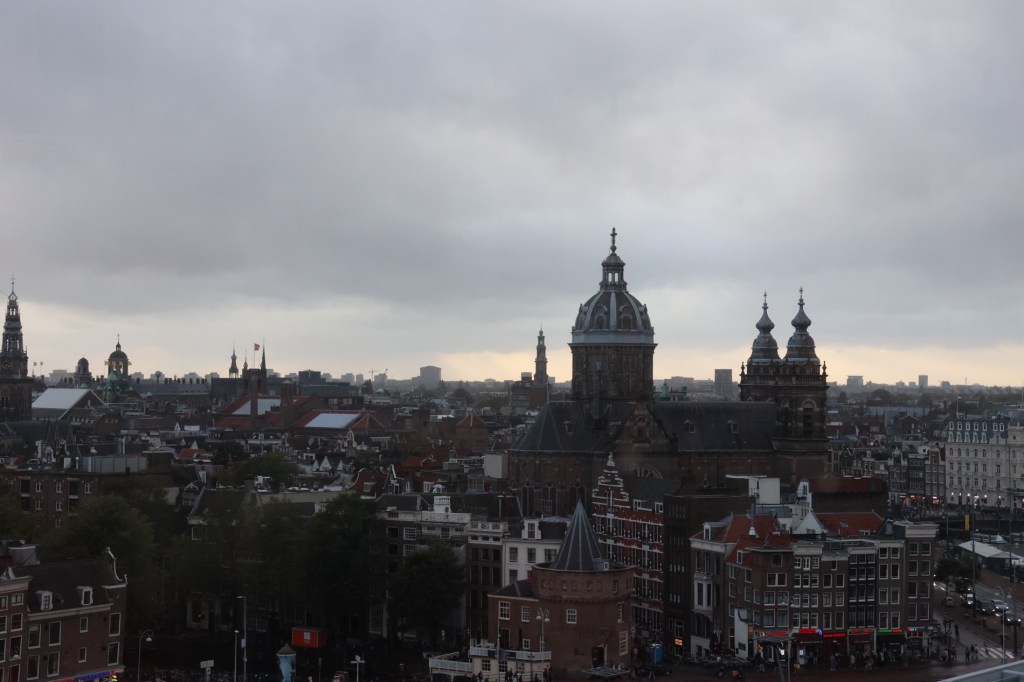
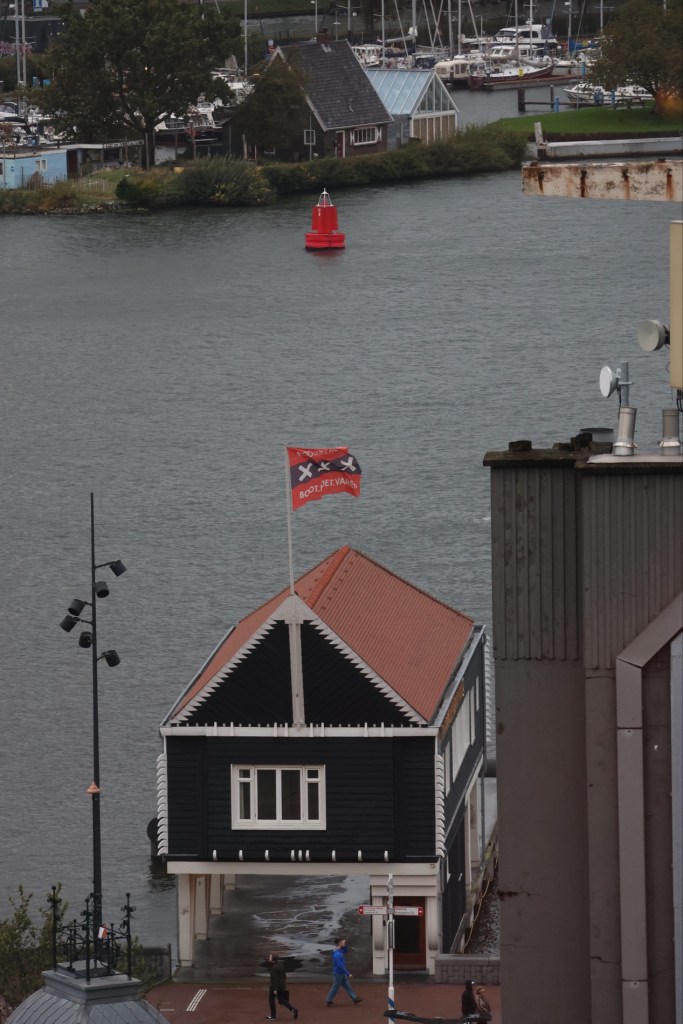
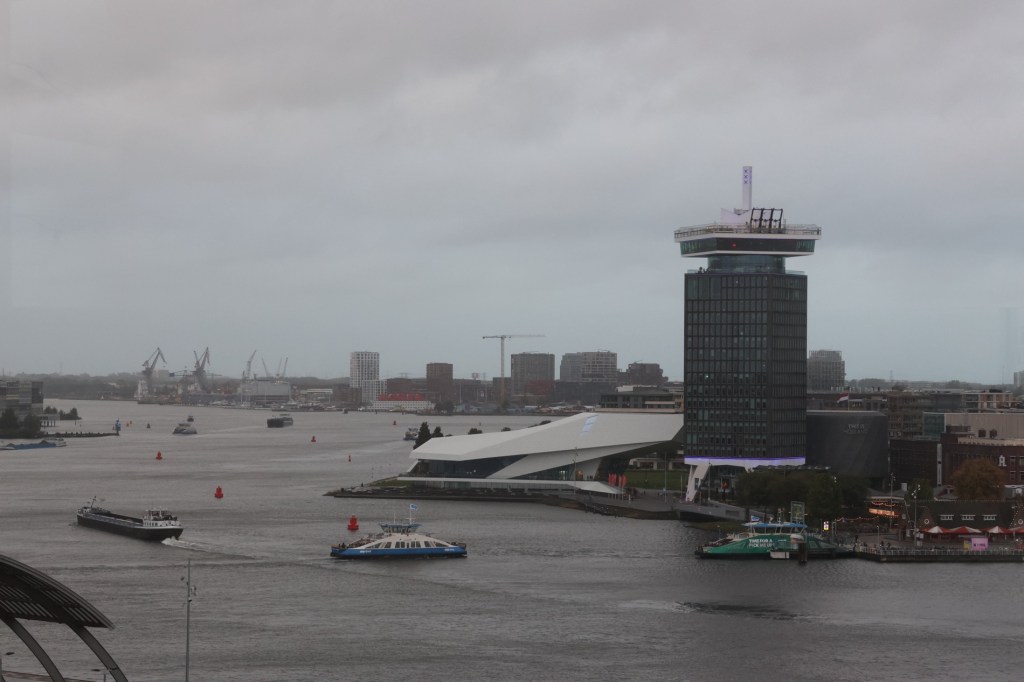
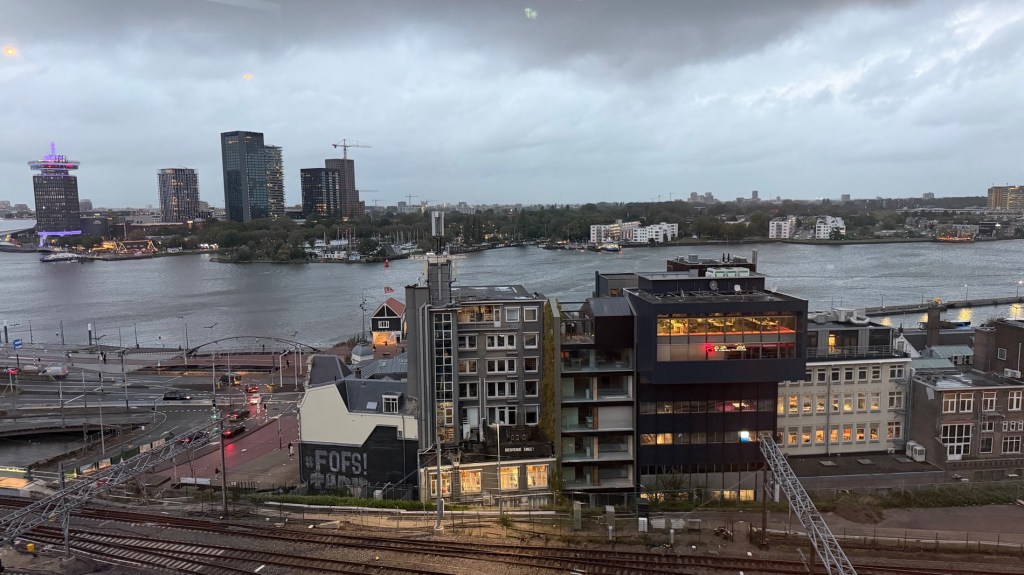
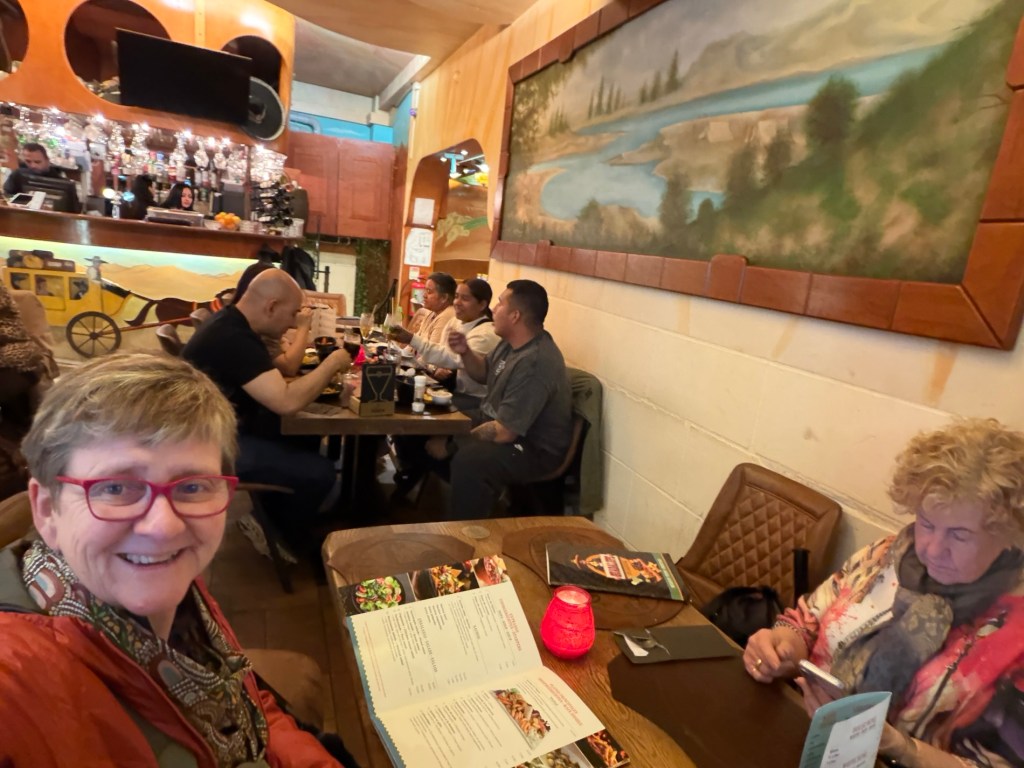
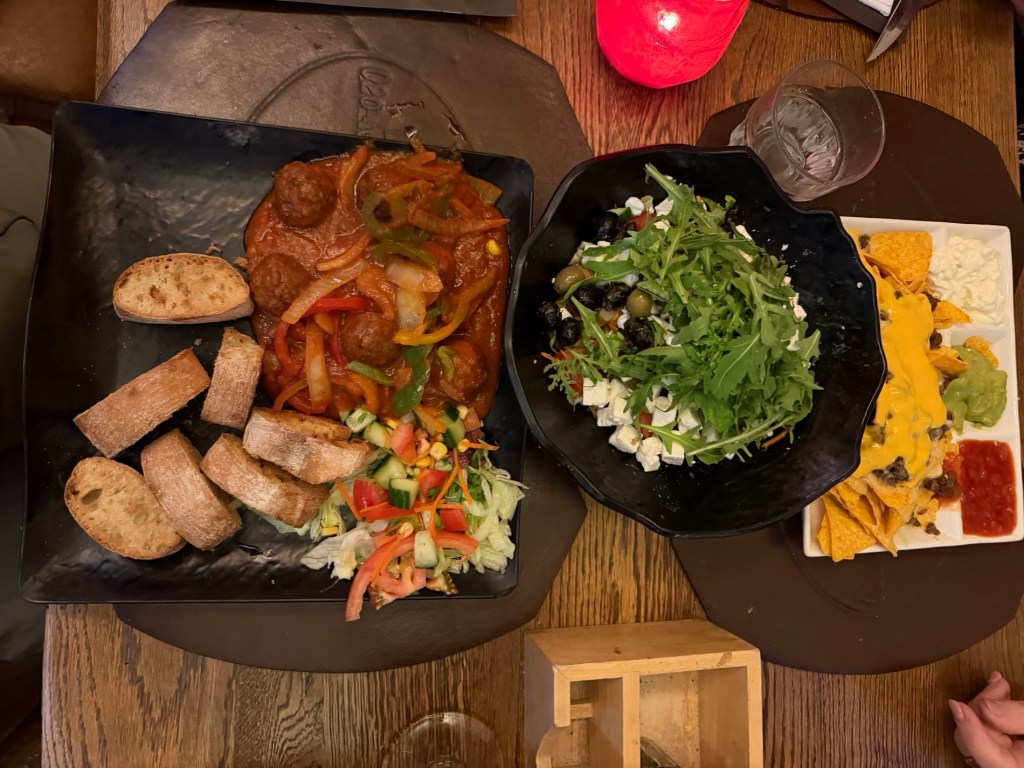
Lastly we walked over the road and canal to have a decent tea (it’s been a while). Ended up with Mexican – I had meatballs in a tomato sauce and bread, Sue has nachos and we shared a Greek salad that was chock o block with fetta.
Home to blog and bed.