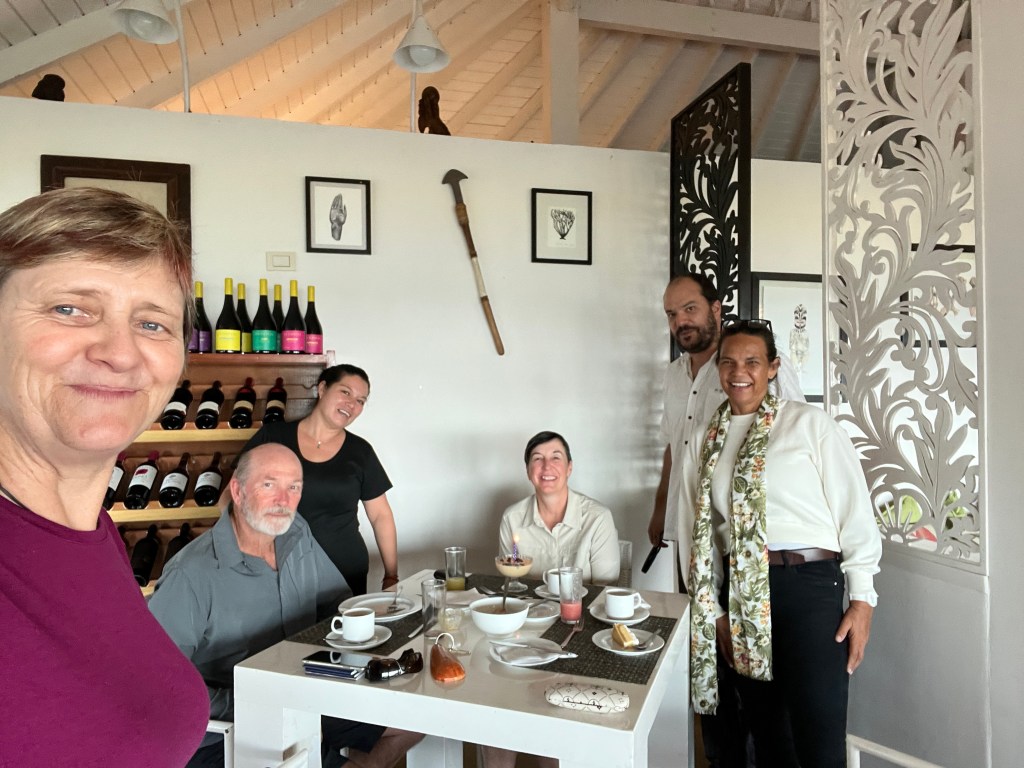
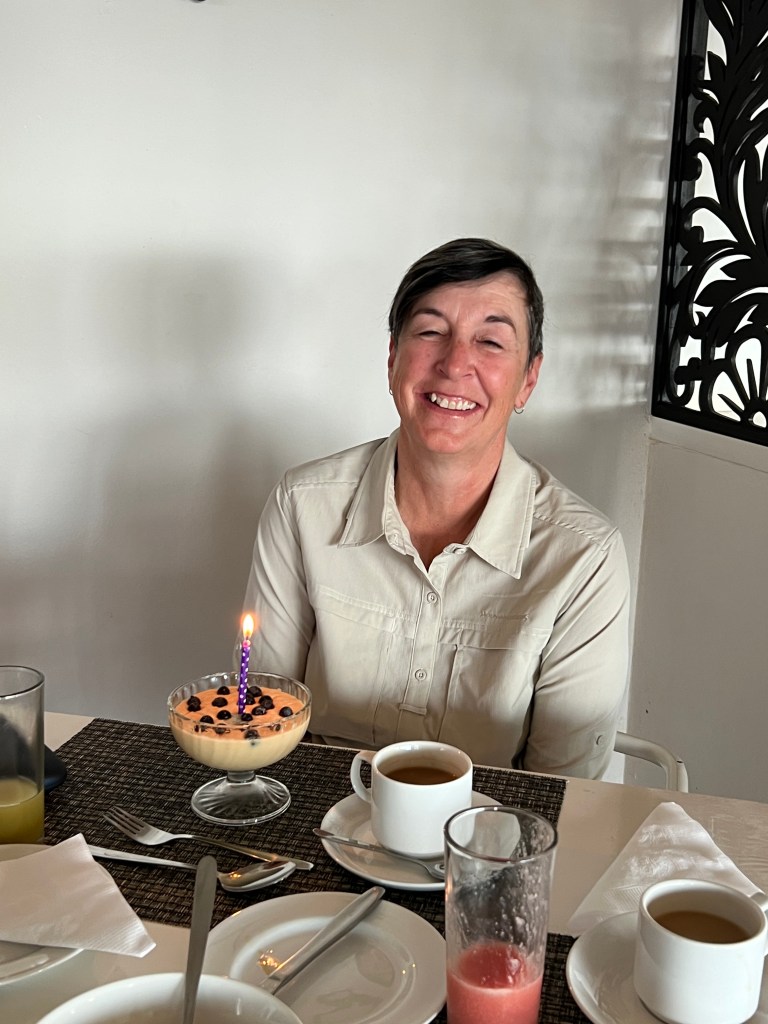
Mary’s birthday. We surprised her with gifts and the staff arranged a candle in a breaky mousse and sang Happy Birthday and something in Rapa Nui.
A full bus load this morning for our full day tour of Rapa Nui. Half Spanish speakers half English. Luis our bus drivers is taking care of the former and we have Isabelle again. A couple of new English speakers Anja from Norway and Maria and Henrique from Holland. We headed for the South coast where we visited…
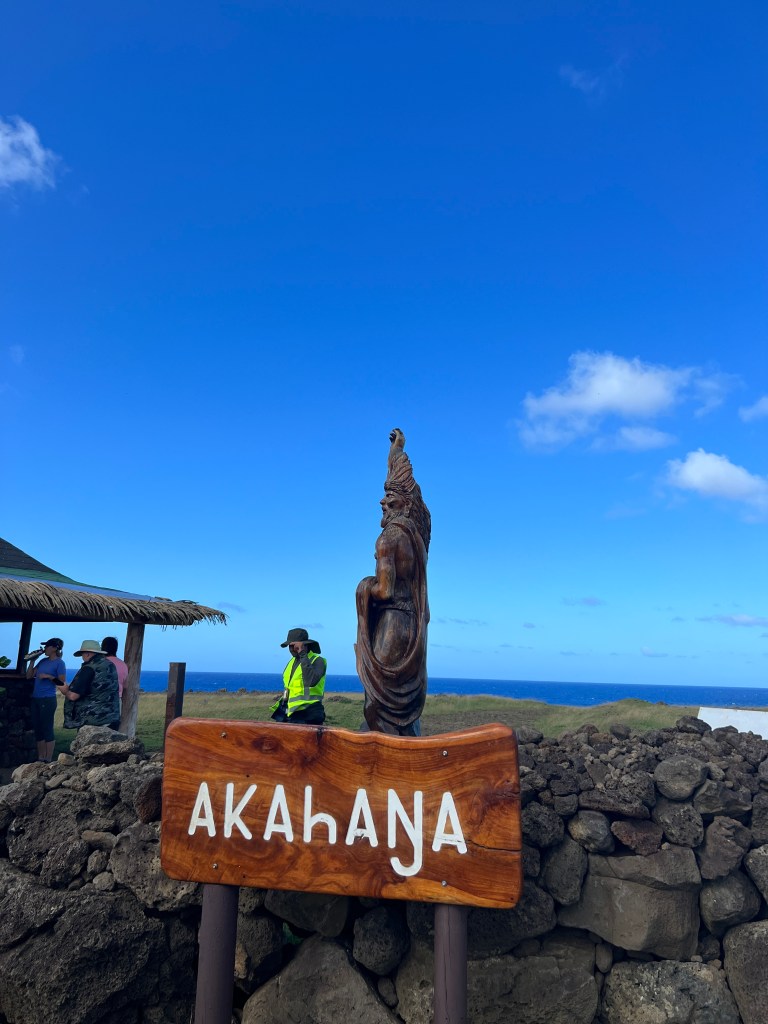
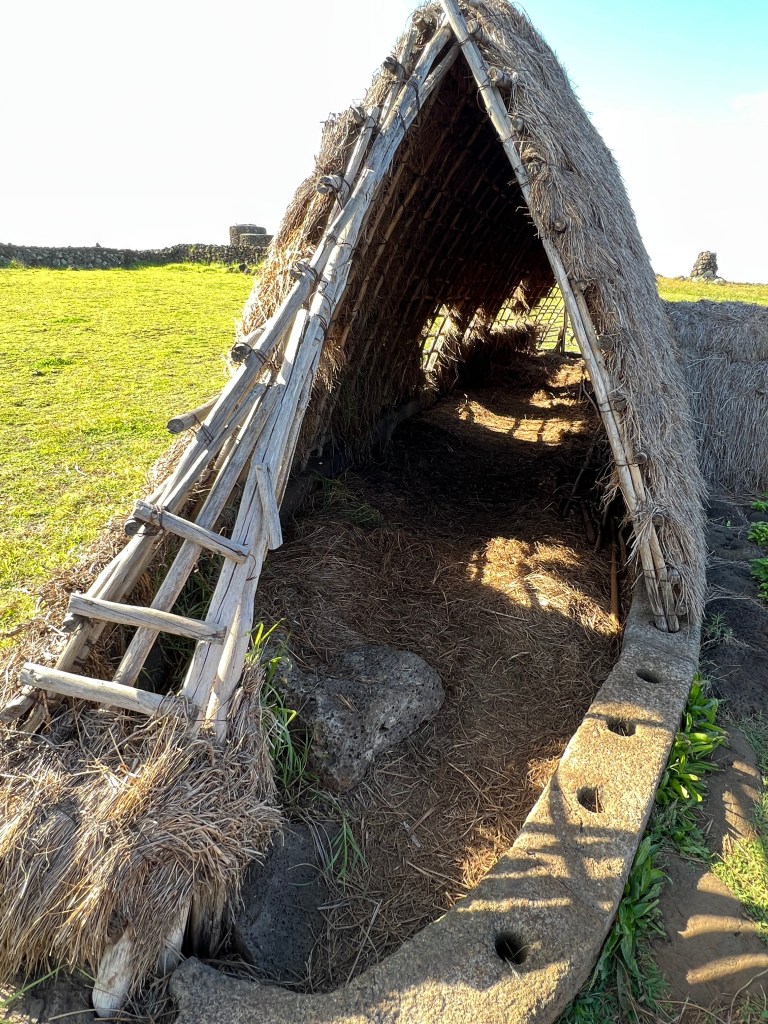
Ahu Akahaŋa – an unrestored Moai site and village made up of thatched type ‘boat houses’ made in the shape of an upturned boat. These were for the higher class, most people lived outside. There was also a solid looking stone structure – stone wall and roof with a small ‘entry’ blocked by a removable rock. Turns out this was the chookhouse They put the chickens back in of a night time and sealed them up for the night. There was a larger opening from which to collect the eggs. The important humans lived in the reed houses. They also made raised garden beds with rock walls to grow plants in. These are called Manavi.
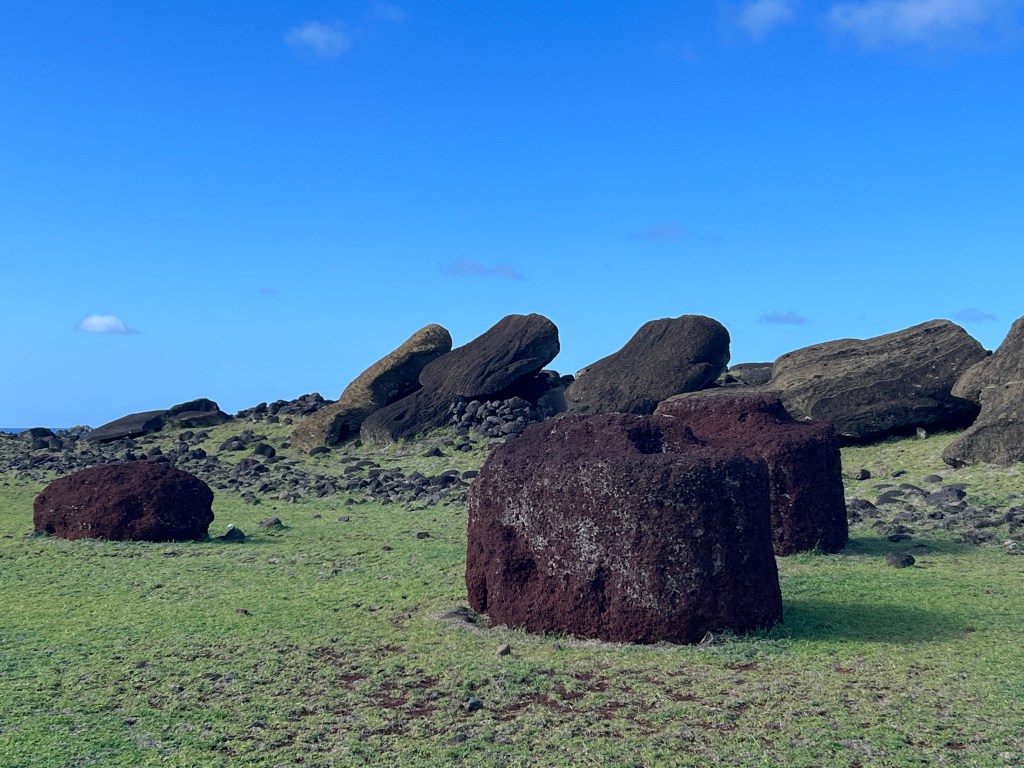

The Moai here are laying in all sorts of disrepair some have been pushed onto their fronts and some on their backs. This is thought to have been an attack from perhaps another village.
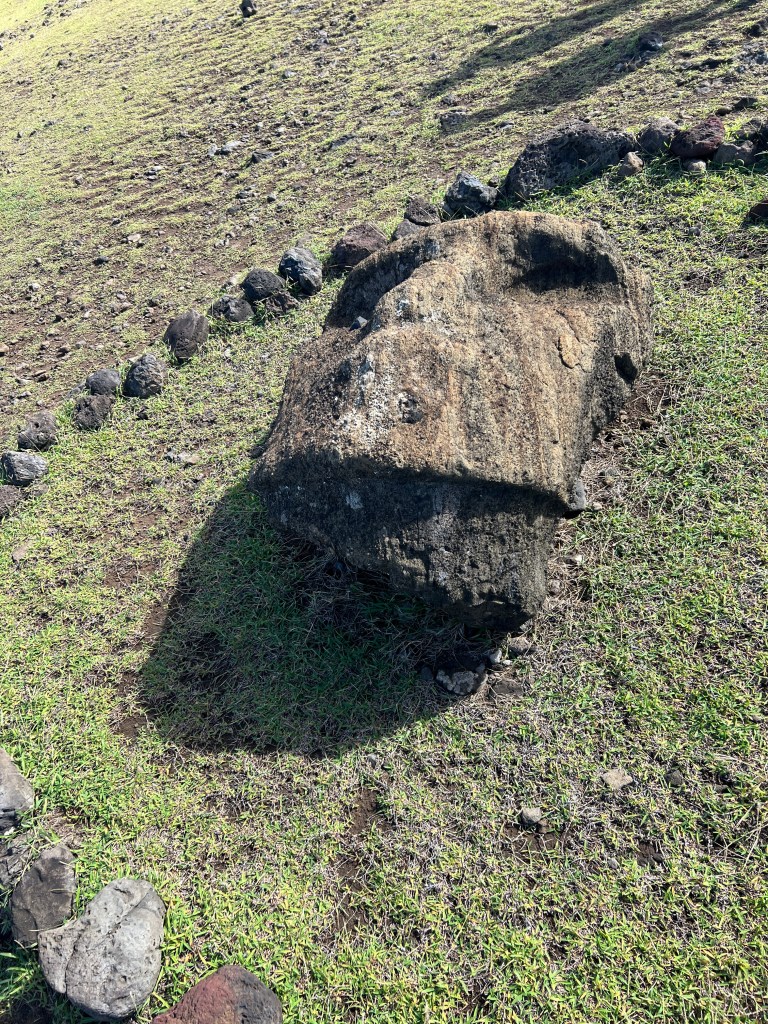
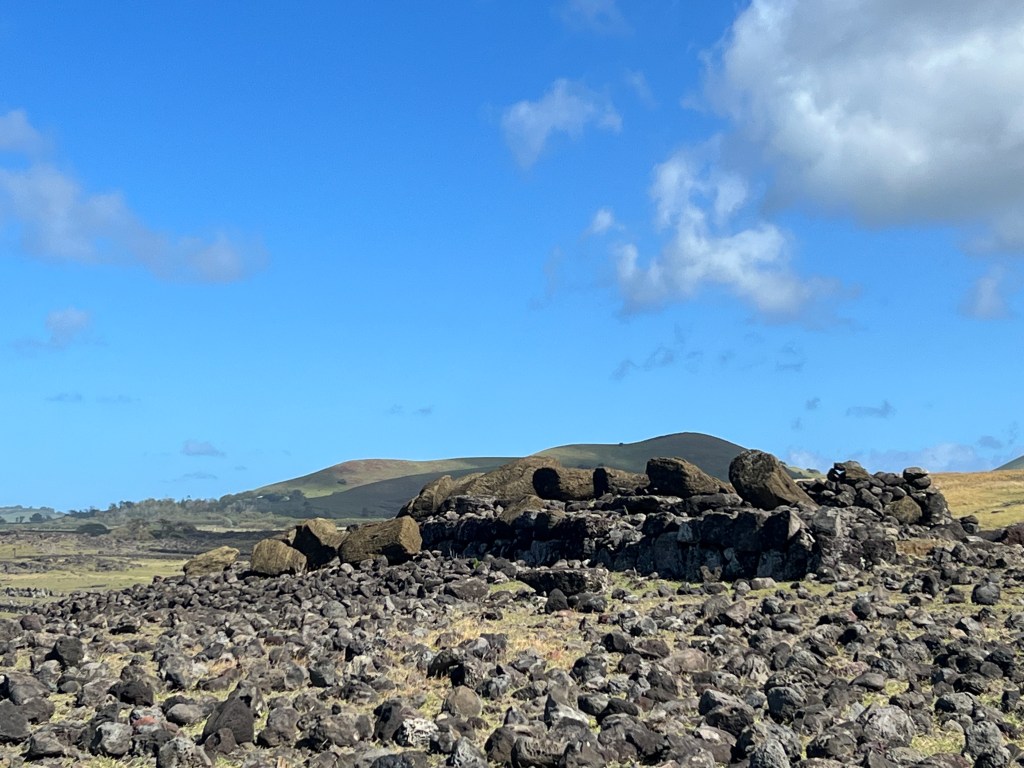
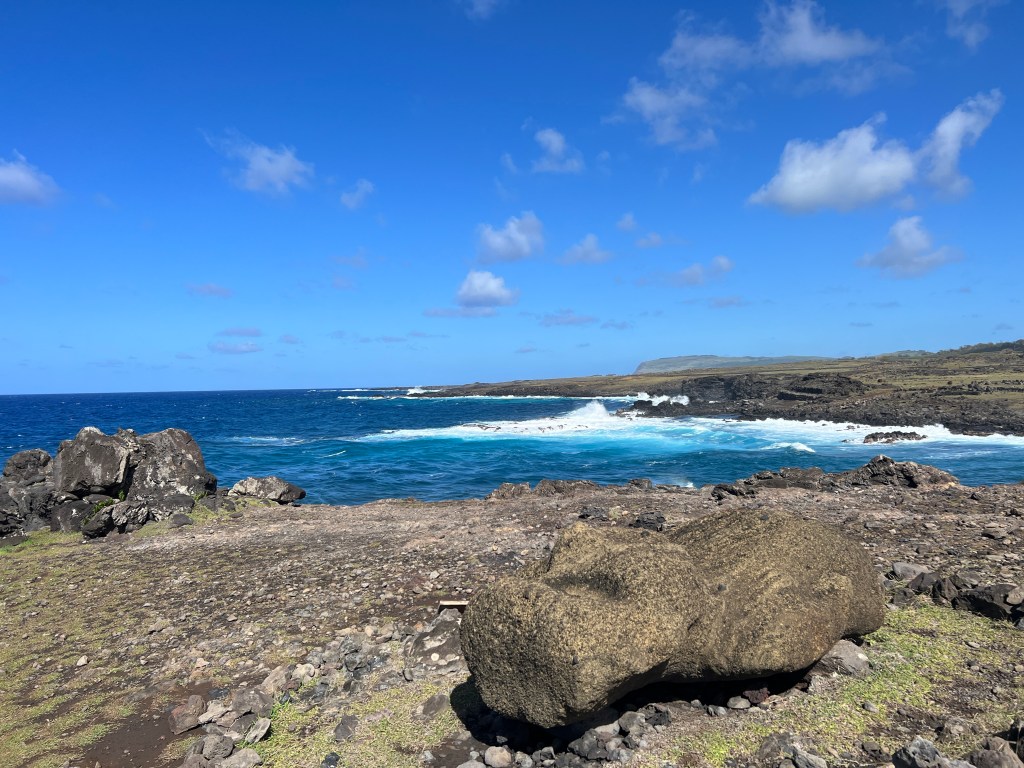
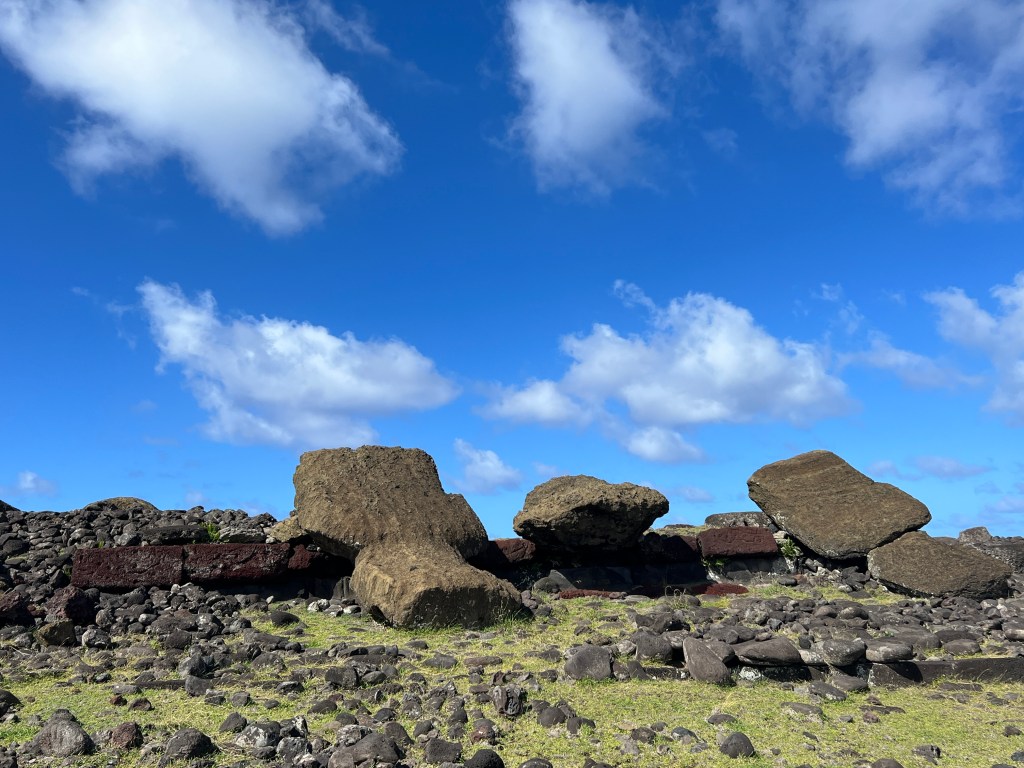
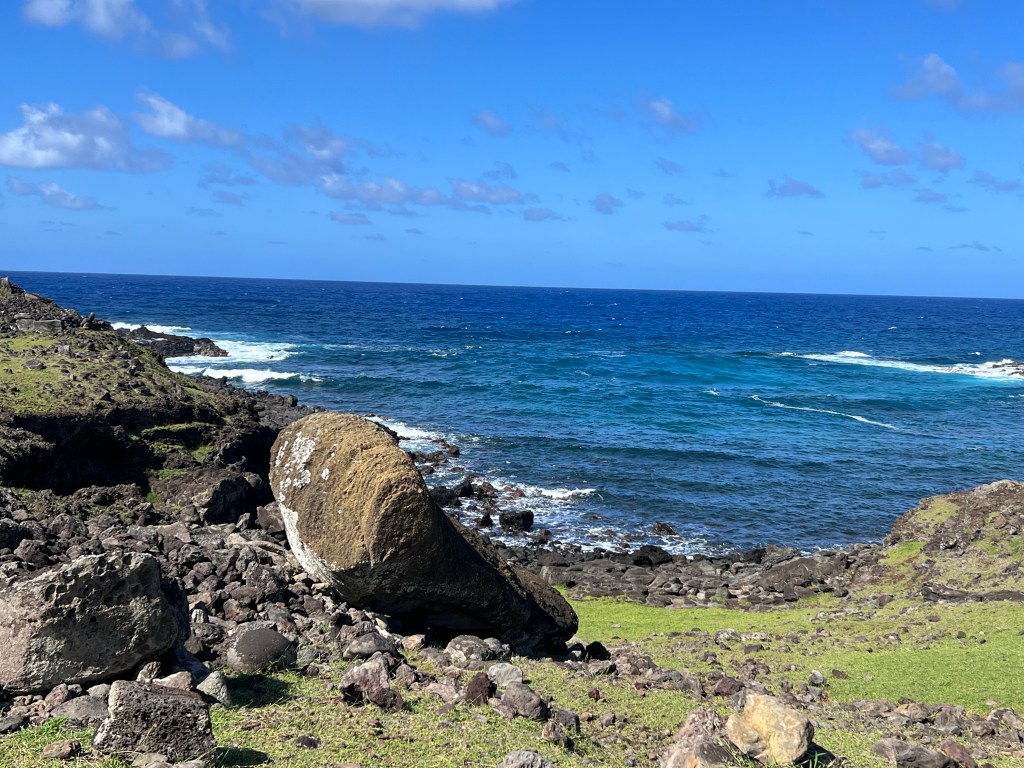
The legendary king Hotu Matu’a died here at Ahu Akahanga. Up the hill at this spot there is a cave where he is said to have been buried. Unfortunately the remains were dug up and sold and they don’t know where they are.
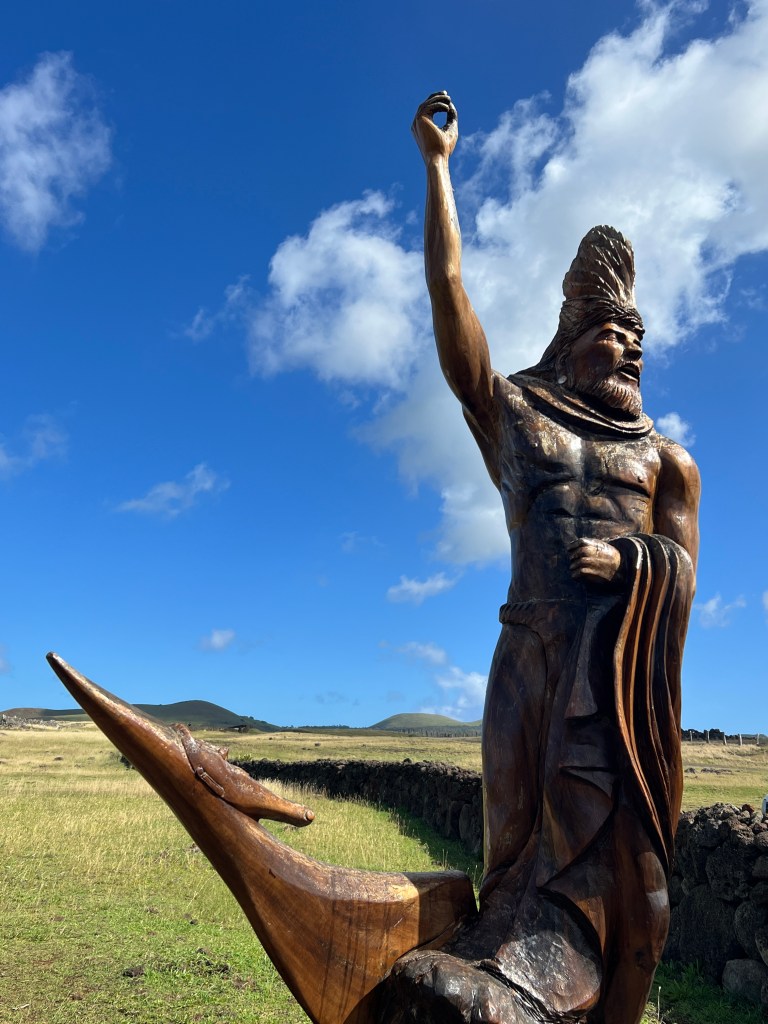
There are not many animals native to Rapa Nui. They have chickens, some insects but plants are all imported from elsewhere mostly from Chile.
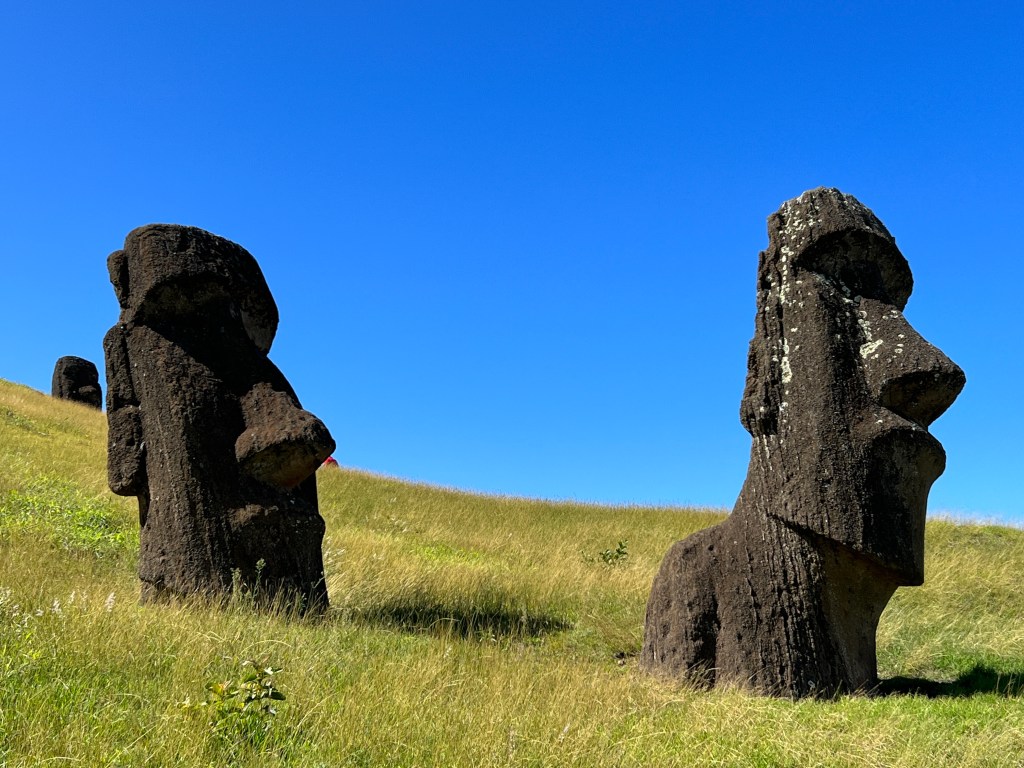
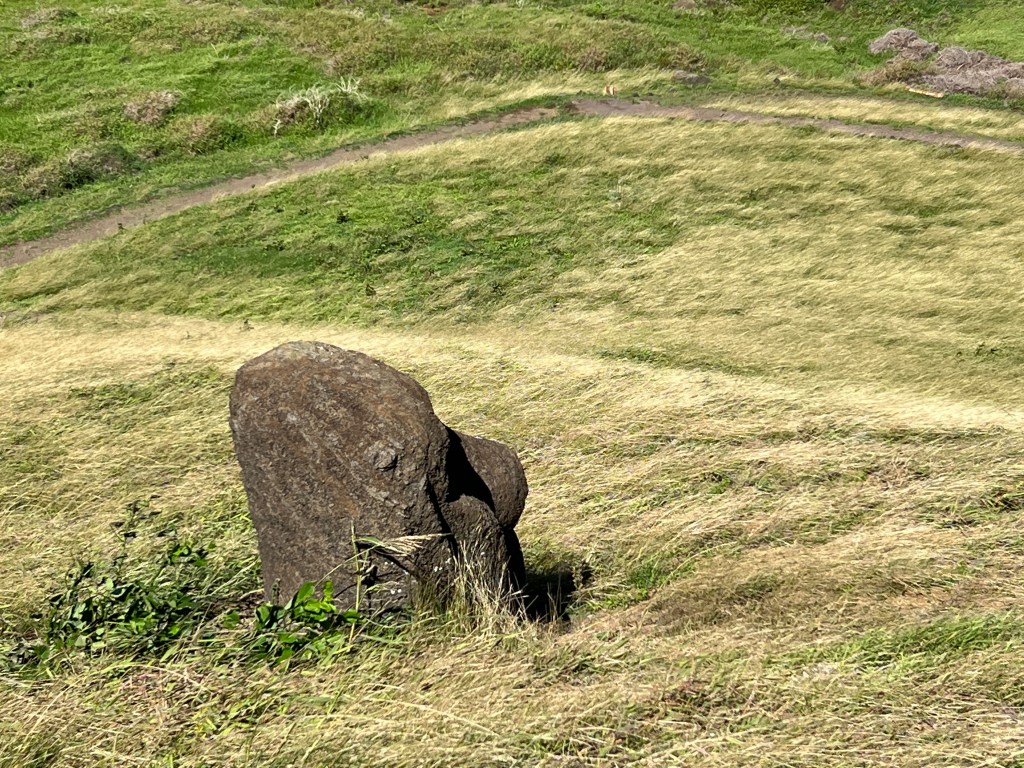
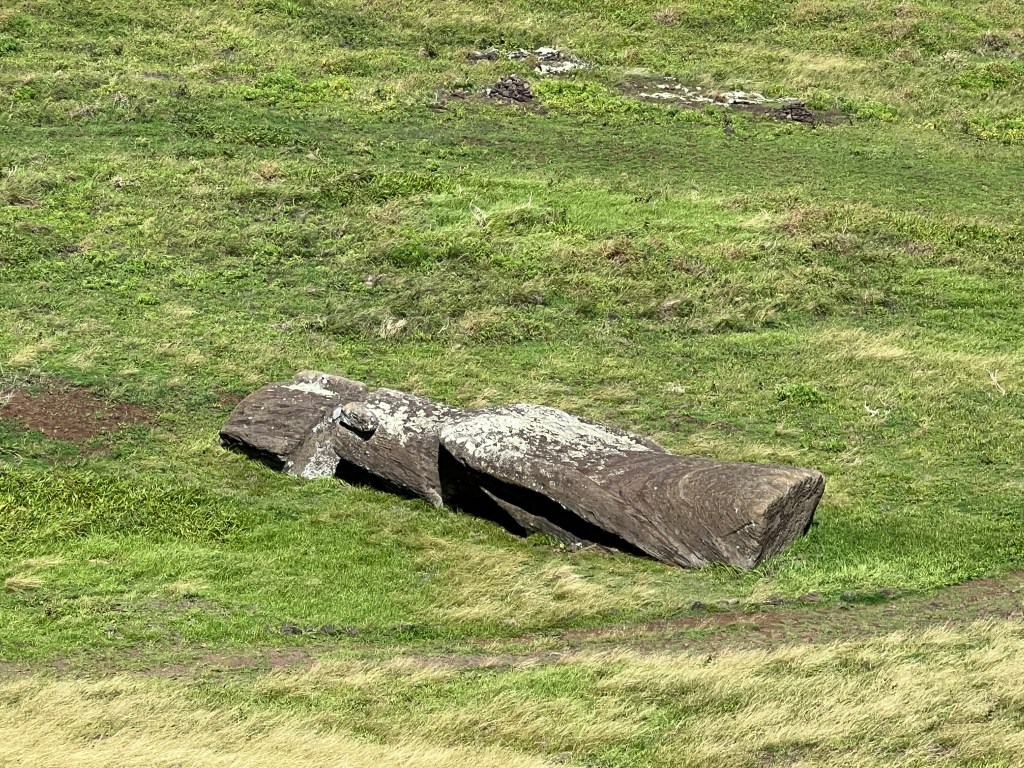
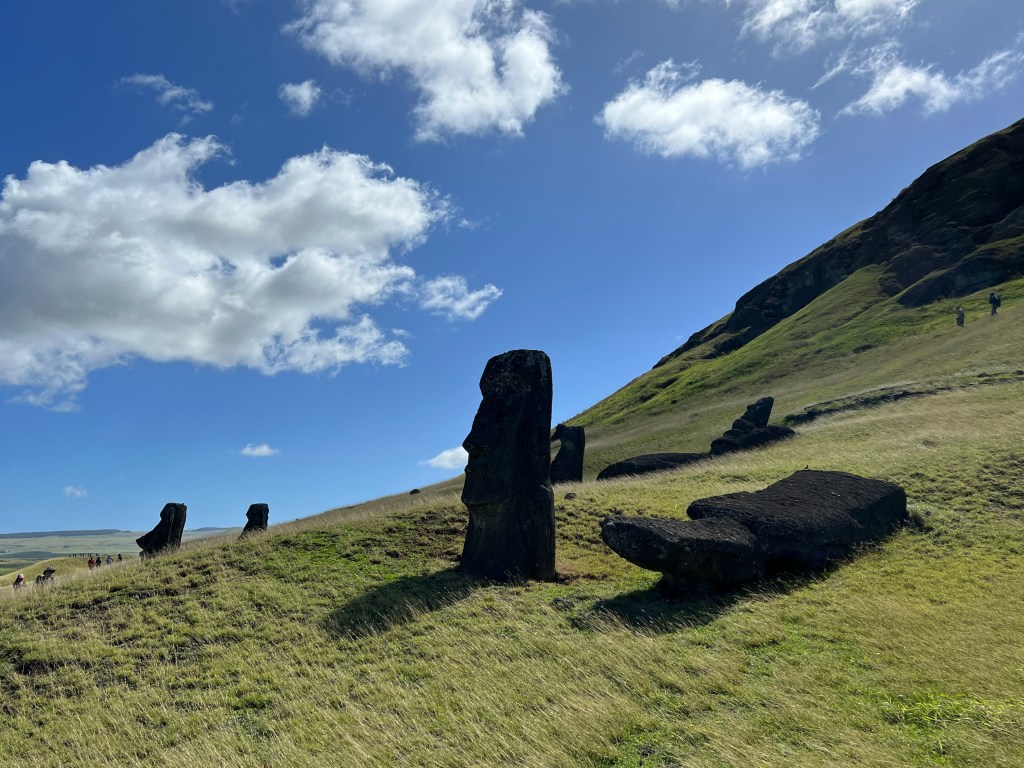
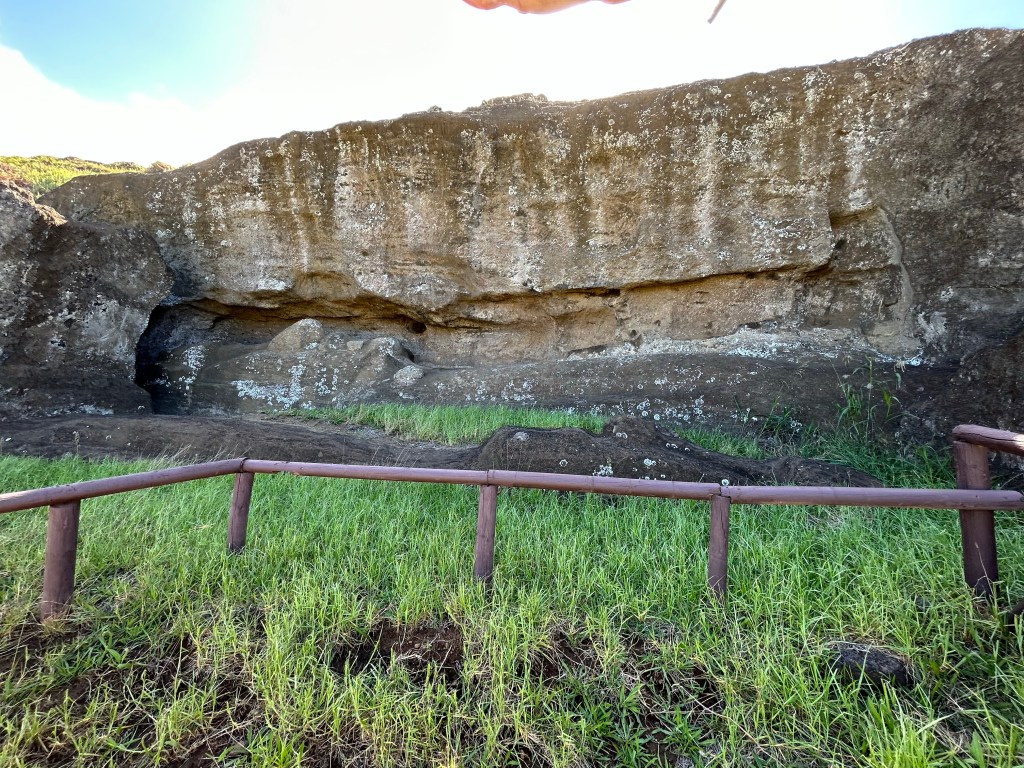
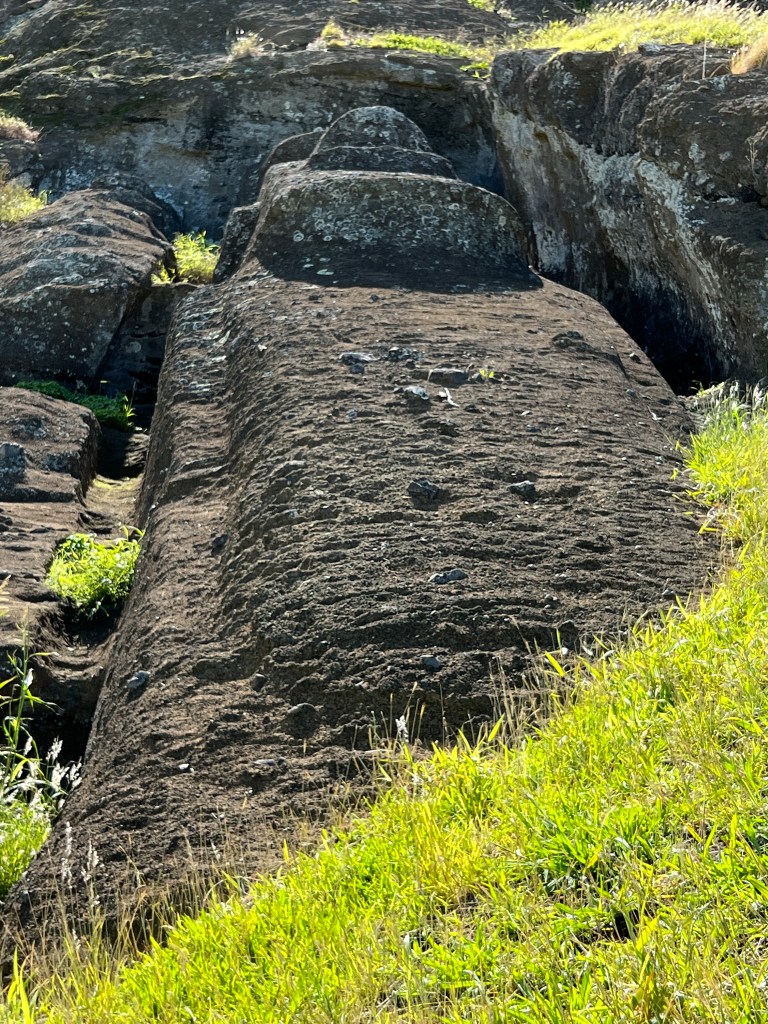
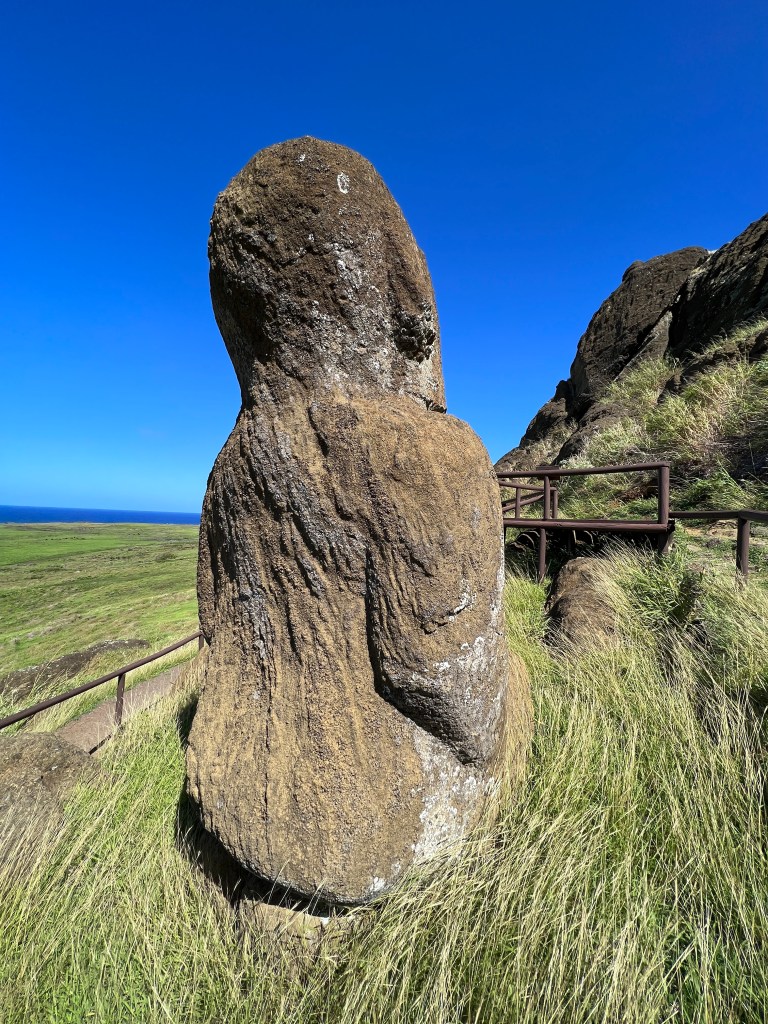
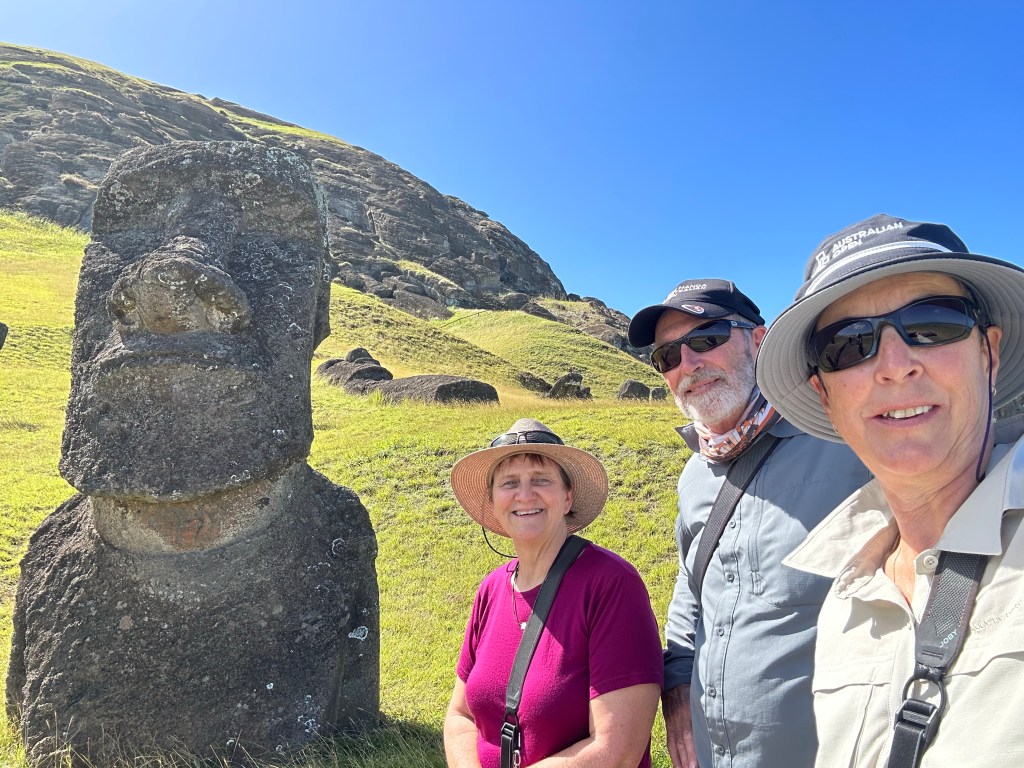
We then went to the quarry Rano Raraku, the quarry of the Moai, where almost all of the 1000 Moai from the island were made. This was an old volcano where the master stone smiths and their apprentices worked to carve Moai from the mountain side. There are hundreds (397) of Moai still here at the quarry in all states of completion. Many are thought to be left there as during the process a fault in the rock may have prevented completion or caused fractures. It is estimated that the work of carving the statues in Rano Raraku spanned more than 500 years, beginning around 1000 AD. and ending in the mid-eighteenth century.
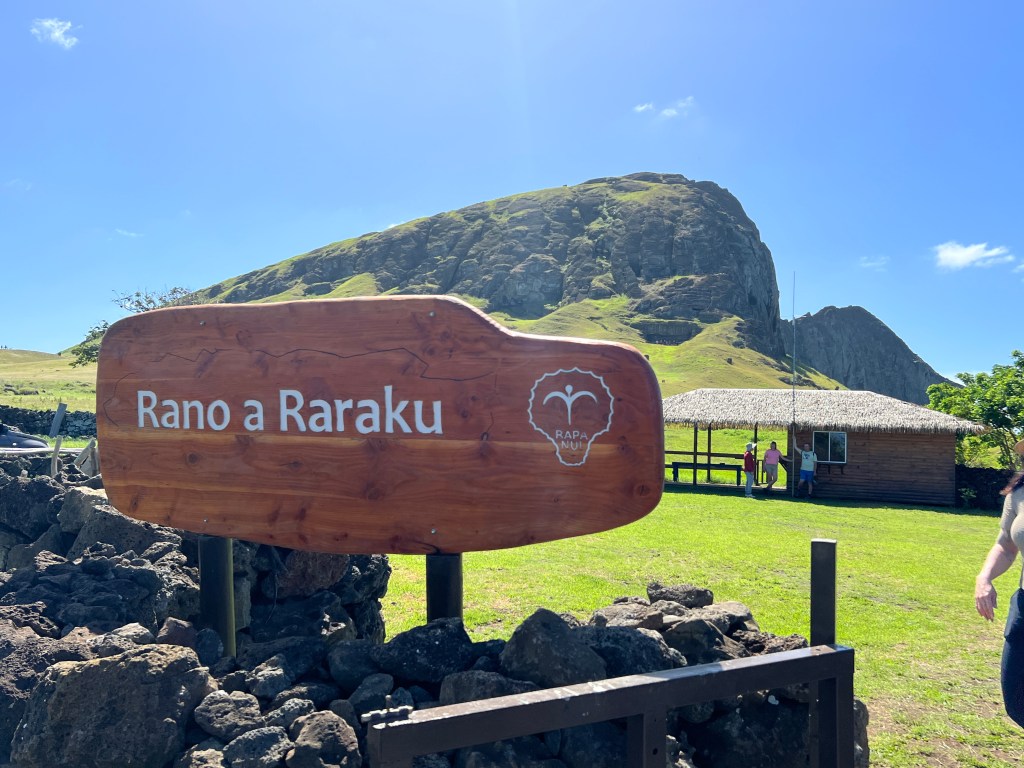


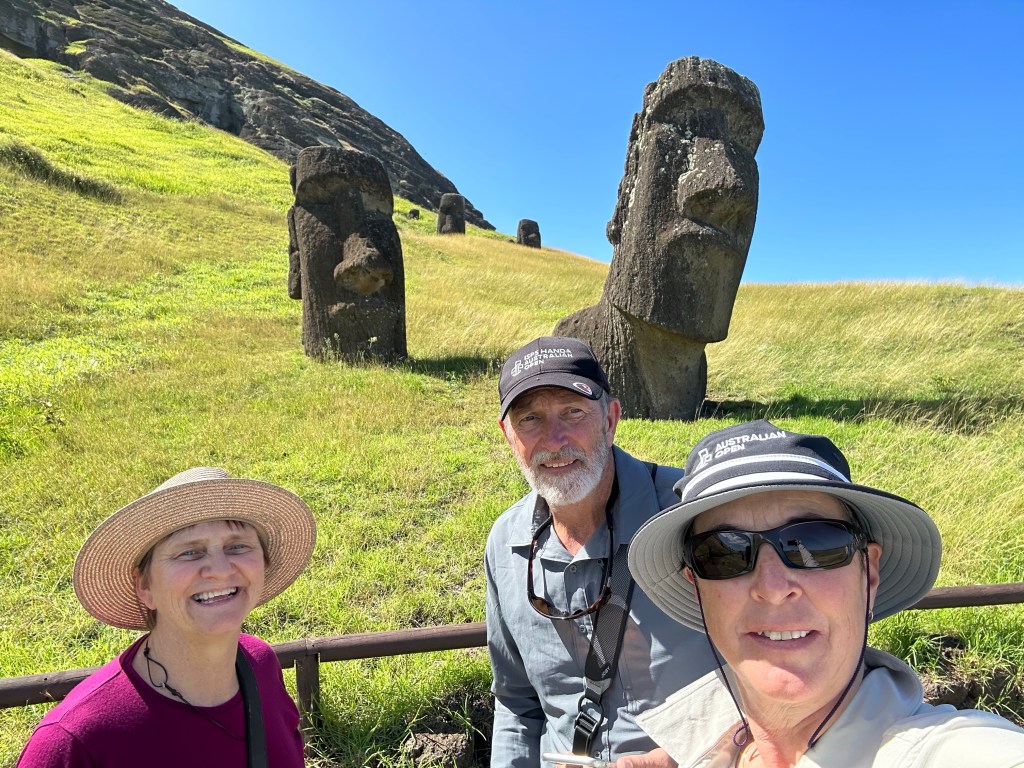

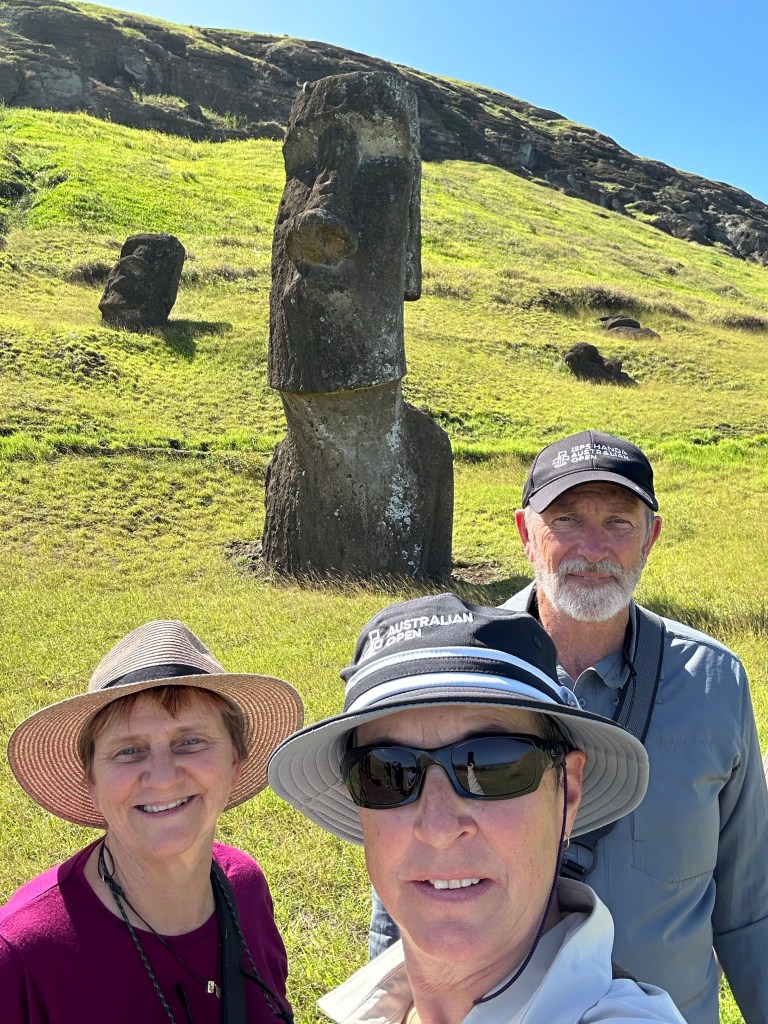
There were Moai standing in the hillside, heads, heads and torsos, lying or buried upright. Others are still in the process of being carved lying and still attached to the rock. This was an unbelievable place to visit and experience the Moai up close and wonder how this was at all possible all those hundreds and hundreds of years ago.
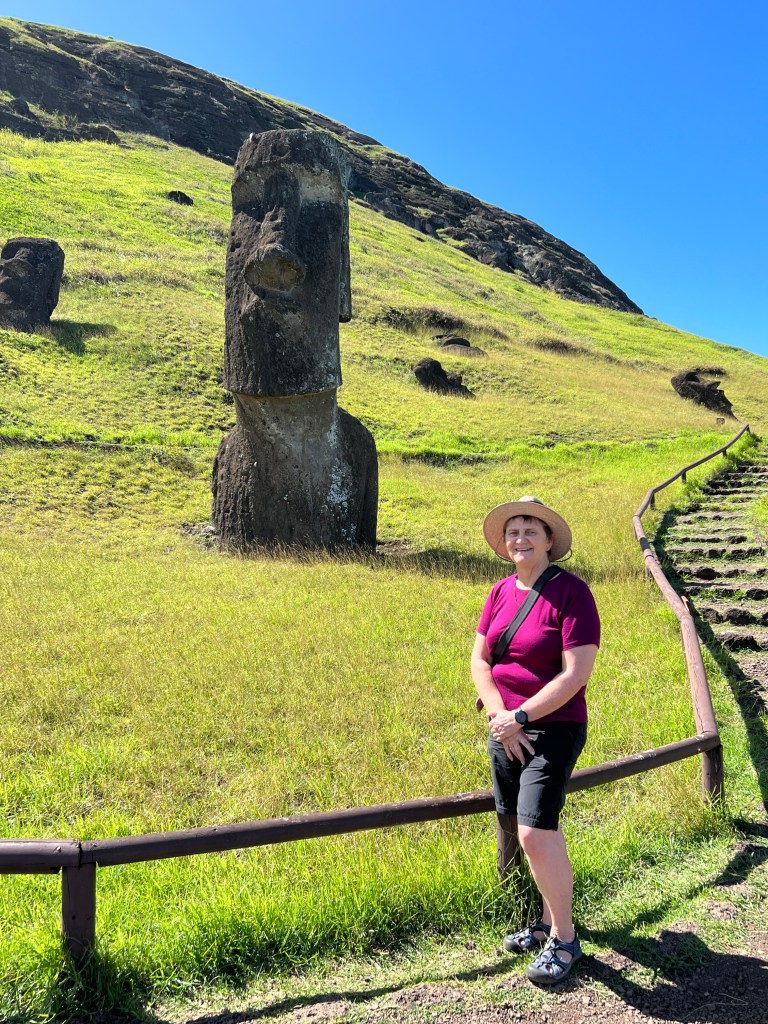
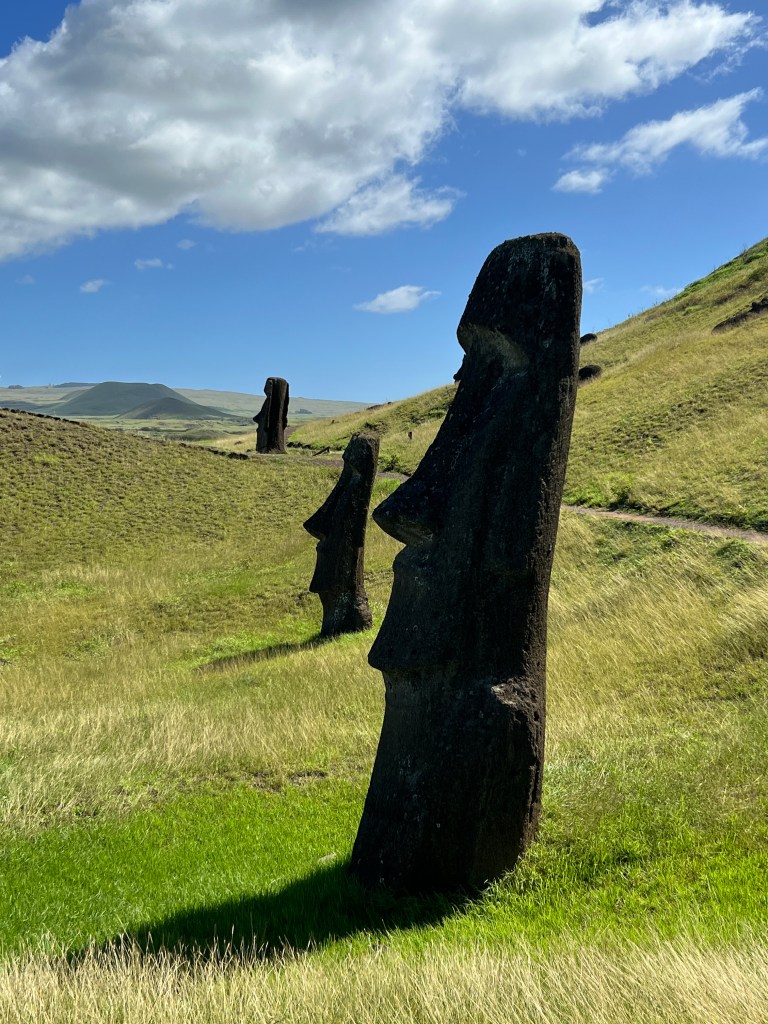
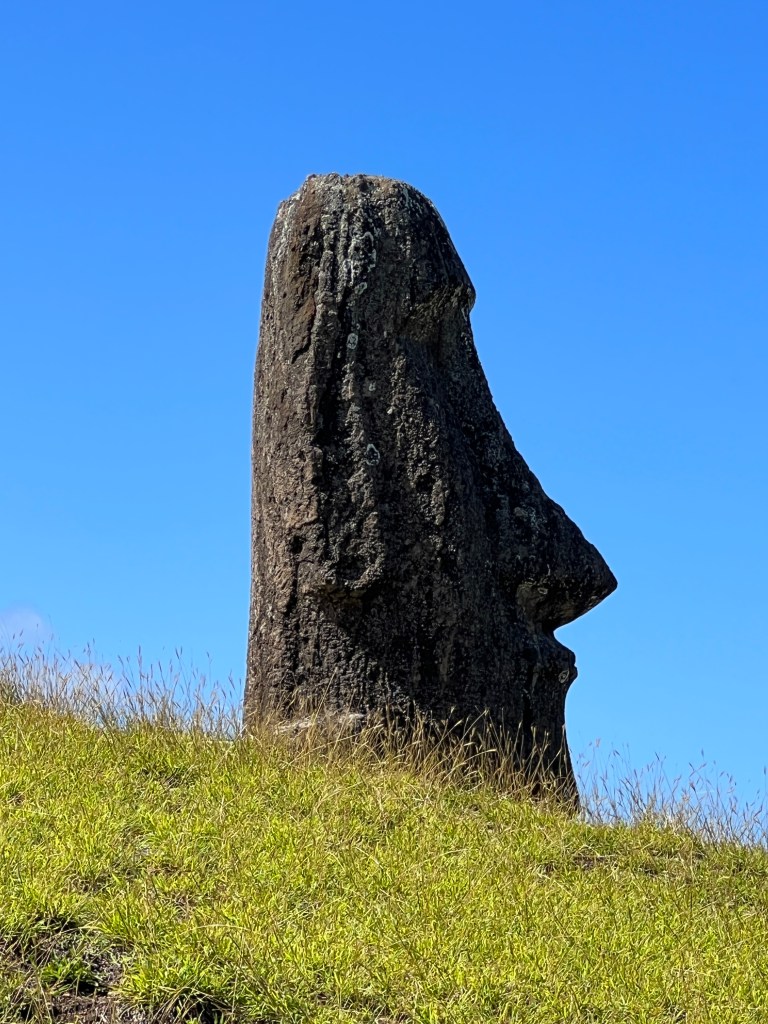
We dragged ourselves away and back onto the bus to Toŋariki where 15 Moai stand.
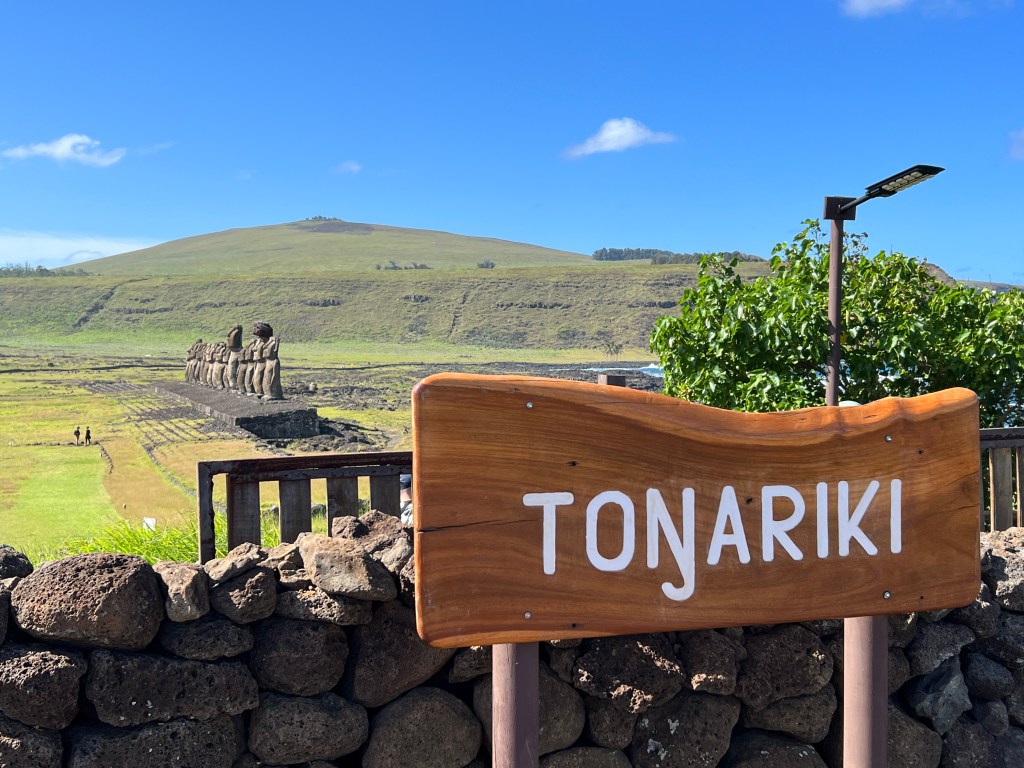
At the entrance to this site there is a Moai called the traveller. It went to Japan for display at a world expo and on the way back it was damaged, with two rope marks left across the torso. Due to the damage and their sincere embarrassment and concern the Japanese ultimately paid for the restoration of the 15 Moai and the ceremonial platforms and surrounds at this site.
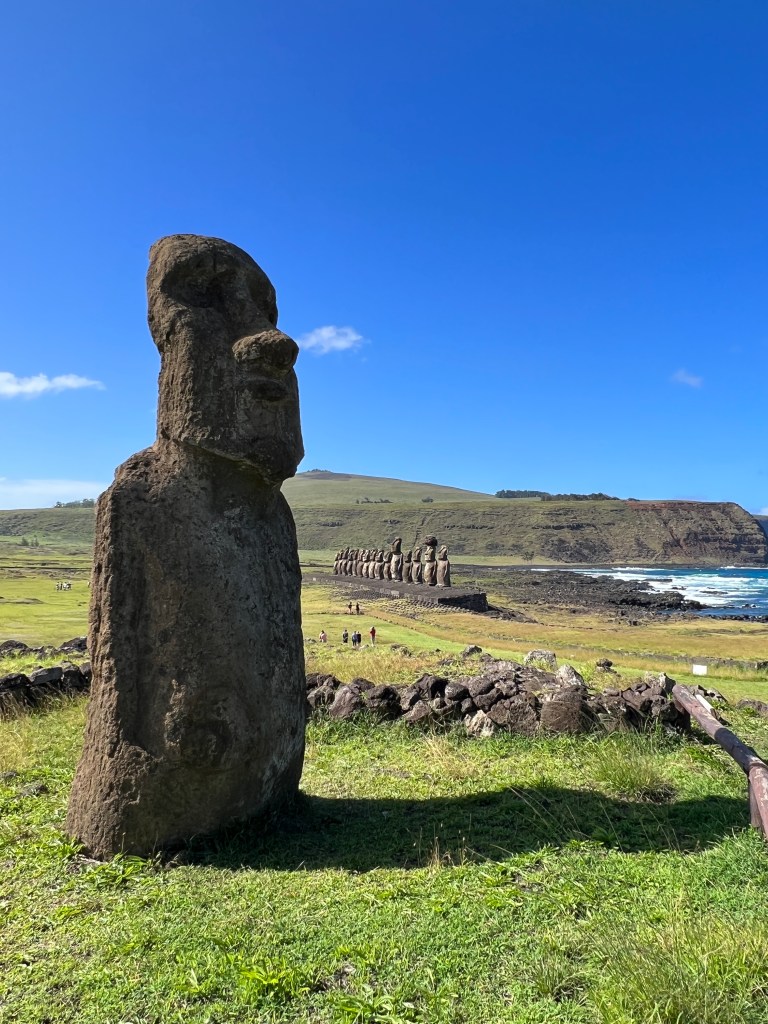
At Toŋariki there were originally 21 Moai but a tsunami in 1960 flattened the whole site. 15 were restored but the others were too badly damaged. Every Moai site has an odd number.
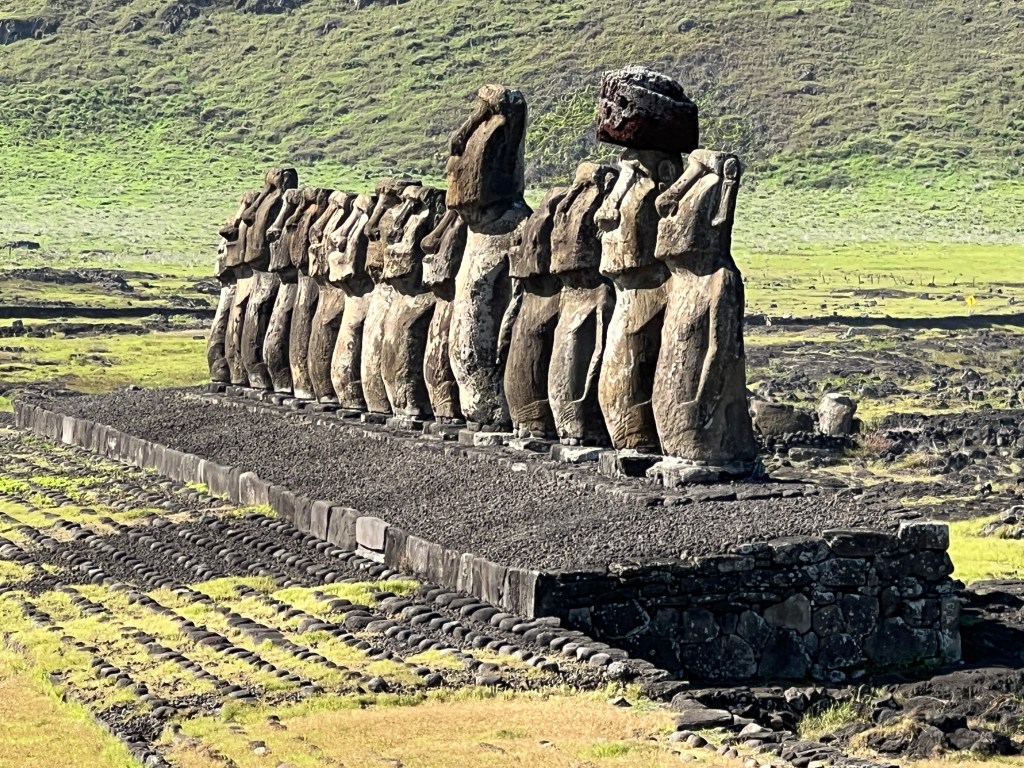
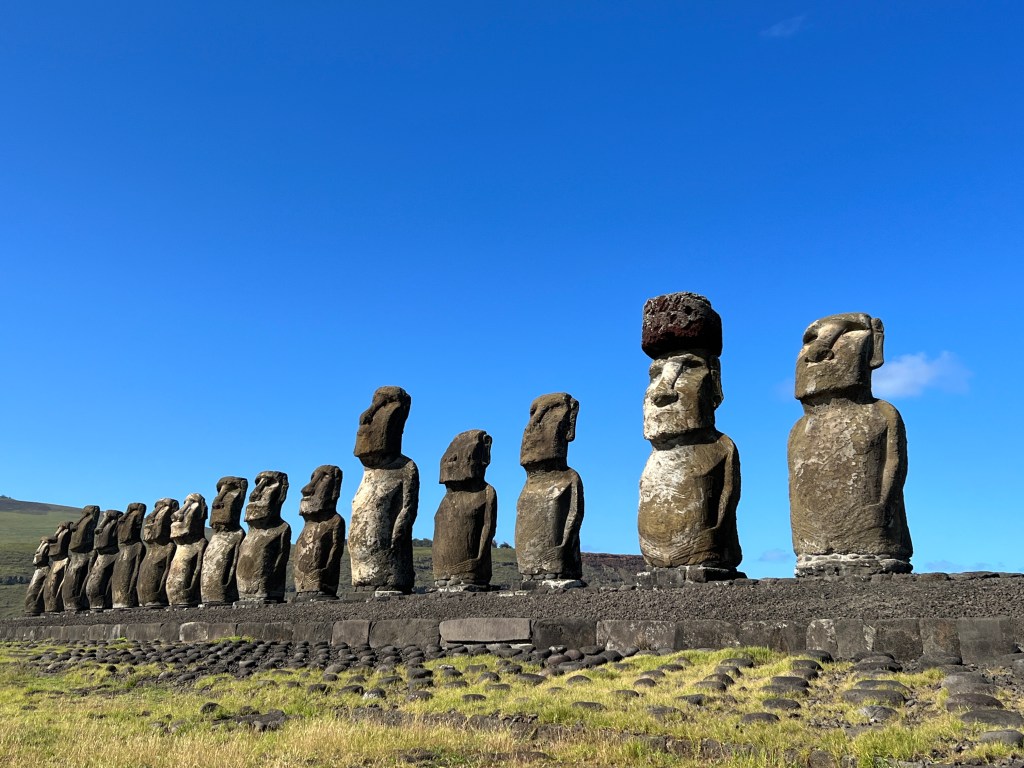
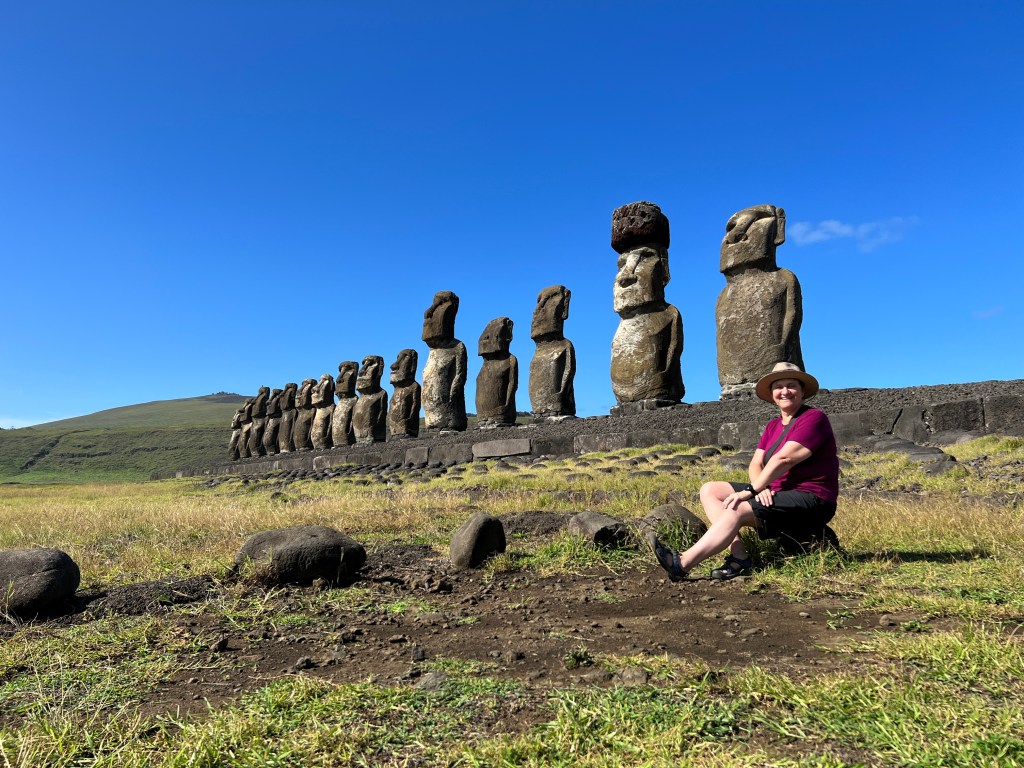
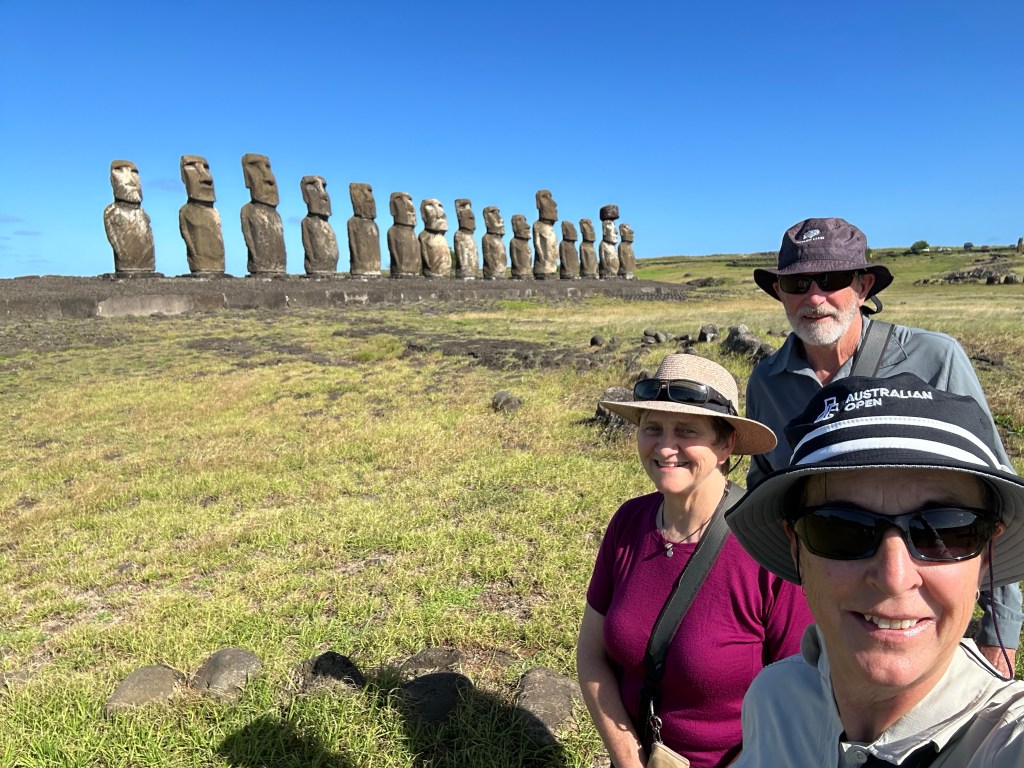
The Moai era lasted 800 years from 700AD. The people arrived in 500AD and started Moai about 700-1400AD.
There were 10 Tribes fighting over the limited resources of the island with a population of approx 10,000 people.
All the Moai rock is found only at Ranu Raraku.
Towards the back of the site there were some viewing platforms and we were advised by Luis that this is a good place to view the Moai at sunrise – we are booked in now to come back with the tour company in the morning.
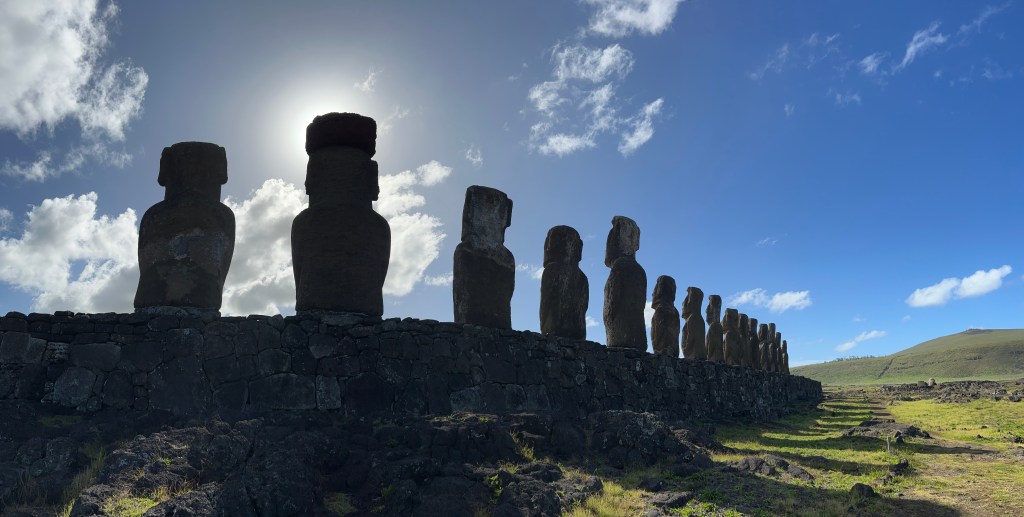

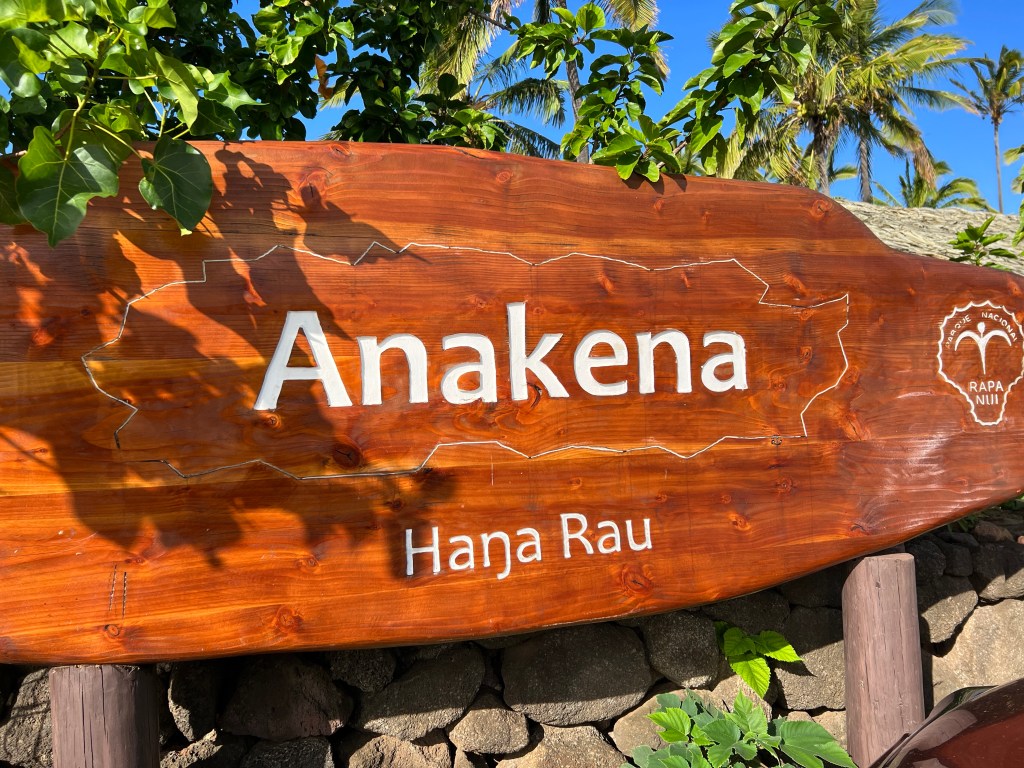
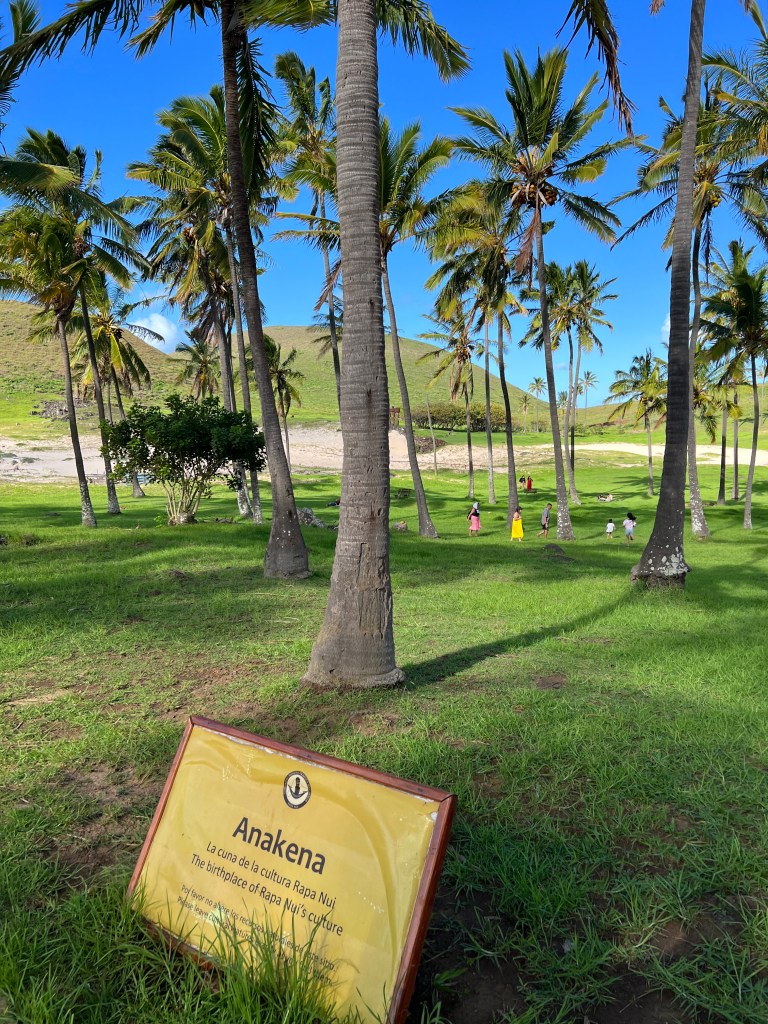
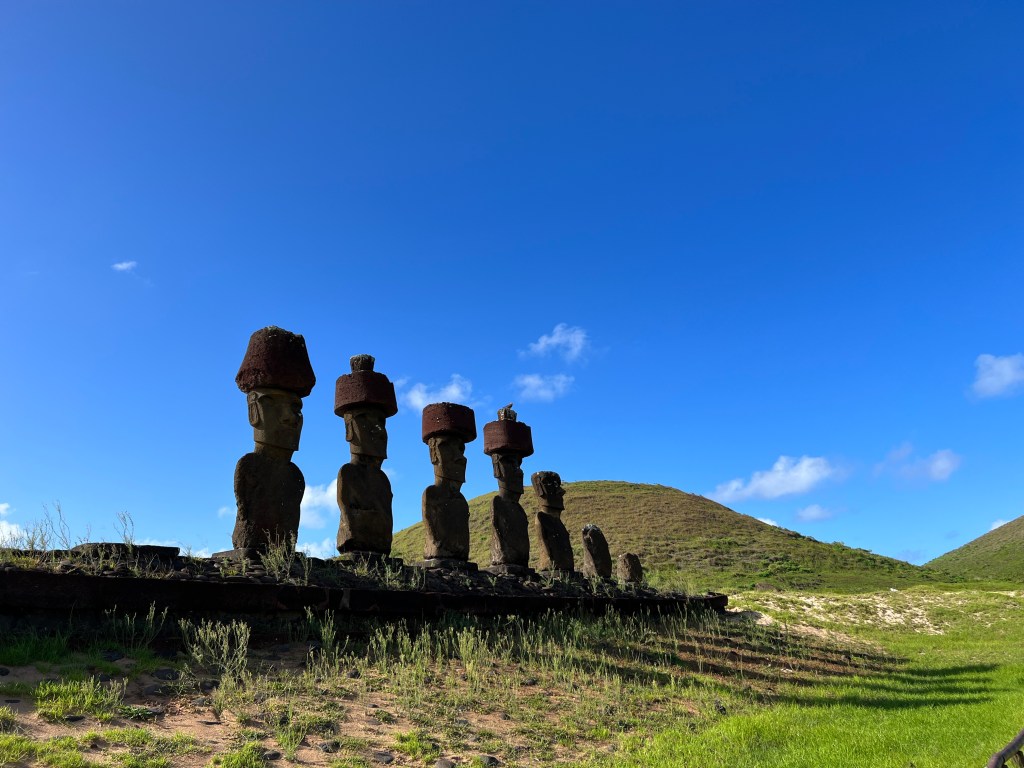
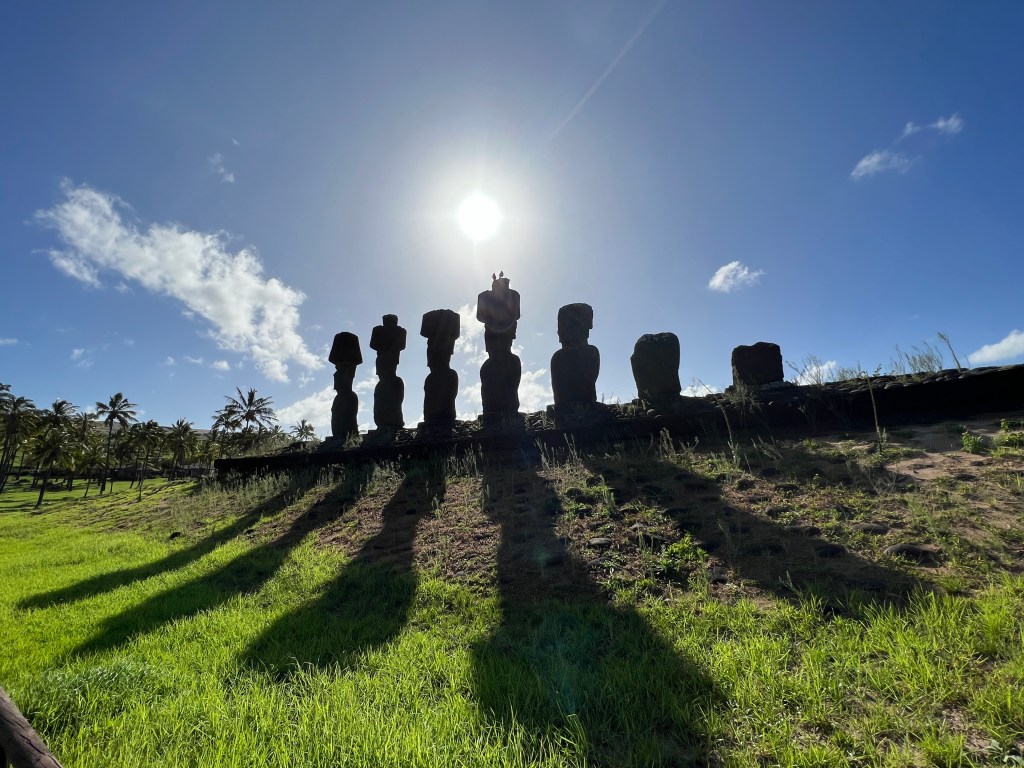
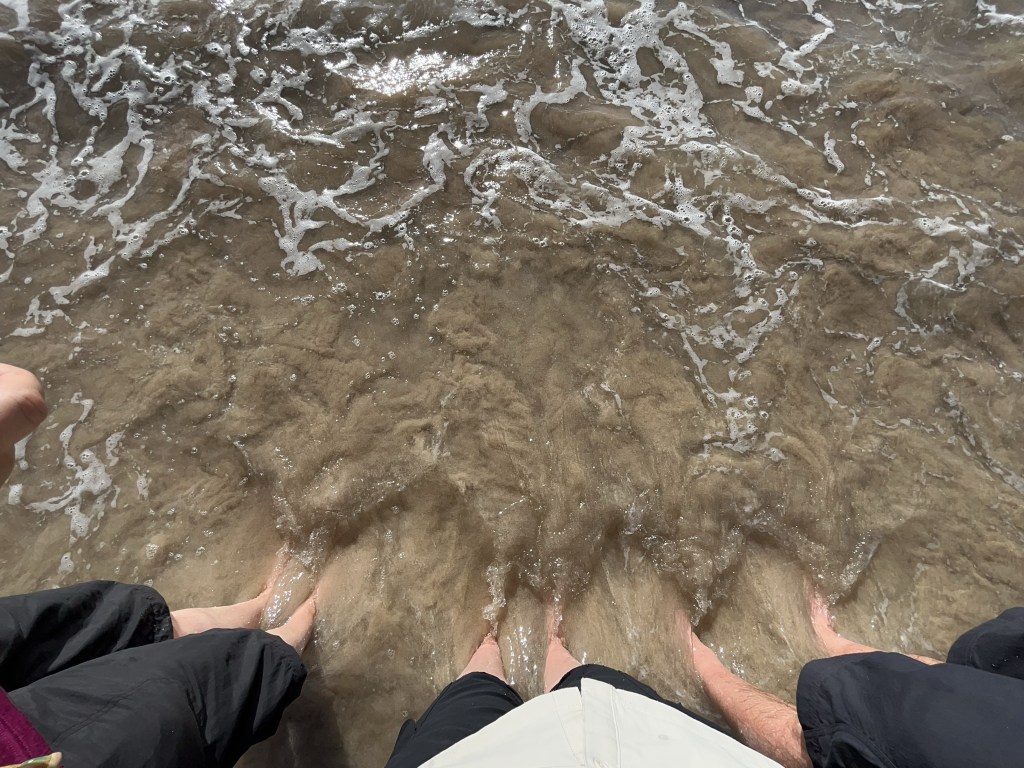
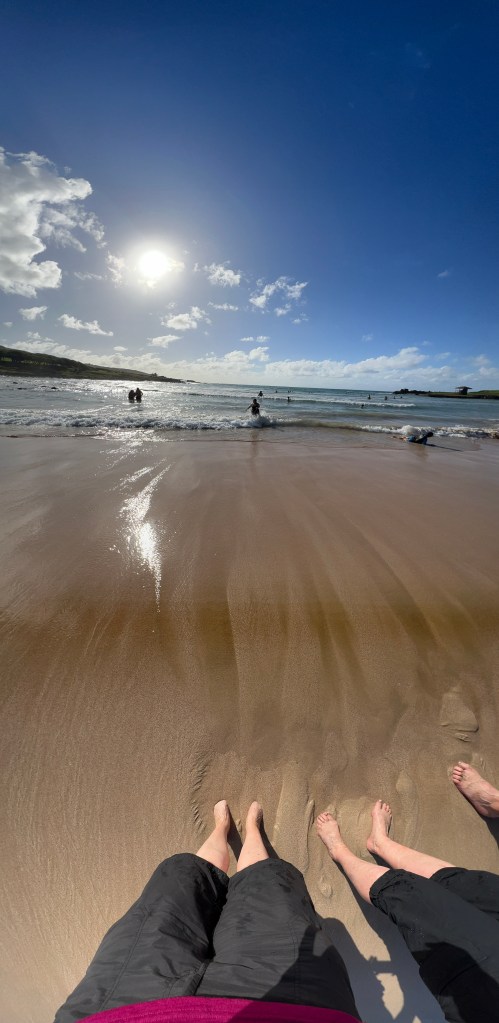
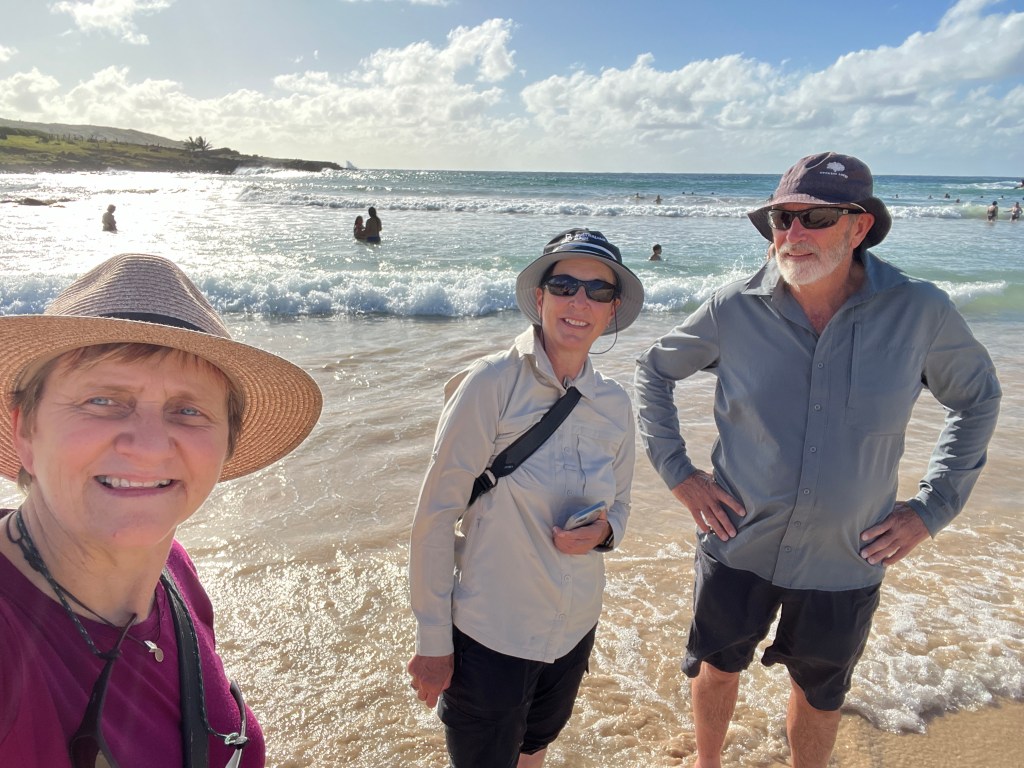
We once again had to be dragged back to the bus, to be taken to our final destination- the only sandy beach on the Island called Anakena for a paddle, some more Moai and a drink before heading back to the hotel, where we planned to view sunset at the Tahai Moai which is a short walk down to the coast from our hotel.

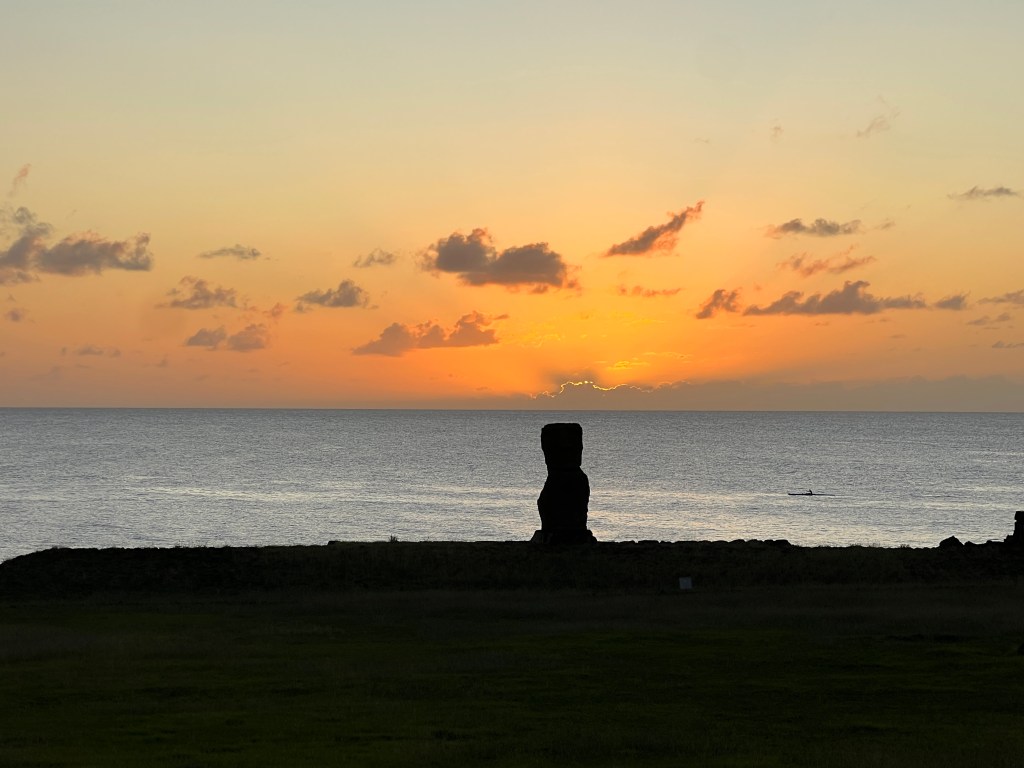
We made it, just, as the sun speedily dipped over the horizon. We were treated to the most amazing phenomenon whereby the sky was streaked with blue rays in a pinkish/purplish sky and seemingly radiating to or from the Tahai Moai.
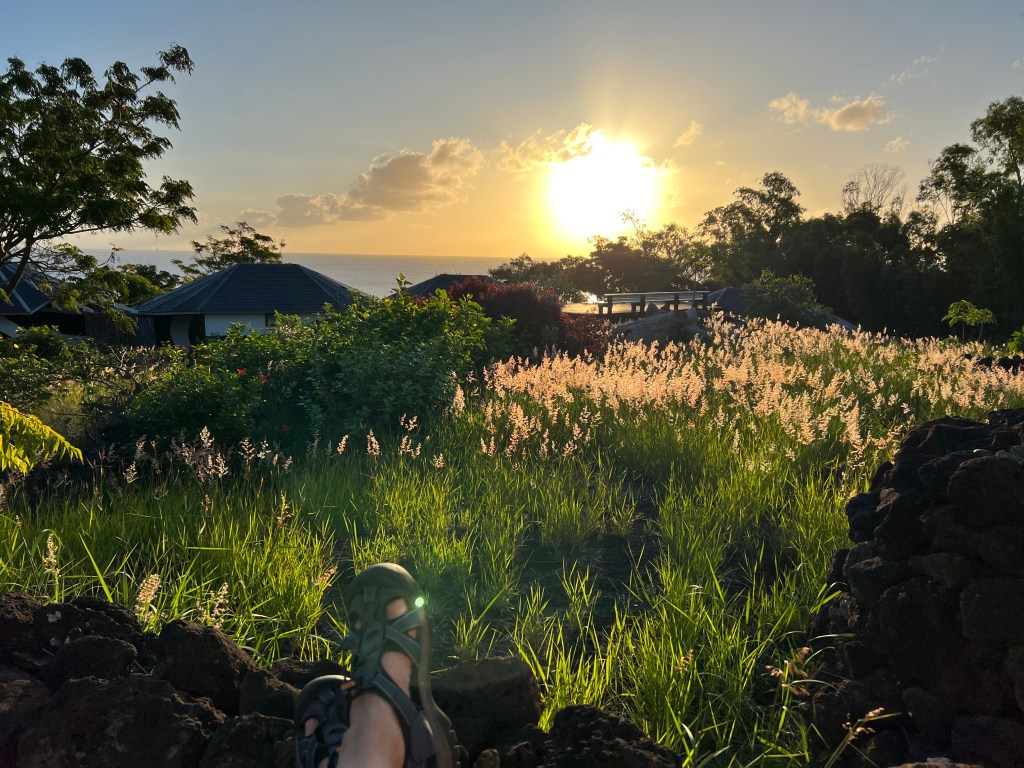
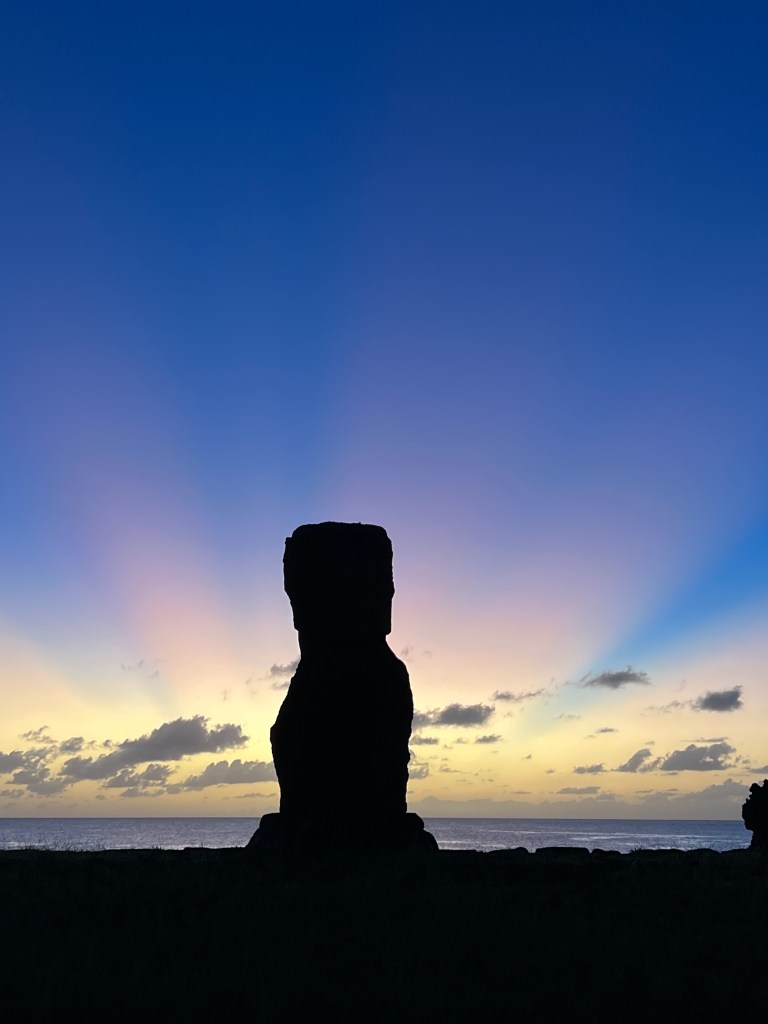
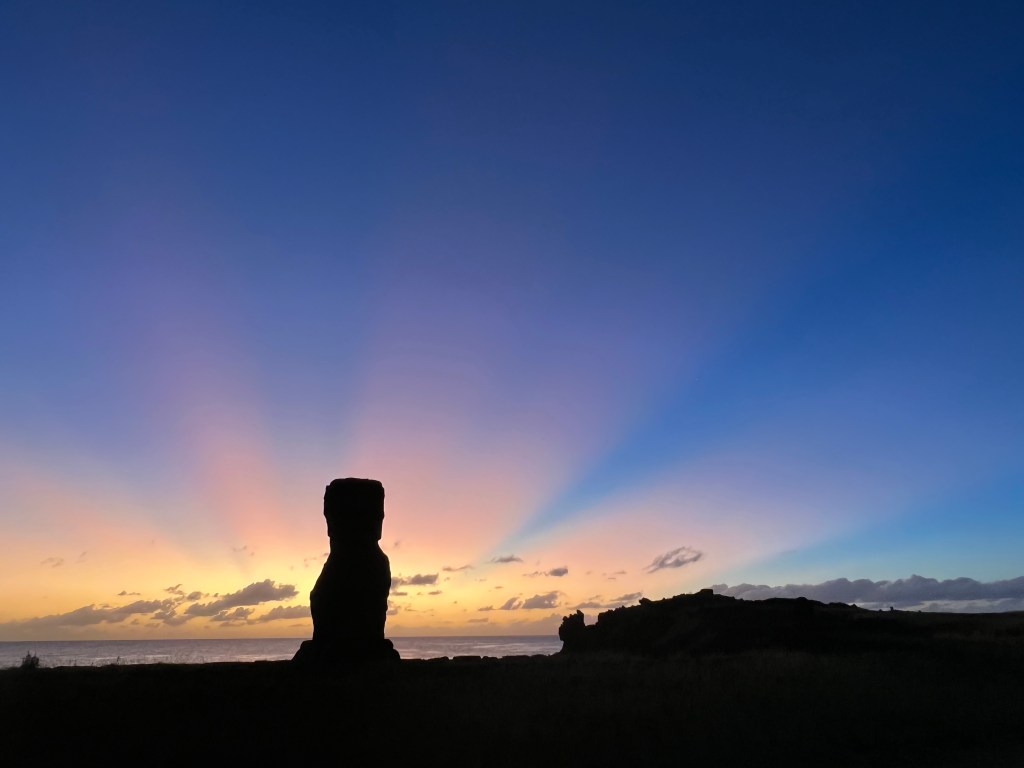


We waited for the daylight to totally disappear and then walked into town for tea.

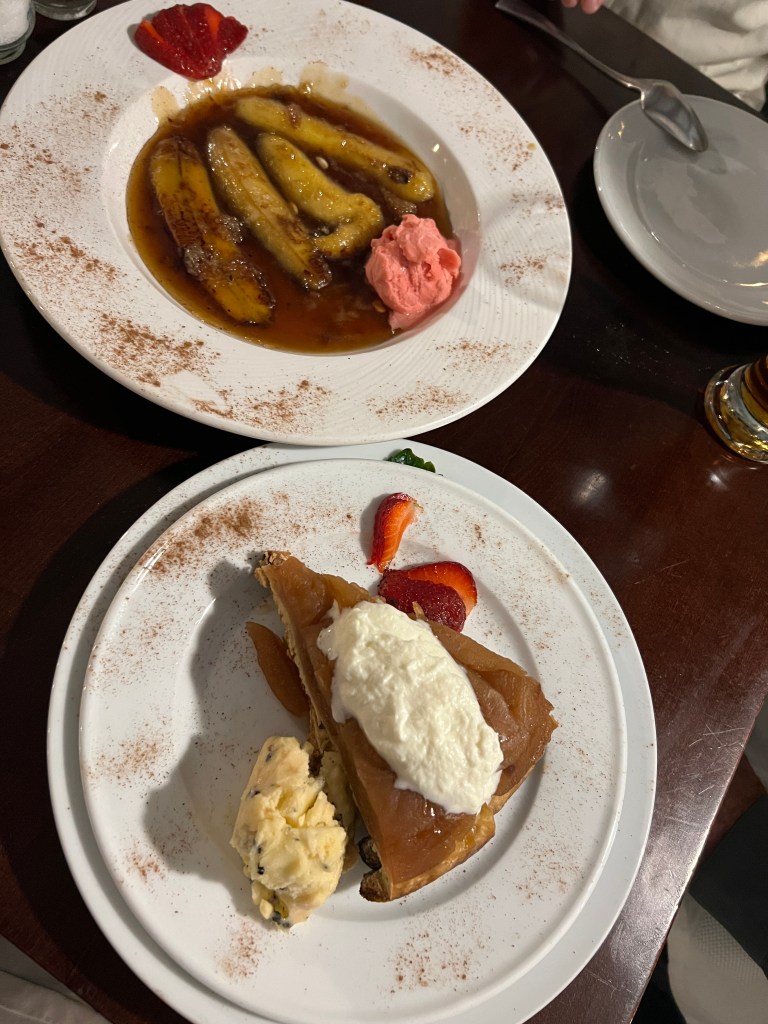
Unbelievable day.
In Napa Rui language we’ve learnt two words. They mostly speak Spanish but a couple of words we managed were. Thank you = Maruru and Yurana= hello
 Travel adventures with Nicola & co.
One response to “Mary’s birthday. Rapa Nui Full day tour – 19th April.”
I think this is so incredible. Glad to finally read about it x
LikeLike