The views from our rooms are pretty damn good. Sun is getting up late around 7.30-8.00 and we get some good light. There has been a full moon too which looks speccy hiding behind and peeking out from the clouds. Clouds here are also amazing to watch, lots at different levels and changing and moving all the time.
Collected today on time by Ignacio in a small bus. There are 5 other Spanish speakers and us and it’s a small bus all the way.
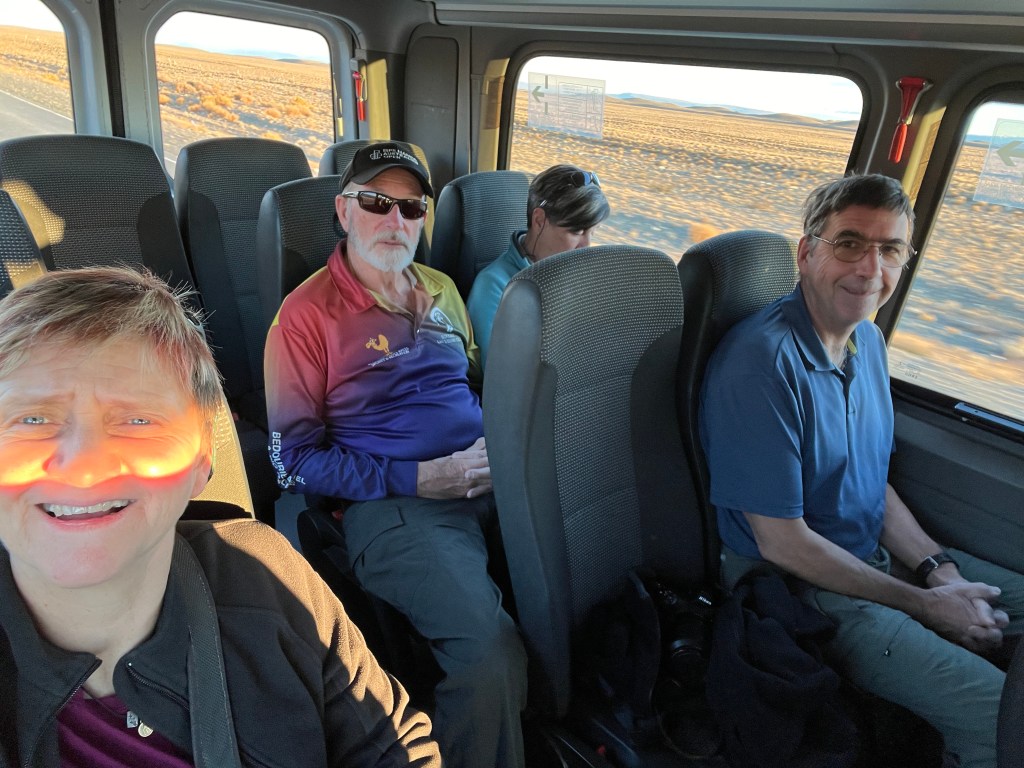
Today we are off to El Chalten, a village some 220kms away and about 3 hours travel.
Ignacio is very very good. He intersperses English and Spanish, rather than a whole lot of Spanish followed by a much shorter English version. He explained all about the Lakes – Laguna Argentino and Laguna Viedma. We learnt about the land, its farming, desertification, the estancias (farms) and a move from lamb to beef and guanaco. We saw plenty of guanaco and quite a few of the ‘rare?’ ostrich which is a Choika or lesser rhea.
The landscape could have been outback Oz in some respects, though the mountains and hills and boulders left in the middle of nowhere by glaciers of the past don’t match with outback Oz. Also the history of exploration in the area. Perito Francisco Moreno is a real cult hero figure out here, but there were others who also explored and named lakes and mountains around the place.
We stopped for a bano (toilet) and cafe break at La Leona estancia and hotel. Here we tried Torta Frita (pastry cooked in pig fat) we shared one with our coffee/hot chocolate. The hotel is in the middle of nowhere on the fast flowing La Leona river. They had solar, wind and water sources of power.
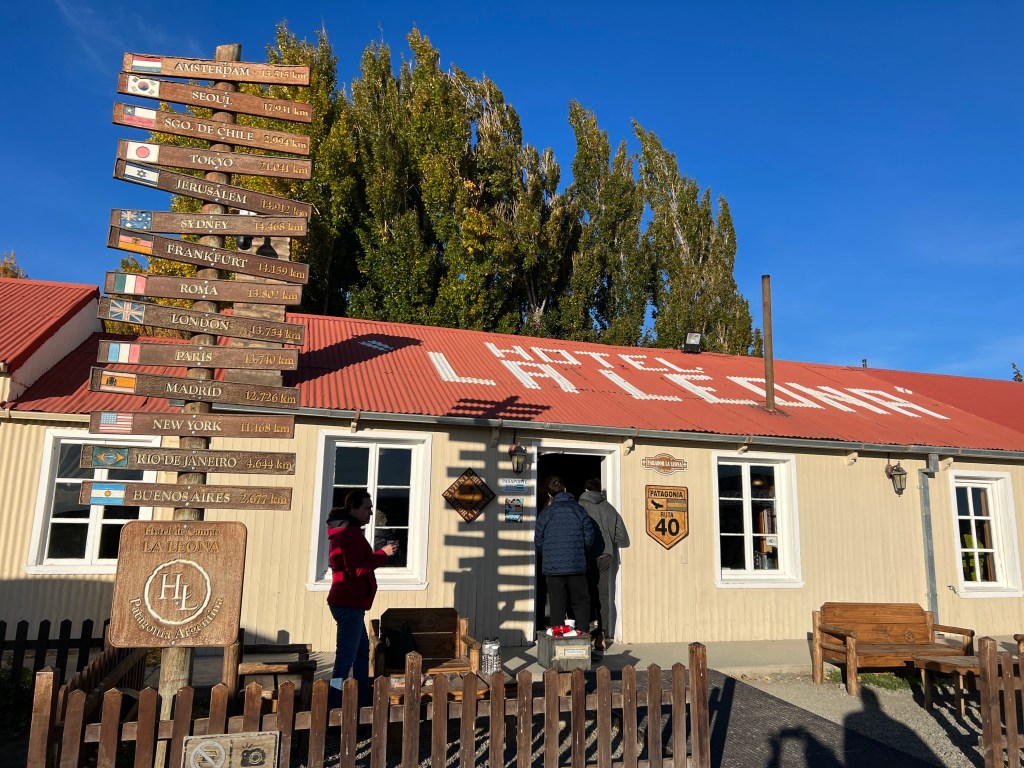

The torta was pretty good – glad it was only a quarter though.
Santa Cruz River is one of the most important in country. Named by Magellan who found the river on the day of the Holy Cross.
Darwin wrote that this area was a “hell of a desert” and you can see why the hilltops which are formed by glacial activity are devoid of trees and look like nothing grows on them. They are actually the silt deposits from ancient glaciers.

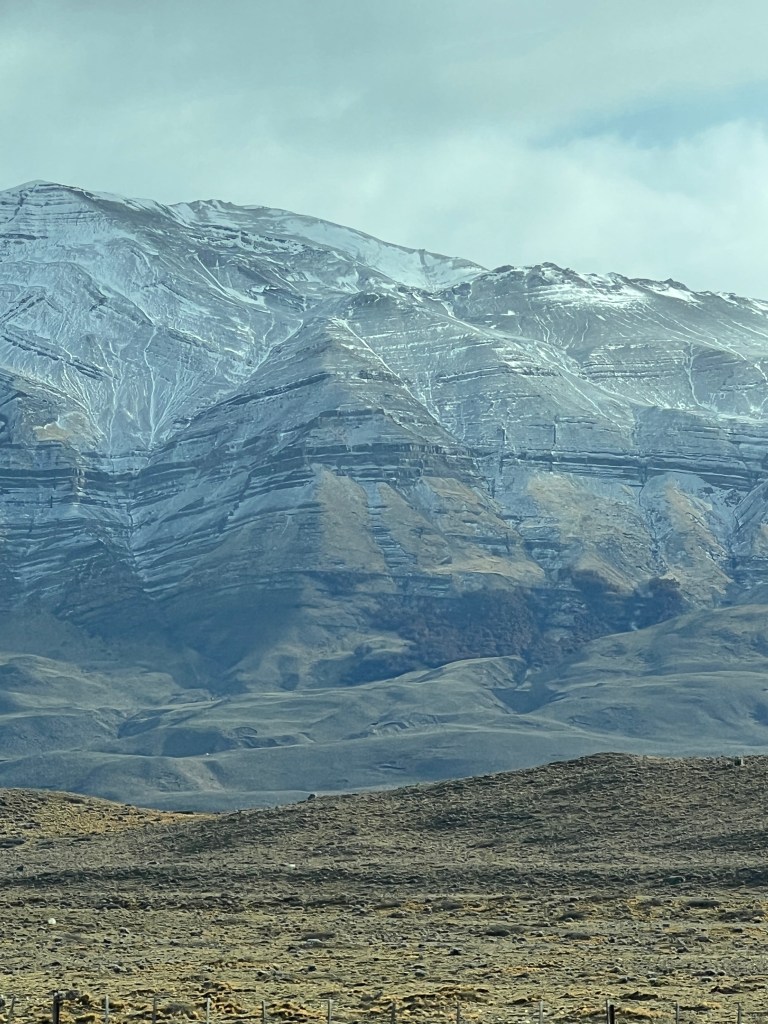
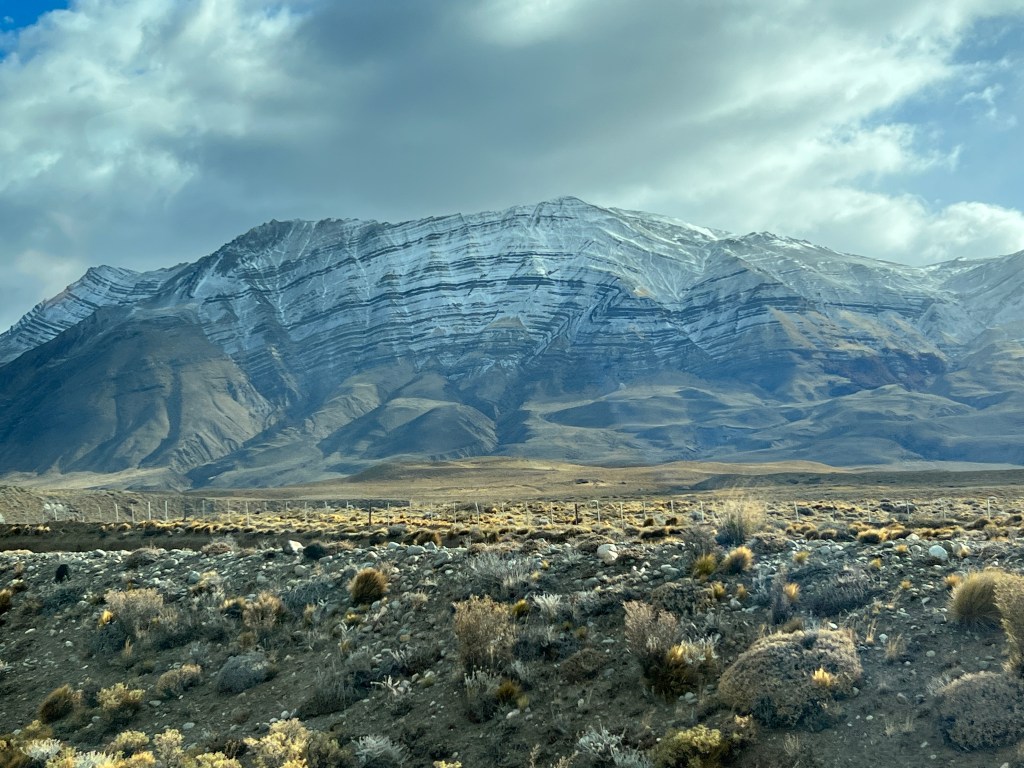
We travelled north along some of the famous Ruta 40, and alongside Lago Argentino, then turned west and north again.
Valentin Filbert travelled and came to the lake but failed to name it.
Perito Moreno actually discovered the whole length of river and lake and named it on 15 Feb 1877.
Lago Argentino is 120km from tip to end of lake and up to 20km wide. It seems to go forever.
We also crossed the River Leona (means lioness -Perito Moreno confused the written words between Puma and lion. The river connects Viedma lake to Argentino Lake.
Viedma Lake is one of the deepest in the world at 900m and deepest in South America.
The Viedma Lago has one glacier only feeding in – Viedma Glacier is the biggest in South America.
There was quite a long story of Moreno and the puma and the naming of the river.
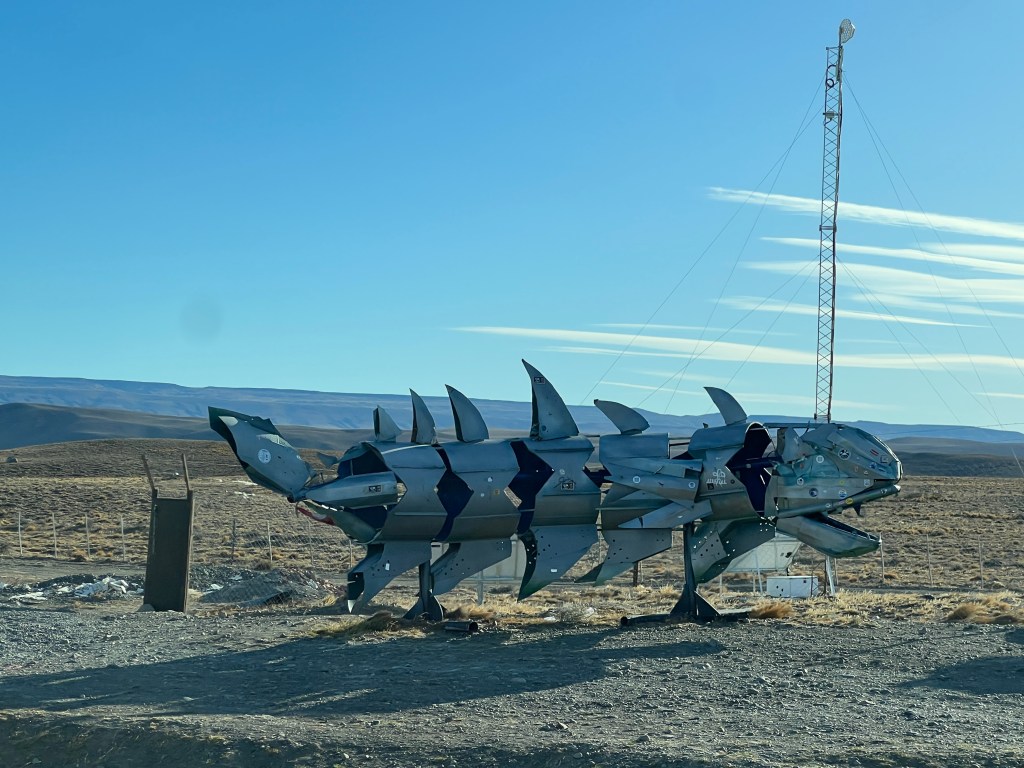
At the junction of Ruta 40 and 41 we passed a sculpture of a fish “Remembering the sea.”
Guanaco live in groups that have only one male with a group of females.
We passed through Margarita Ranch which is bigger. Some of the Estancias are up to 350 000 hectares.
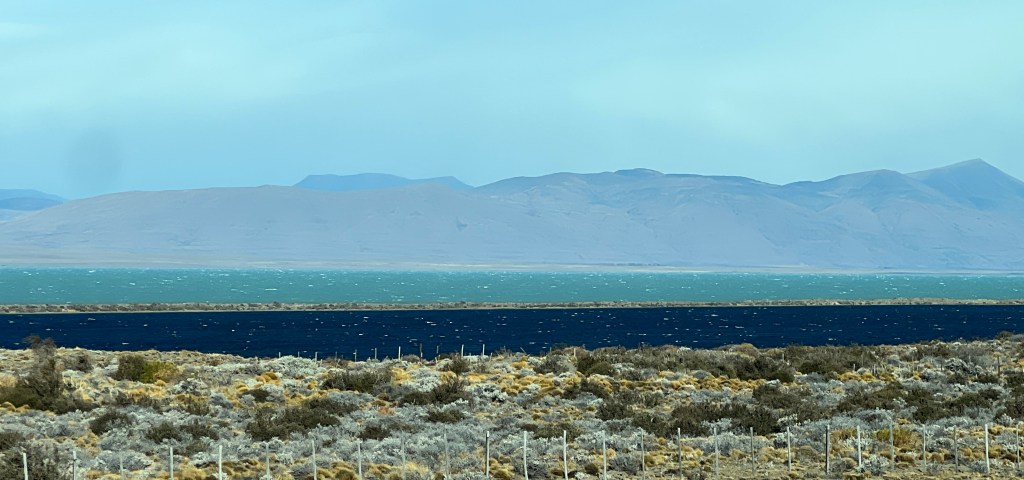
At one point Ignacio pointed out two lakes side by side – totally different colours. One the light blue fed by glacial waters or milk, the other deep ink blue from rivers and other sources.
Closer to El Chalten we had the talk from Ignacio about our options at El Chalten which is a key kicking off place for many treks and adventure activities. We would have 4 hours with 3 main options (really 4)
1. Capri Lake – climbing up. View of Mt Fitz Roy. Up up up.
2. Torre balcony 80min return up and down.
3. Condors balcony – simple 2km walk with views of the town, valley and mountains and condors.
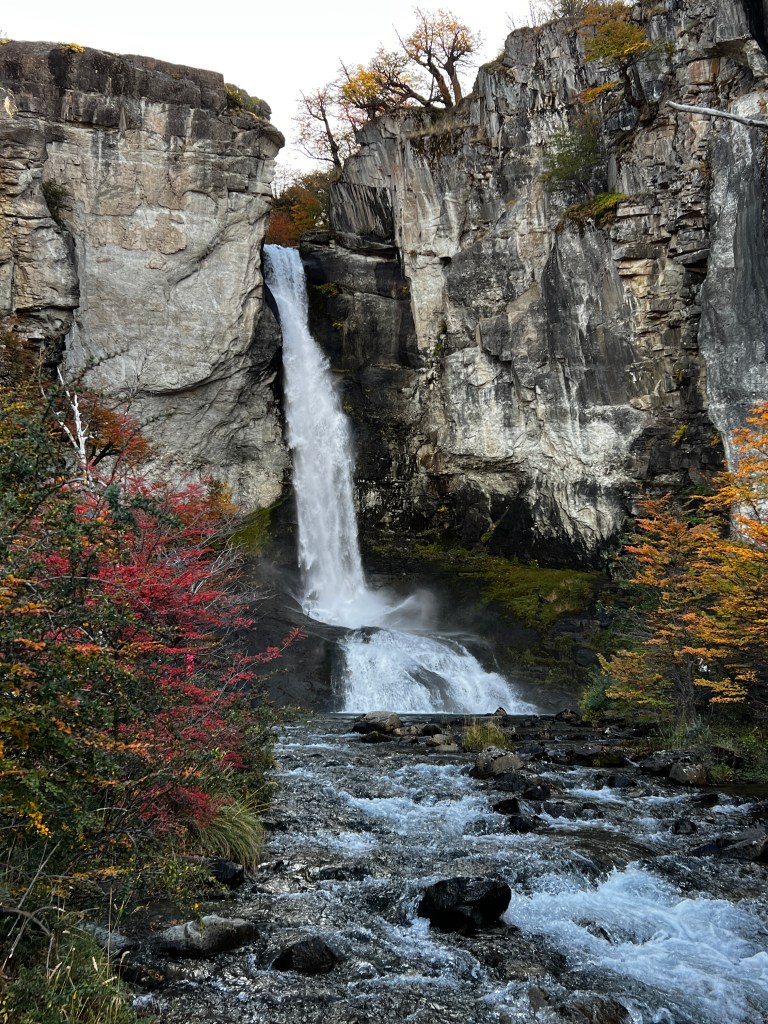
4. Chorilla del Santo, a 20m waterfall.
We could choose to do the last two or ONE of the others. And if we chose the former we could have the bus drive us to the waterfall with the other group.
He recommended that Torre not much good on a cloudy day.
So we opted for Condors Balcony and the waterfall. We have lunchboxes provided and should have time around the town.
As we neared El Chalten we could see the tongue of the Viedma glacier which is 750sq kms with a small and receding front edge.
Chalten has a population of about – 3000 and established in 1925 is a young town.
The key attraction is Mt Fitz Roy and the Torre, Ignacio explained that they are shrouded in clouds but IF they appeared we would stop the bus to view, however he didn’t want us to look all day so didn’t tell us exactly where they should be until the end. They never did make an appearance as they create their own humidity and clouds and were shrouded in cloud all day.
Around this time we saw a condor on the ground just to our right – amazing big beast – he tried to take off but struggled with the wind etc. wonderful to see up close – not sure of the picture as we were moving quite quickly on the bus.
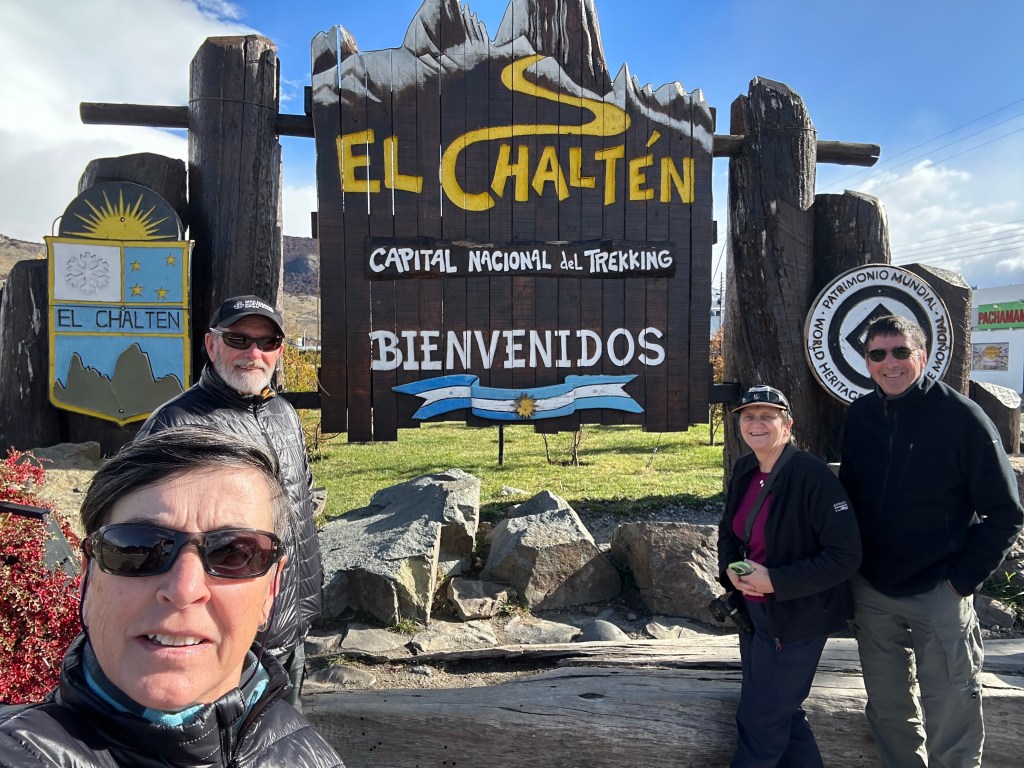
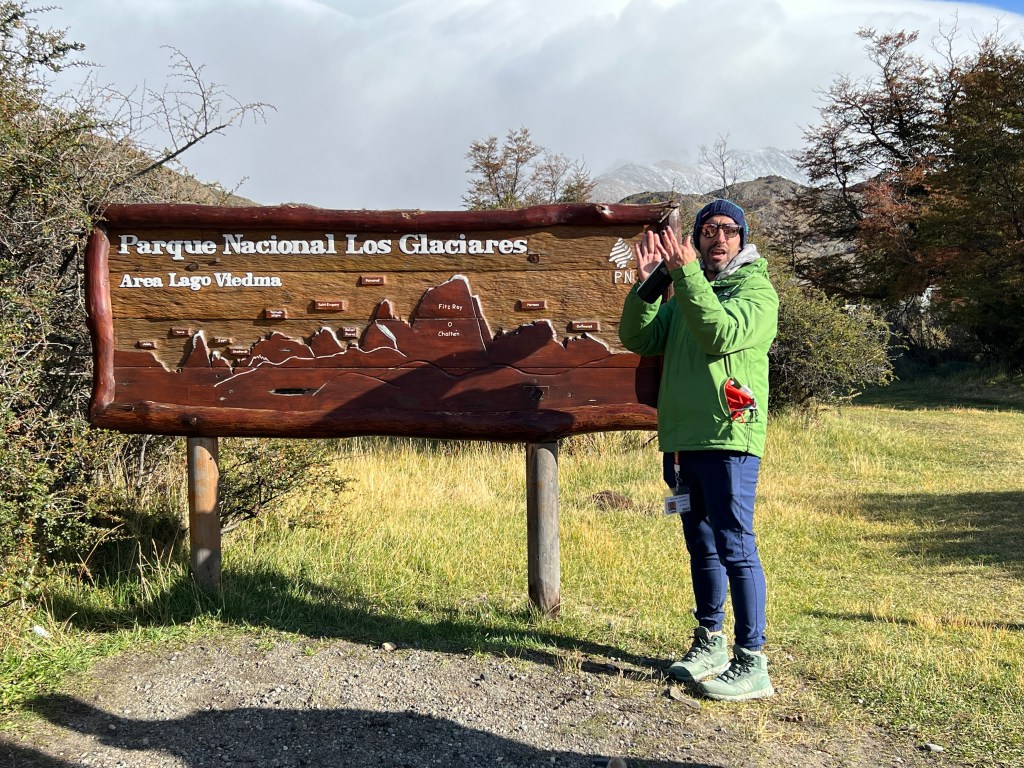
Our first stop was in town for a loo stop and opportunity to see the Welcome to El Chalten sign. Then it was back to NP offices and off the bus to hike up to the Balcony of the Condors. This was a short 2kms up to a 504m rocky hill from which you can see over the town as usually see condors. The town is built at the junction of the Rio Fitz Roy and Rio de las Vueltas.
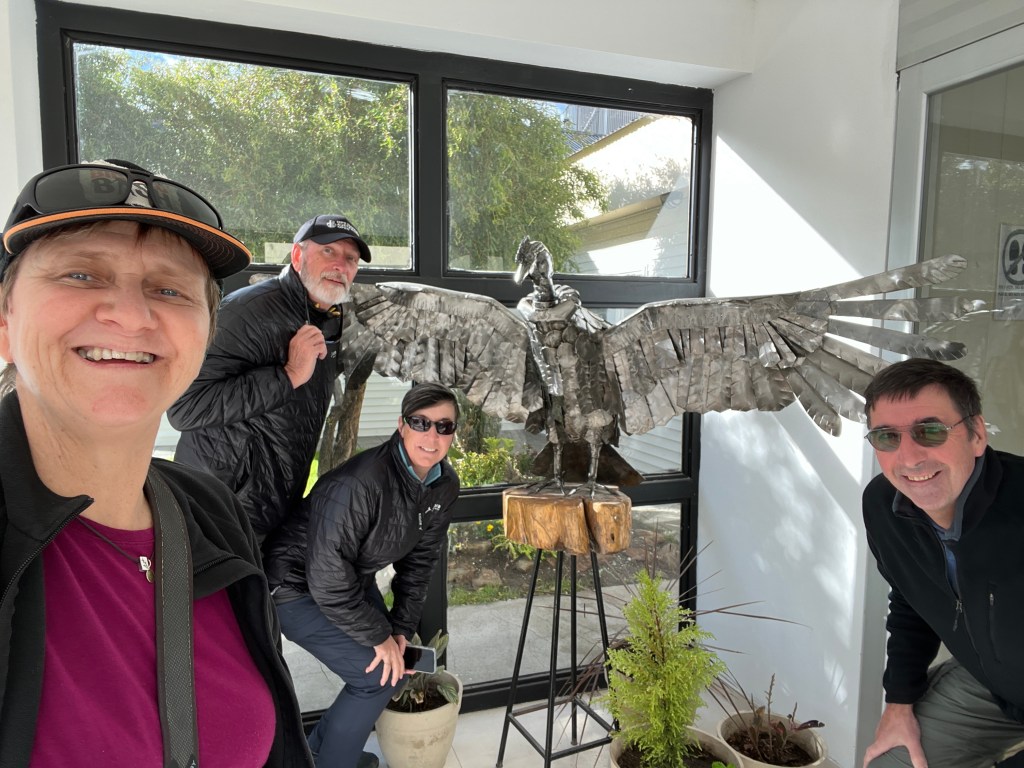
We had a condor or two circling around as we climbed the path. The views were spectacular- still no Chaltén or Torre though.
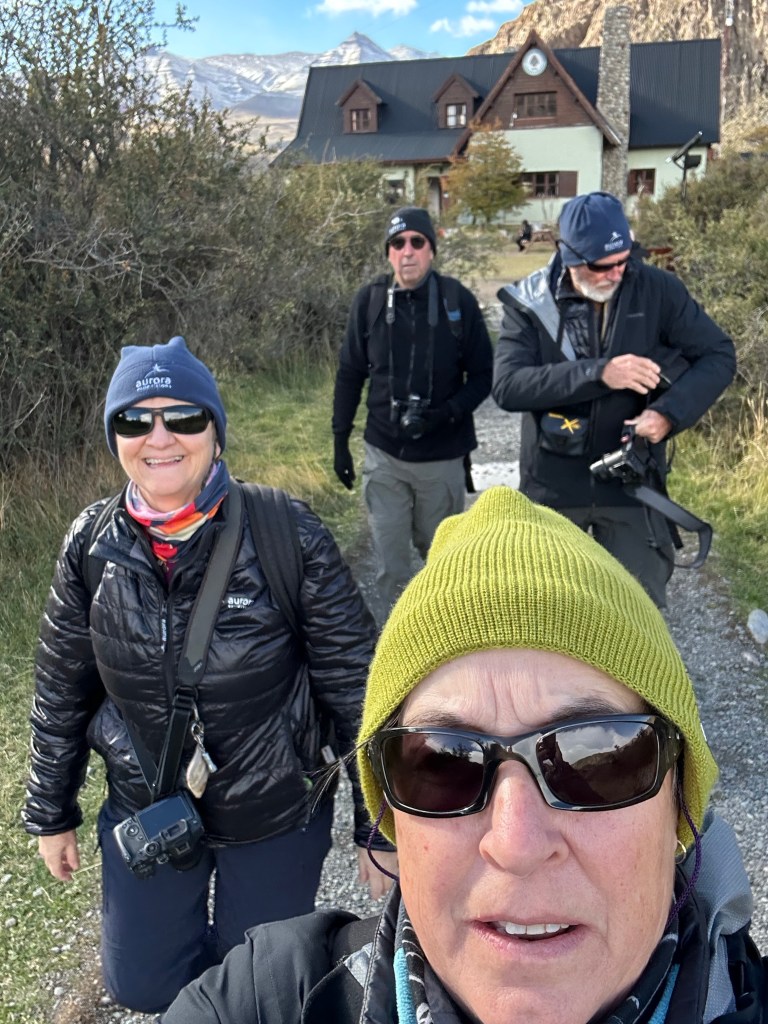
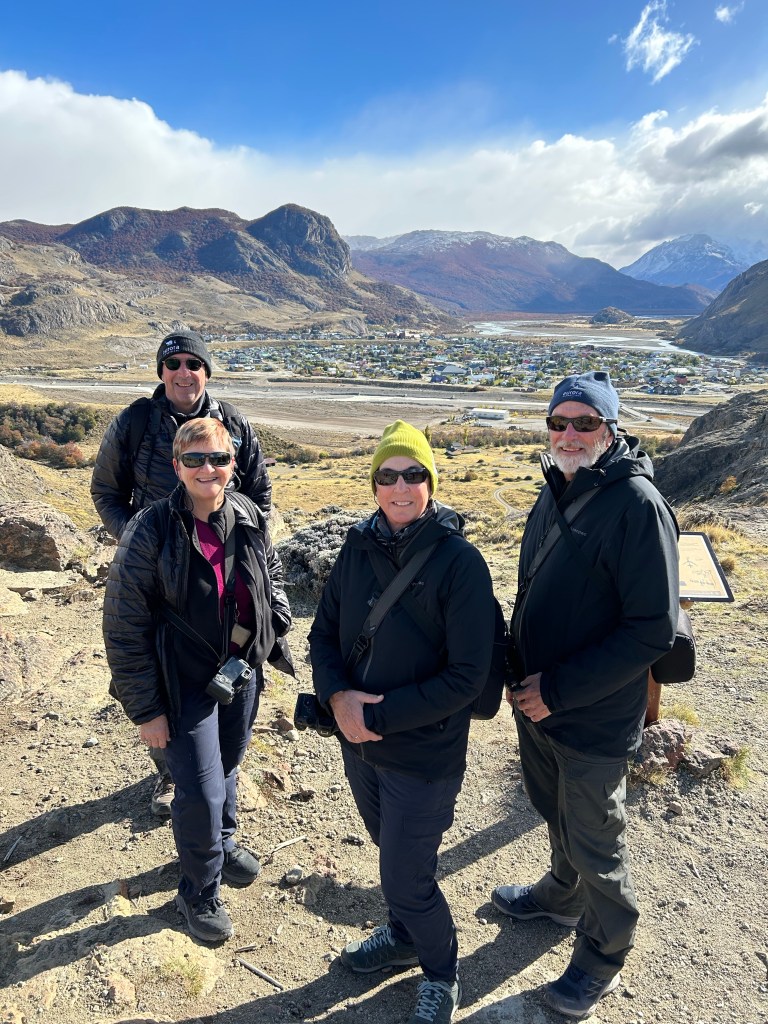
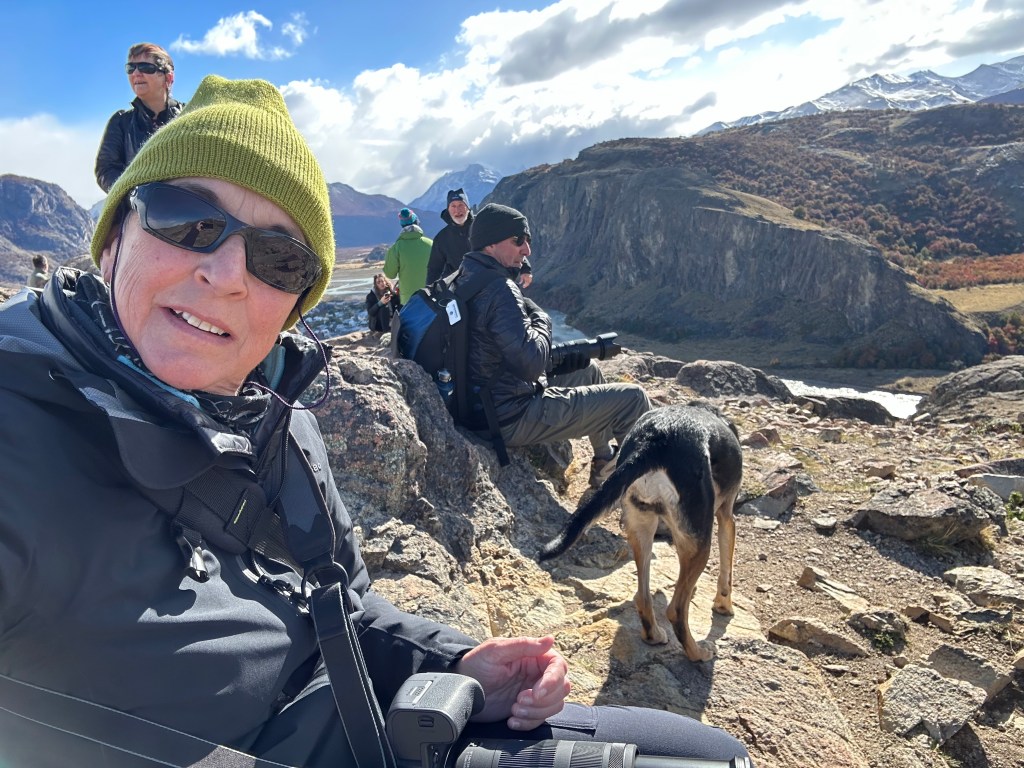
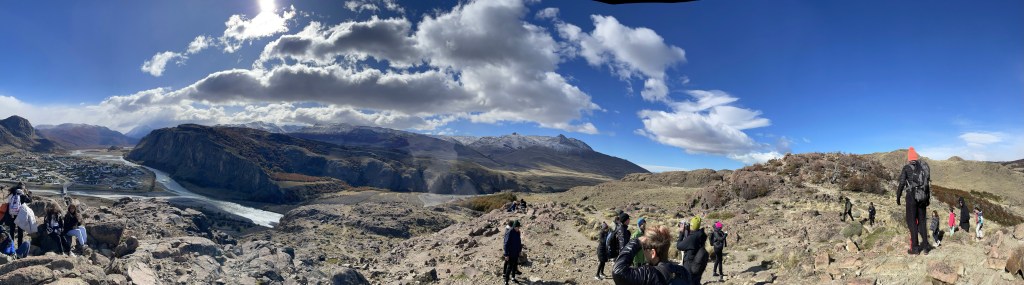
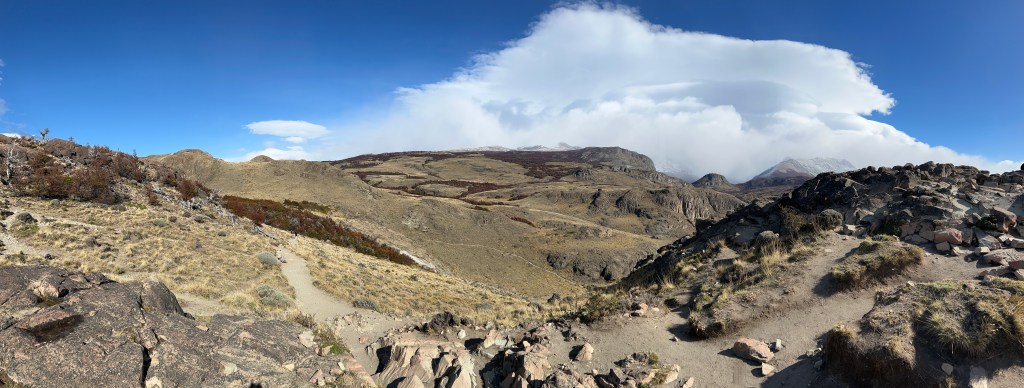
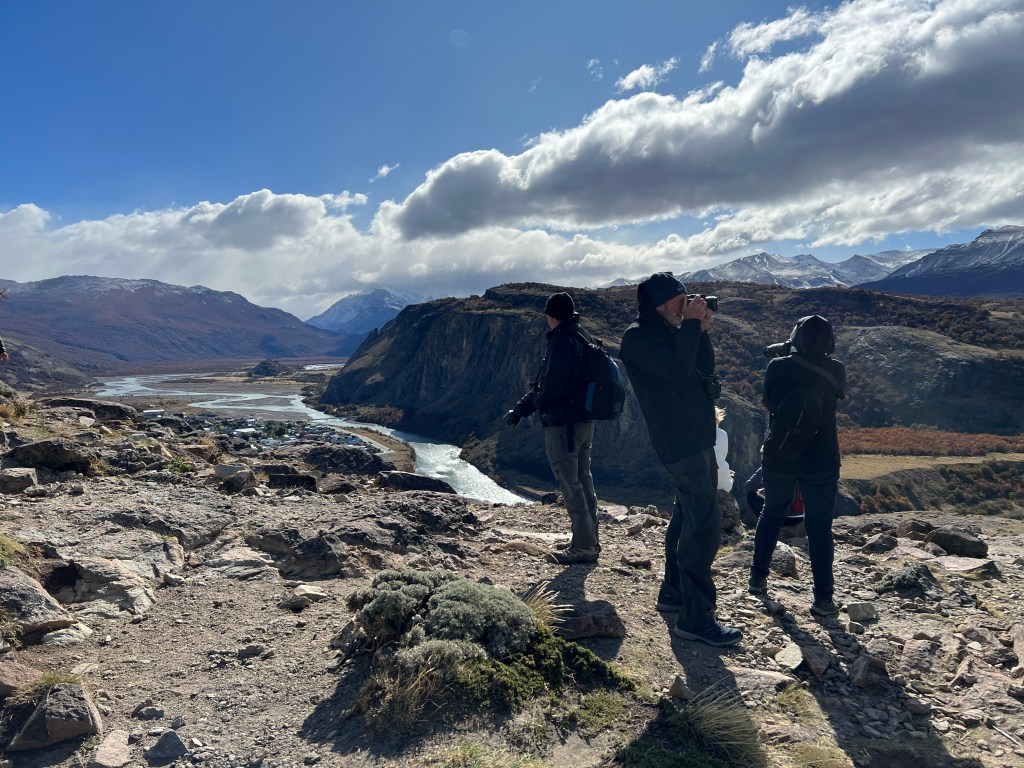
There were several condors flying around and we changed to big lenses to try to capture some pics. Of course our 20 minutes ran out really fast. Bless him, Ignacio figured we might want longer and arranged for us to stay longer and come and meet him in town, giving us another 30min. Unfortunately the condors left about the same time Ignacio did, but we certainly got to experience the quick change of windspeeds that had been referenced over the past couple of days. You could hear the wind coming and then the people a little more on top of the rock were literally blown around- man was it windy.
We made our way down carefully as the wind blustered and blew.

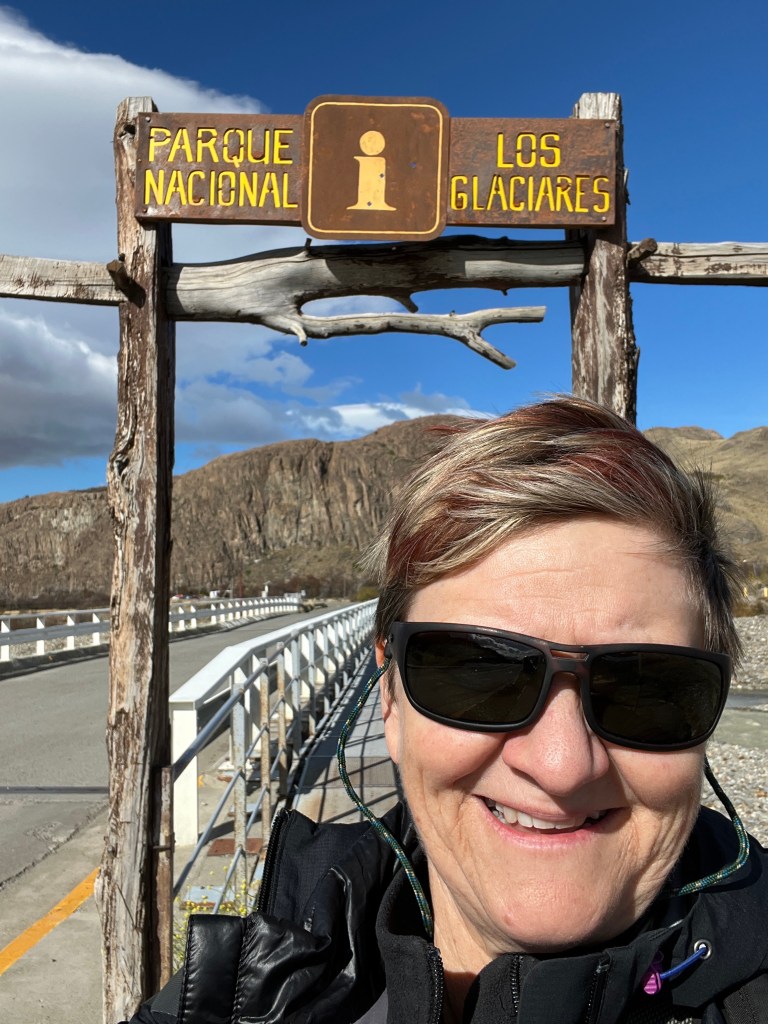
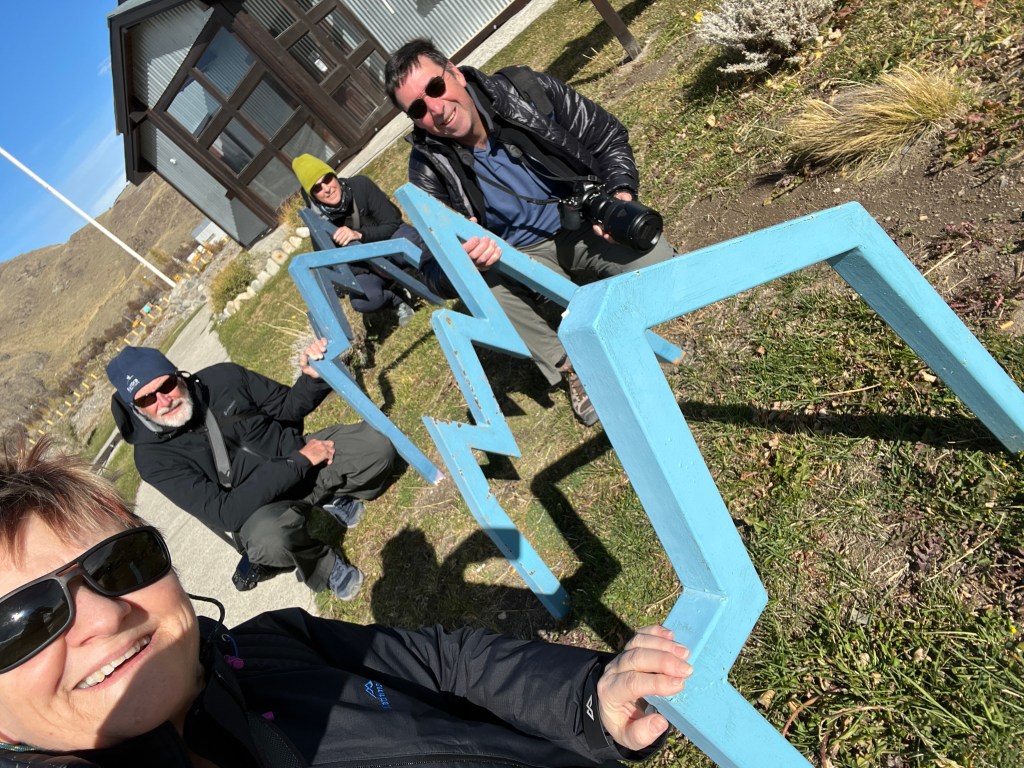
We were back into town and met Ignacio at the sign at 1:45. We then marched quickly through the town – which was pretty much shut for siesta time – to a hotel at the other side where the rest of the group had a sit down dinner and we were provided our lunchboxes, we bought hot choc and ate half our lunch which iwas two jamon en queso rolls – we all struggled through one. Also an apple, water and a yummy white chocolate mini wagon wheel type biccie (alfajores in local language I think)

While striding through town we saw a bird, a Loica – (meadowlark) Voted emblem of Calafate.
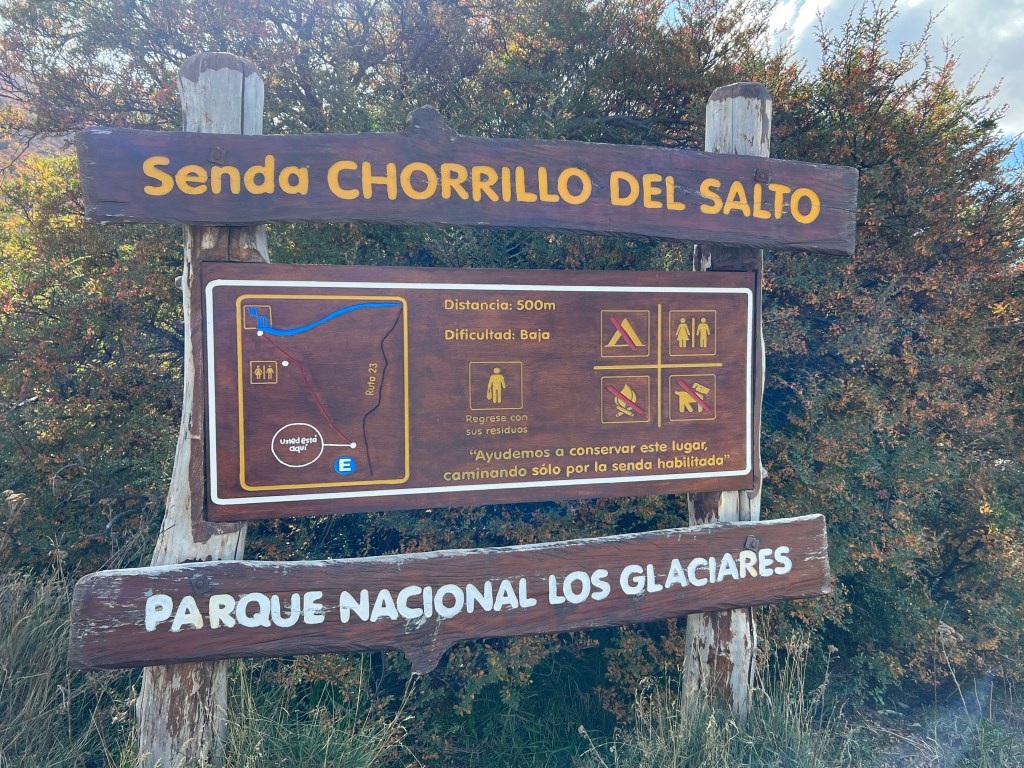
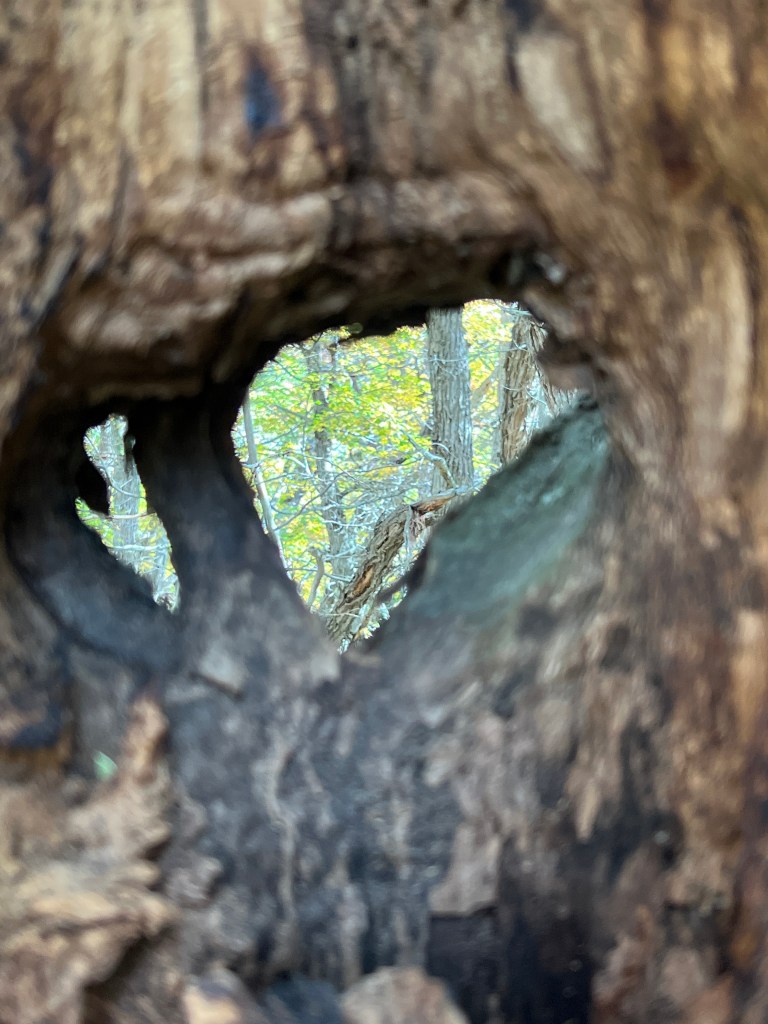
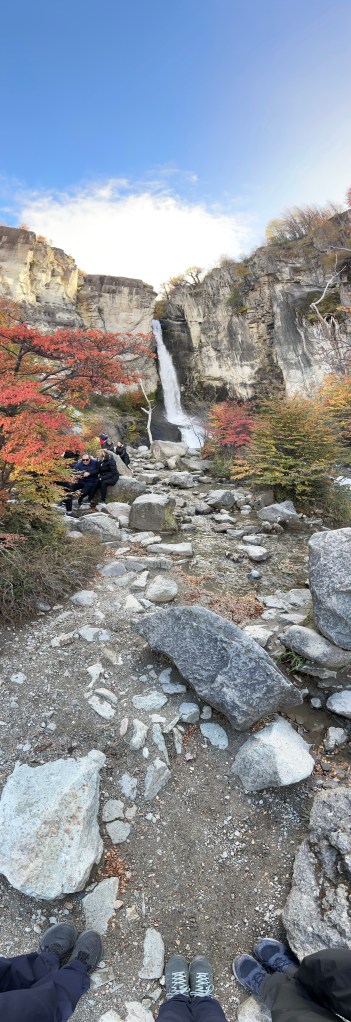
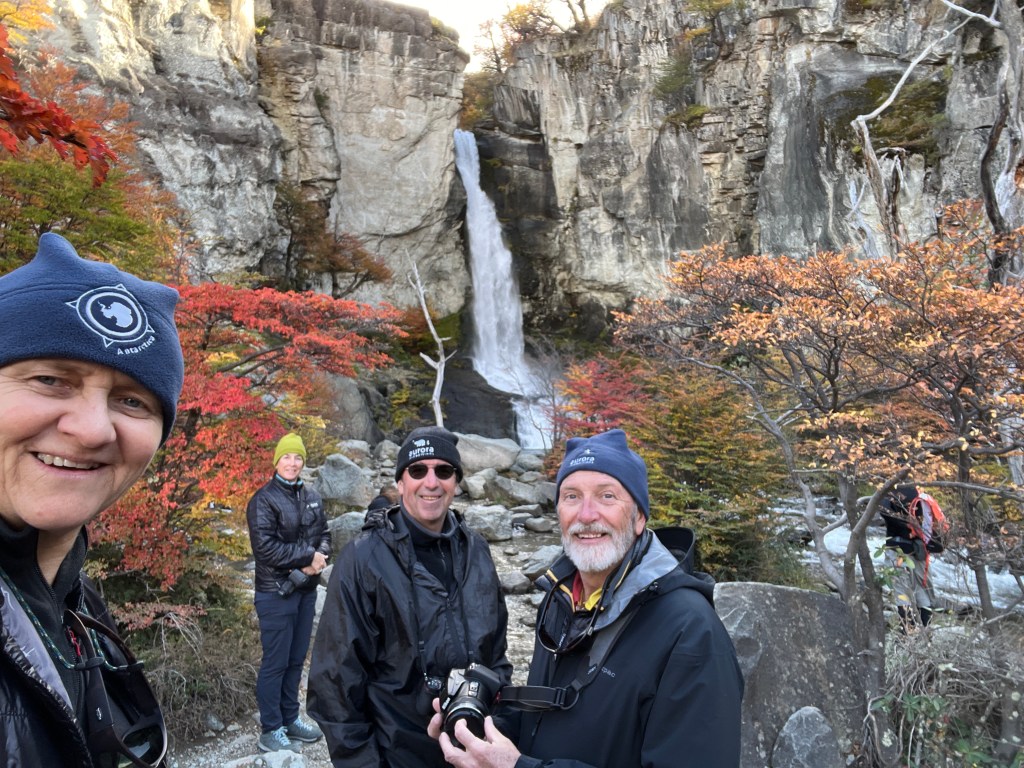
Then at 2:30 it was back on board for a short trip out of town along the Rio de las Vuentes and into the bosque (forest) a total change of scenery from the treeless landscape of the morning. We had a short walk through the forest to the Chorilla de Salta waterfall, which was fairly flowing and provided many a good photo opportunity.
From there it was time to retrace our steps. The real challenge was to stay awake to see the landscape in the afternoon light which Ignacio had indicated is better. Needless to say lots more photos between us all on the return, some more than others as sleep overwhelmed a couple of our crew (Mary and Steve).
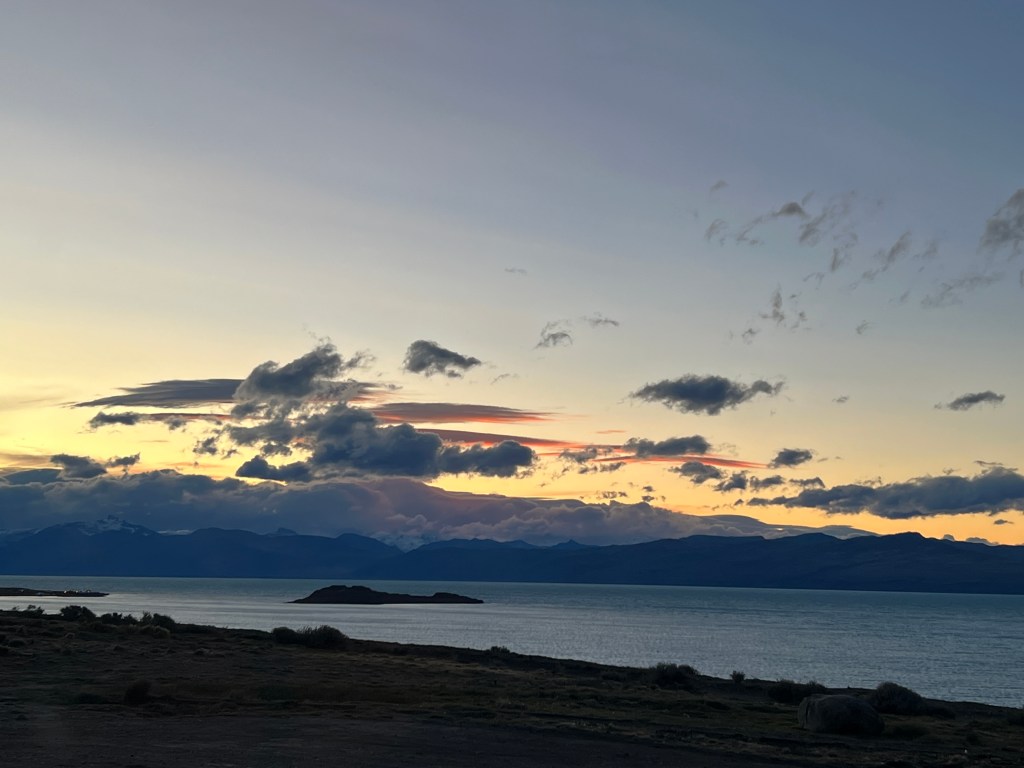
We returned to the hotel about 7ish, which gave time to shower and get cleaned up for dinner which we’d booked at Design Suites as we knew it would be a long late day. A nice meal and drinks and once again.
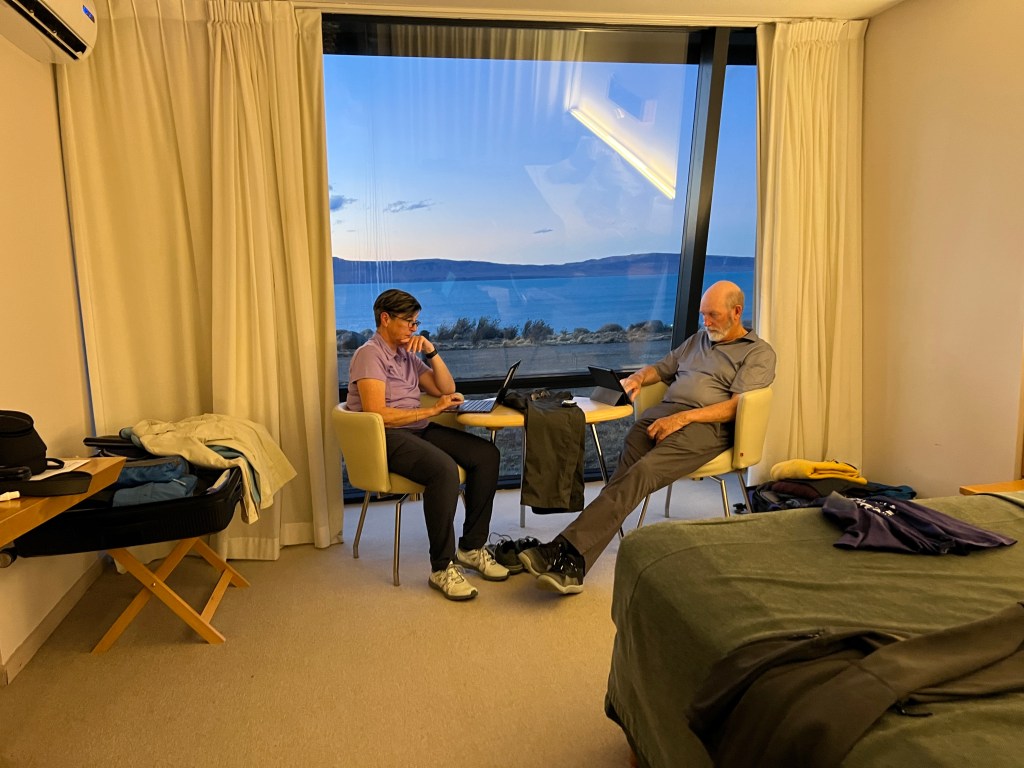
We were initially the only ones in the restaurant- not a good sign. Then we remembered it was only 8.30ish – very early to dine in Argentina. As we dined the place filled up and even turned over a couple of tables. Just can’t get used to seeing little kids out starting to eat at 10:30 and later.
Tomorrow is a free day – so sleep in with breaky at 8.30.
 Travel adventures with Nicola & co.
3 responses to “El Chalten, choike, guanaco, condors and waterfall – 7 April”
Stunning scenery. Thanks for sharing your photos. Would be an adjustment eating so late in the day when thinking about sleep
LikeLike
The condor is for us Chilean, what is for Australian the kangaroo.
Ignacio spoke longer in Spanish because in English you can say the same thing using less words.
LikeLike
Hey C. Thanks for that info. Condors have been elusive in my travels. Def far more words used in Spanish. Lol.
LikeLike