Analamazaotra National Park and Lemur Island. Lemurs, Lemurs and rainforest critters.
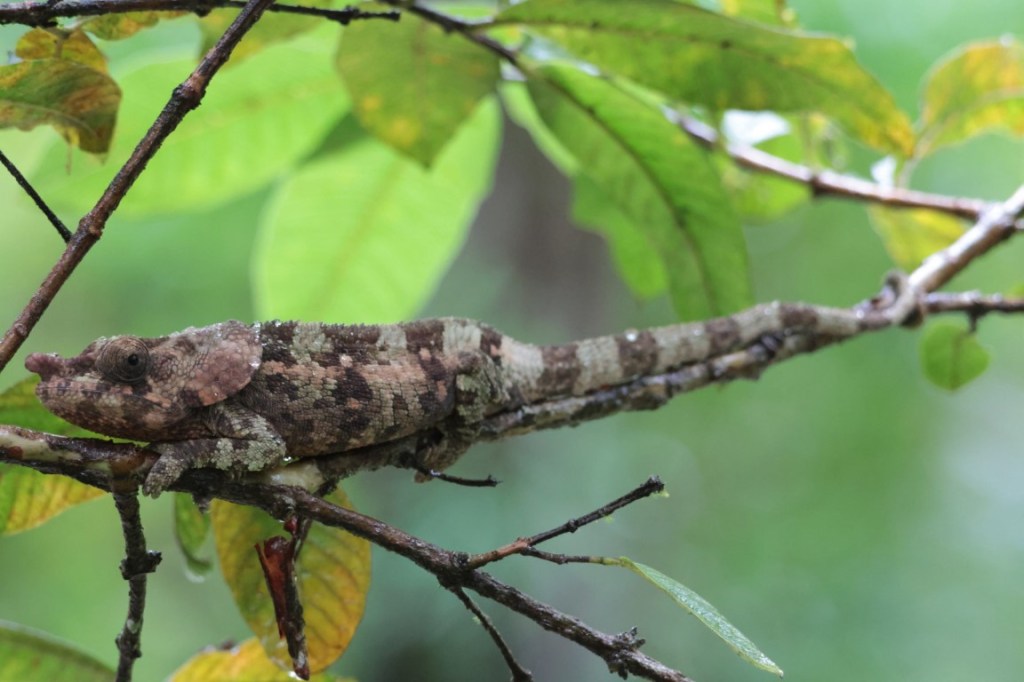
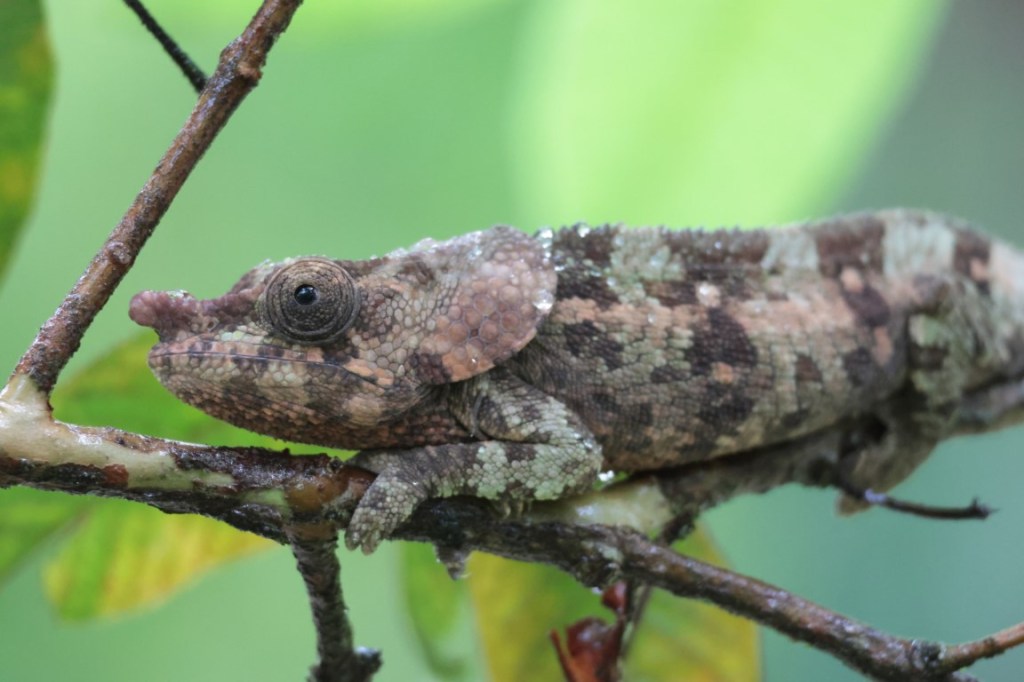
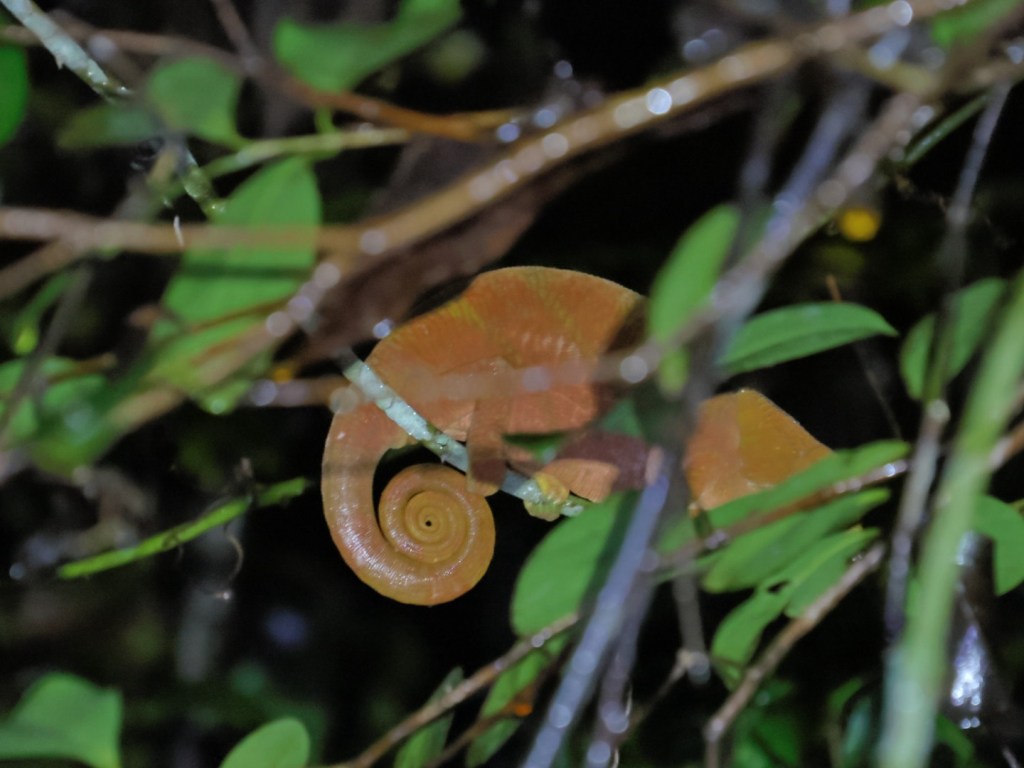
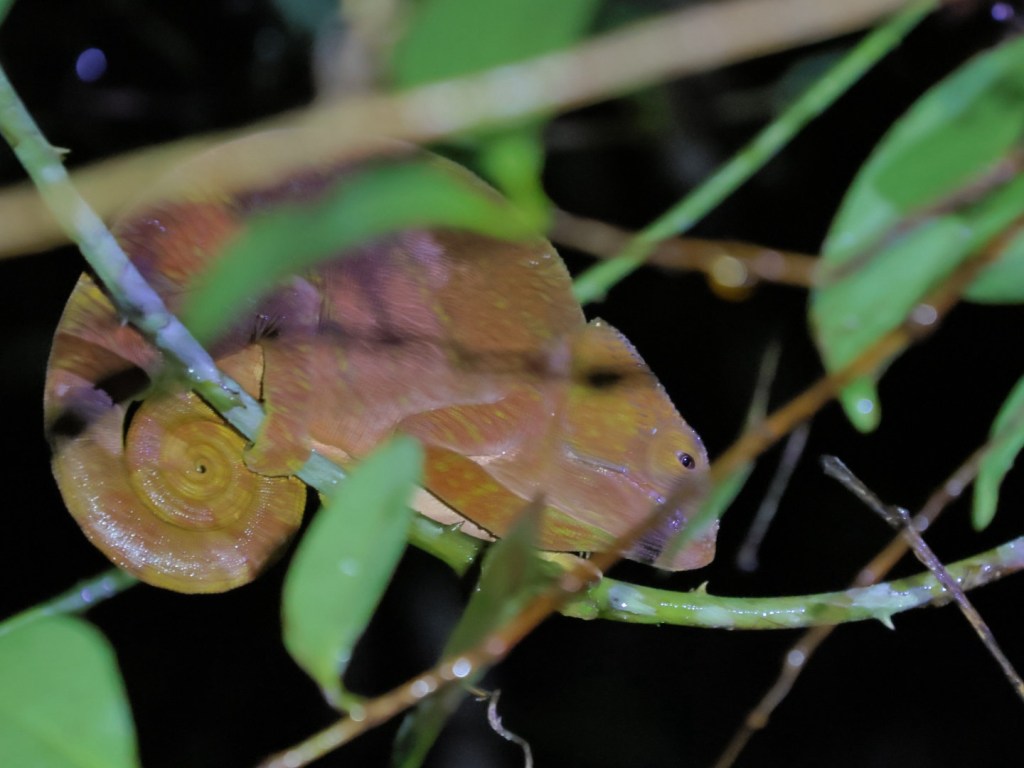
Once an eye fixes on a prey both lock in and triangulate the prey. Then the tongue extends just the right amount to catch the prey. So damn clever.









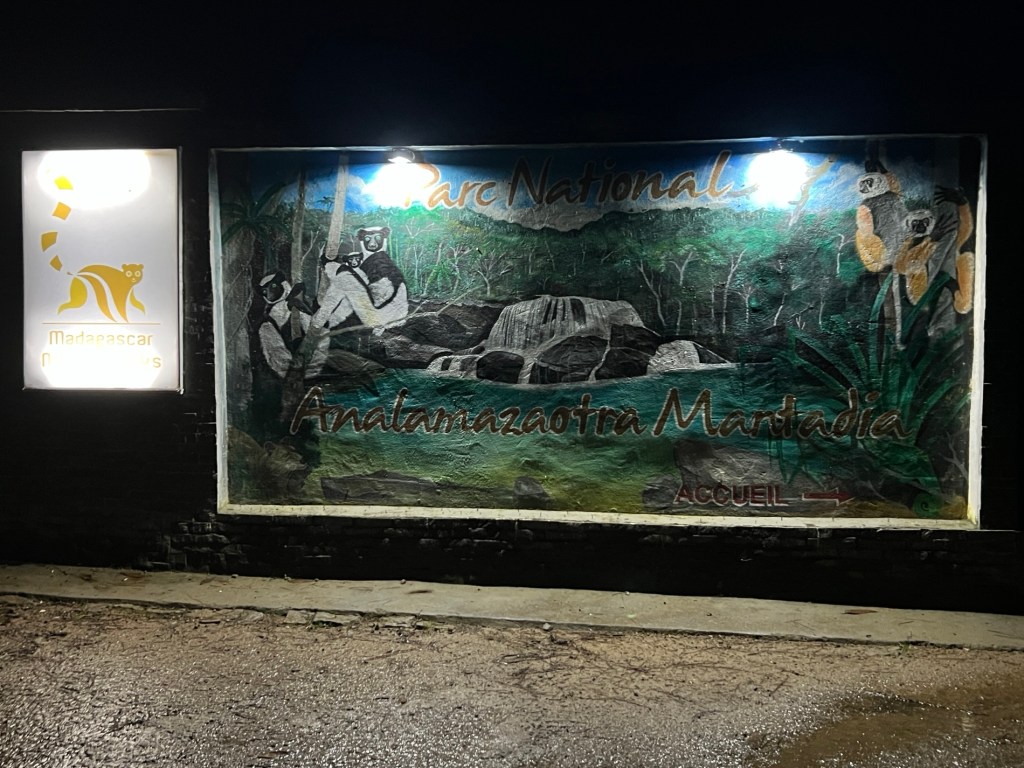
A day in Andasibe. Lemurs, Lemurs and rainforest critters.
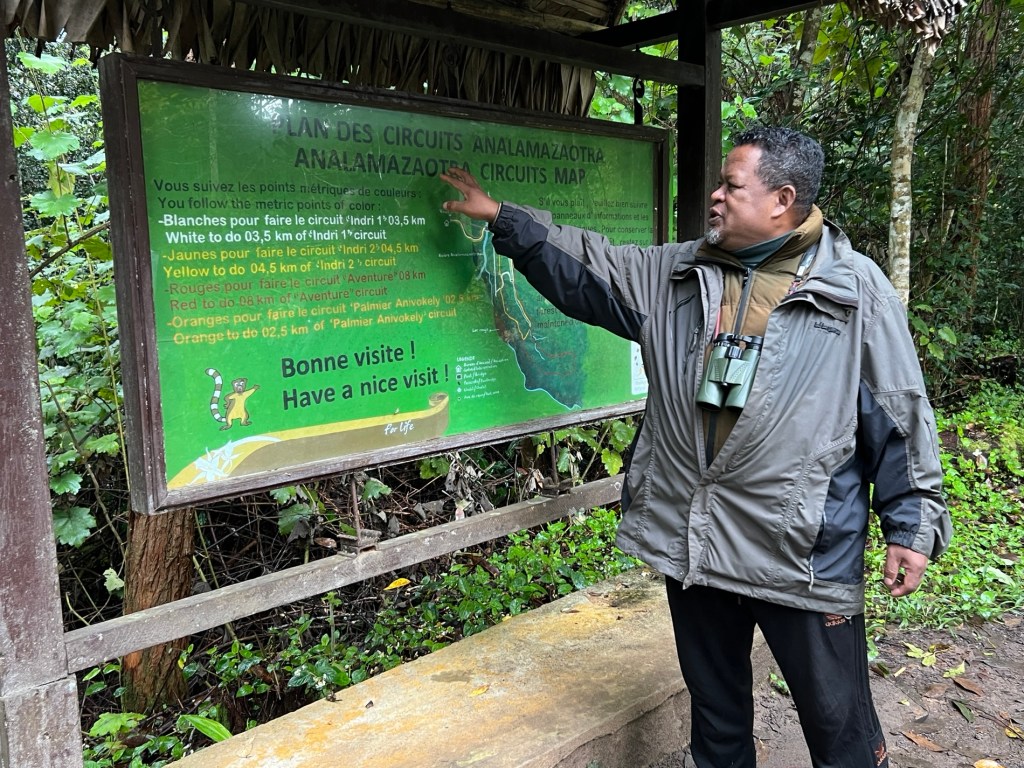
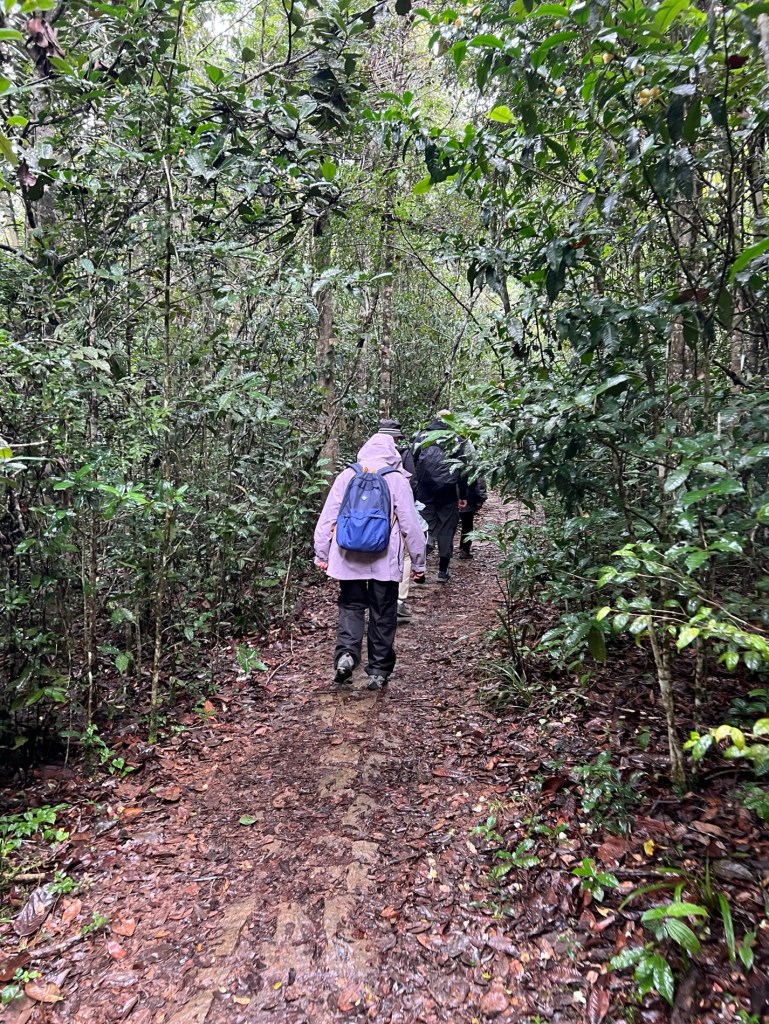
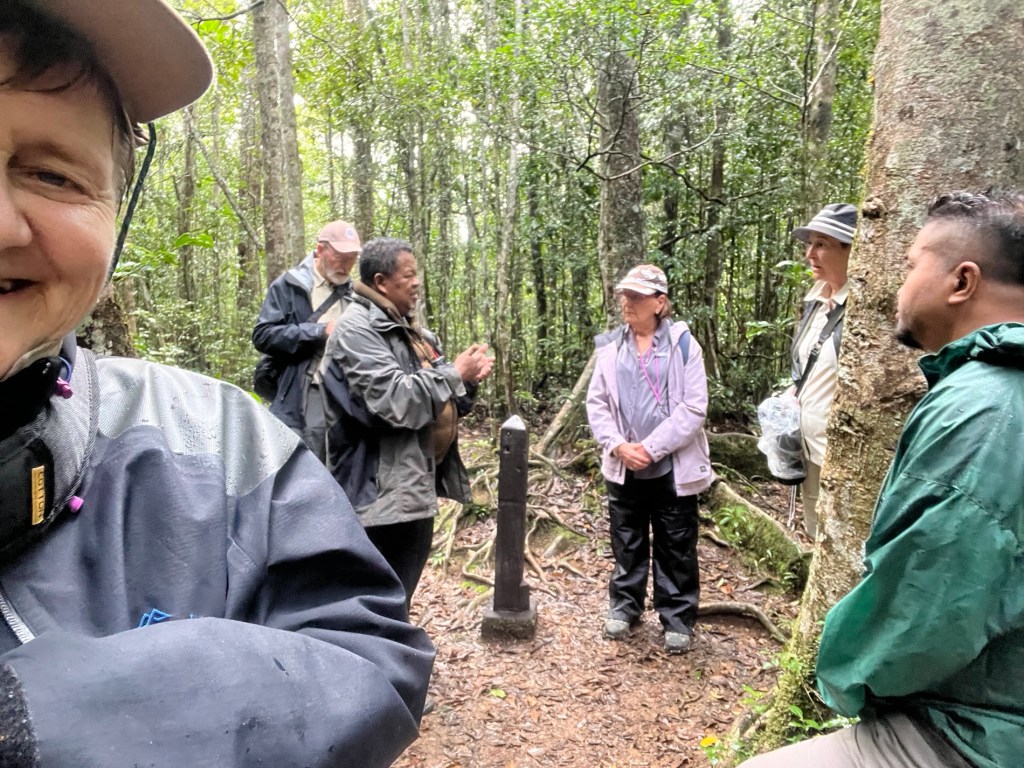
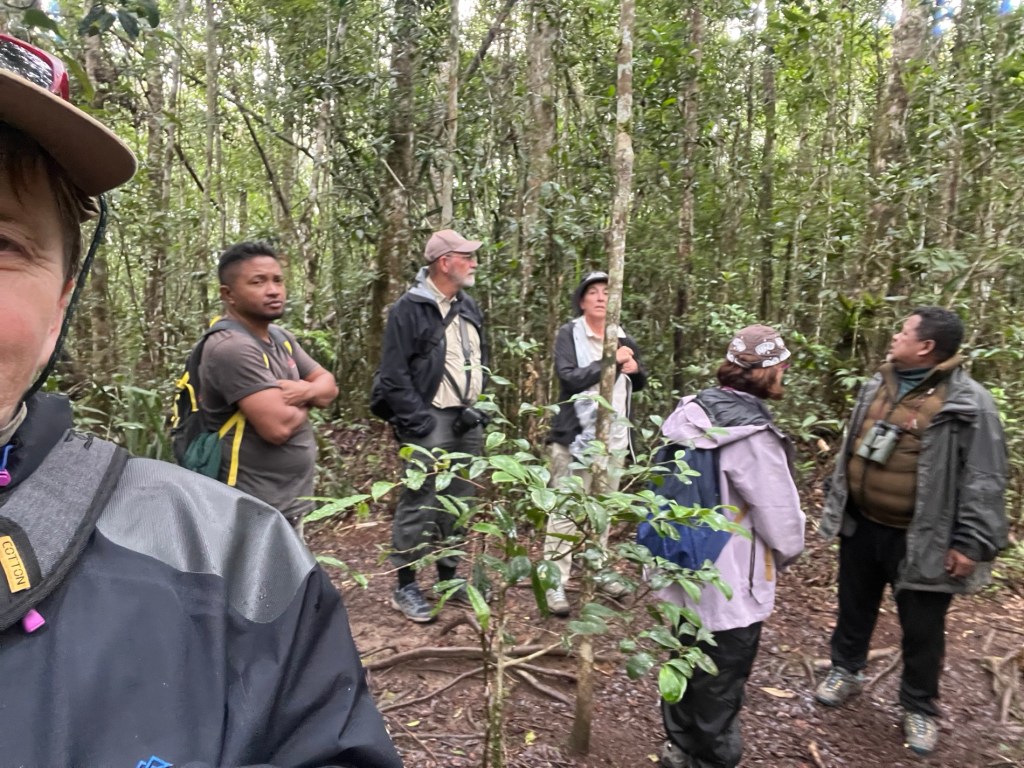
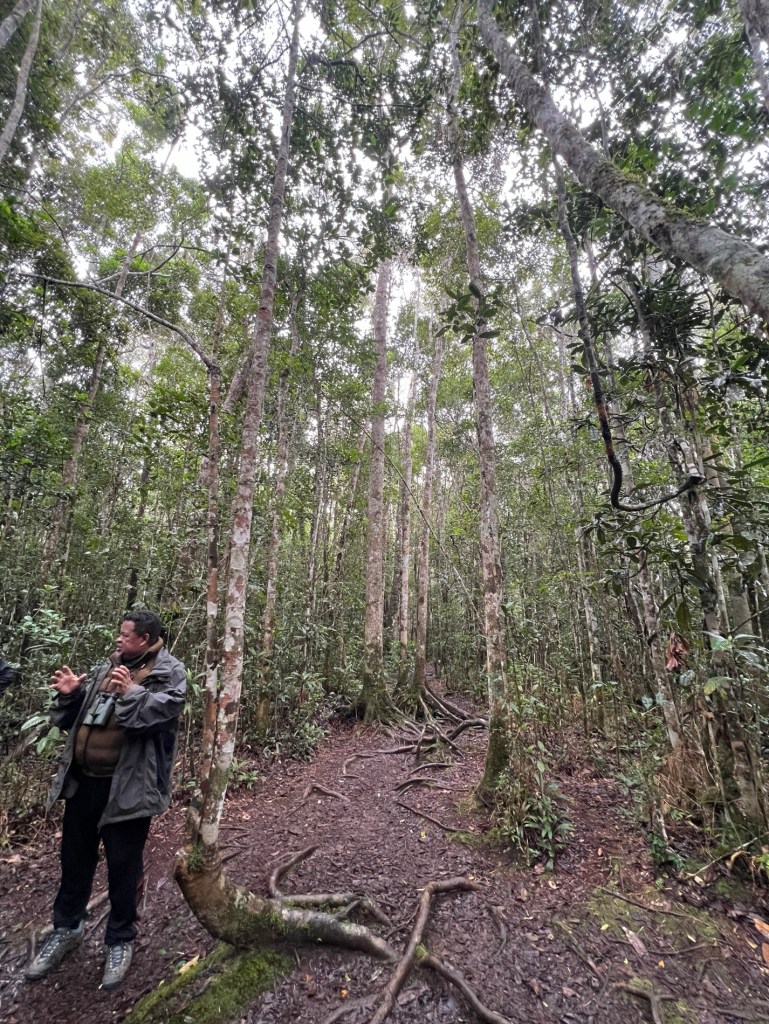
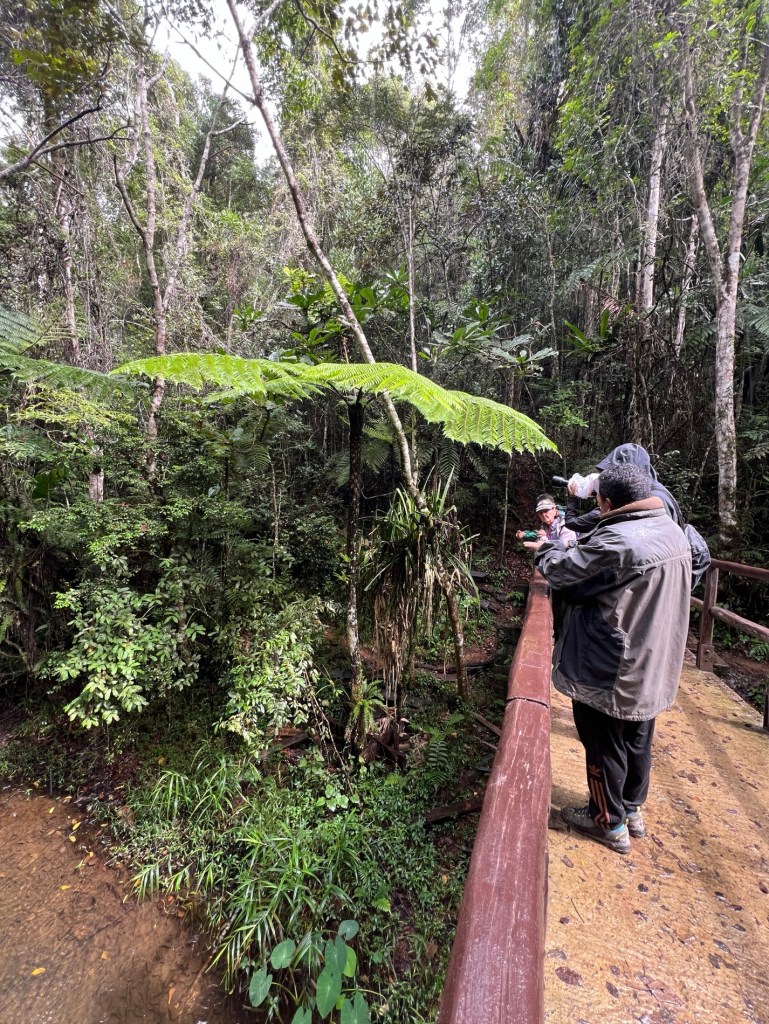
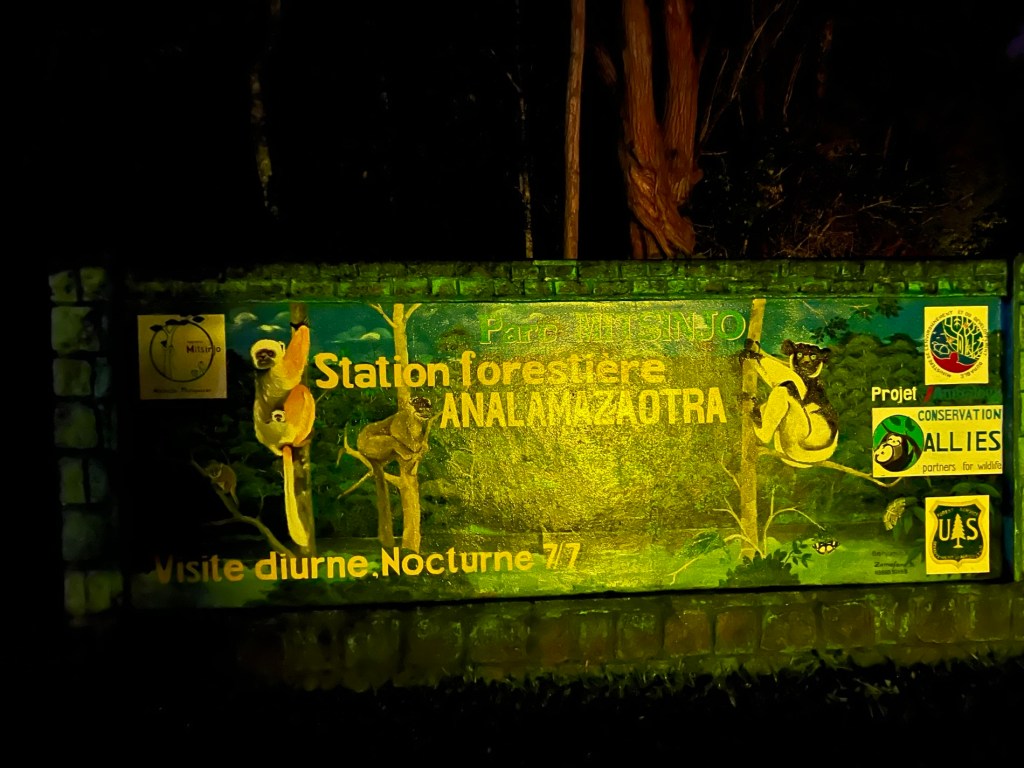
This morning we were off to undertake a walk in the Analamatrazoa Rainforest Reserve at 8:30 ish.
Dessie was our guide and has been in the job for 36 years, great English and very knowledgeable too.
The reserve was established in 1927 and was created for Indri (one of the Lemurs) protection and was later renamed Analamazoatra.
As the natural forest around Andasibe was cleared, the Indri began to disappear. The government became aware of the danger to this unique animal, and in 1970 a part of the forest was set aside as a Special Reserve for the protection of the Indri. The walks take place in a small portion of the greater park.
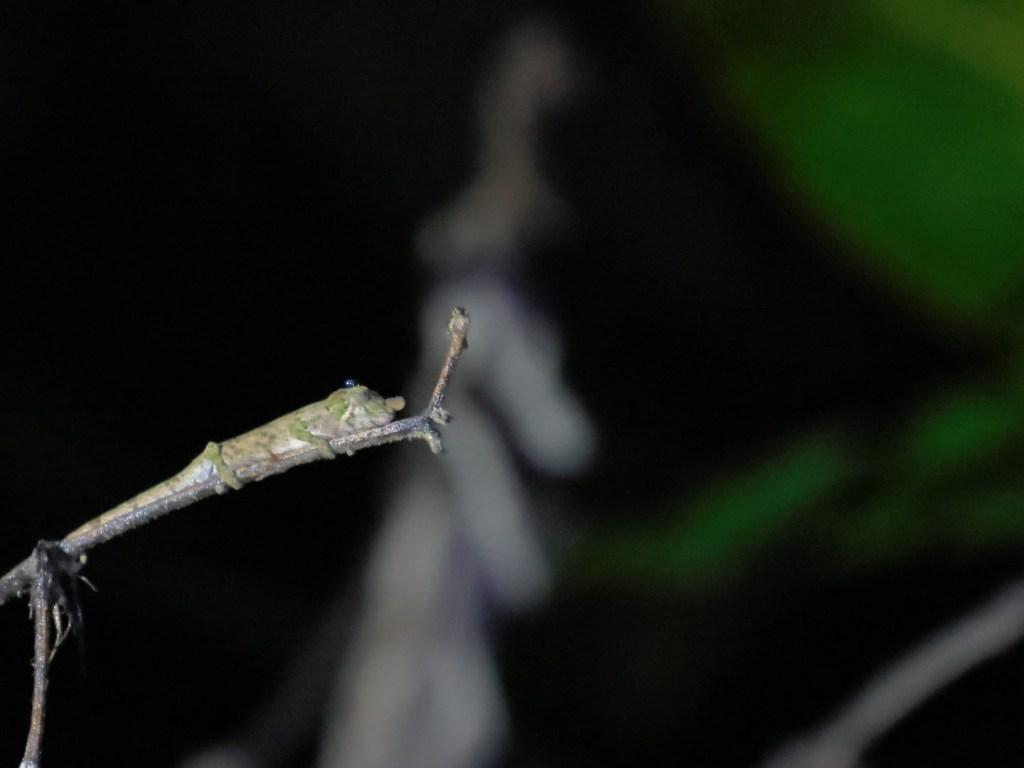
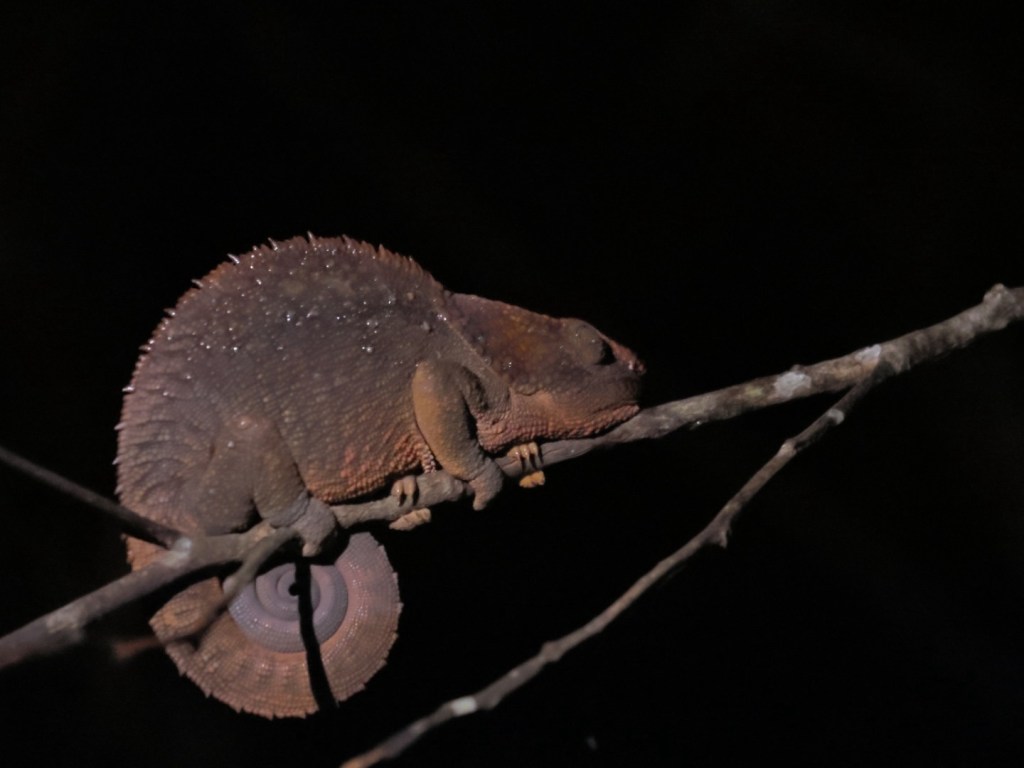
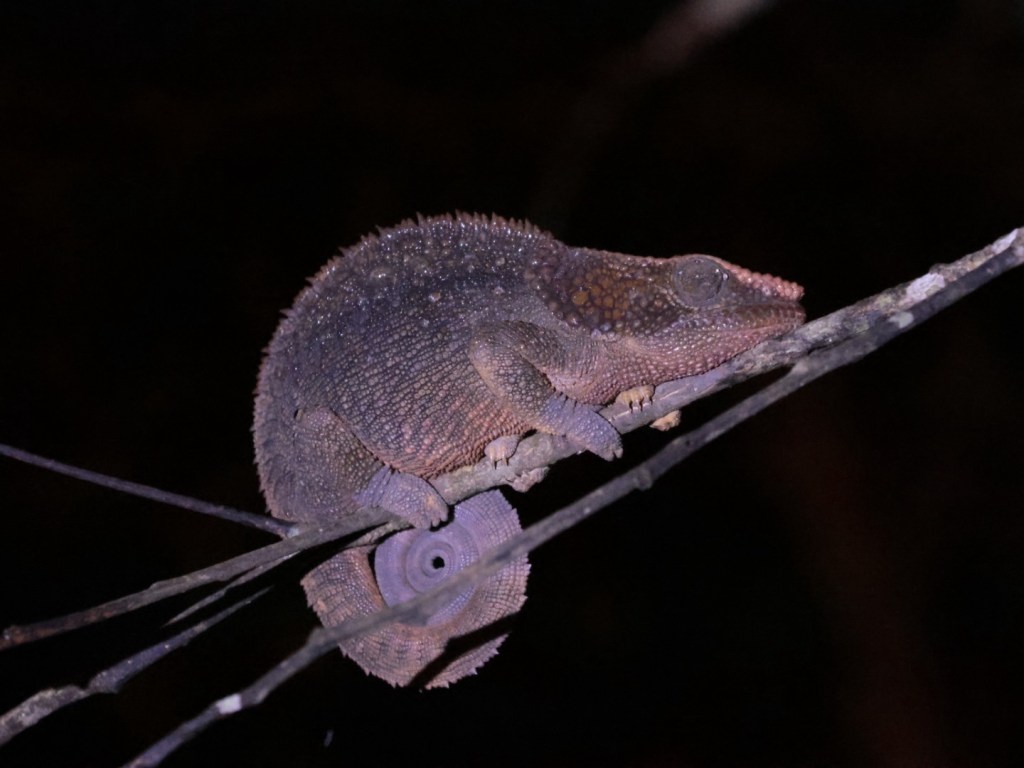
While Benj was getting the tickets, Dessie showed us a Short horned chameleon or Elephant eared chameleon. Once an eye fixes on a prey both lock in and triangulate the prey. Then the tongue extends just the right amount to catch the prey. So damn clever.
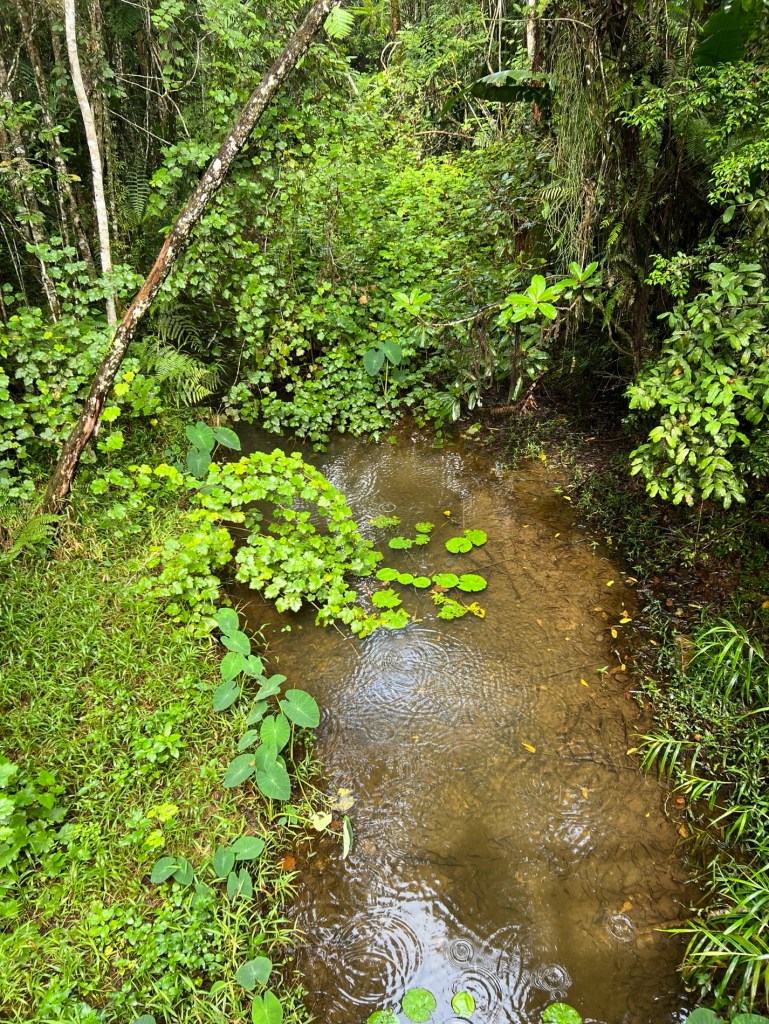
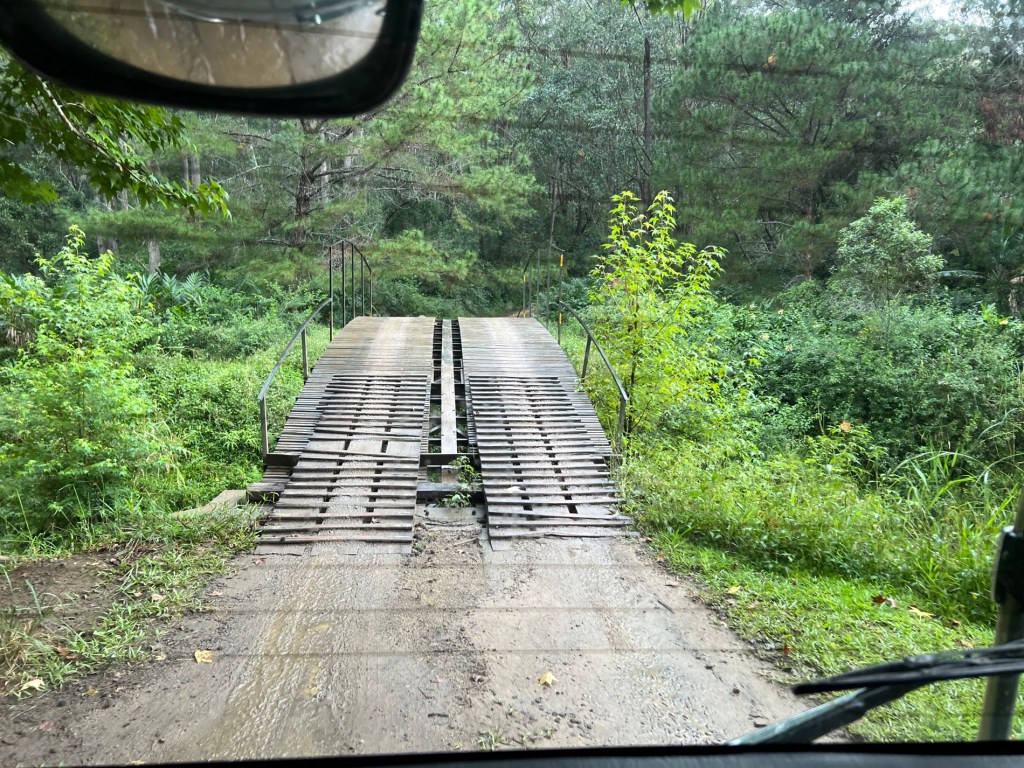
The Reserve contained a Fish farm too. I didn’t really catch the gist of why. We did learn that Madagascar suffers from cyclones and there were 5 this season, which caused a lot of flooding, the water can rise up to three metres over the bridges.
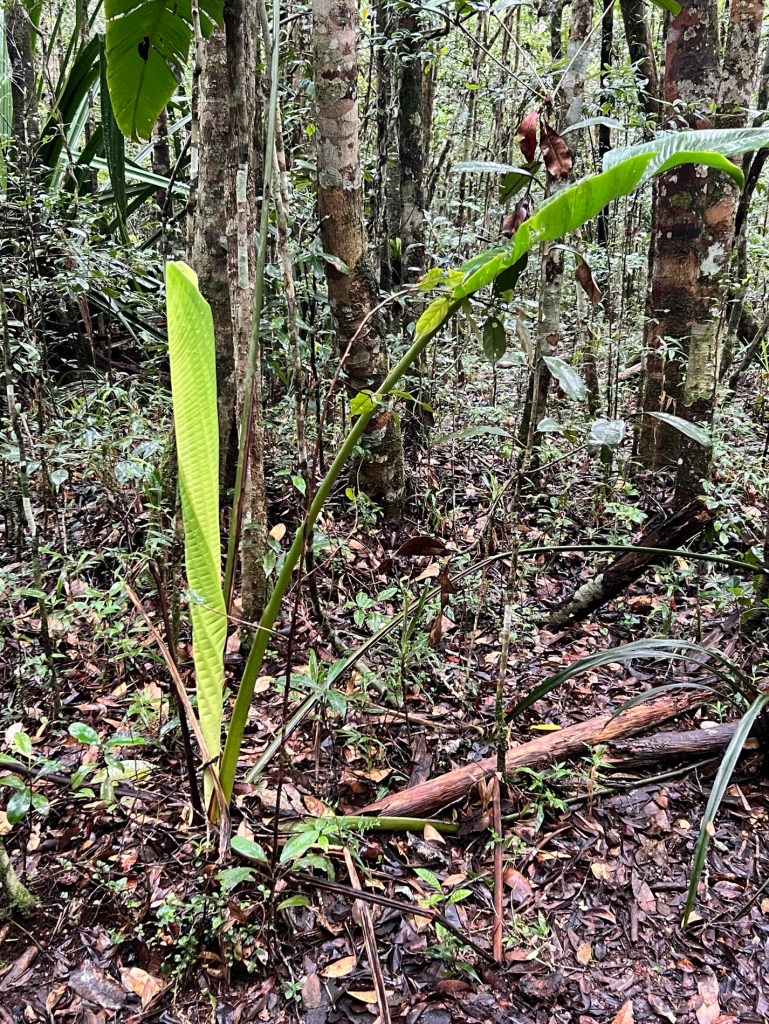
The Pandanus palm grows in the Reserve and has many uses and is no longer growing outside the park. The leaves are used by the Malagasy people for Roofing, and weaving. Over harvesting has resulted in the lack of palms outside the protected area. It also provides a great home for geckos and frogs. The palm catches and holds water which attracts mosquitoes that the frogs and geckos eat.
The vegetation was lush and quite thick. A lot of the trees had epiphytic birds nest ferns and orchids on them. The Epiphytes work in support of host plant, while the Parasitic plants kill the host.
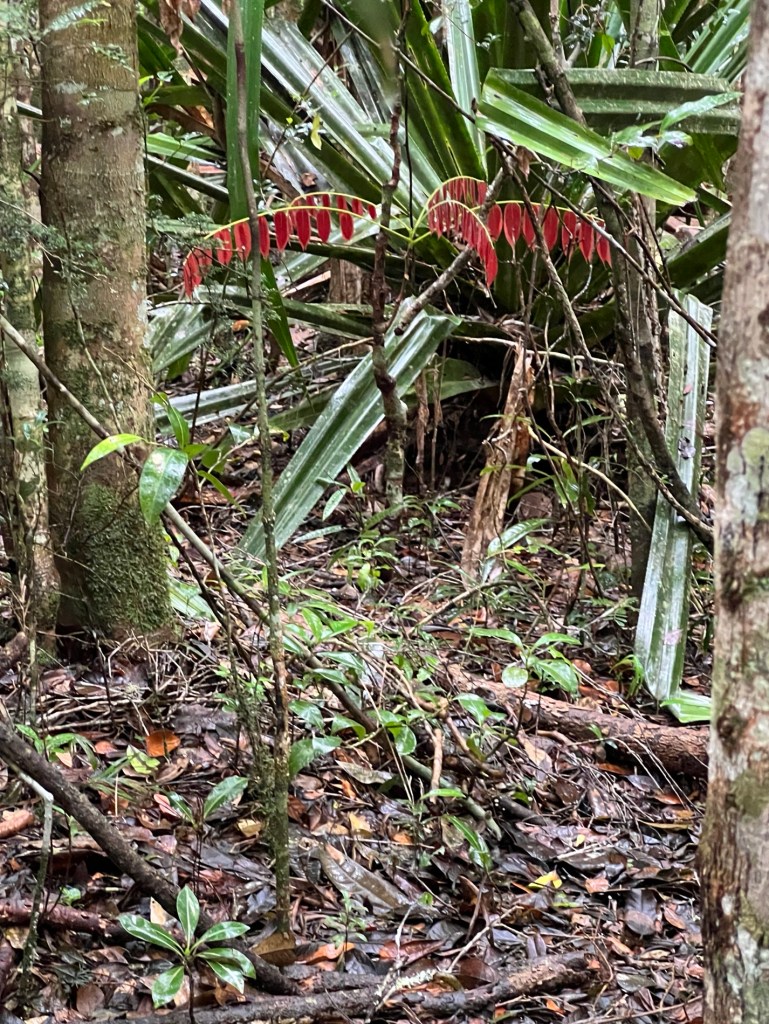
It was also mostly green so Liliana Connictus, a red leaved plant caught our eye, Dessie explained it’s poisonous when still red and roots are good for stomach ache. It’s a vine and turns green.
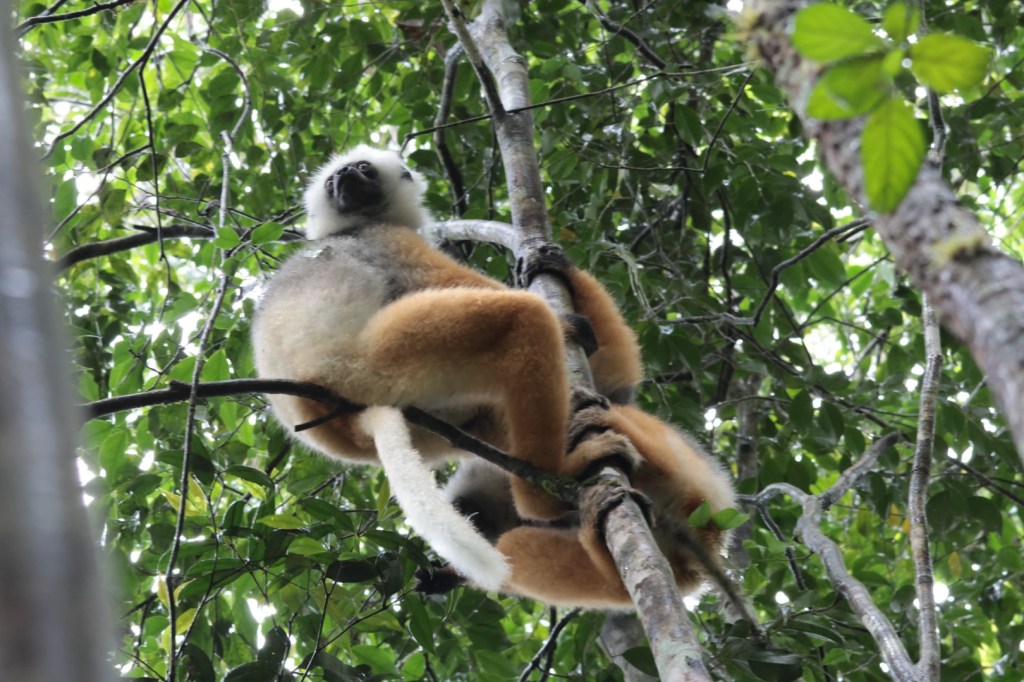
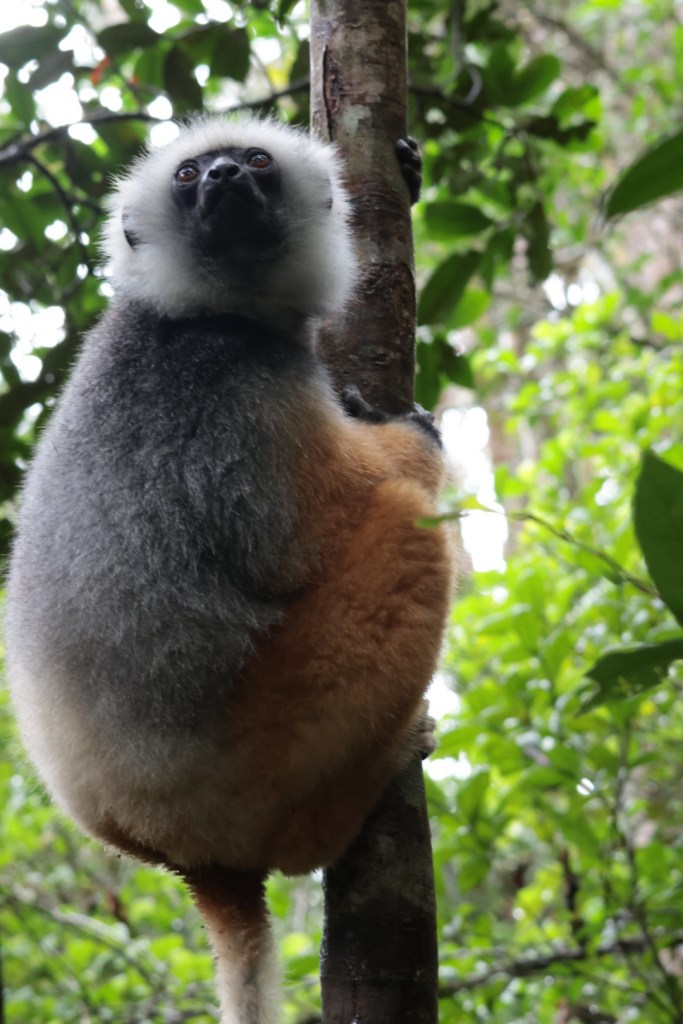
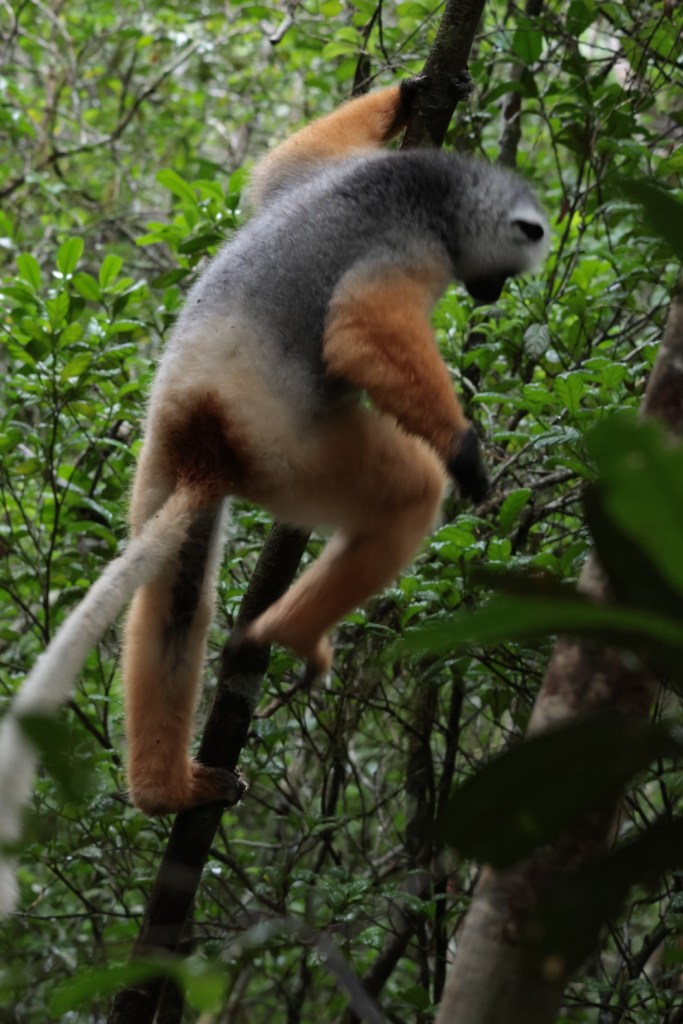
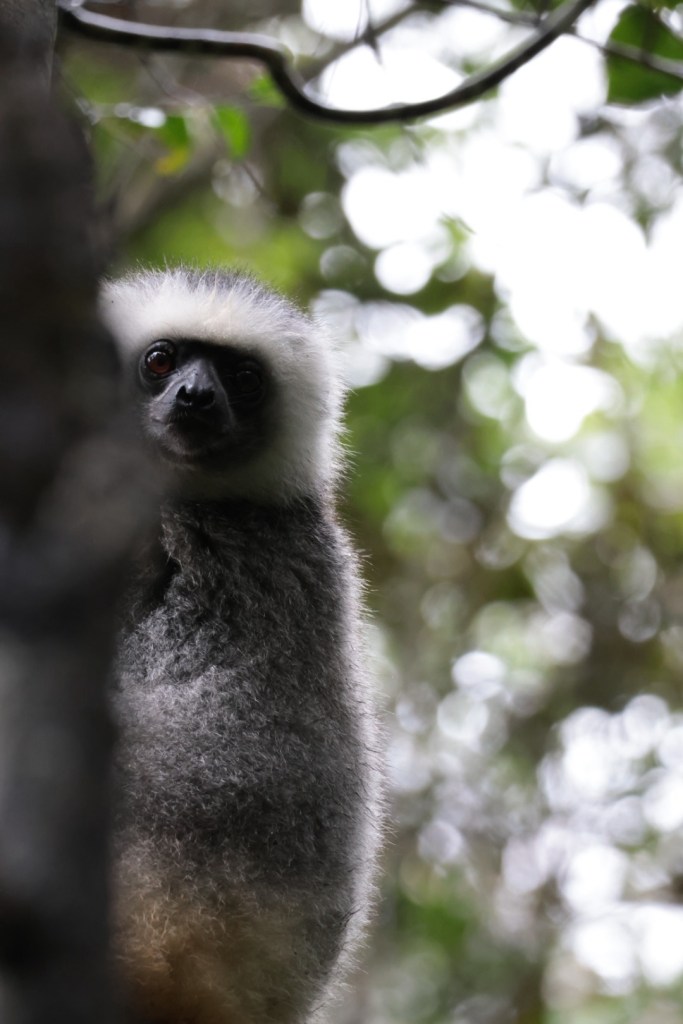
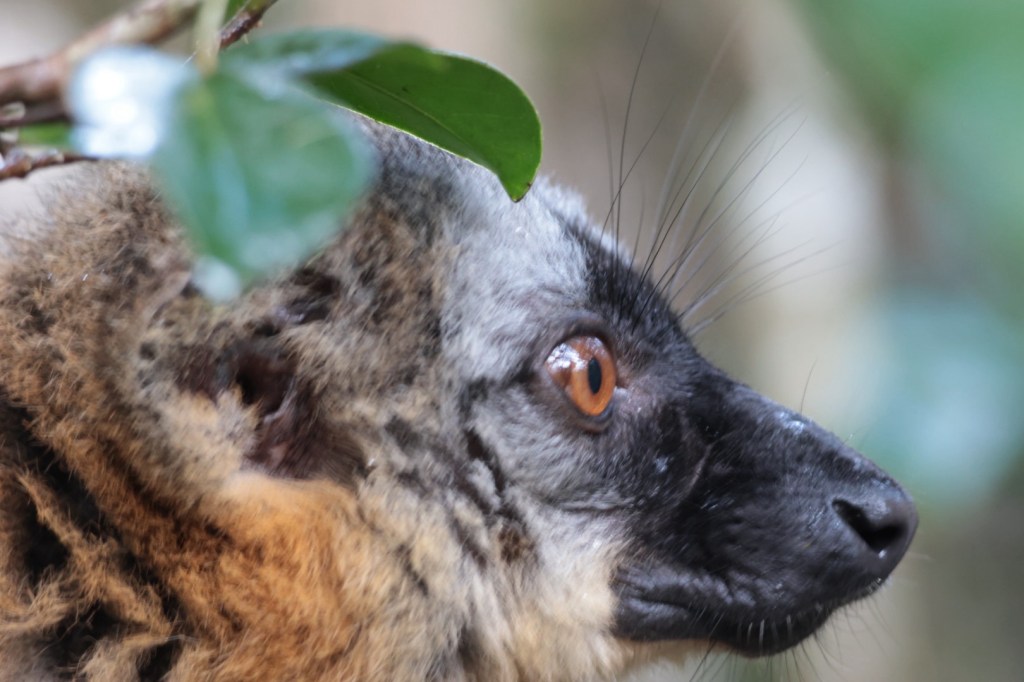
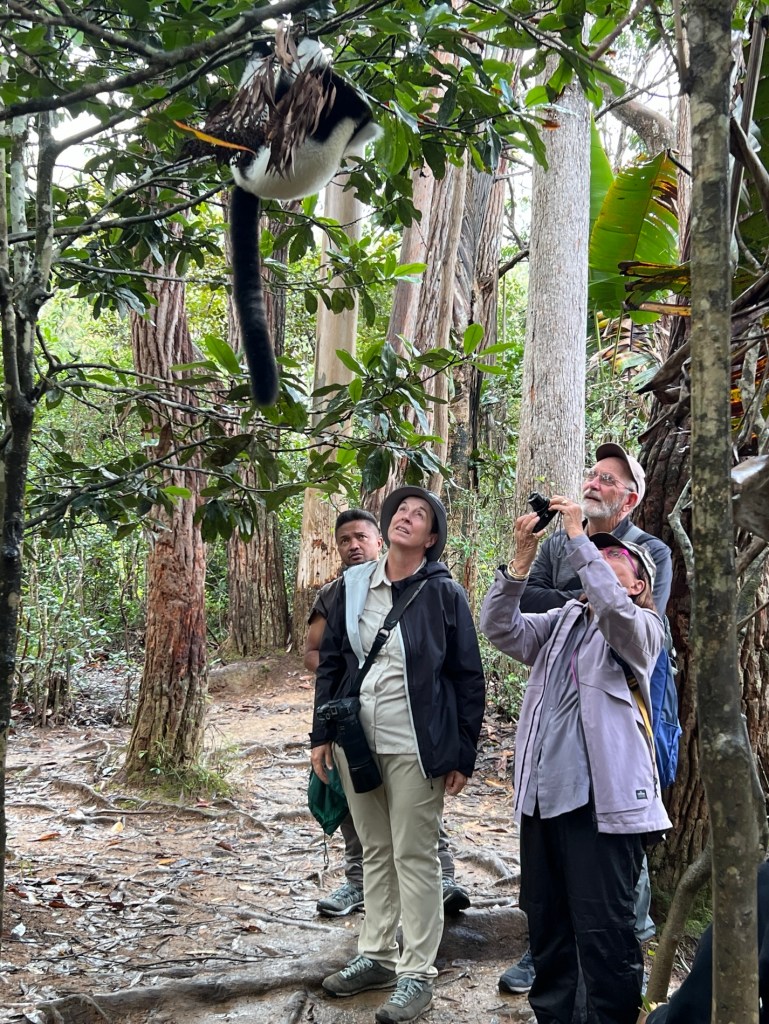
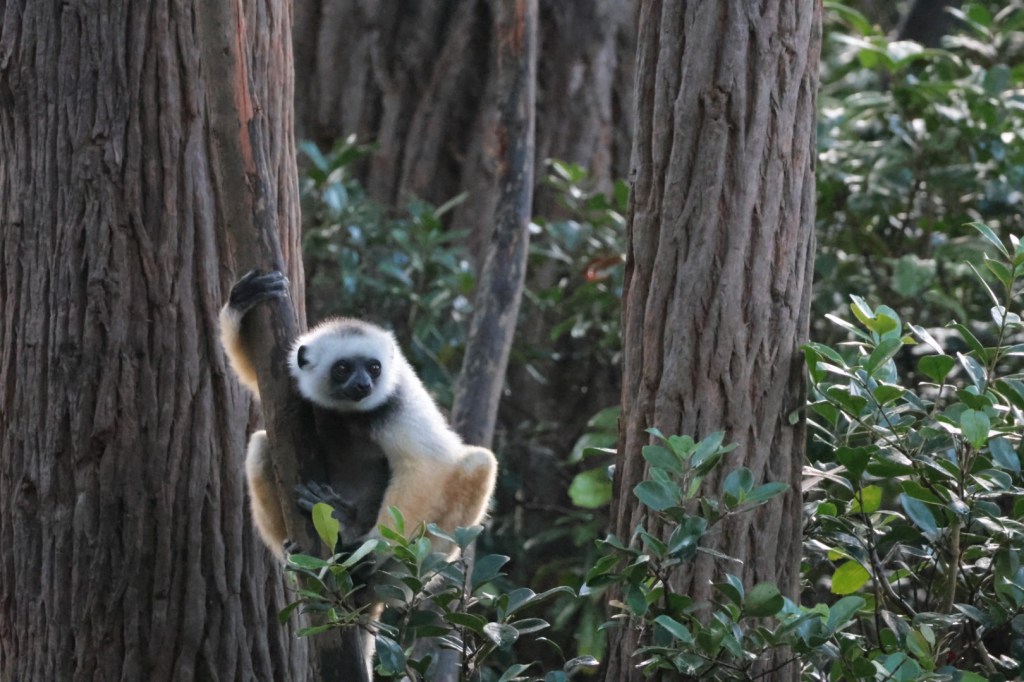
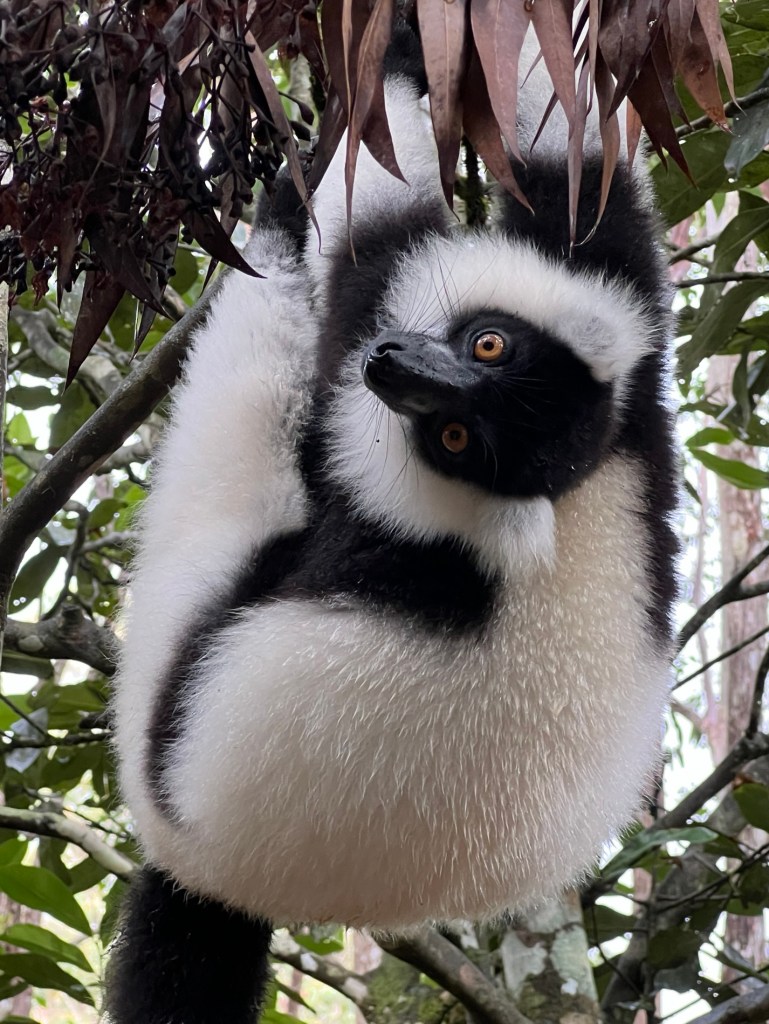
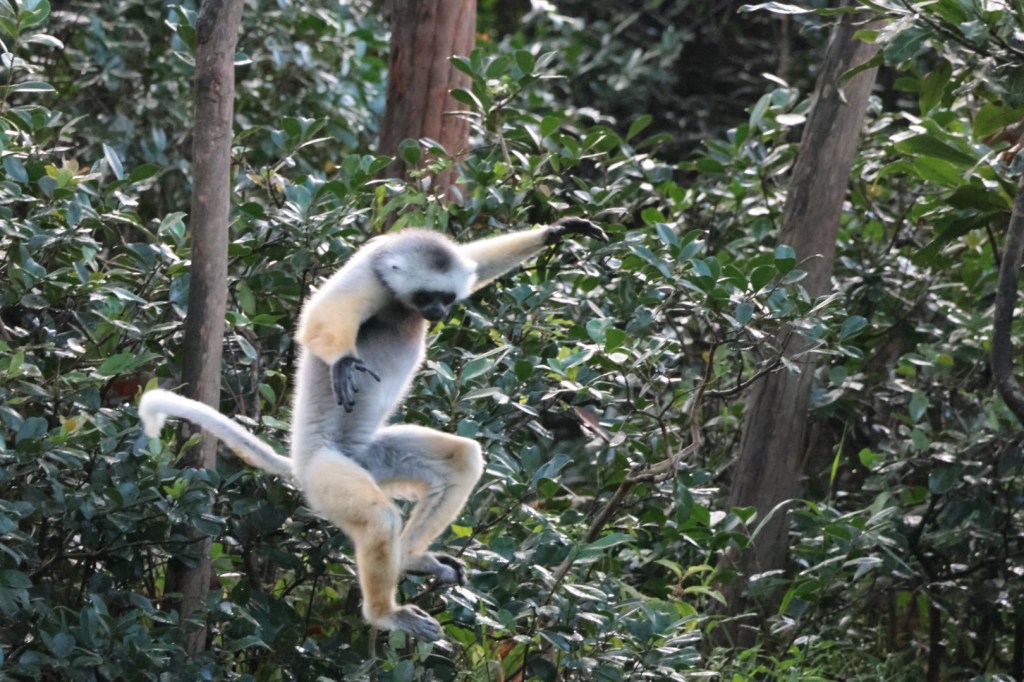
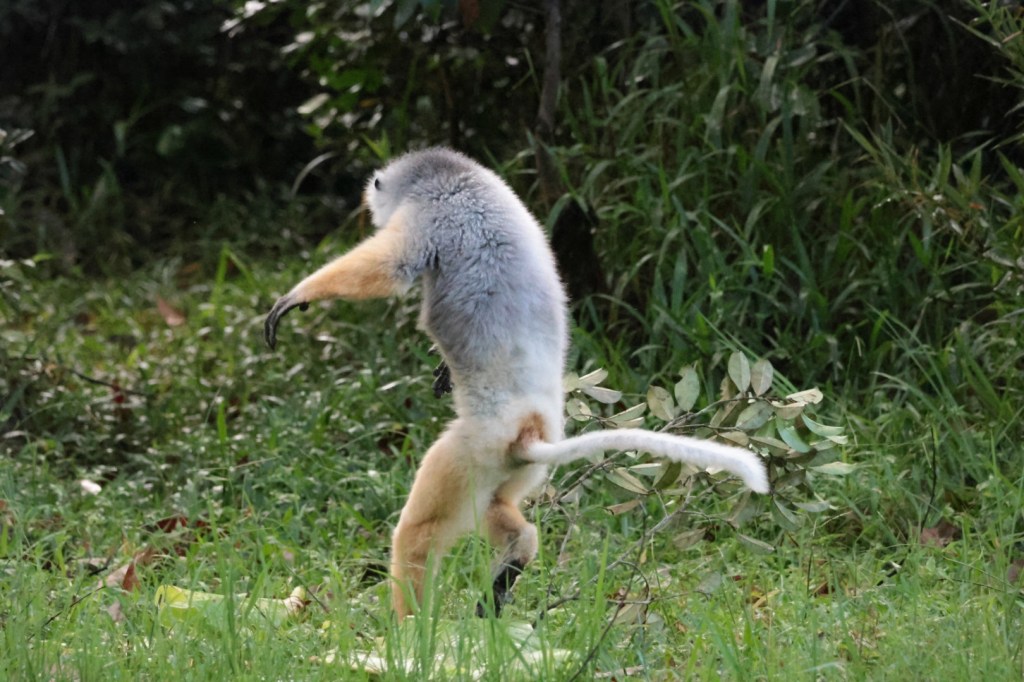
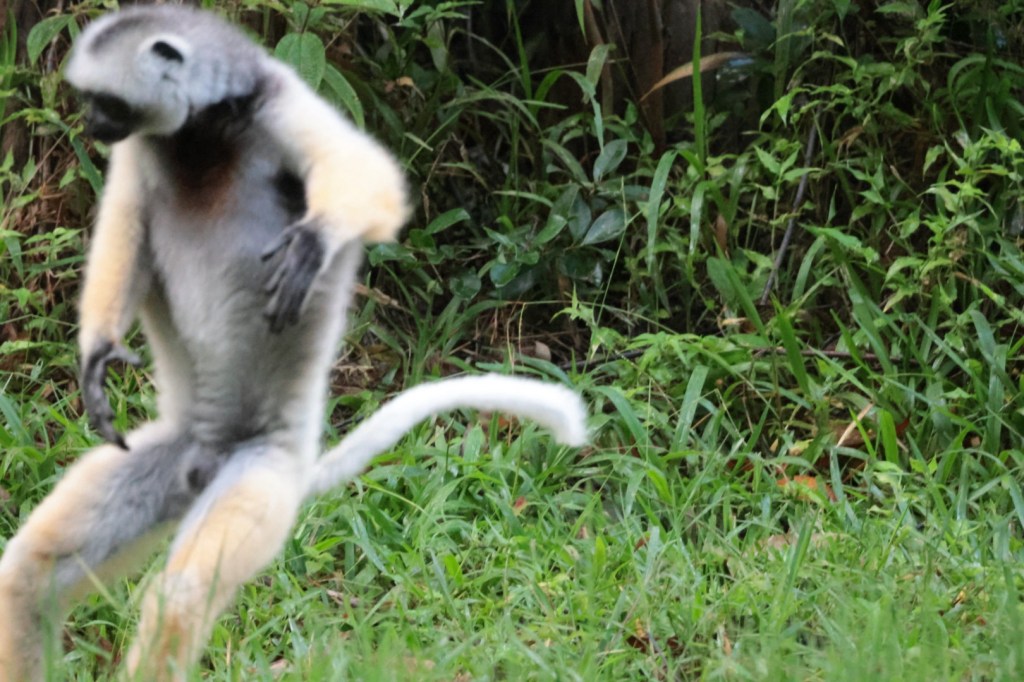
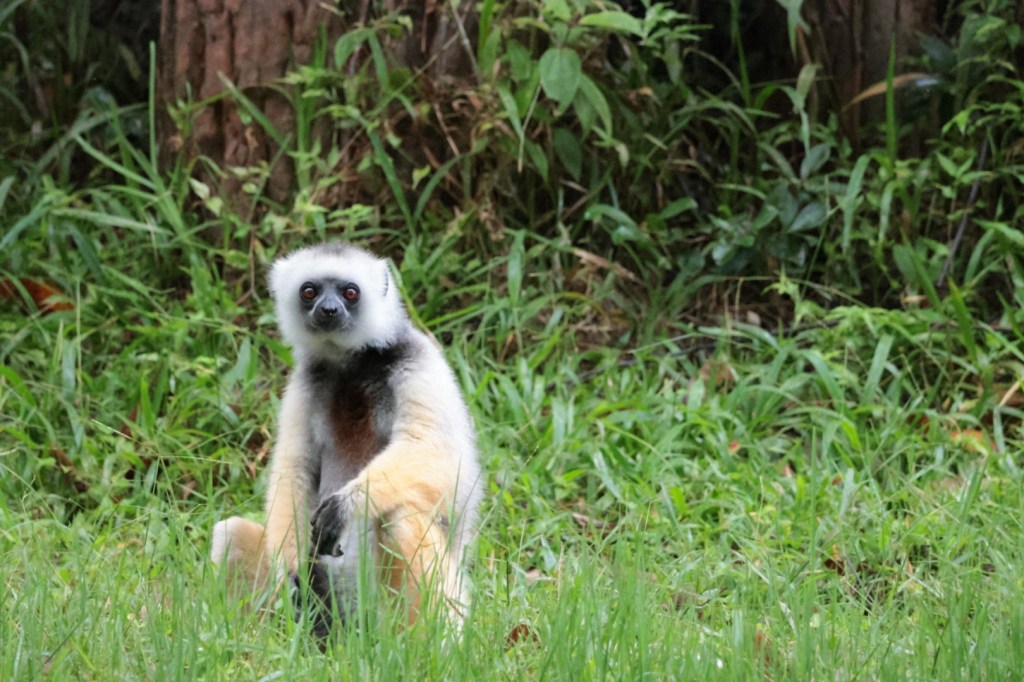
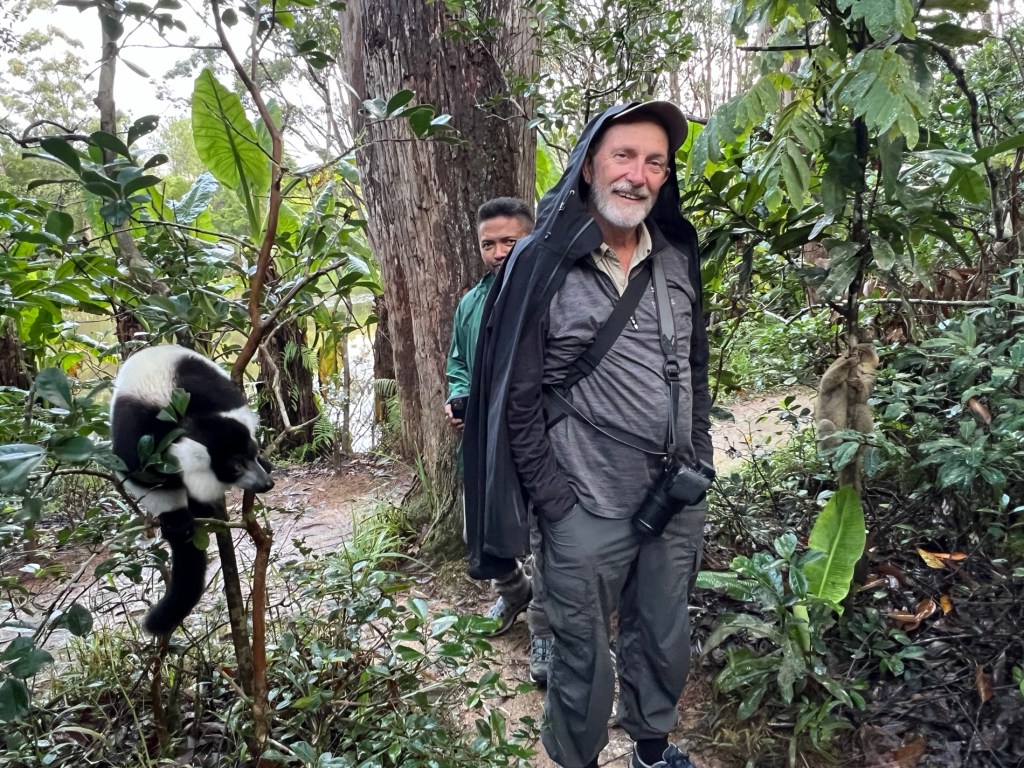
We came across our first lemur here a Diademed Sifaka (Golden Sifaka) a large extended family of 8-9 with a larger territory of 40ha. Photography was really challenging through the thick and wet rainforest. Whenever the lemurs jumped/leapt from tree to tree we had a heavy shower, often down the lenses, from the rainwater falling off the treetops. The lemurs are monogamous and reproduce every 2 or 3 years.
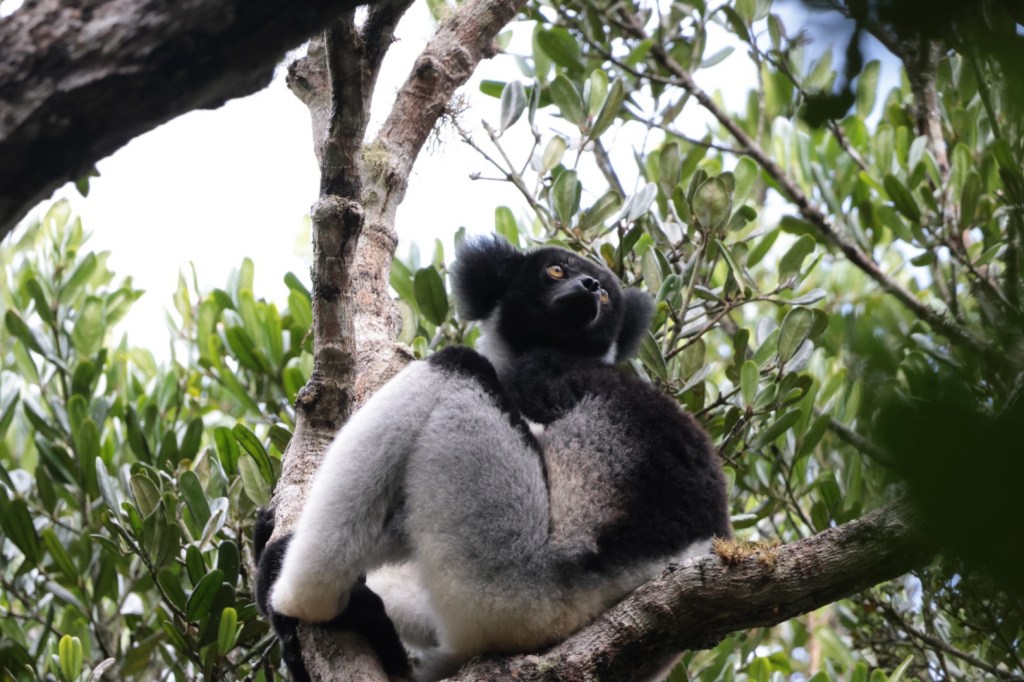
Next we saw an Indri family of four, high up in the treetops catching the suns rays when it poked out from behind the clouds. They also produce one young every two years. Lemurs live for about 50 years and breed between the ages of 9-35 (Menopause) with an 8
month gestation period.
Dessie also shared that Madagascar was once known as the green Island however since the clearing of 85% of the vegetation, now it s the brown island, with only 11-12% vegetated. This certainly matched with what we saw flying over the country these past few days. Destruction of habitat is the greatest risk for the lemurs who are all considered endangered for that reason.
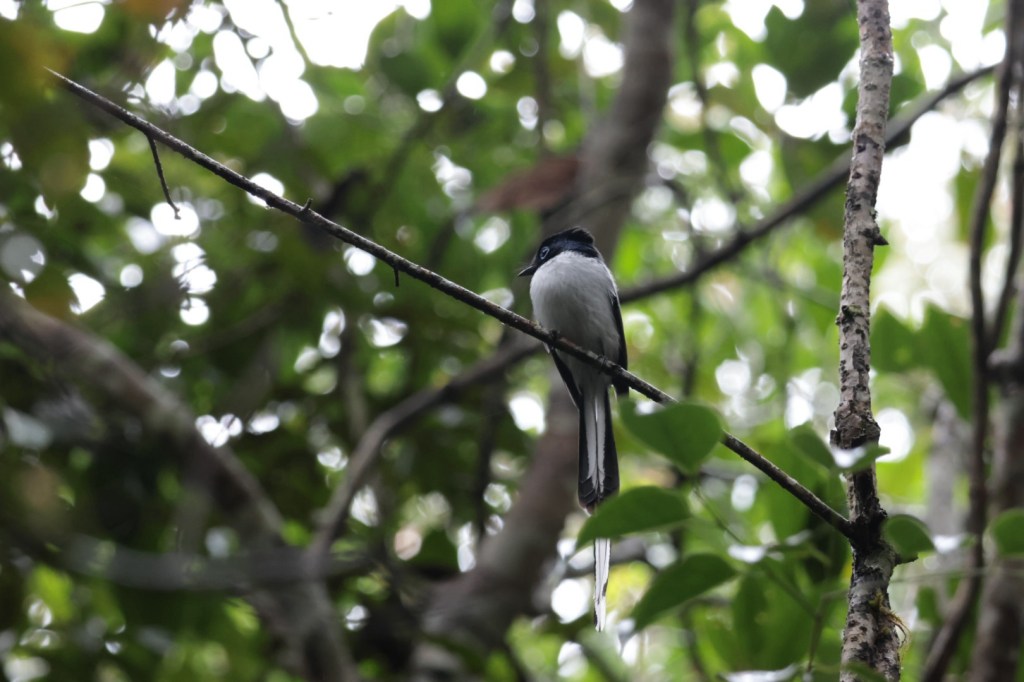
Benj pointed out a White faced paradise flycatcher male and the brown female.
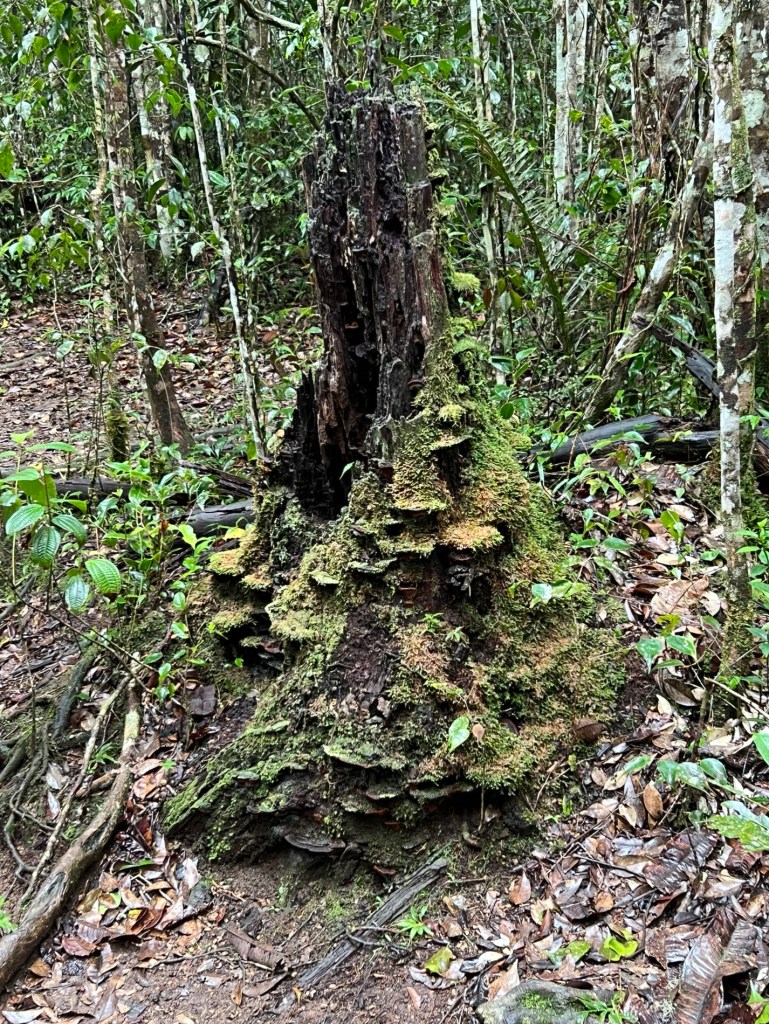
There was a Black termite nest full of galleries of termites.
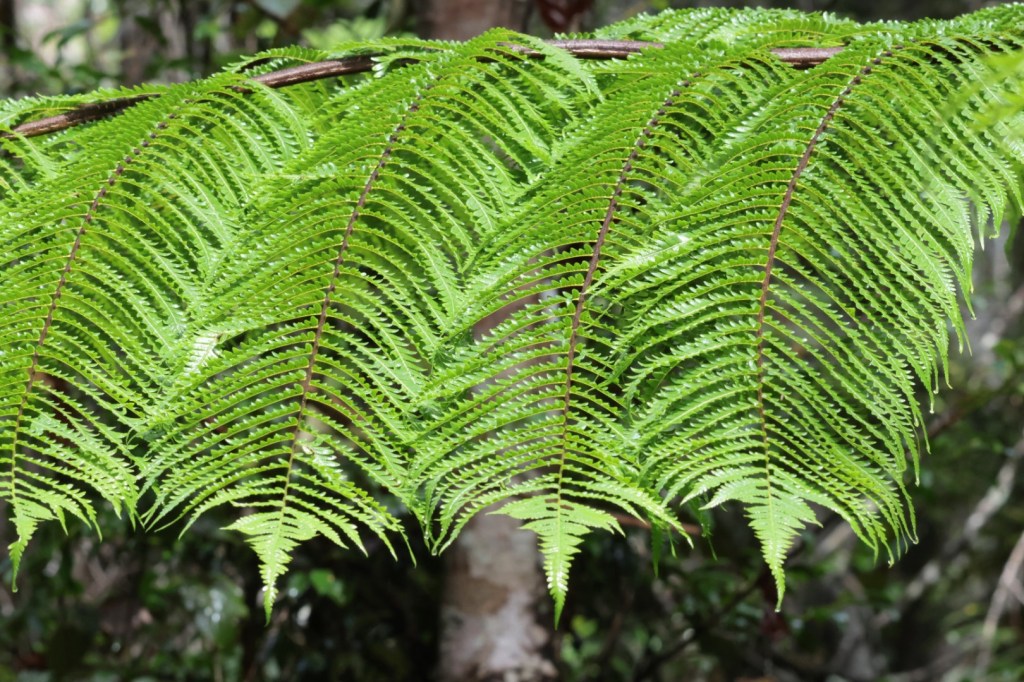
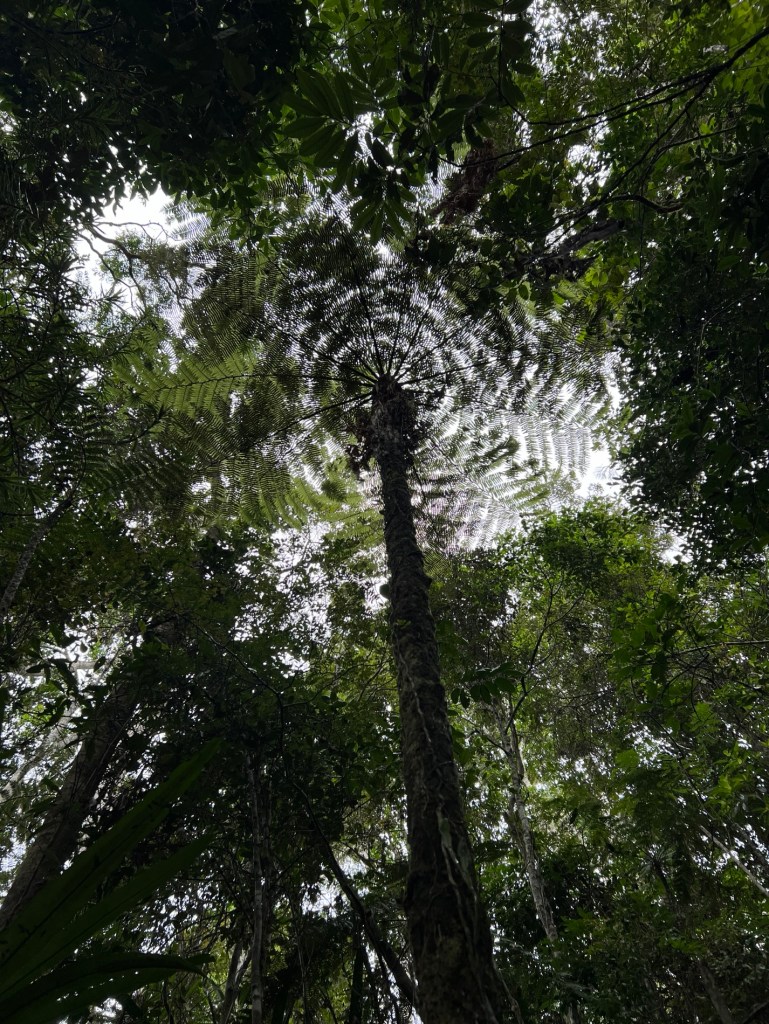
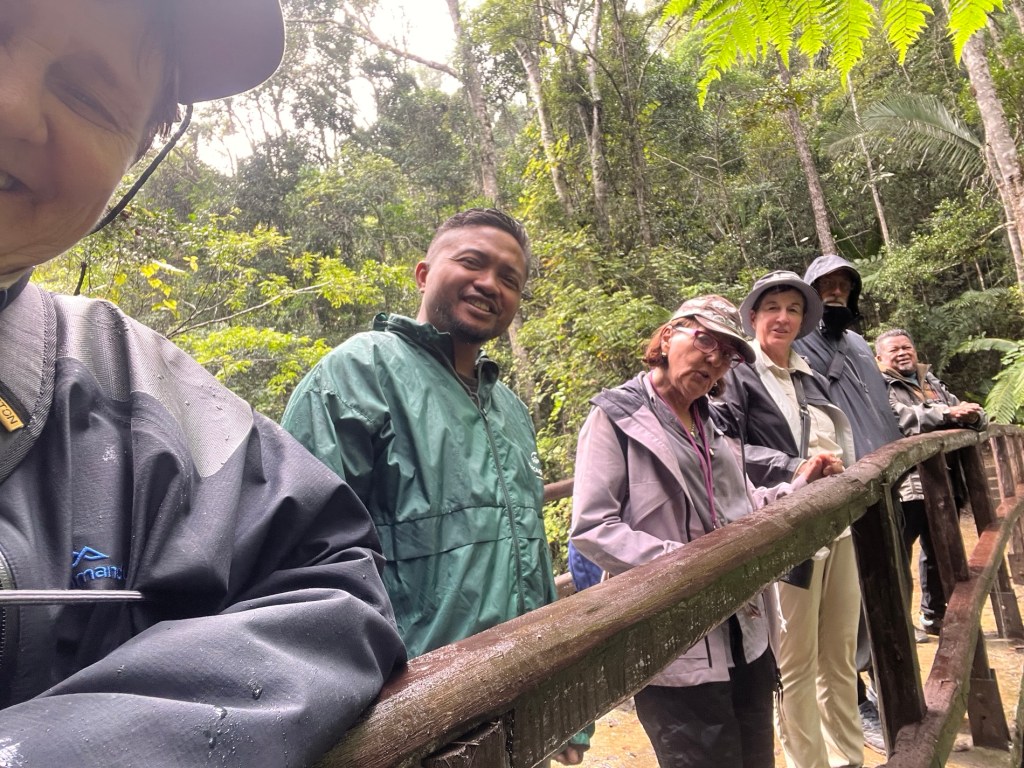
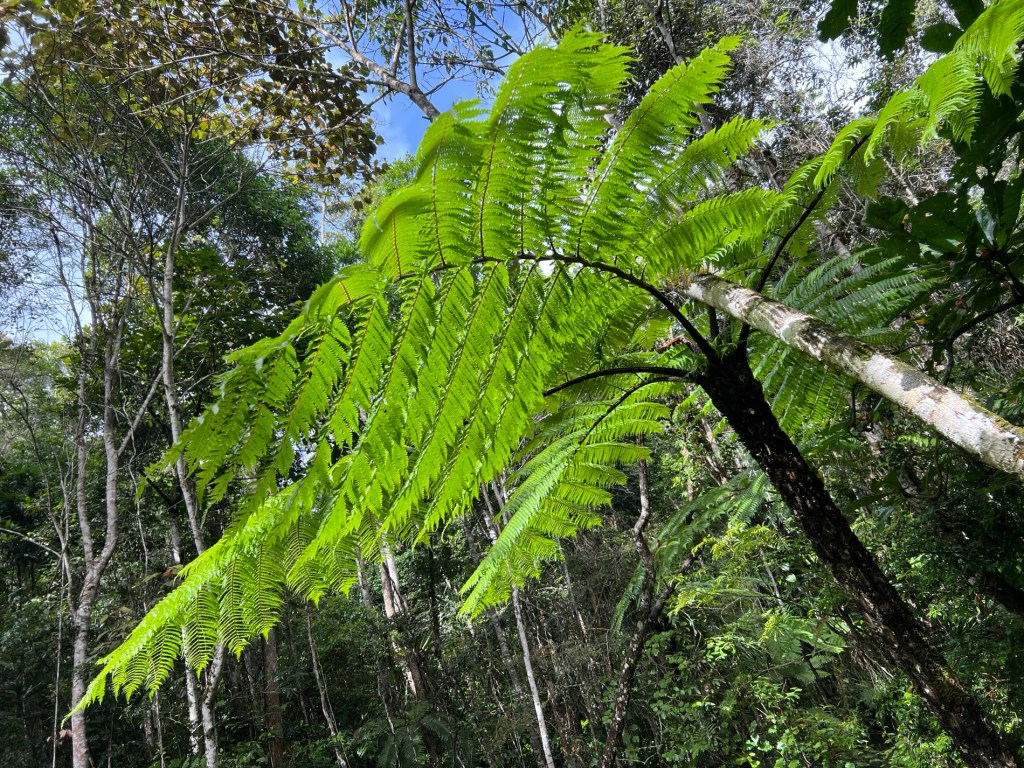
Dessie pointed out a Tree fern near a bridge over the creek, known as a ‘Dinosaur Tree’ as it’s been around since the time of dinosaurs and is a match to the tree ferns of NZ and this one is over 1000 years old.
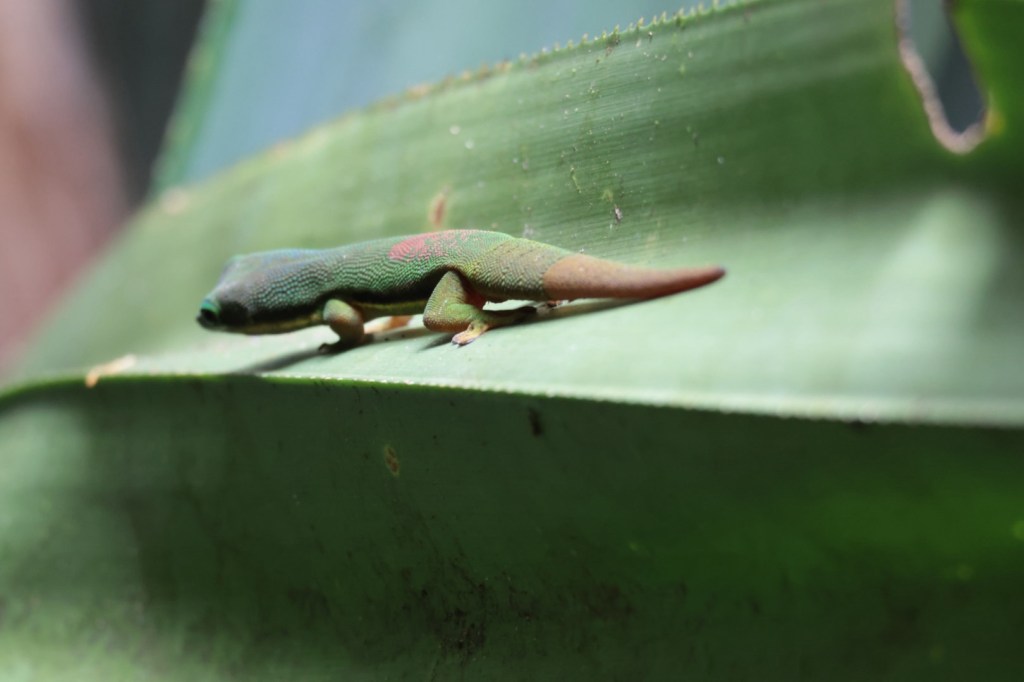
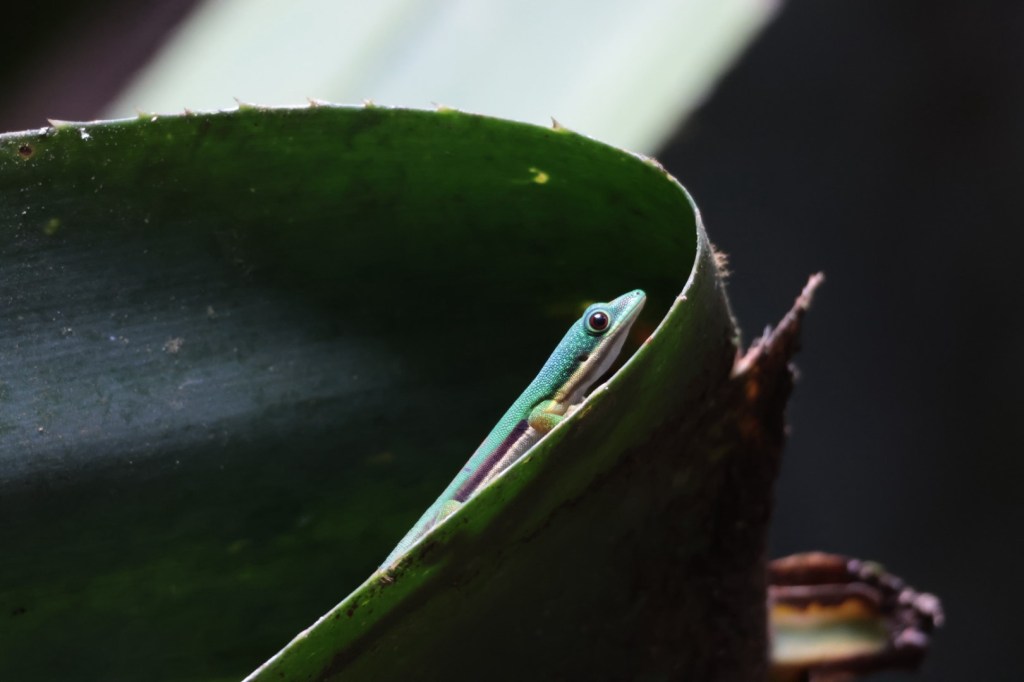
We saw several Lined tail Green Geckos in a Pandanas palm and a
Ground lemur briefly near the end of our walk.
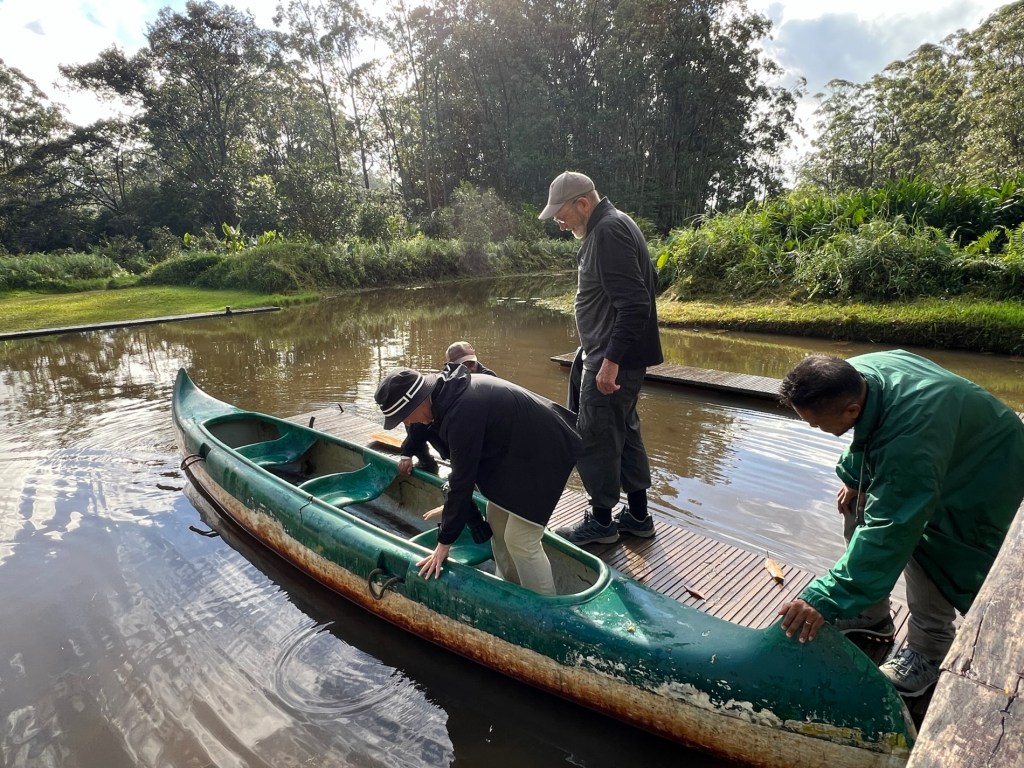
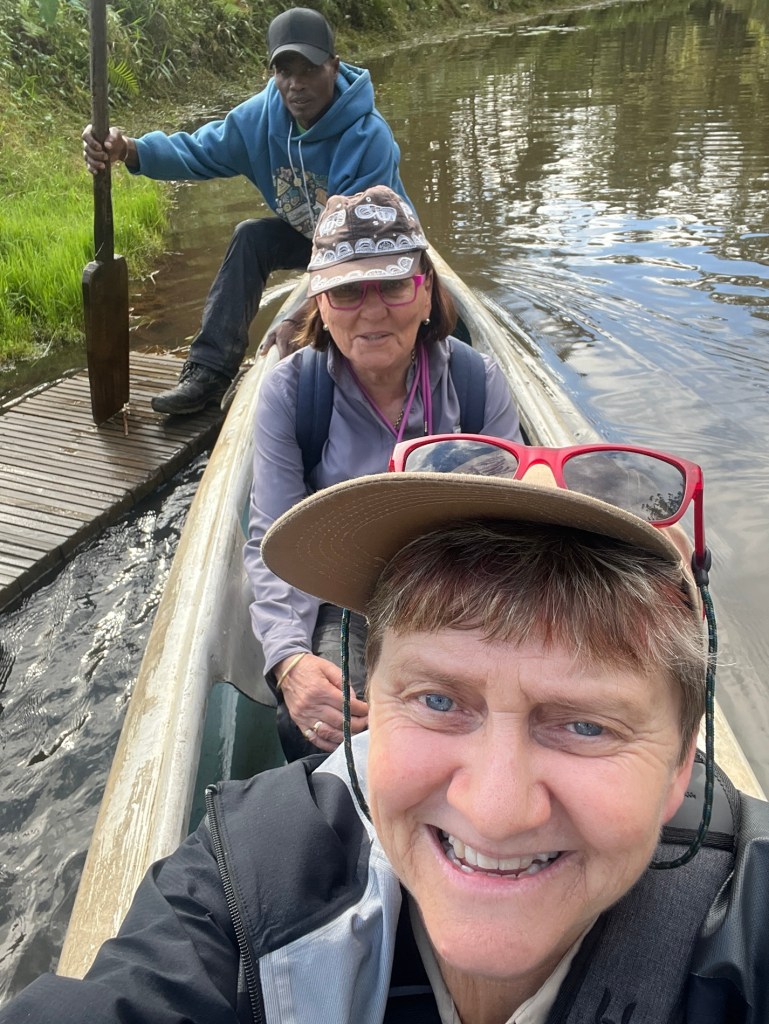
We returned to the lodge for lunch and headed out through the Village of Andasibe and visited Lemur Island via canoe.
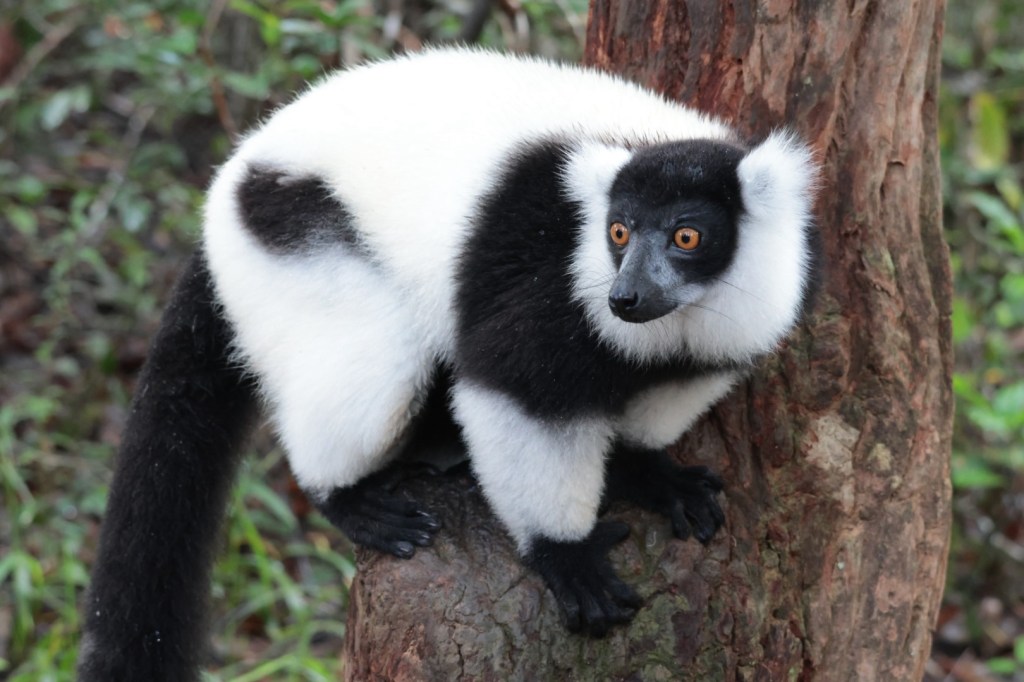
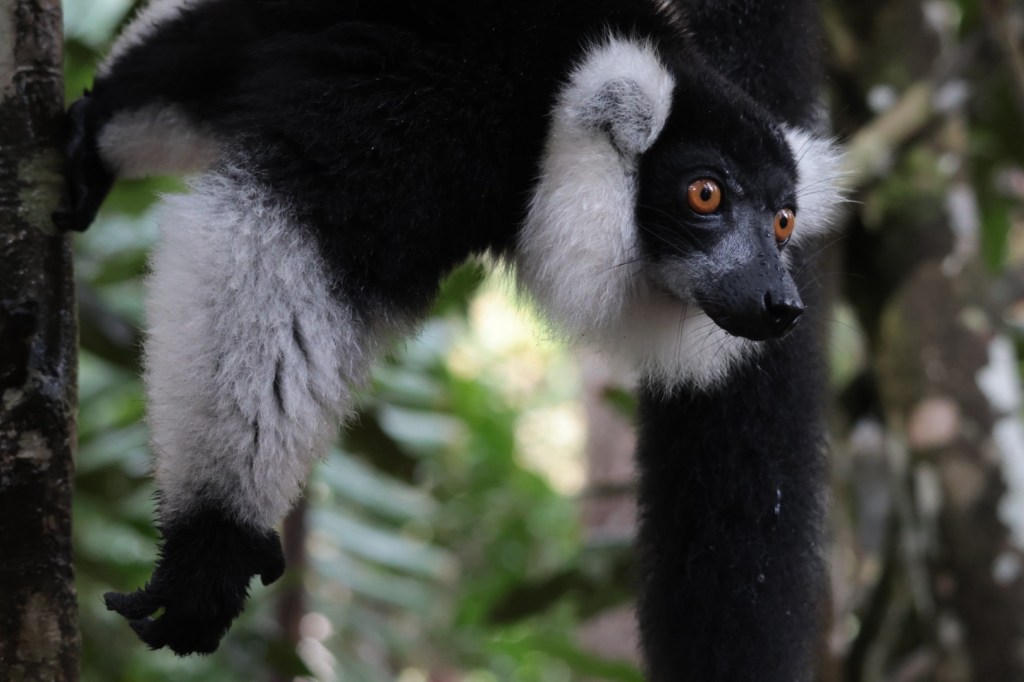
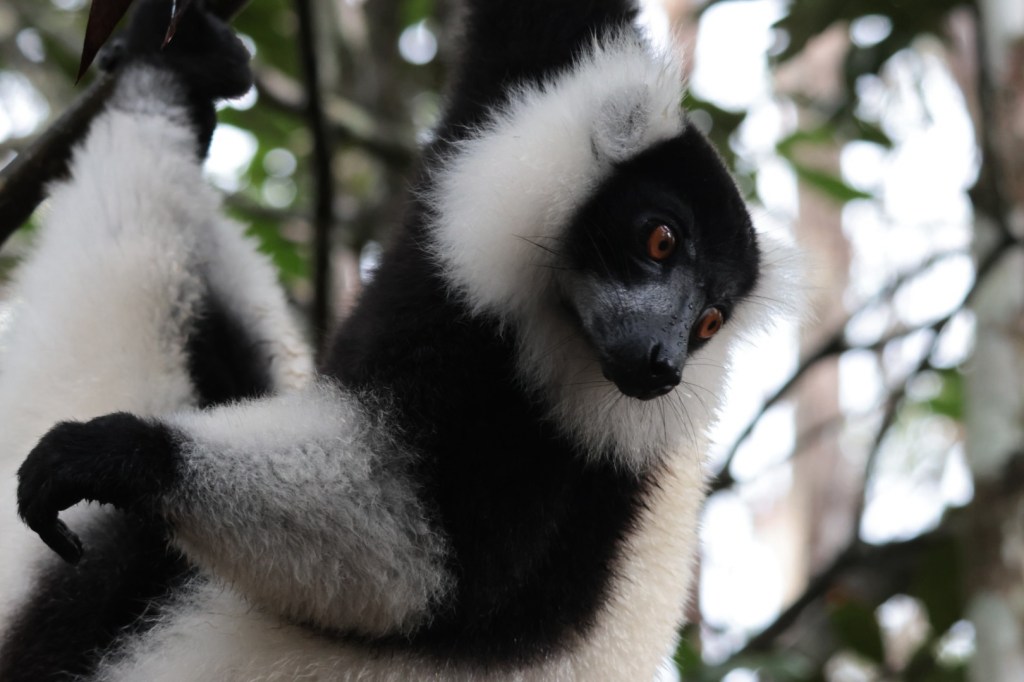
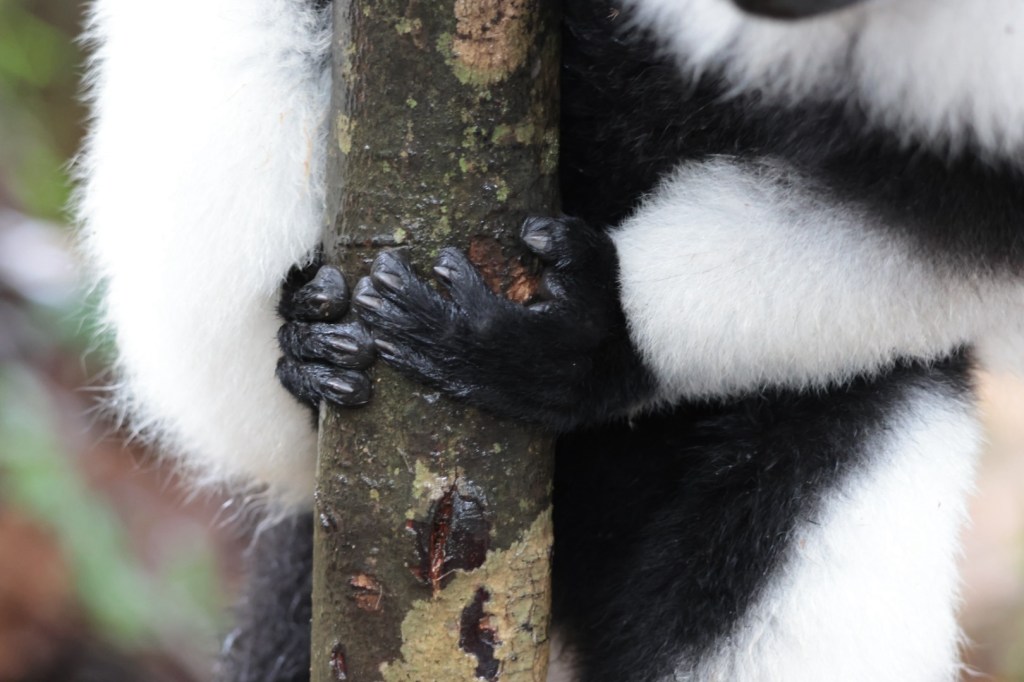
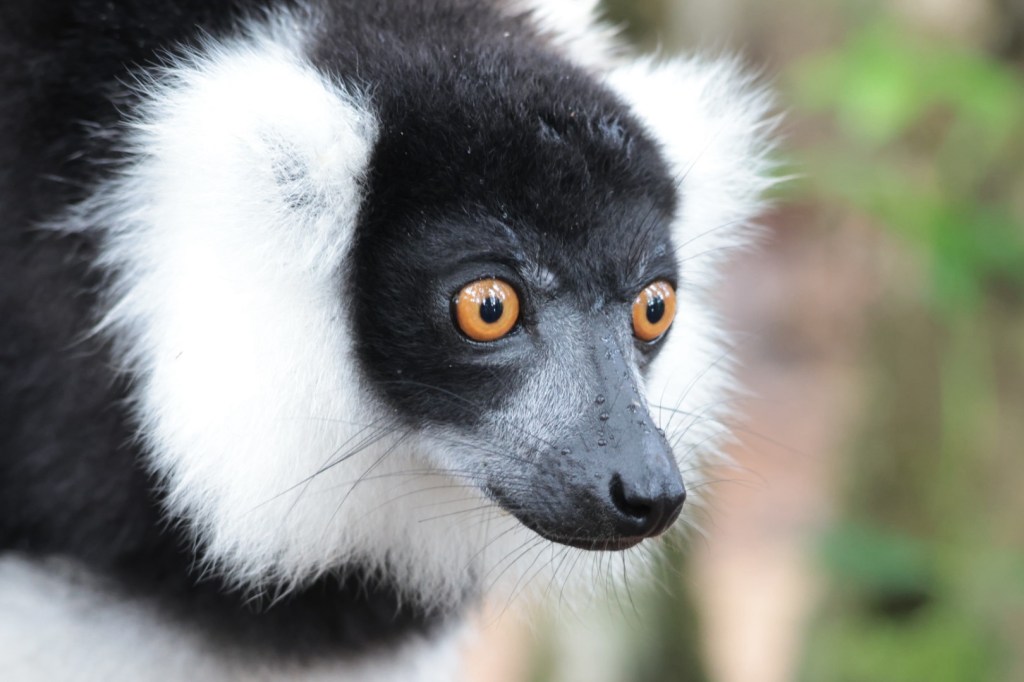
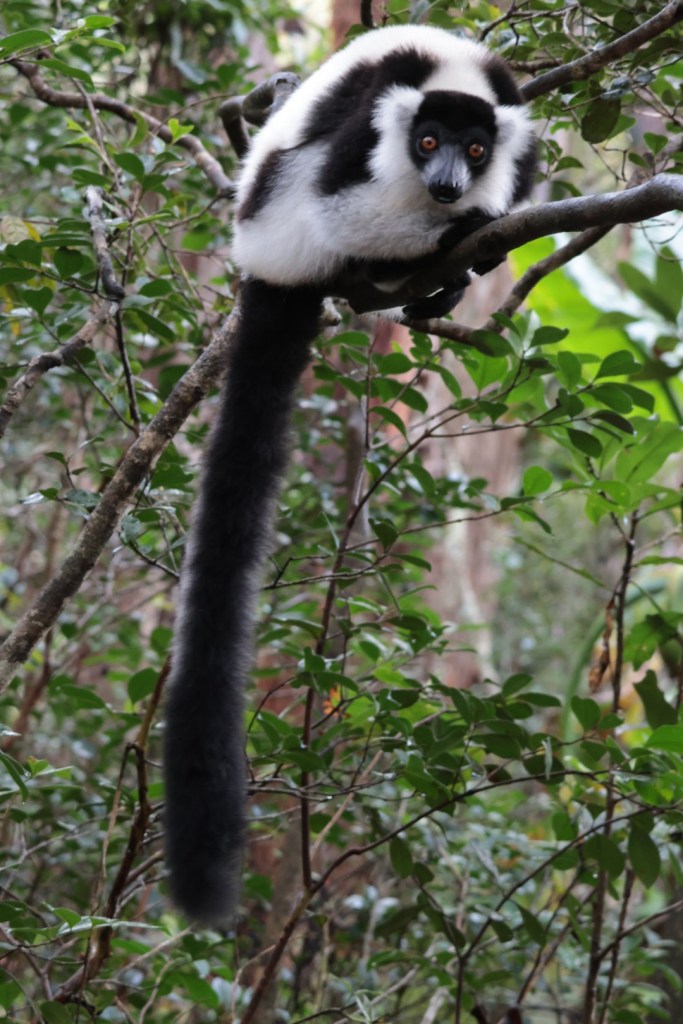
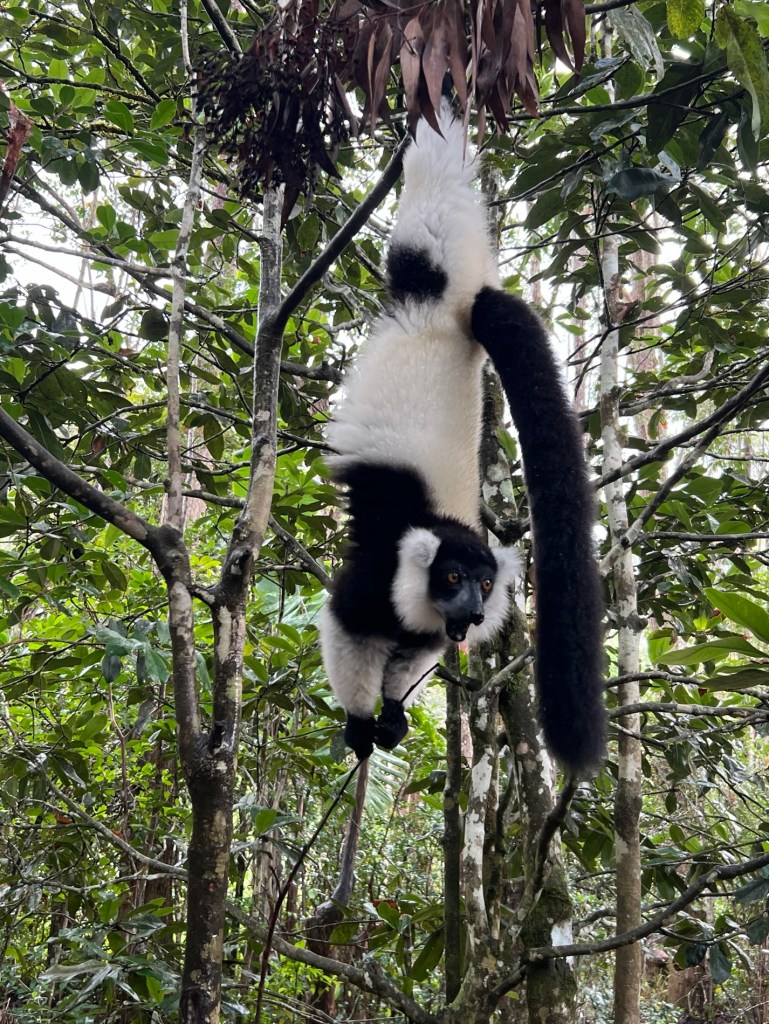
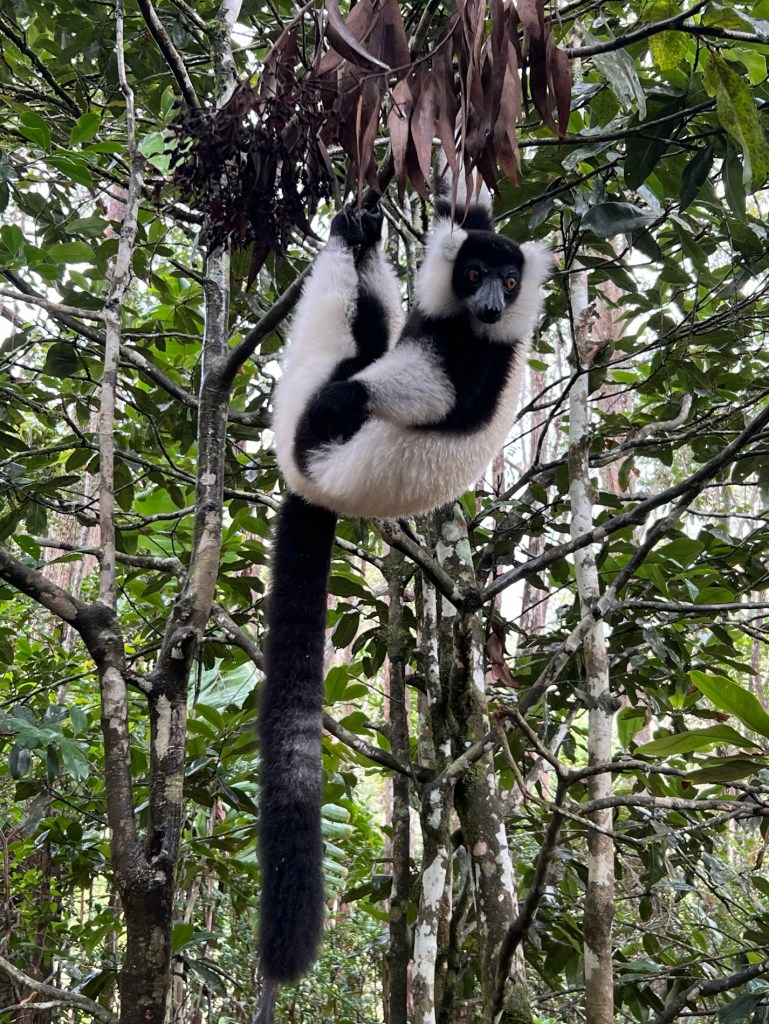
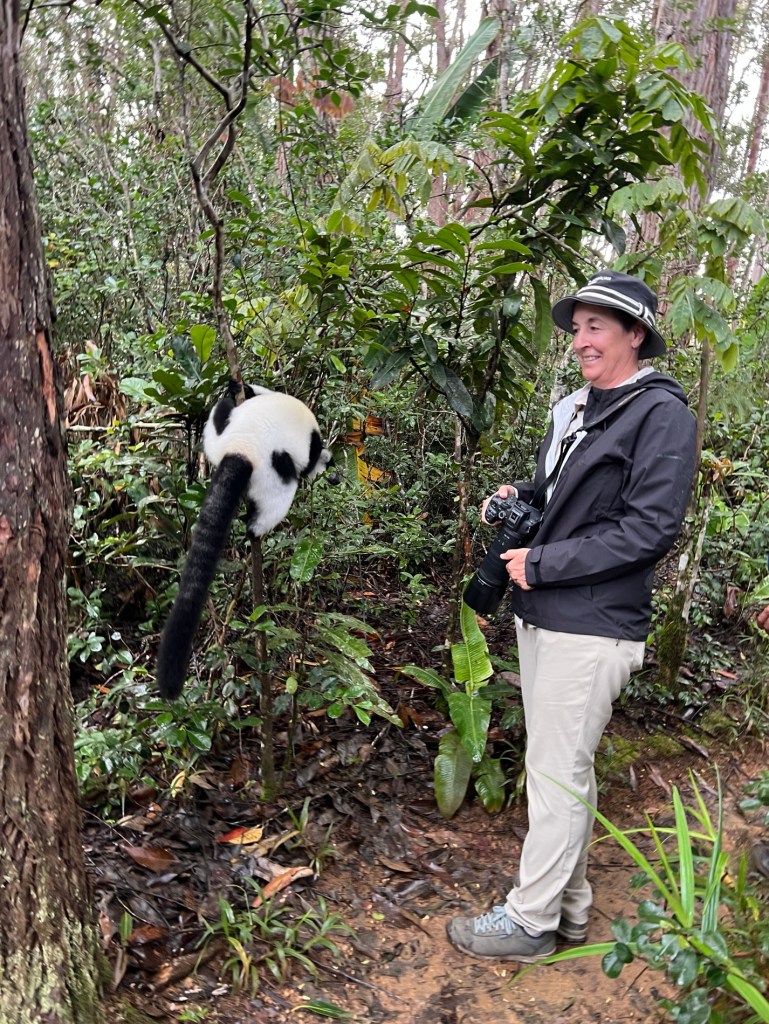
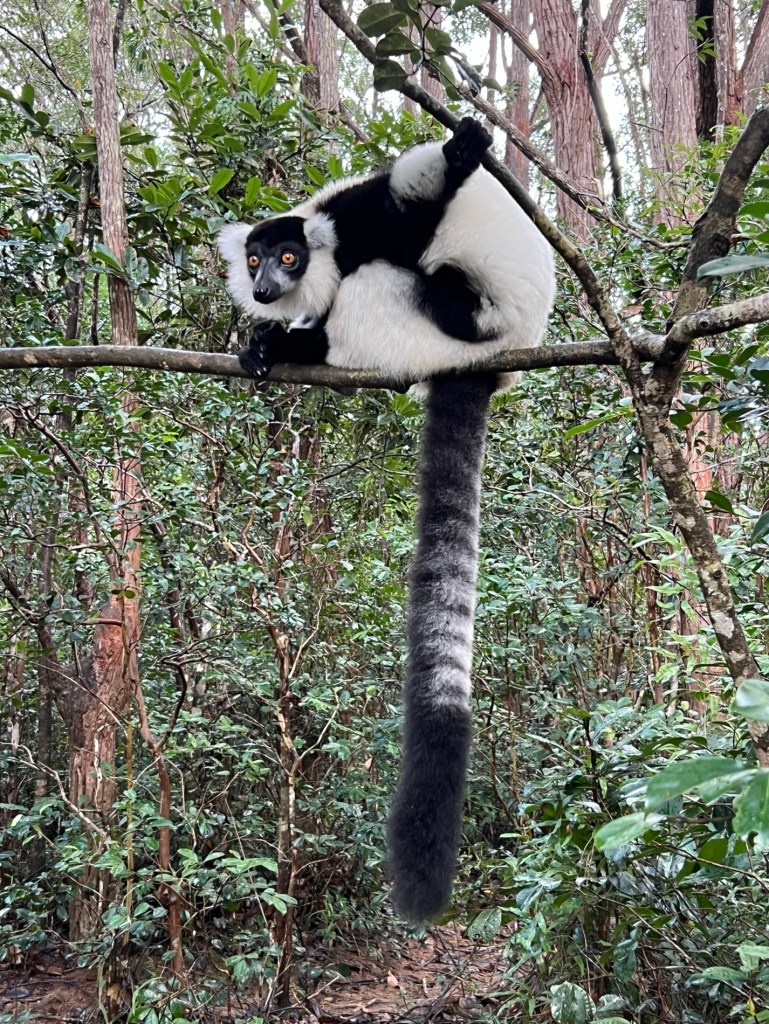
We heard the Black and white Ruffed lemur calling as we arrived.
Then a Black and White Ruffed Lemur came to welcome us to the island.
This island was built in 1996 and was populated with lemurs who were previously kept as pets after the government put a stop to ownership of lemurs.
The first visitors started in 2000. The island is home to five different species of lemurs and we were lucky enough to see them all. Some up close and personal.
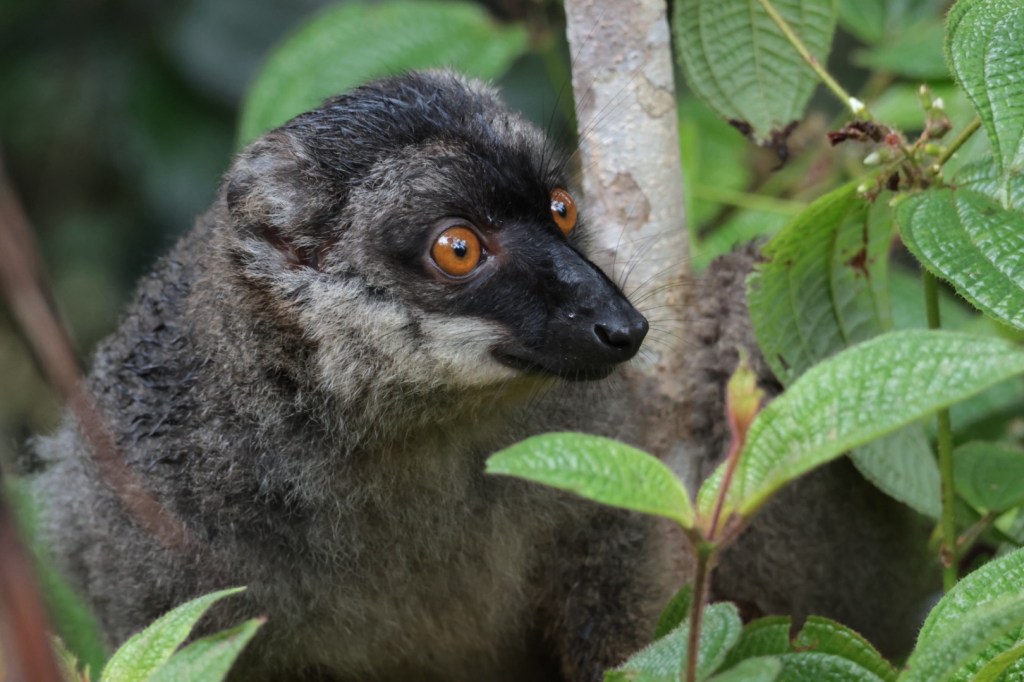
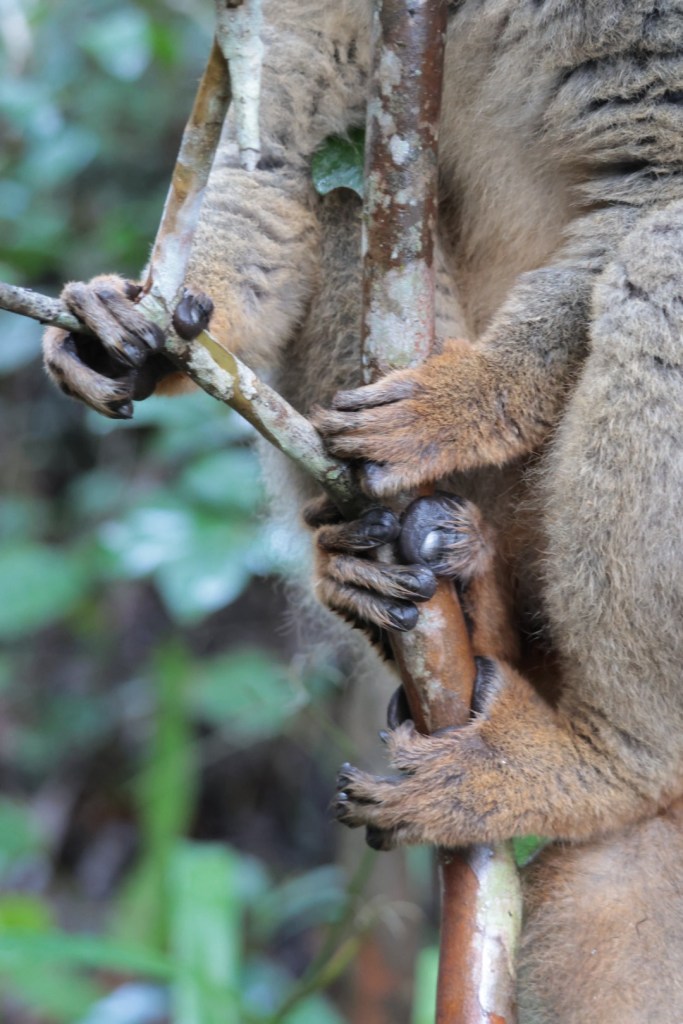
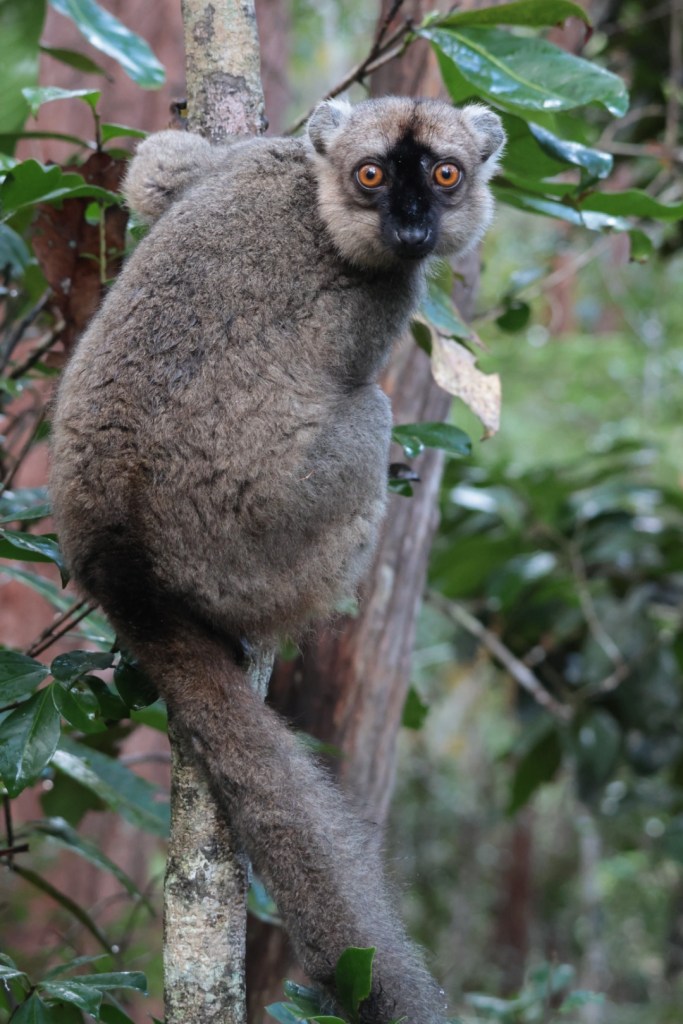
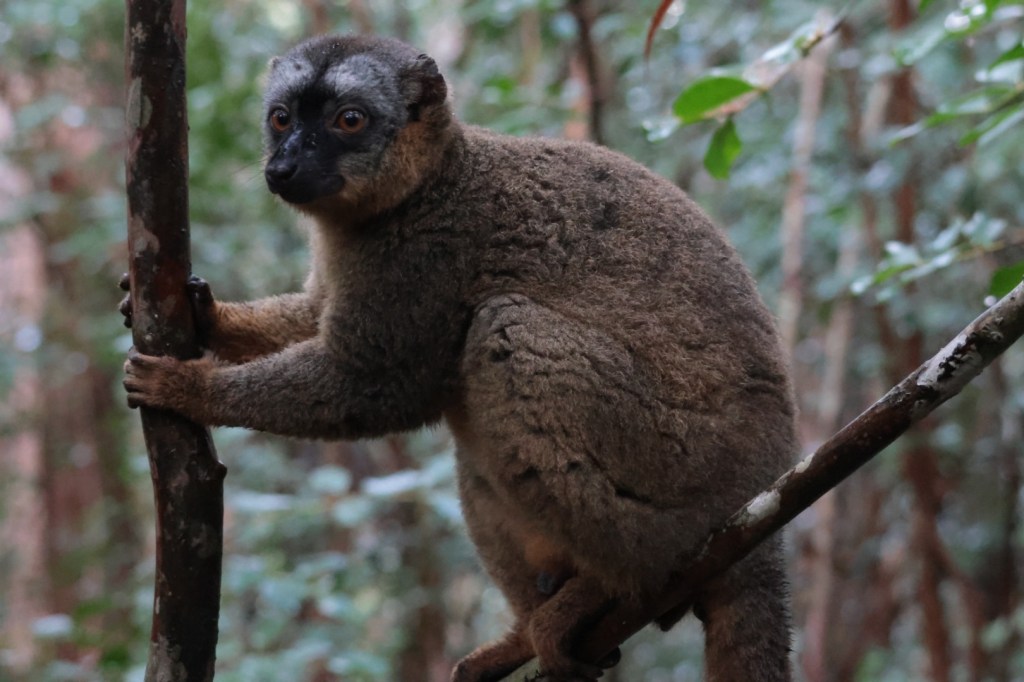
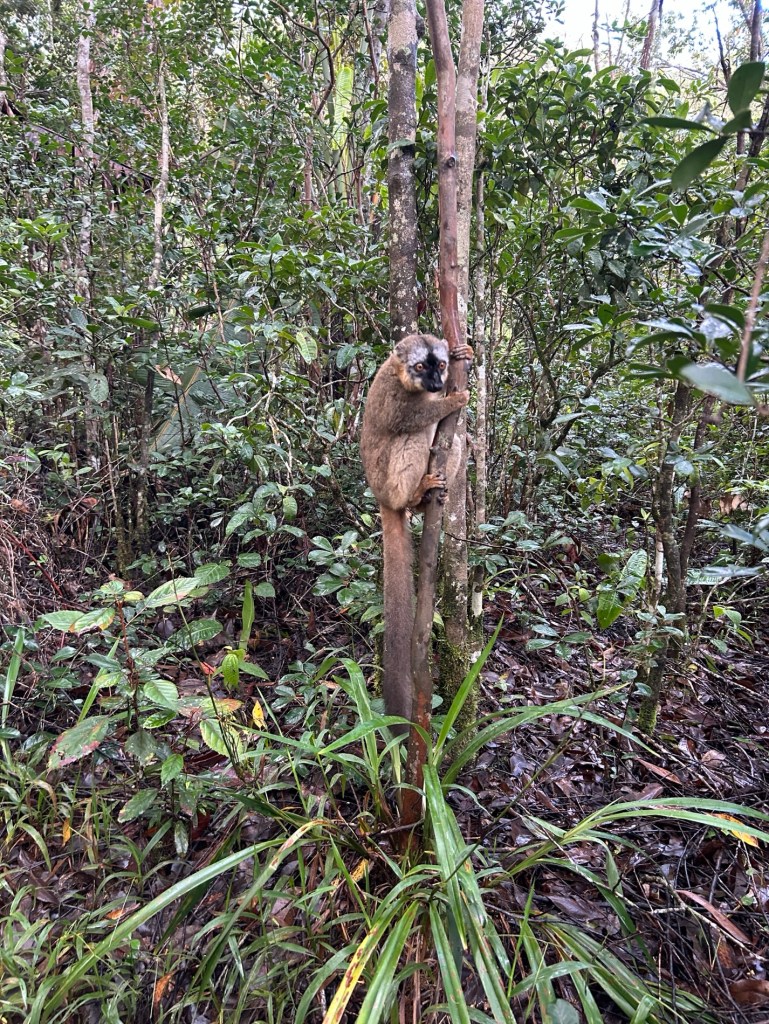
Common Brown lemurs
Ground lemur
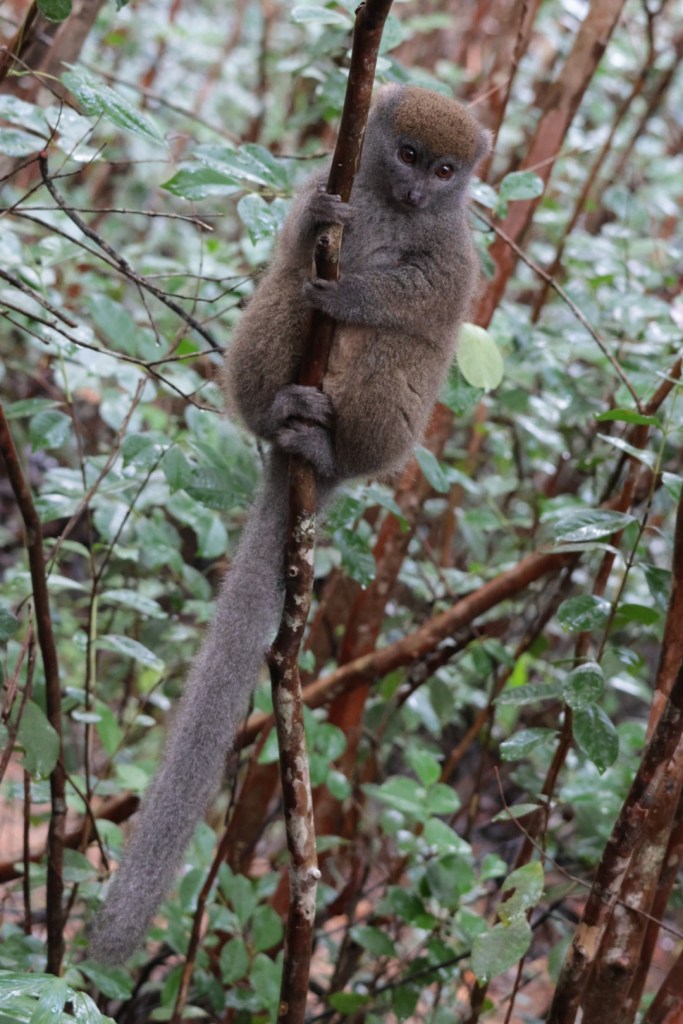
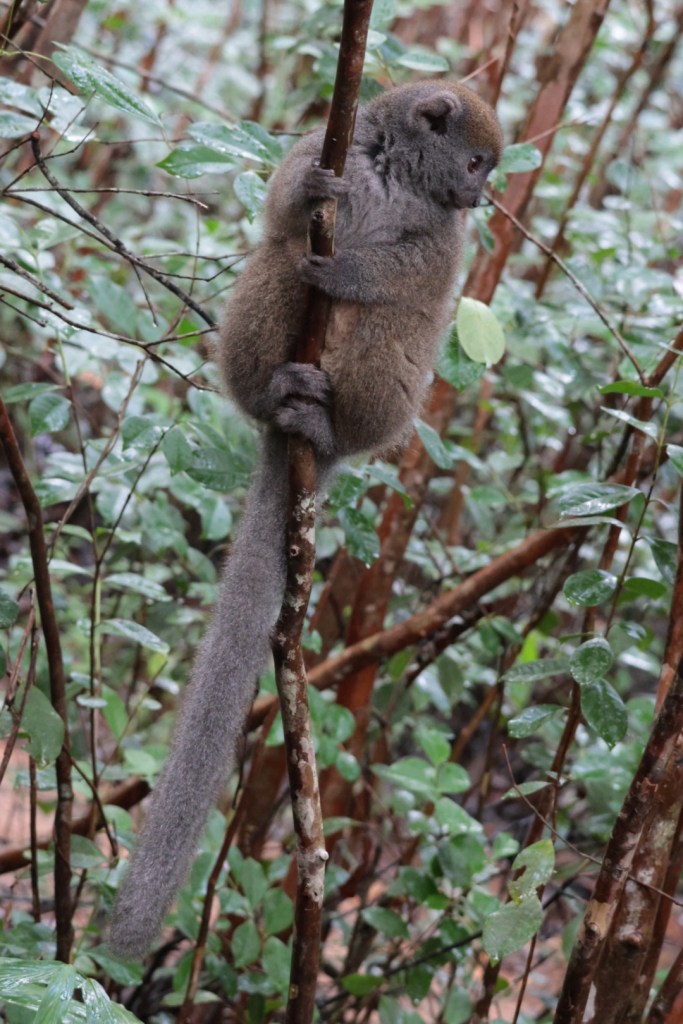
Bamboo lemur
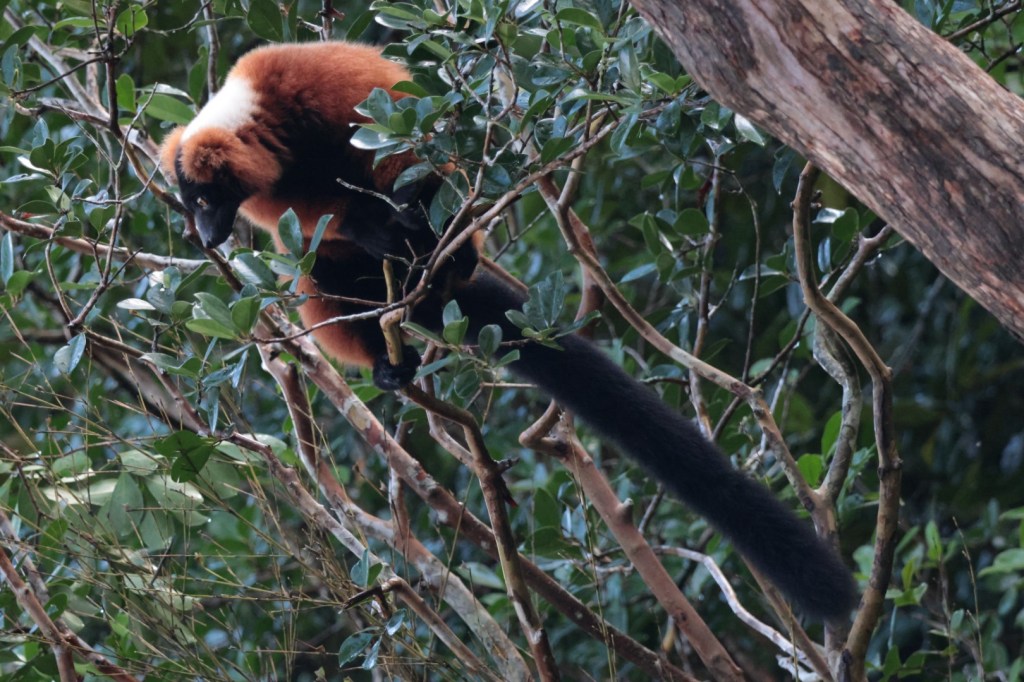
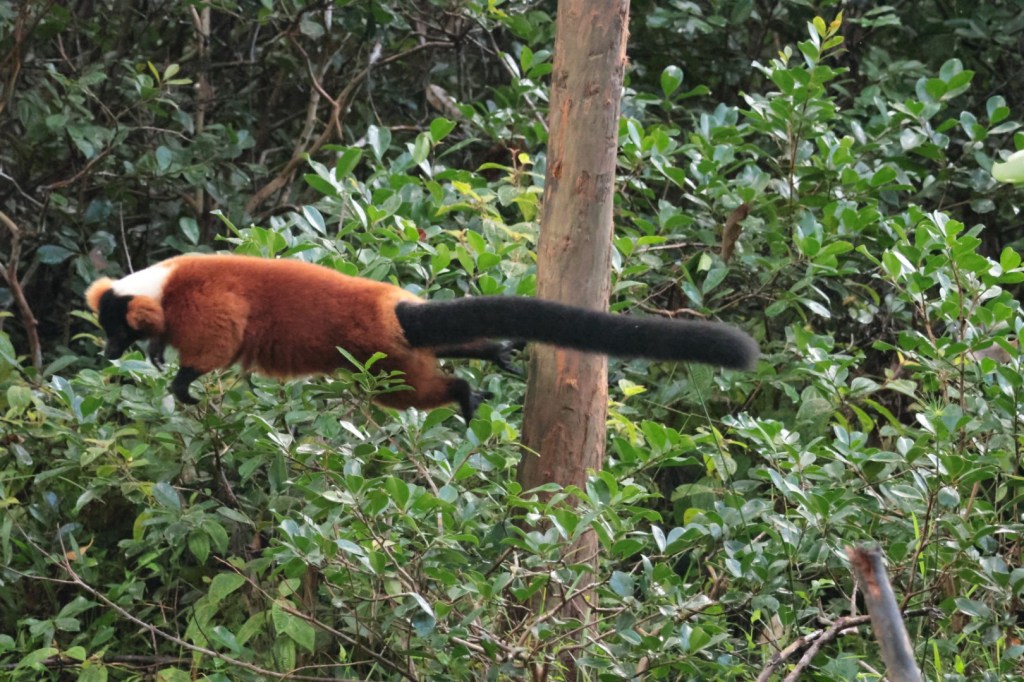
Red ruffed lemur
Diademed Sifaka (golden sifaka)
Daniel our guide for the visit to the island has worked here for 6 years and he loves his job. They do train the young ones to be released into the wild. They have several islands only one of which humans can visit. The Red Ruffed and White Ruffed lemurs have to be kept on separate islands as when they mate their offspring is infertile.
The owner of the Vakona Lodge has created these islands and seems to own a lot of the land around. He has created a haven for the lemurs and a fantastic experience for us. In the high season about 100 people a day visit the island. He established the islands for conservation of the lemurs, tourists came later.
We were lucky to see all 5 species on the island. The people prior to us missed the Bamboo lemur and boy was he cute!
We canoed back across the moat and headed back to the lodge.
Another weird thing. As we neared the Vakona lodge Nico (our driver) got very excited and honked his horn vigorously at a group of people walking down the road. Turns out to be a cousin and family of his here from Germany for a wedding (not sure if it was her wedding or a family member – a few things get lost in translation)
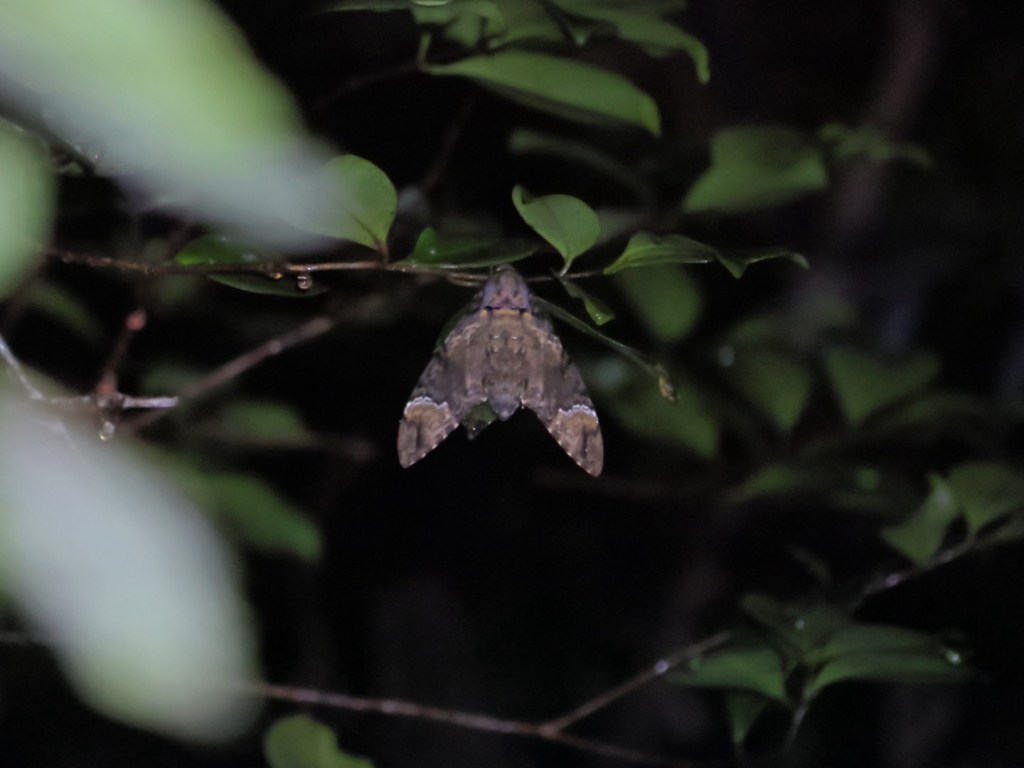
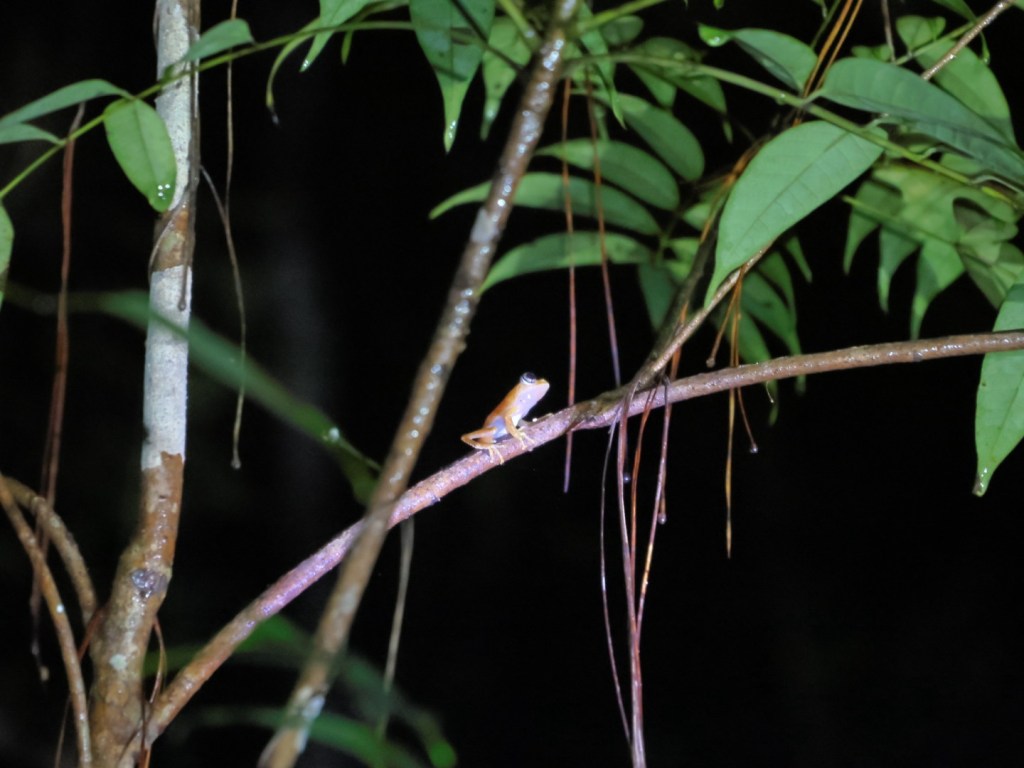
Back to the lodge for a quick turnaround, a drink, order dinner then back in the van for a night walk in the forest with Dessie. It has been raining for most of the day and it was still when we started walking. We saw and attempted to photograph the following critters
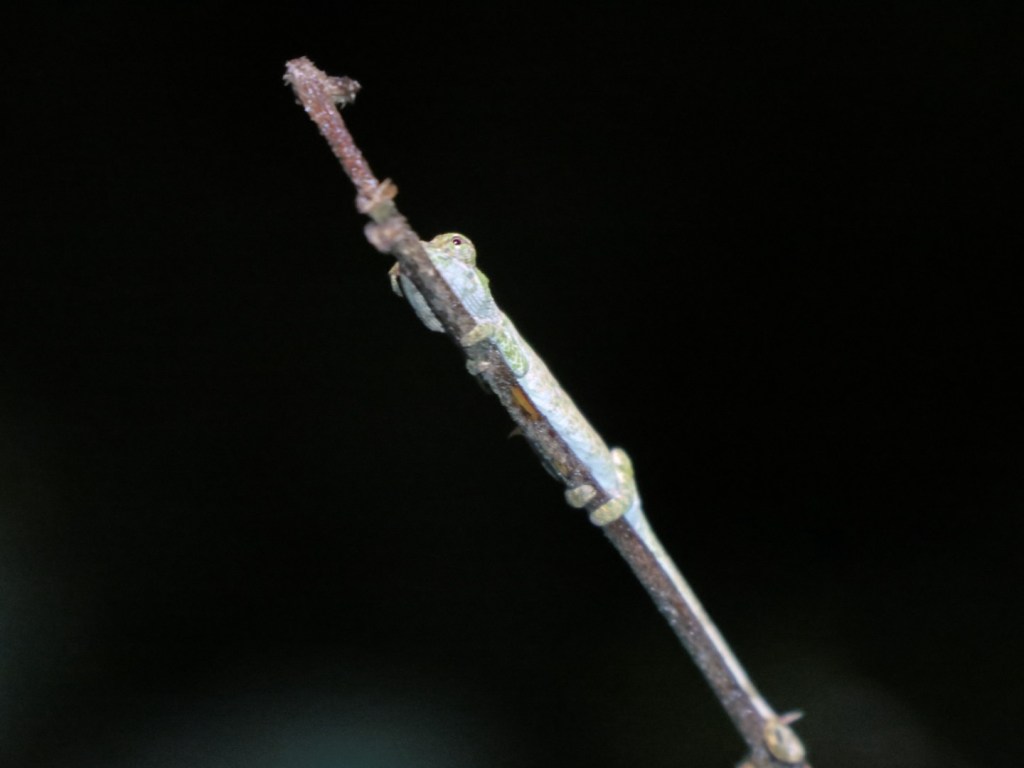
The world’s tiniest chameleon.
Green bright eyed frog
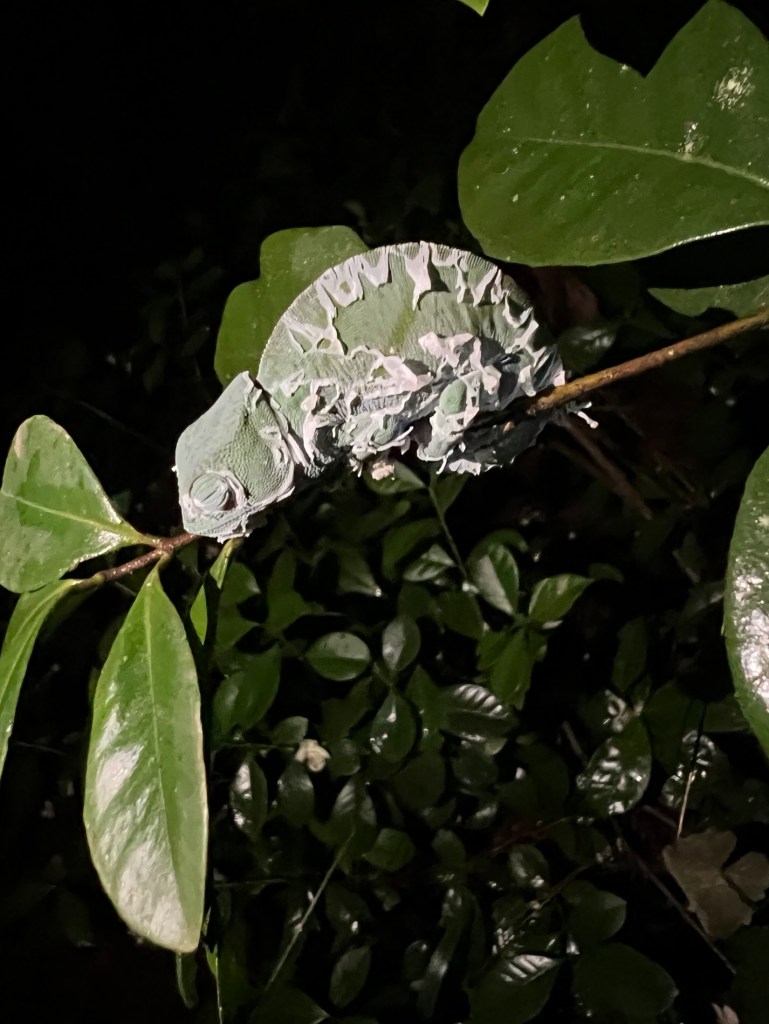
Largest Chameleon female.
Hawk Moth
Madagascar Red frog
Mouse Lemur
On the trip home Benj spotted a
Short nosed (elephant ears) chameleon in a plant beside the road.
The Madagascan people of this area are the Bezanozano (Bezarnoo-Zarn) people.
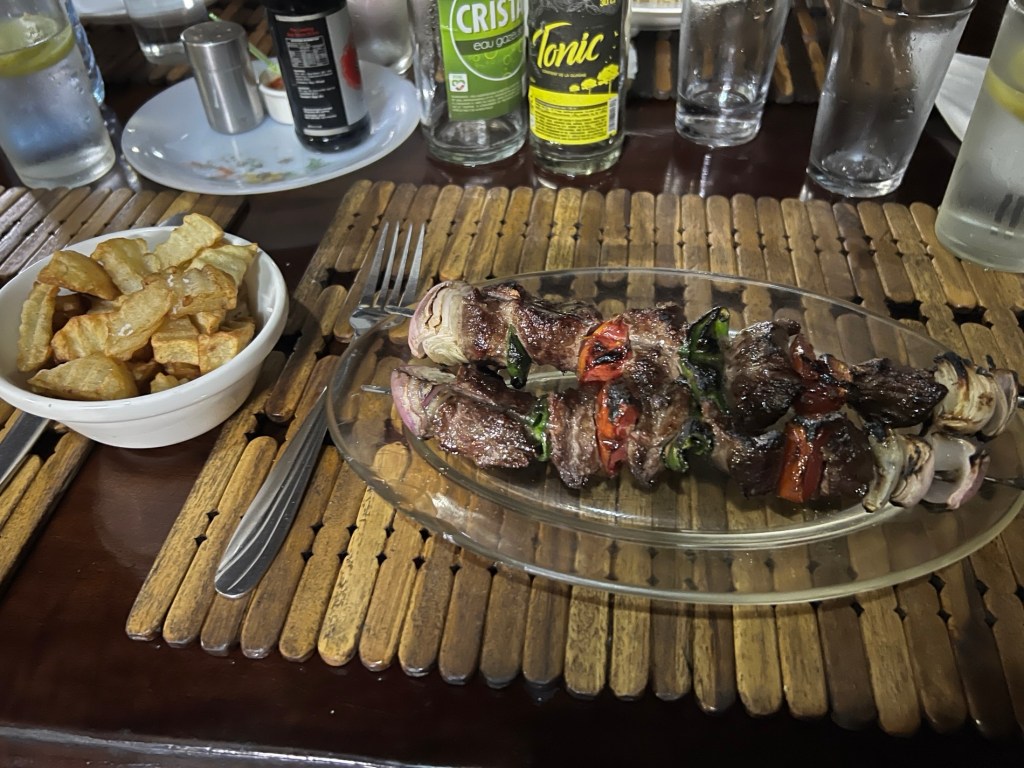
Home for dinner. The food here has been great. The lodge is owned by Chinese Madagascans and the menu reflects both. Tonight I had zebu skewers and fries, zebu being Madagascan cow.
Back to our rooms to pack – a stack of washing we had done and get organised for another road trip tomorrow.
 Travel adventures with Nicola & co.