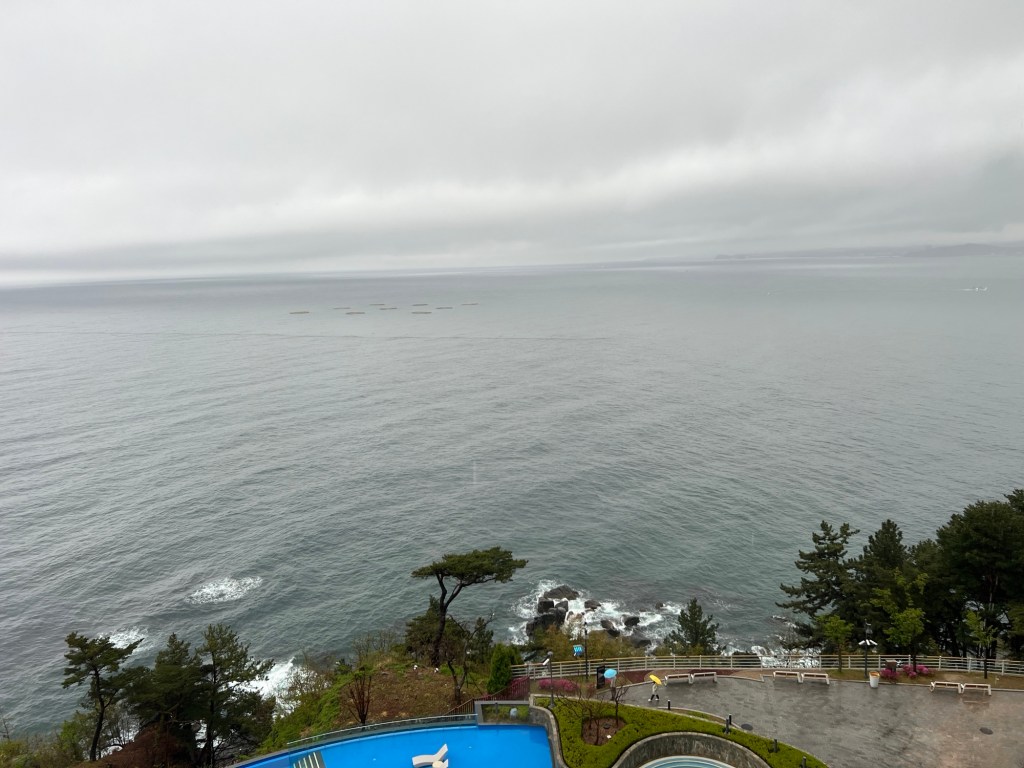
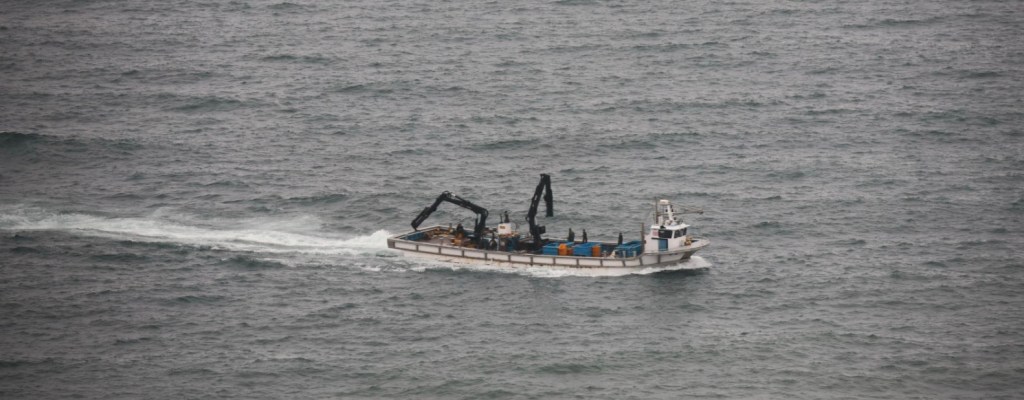
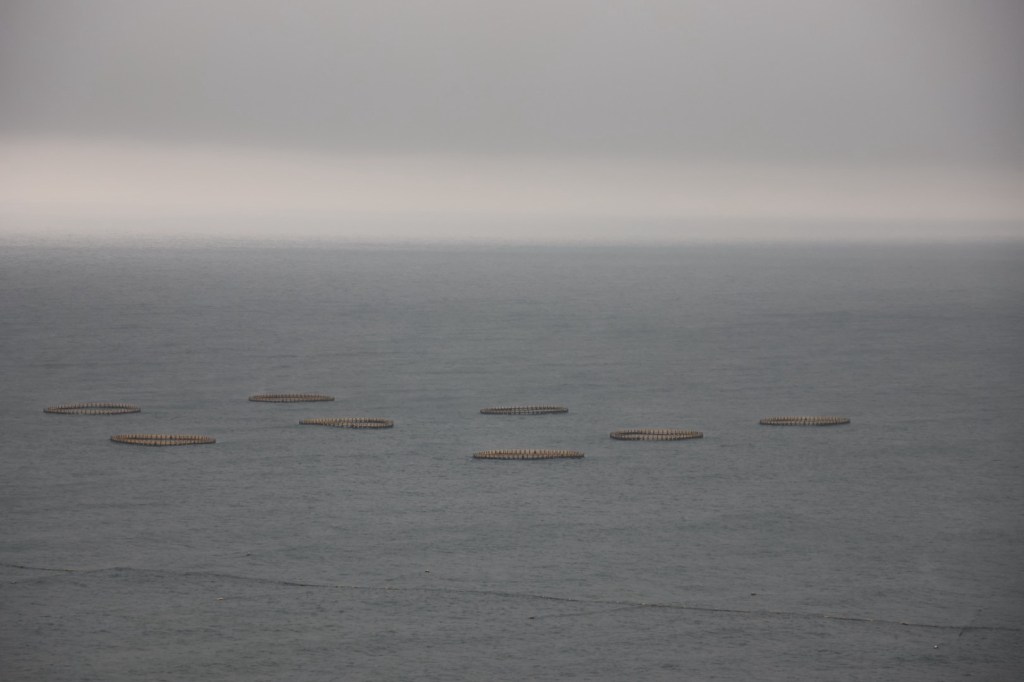
Woke to another dreary day and chilly looking out to sea from the balcony, there were no fishing boats out initially today. (Sunday off maybe)
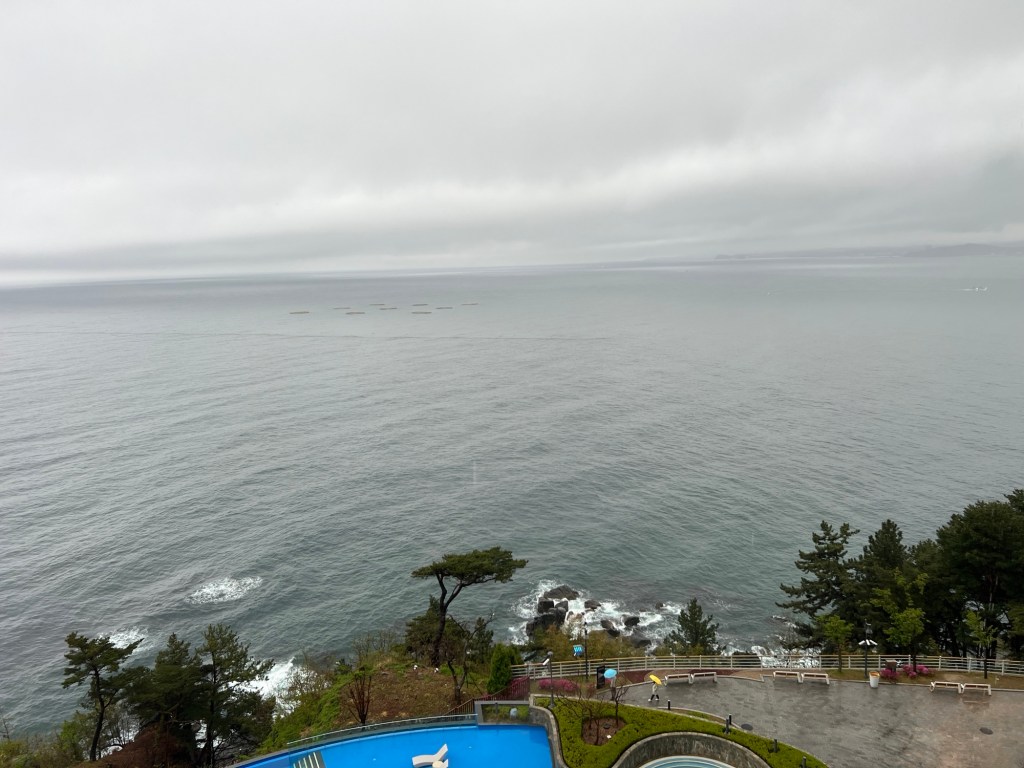
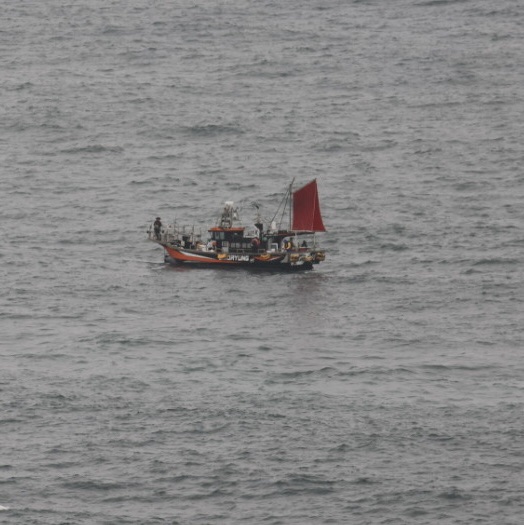
However I did spot a couple after breaky. One with the traditional looking red sail/flag on the bow.

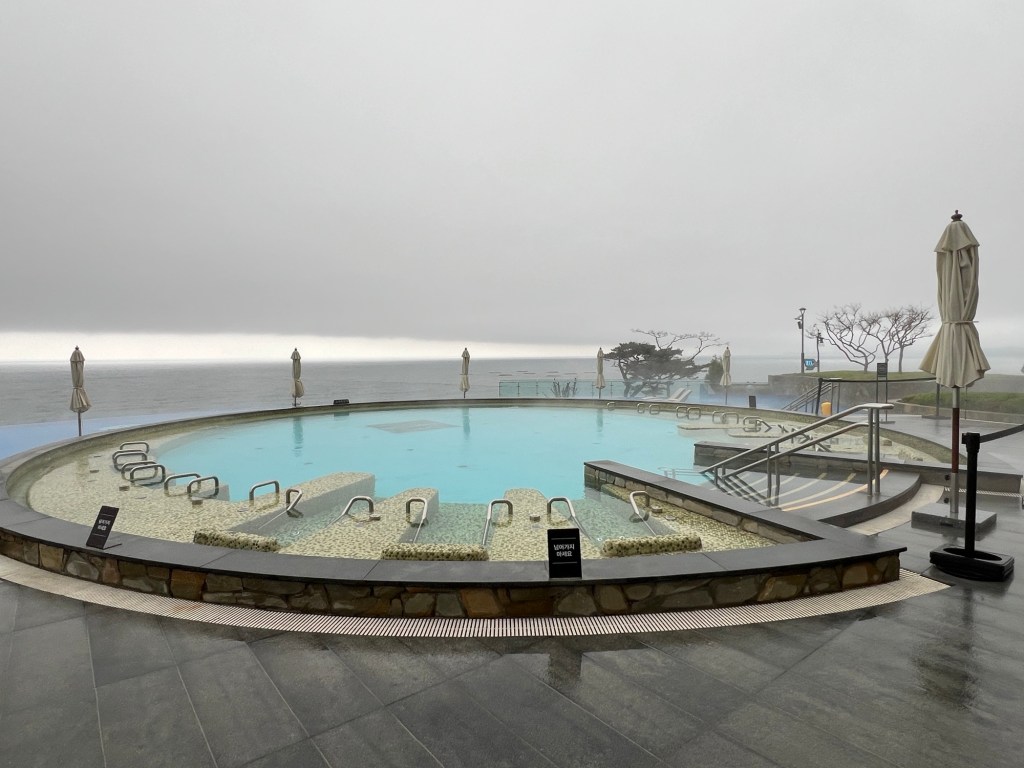
I was early to check out and had a little walk around the hotel and had some time to look around downstairs this am.
Today we headed to the much anticipated Demilitarised Zone – DMZ (the border between South and North Korea) Alex sent info through last night giving us a sense of what to expect. In short we needed to stick with him and move together – real challenge for us!
Alex changed up the route. A more scenic and less populated route off the main roads which required an 8:30 start.
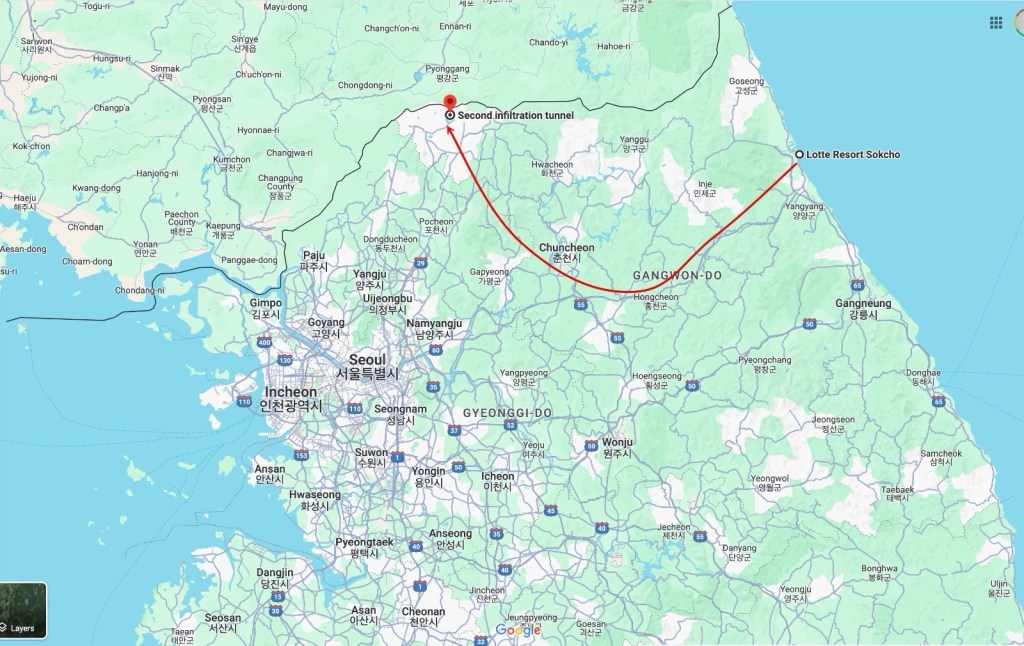
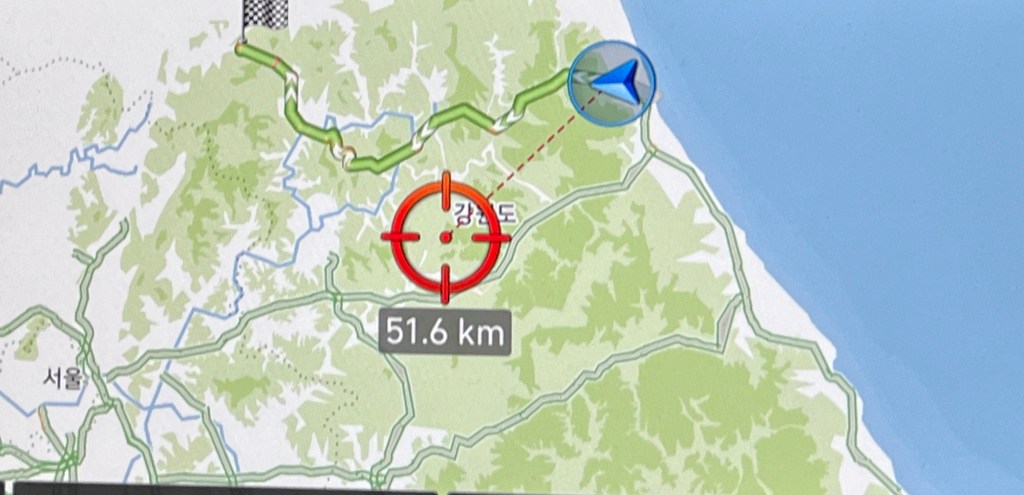
Alex indicated that the only big buildings we would pass are military camps. There are
600 000 soldiers in the services and it is compulsory for all men to serve 18 months in military. Most men/boys choose to do this after their first year of university. For the five years following compulsory service, there are 6 monthly drills to maintain currency of skills and up till age of 40 men are required to participate in action if there is any war. After the five year period they can volunteer to join the fight.
Women can only be officers. (I didn’t get my head around the explanation of women, maybe he meant in the office/administration.
Korea has army, airforce and navy. Women can choose to apply but don’t get conscripted like the men.
SK has a long mountain range down the eastern side.
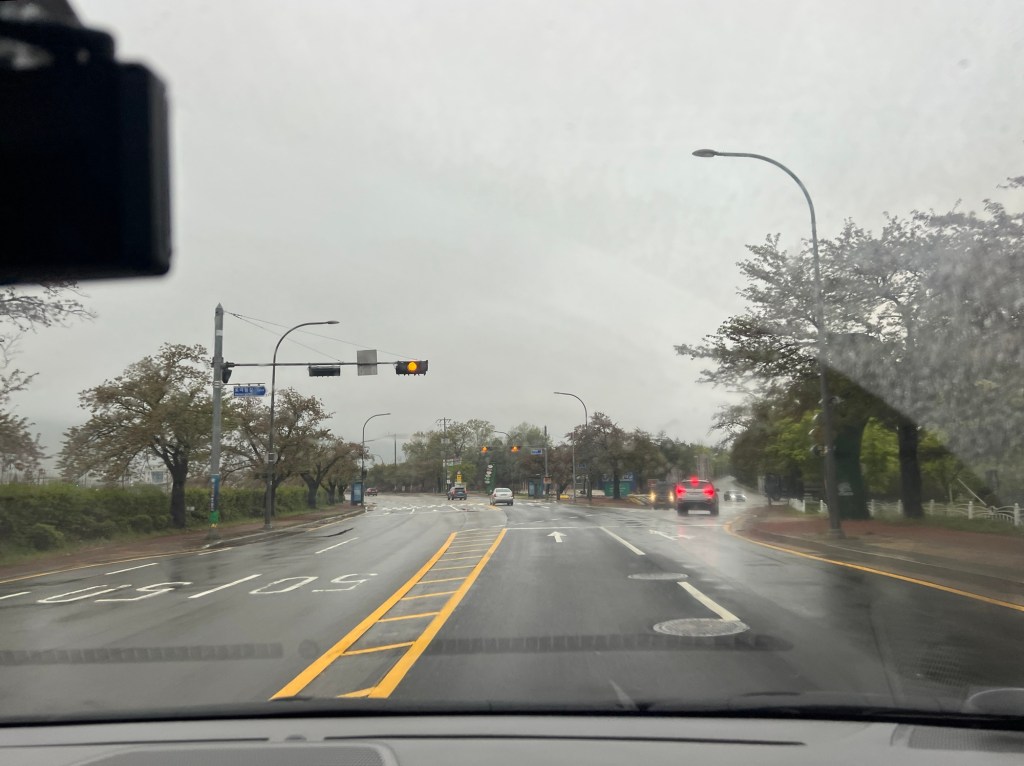
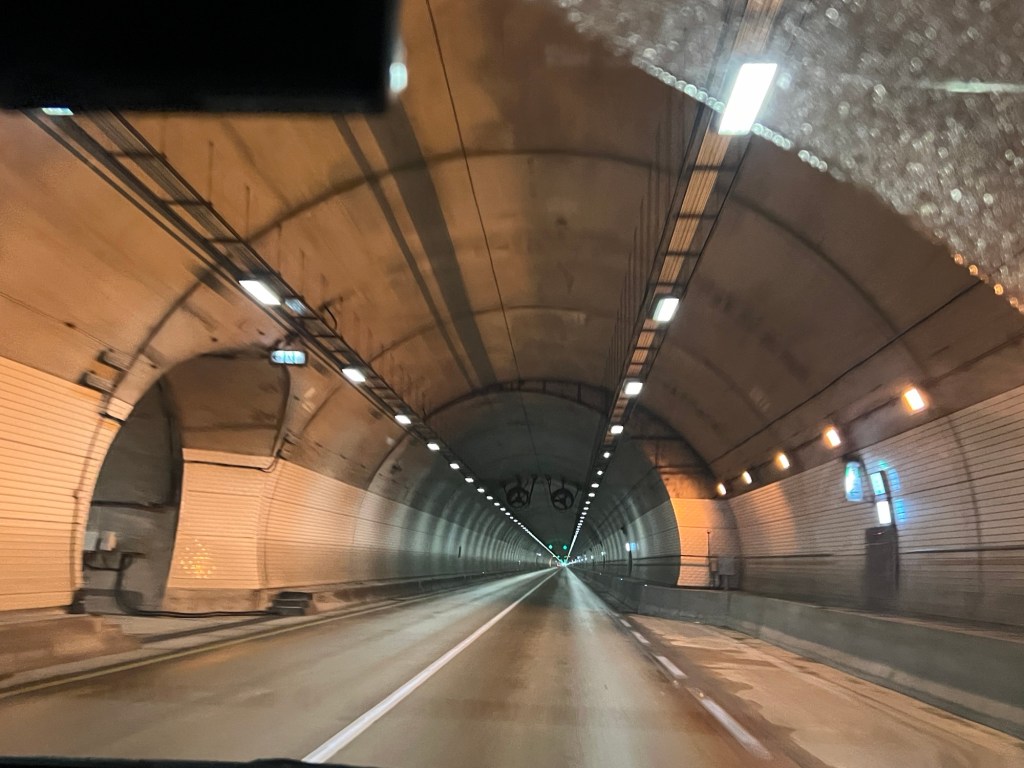
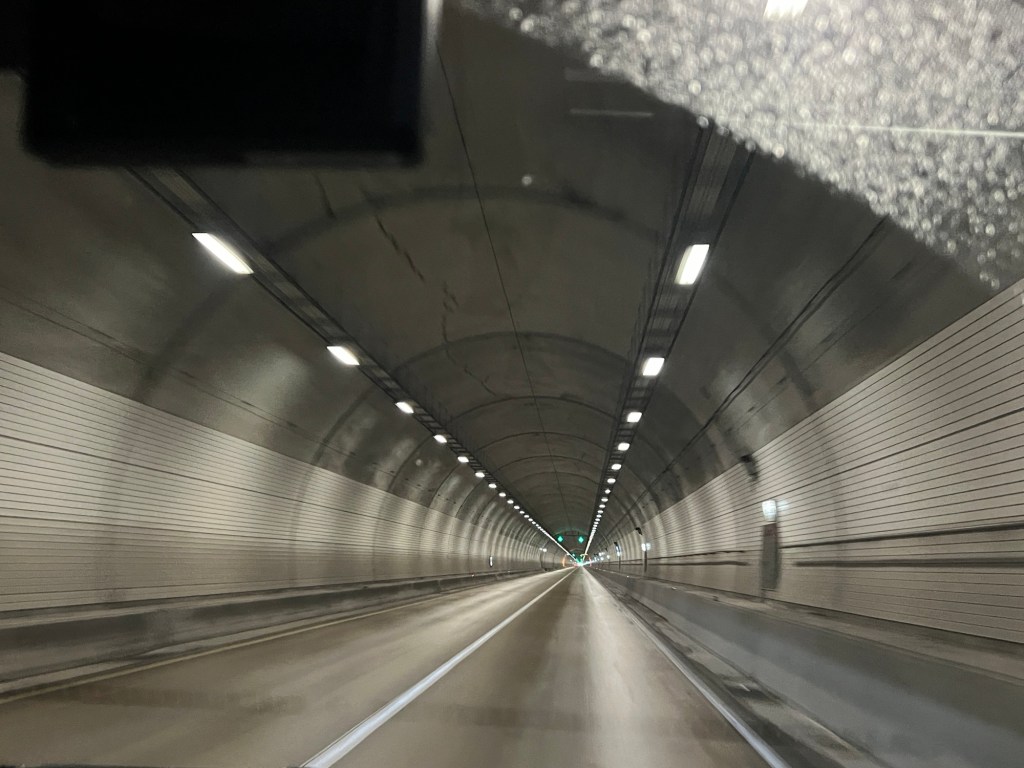
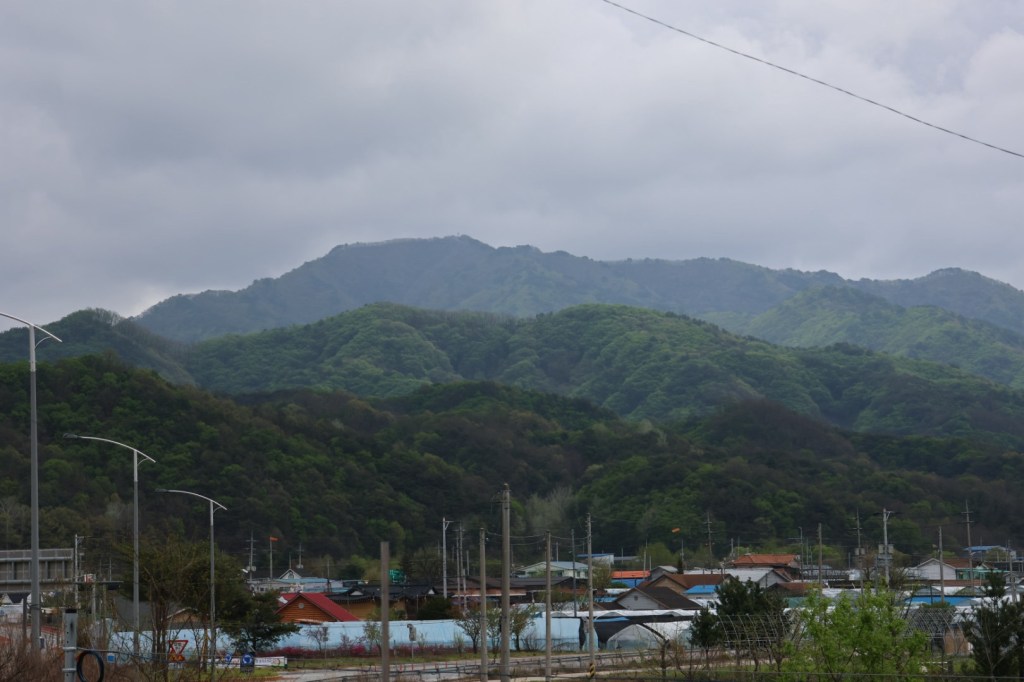
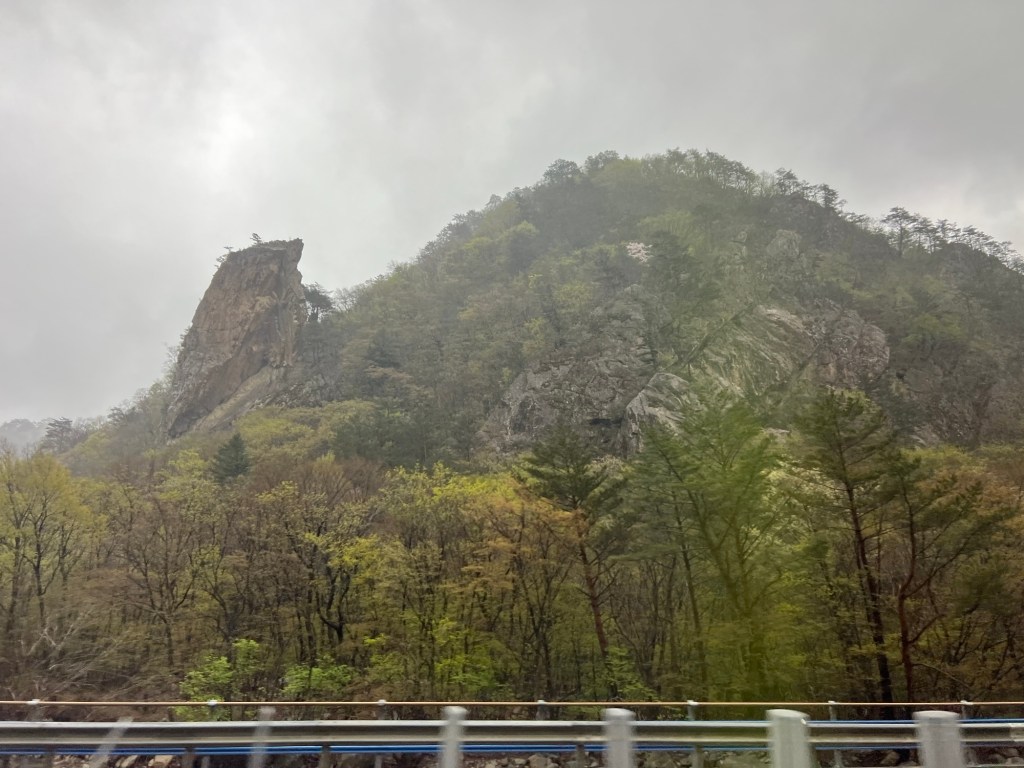
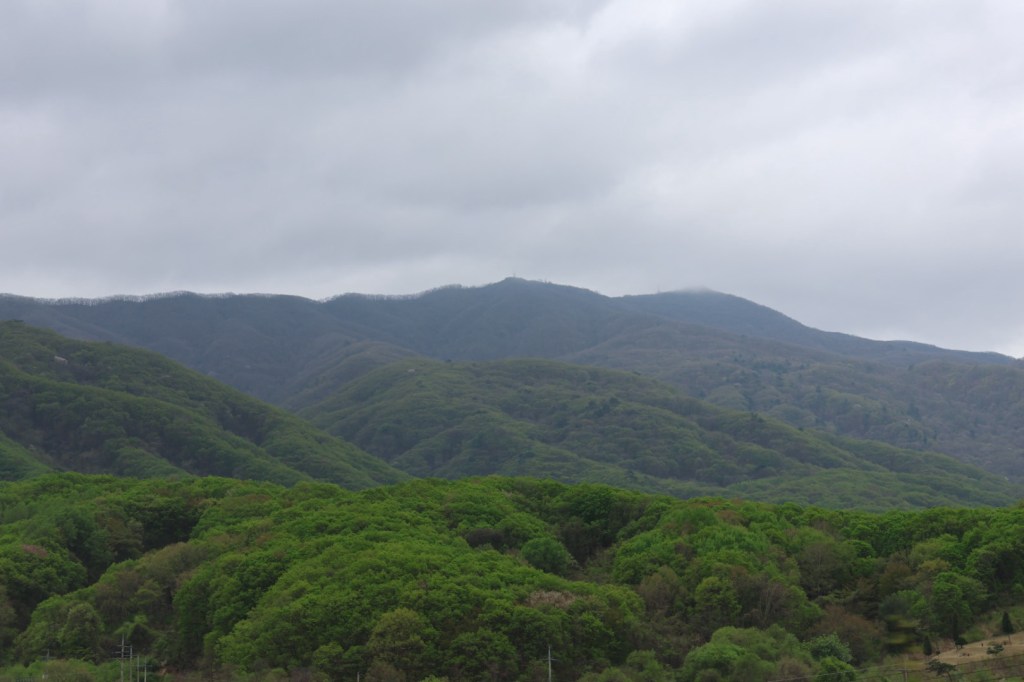
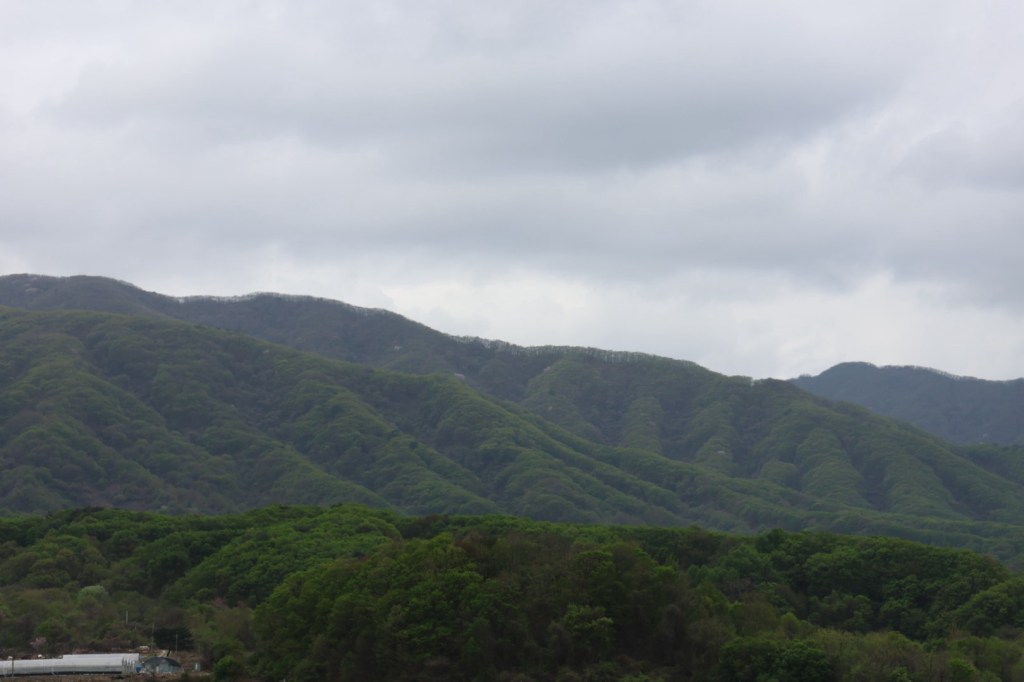
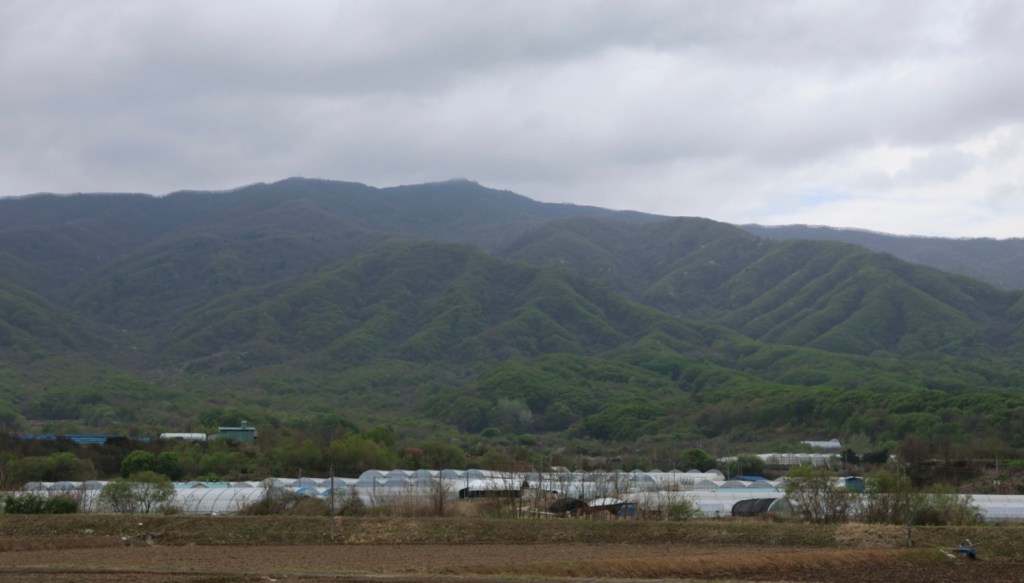
The scenery on the drive was great, the morning started in rain and mist, after travelling through a 4km tunnel it was much improved conditions on the other side of the mountains we drove through. Multiple photos of things we saw along the way, all while trying to take in Alex’s chapters on the history and stories of the DMZ.

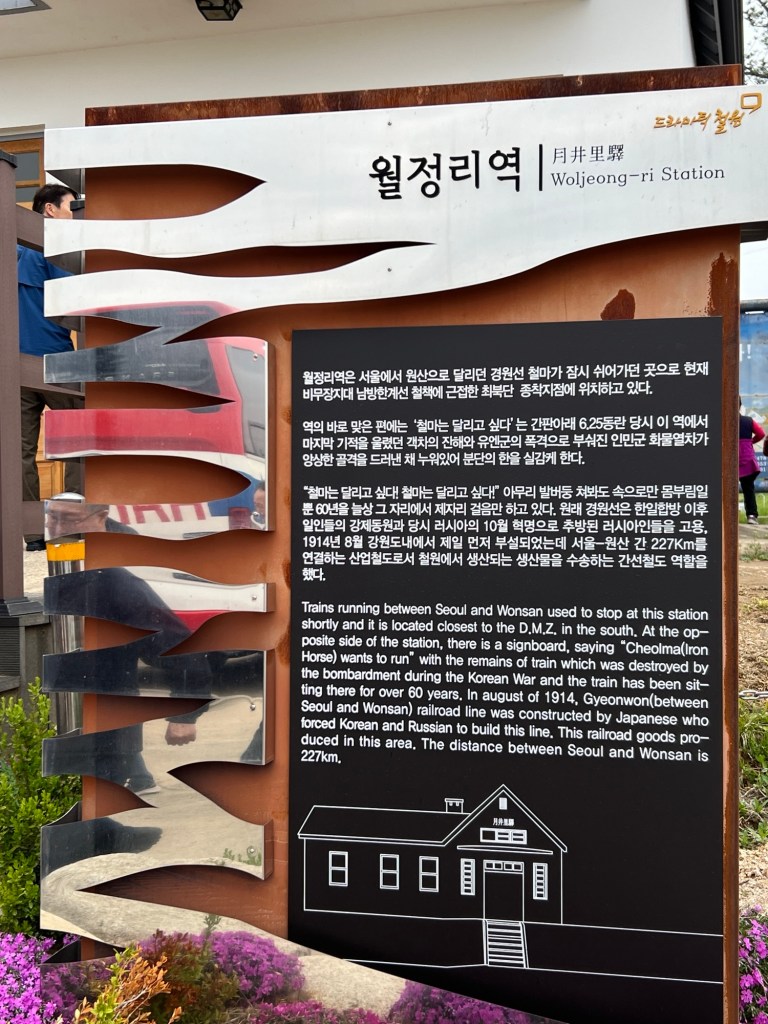
DMZ ZONE information from Alex.
The 4km zone is actually only 800m in some places. Fences are used to control civilian movement.
There are four secret tunnels made by Nth Korea into Sth Korea. Currently only tunnels number 2 and 3 are open. Today we visit #2 Cherwon tunnel and Peace Observatory – 100km from Seoul.
We drove through Yangu district which neighbours Cheorwon to the West and Changch’on to the north in North Korea. 🇰🇵
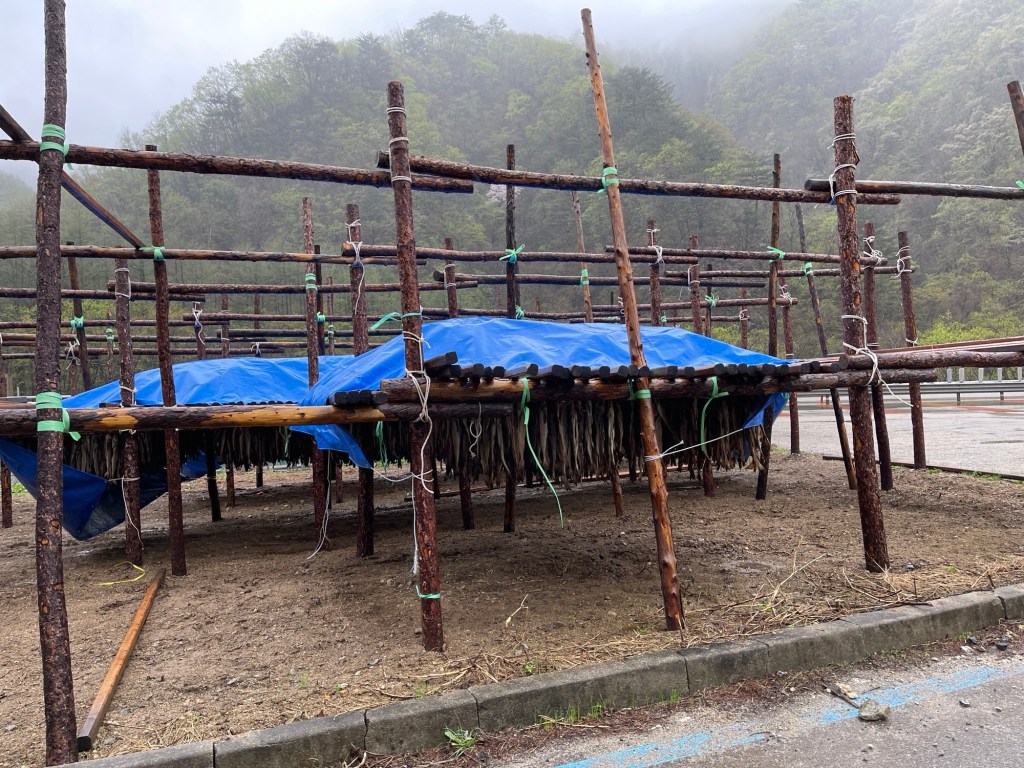
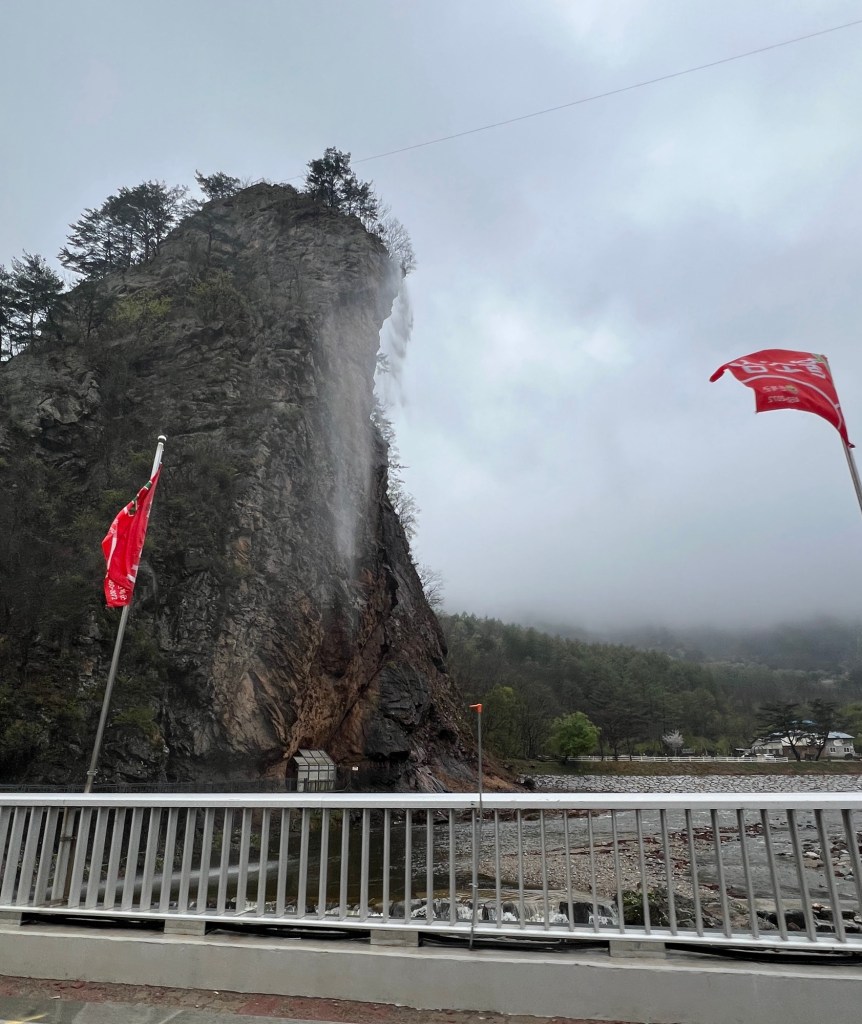
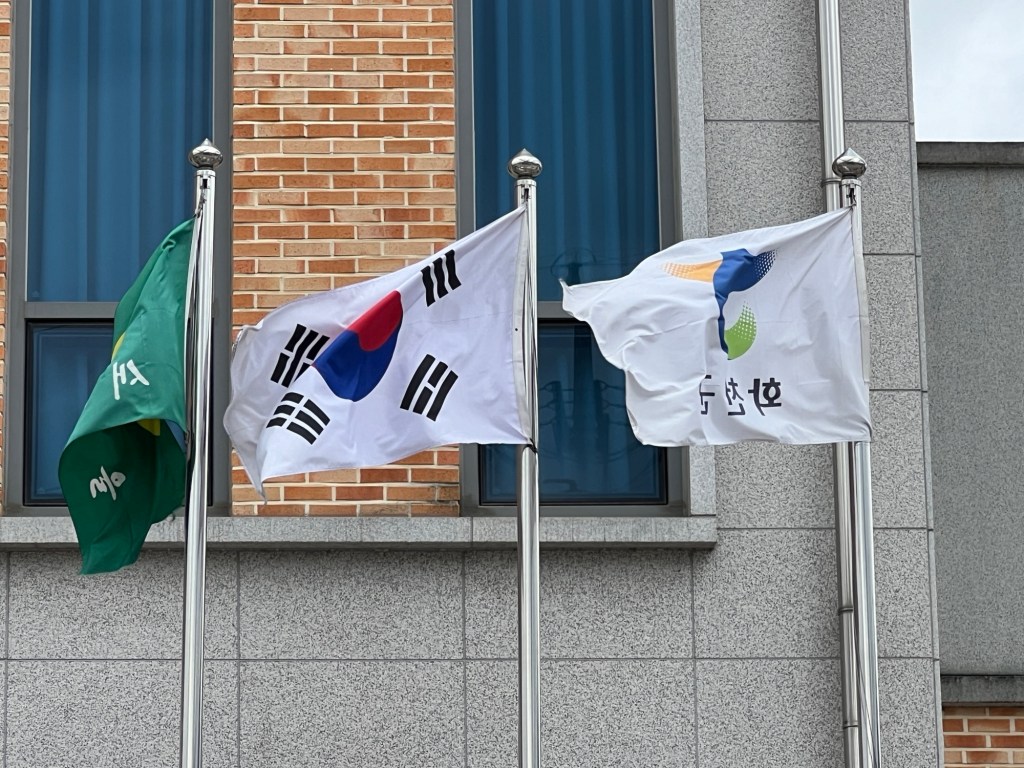
Stopped at a community centre for restrooms. So clean. All the loos here have been super clean and no graffiti. Some had squat loos but all had western option which we took.
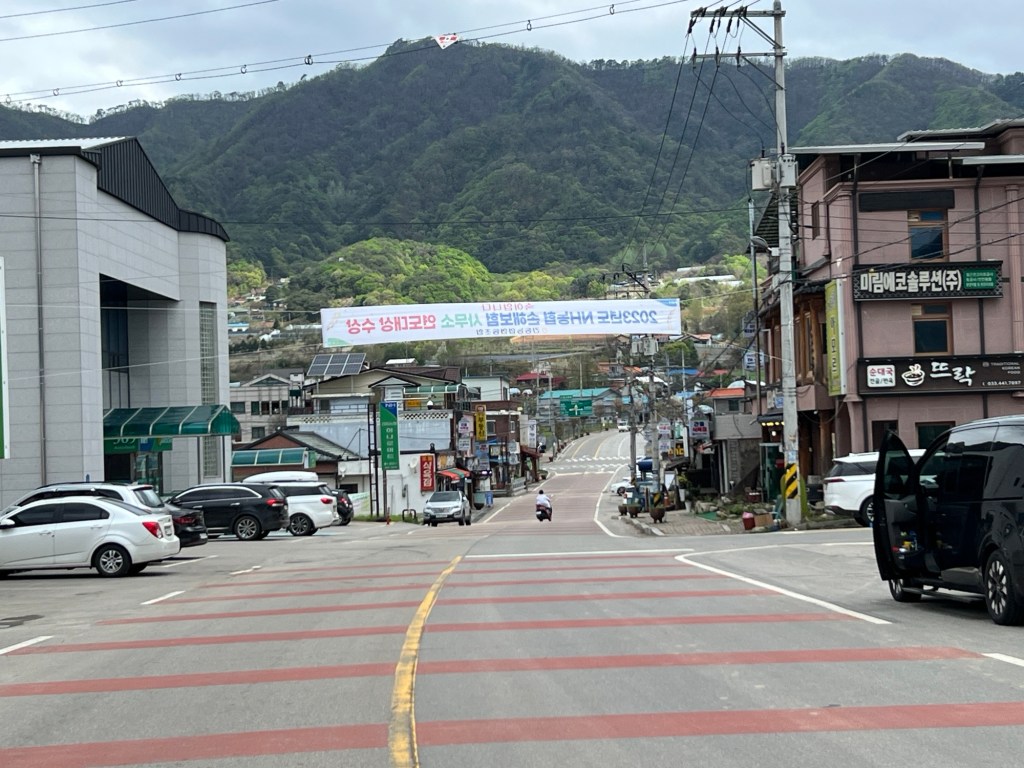

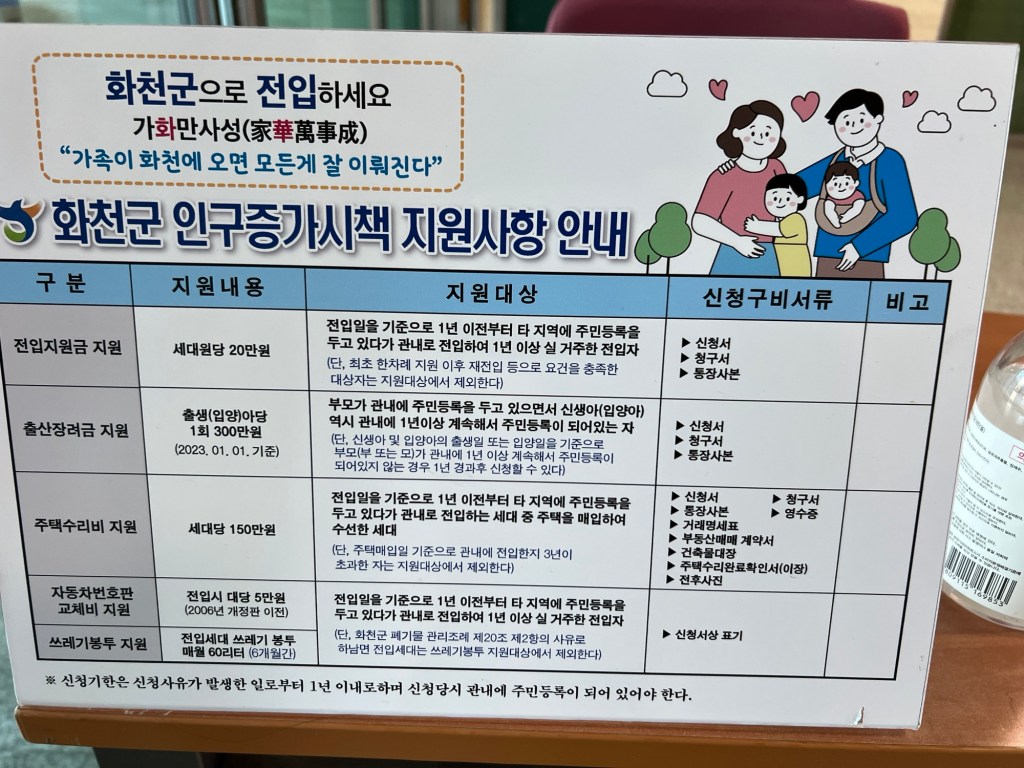
The poster above translates as follows.
Please move to Hwacheon-gun. “When your family comes to Hwacheon, everything will go well.” Hwacheon-gun Population Growth Policy Support Guide.
Support for transfer subsidy = 200,000 won per household member.
Support for childbirth subsidy = Birth (admission) child. 3 million won per time.
Support for housing repair costs = 1.5 million won per household
License plate Replacement fee support.
Seems they are desperately trying to attract population.
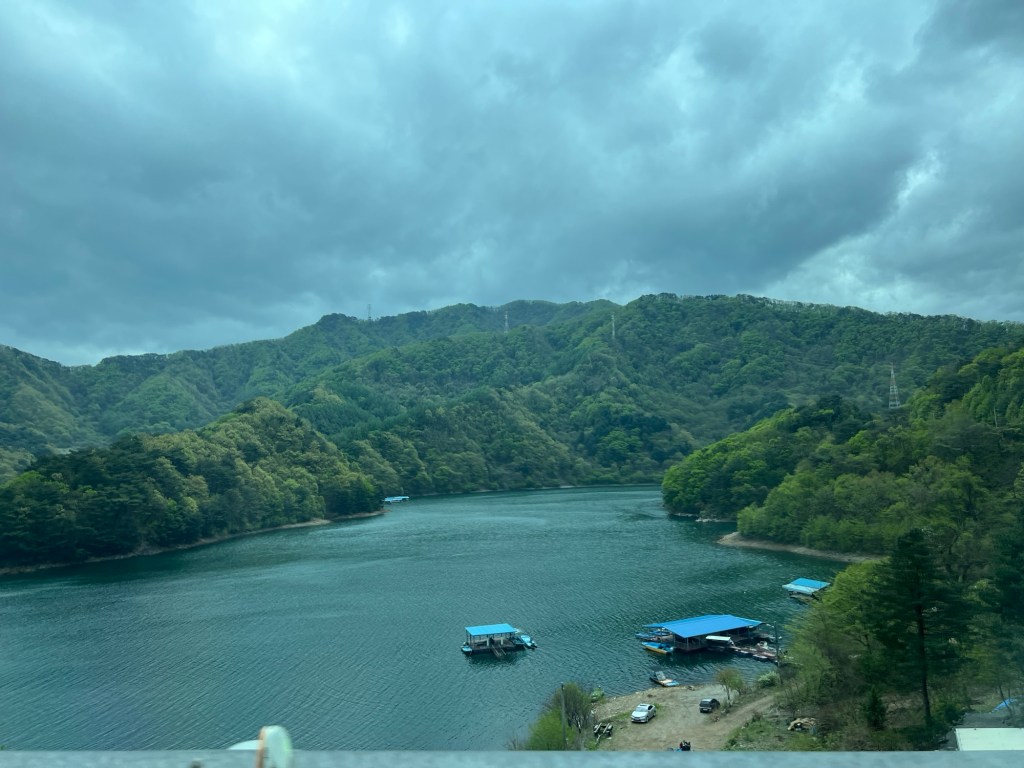
Drove alongside beautiful Lake Paro ho. With little floating fishing huts on the shore. The Koreans come and stay overnight.
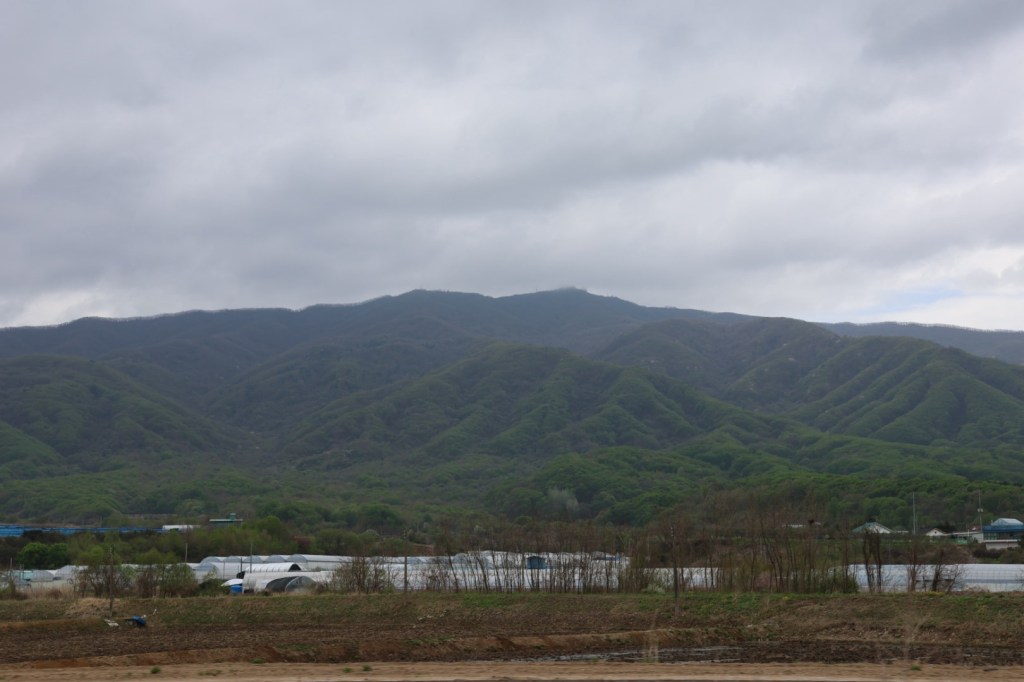
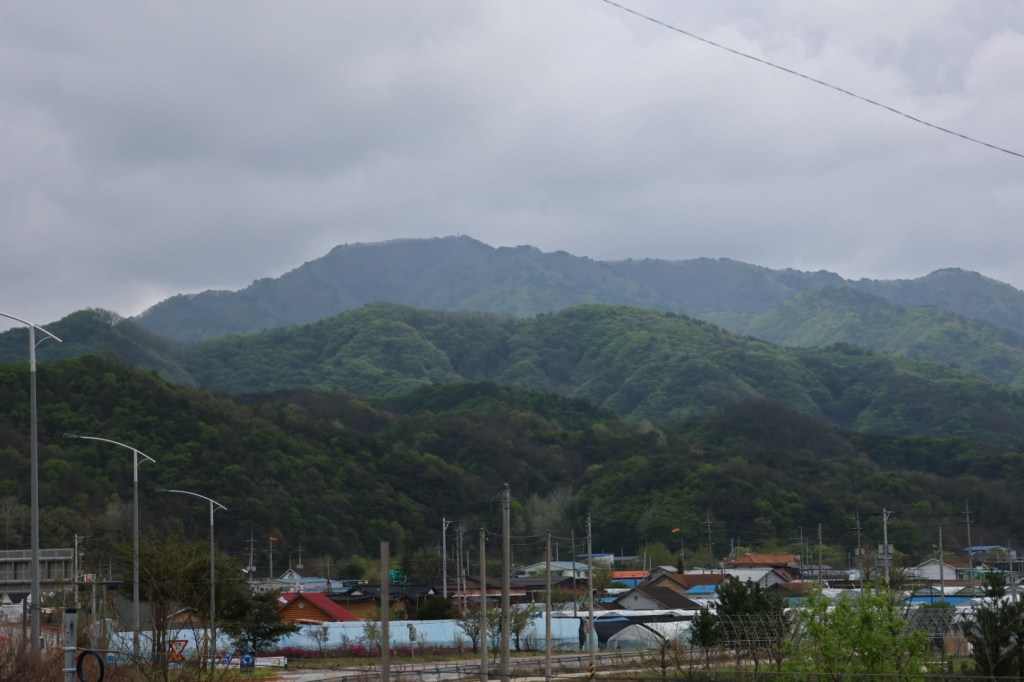
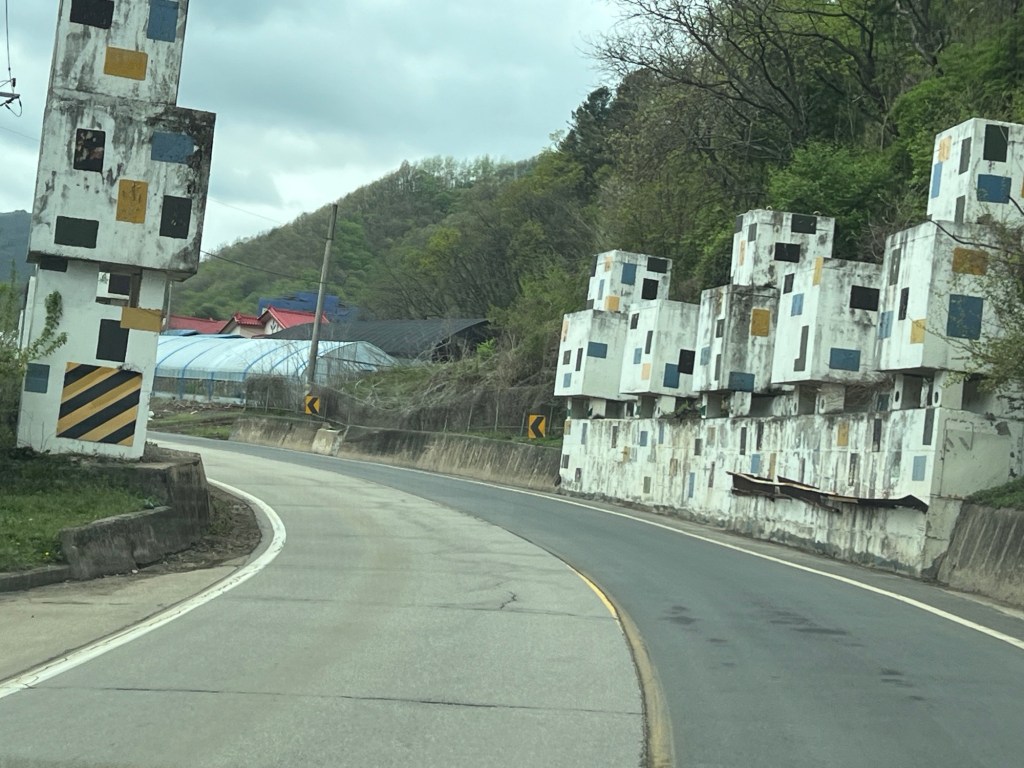
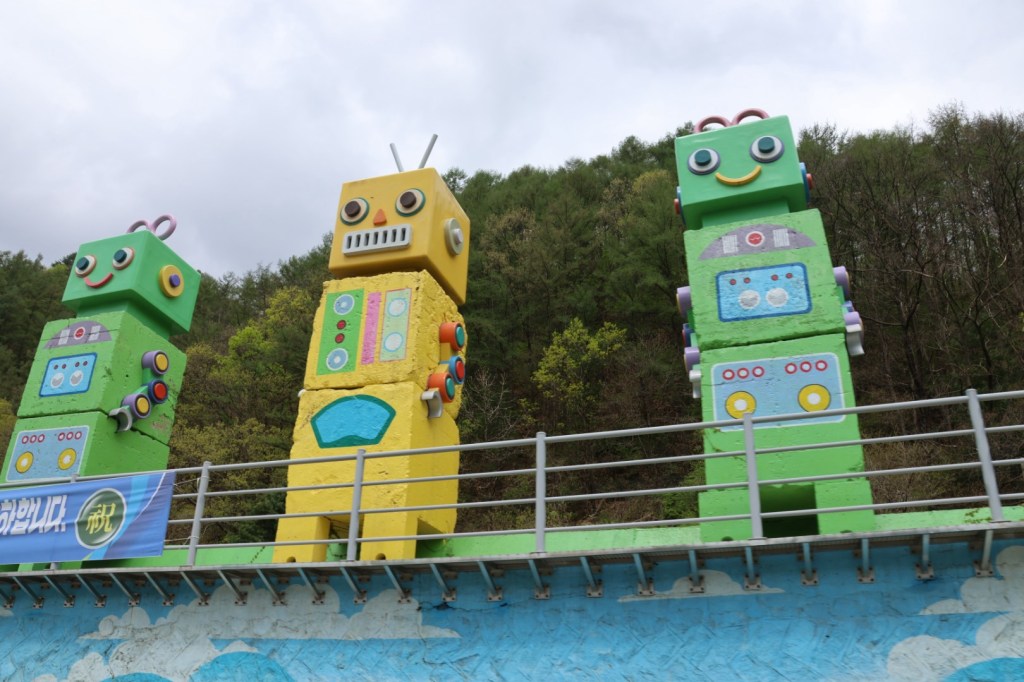
Along our route we passed many ‘Tank defence points.’ Basically huge cement blocks either side of the road creating a short fence that can be blown up and create a blockage on the road preventing tanks from the North using the road. We saw many, some old and very dour looking, others have been modernised to disguise the real intent.
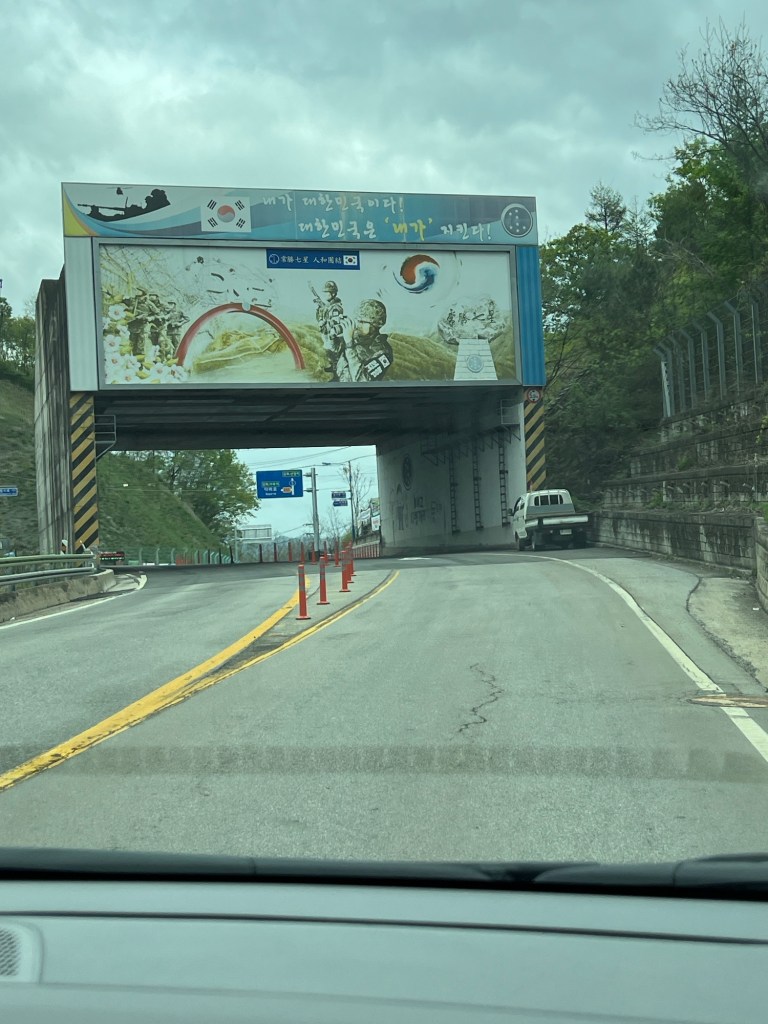
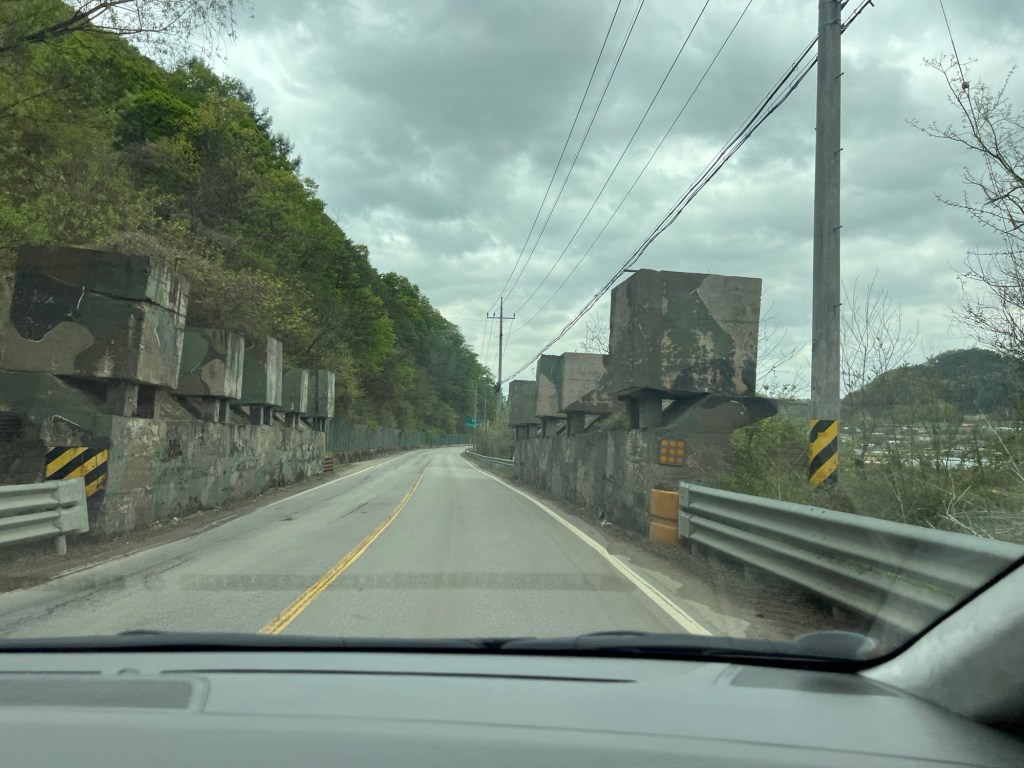
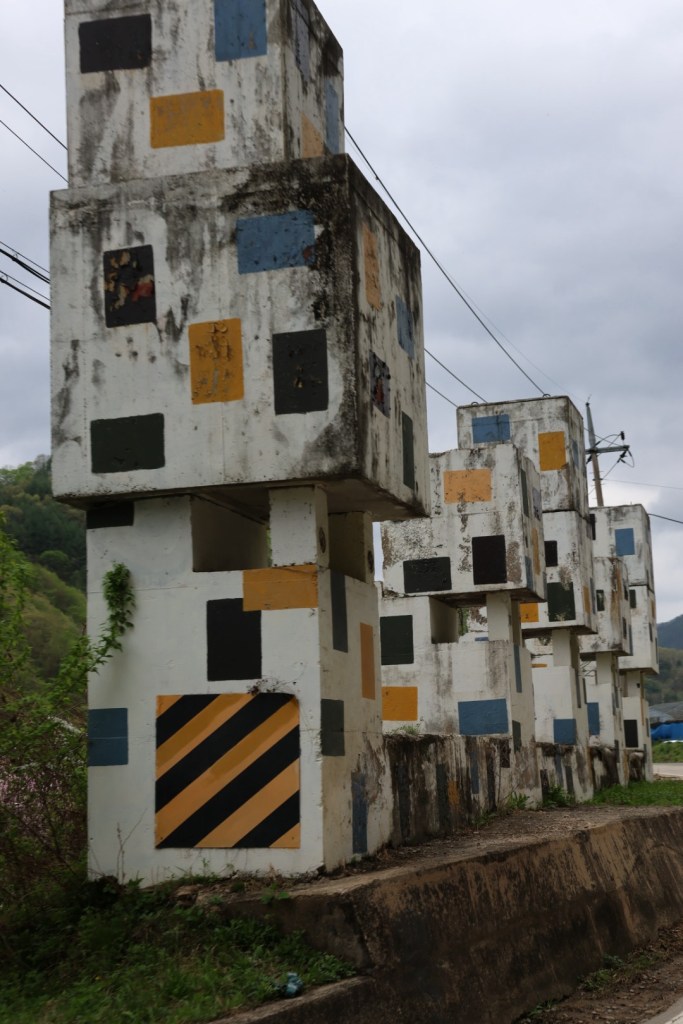
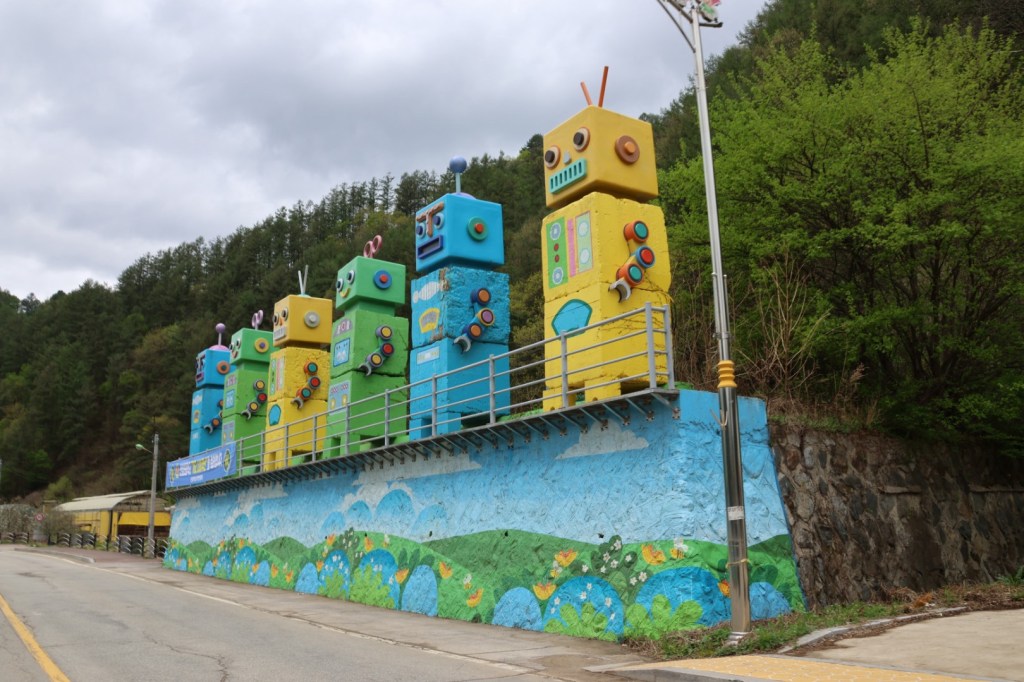
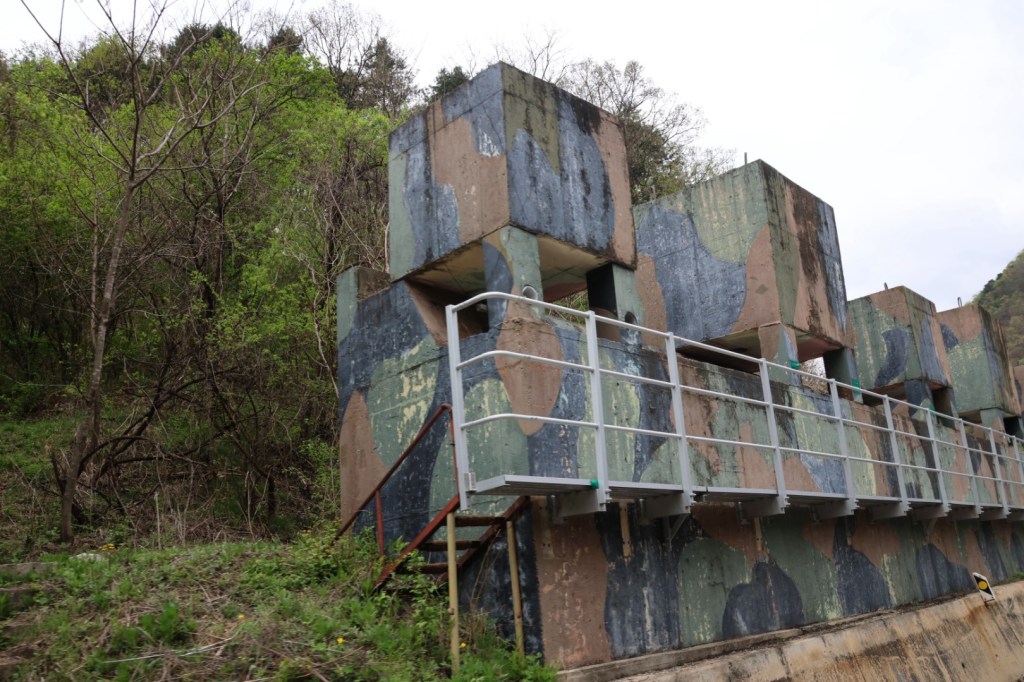
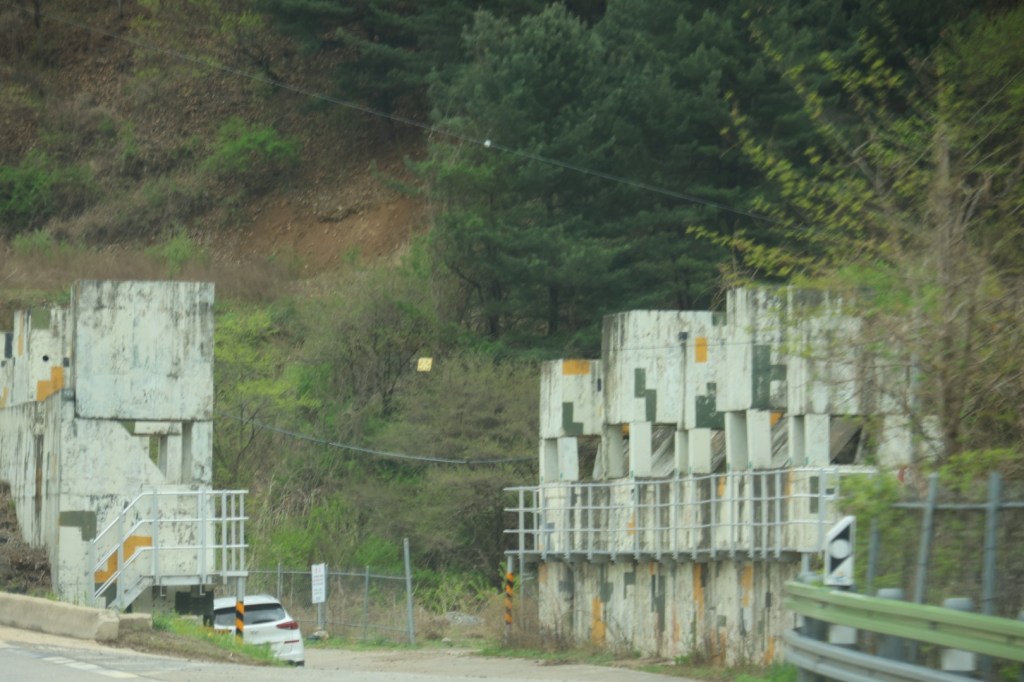
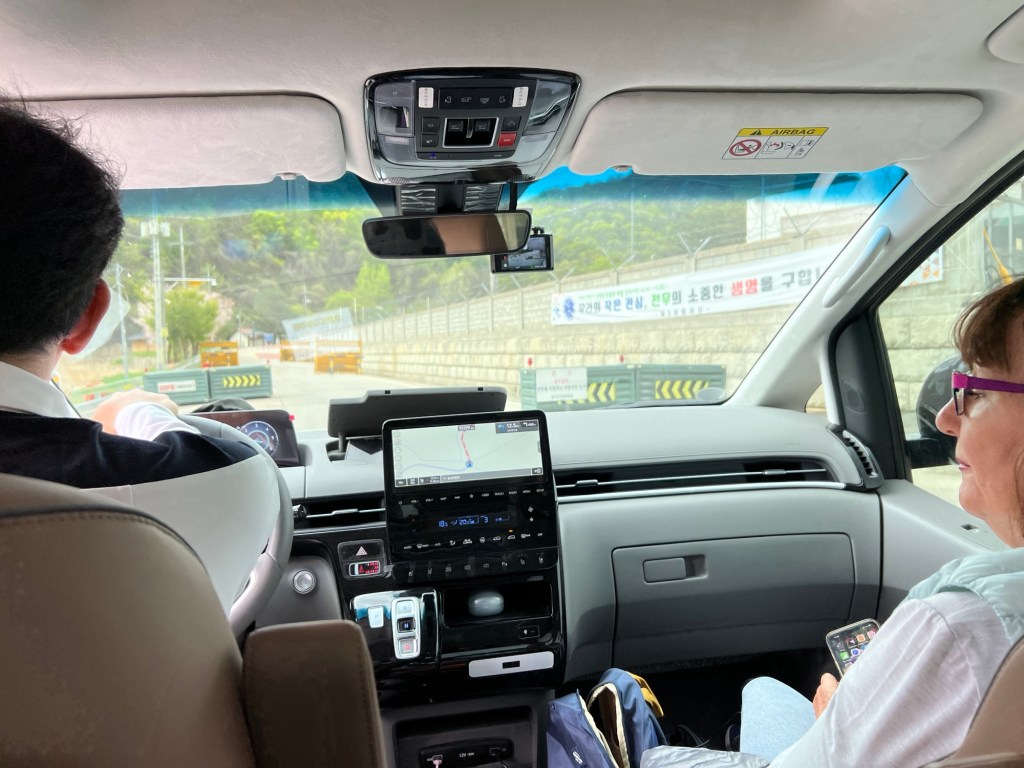
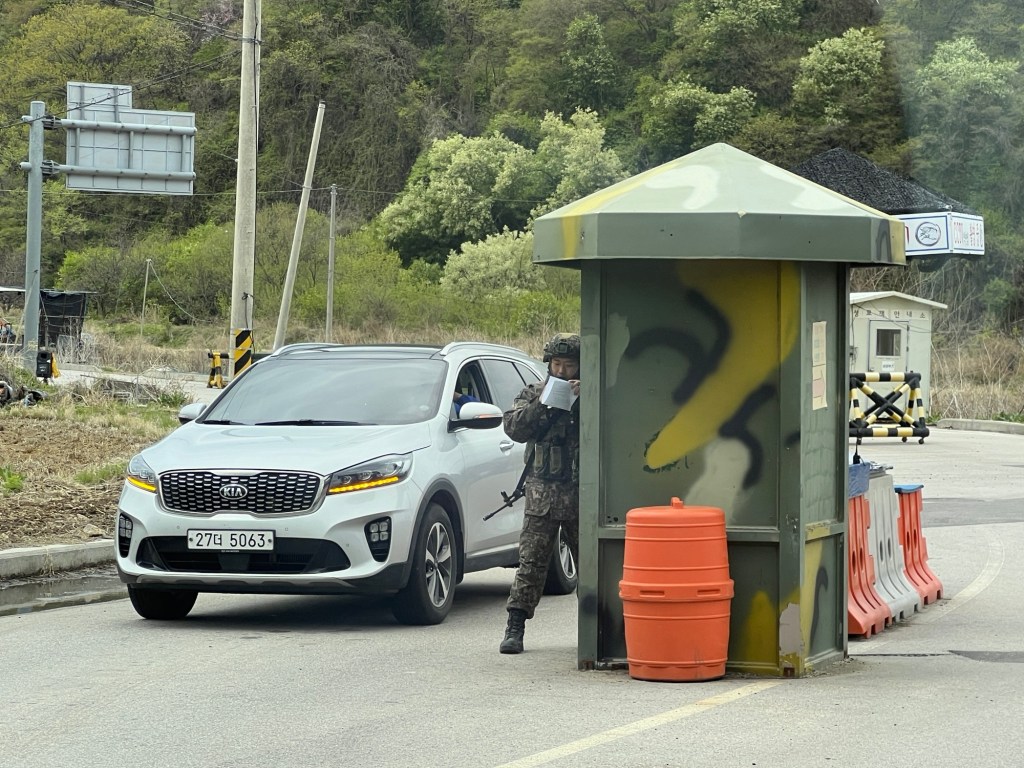
Alex told me I would need to put my camera away as we were approaching a military checkpoint. This is where we enter the controlled zone. Here there were two fully equipped soldiers – with faces covered in black masks, helmets, automatic guns, they asked Alex what our purpose was and then we all had to provide passports and they wrote stuff down and took photos of our passports. They looked quite menacing and we were definitely intimidated despite their youth. Alex received a tag/permit for the van that we have to return when we leave the controlled zone. This is the closest point to the border and we are not allowed to stop the car until we depart the controlled zone. From Google – The Civilian Control Zone (CCZ) is a stretch of land that lies between the DMZ and the Civilian Control Line (CCL). The CCL is a line designated to restrict public access in areas adjacent to the MDL where the legal protection of the military is required.
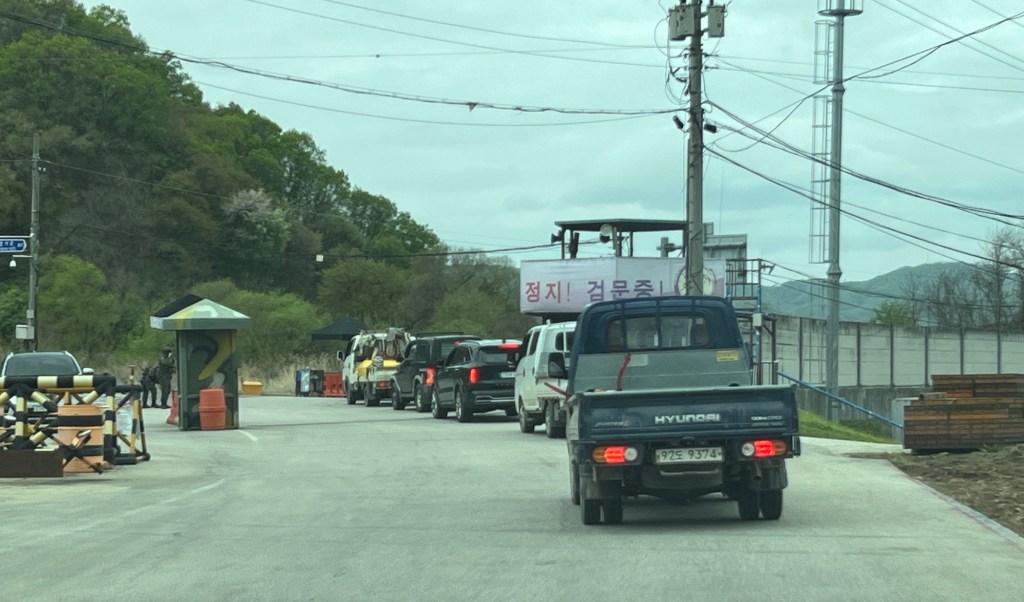
We didn’t take photos here as we were too scared to do so and cameras were to be put away. The best we have is approaching the Controlled Zone Checkpoint.
Hwacheon town is noted for an ice fishing competition on the river in Winter. We passed through more towns than we expected but very few high rise residential blocks. In Hwacheon we captured some sculptures along the Bukhan River.
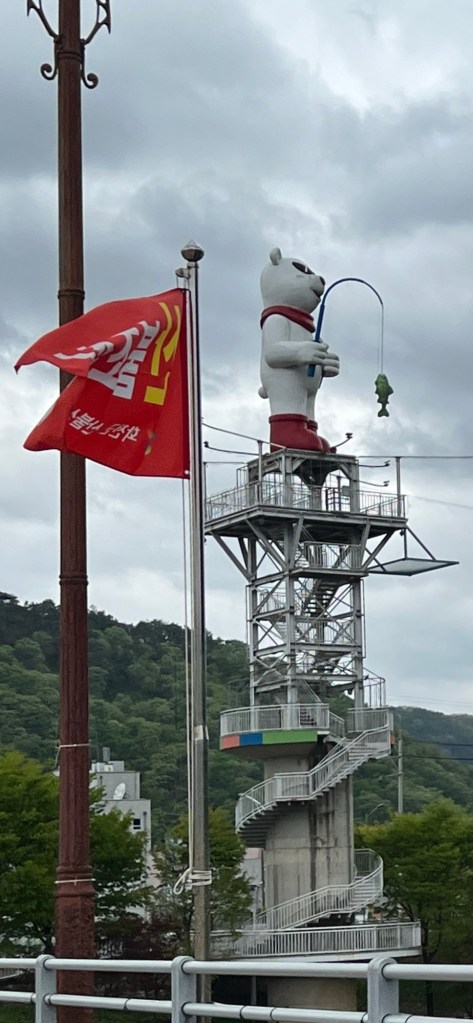
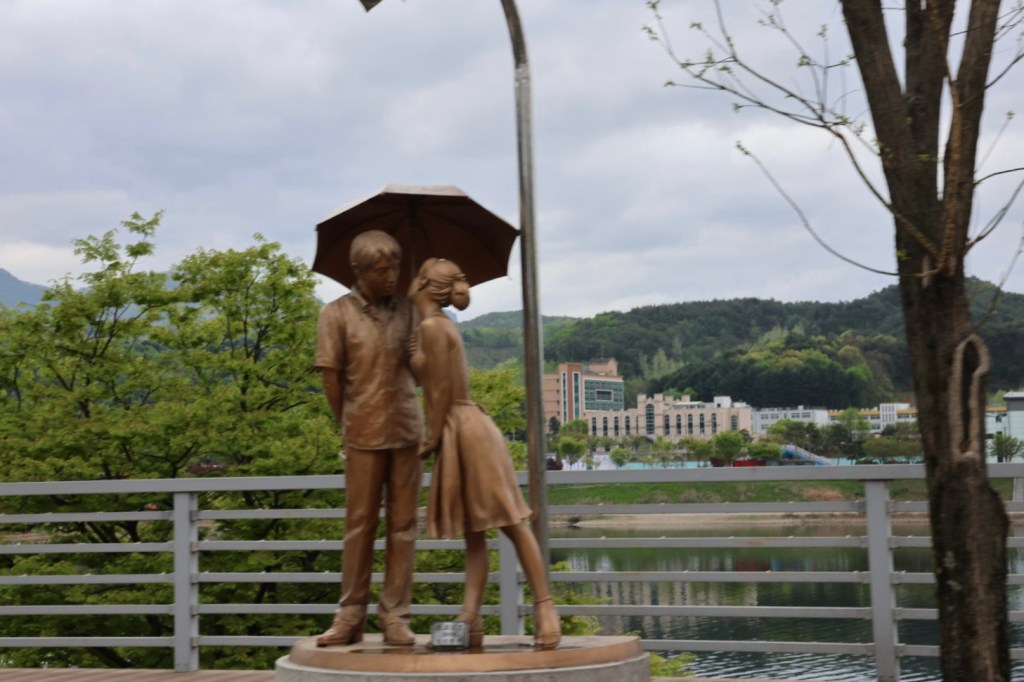
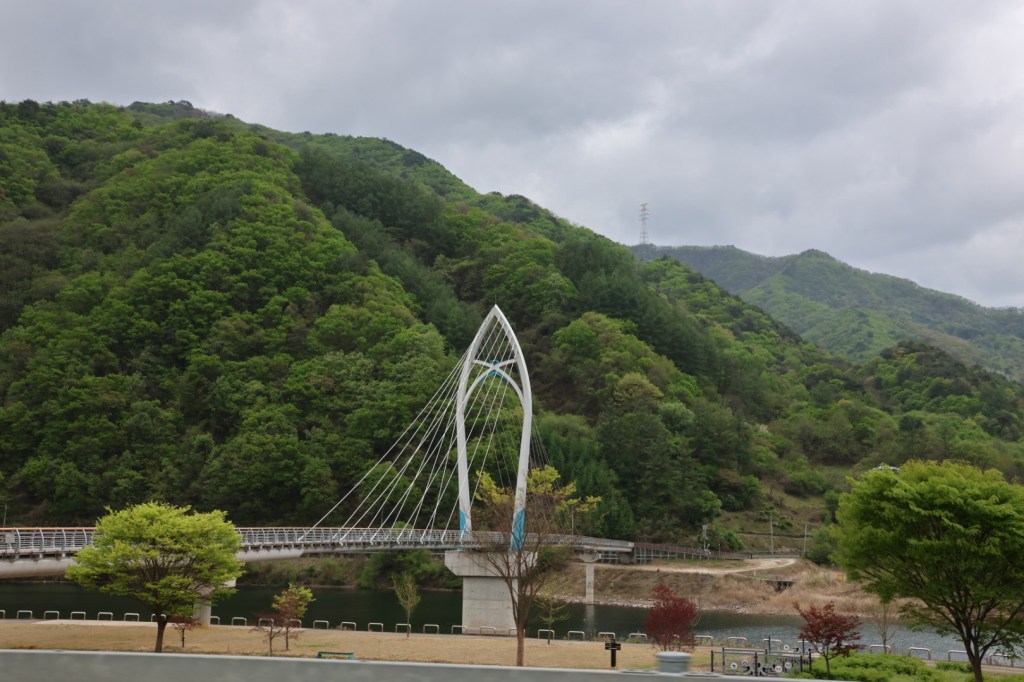

We left the controlled zone again and not that long down the road, another checkpoint with more soldiers checking us out, making sure we were all in the car and taking the tag.
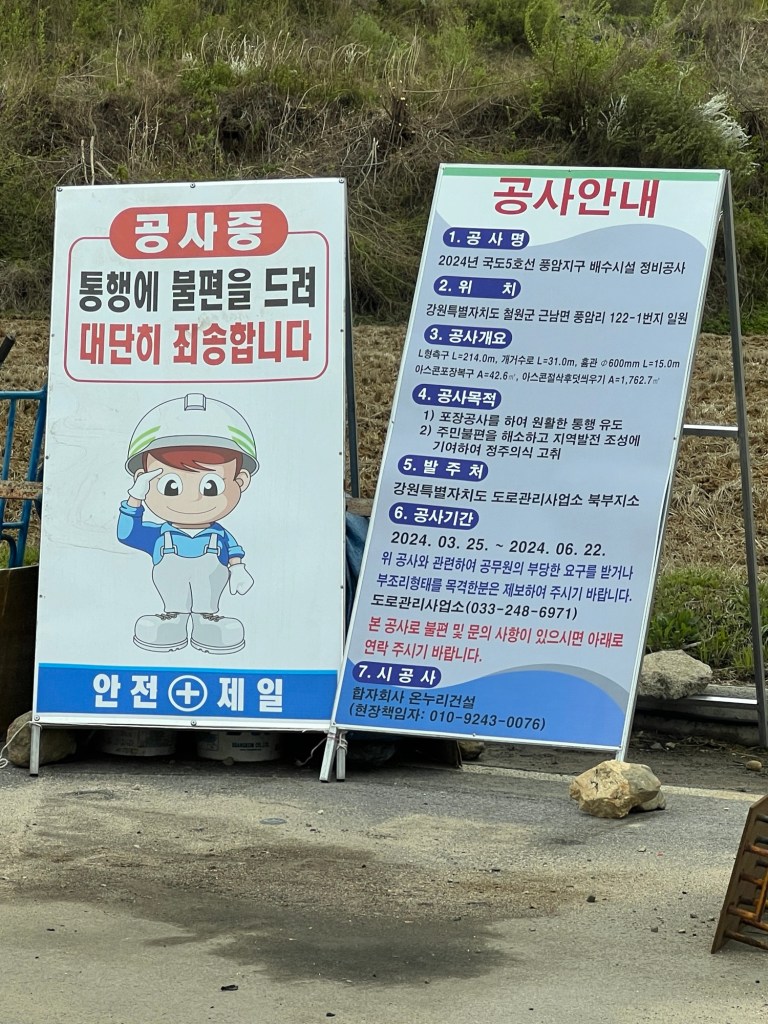
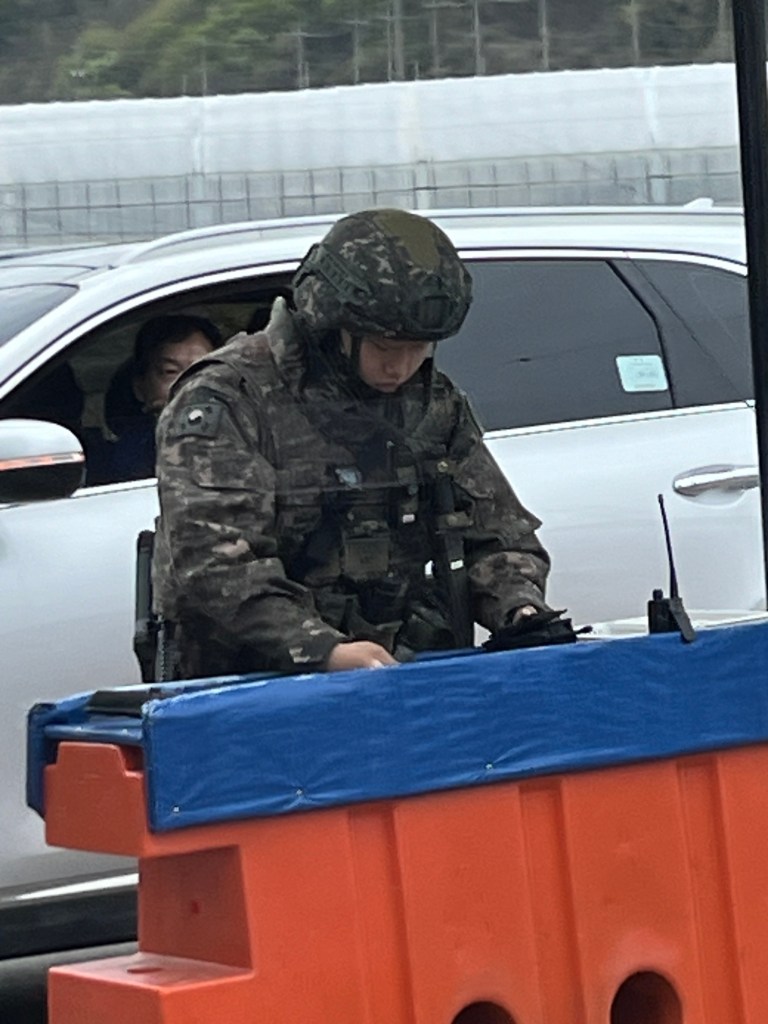
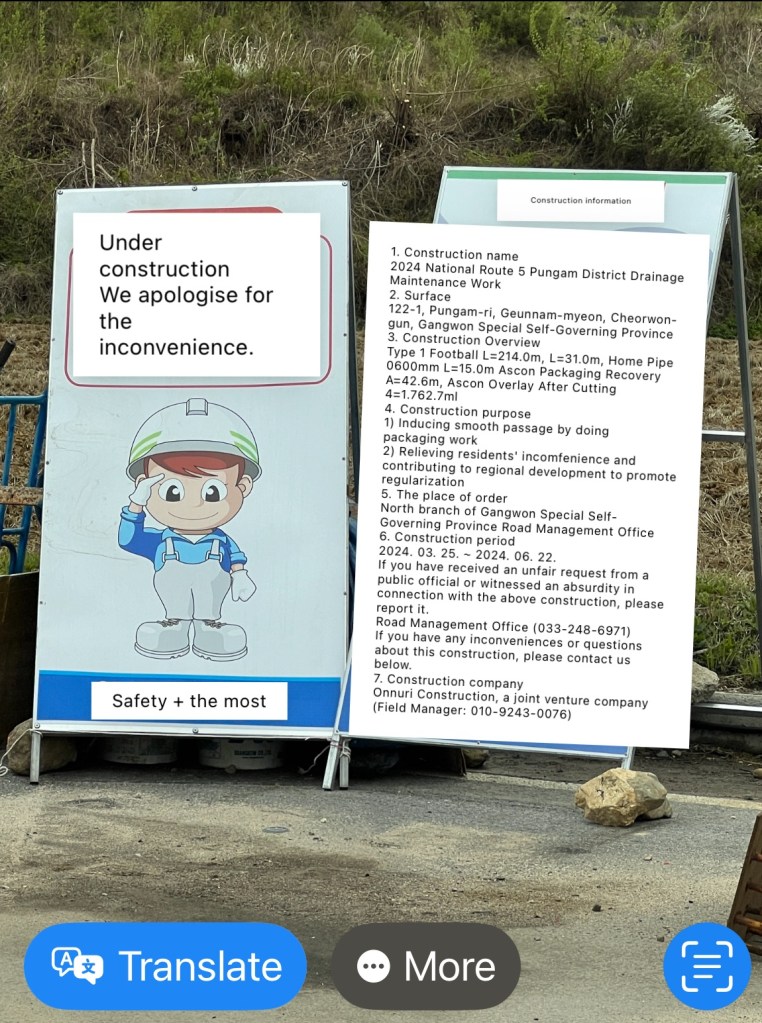
Only a short distance later we were stopped at yet another checkpoint. No menacing face covering this time but still guns and helmet cams and serious demeanour. This one Alex wasn’t expecting and despite his best attempts they wouldn’t let us proceed on that road, so we did a ‘U turn’ and took an alternative route. As it turned out when I translated the sign, it was some sort of construction down the road.

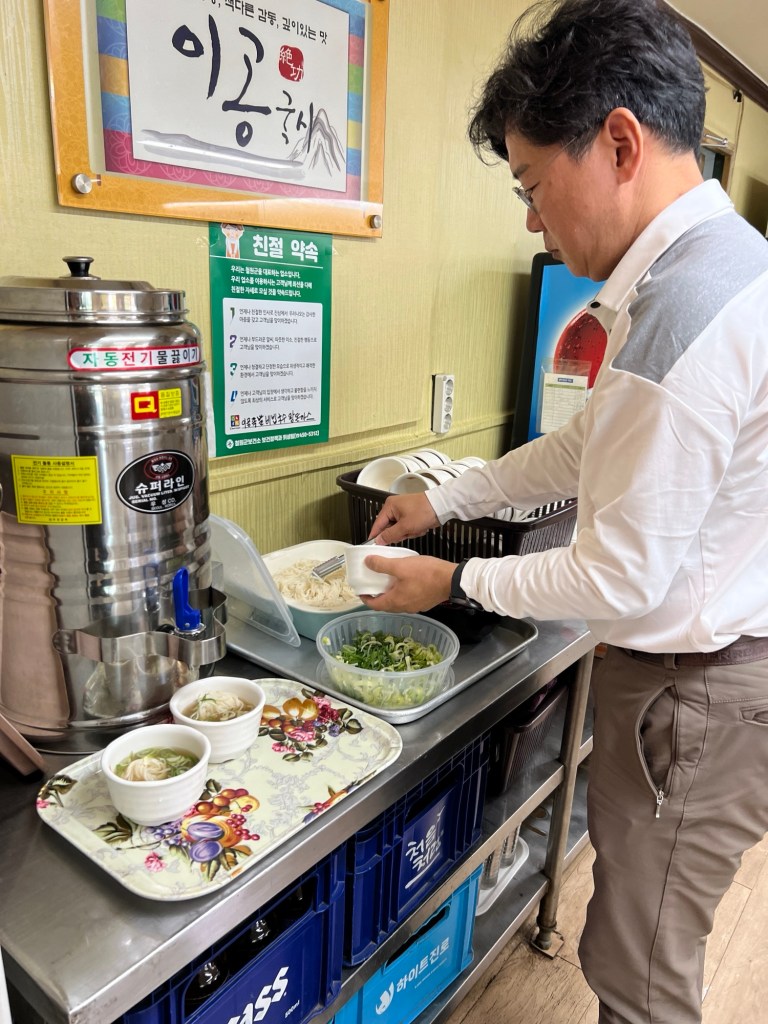
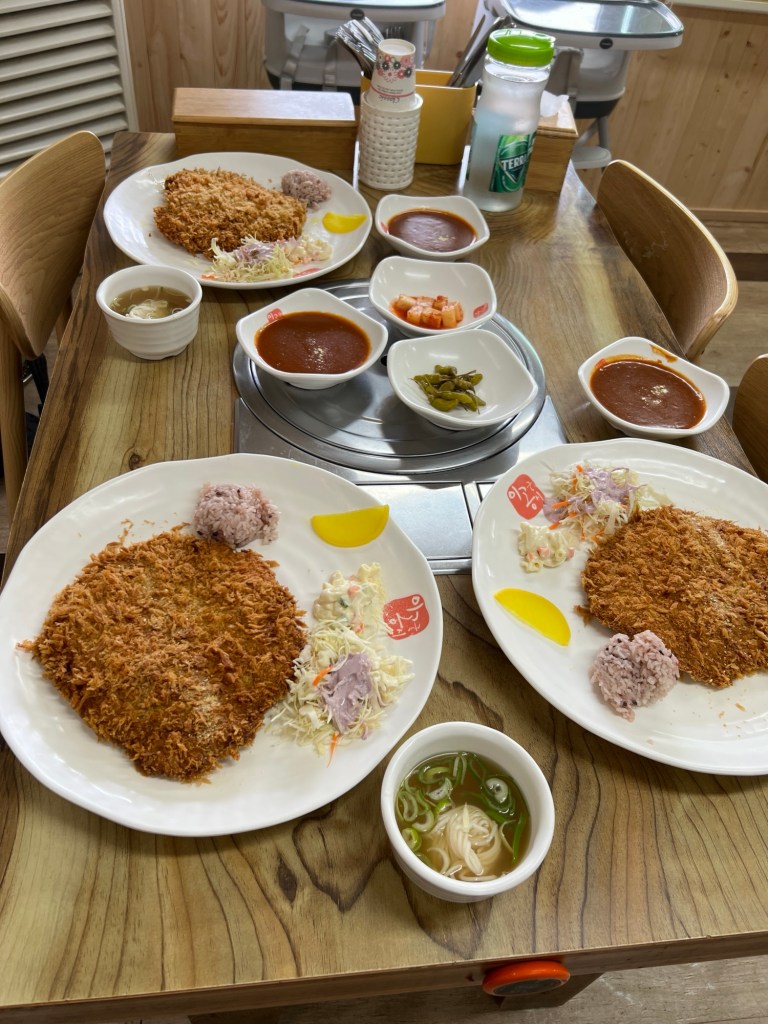
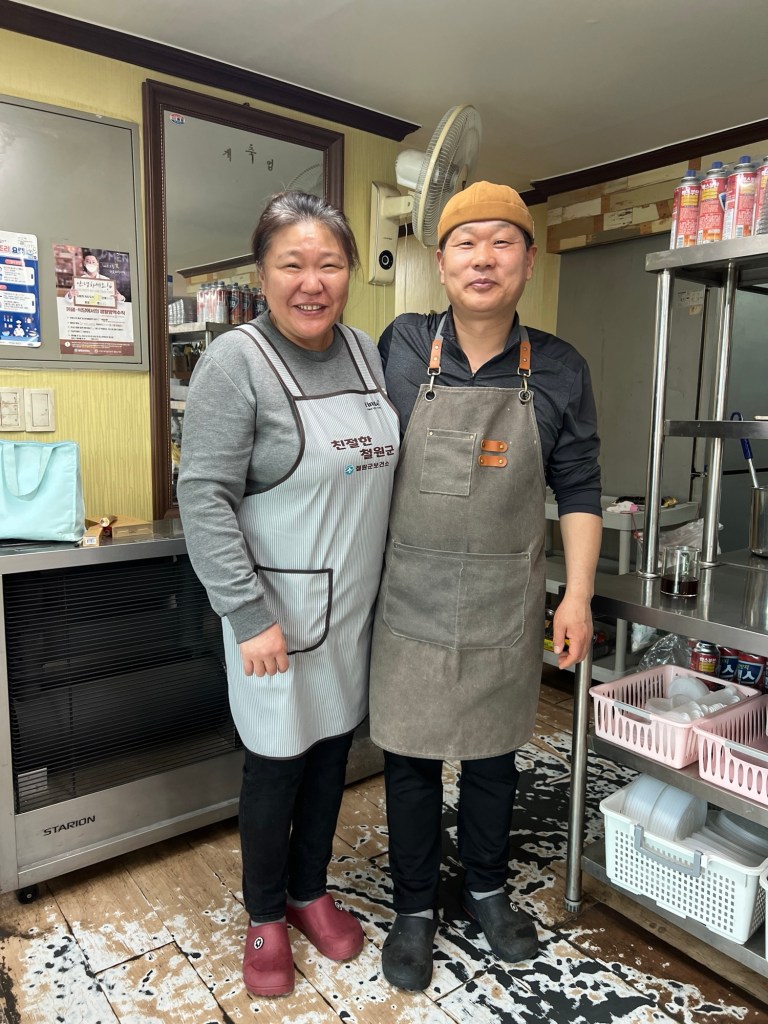
We stopped for lunch at Munhye in Gangwon at midday. Alex ordered ahead of time and we enjoyed a really nice crispy breaded (crumbed) pork schnitzel, noodle soup and some sides (with a Pepsi, which is a first) before heading to join our tour at Cheorwon Demilitarised Zone (DMZ) at 1:30.
Ninety % of tourists visiting the DMZ do so from Seoul and visit the fourth tunnel (currently closed) it’s about an hour from Seoul, you have to travel in big tour buses and it’s evidently like an amusement park compared to where we are going. We are very fortunate to see it using our own van to move with the tour convoy.
We crossed the 38th Parrallel which was North Korean territory before the Korean War and the South took land from the north.
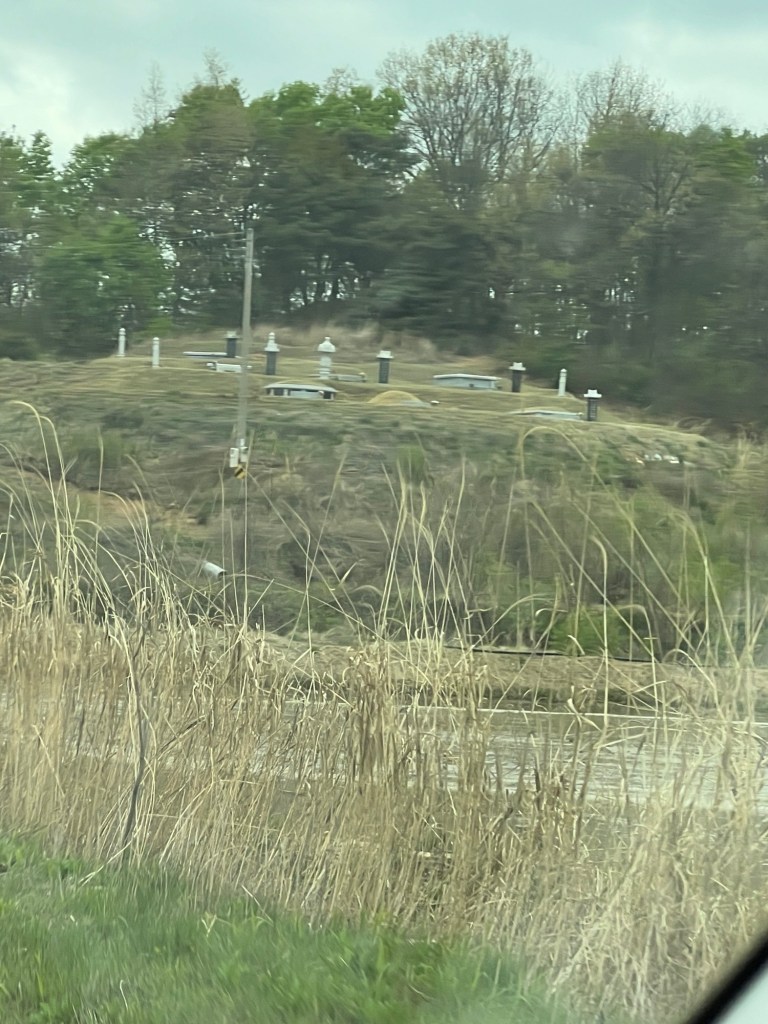
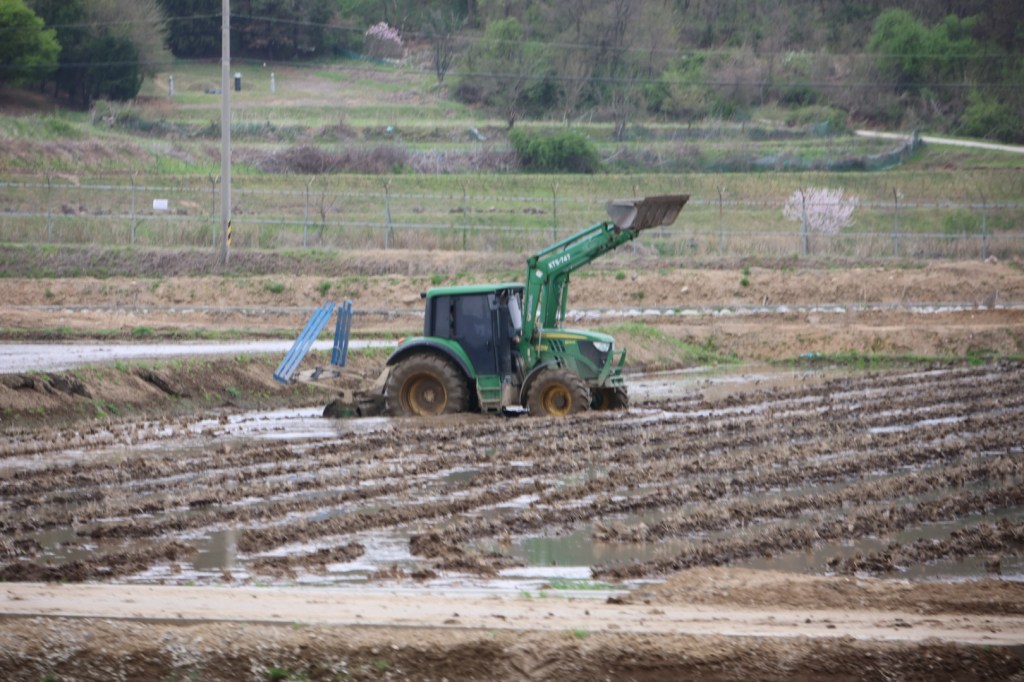
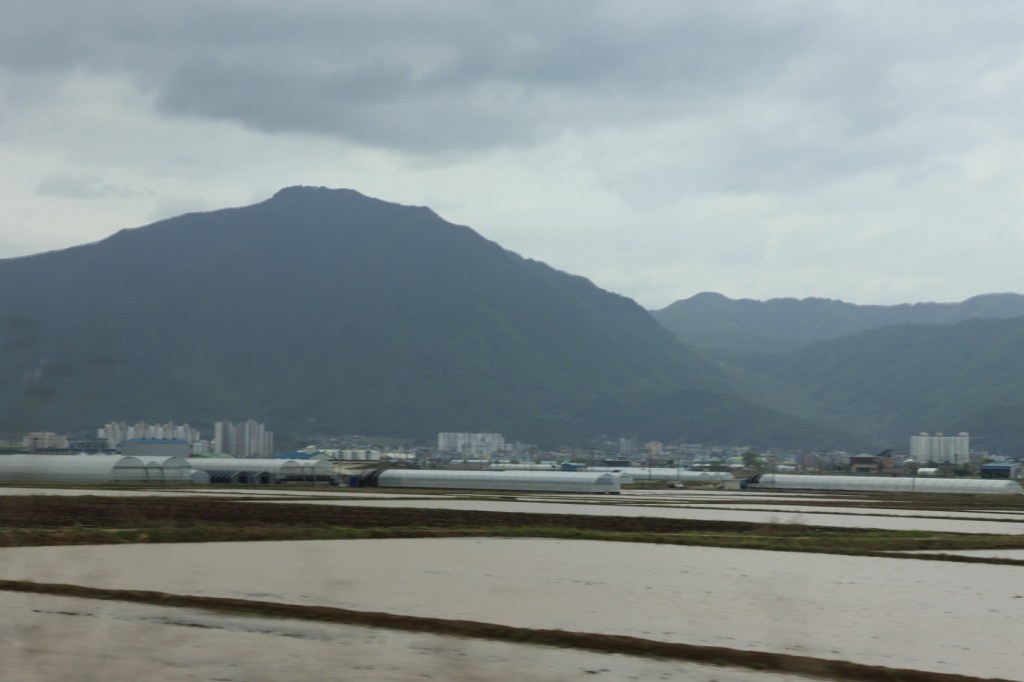

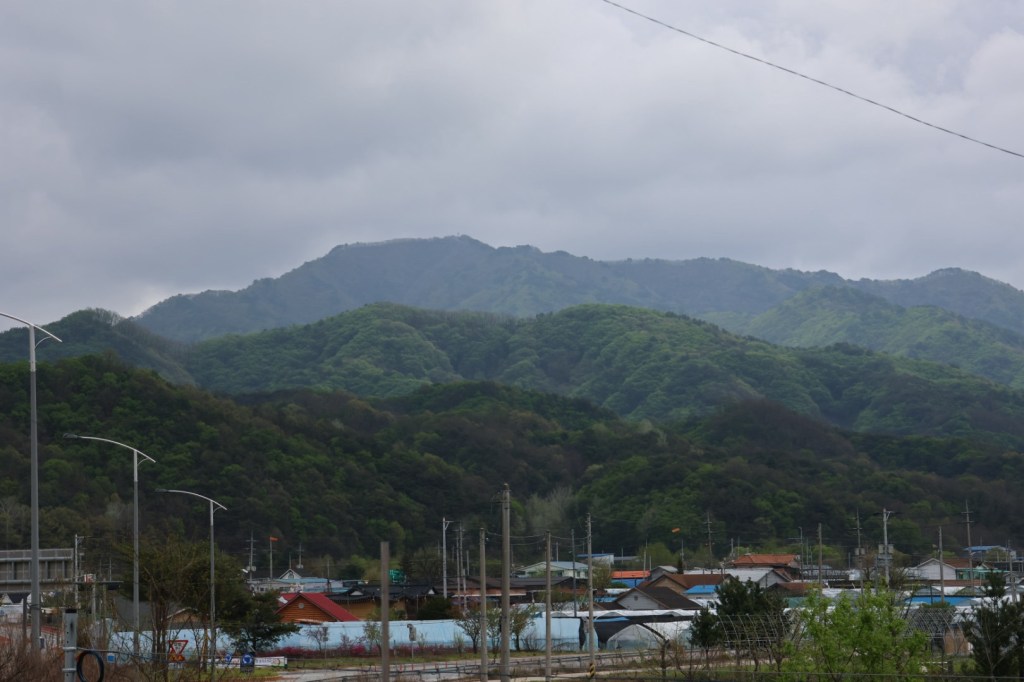
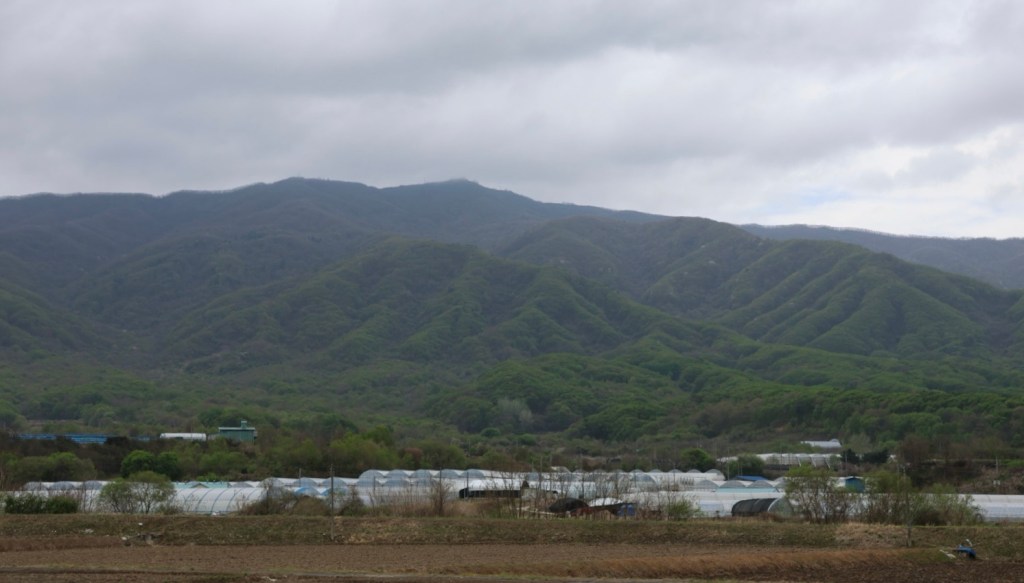
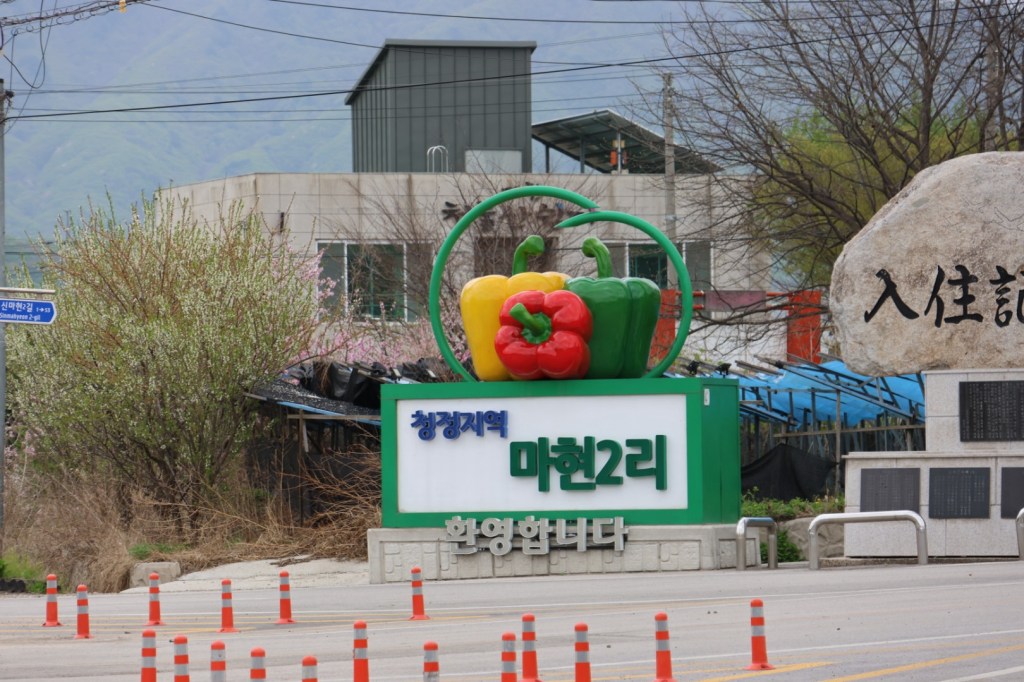
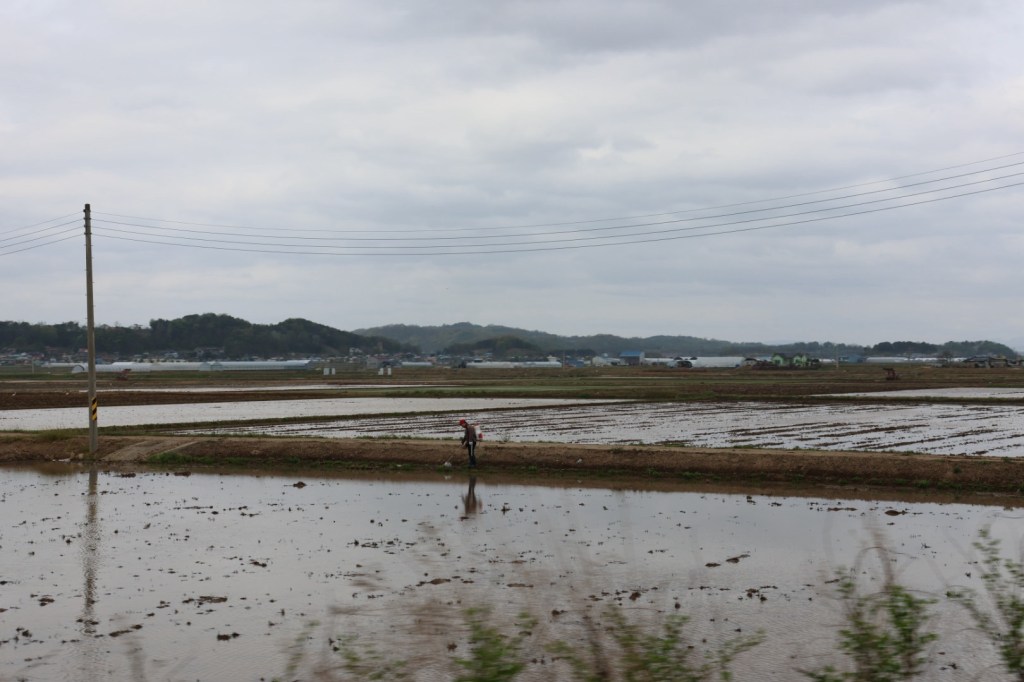
Somewhere along the way we passed Sth Korean tank garages, where they hide/house the tanks.
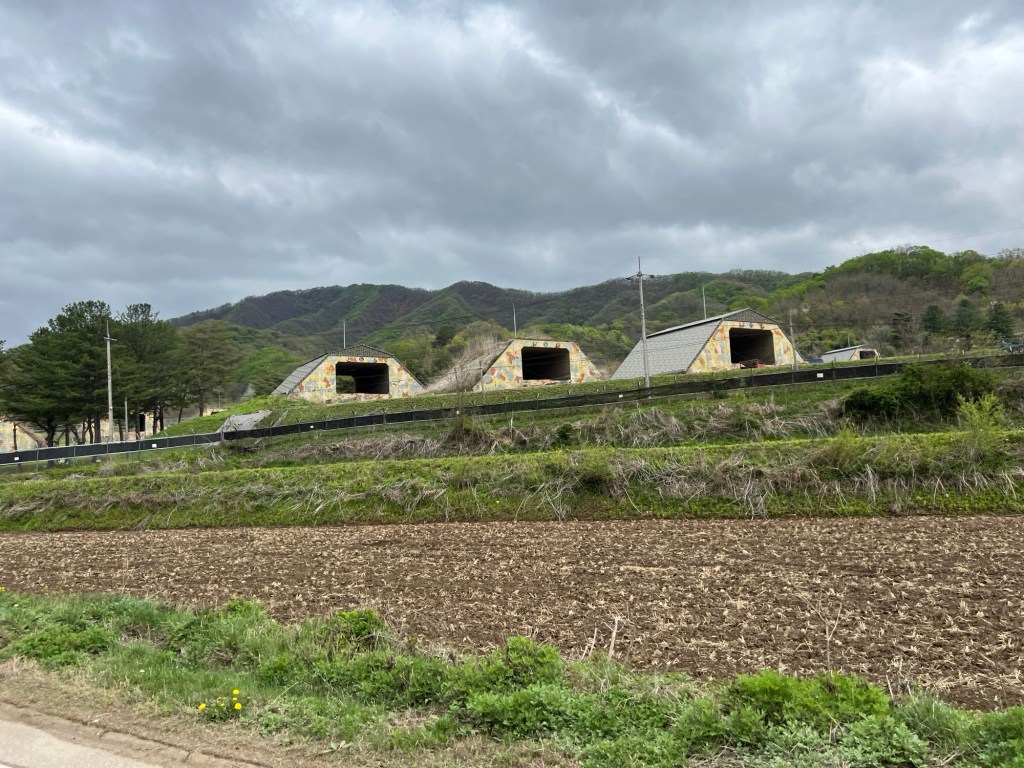
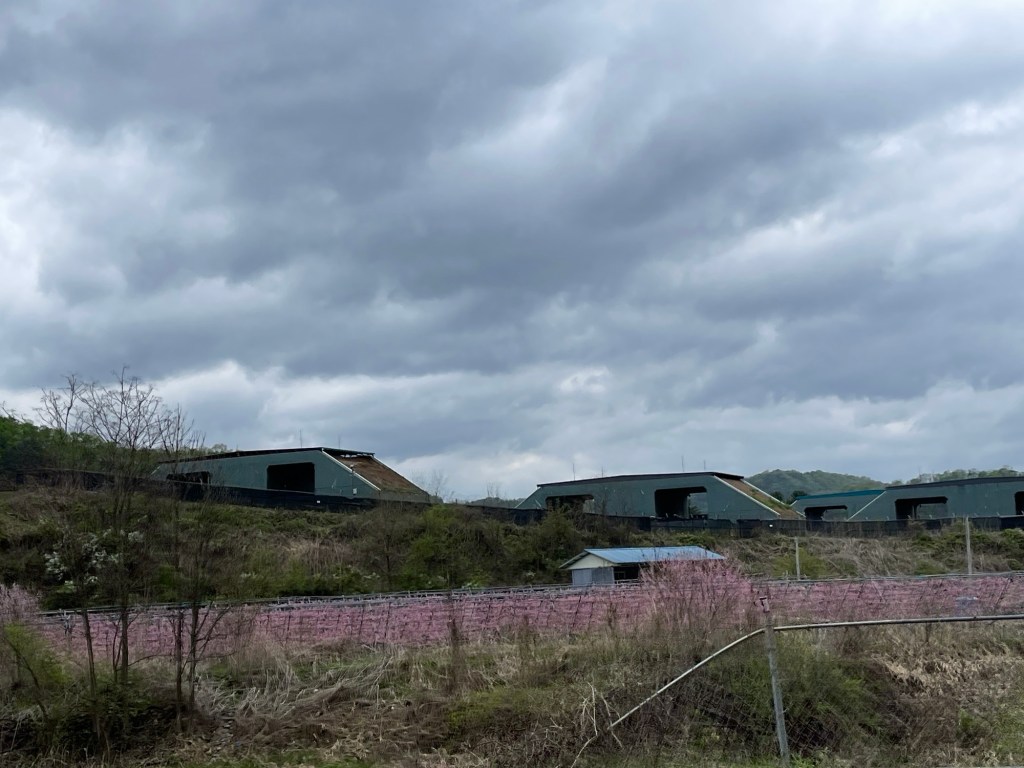
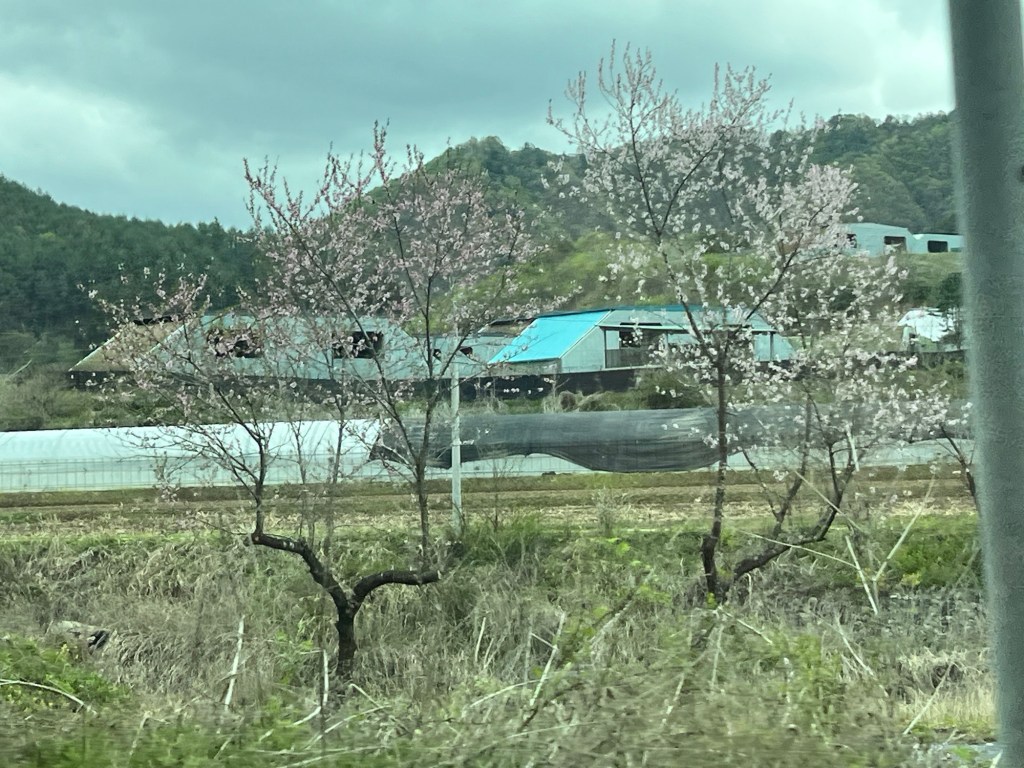
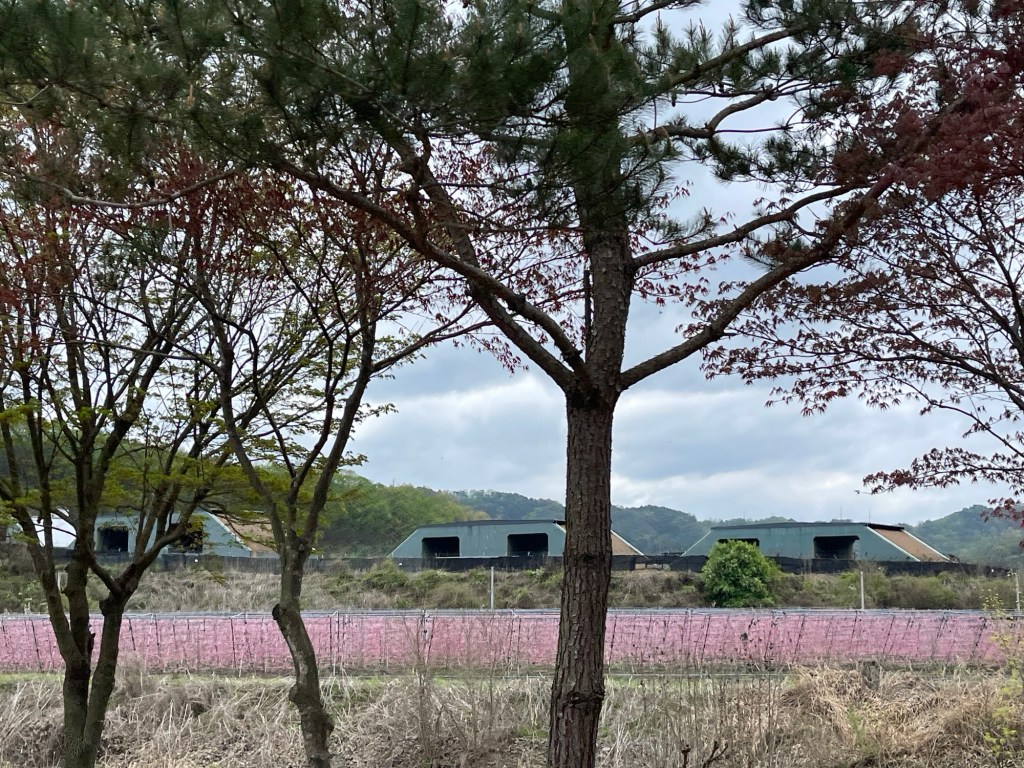
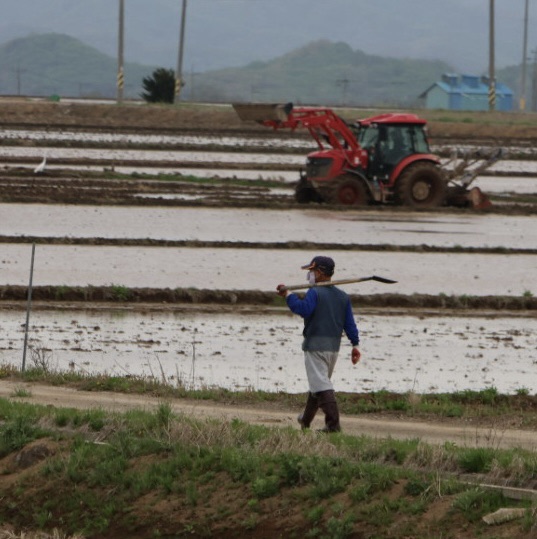
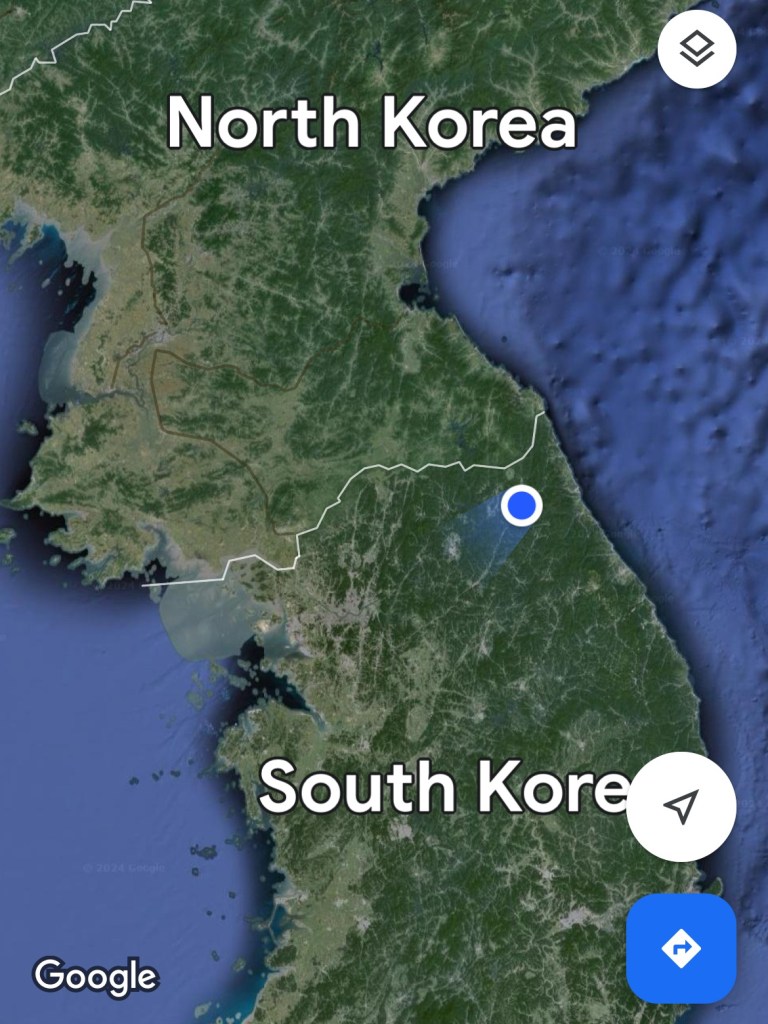
Very surreal to think just how close we are to the most isolated country in the world North Korea. We took so many map shots along the way as we were getting ever closer to the border.
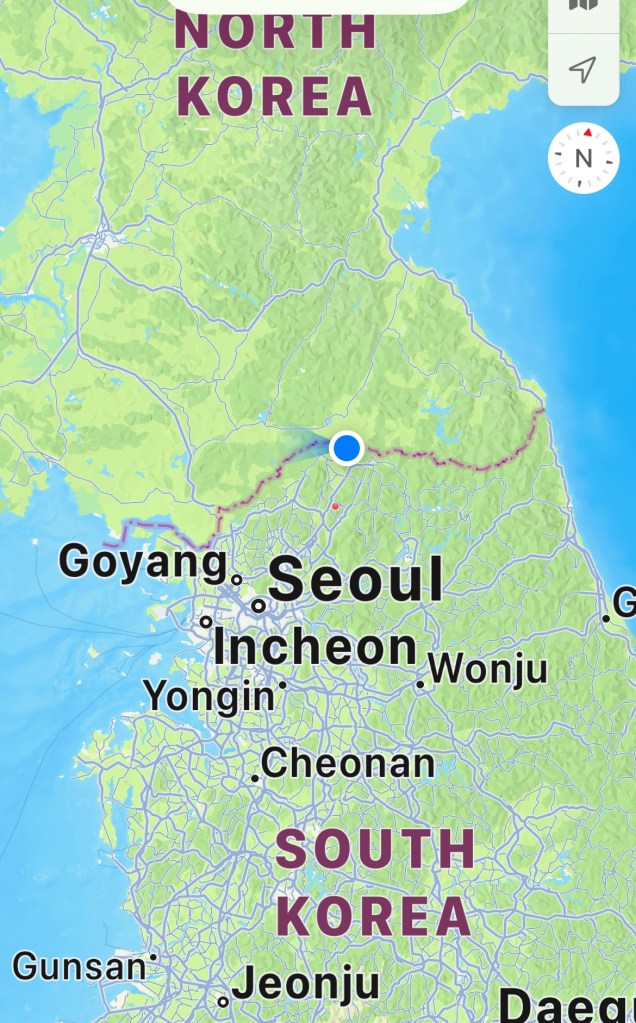
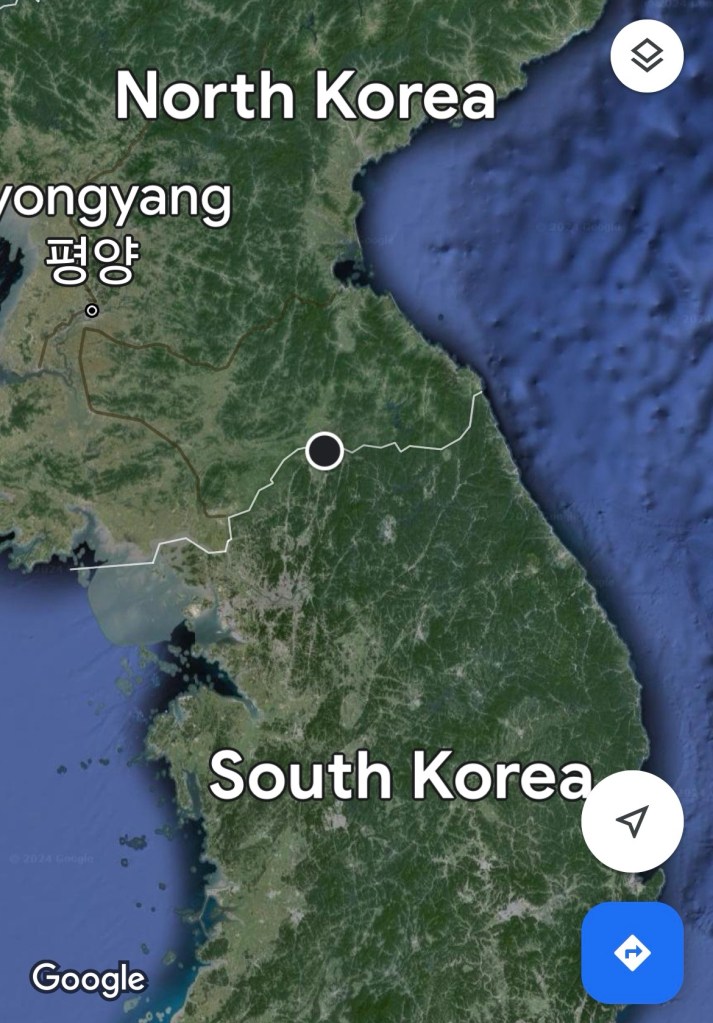
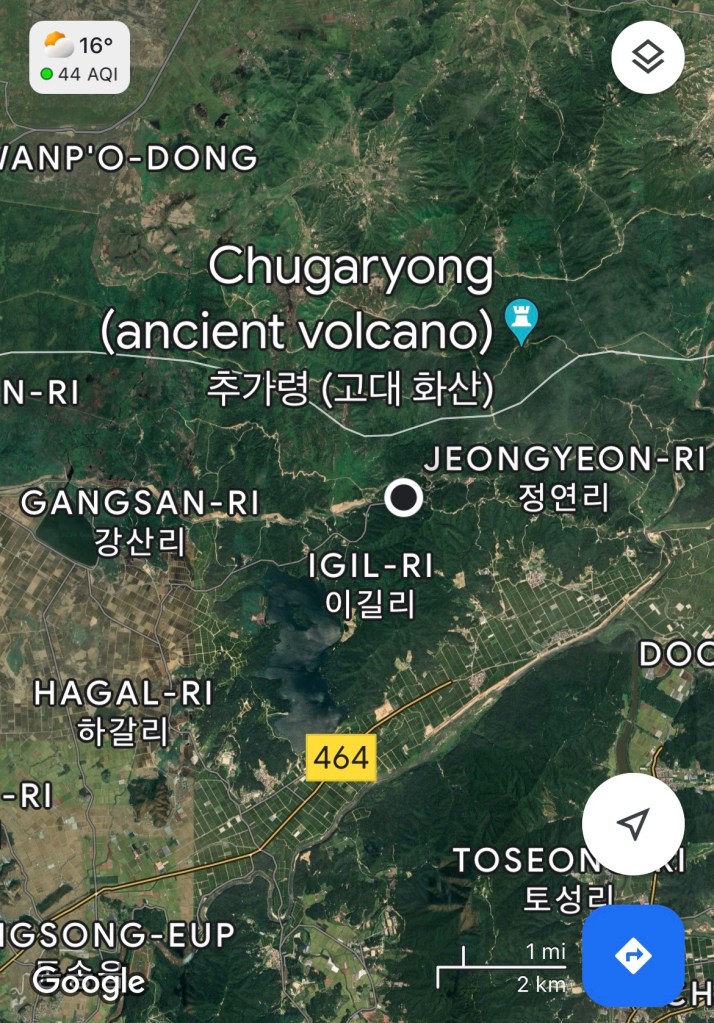
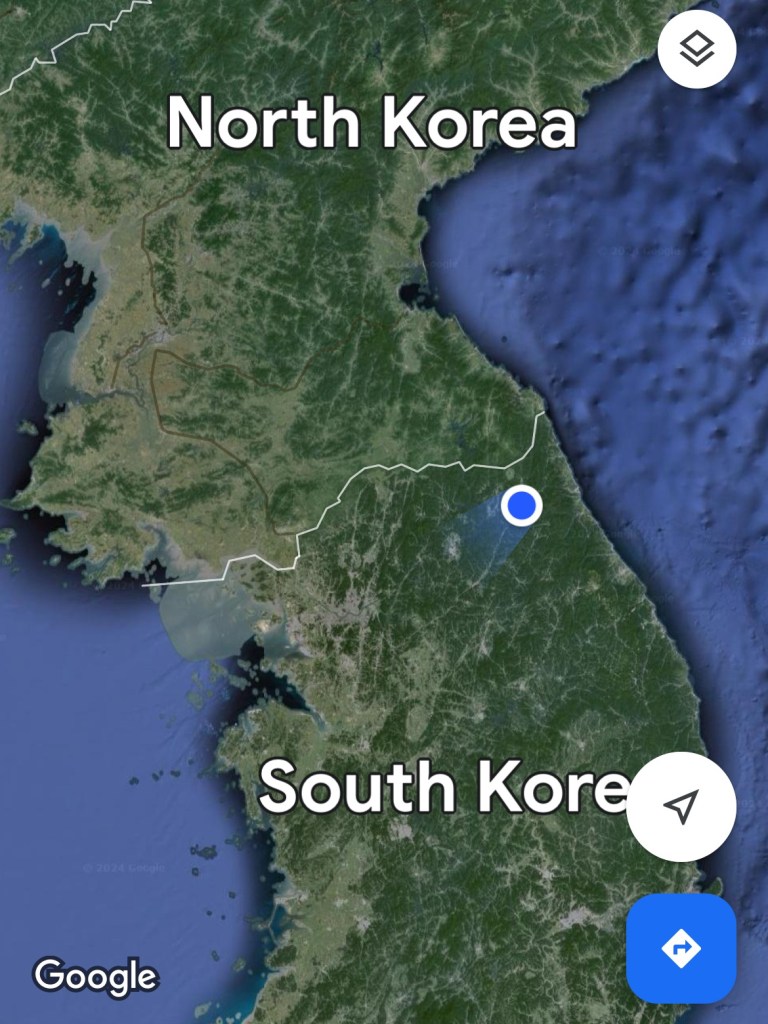
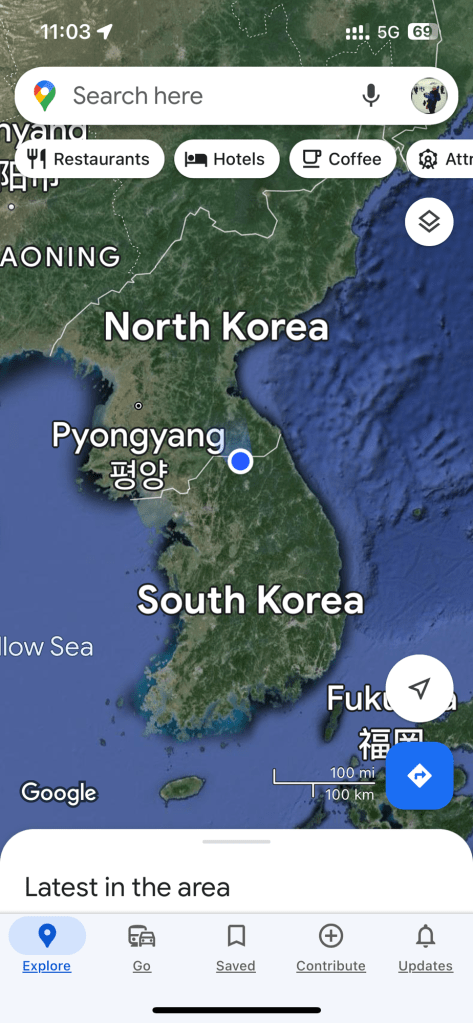
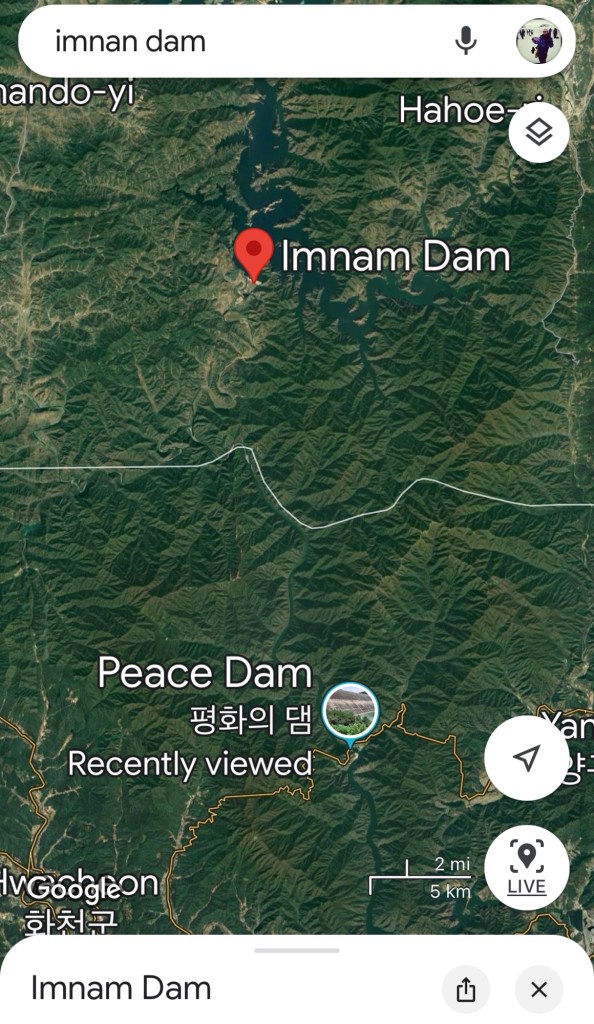
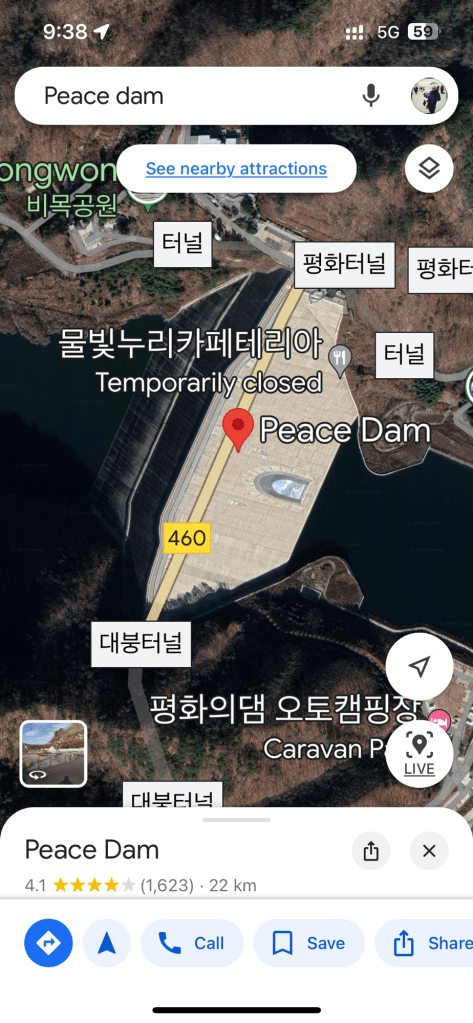
Alex talked to us about the Peace Dam built by the South, to prepare for water sources being cut from the North, where they had built the Imnam dam wall which cuts the flow to SK. Clever forms of warfare. We could see these dams on Google Maps.

We arrived at Cheorwon, the check in point to join the DMZ tour.
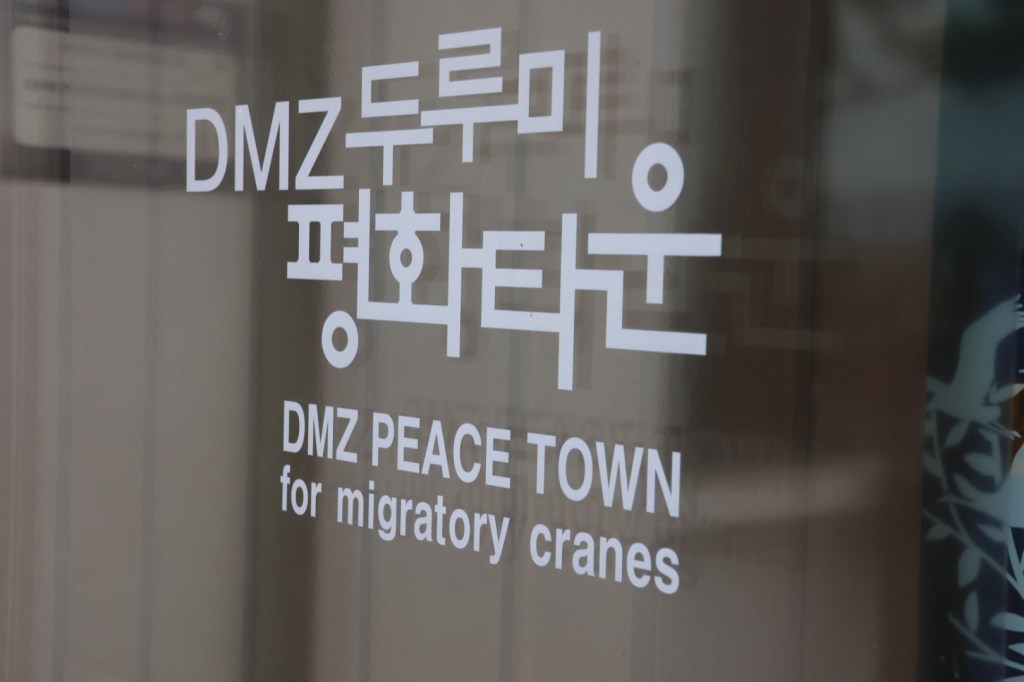
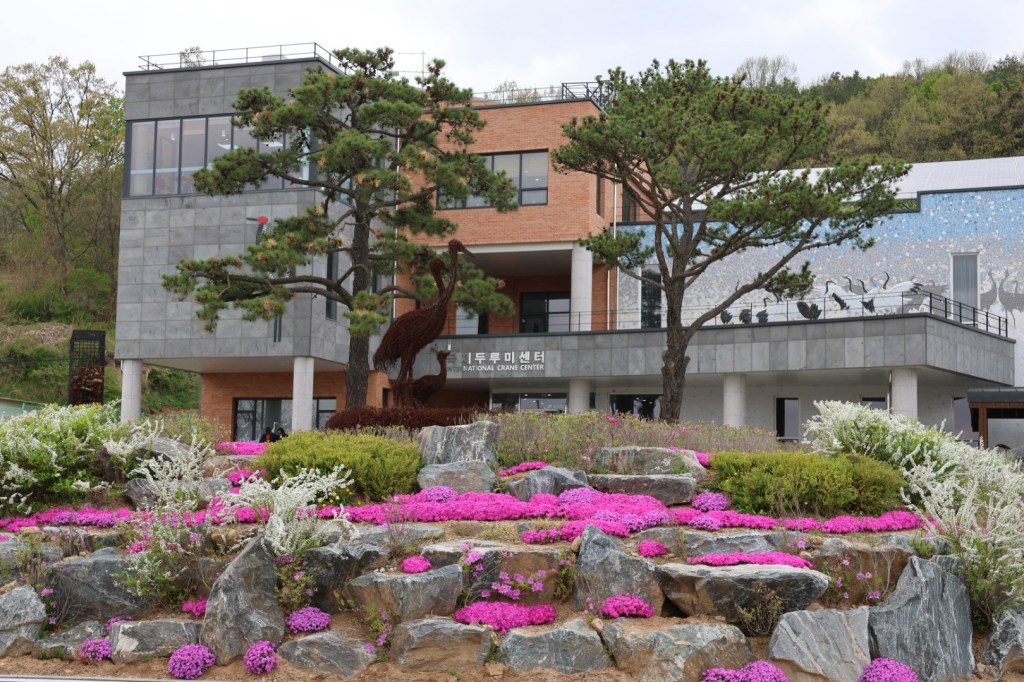
The tour office is located within the International Crane Centre.
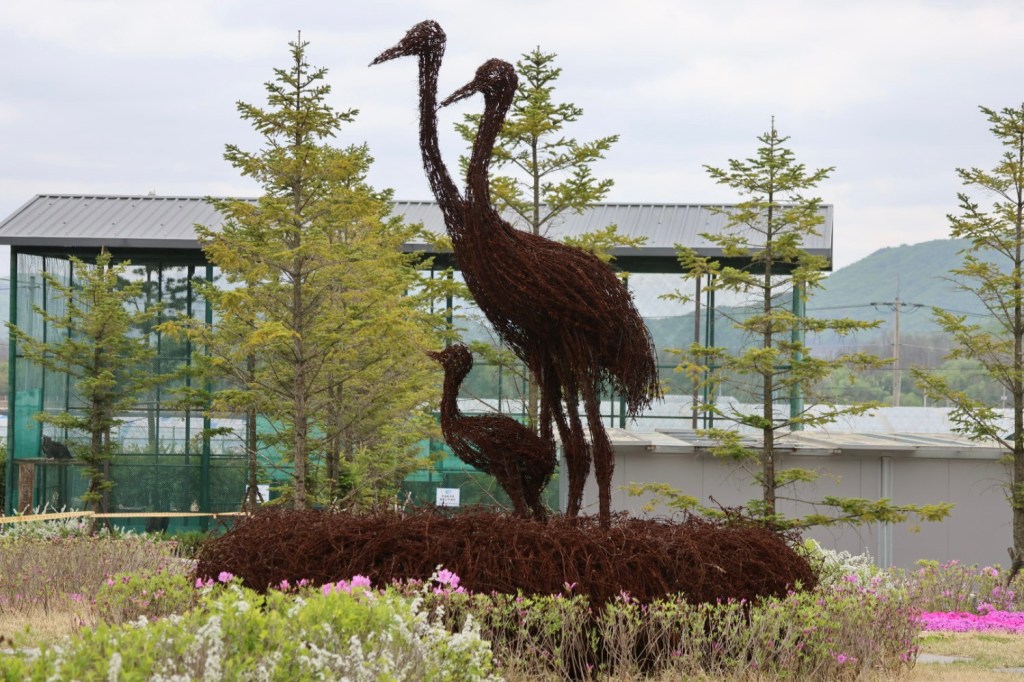
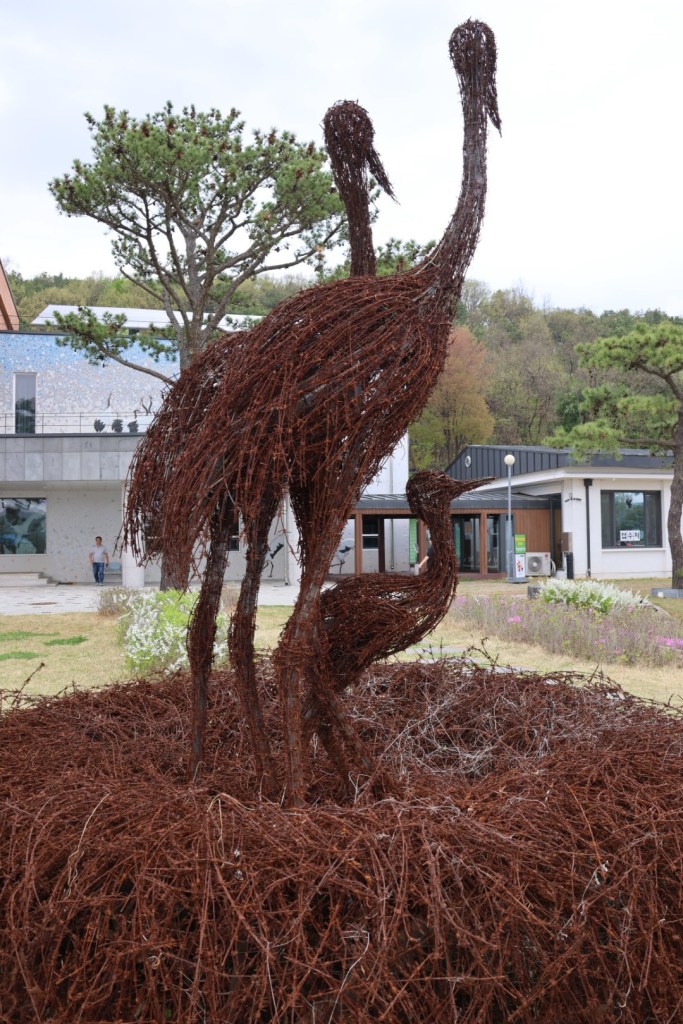
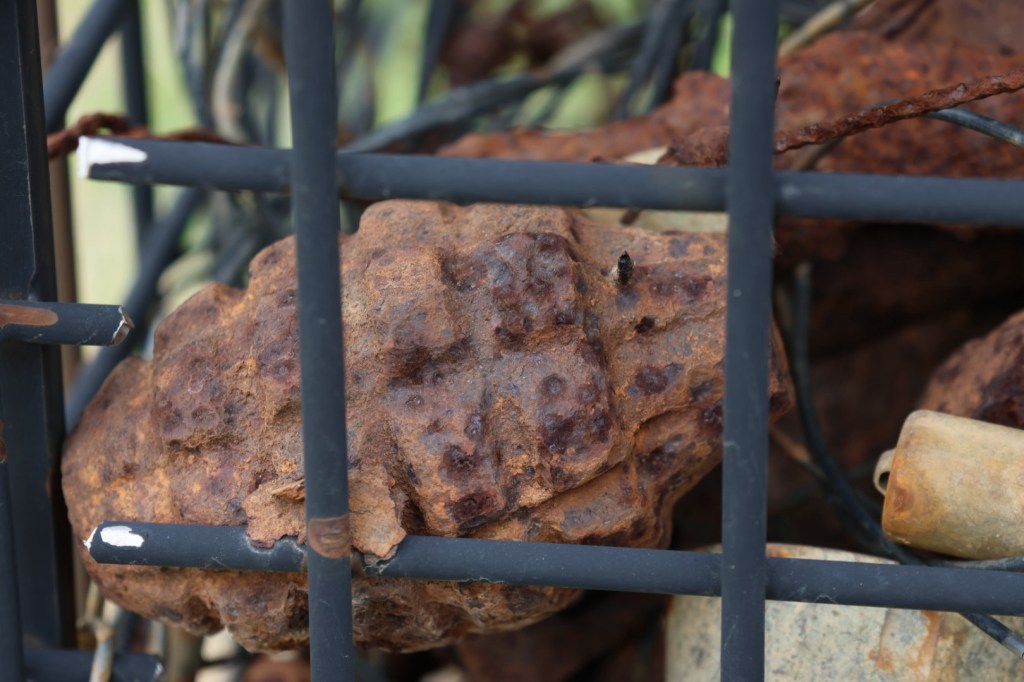
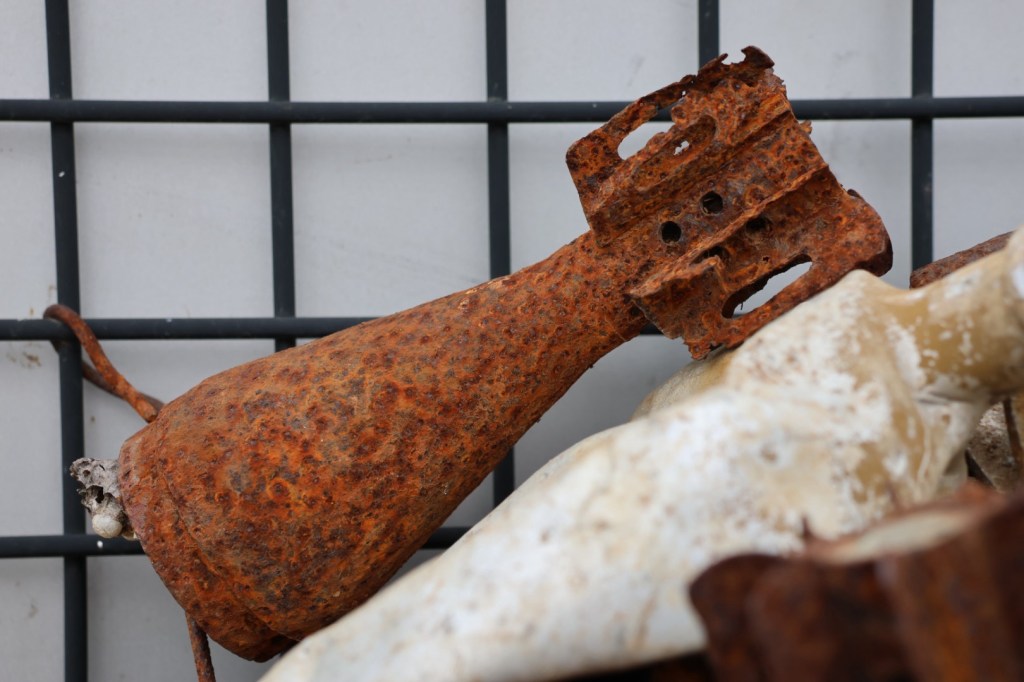
We had about 25 minutes to look around. One sculpture of a Crane Family was made from Barbed Wire from the Korean War. The sign behind was filled with other fragments of war found during excavation. I could see small missiles and big bullets and hand grenades.

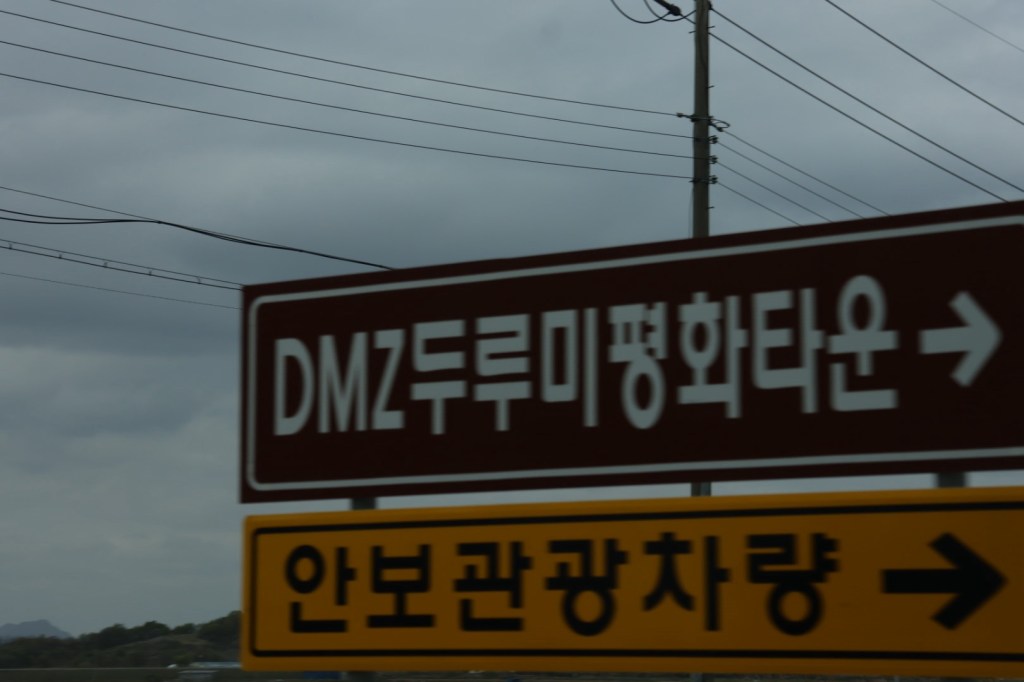
Alex went and did the paperwork after the parking the van in the convoy line. There are about 30 vehicles and a bus and mini bus in our 1:30 convoy. Each vehicle was provided with a blue light to indicate that we were part of the 1:30 tour. The 2:30 tour had amber lights.
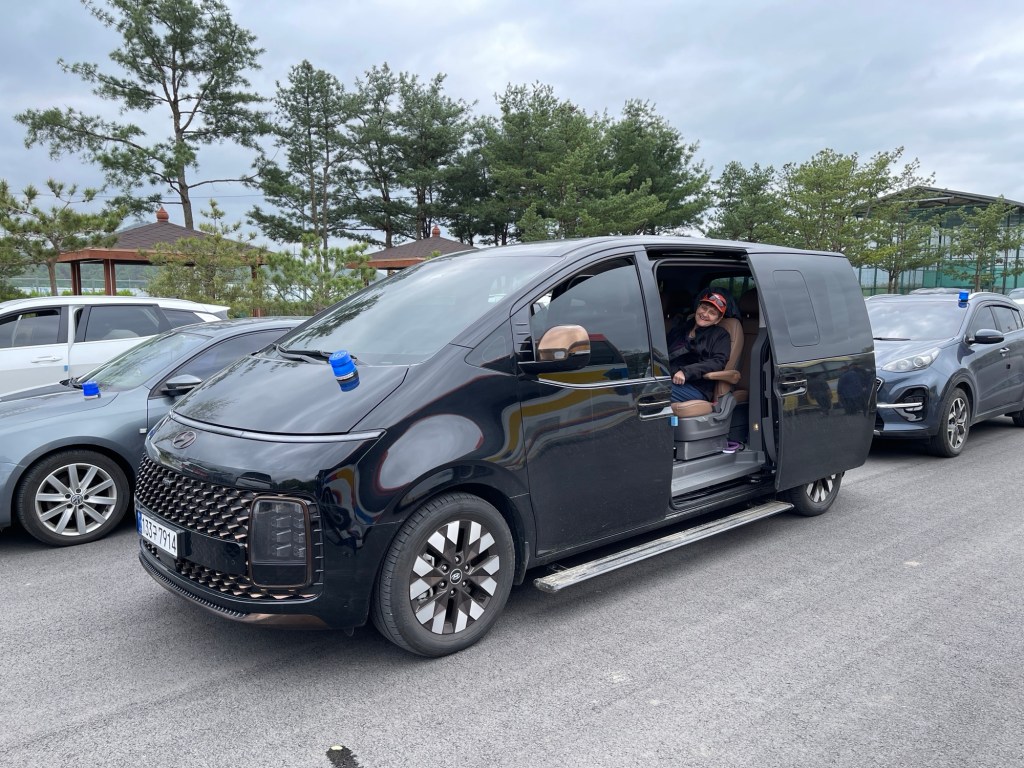
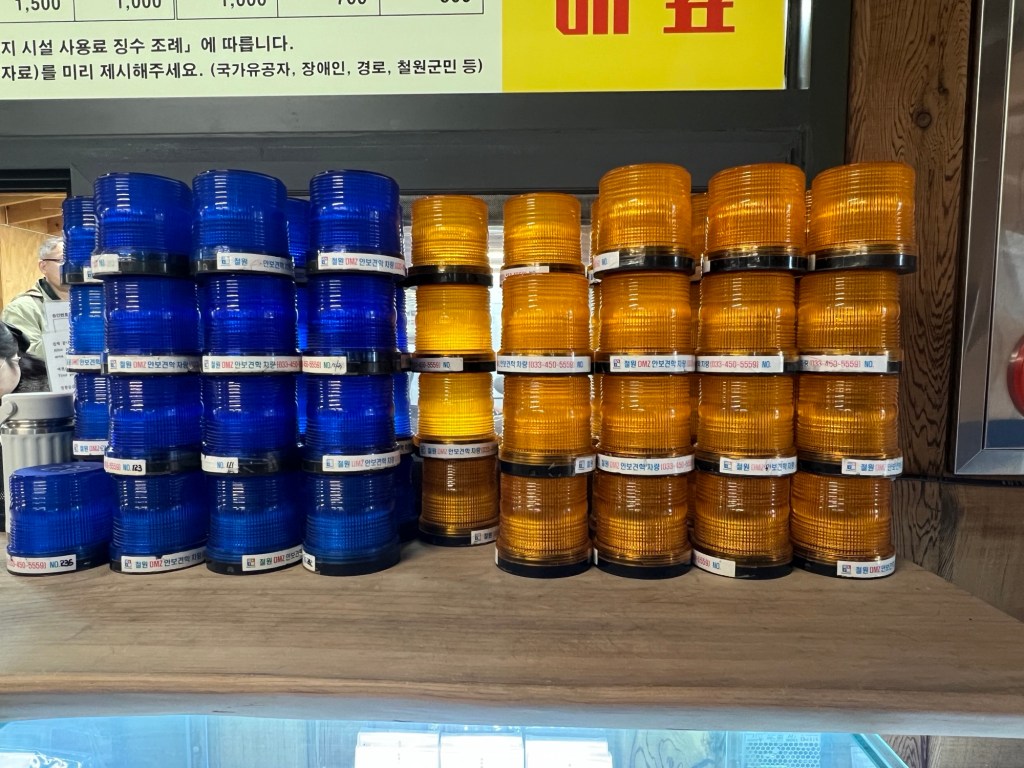
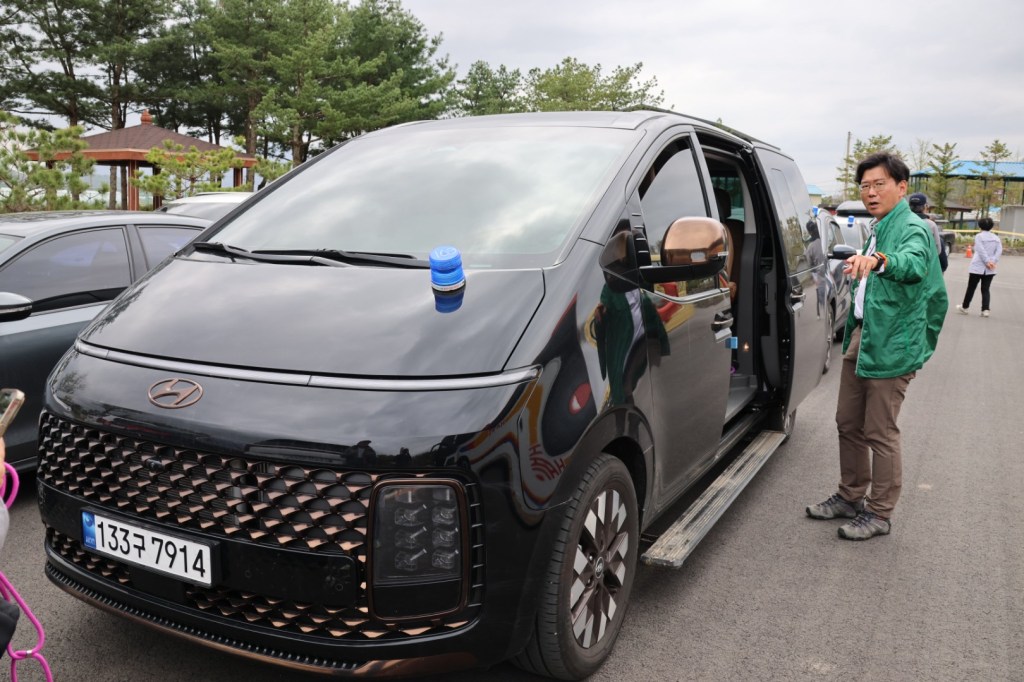
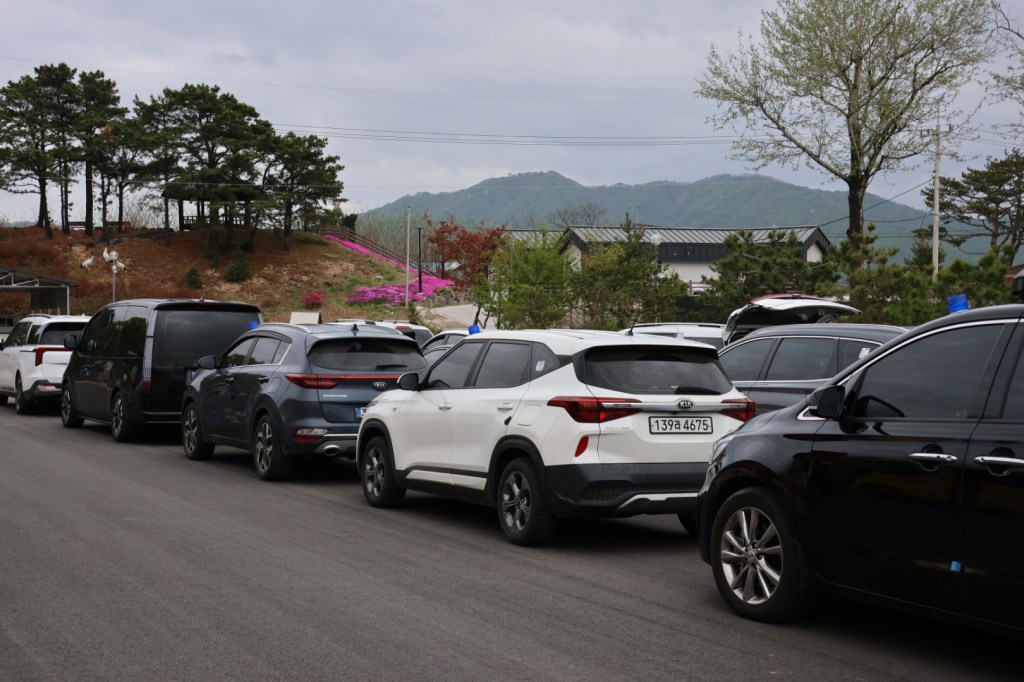
The convoy was escorted front and rear by a South Korean military vehicle.

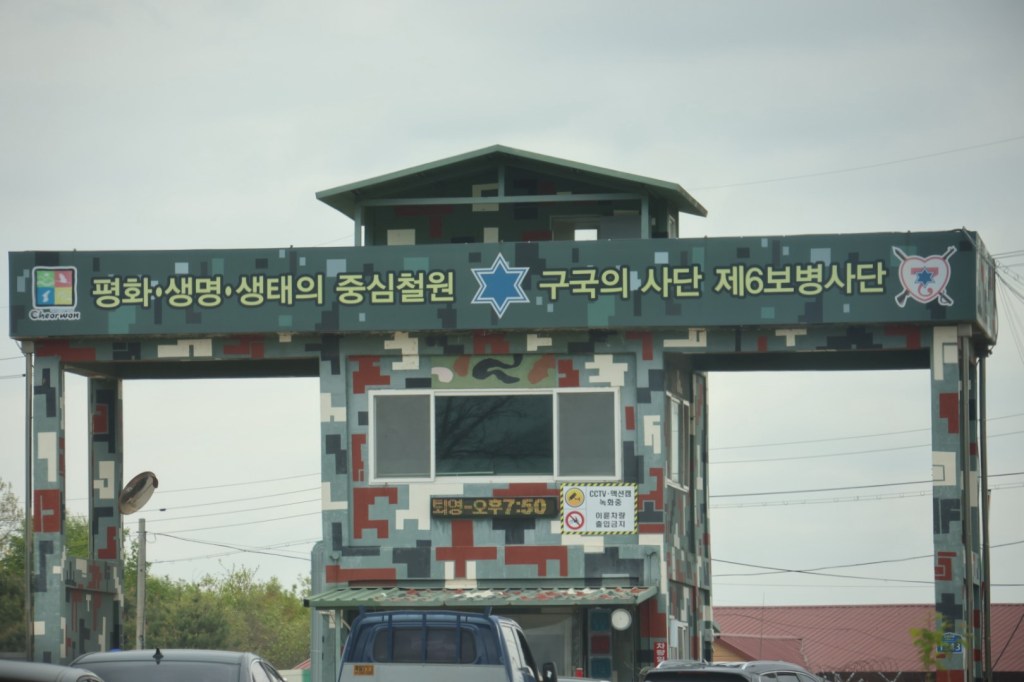

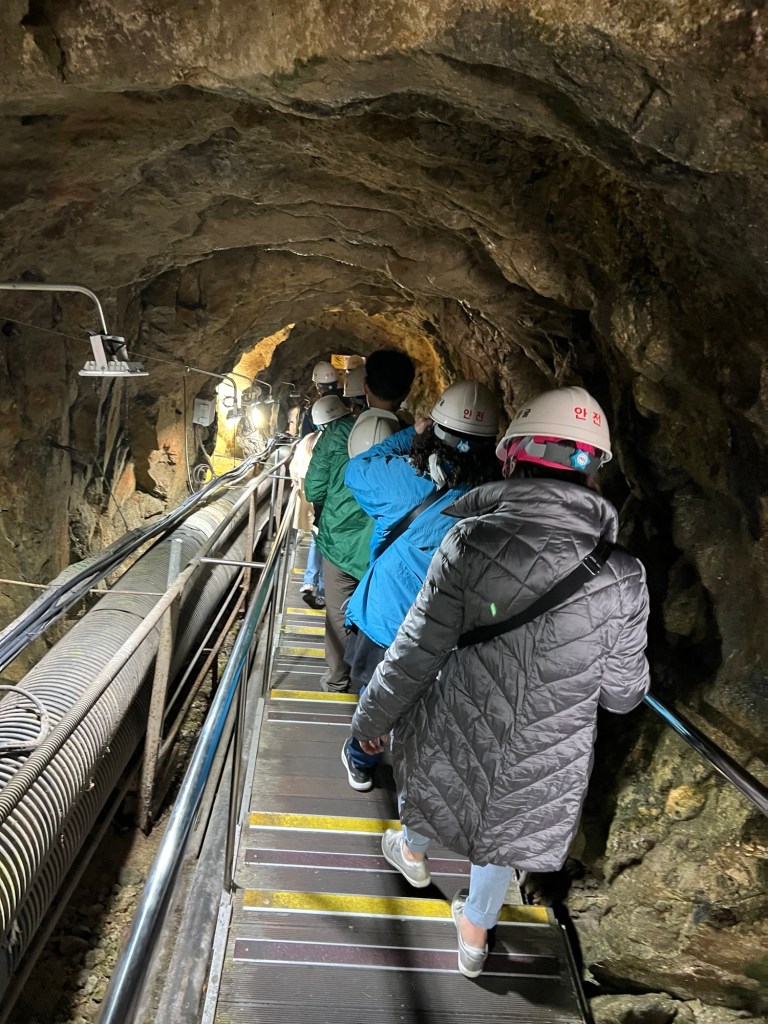
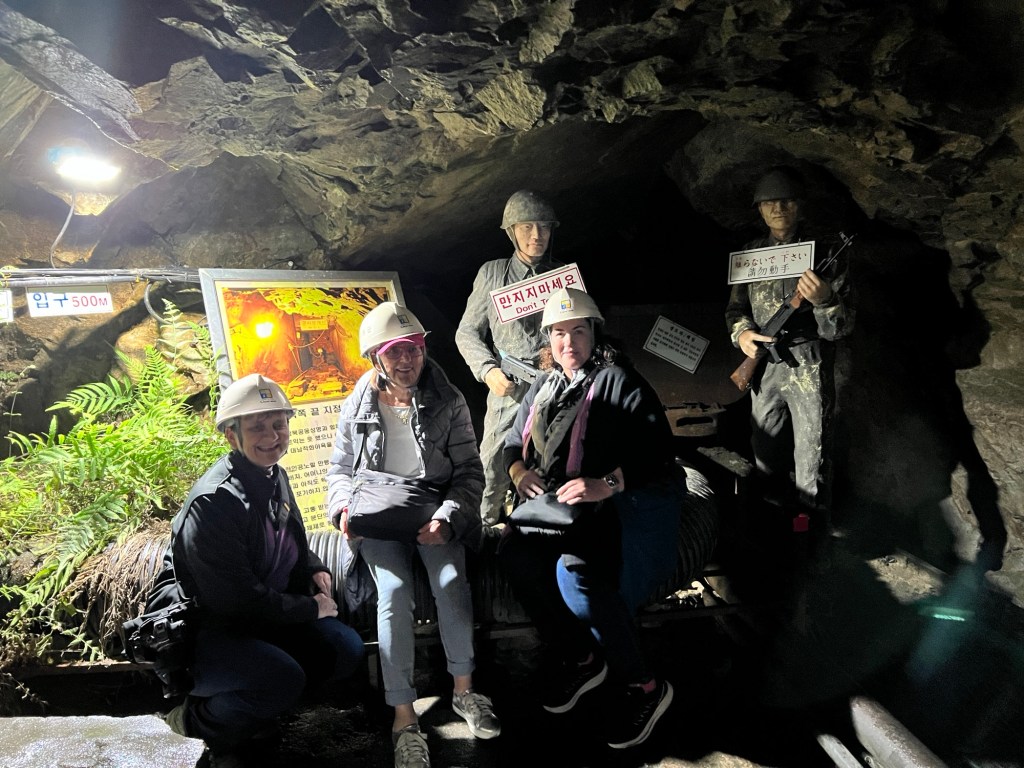
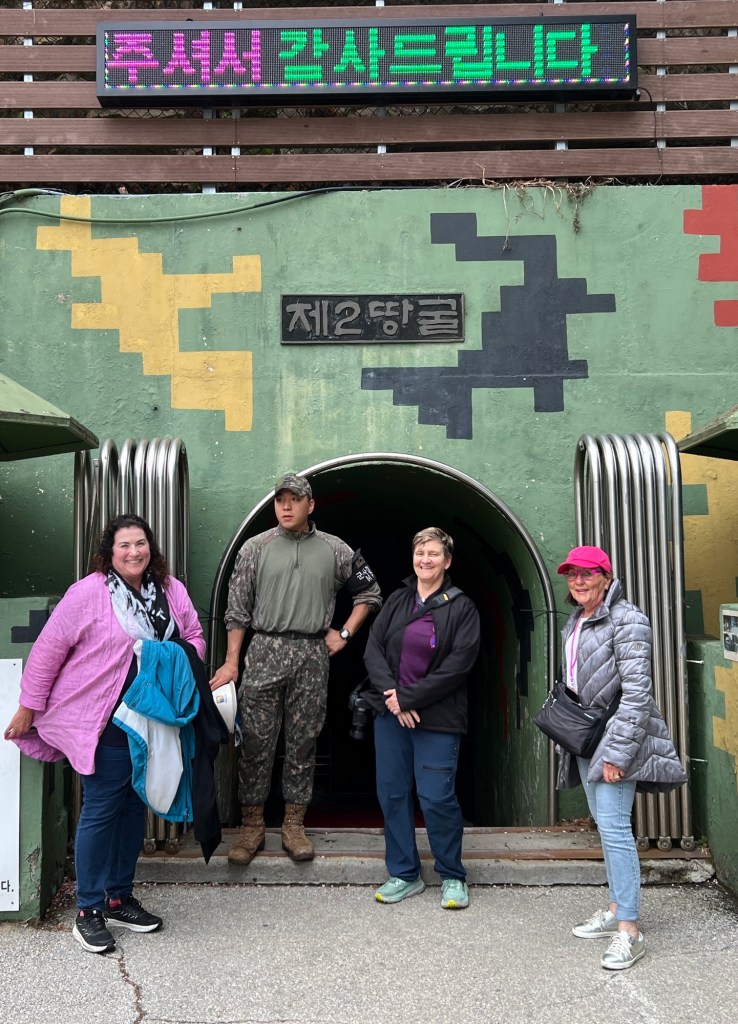
The first stop was Tunnel #2. This was a tunnel built by the North Korean’s to infiltrate the south. Once South Korea found the tunnel they dug down to it.
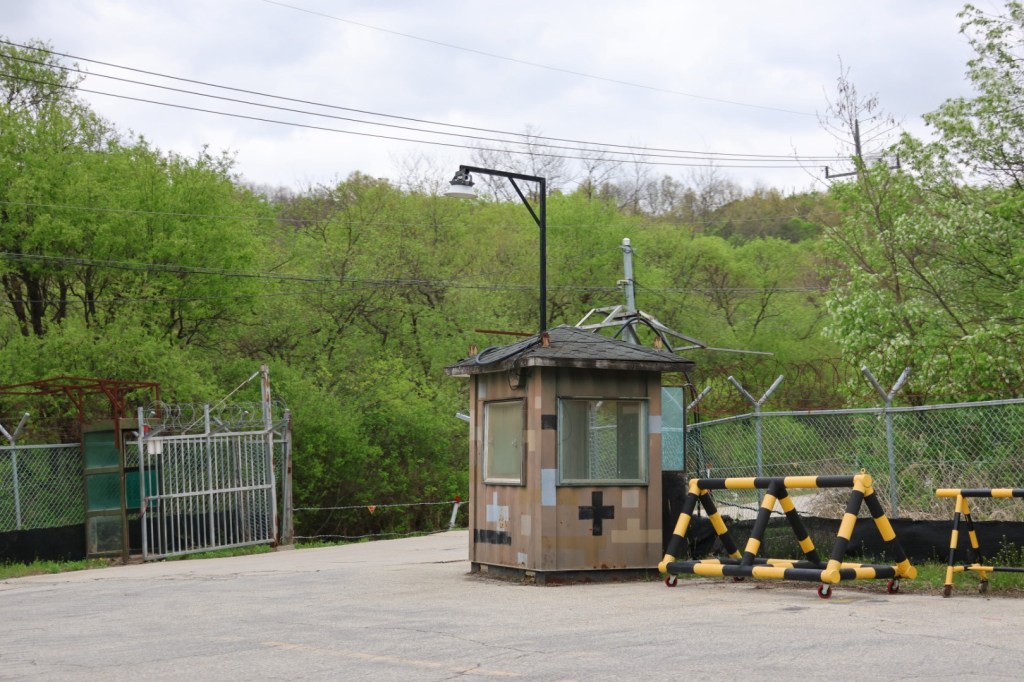
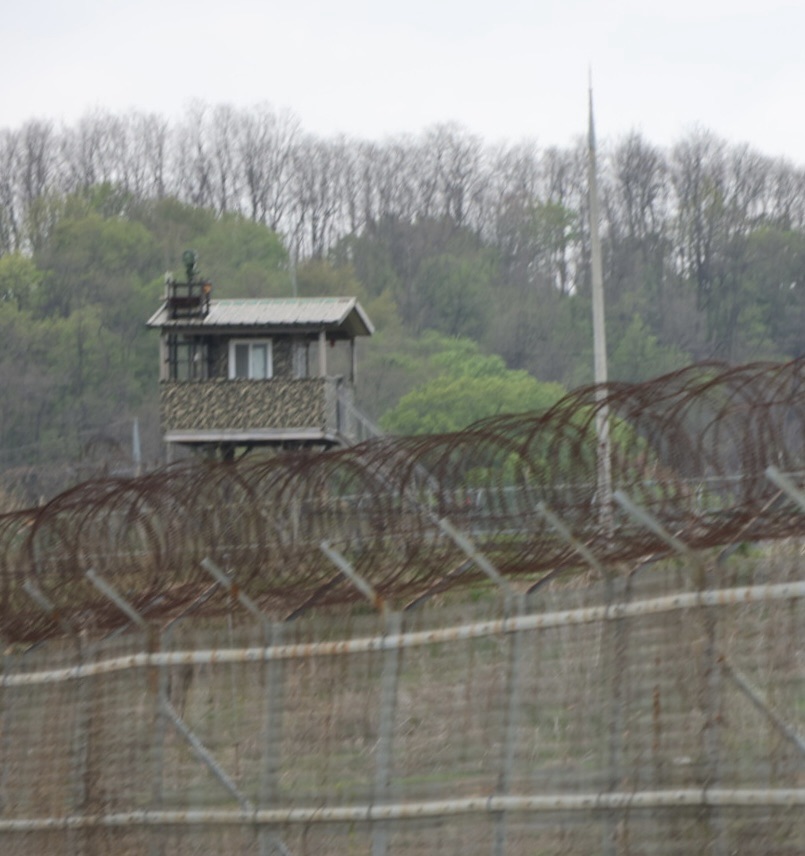
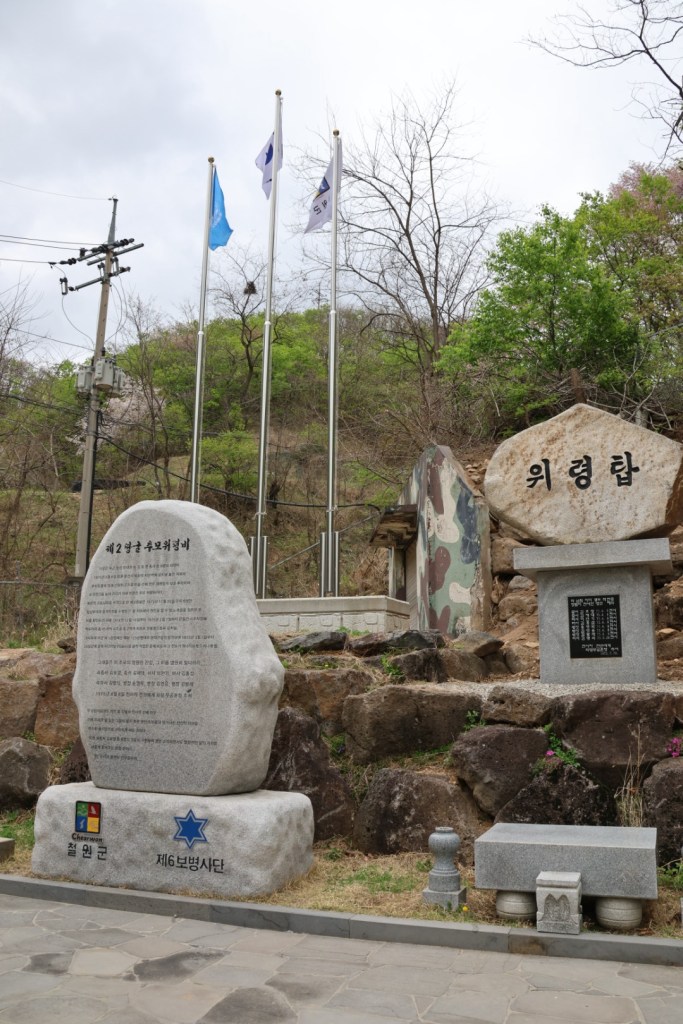
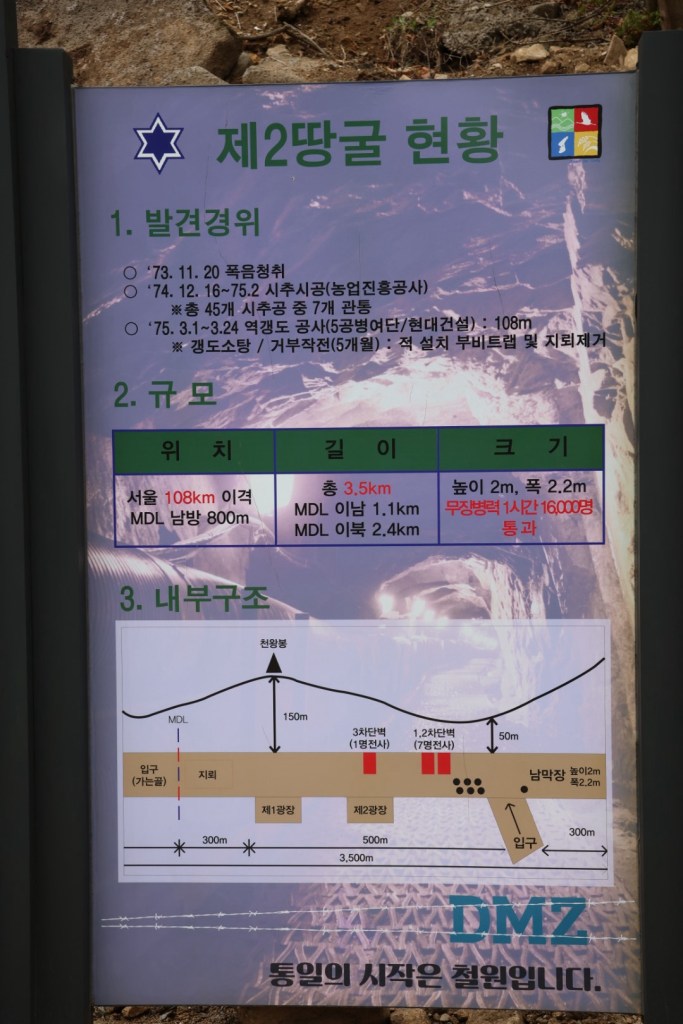
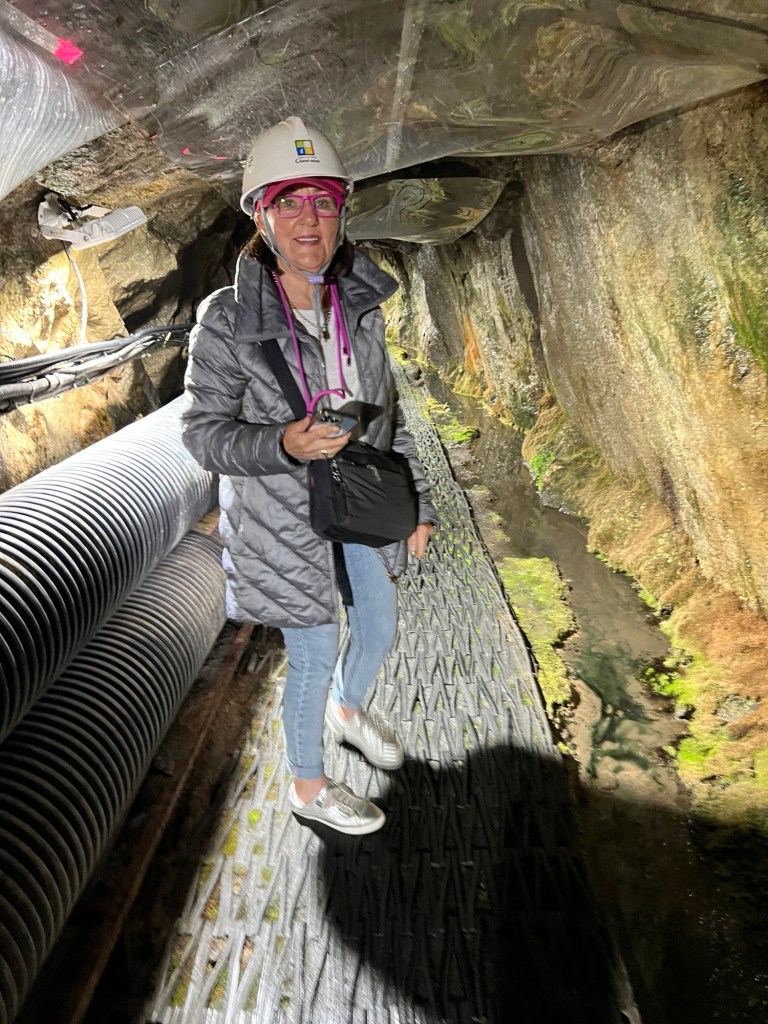
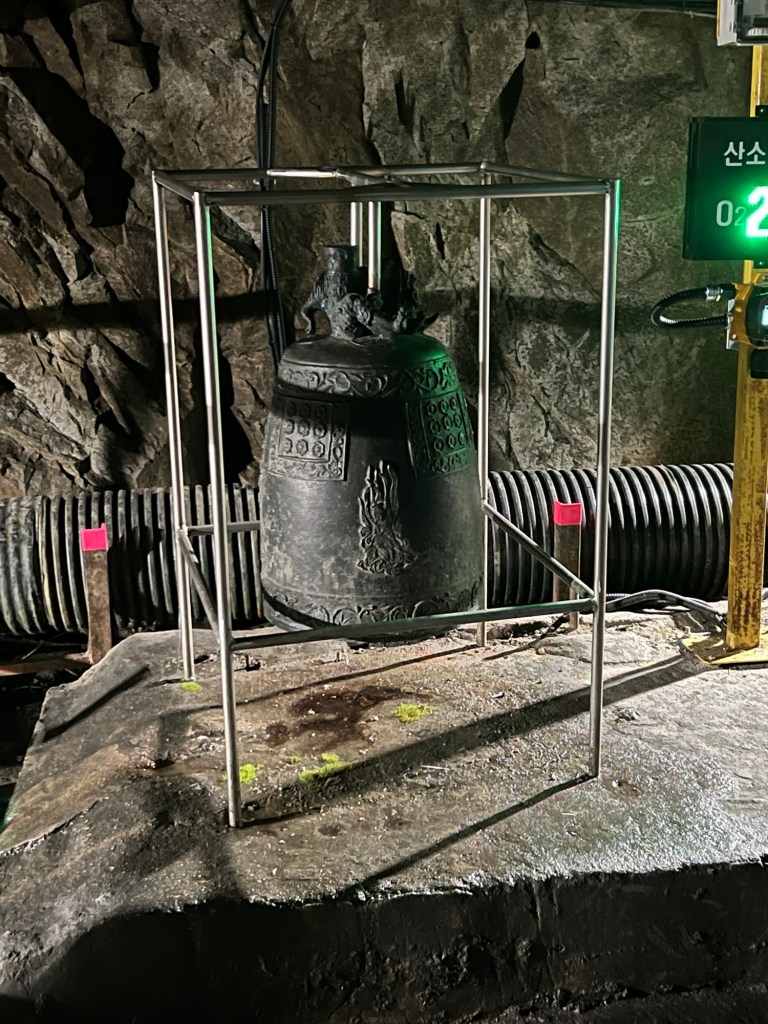
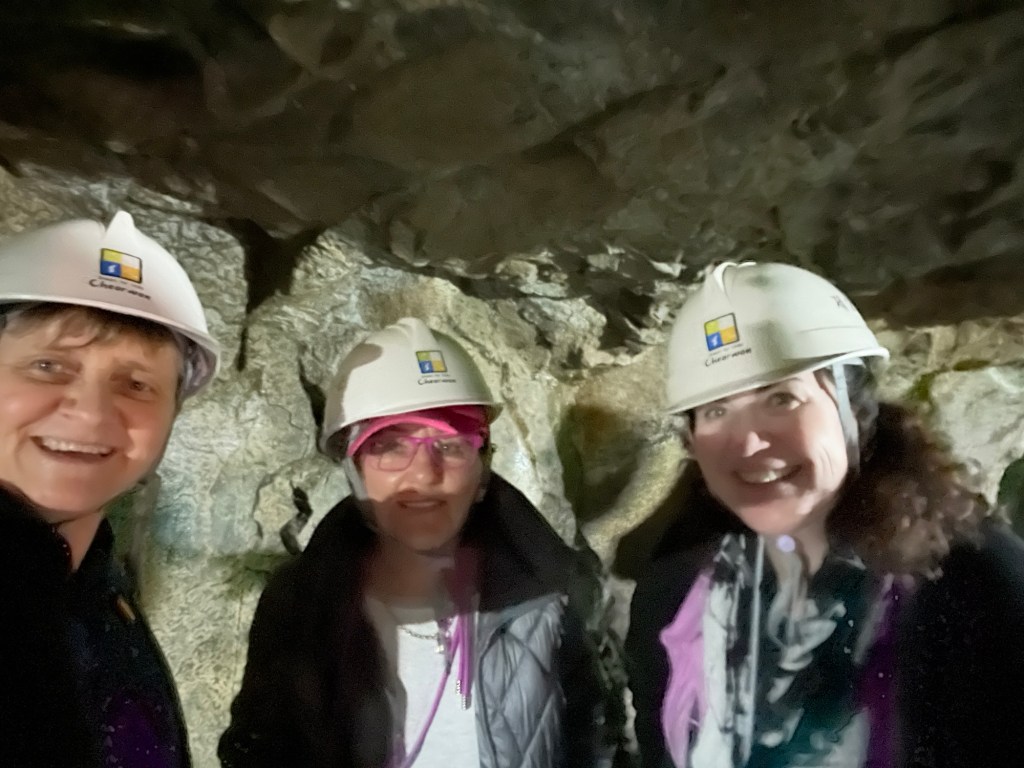
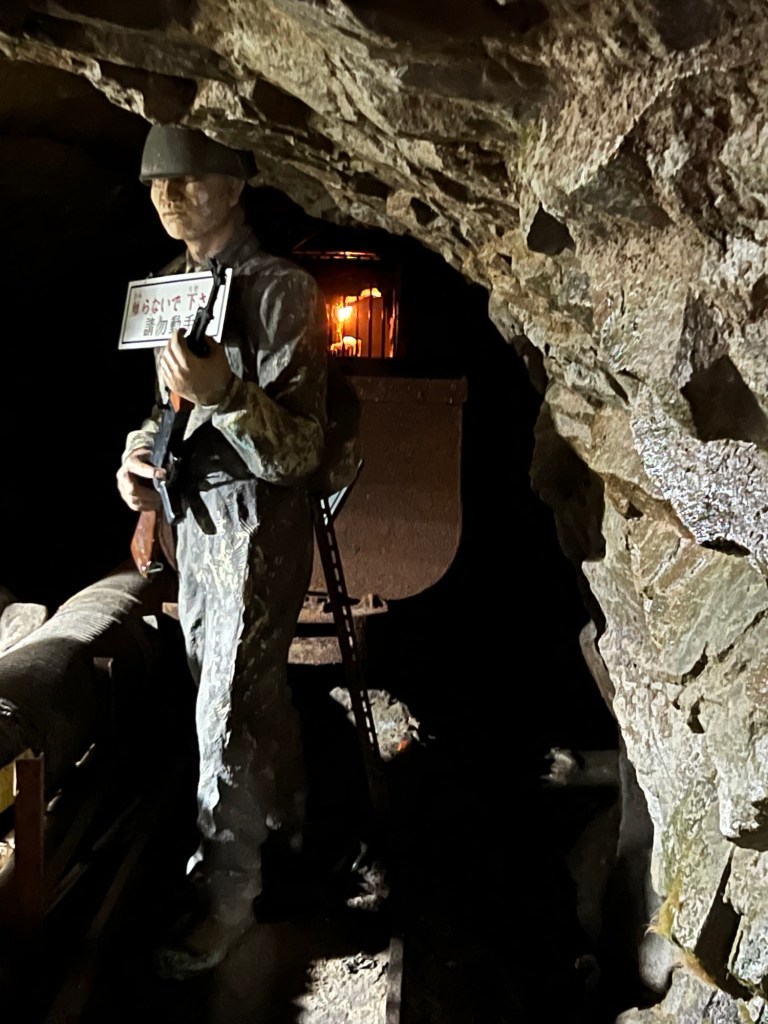
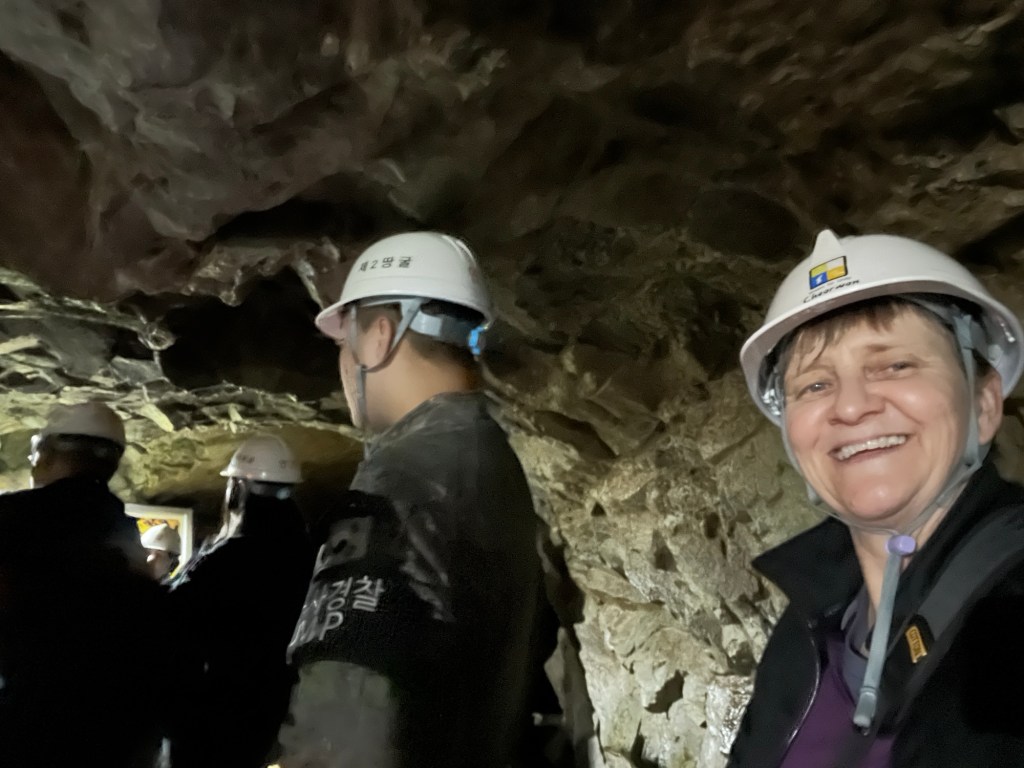
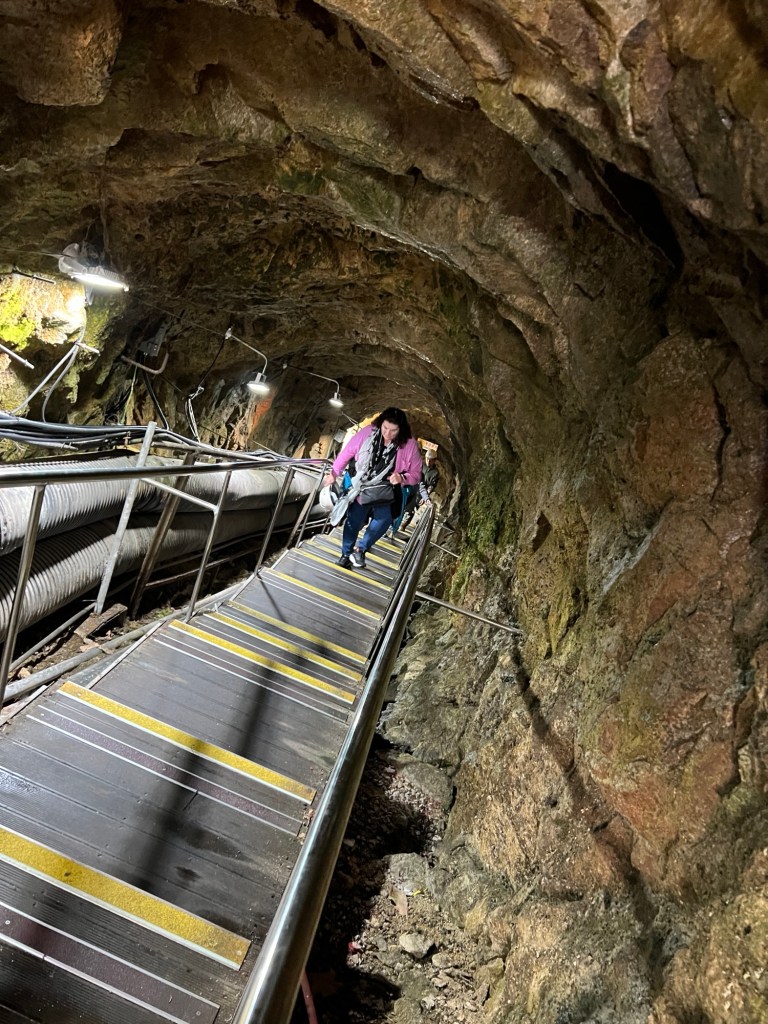
We walked down the South Korean access tunnel into the tunnel proper and walked up towards the border underground.
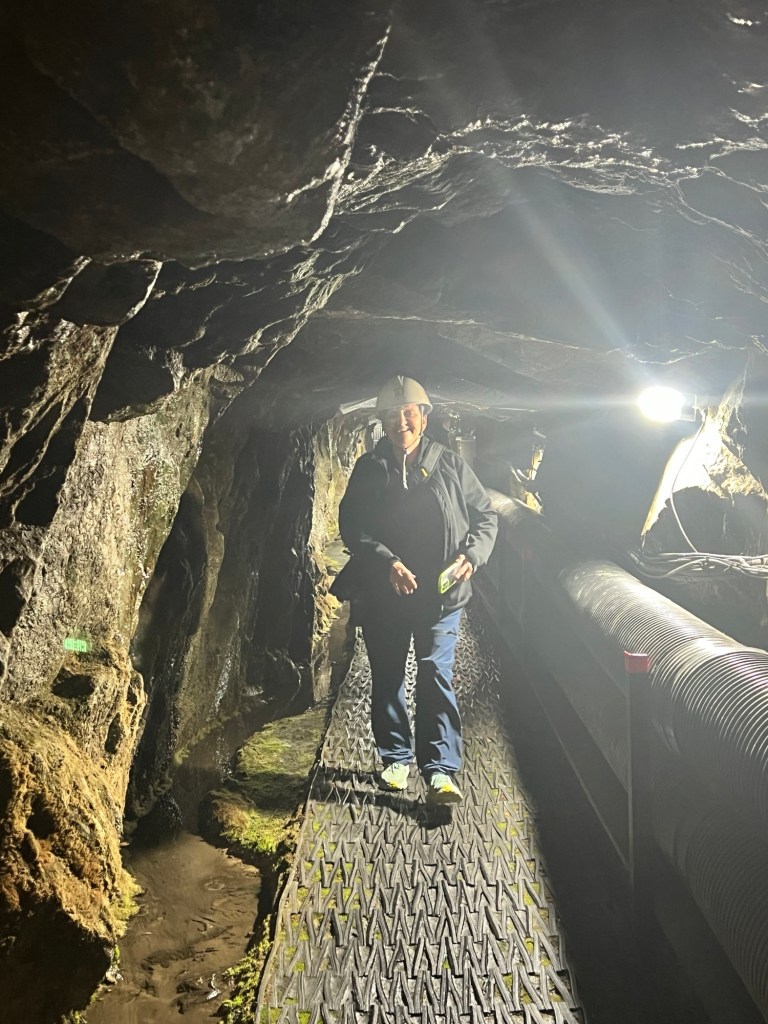
The tunnel was built through pure rock and there was evidence of dynamite holes of the North Koreans and observation holes drilled by the South Koreans to listen and observe.
There was an MP down there taking photos at the end and making sure we were all out. We snagged a picture with him at the end.
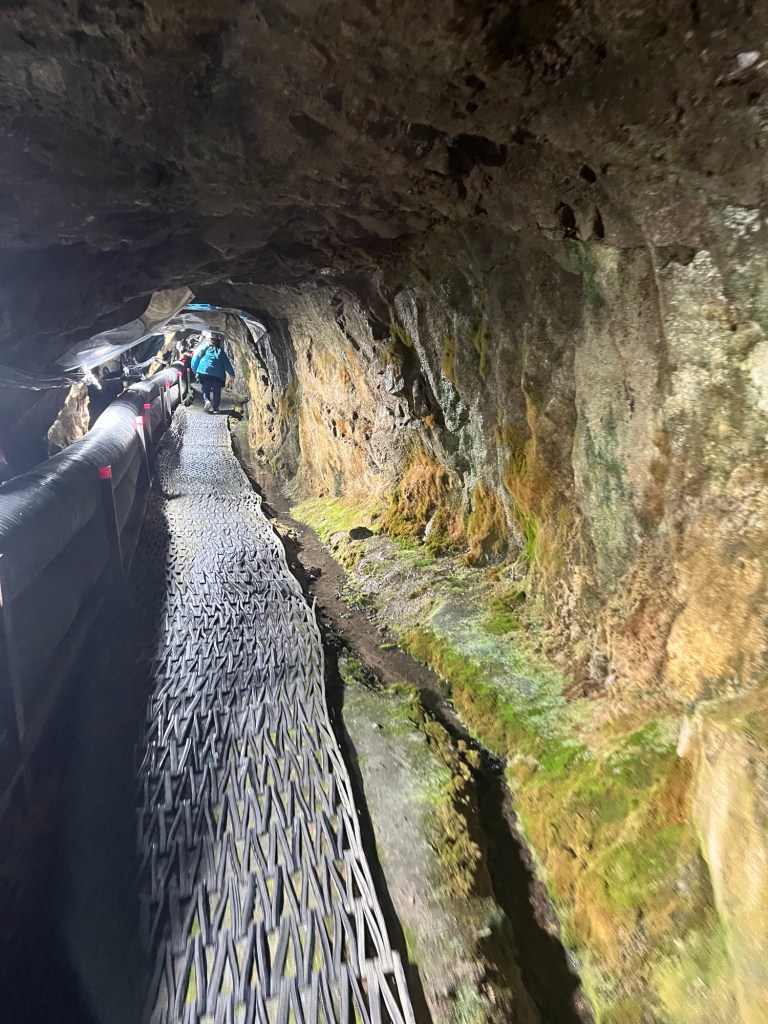
Here’s some info from one of the few English info boards around the place.
Located 106Km north of Seoul, this North Korean subterranean tunnel to infiltrate South was discovered on March 24,1975 at the end of dozens of days of arduous excavation work, The excavation began upon the reports of two soldiers of the Cheongseong Blue Star Unit. Corporal Lee Gitae, and Pfc. Kim Hyoseop. They reported hearing explosions during their sentry duty on November 20, 1973.
The infiltration subterranean tunnel that was discovered, the second of its kind south of the military demarcation line. Through this tunnel, North Korea had the capabilities to invade the South with armed forces of over 16,000 men per hour in battle formation of double or triple columns. During the search of the tunnel, Sergeant Kim Hoyoung and seven soldiers were killed by land mine explosions and booby traps installed at the interruption wall by North Korea.
It appears that North Korea built this infiltration tunnel to infiltrate and harass the South Korean rear line in the event of military emergency, so that they could achieve their ultimate goal of communizing the South by deactivating our defenses.
This infiltration tunnel, which arouses our attention to the reality that North Korea has never relented in its absurd ambition for the communizing of the South, serves us a reminder that we must give our full attention to the defense of our country until the Korean peninsula is reunified into a free and democratic country.
Having walked down the tunnel in single file and two abreast- I cannot imagine the North Koreans moving that many troops in such a short time!
We were told by Alex that we had to stay together and keep moving today – this is a real challenge as we all want to stop and take photos, but we were too scared not to try to keep up with him.
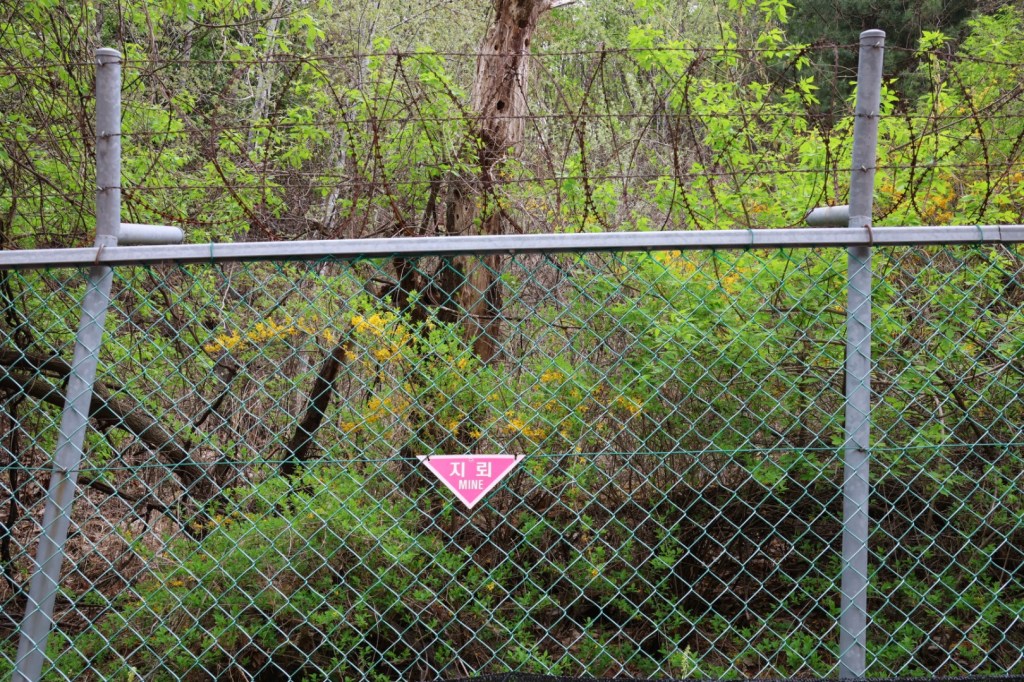
After being herded back into the van we took a short drive to the second component of Cheorwon DMZ tour – the Peace Observatory.
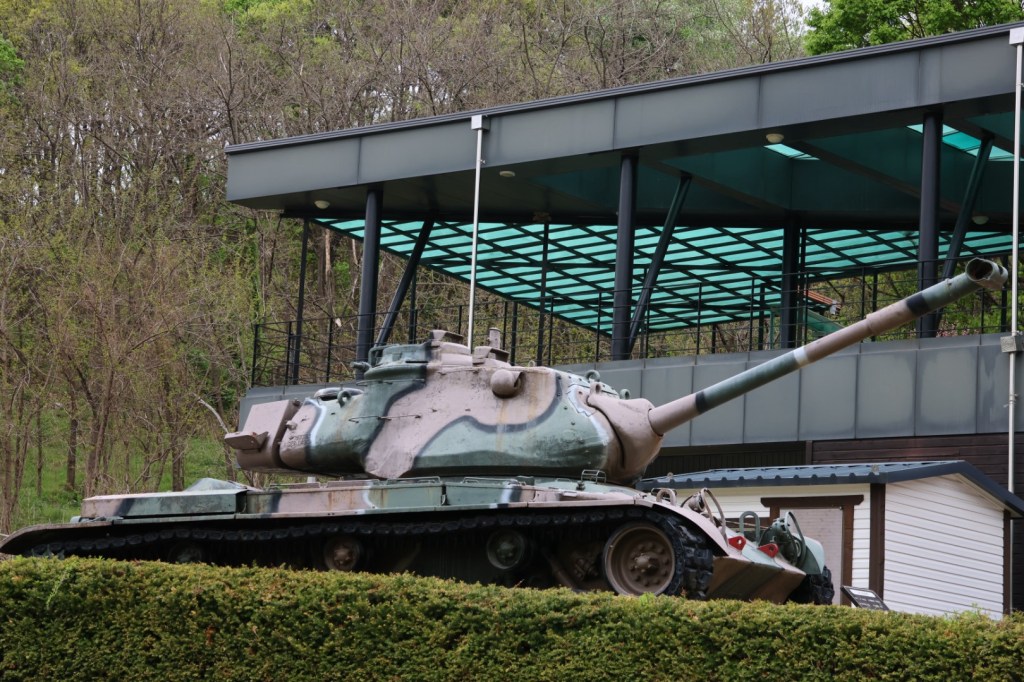
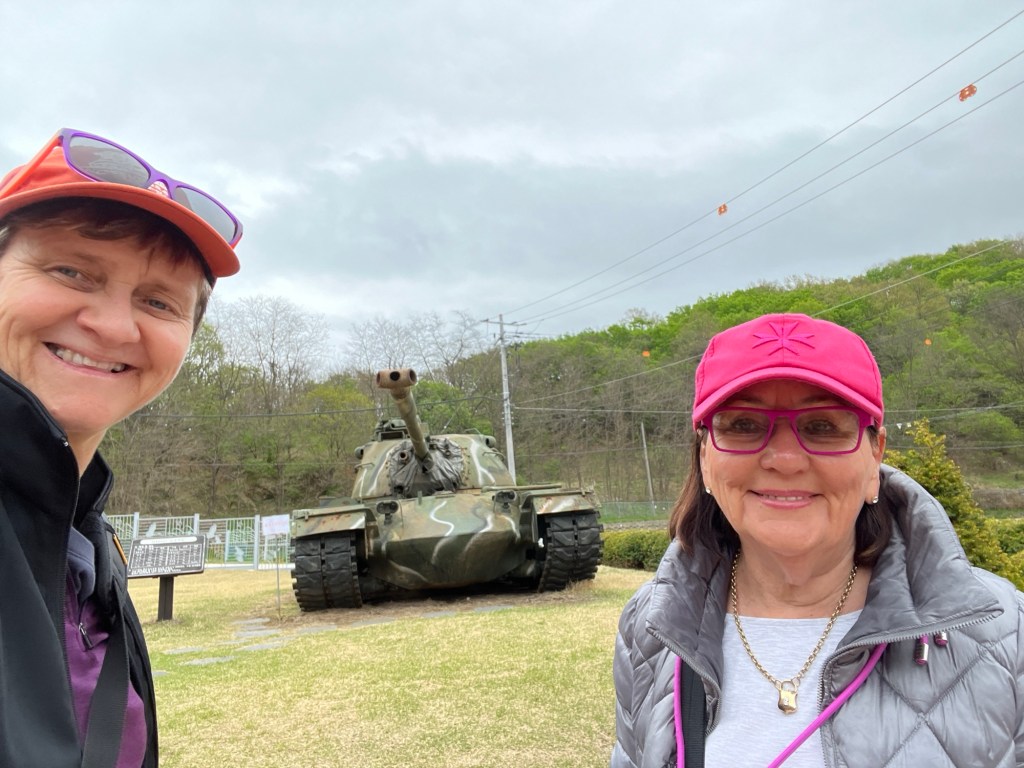
We were ferried up to the observatory entrance via a short monorail. There were some tanks on display too.



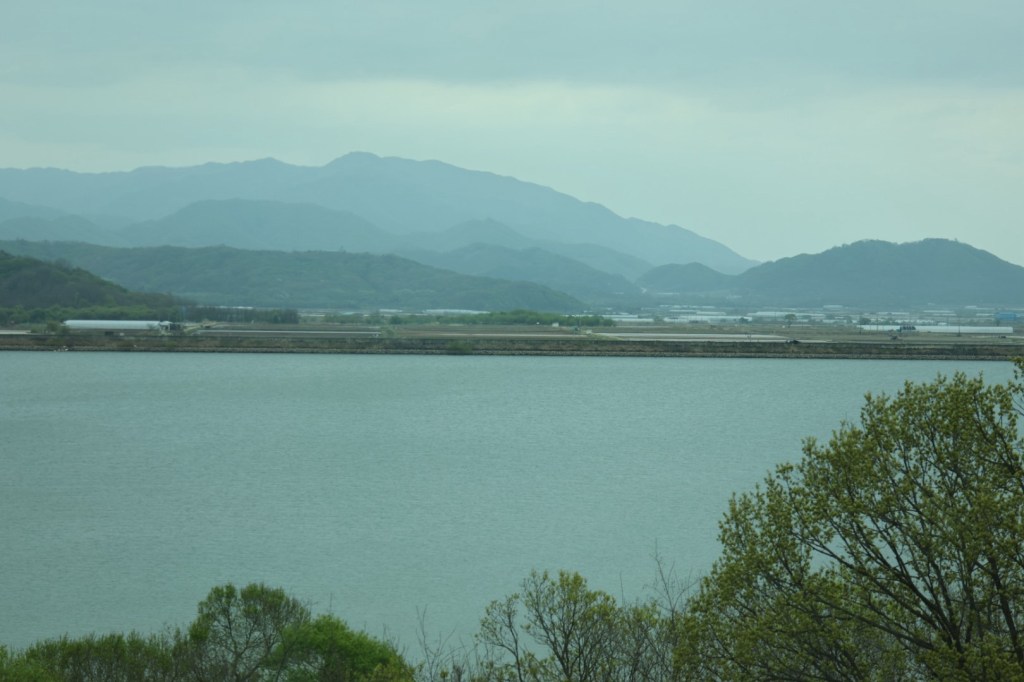
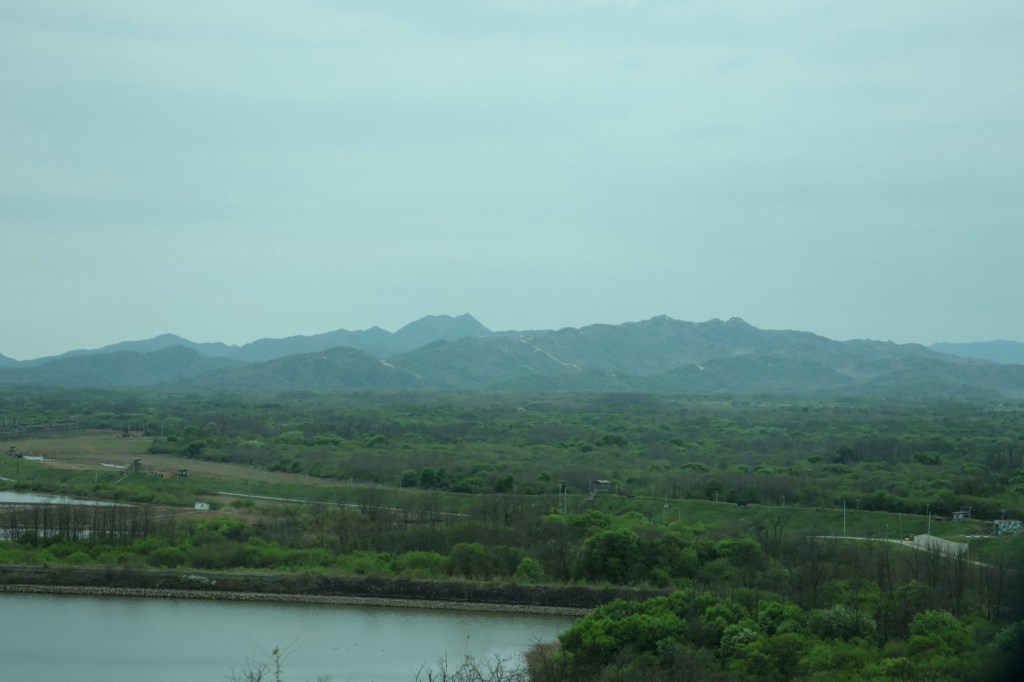
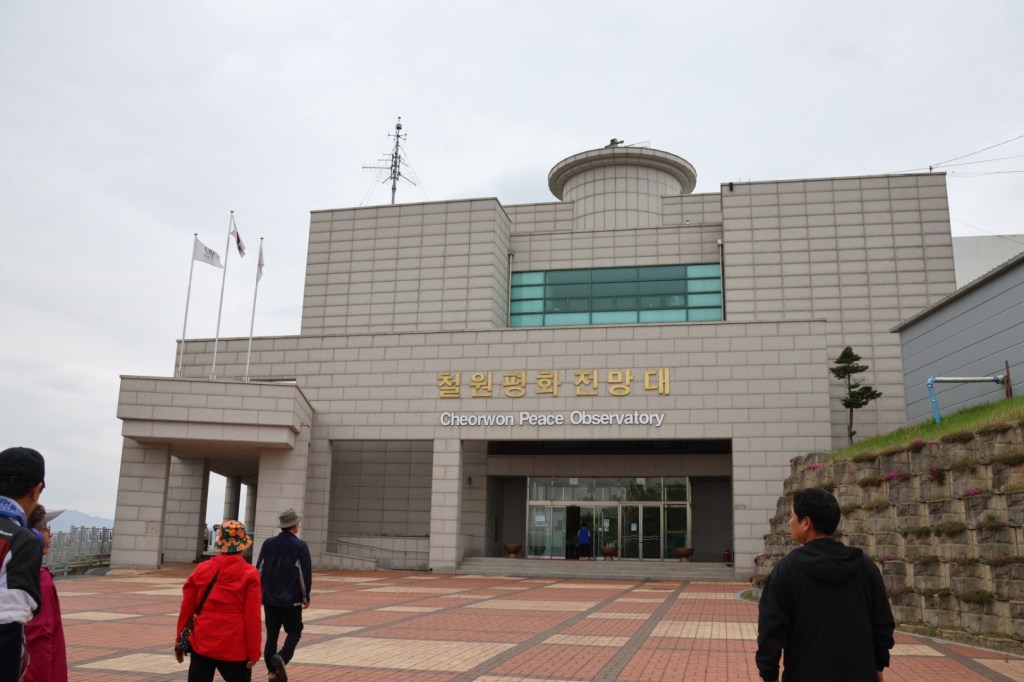
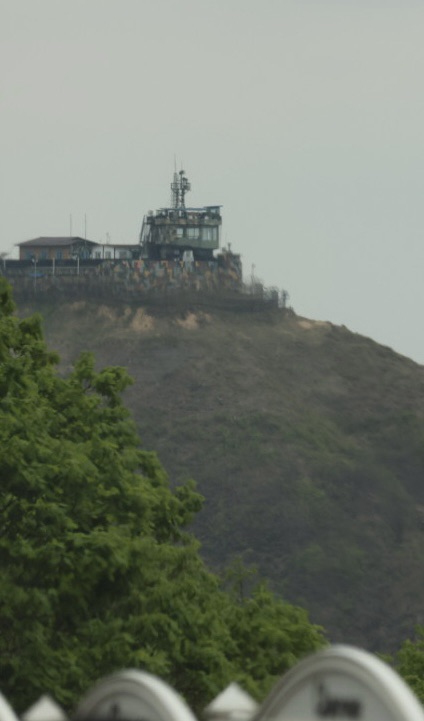
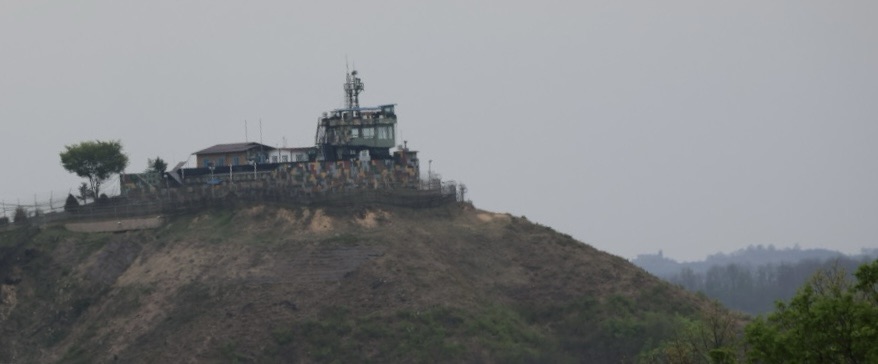
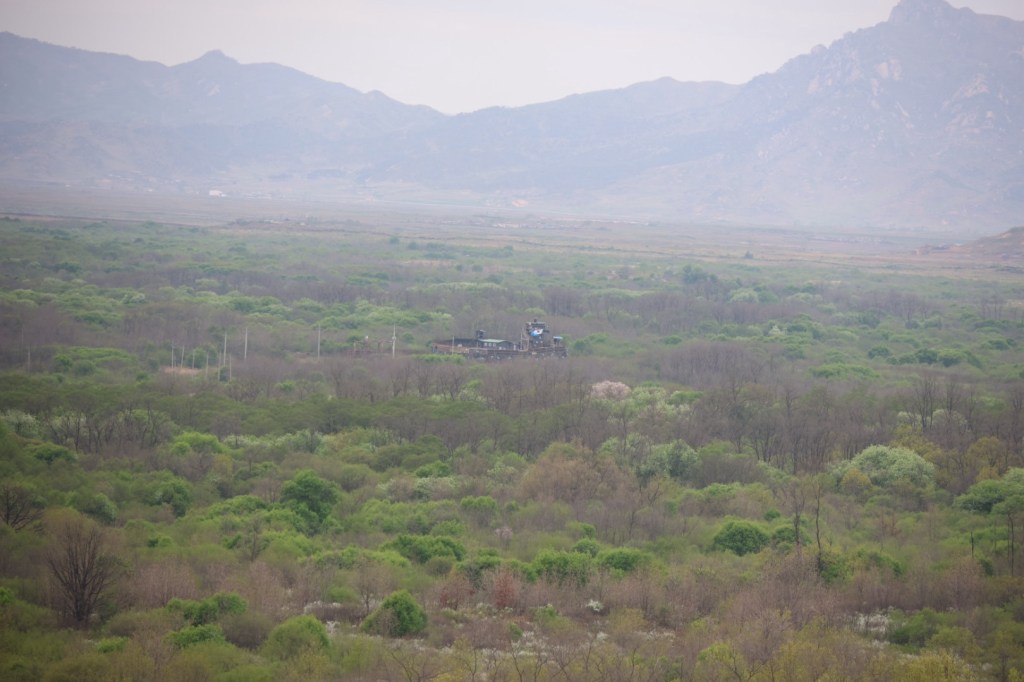
From the Peace Observatory we could clearly see into North Korea about 900 metres away. The South Korean fence and guard posts were clearly visible as were some of the North Korean Guardposts.
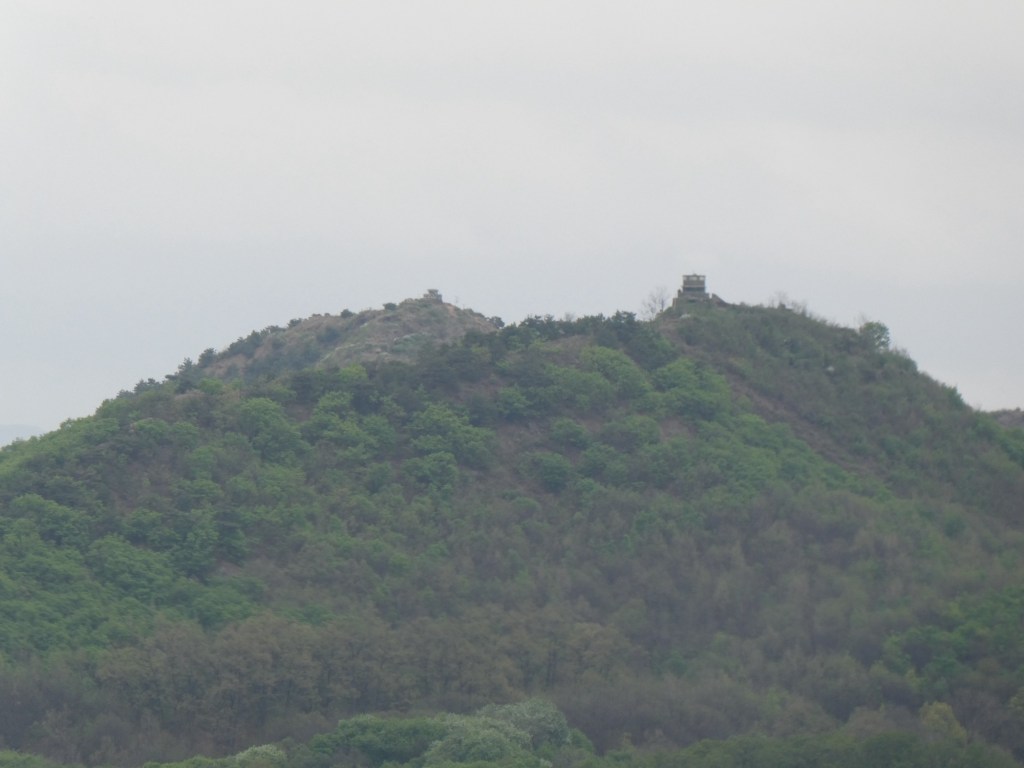
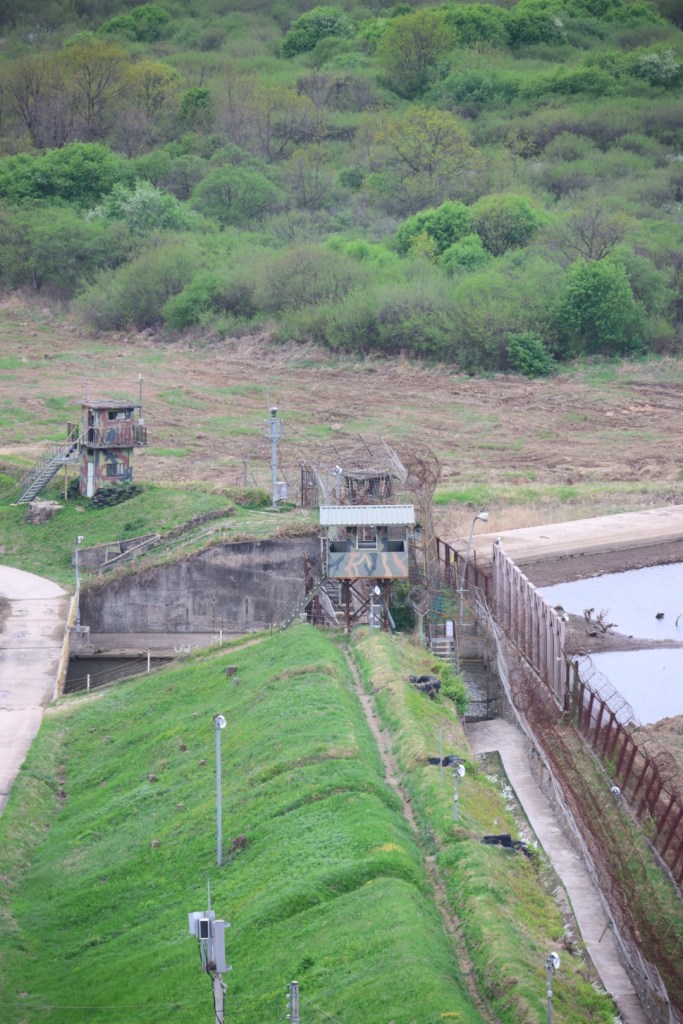
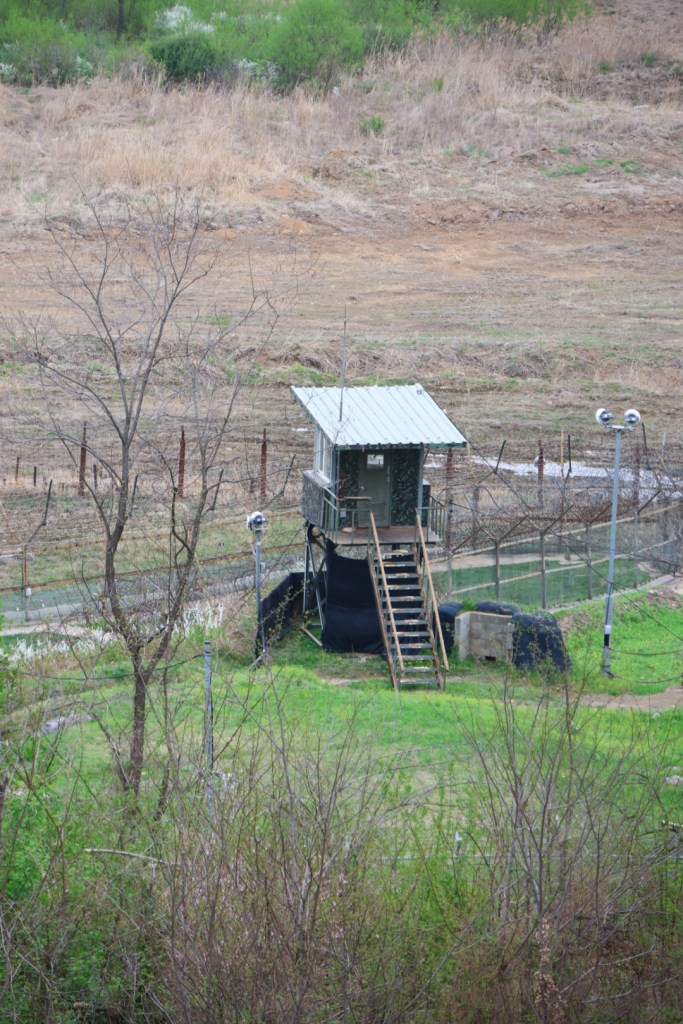
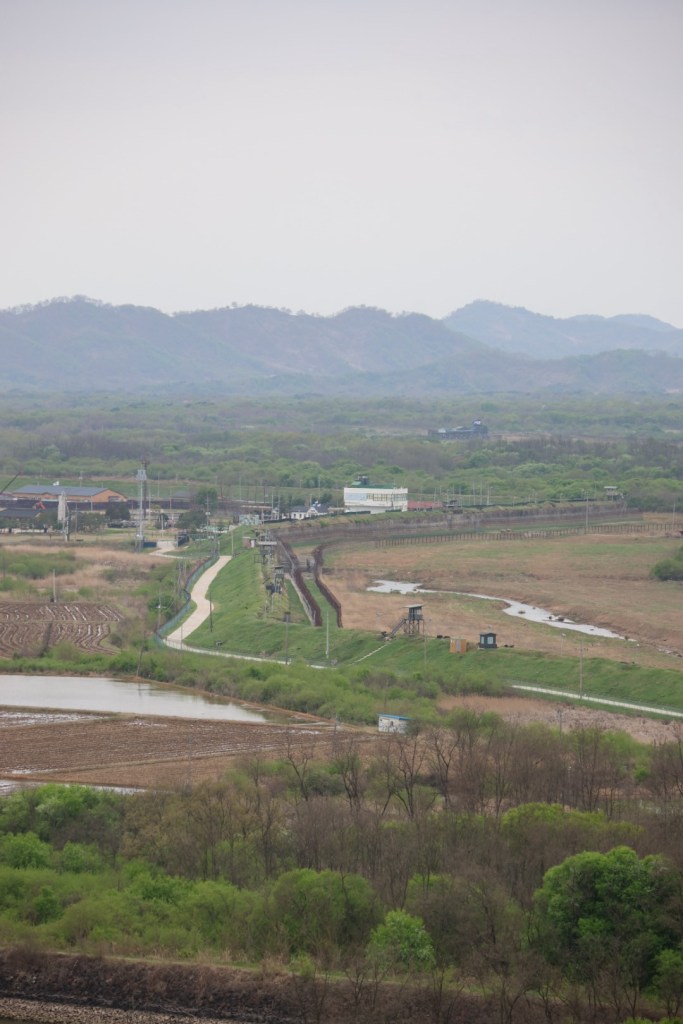
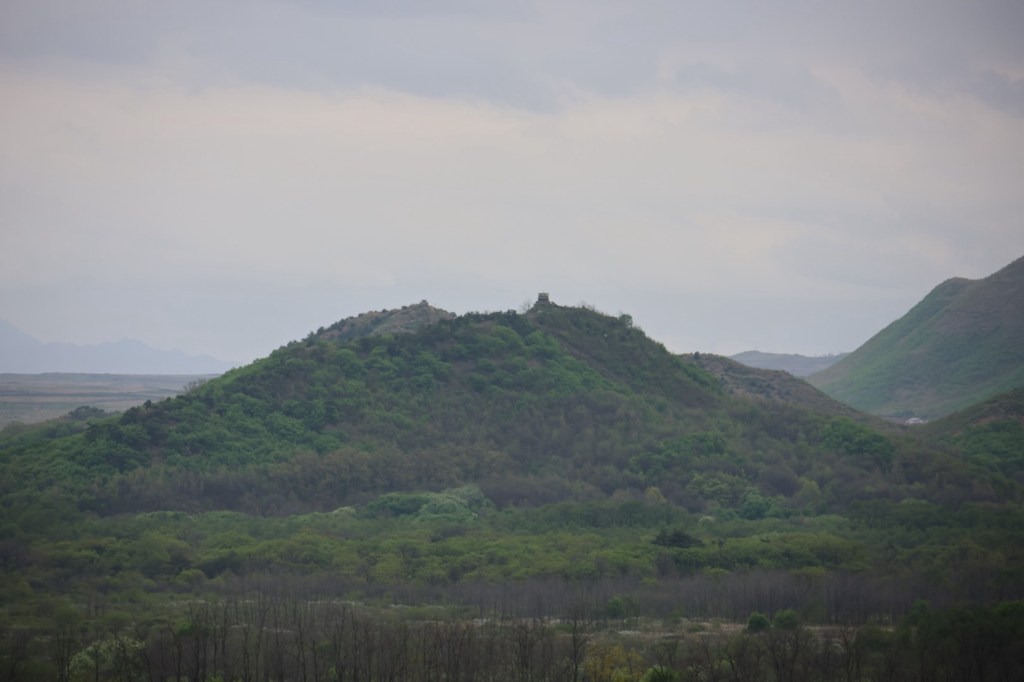
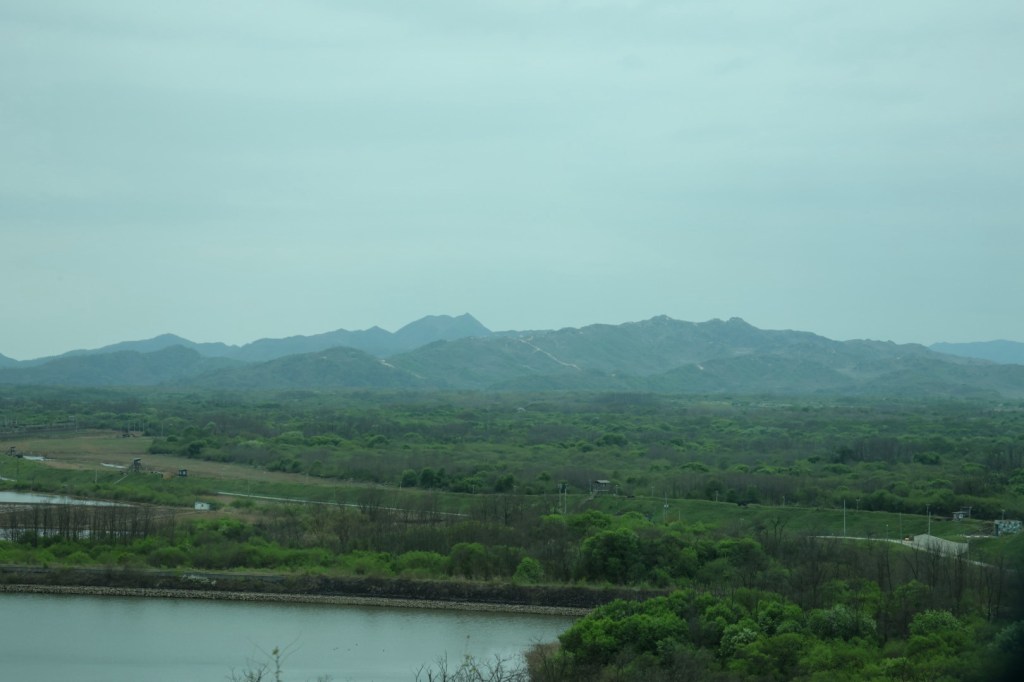
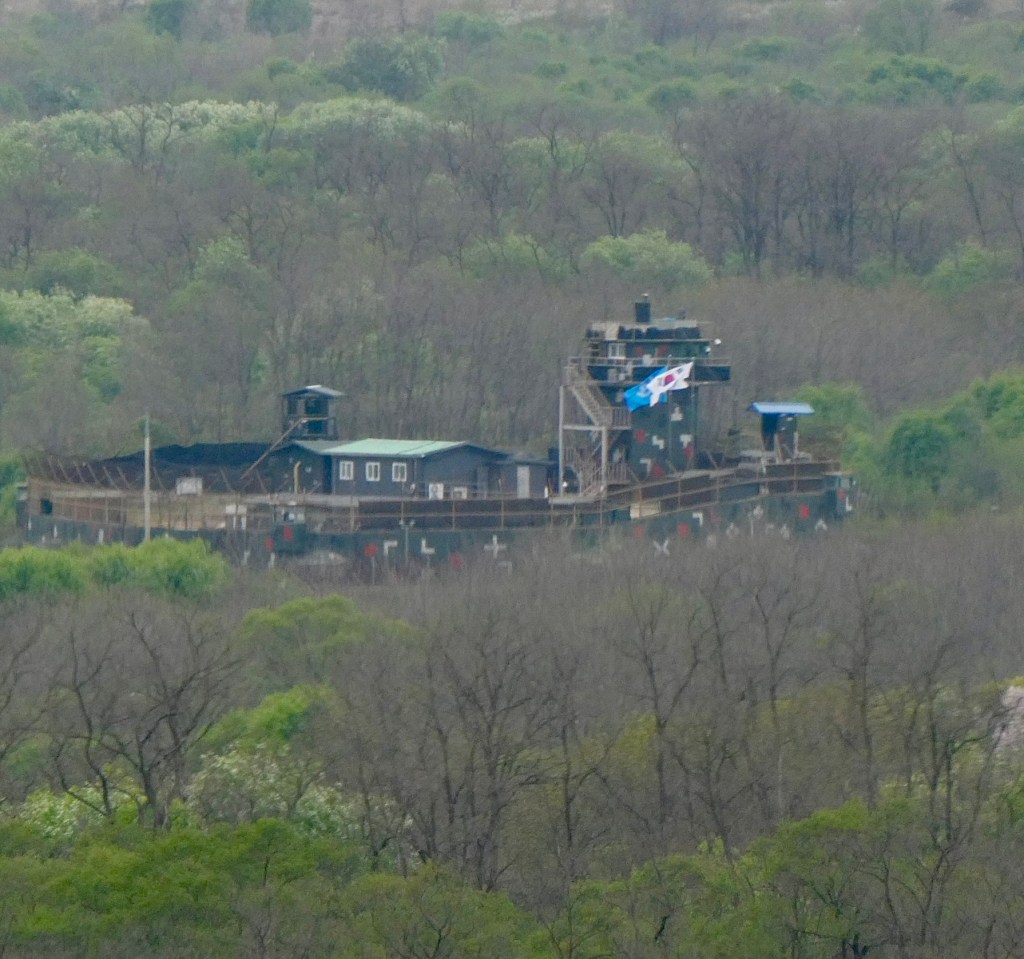
Alex pointed out a building in the neutral zone – which he called a breach of agreement. With binoculars you could clearly see a large black building flying South Korean flag. MORE HOMEWORK REQUIRED. (I’ve tried and can’t get a clear picture of this very large guard post in the neutral zone flying Korean and UN flag???)
Then we were rushed up to the balcony to have a brief look out to North Korea and the DMZ.
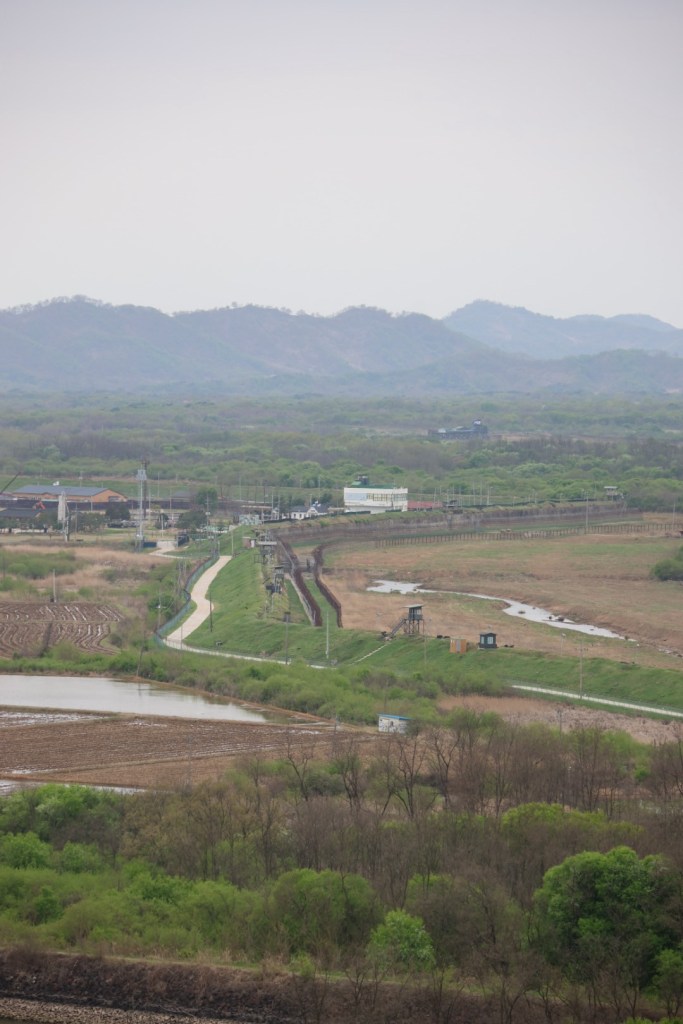
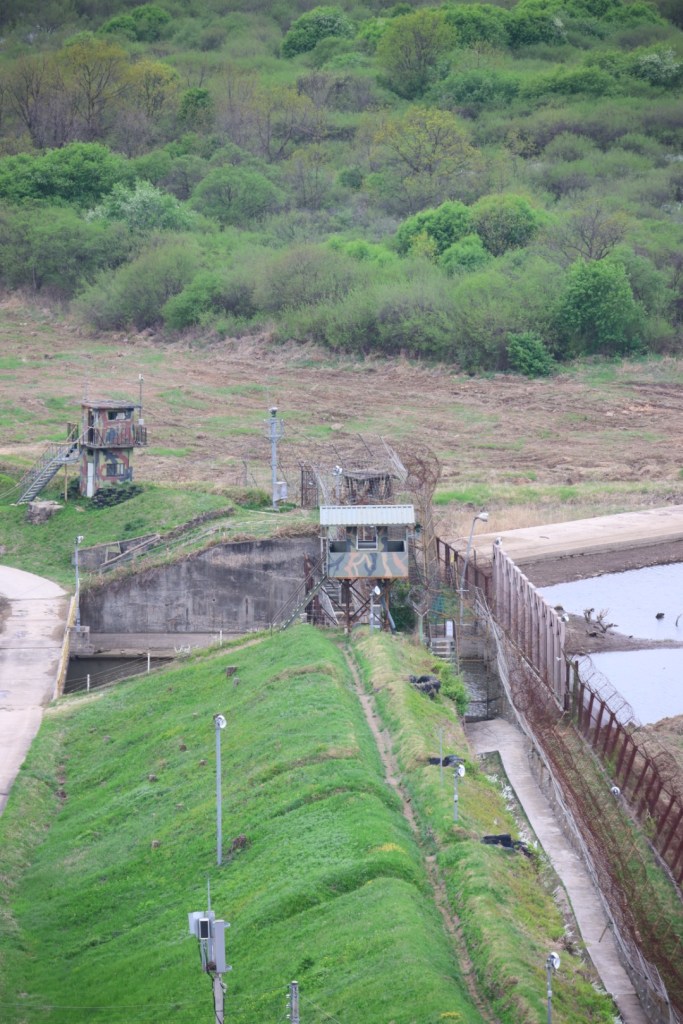
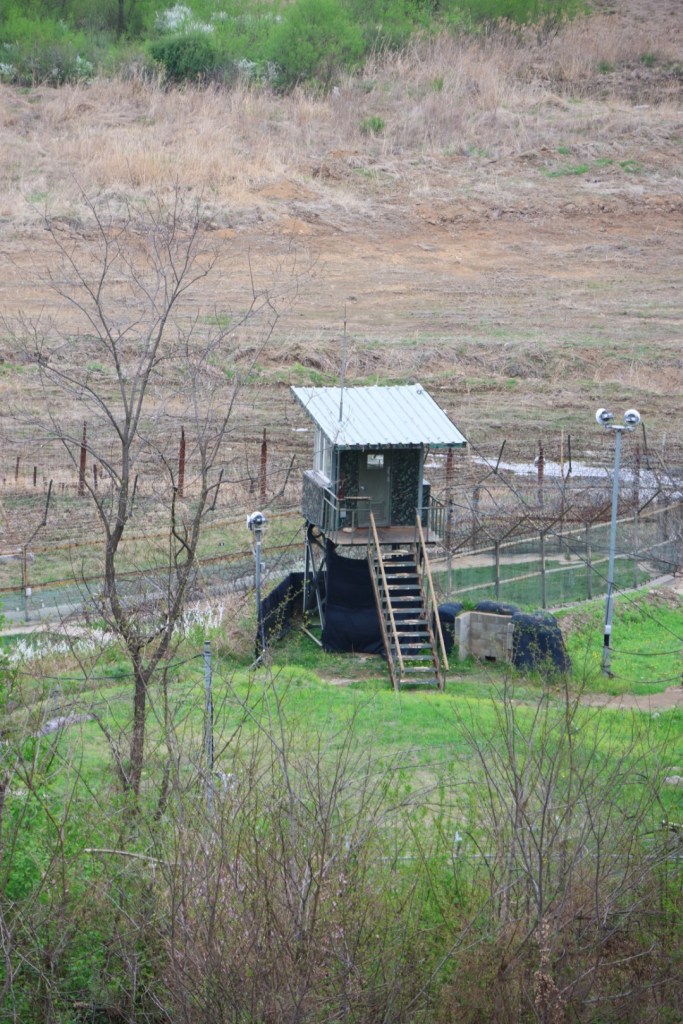
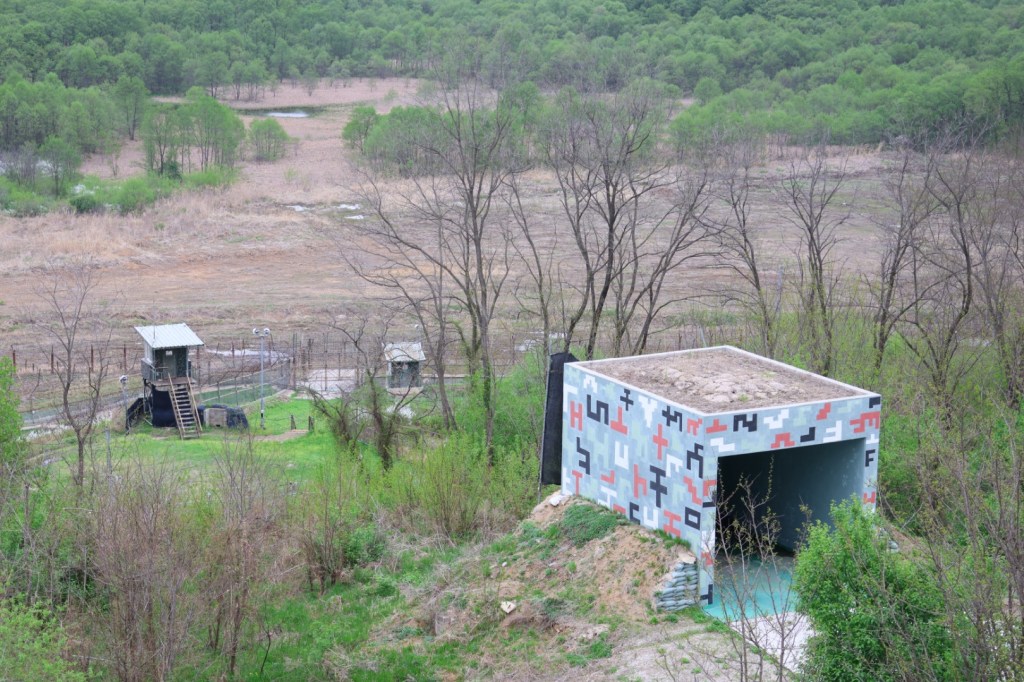
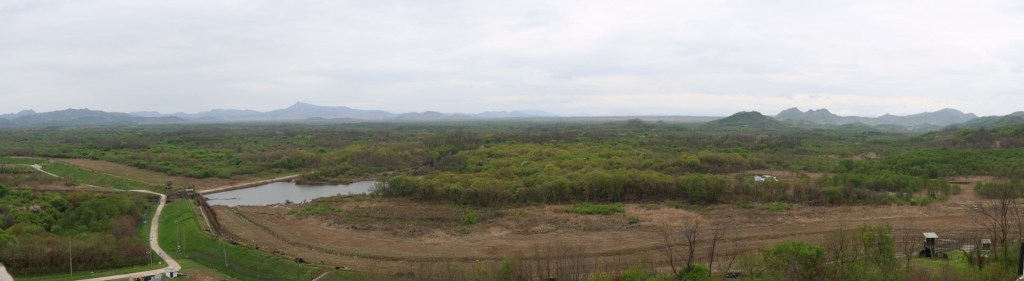
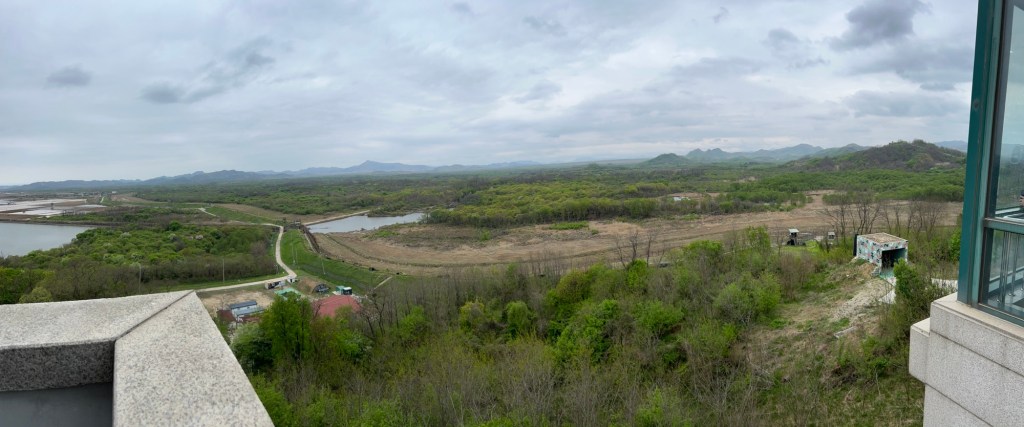
and hustled back inside the building to look at a model that showed the different lines, fences, Guard Posts and the Woljeong-to railway, then back downstairs to very briefly look at a museum that could have taken an hour before being hustled back to the monorail and back into convoy to move to third point of the tour.
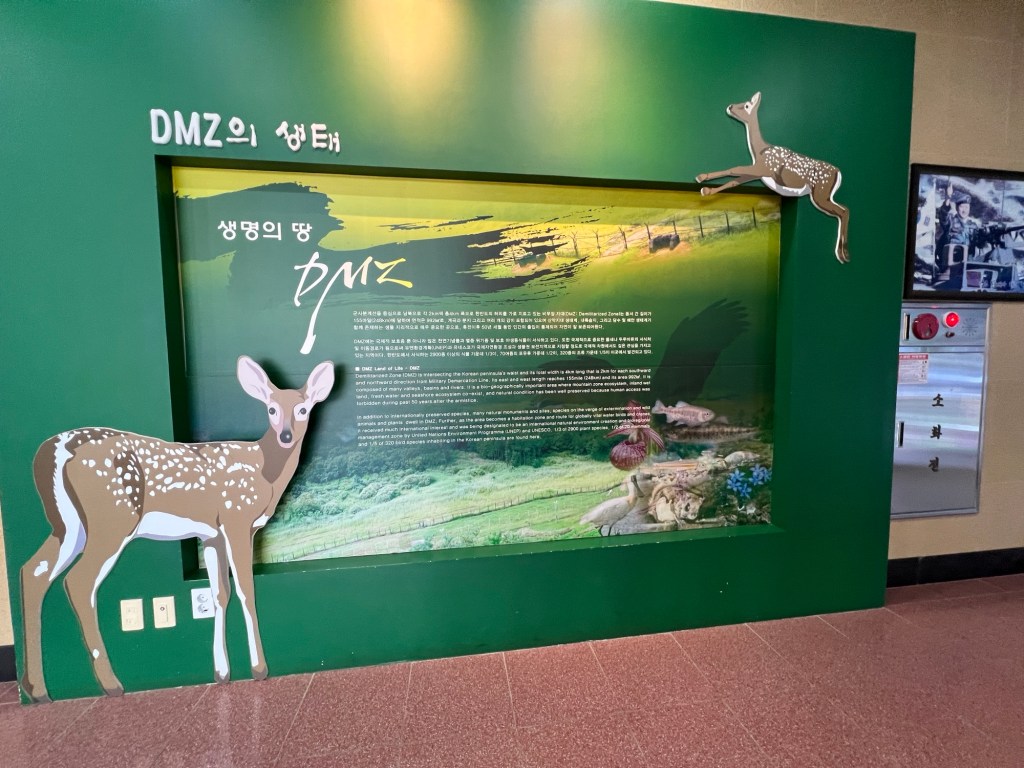
The Woljeong-ri Railway station is the site of a SK Iron ridge sightseeing train that ran between Seoul and Wonsan and was bombed almost to oblivion by the North Koreans. The twisted and shrapnel pocked wreckage would have held no survivors I imagine. The train has been left in situ as a reminder and something of a memorial I assume (although this wasn’t evident).
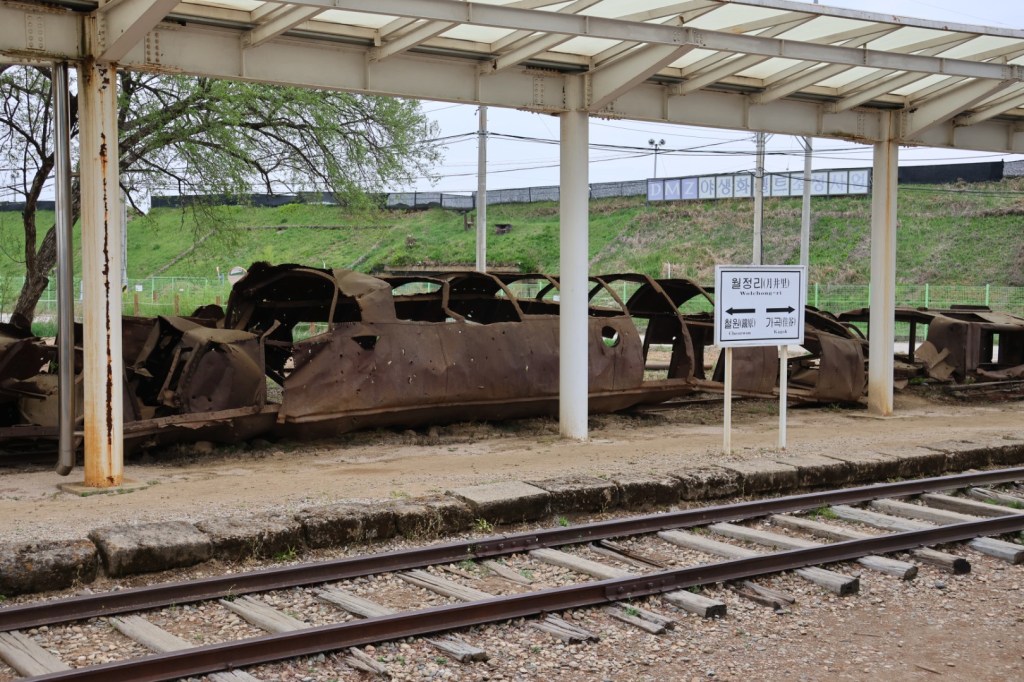
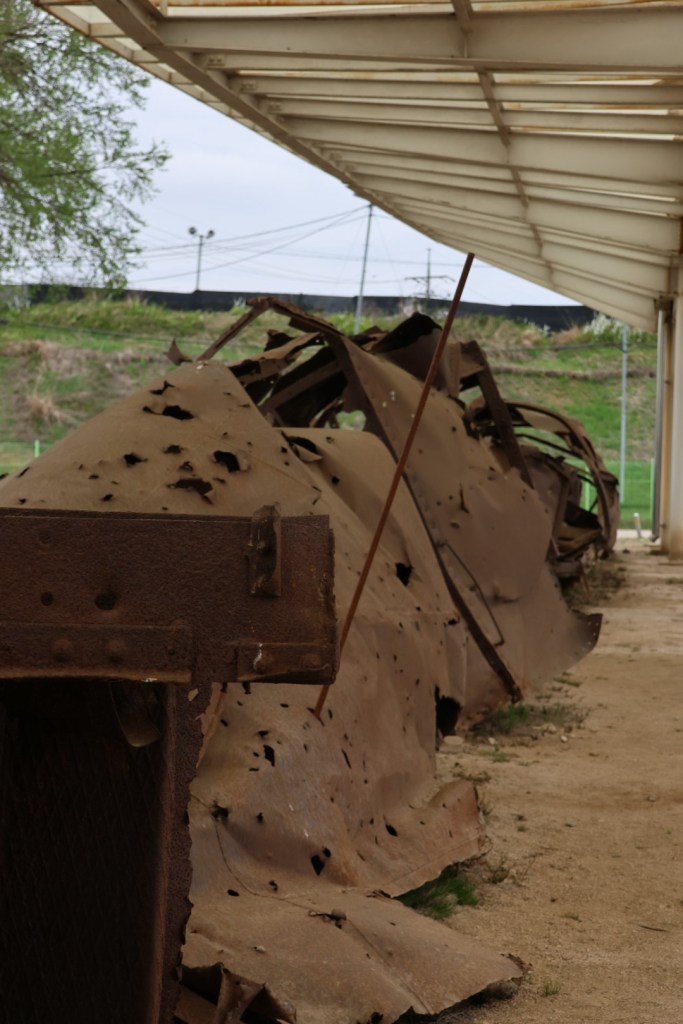

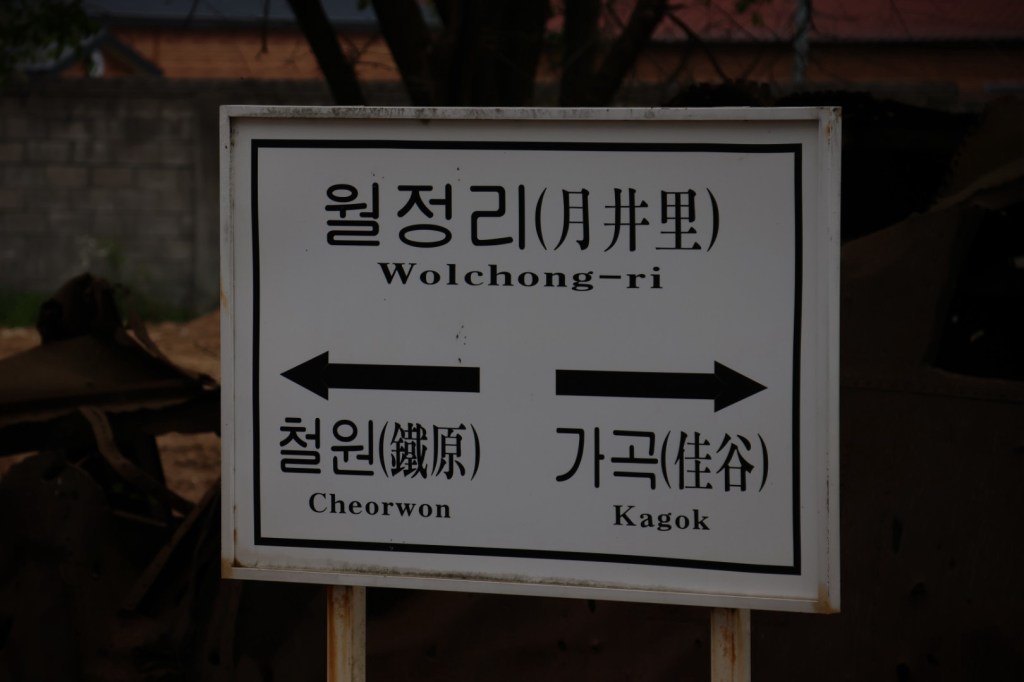
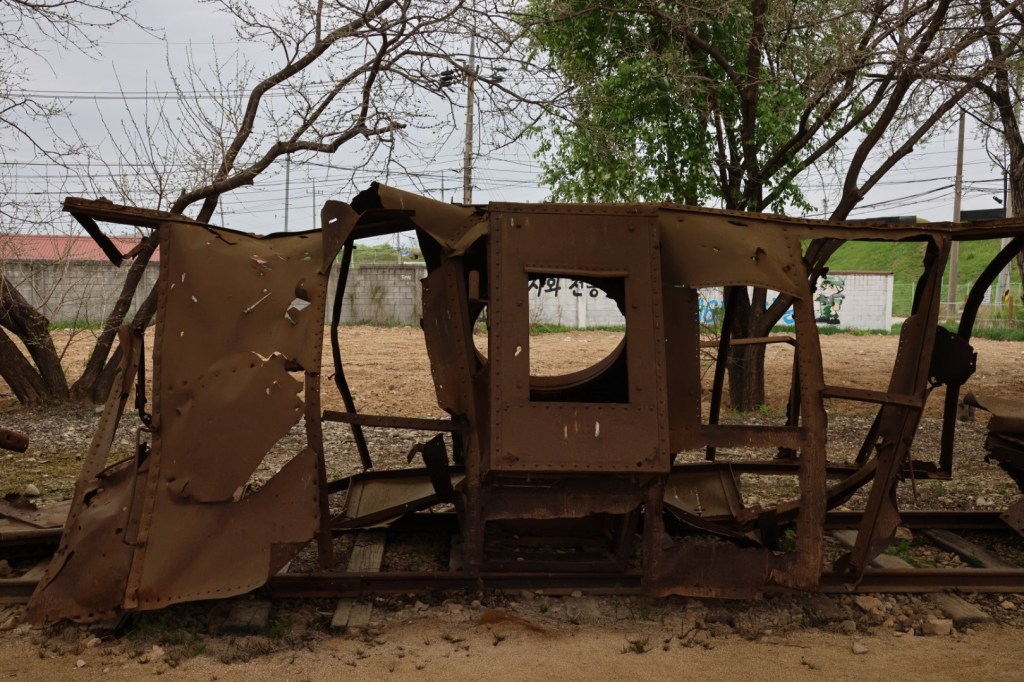
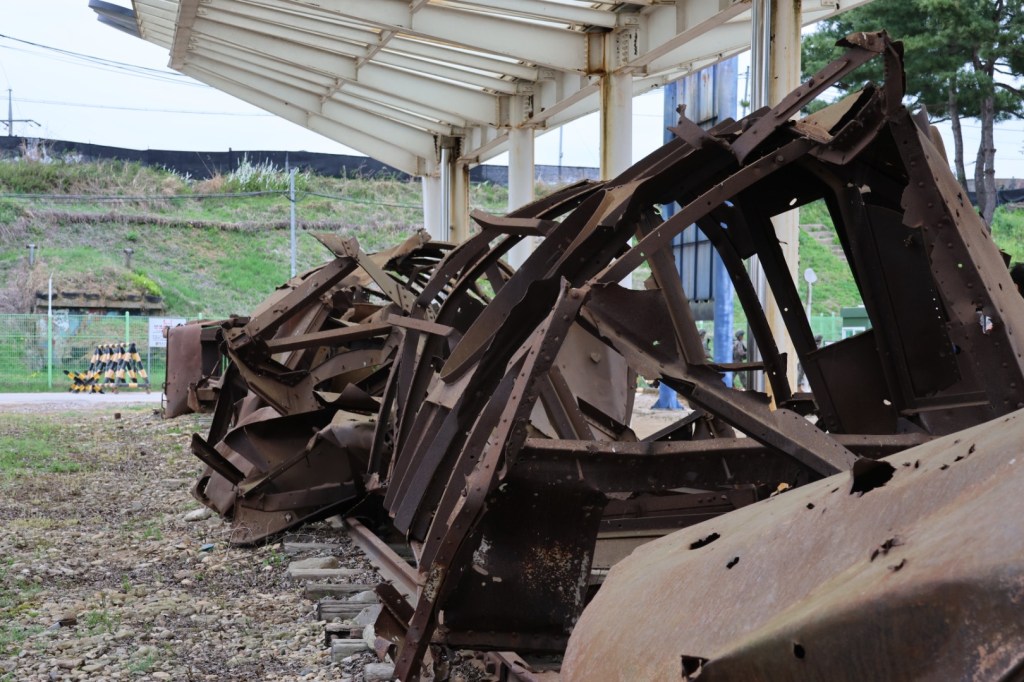
The site was also very close to an entry point for the SK military to access the fence. We were unable to take pictures here as it’s part of ongoing military operations.
The site also held some sort of memorial and I had see our Australian Flag flying as we drove in. I asked Alex if I could quickly go over (about 50m away for a look) I ran over and snapped some shots of the memorial and the English on the plaques and ran back to the van to a very worried crew, evidently the soldiers were quite troubled by a person running away from the group and were watching me and consulting with their mates. In hindsight perhaps I should have walked, but given the strict timetable for this tour I didn’t want to hold things up any more than necessary. Anyway I survived and we merged back into convoy and all was well.

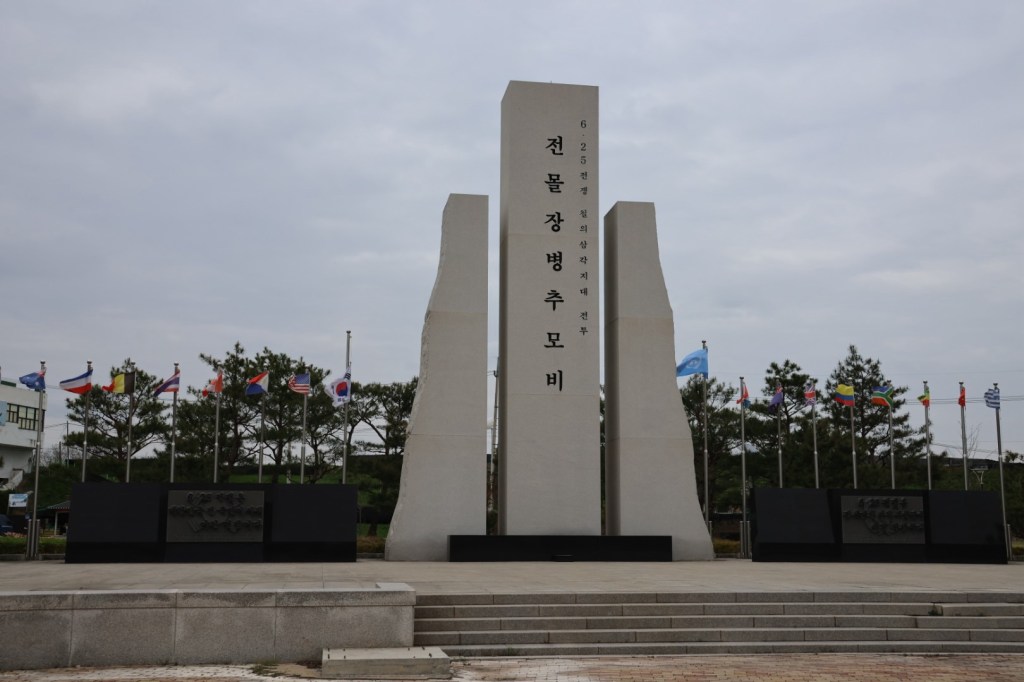
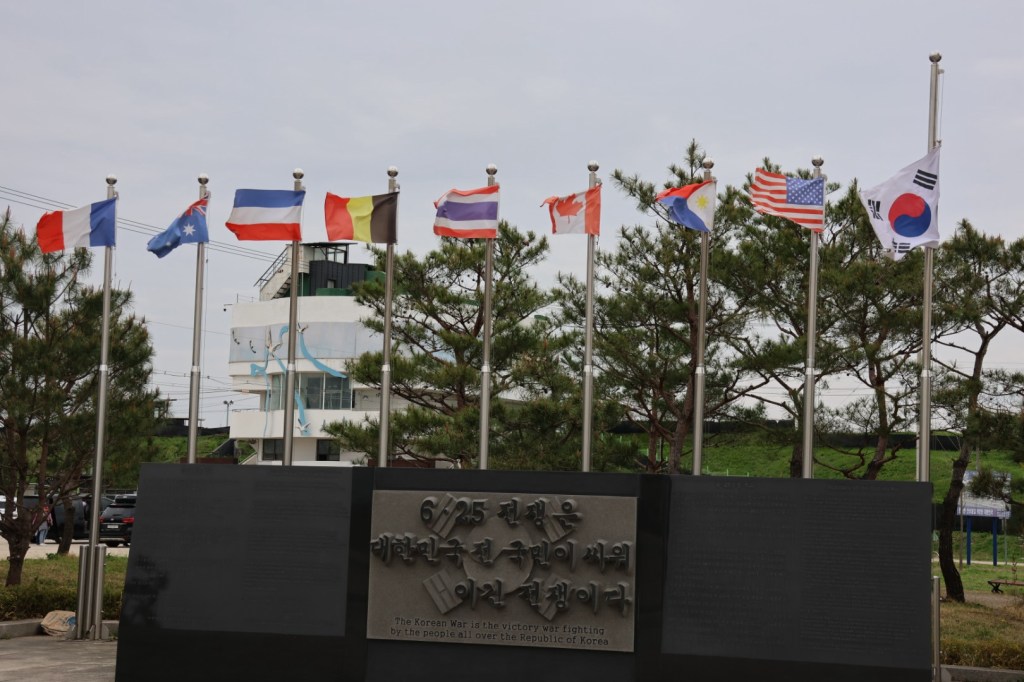
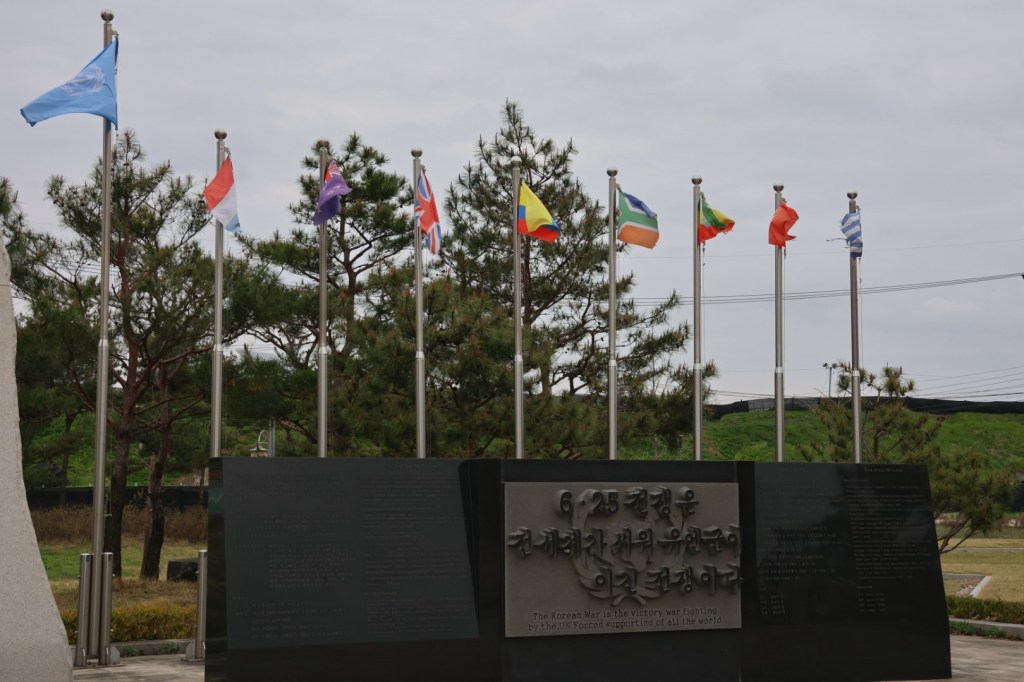

Now it was time to head back to Seoul.
Cheorwan downtown was totally destroyed during the war and is now just farming land.
We also drove close to the headquarters of the Labour Party. Who formed here in Cheorwan between 1945 and 1953. They overran the locals threatening to kill them if they didn’t surrender their lands. (I lost the plot on this story, my brain hurts today, so much information)
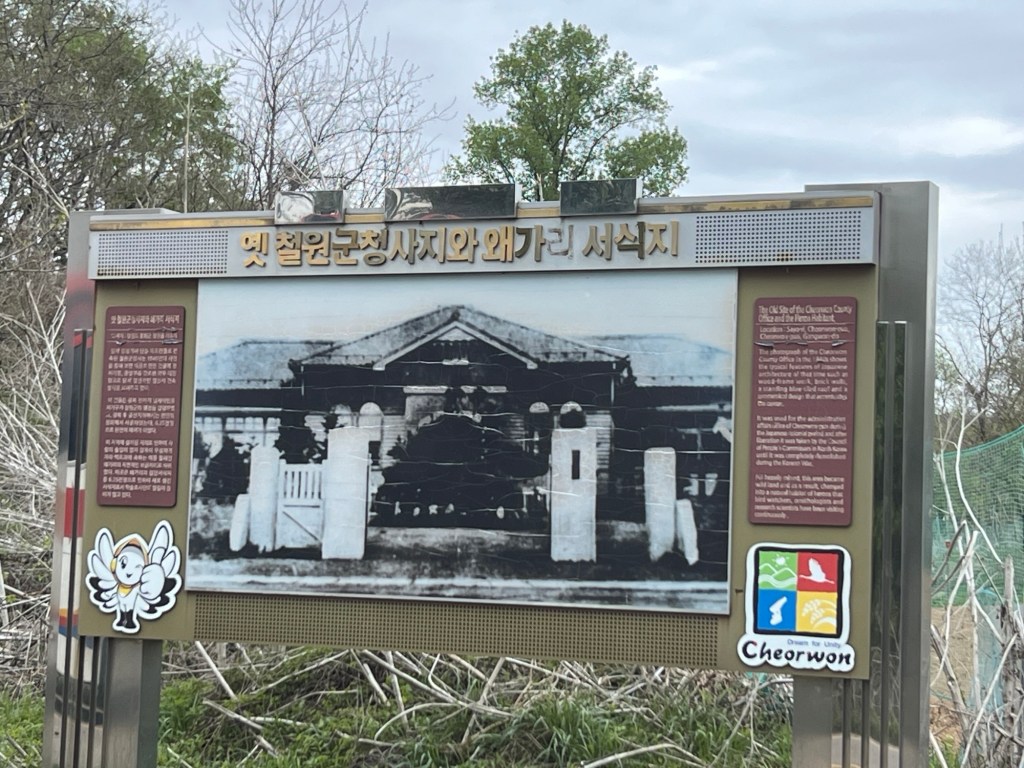
On reflection of our time here, there are a lot of similarities between SK and us. Their levels of government, policies and practices, loss of manufacturing, selling off assets. Ever expanding big builds, population growth. The interesting thing is that they basically started to develop from scratch following the end of Japanese colonisation with the war in 1953.
The trip back to Seoul was uneventful. We needed to be back for our final farewell (and tip) to Alex and in time for our last nights dinner at 7:00pm. I also need to pick up the specs I had purchased before leaving Seoul. Time was right. Alex dropped me at optometrist about 6:20. I ran in, had a super quick fitting and chased the van as they took off just as I left the shop. Anyway cut them off before they took off around the block.
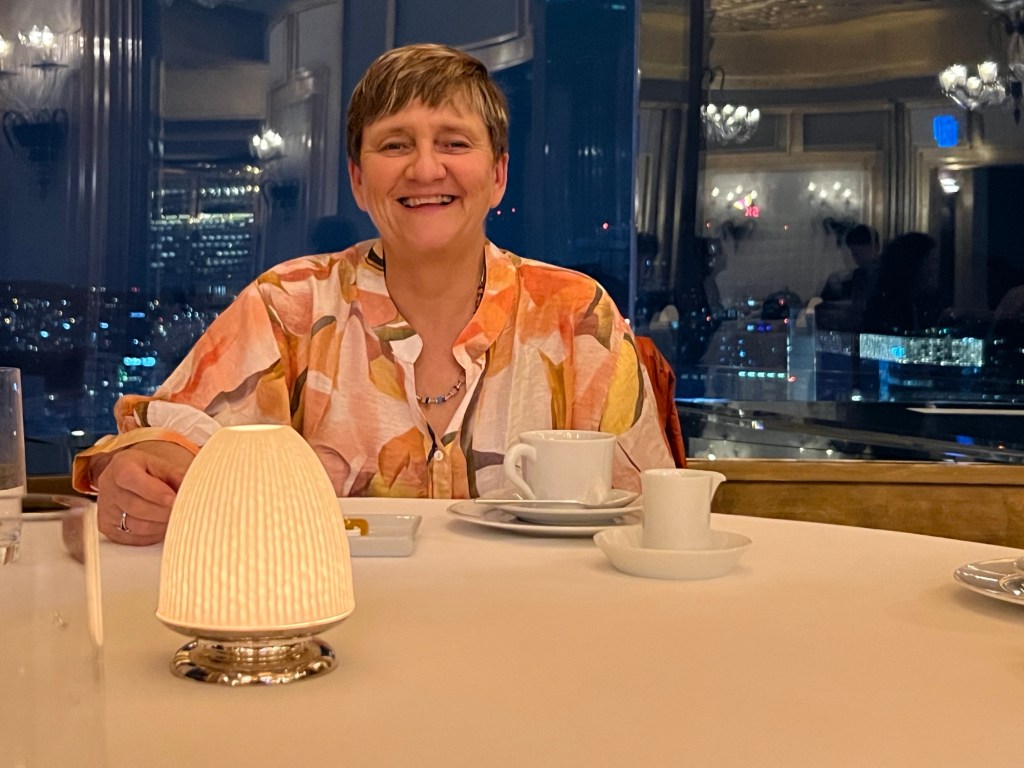
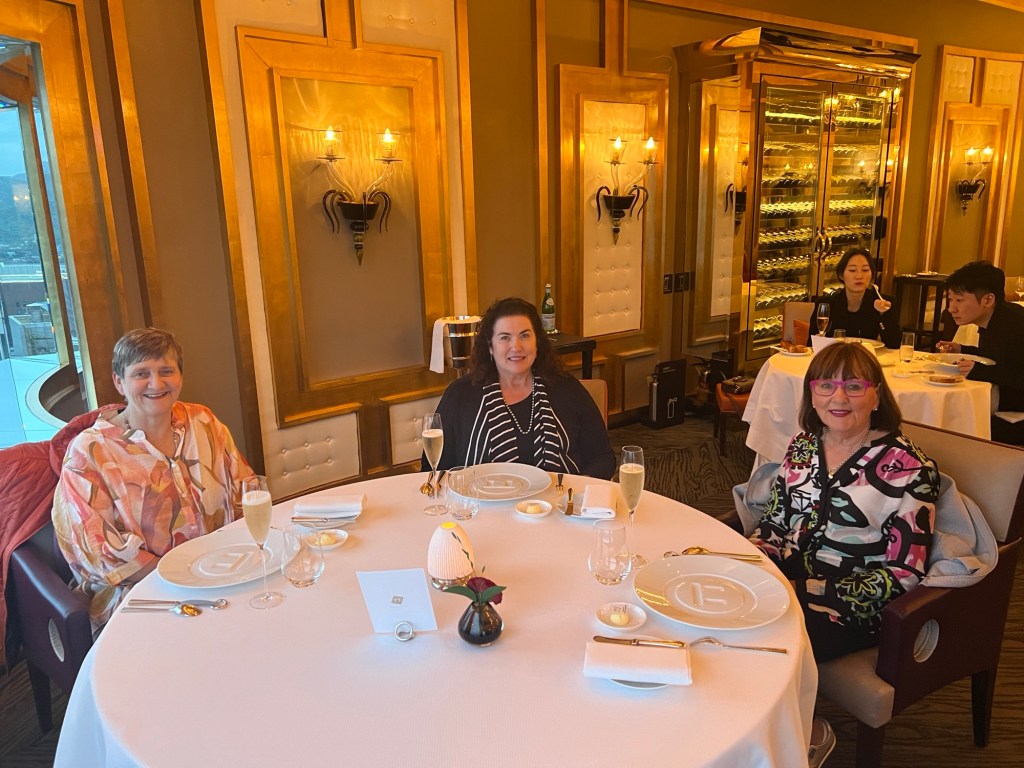
Back to hotel, grabbed our luggage, Alex checked us in. We said our goodbyes and had about 20 minutes to change and get dressed up for our flash dinner at TT Pierre Gagnaire á Seoul. (A Michelin star French restaurant on the 22nd floor of the hotel.)
The views, the staff and the meal were all absolutely divine.
Esprit Pierre Gagnaire


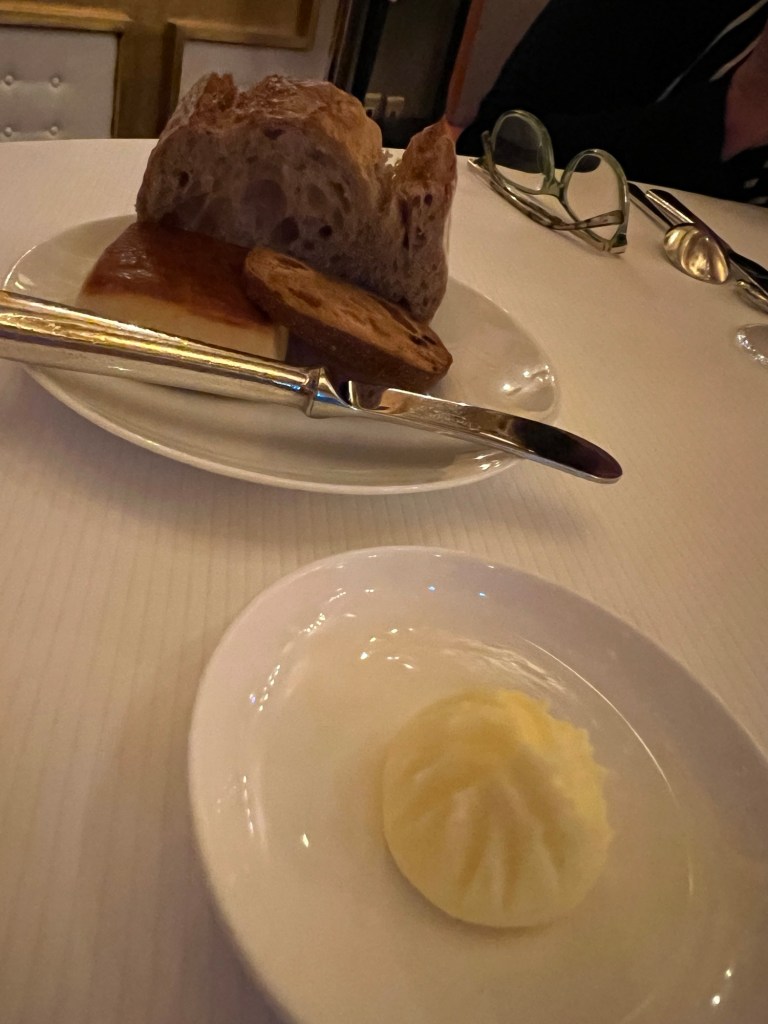
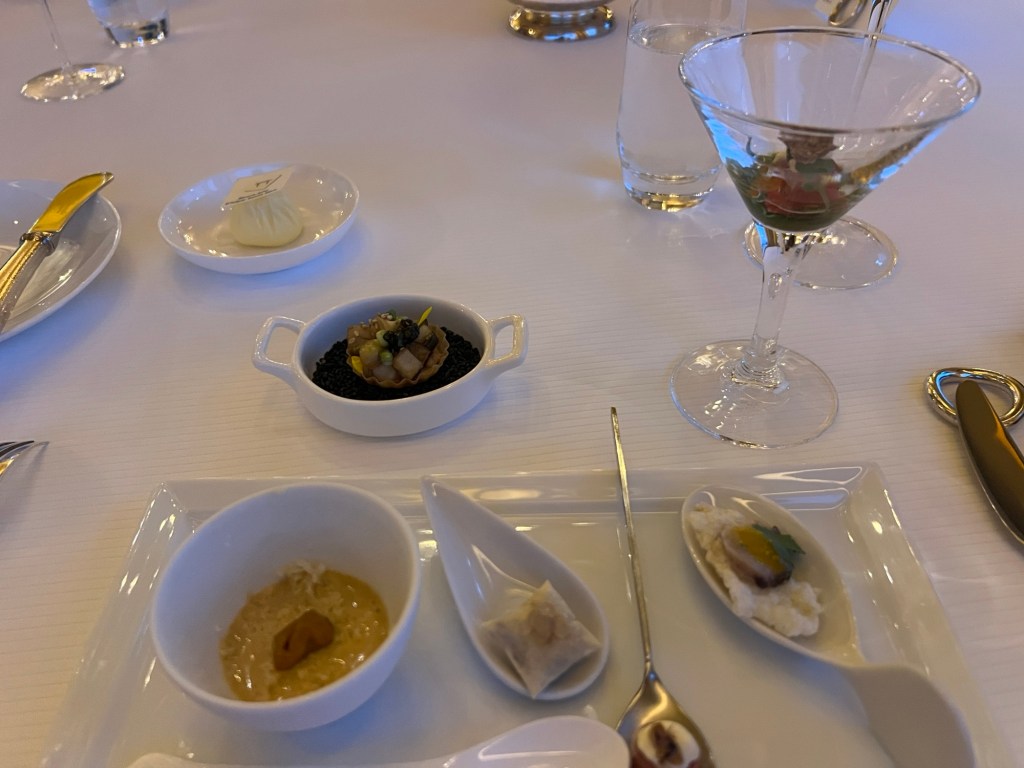
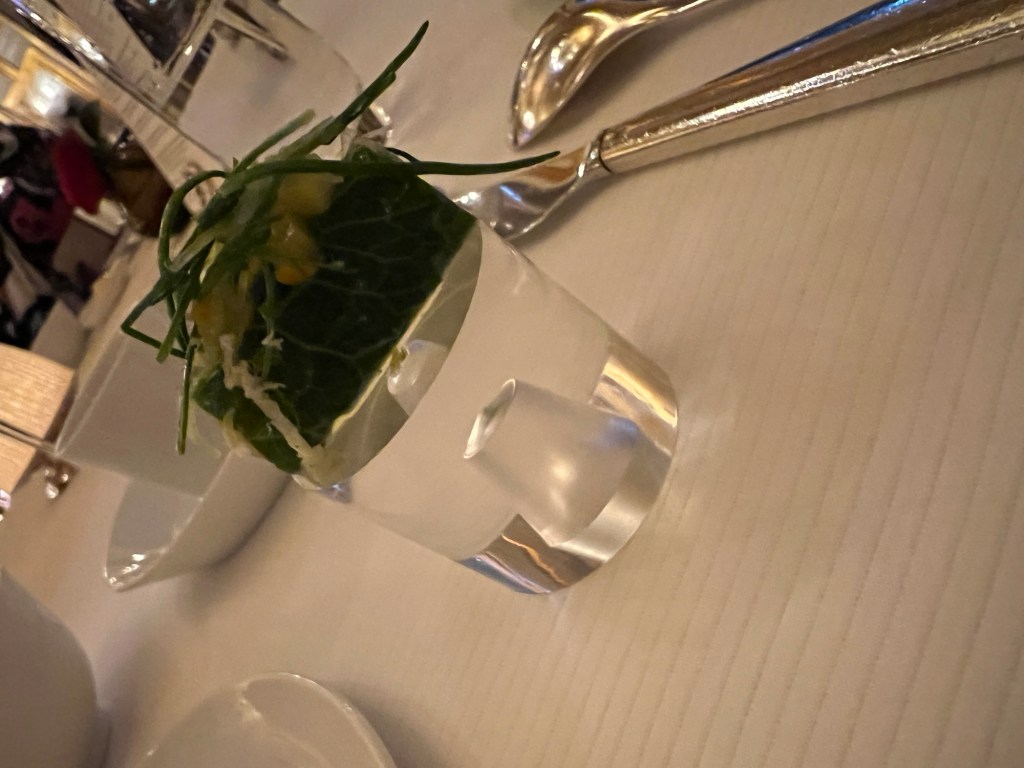
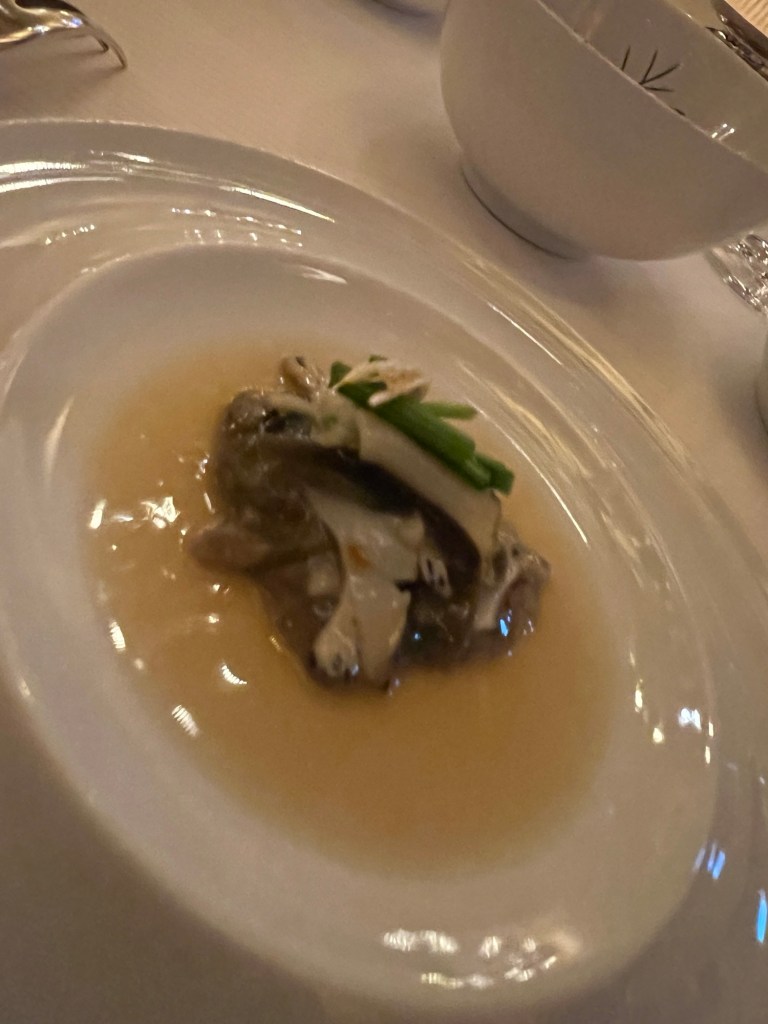
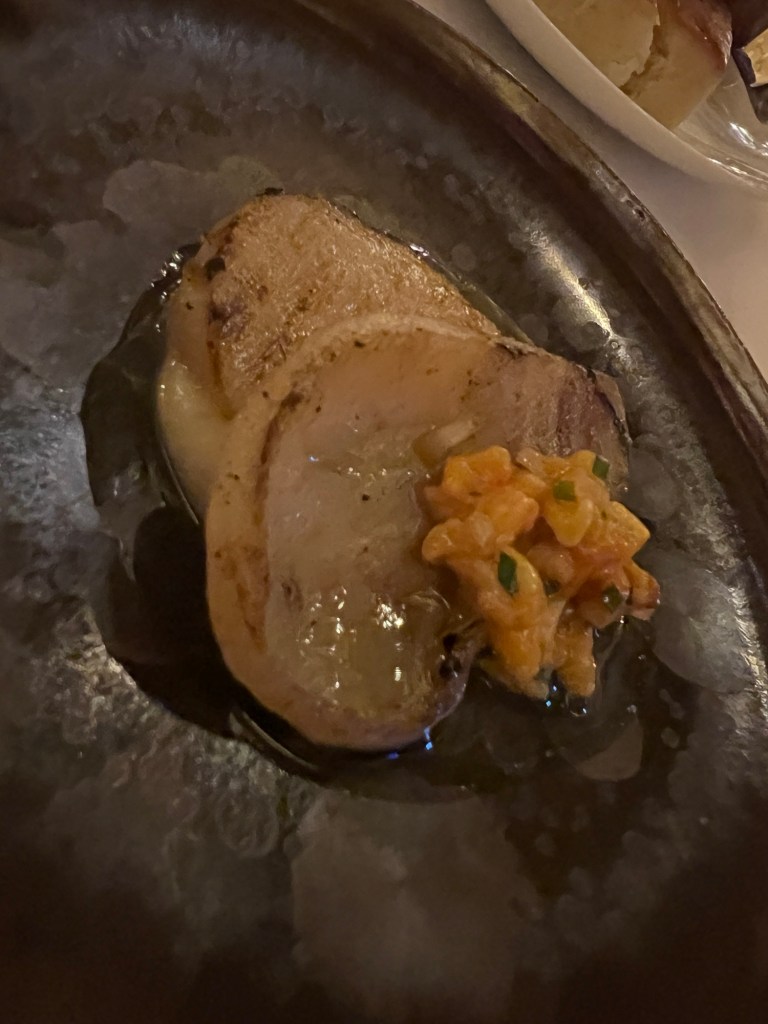
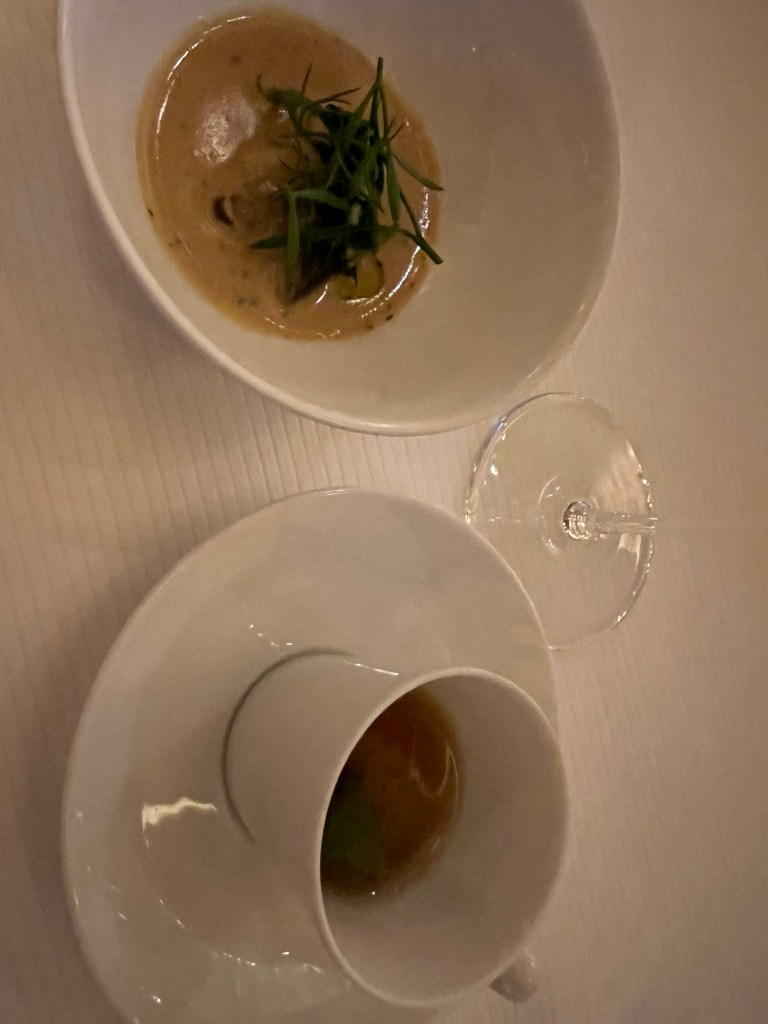

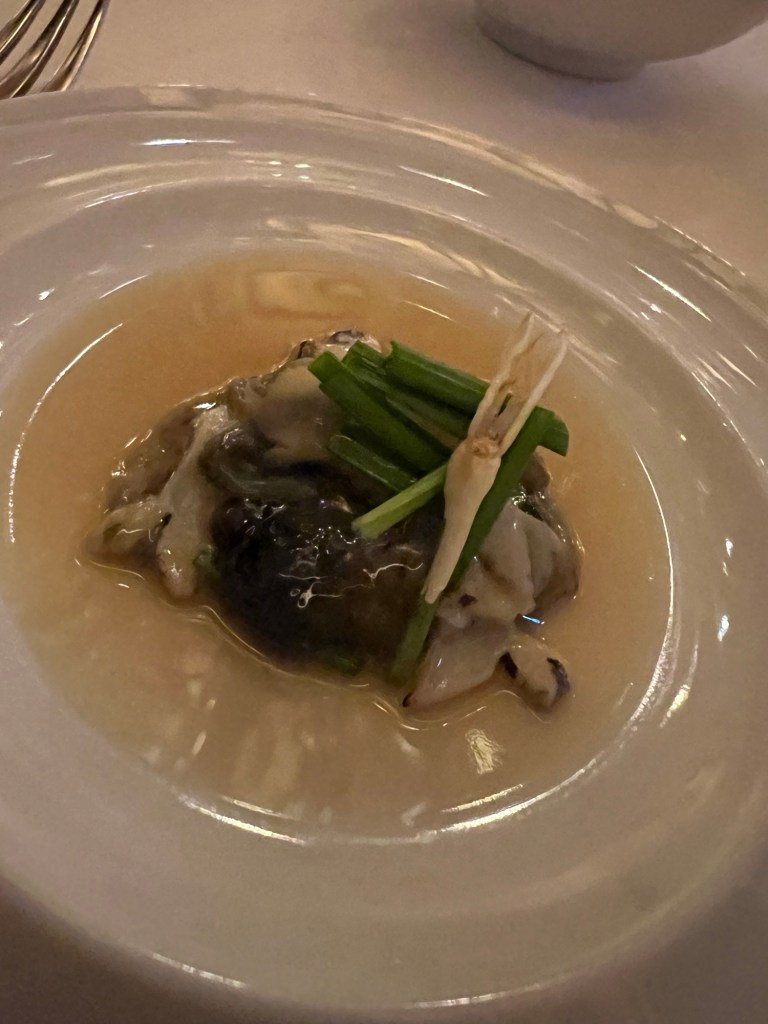
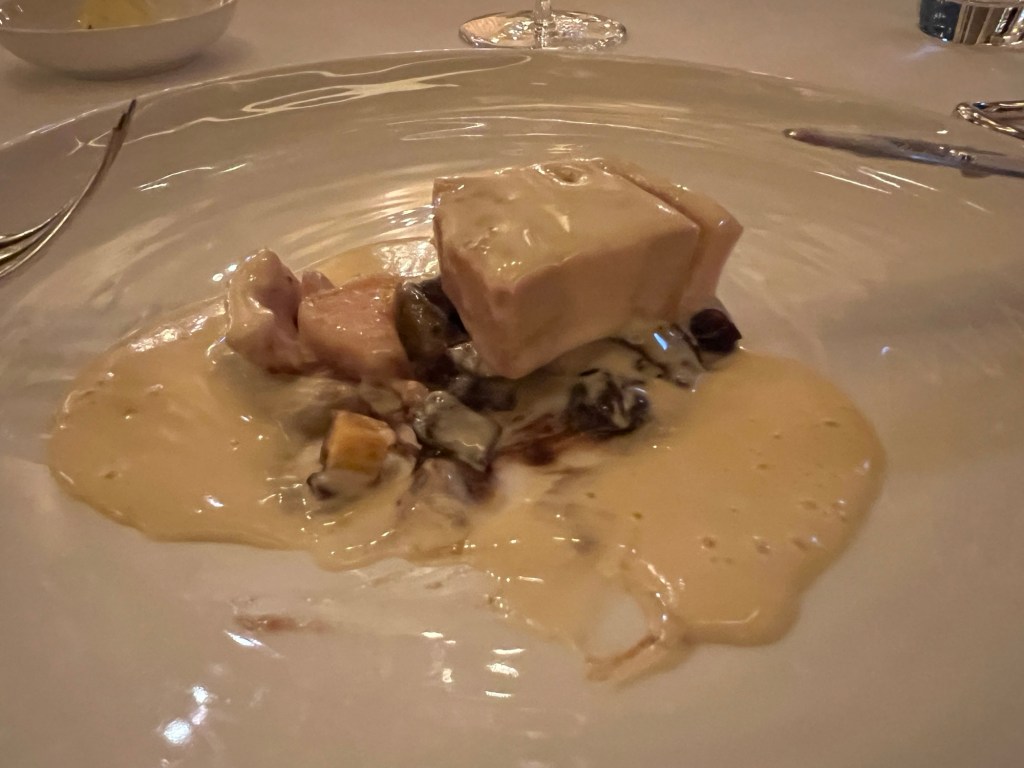
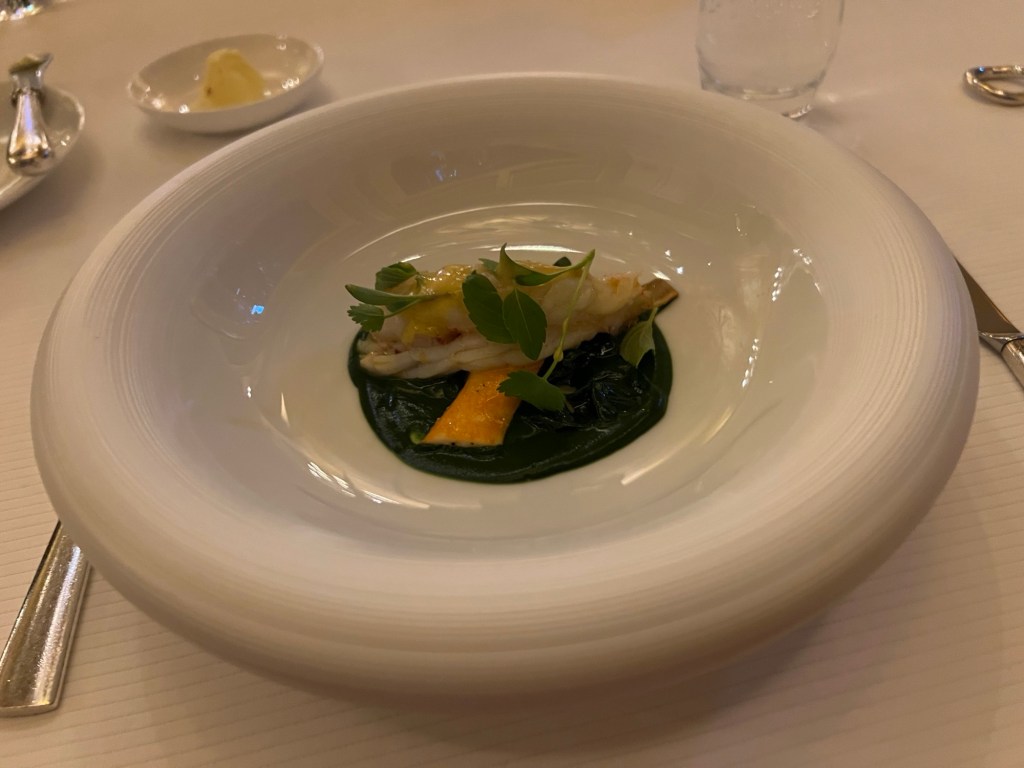
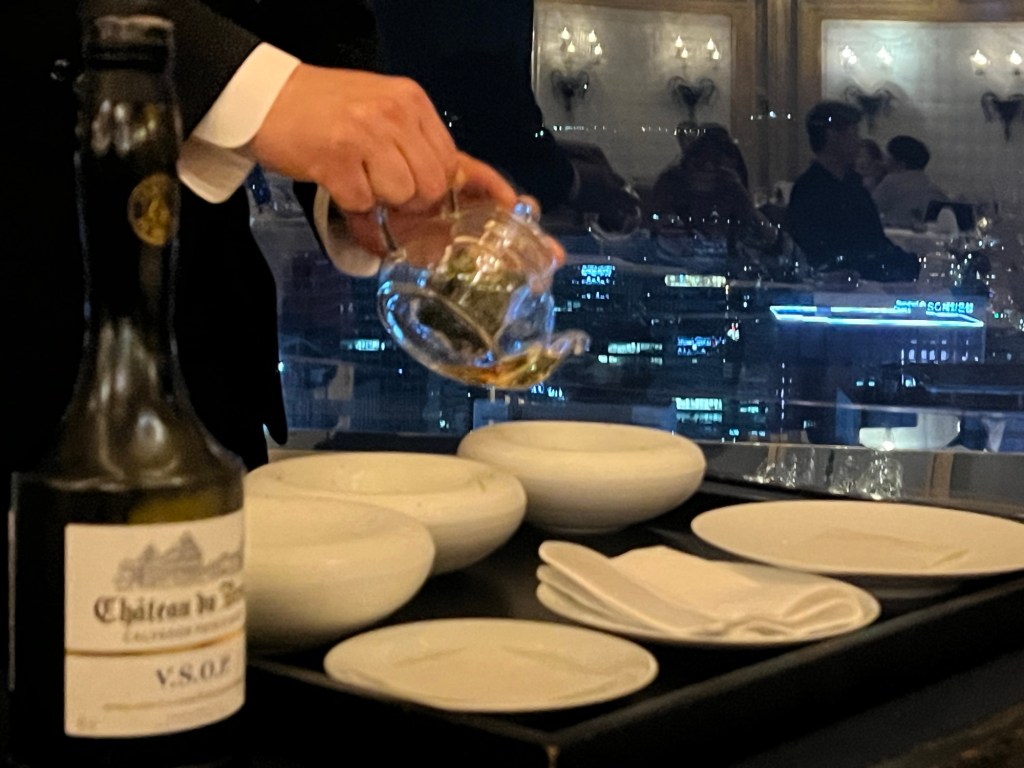

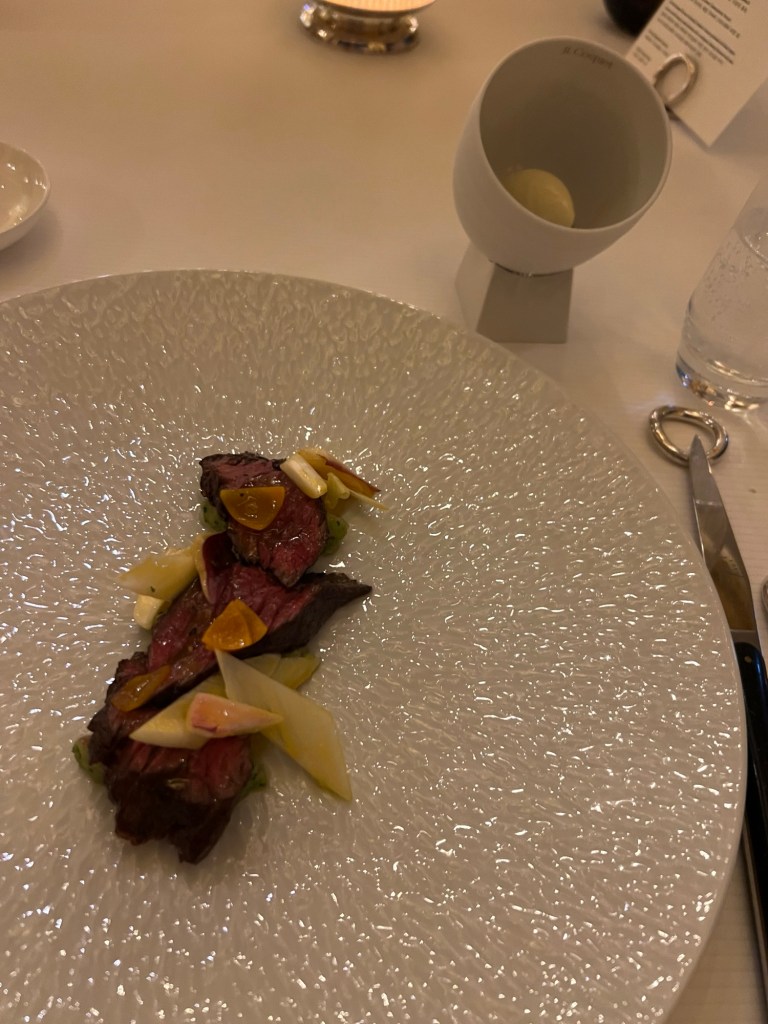
There was this one too but I either didn’t have a pic or I’ve messed up the captions above. – Spain octopus with Belino puree, smoked paprika flavored chistorra, pepperdrops, Naengi.
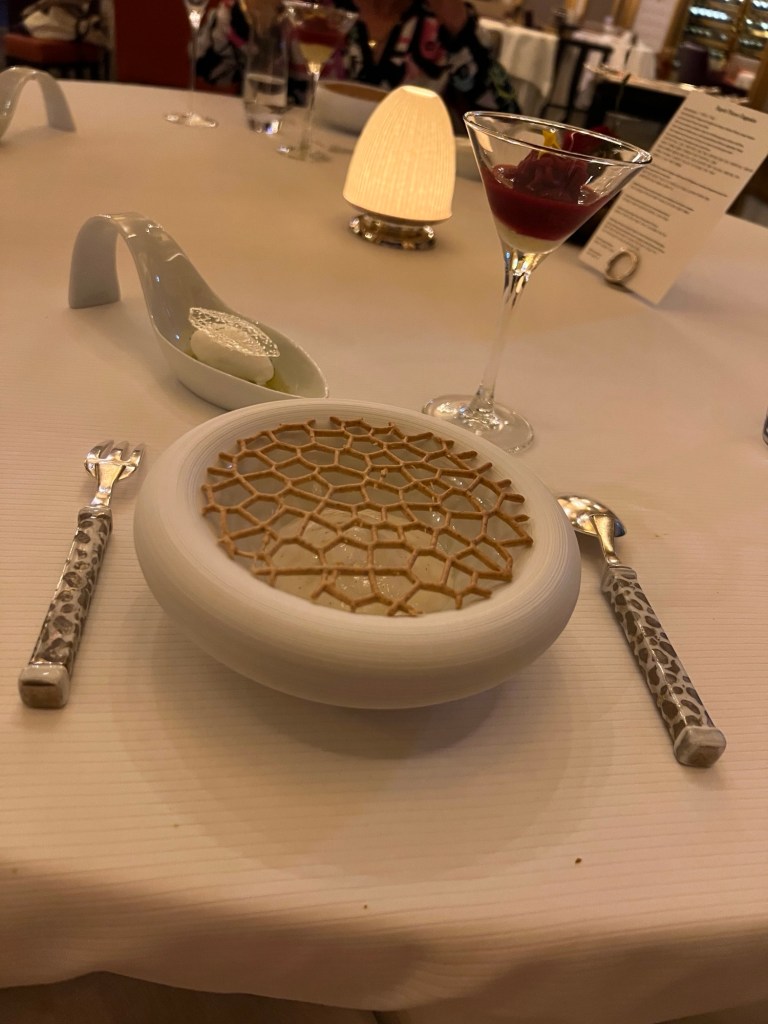
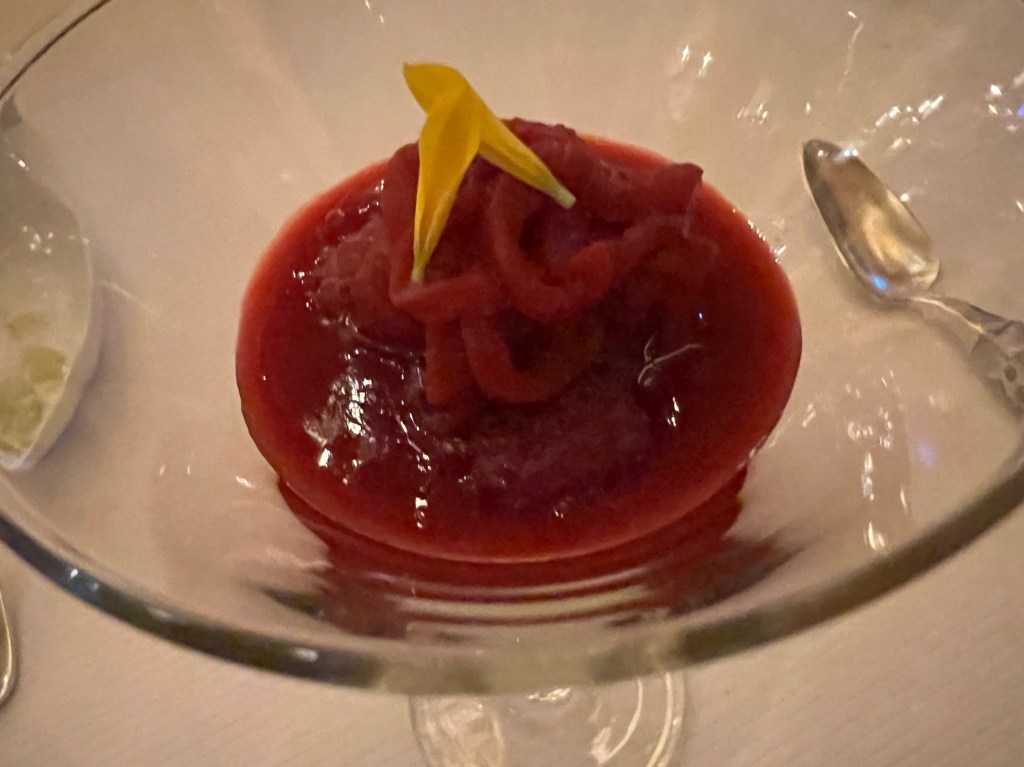
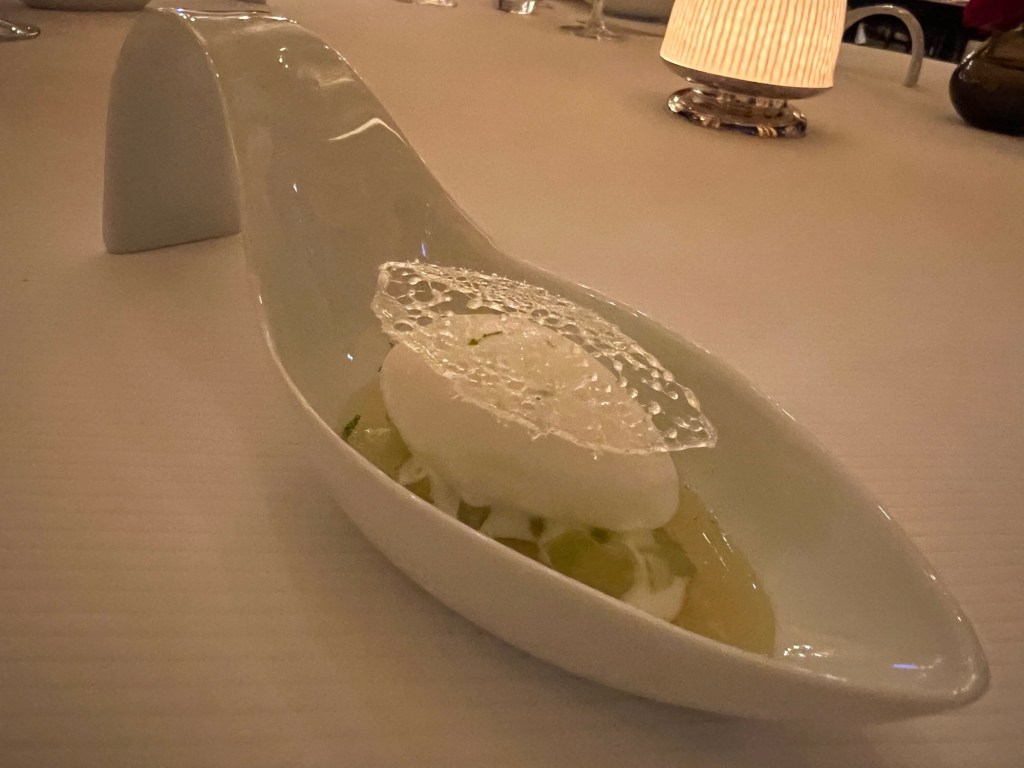

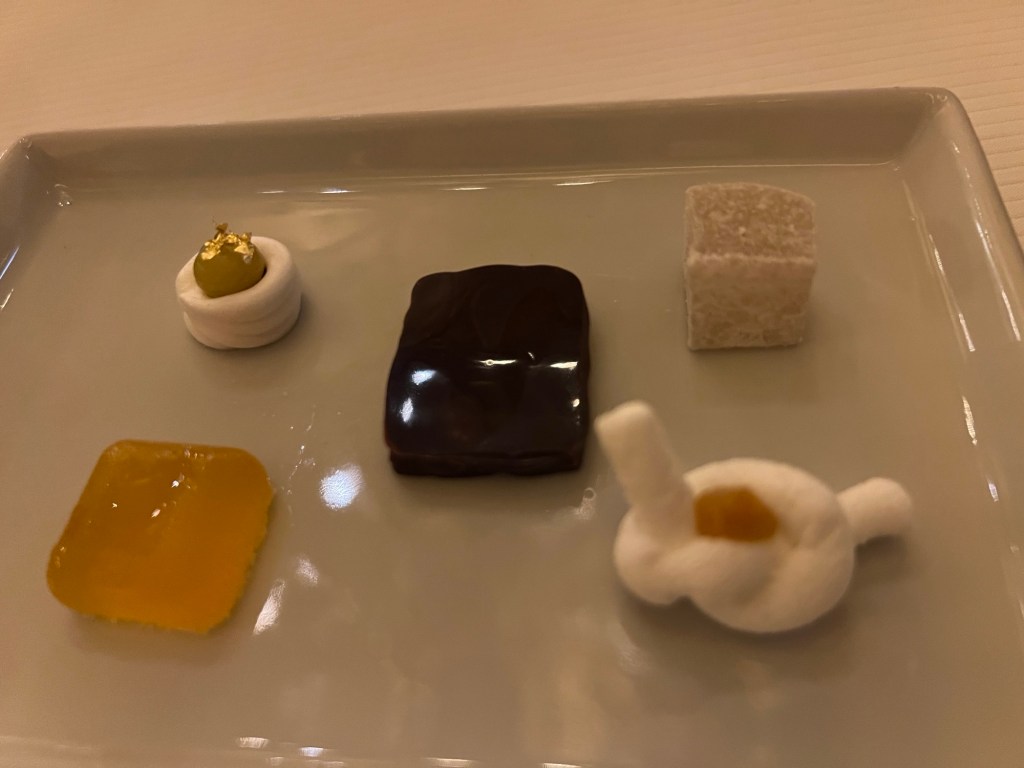
By this stage we were fit to burst. Only the bill to pay and views to capture.
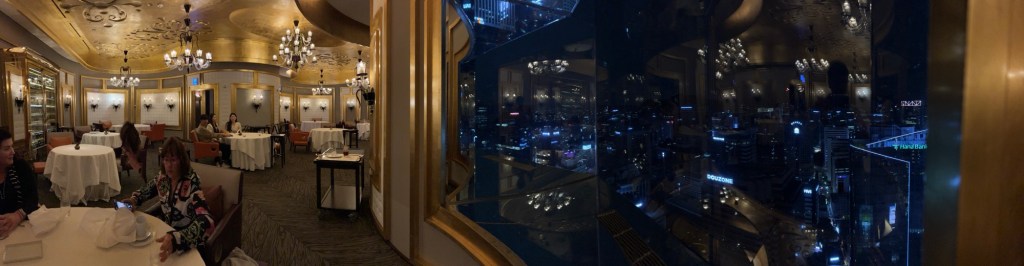

Now it’s home to pack – Suzie and I leave at 8:30 tomorrow.
 Travel adventures with Nicola & co.