Awoke early – spent time sorting photos etc for blog. While listening to ABC Gippsland I heard one of our team being interviewed- she is shaving her head to raise funds for Gippsland Cancer Care to update their waiting room. Good for you Renee.
Packed and ready to go before breaky. Evidently it’s a bit of a drive to our next destination-4 hours. I quite enjoy the drives, seeing the countryside.
Rescued a little Weaver beetle (Moechotypa diphysis) in the lobby.
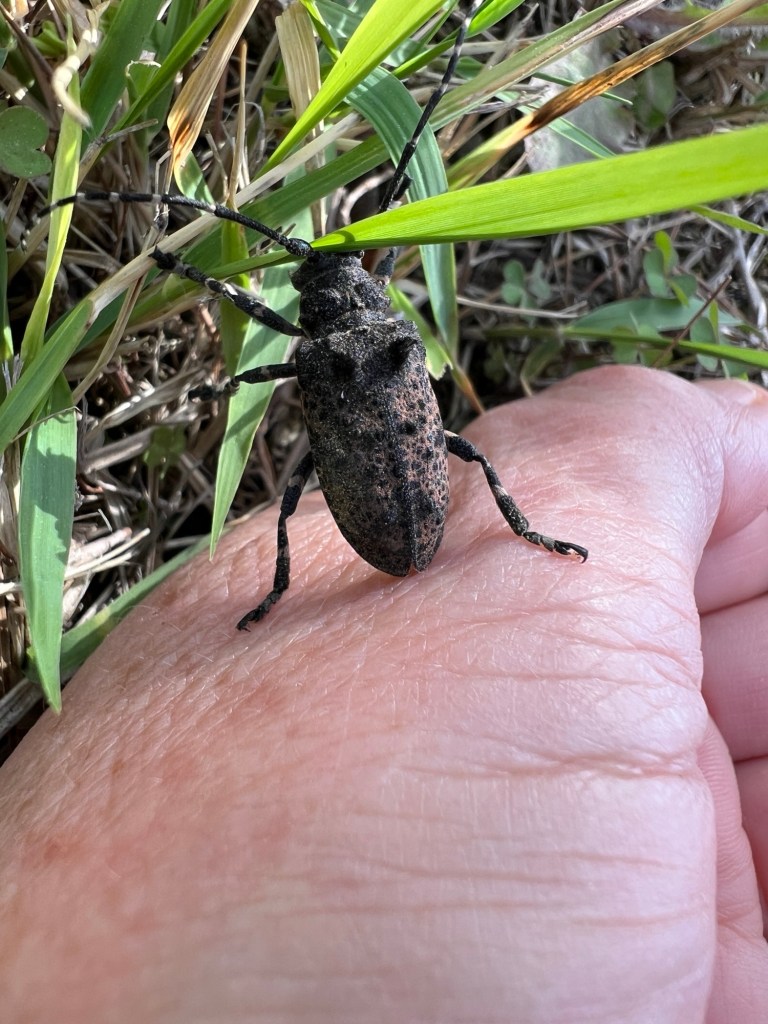
RF. Did you know the info ℹ️ button on the iPhone in photos will identify creatures for you? It’s a game changer.
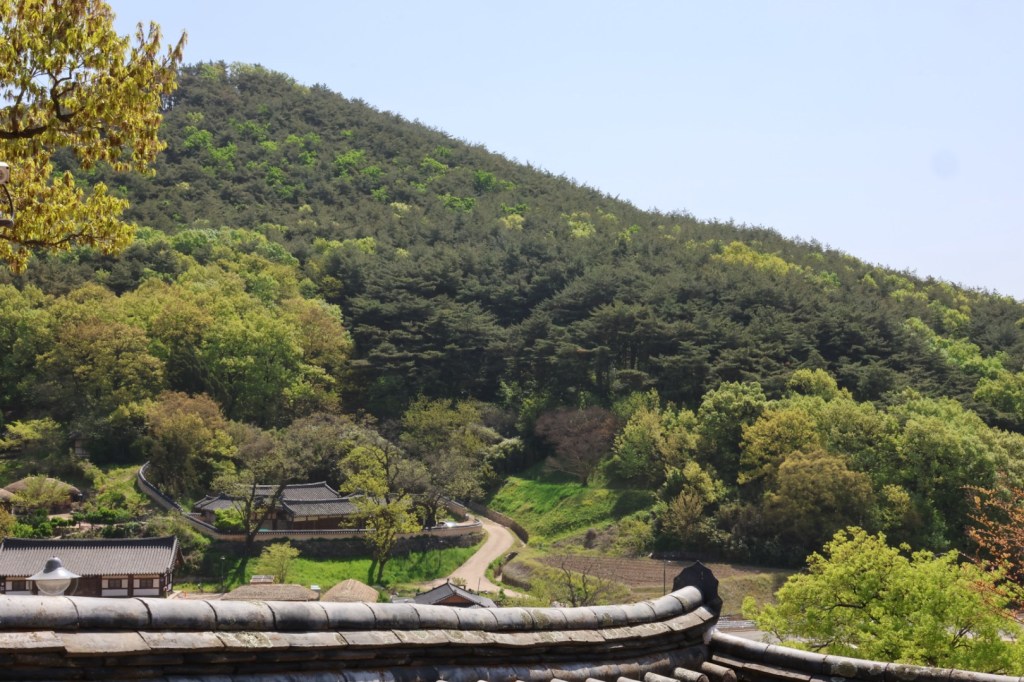
Yangdong Village is our first stop about 30 minutes out of town.
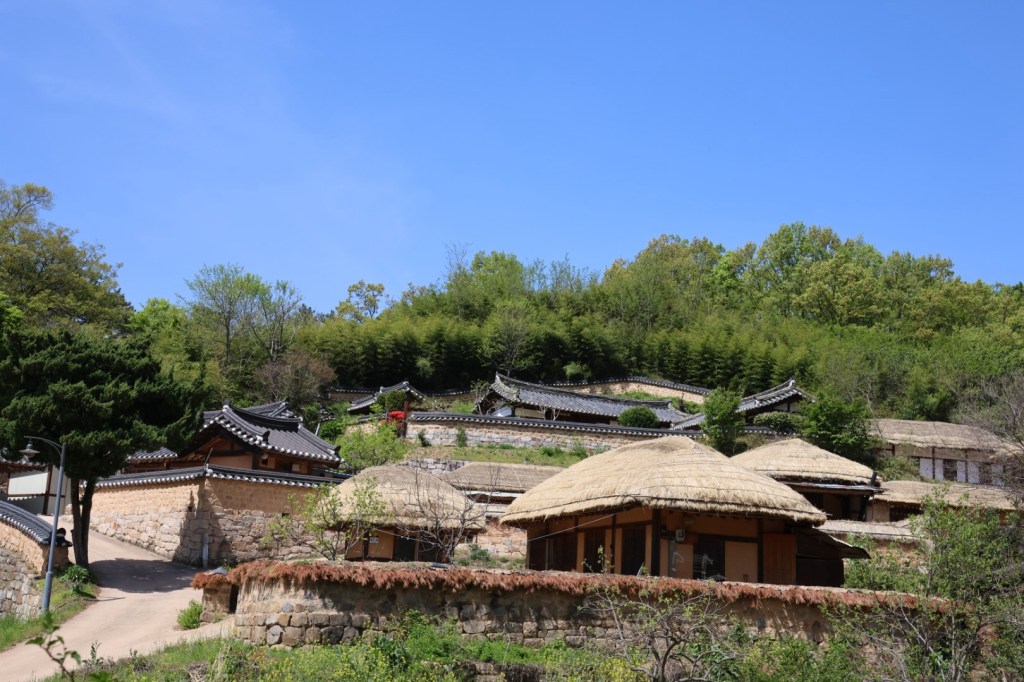
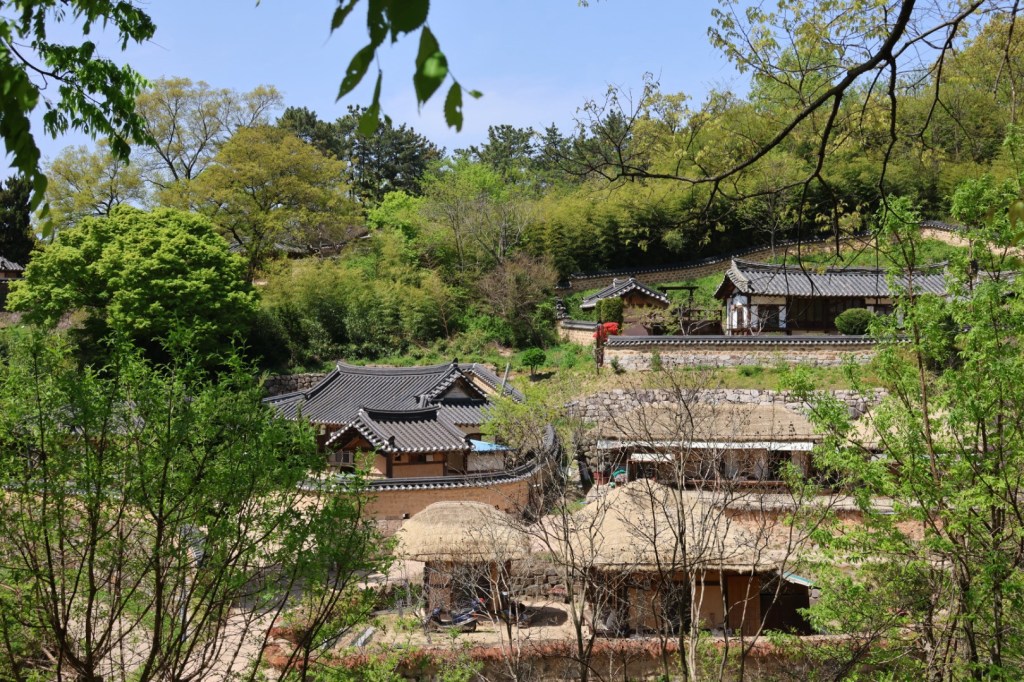
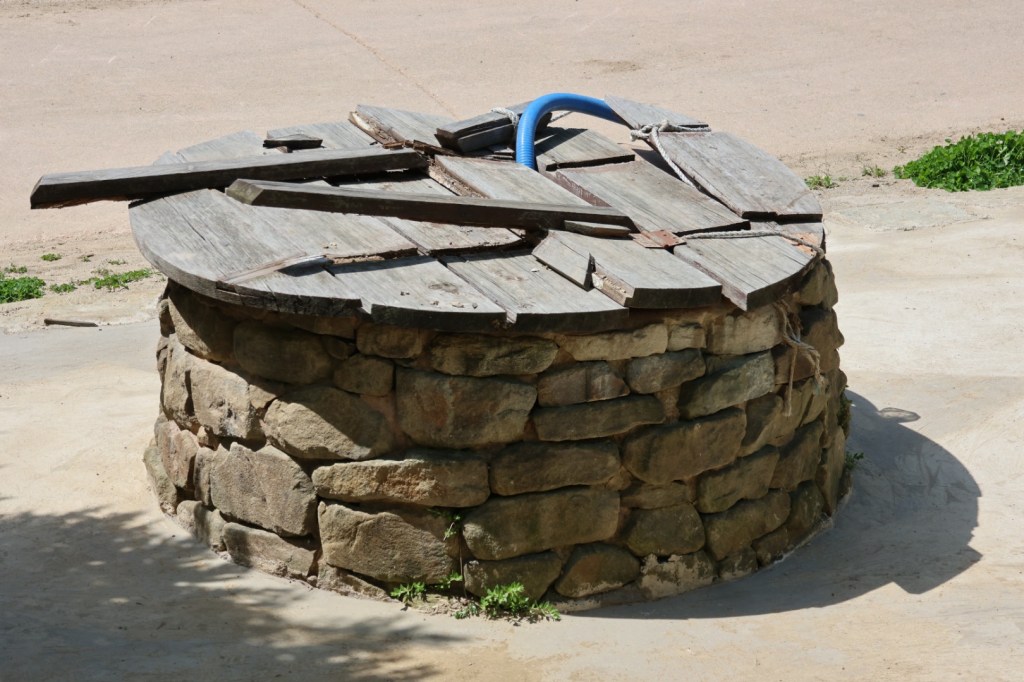
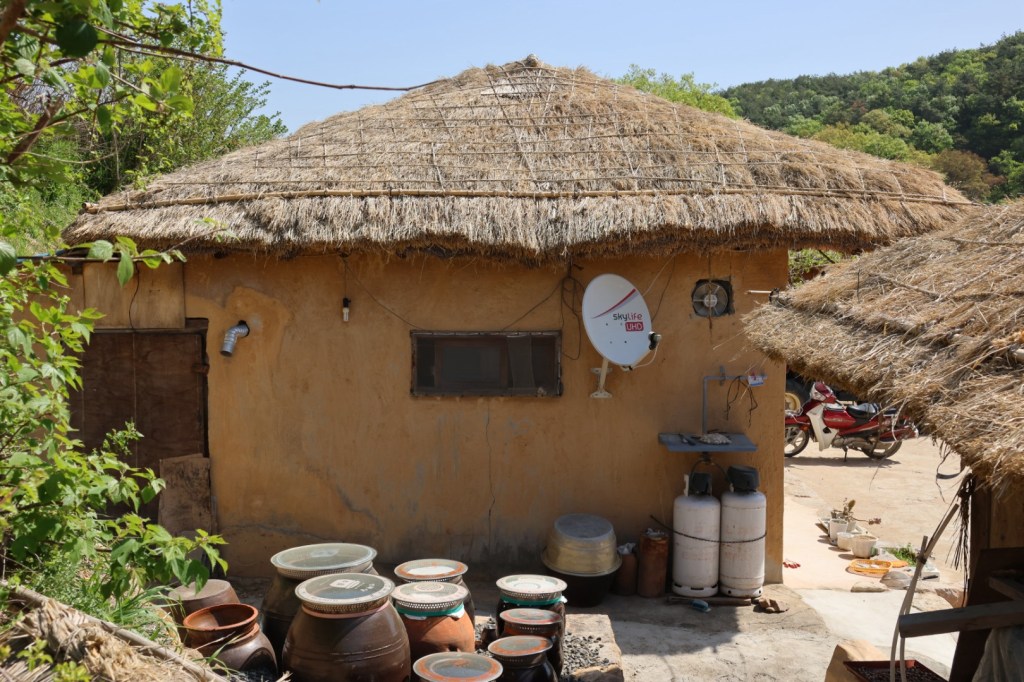
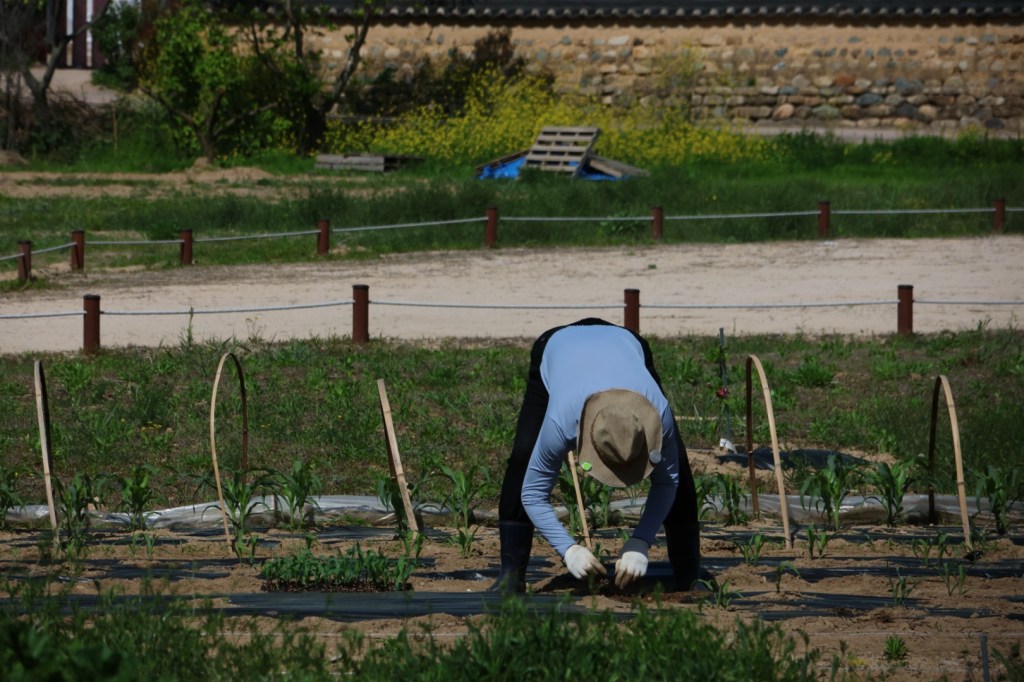
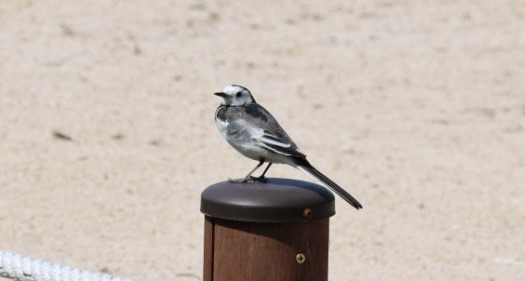
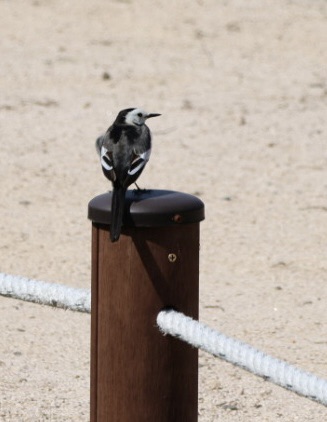
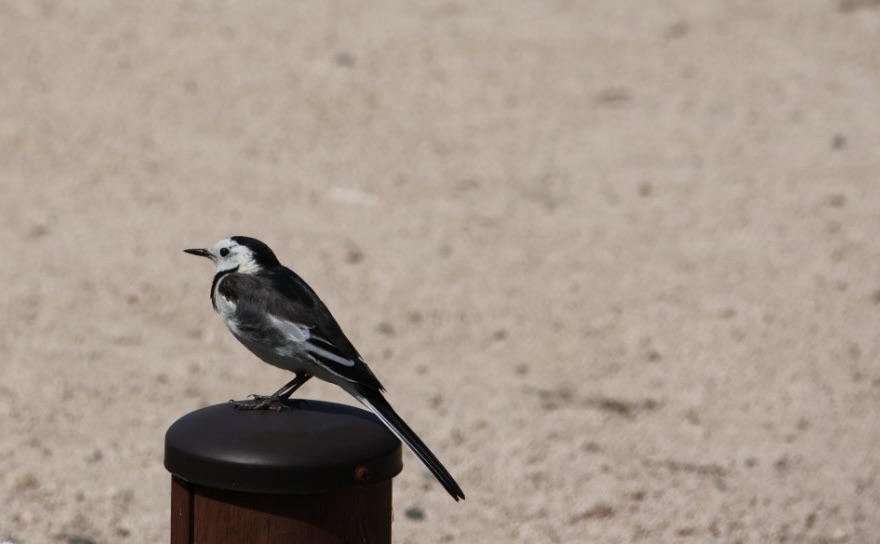
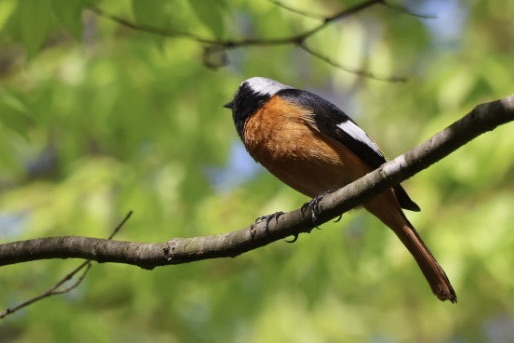
A genuine village, with descendants of the original clans still in residence. We spotted a couple of birds on the way in 1. A White Wagtail 2. Daurian Redstart whilst walking into the village proper.

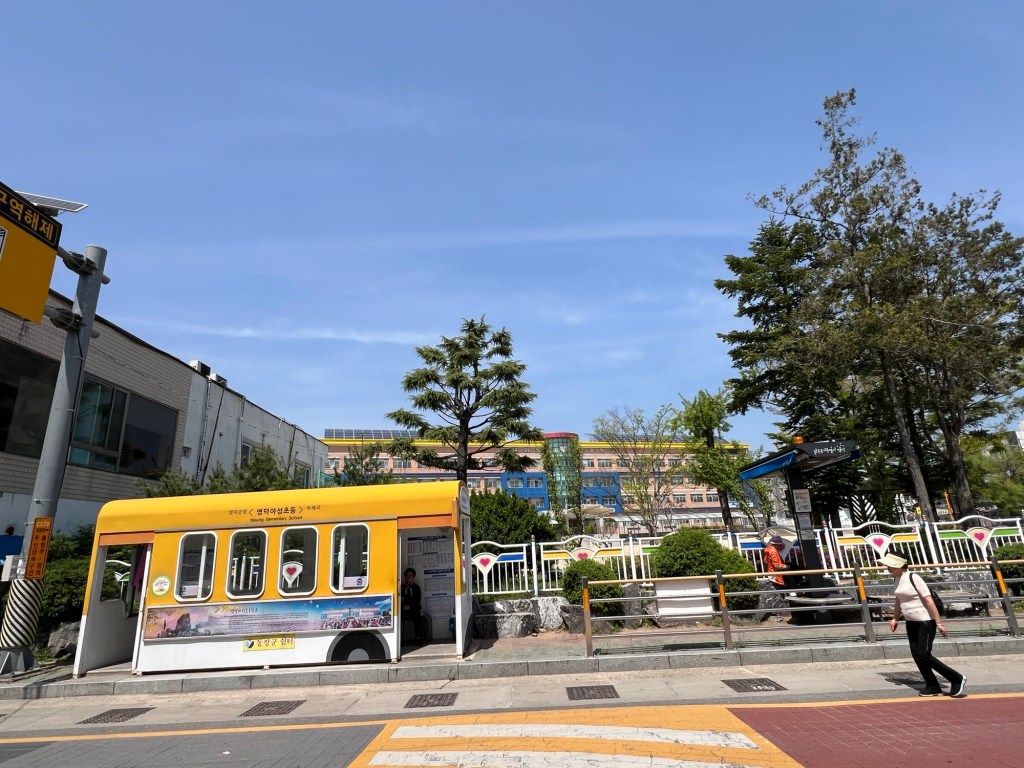
Passed a school.
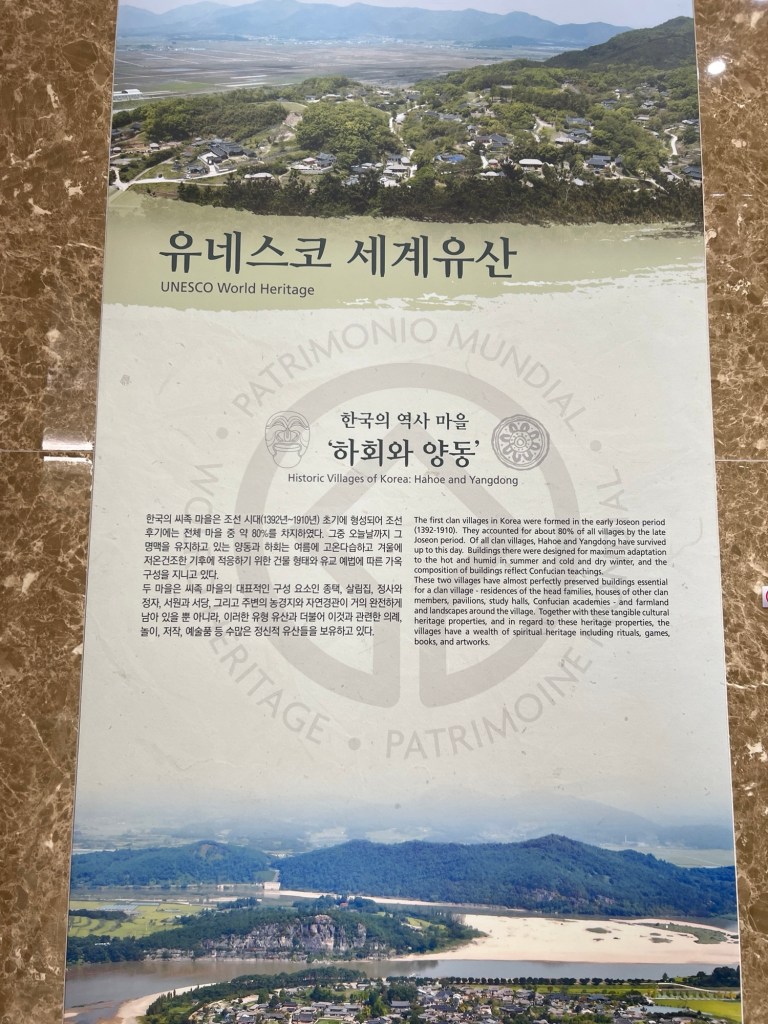
Yangdong Village was formed by the two clans of the Wolseong Son and Yeogang Lee families and is a typical yangban village that consists of large Korean traditional houses.
We climbed up the hill through the village to see Gwangajeong House built in 1514. To put that into perspective it’s built before Christopher Columbus made his discovery of the ‘New world.’
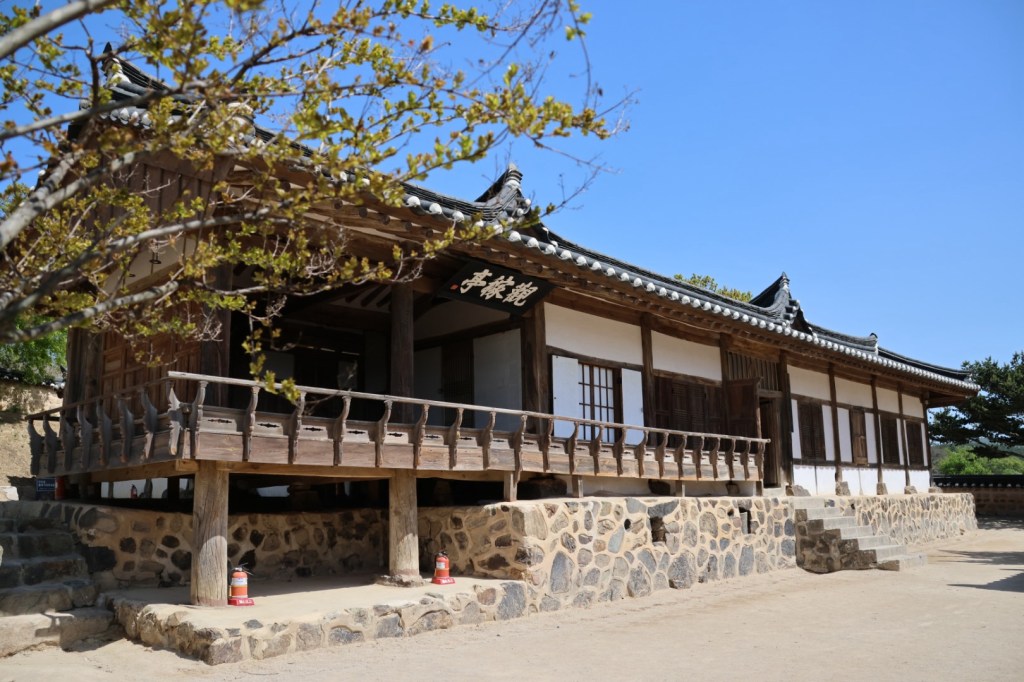
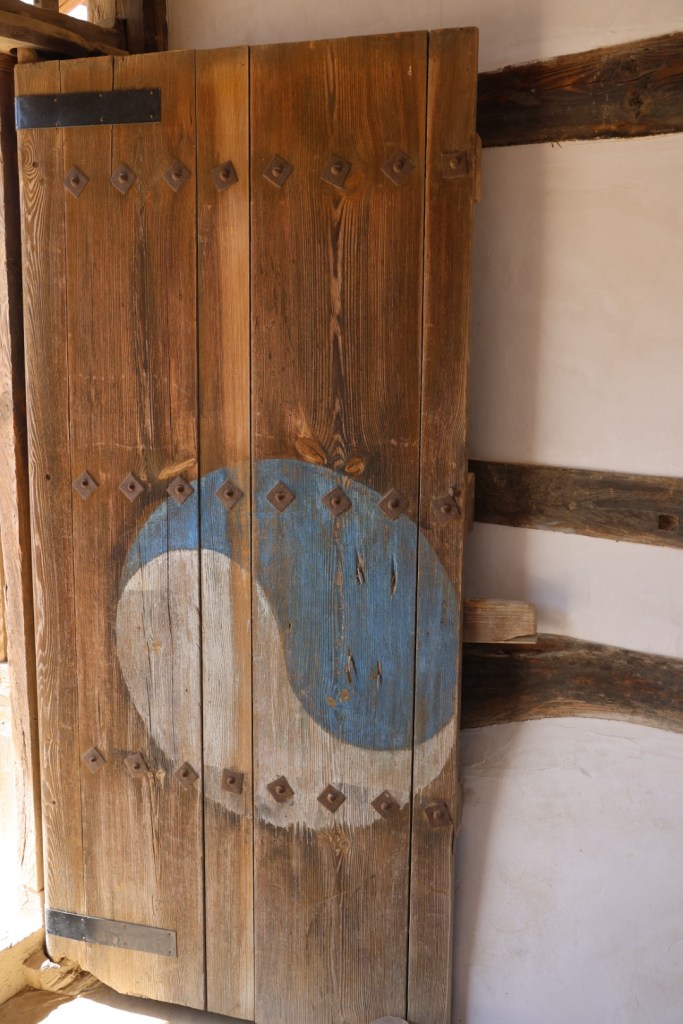
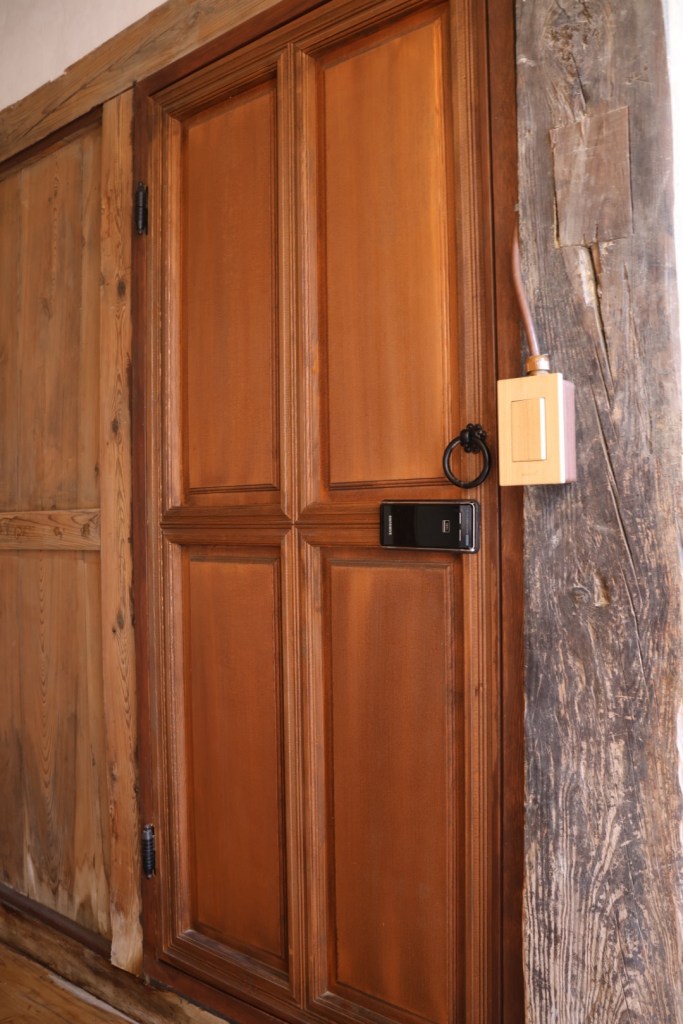
This house had a temple out the back and some other relics on display. Hard to believe the age of them and the trust to have them displayed with no one around. There was plenty of cc tv.
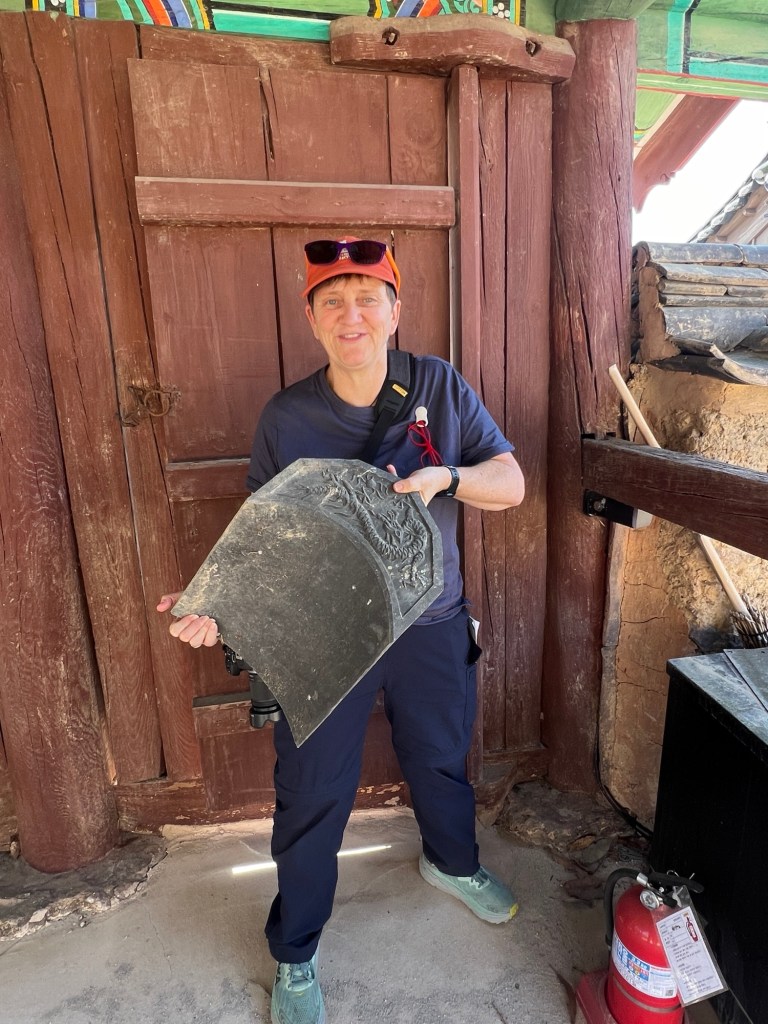

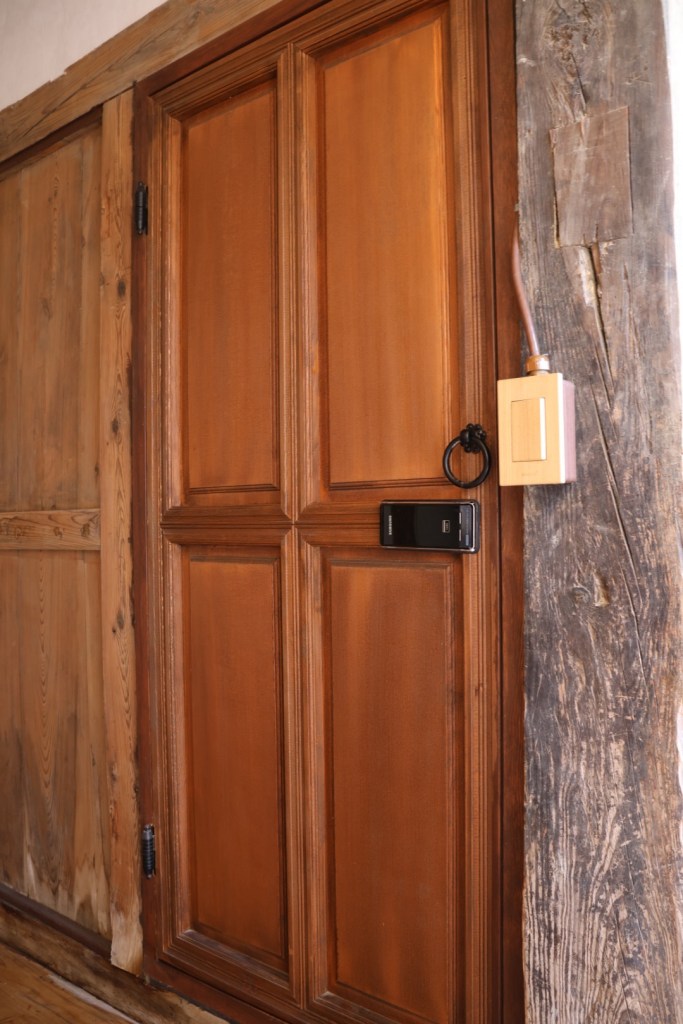
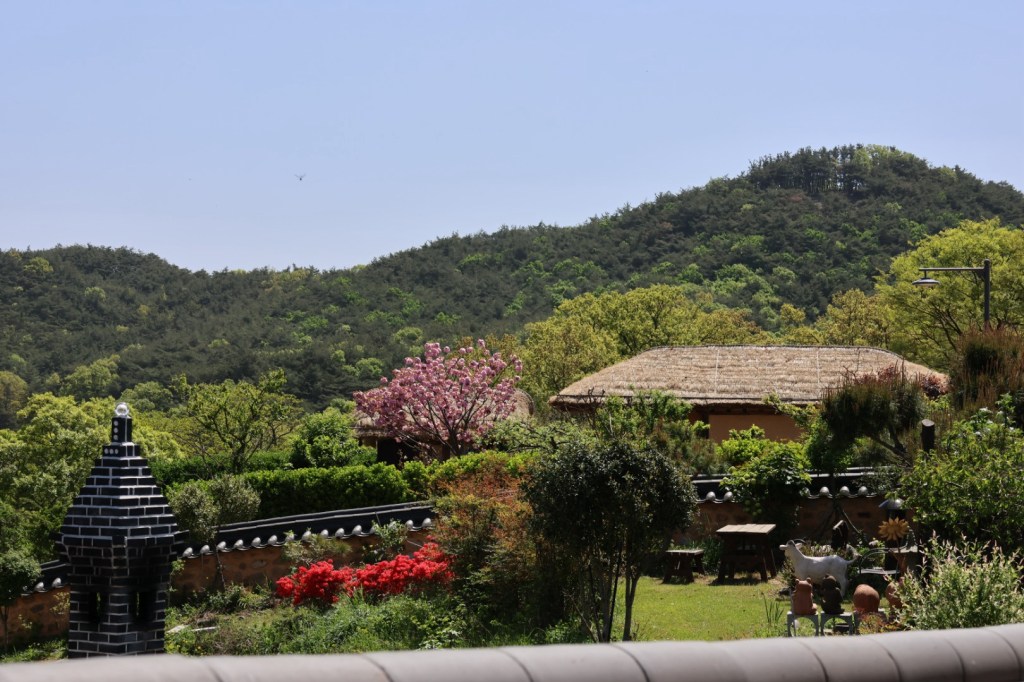
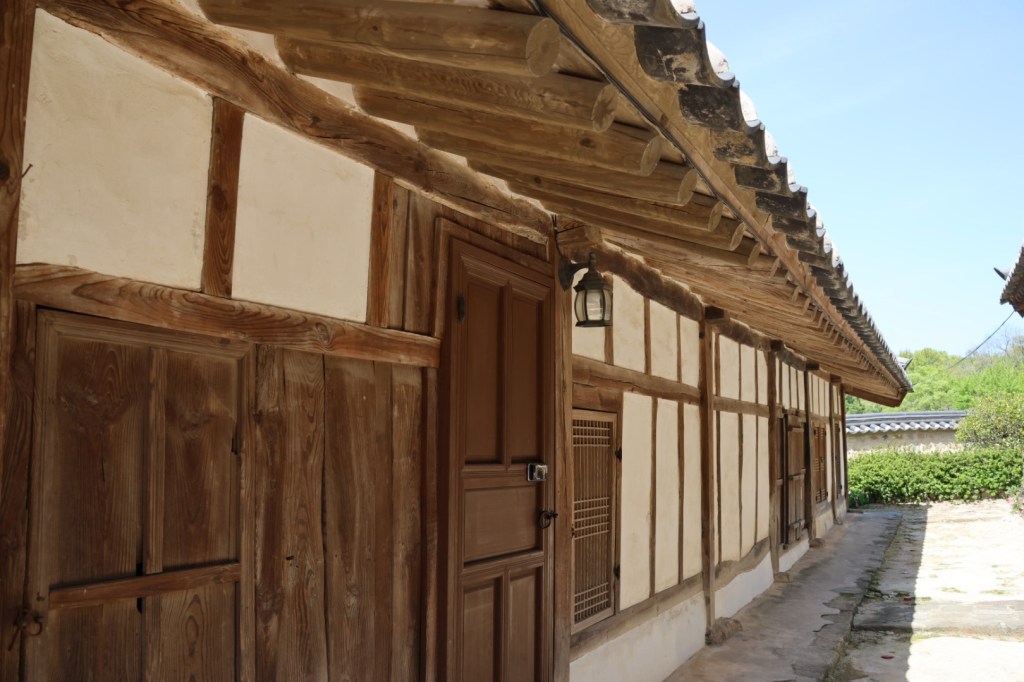
The mix of old and new has mostly been tastefully done.
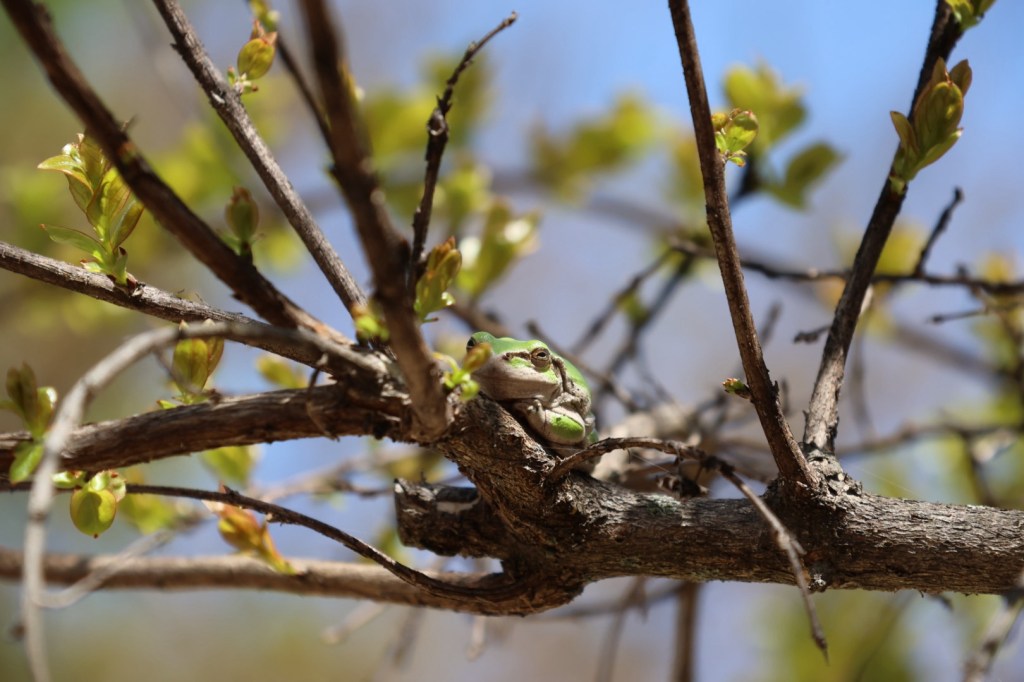
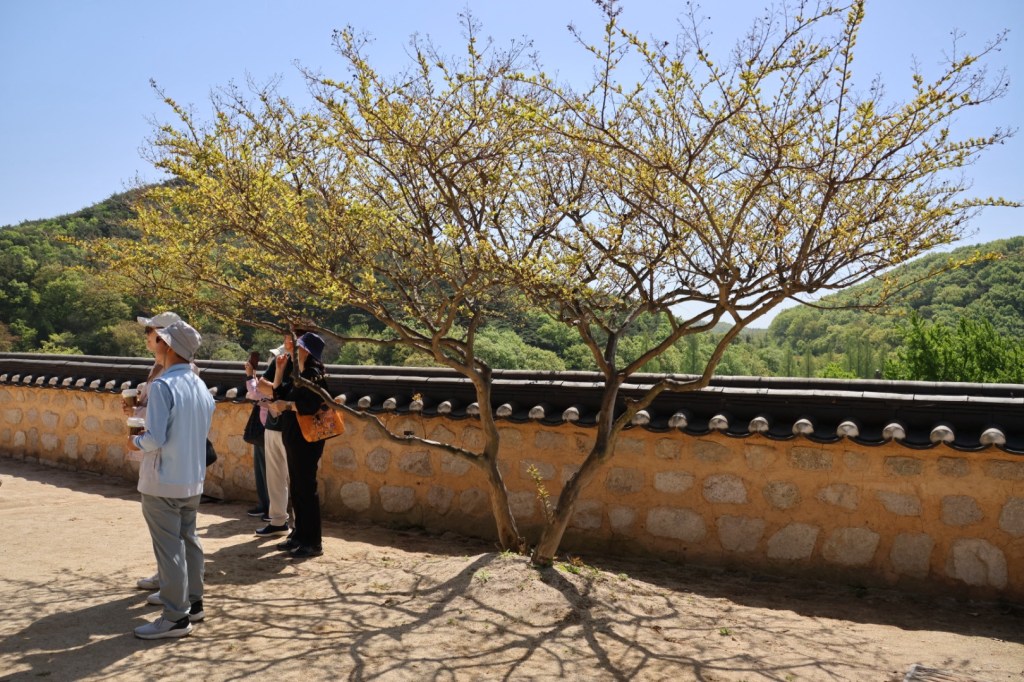
This house also had some big old trees and one Crepe Myrtle I was looking at revealed what I initially thought was a rubber frog was NOT – real Japanese Tree Frog about 4cm long – cant believe I spotted him. Love the photos of it.

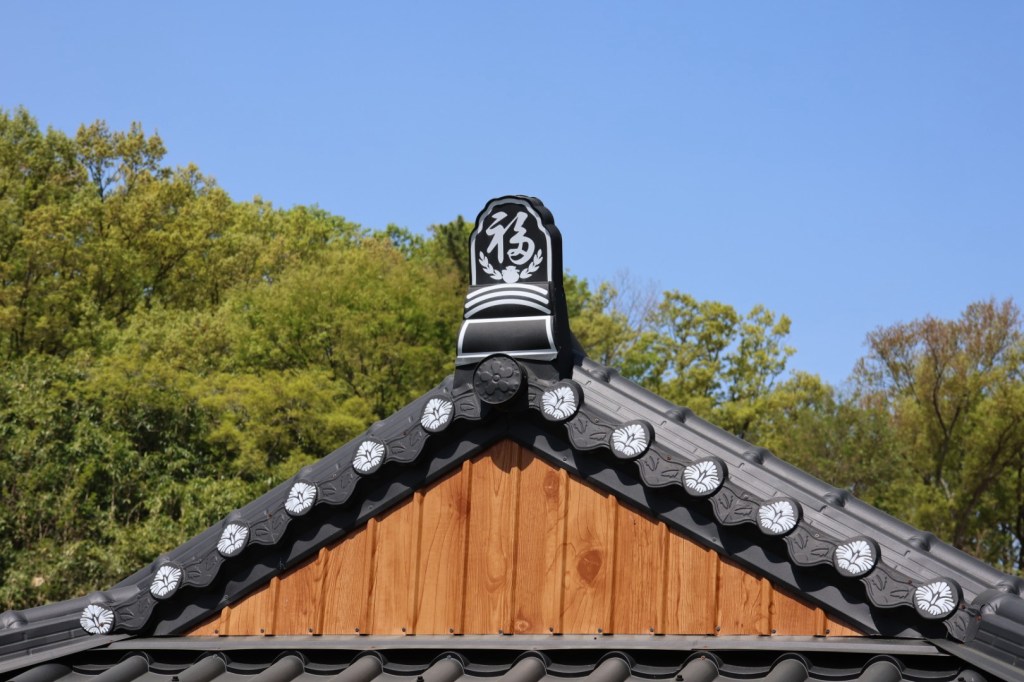
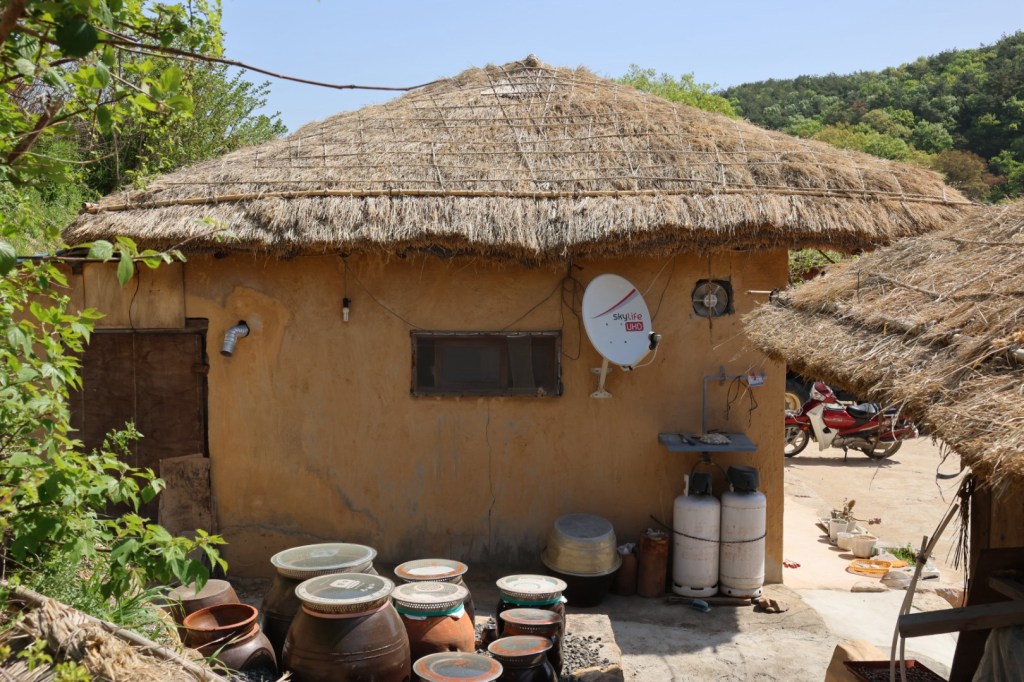
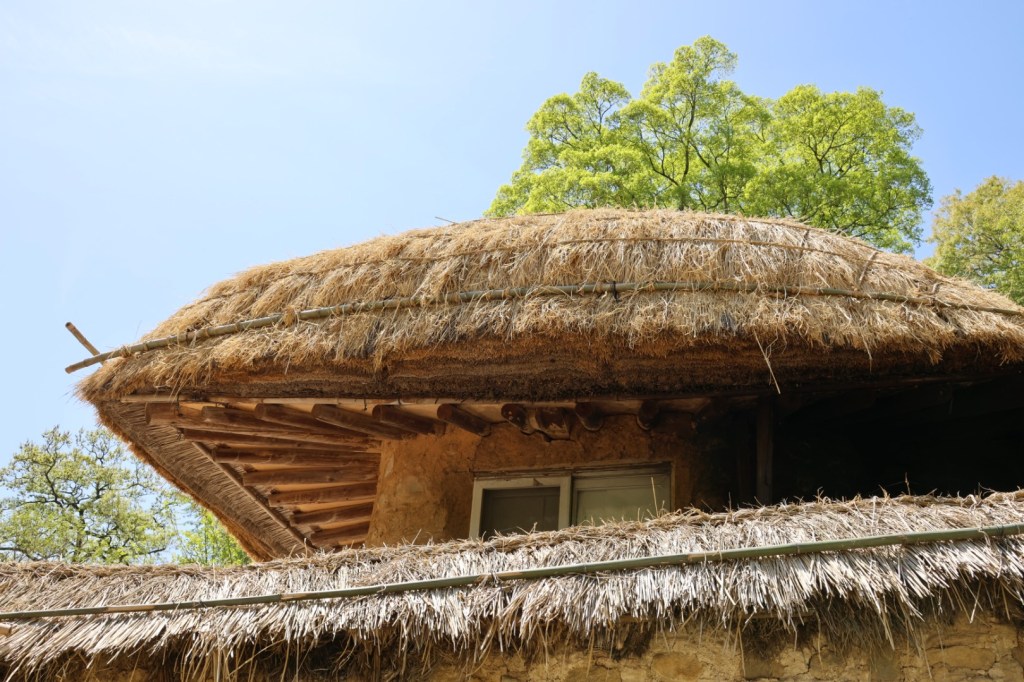
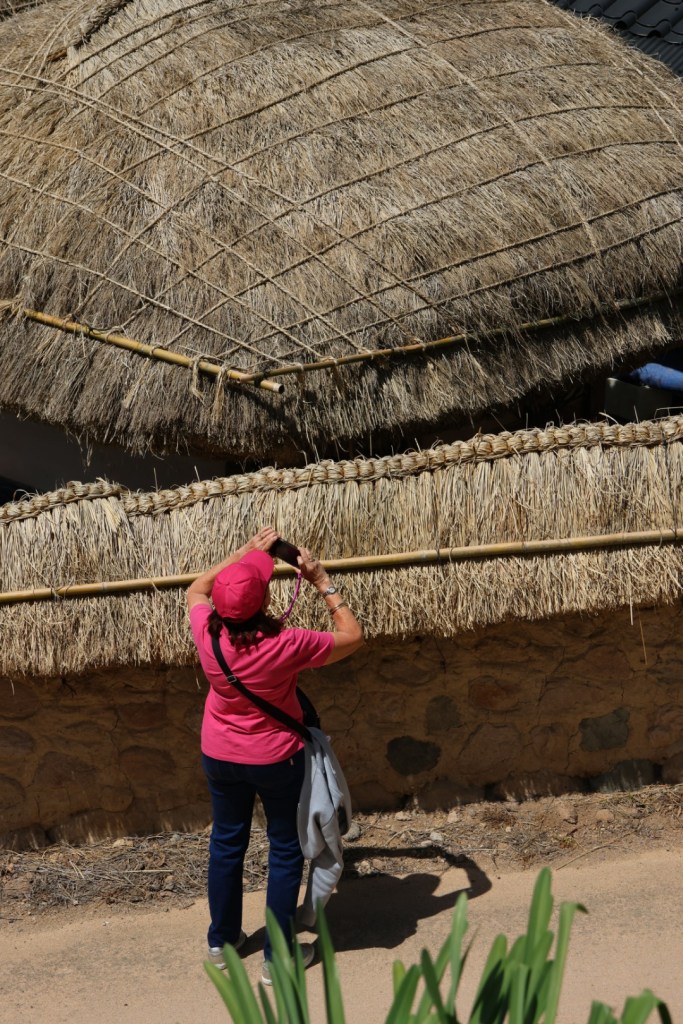
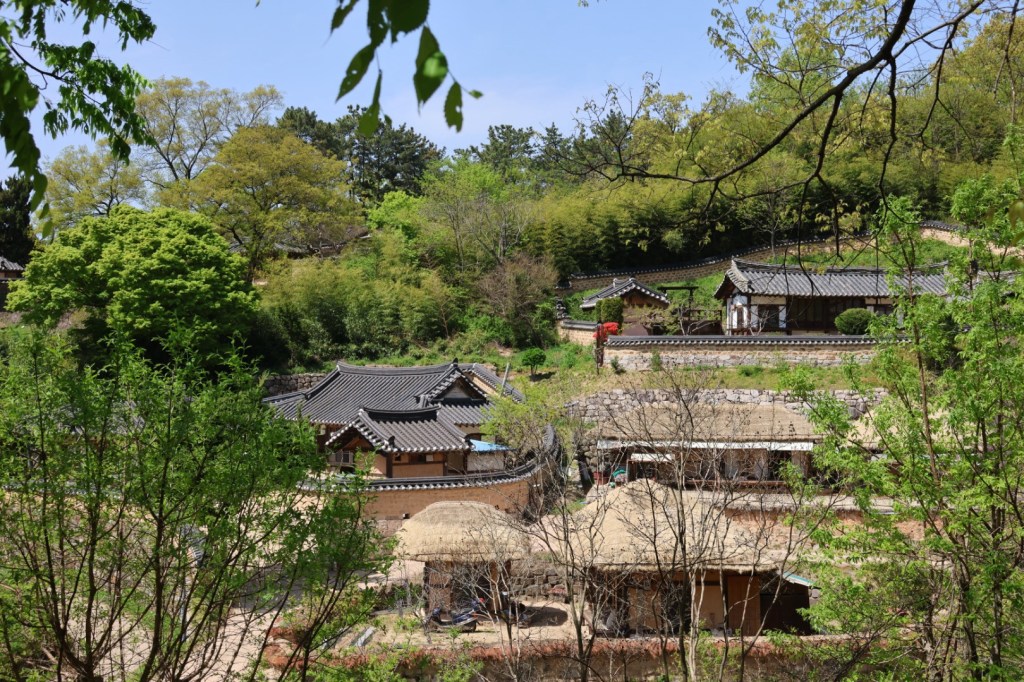
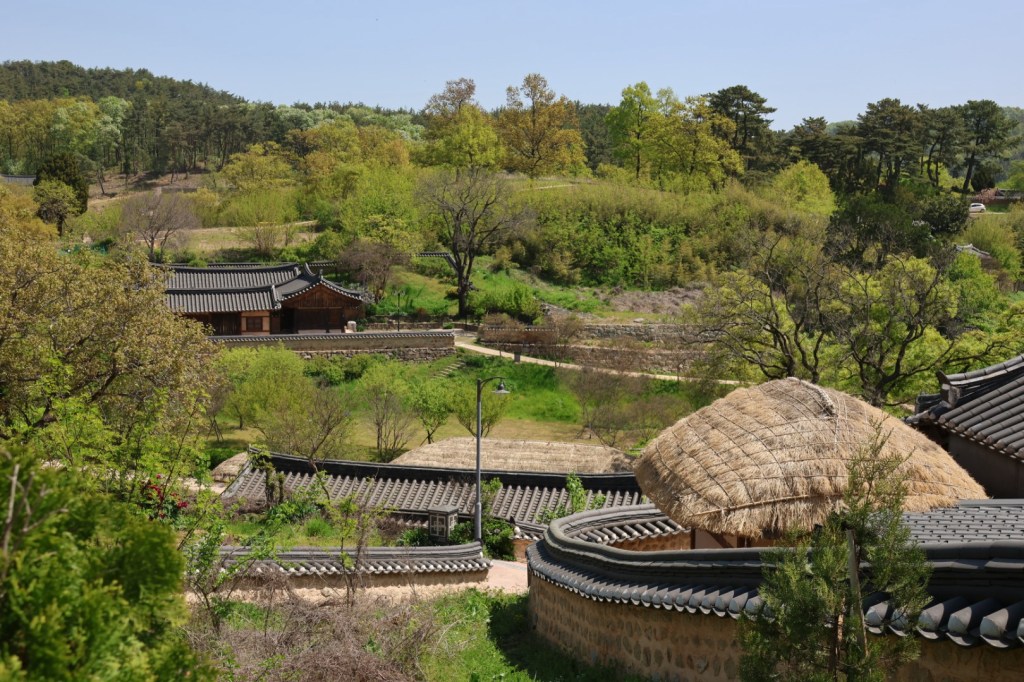
There are upper class houses and other houses with old traditional structures. The upper are tiled roofs and the less wealthy are thatched. Alex explained that thatch is replaced annually. There were two houses with corrugated iron structure protecting the naked house – we presumed awaiting new thatch. The handiwork in the thatched roof and fencing was impressive.
Many layers of rice straw in roof and a nice plait running along the apex of fences.
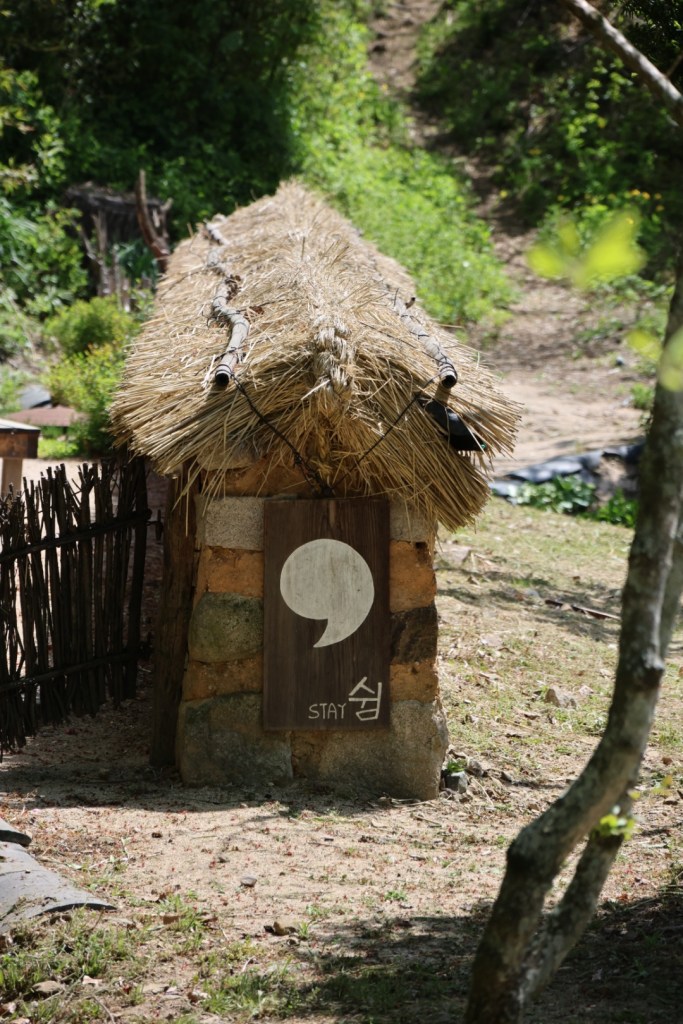
The lines of roofing and fences running up and down hills and around corners led the eye neatly around the Village.

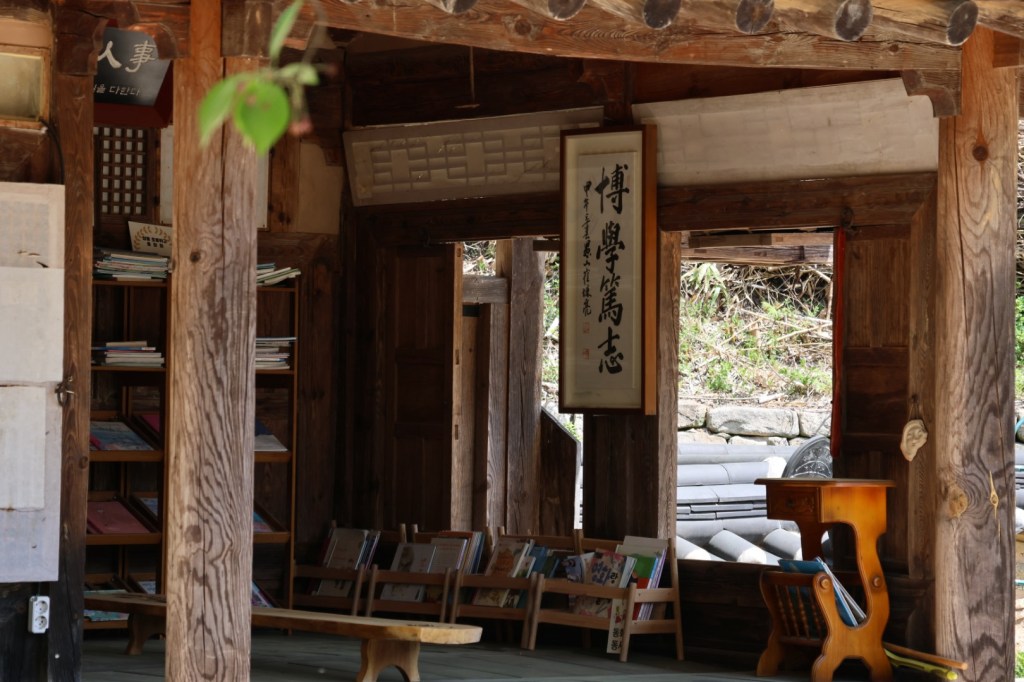
The Yangdong Village followed Confucianism for the education of boys.
The Confucian schools were part of the village. Each school had about 10 students – all male. There were two schools originally and the buildings still stand although one was deserted.
Songcheom Head House was our next stop and is the home of one of the descendants on the original clan. He actually drove away as we approached. Alex spoke with him – about 70 Alex reckoned and obviously wealthy given the car was a BMW Z 6 or some posh model.
The house and garden were immaculately maintained.
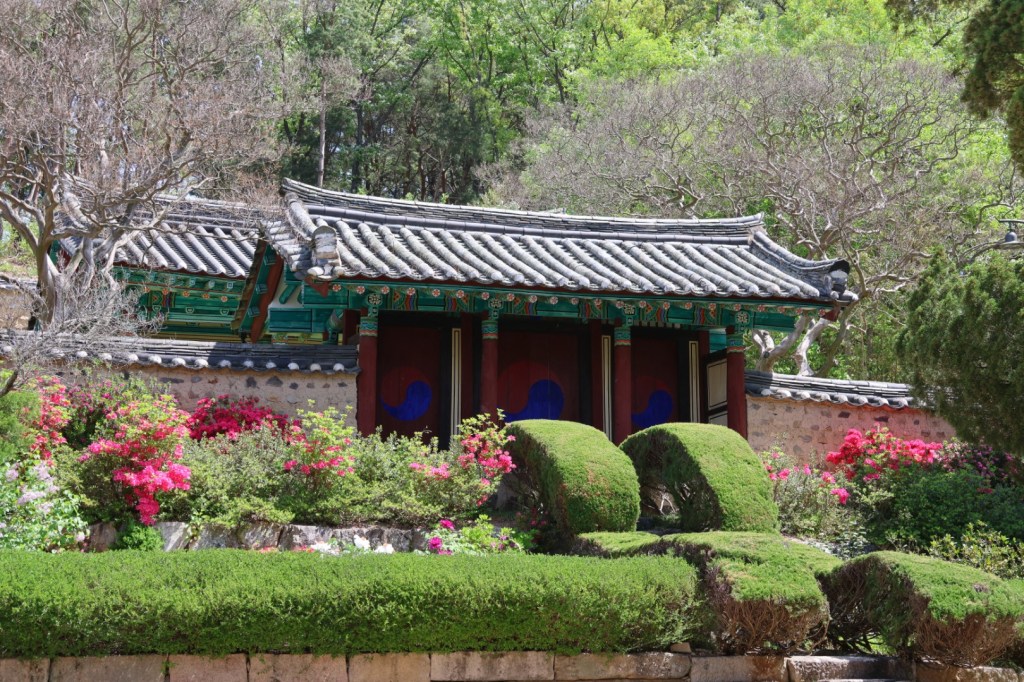
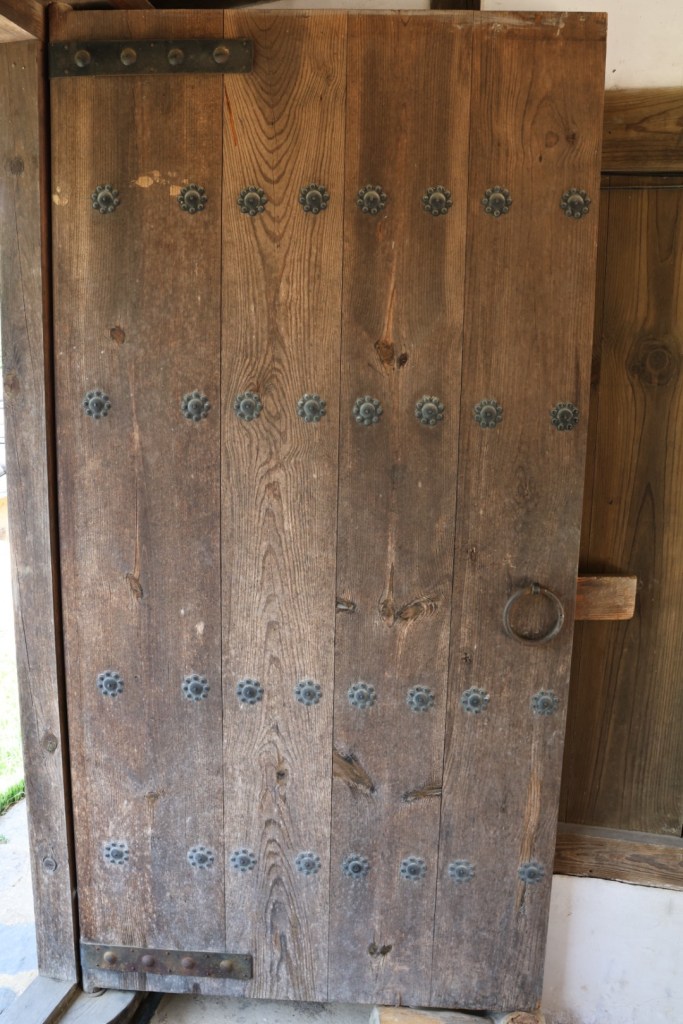
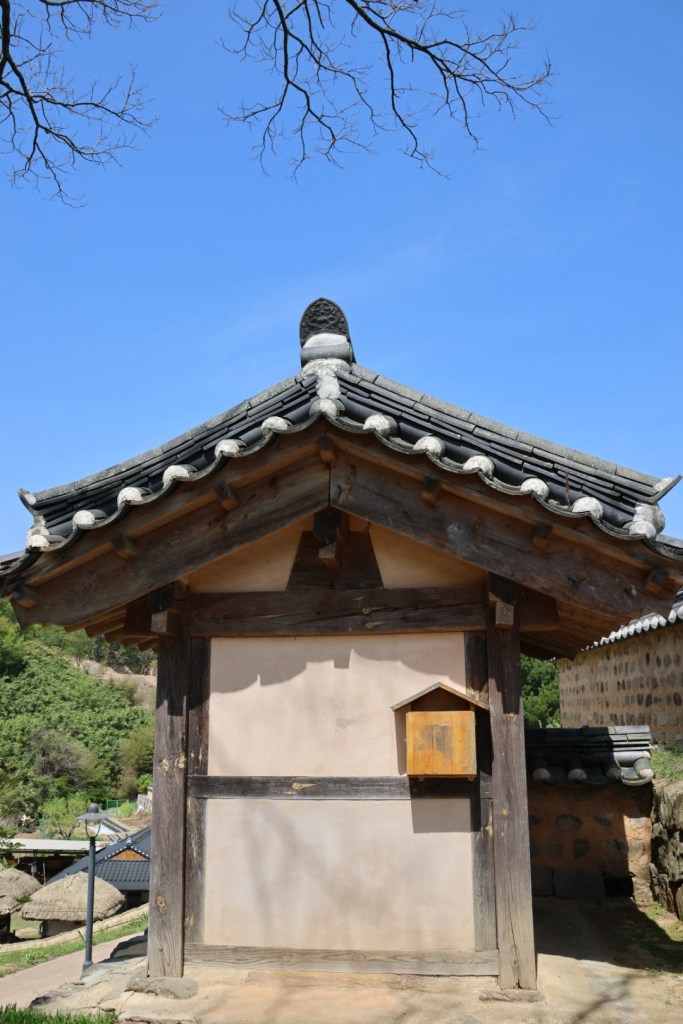
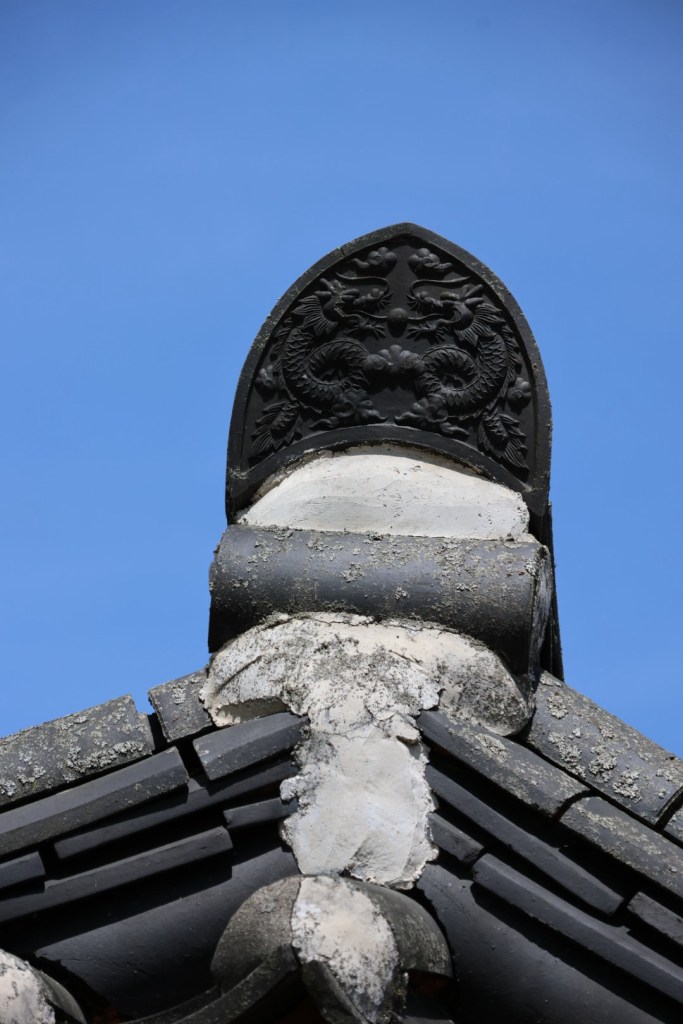
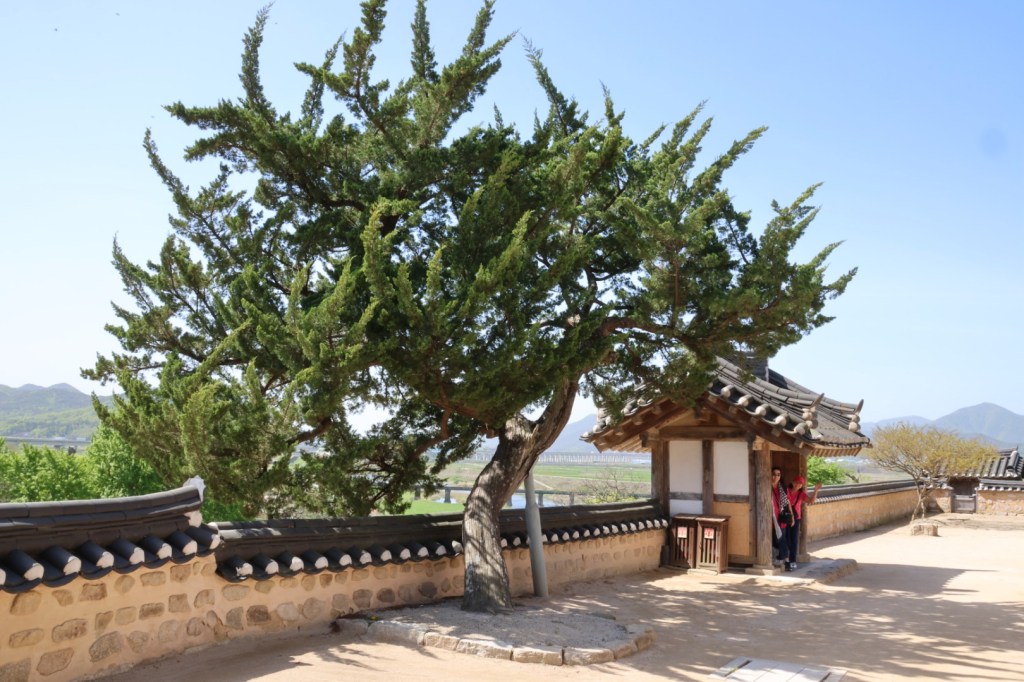
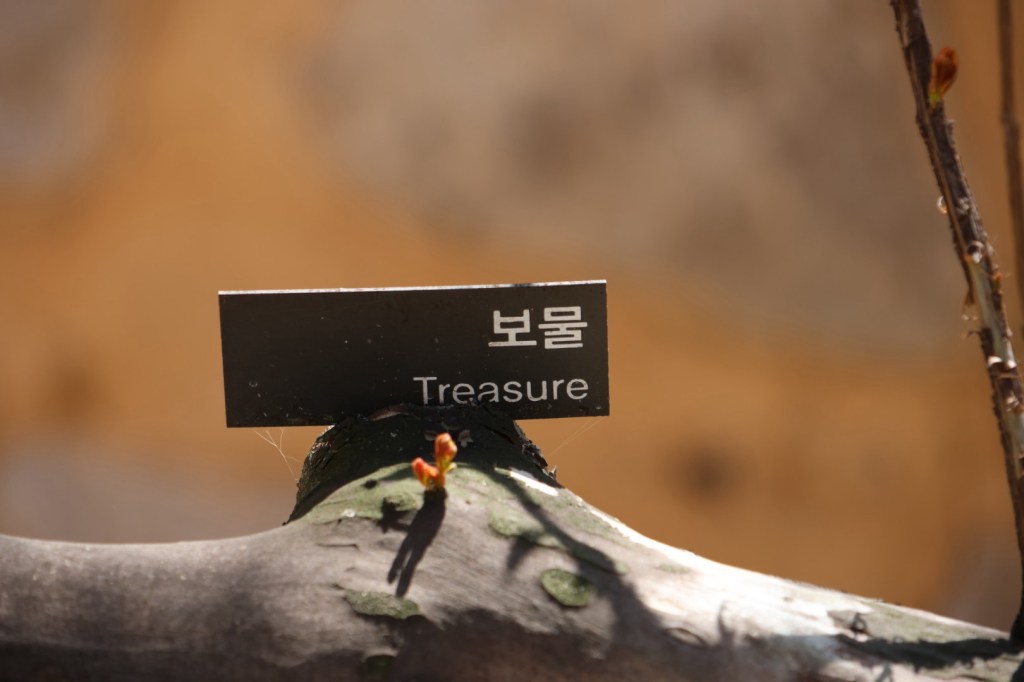
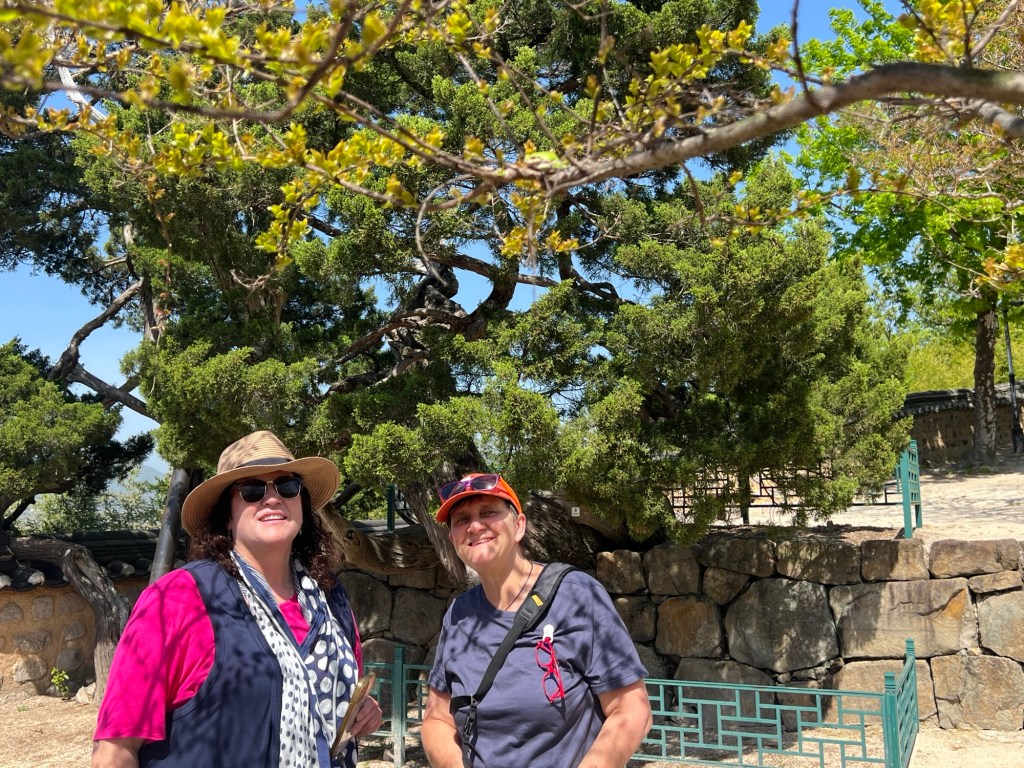
There was an old and humungus Chinese Juniper tree in the garden in front of the Shrine.
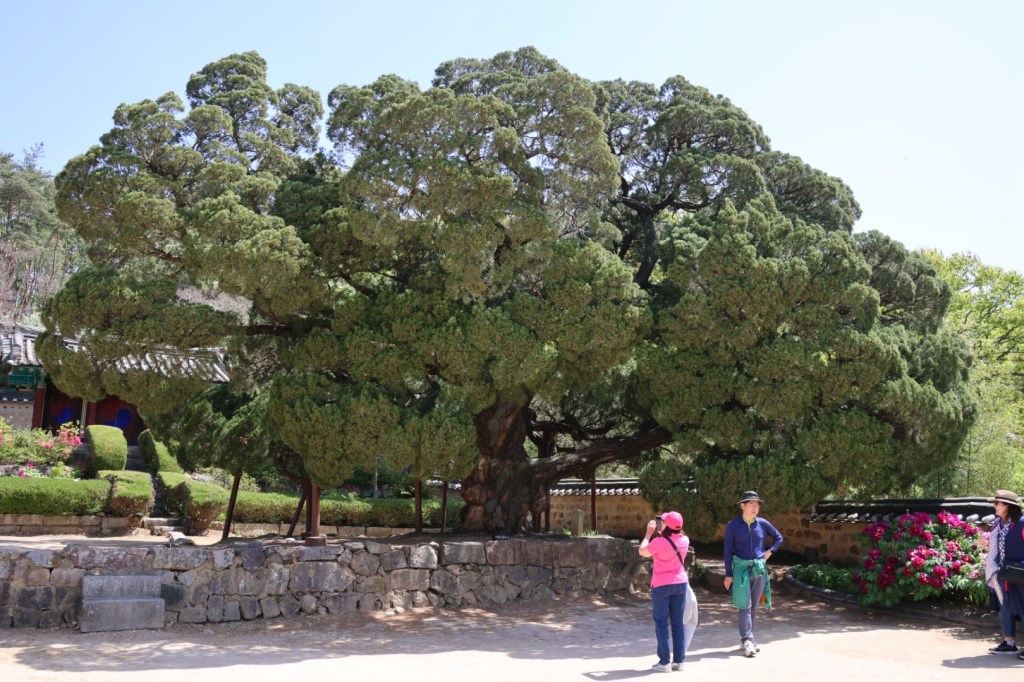
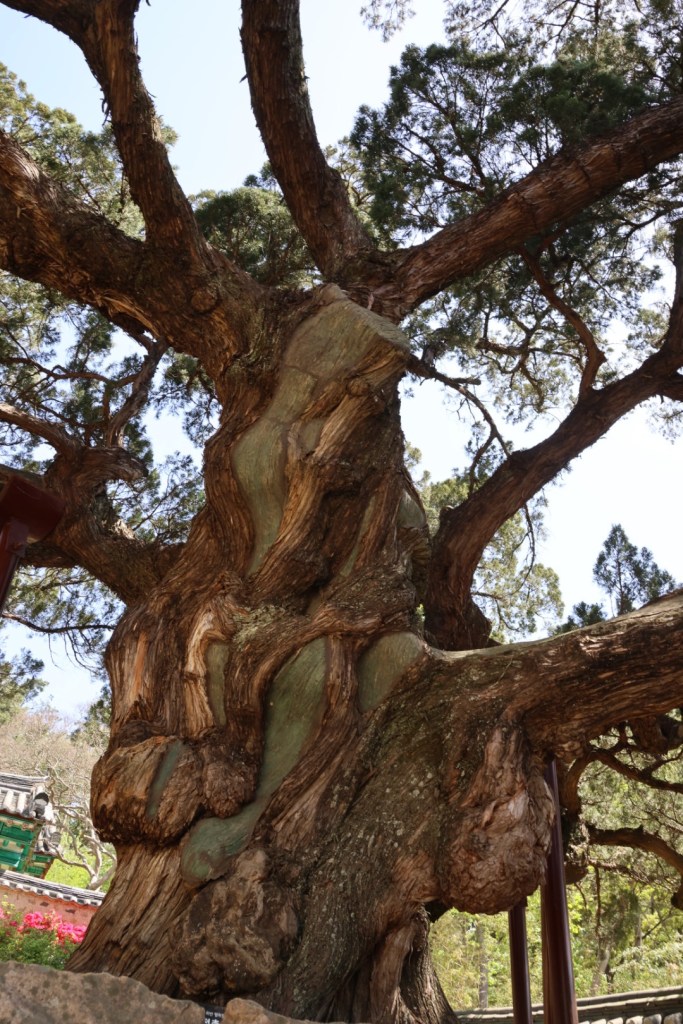
Chinese juniper uniperus chinensis L.) is a coniferous evergreen tree that is highly tolerant of pollution and is commonly planted in gardens and parks. Its wood is popularly used as a material for sculpture and furniture, as well as incense in rituals due to its strong scent. It is called “incense tree” in Korean.
It is said that this tree was planted by Son So (1433-1484) at the same time as the construction of the head house in the mid-15th century
The trunk splits off into three large branches at a height of 90 cm, then continues twisting upwards, before splitting again into three more branches above that. The total diameter of the tree and its foliage is 12 m. The tree is very healthy, and its balanced shape was just perfect.
The village had heaps to look at and kept us busy looking and snapping pics for twice the time Alex had slotted. The fact that the village was pretty much how it has been for hundreds of years and has people living and working there made it a fave for all of us.
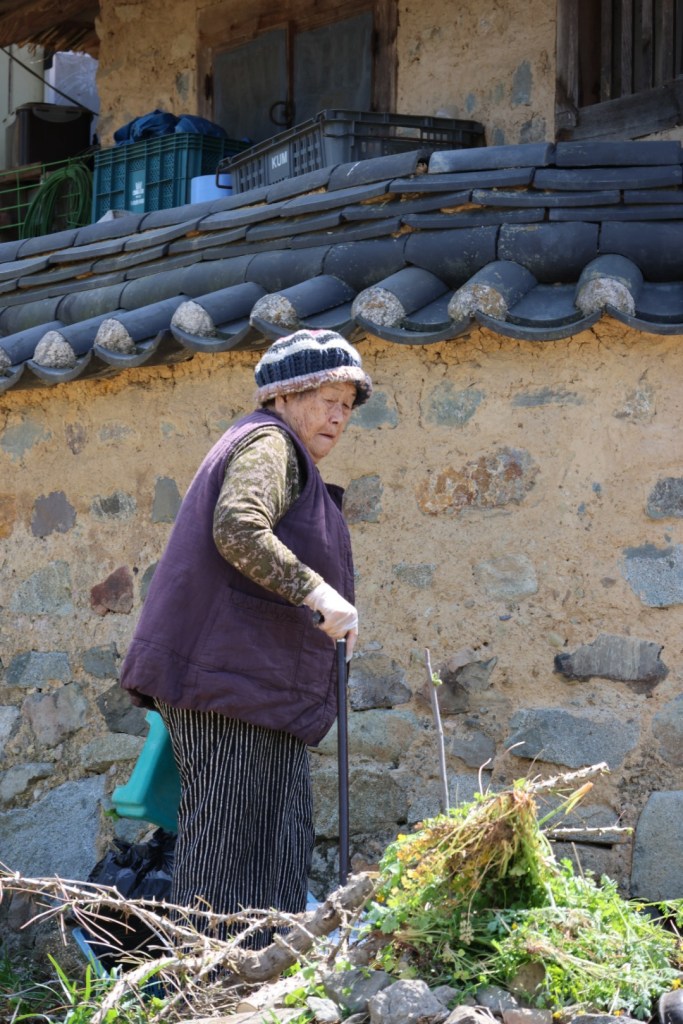
That and the fact that it’s a little bit of the tourist route – with NO buses in the carpark AND it is a UNESCO listed site.
Then it was back into the Van to drive a few hours to Sokcho.
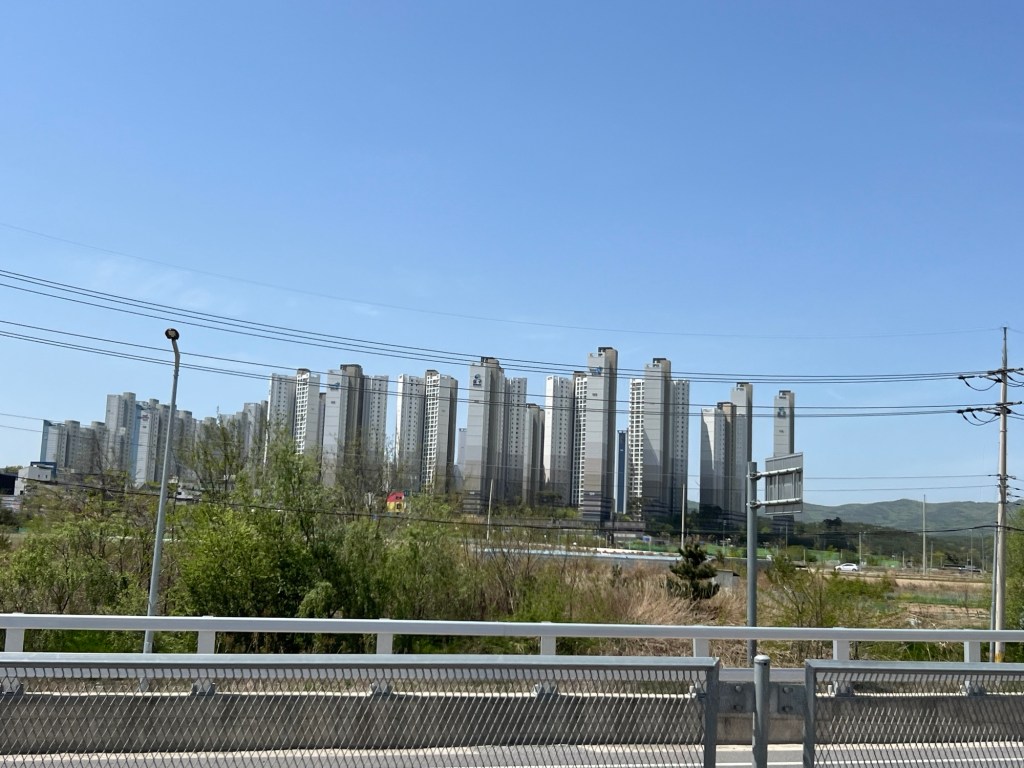
The drive was really scenic. Lots to see along the way.
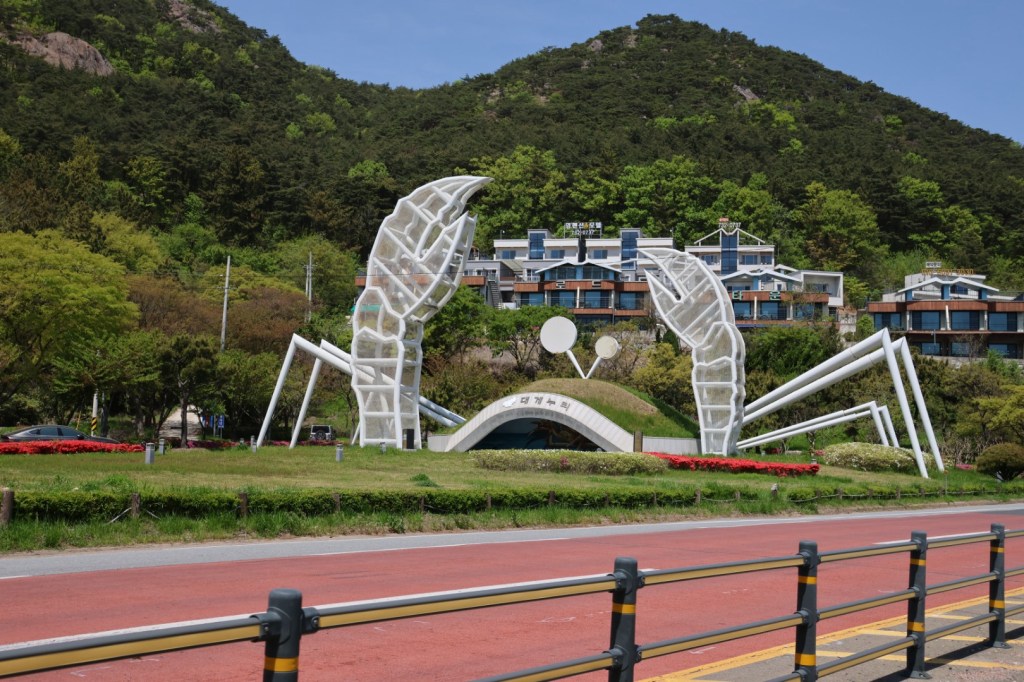

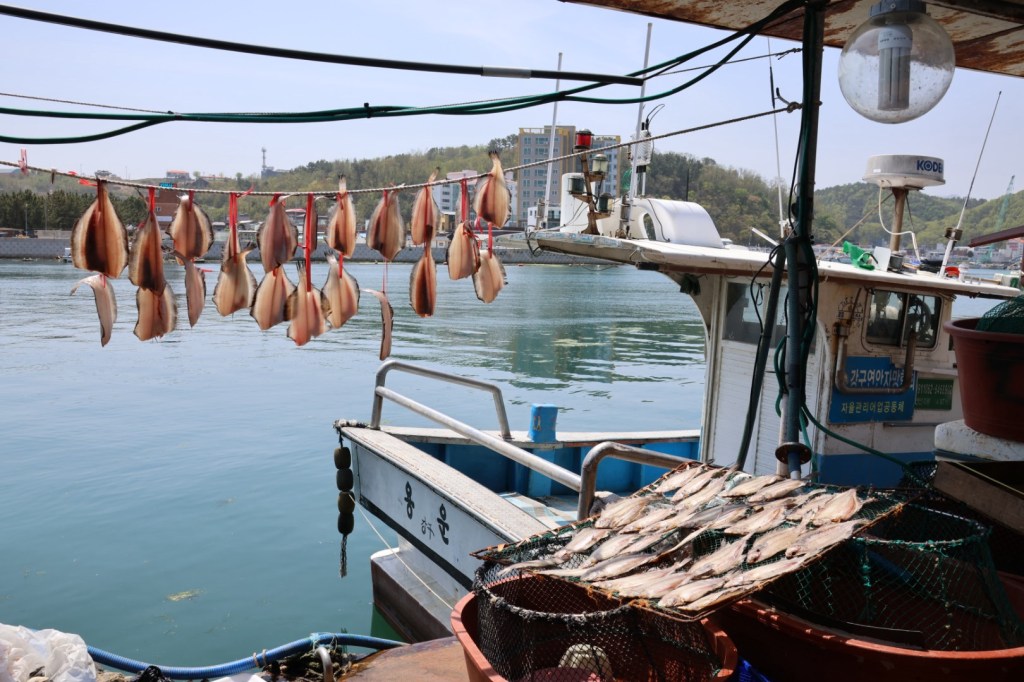
We popped into Ganggu port for lunch stop. 30 minute break for Alex. A chance for us to wander around and find something to eat and check out the traditional fish market.
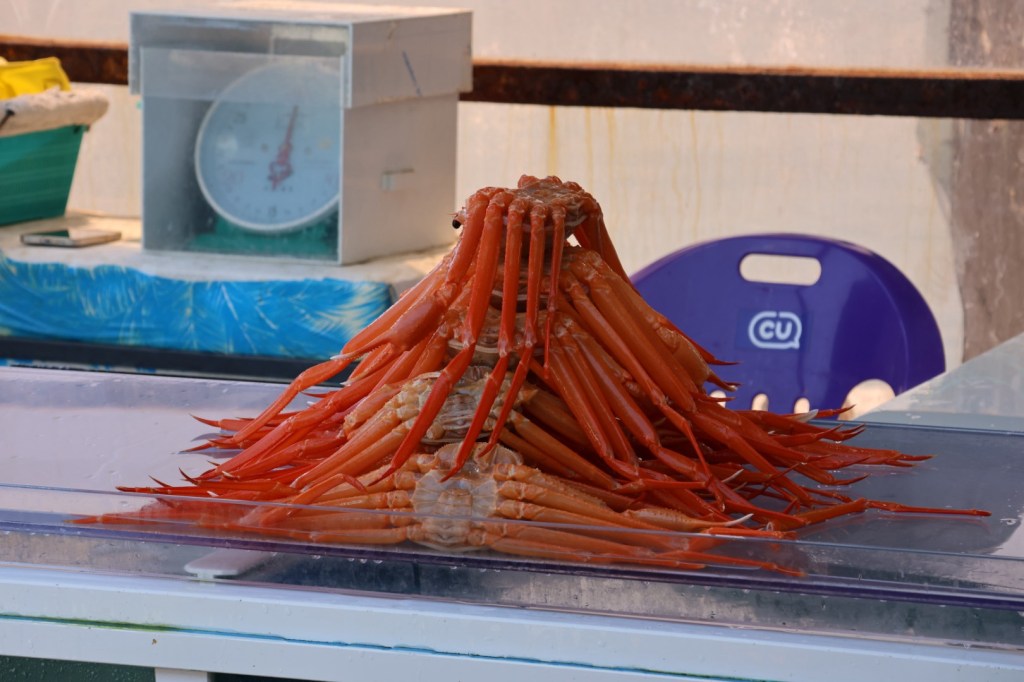
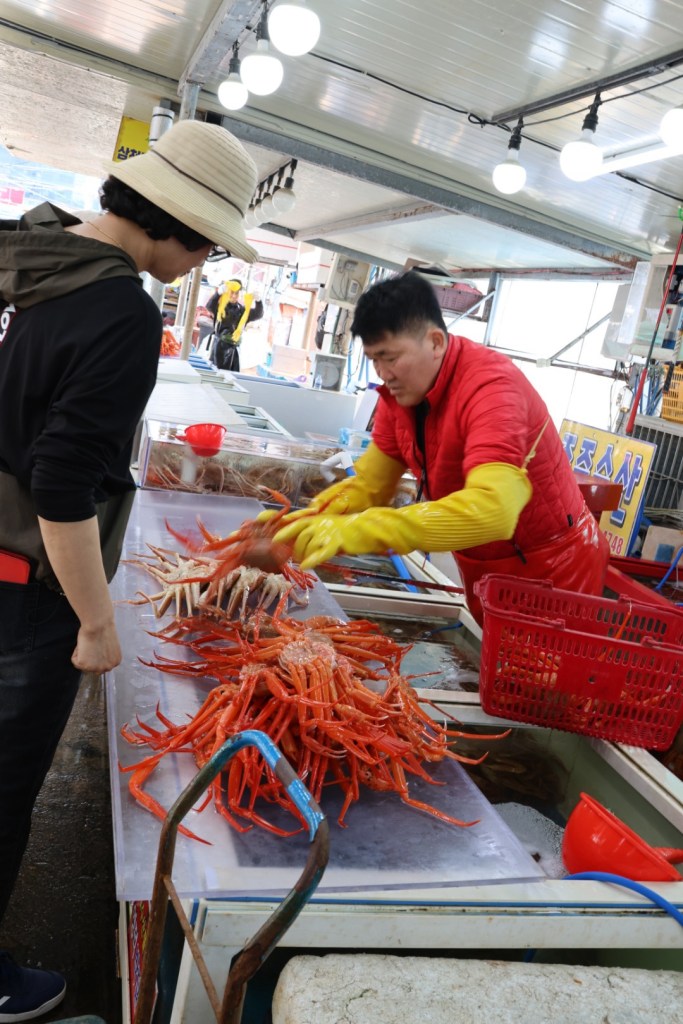
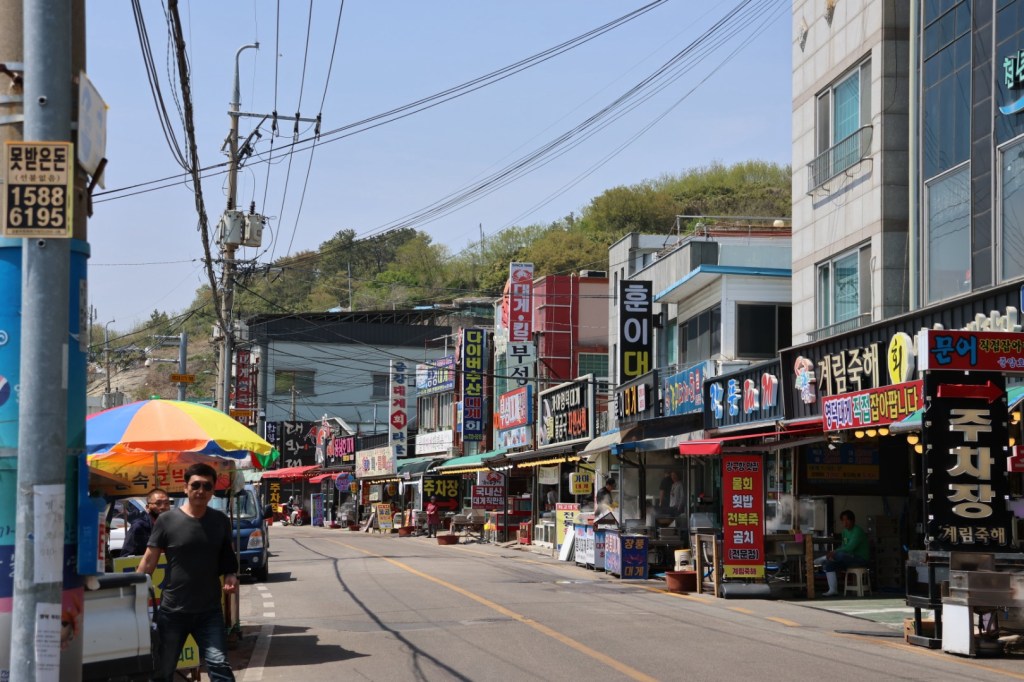
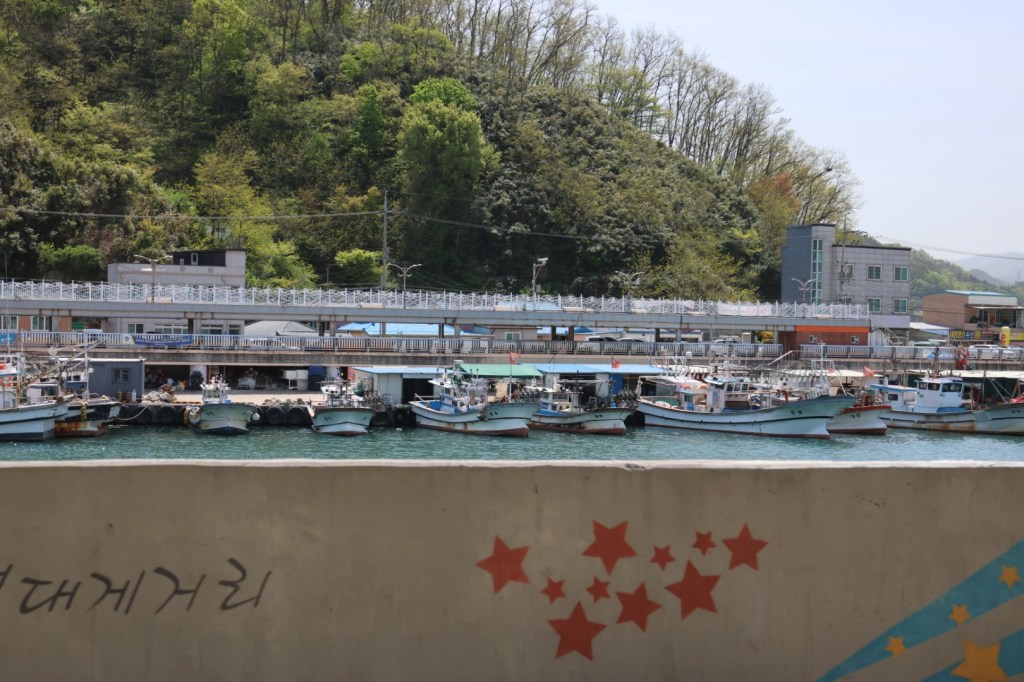
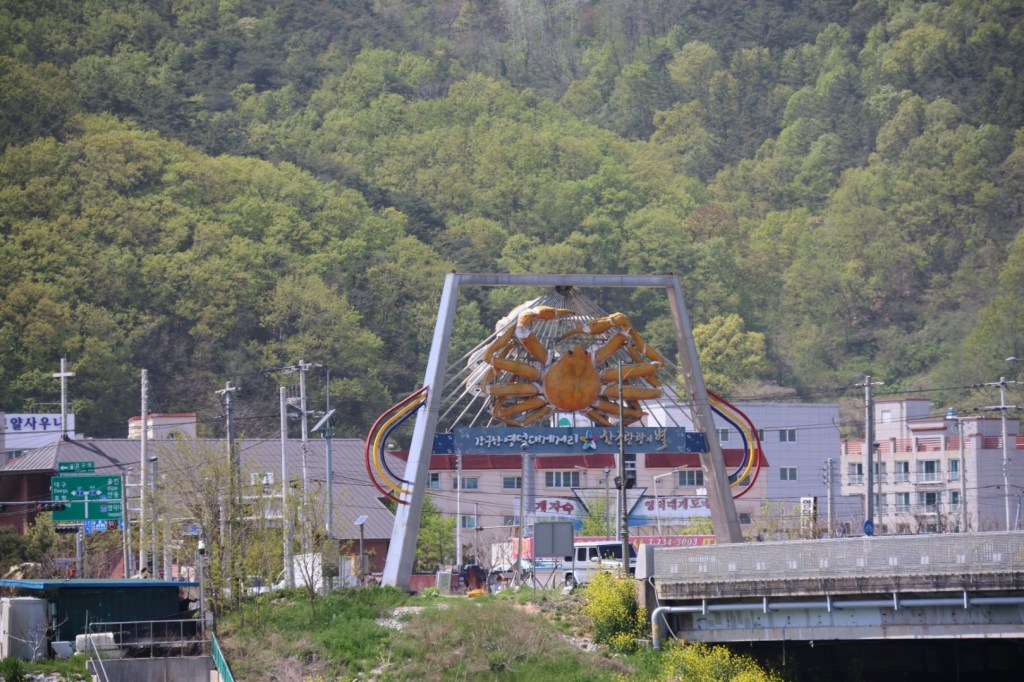
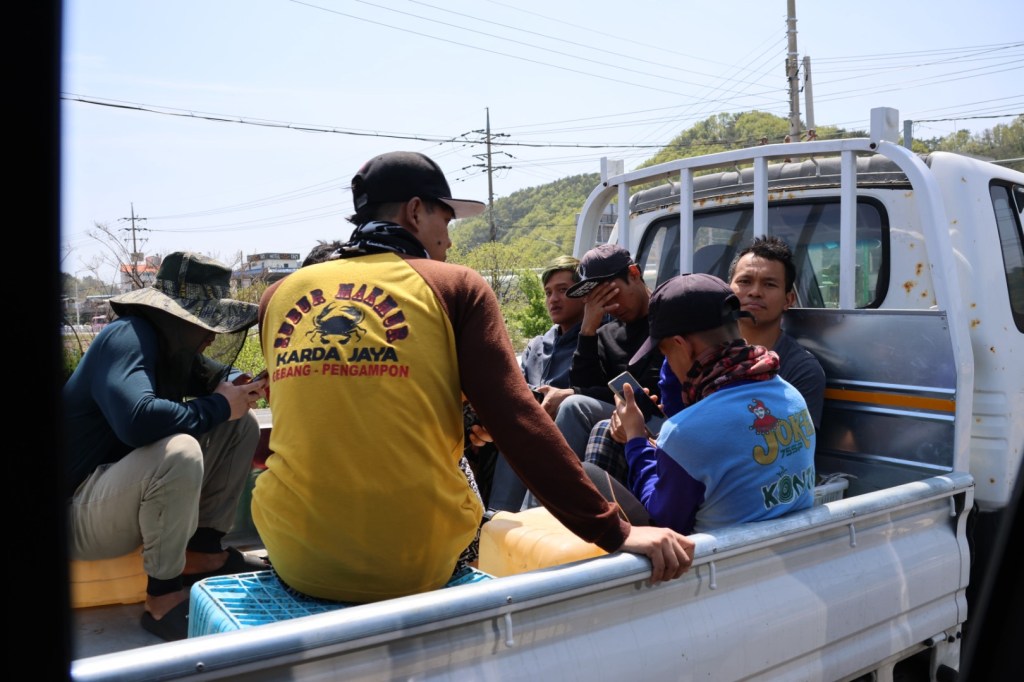
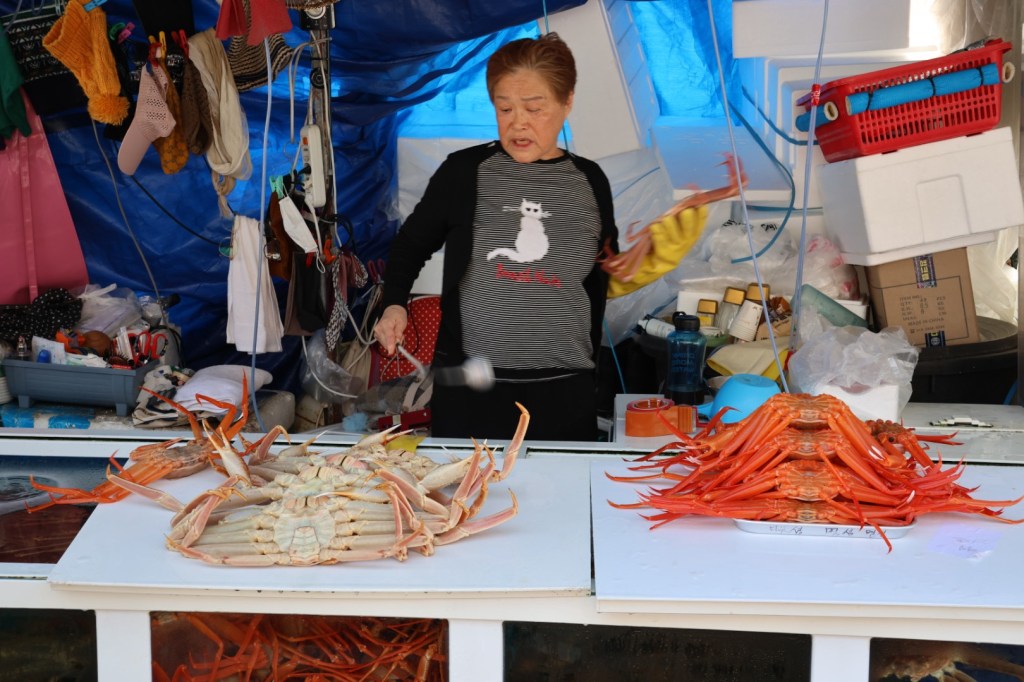
There were Crabs everywhere – thousands of them.
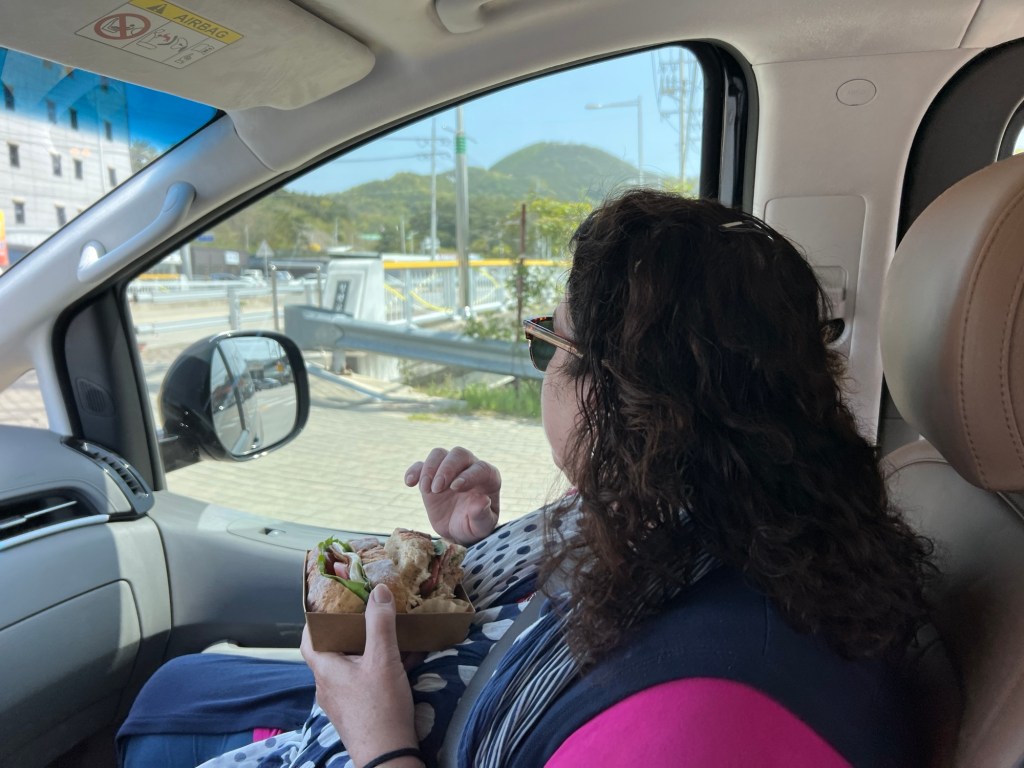
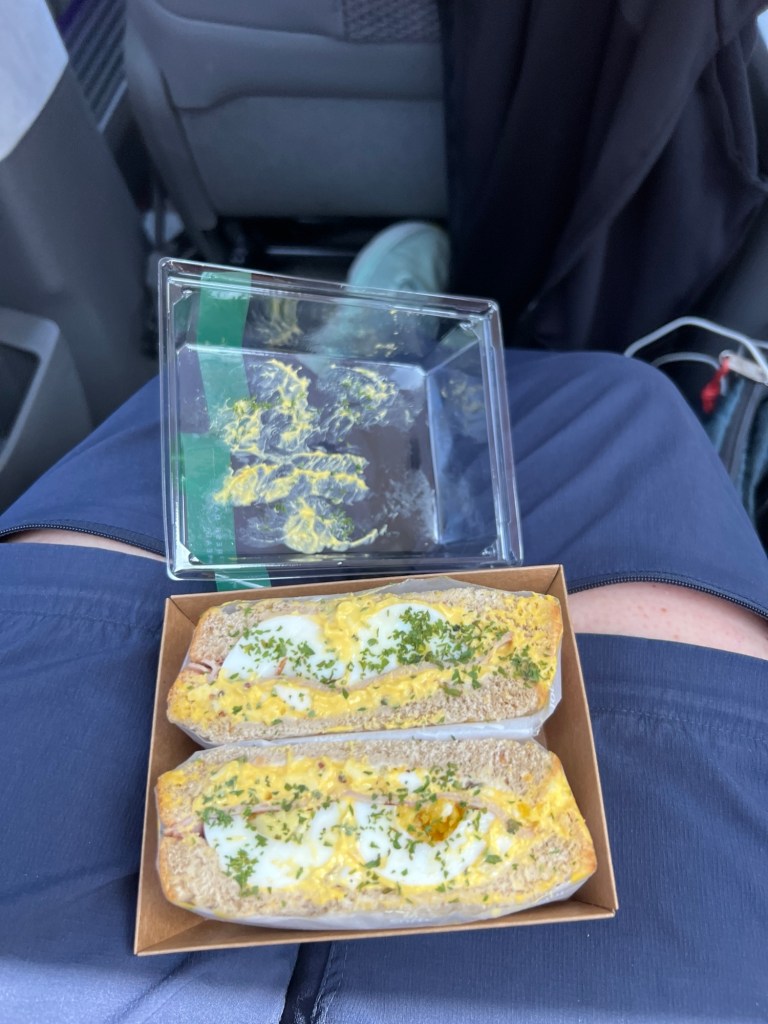
Alex phoned us shortly after dropping us to say that it would be difficult for us to find the something simple we’d requested for lunch and he cut his time off to 20 minute and took us into Yeongdeok-gun to a Tour Le Jours bakery for lunch. We are a bit earlier in the day – so more range of sangas and coffee and some little donut balls to share.
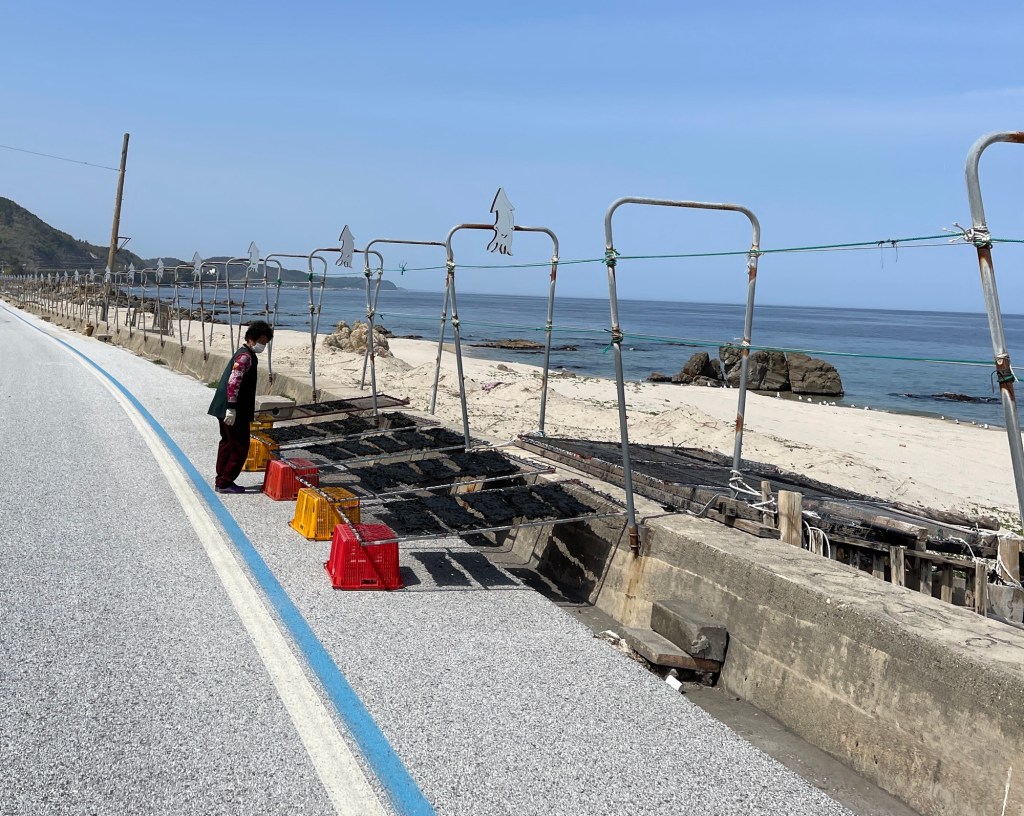
We were cruising along the highway past a big gold Buddha and I saw a sign pointing to Squid St, asked Alex about it, so he detoured off the highway to drive along the coast road into another little fishing village and explained that previously this location was known for squid. All along the street are drying racks for the squid. Unfortunately, North Korea signed a contract with China’s fishing fleet for squid fishing off the East coast of North Korea. They sail down the west coast and around past Manayang, to reach the squid along the east coast. On route the Chinese fishing fleet have decimated the squid industry at Mangyang and the drying racks are bare.
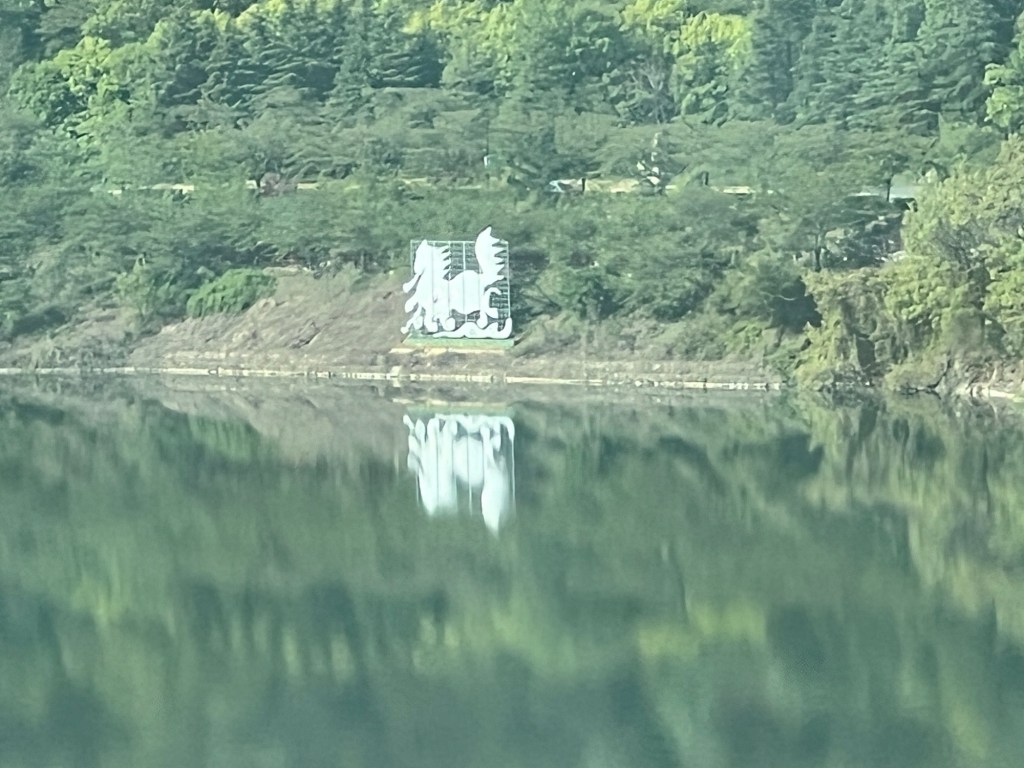
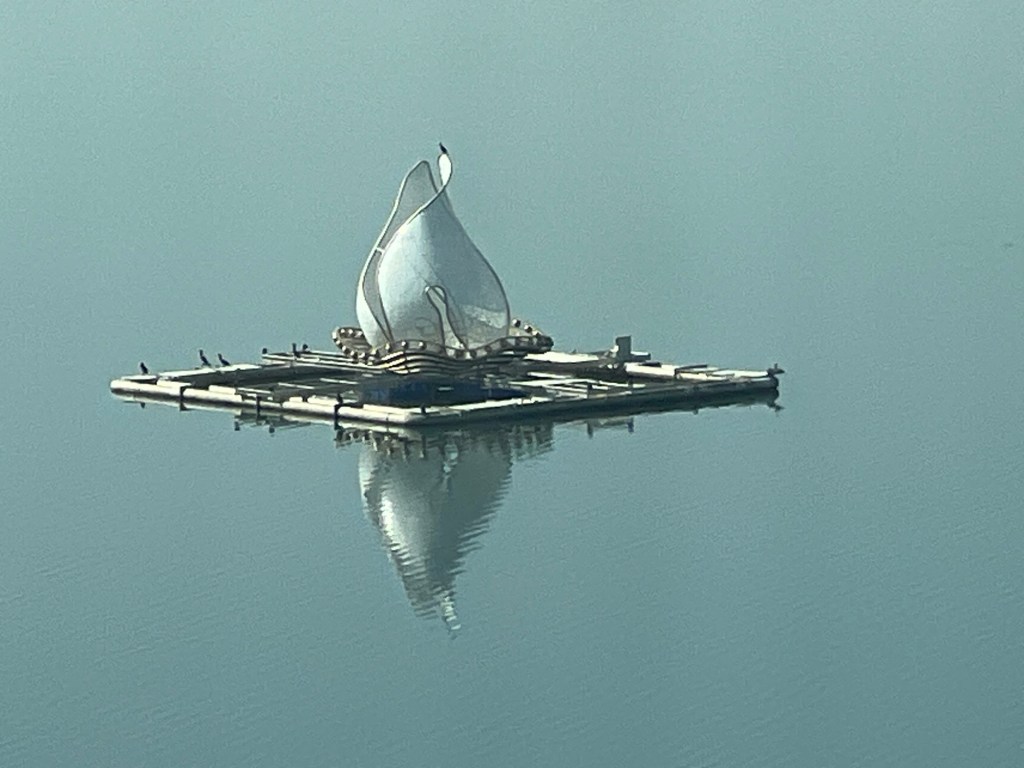
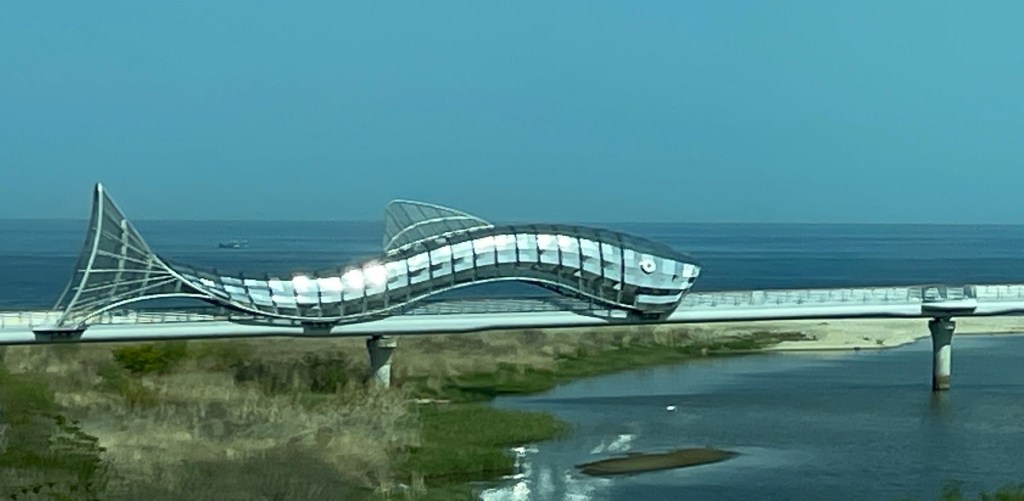
Further along was a fabulous bridge with a salmon either end. This spanned the mouth of a river where the salmon swim upstream to spawn up in the mountains.

We also passed by the city of Gangueng which hosted components of the Winter Olympics eg skating and other sports, while the skiiing components took place in the mountains to the east.
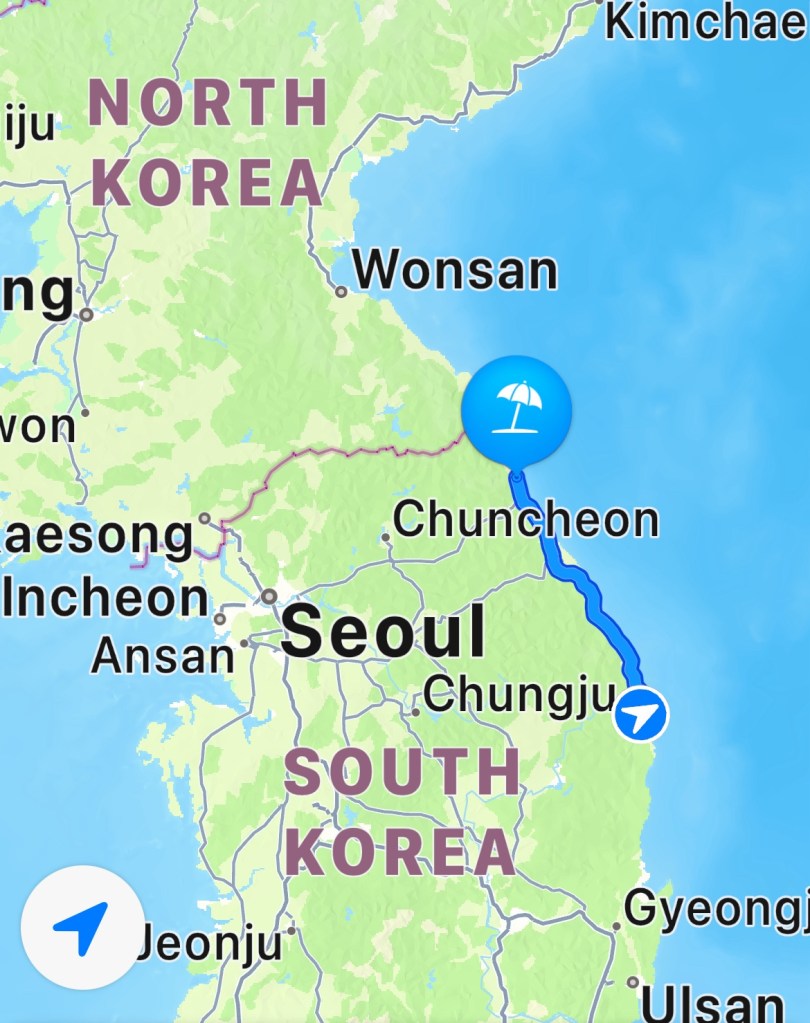
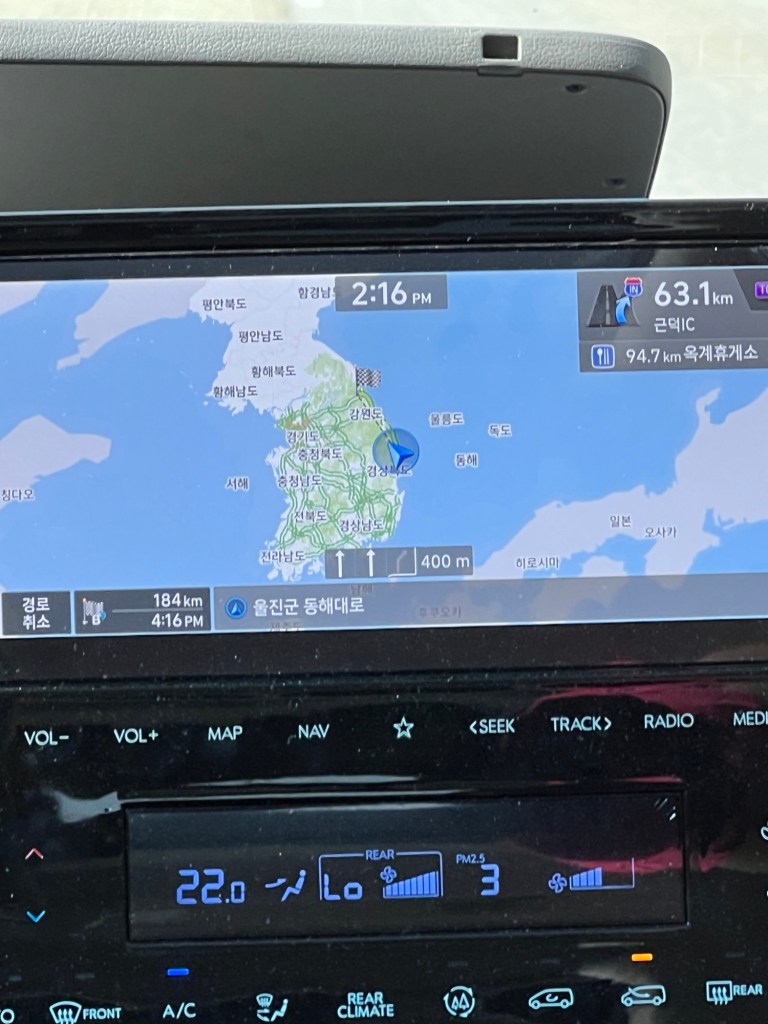
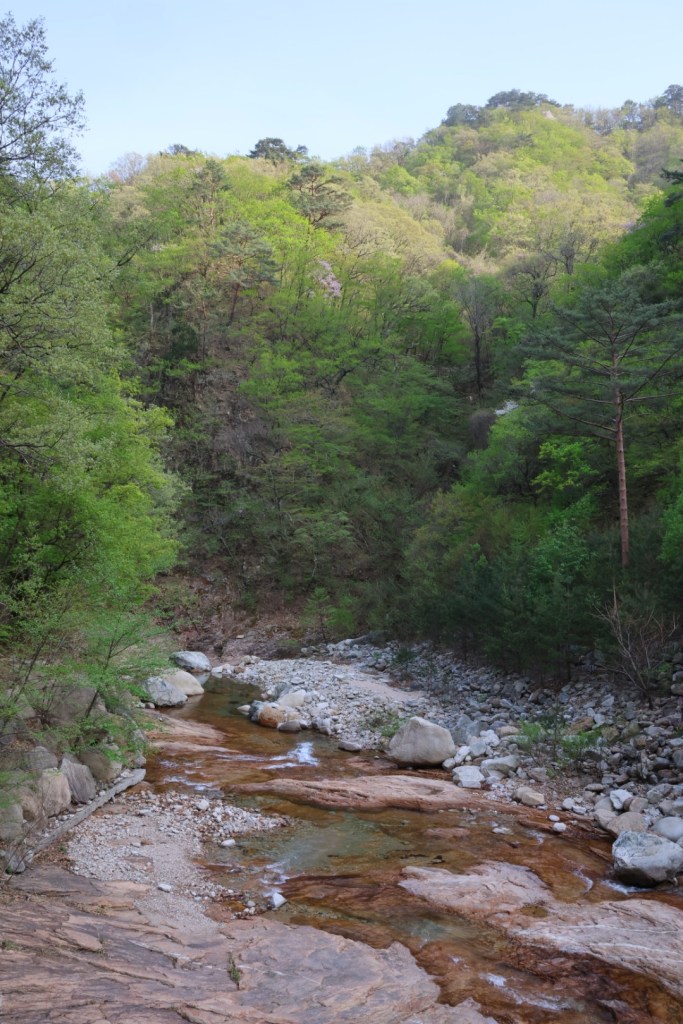
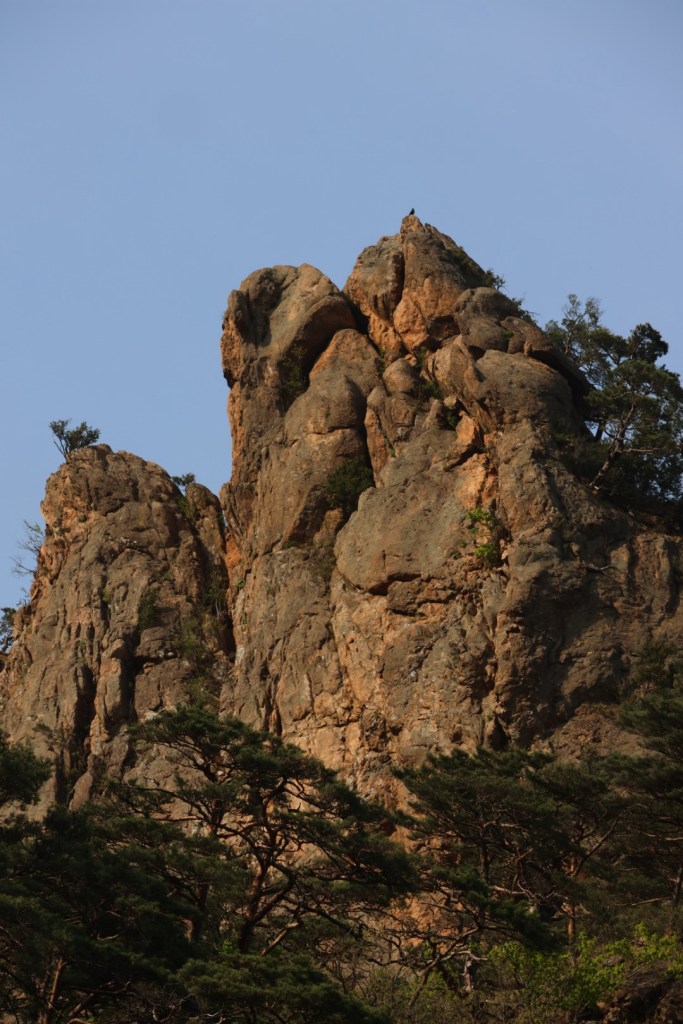
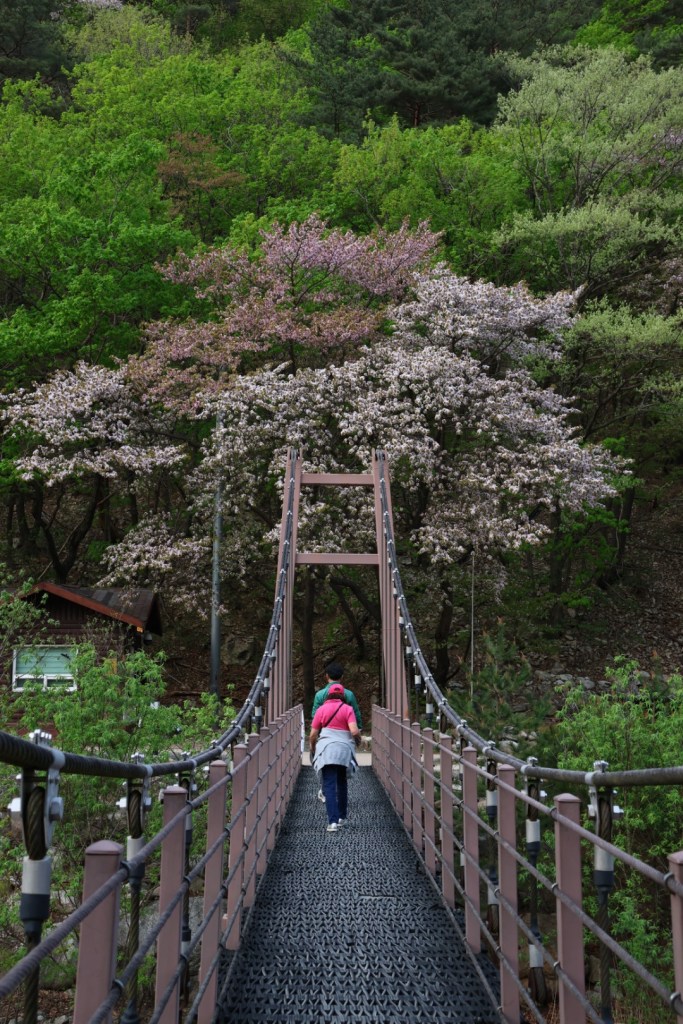
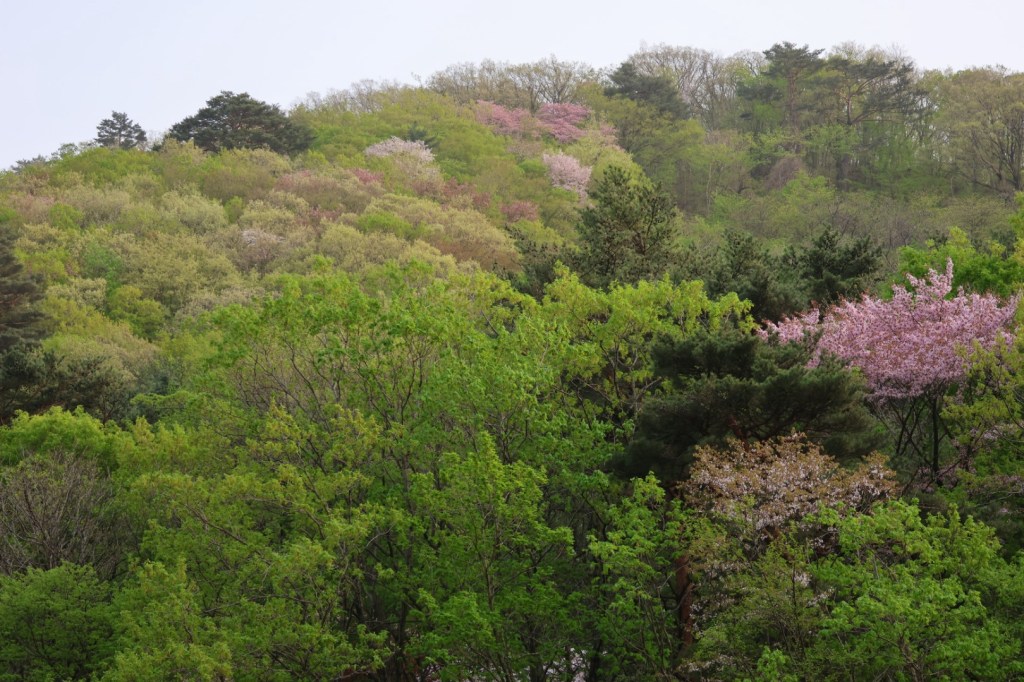
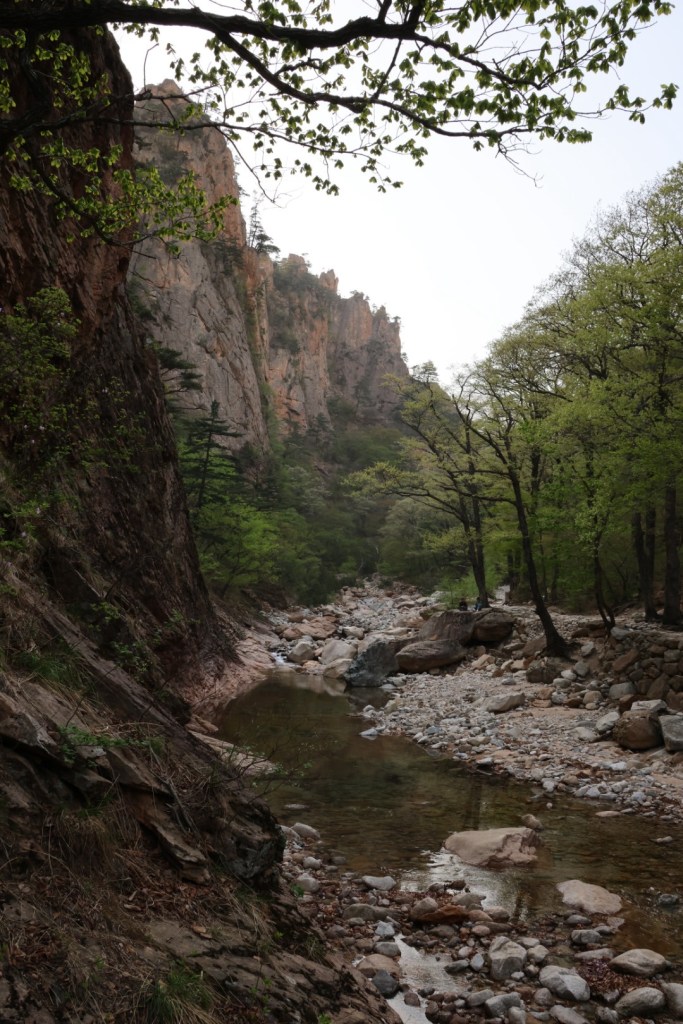
The weather today is quite warm however a less attractive weather day is expected tomorrow, so we are changing up the itinerary and headed to Seoraksan Mountain to do the hike planned for tomorrow. As we neared Mt Seoraksan the mountains became more rugged and were beautifully green with hues from lime green to the deep greens of pine dotted with pockets of pink of cherry blossom.

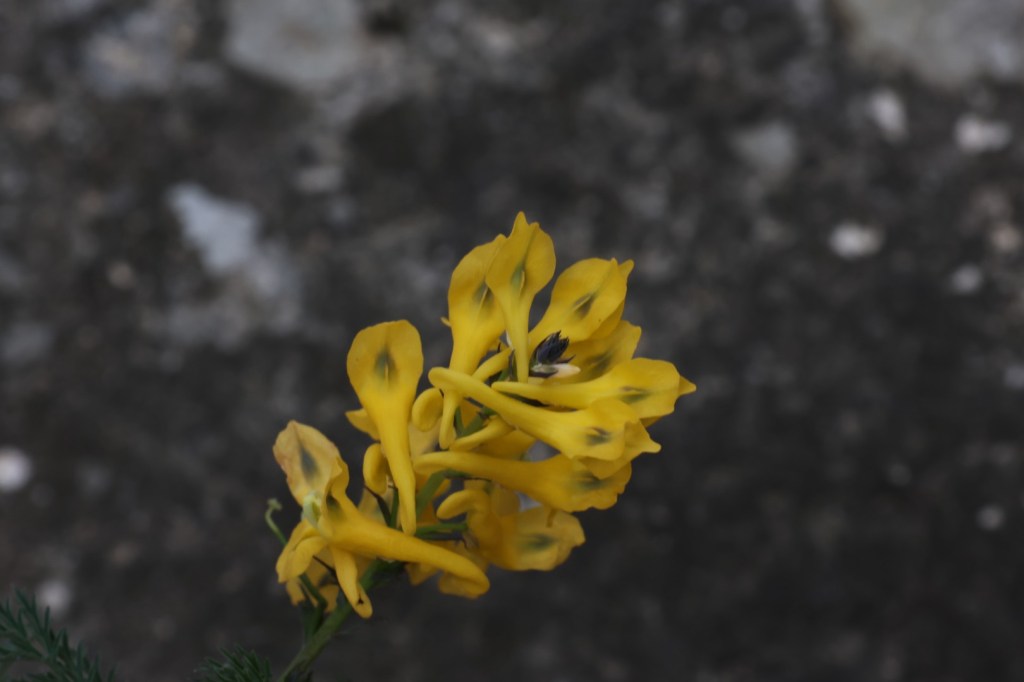
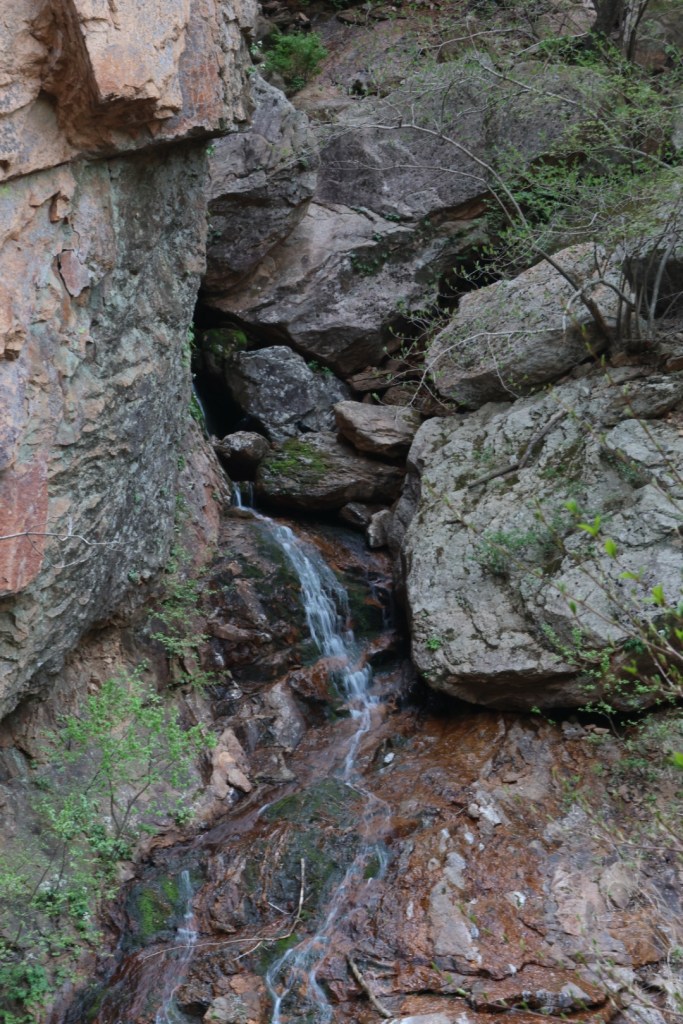
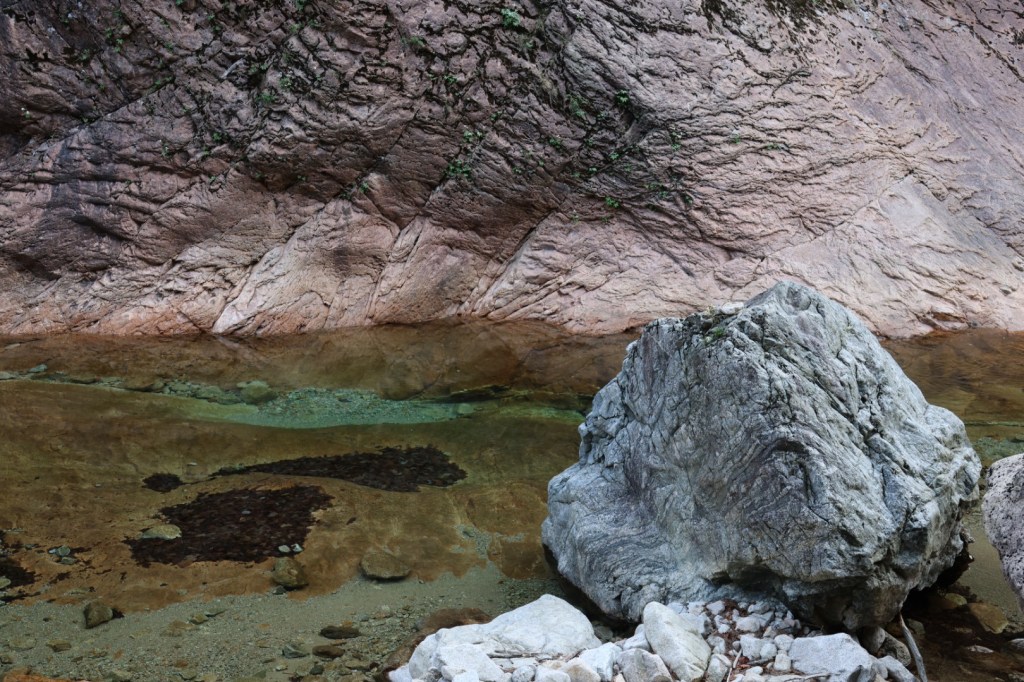
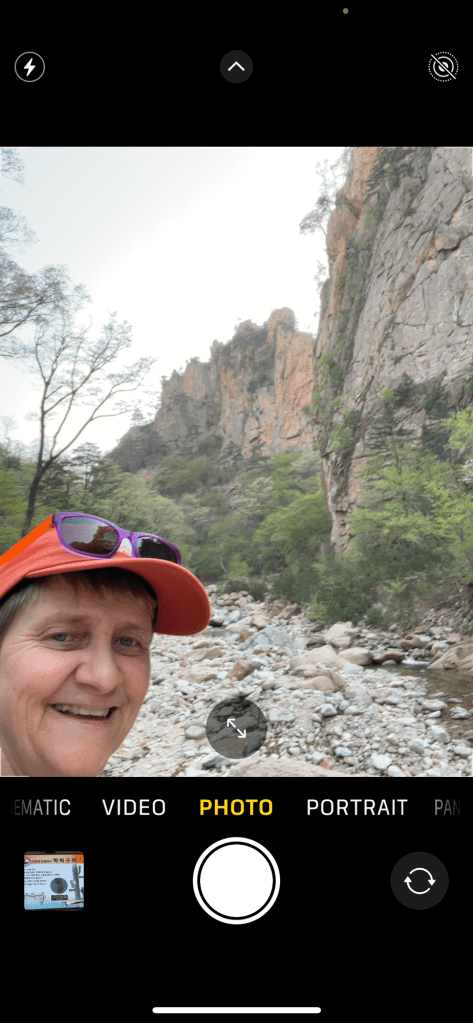
The walk along the creek and up a gorge was fun. Not a lot to see except the trees and rock, with the occasional flower or stream shot. Very beautiful and nice to be out in nature without bus loads.

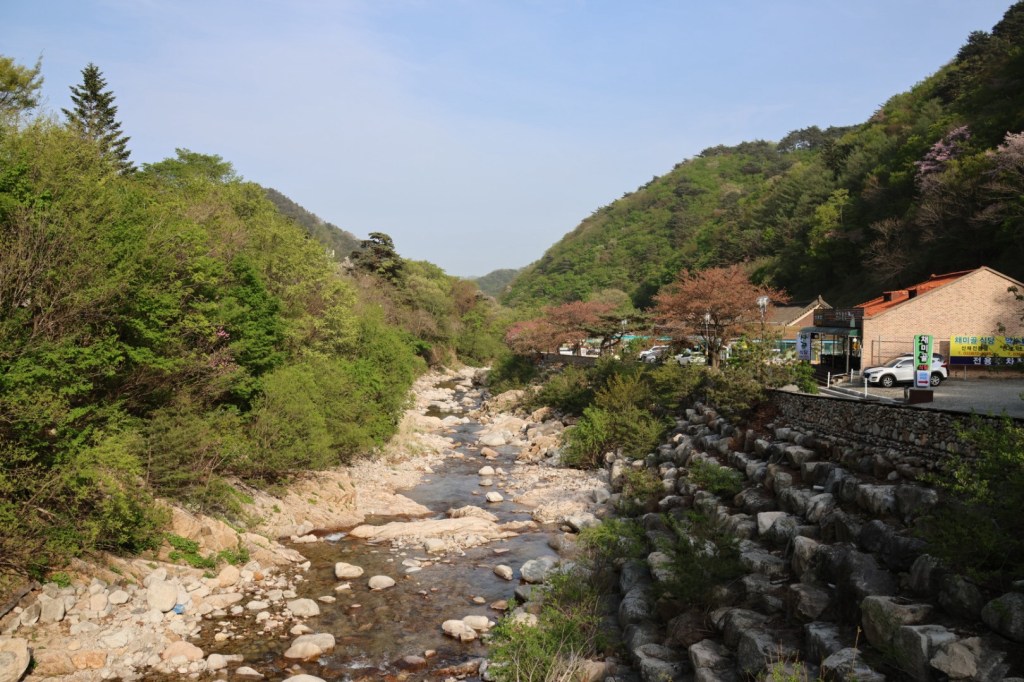
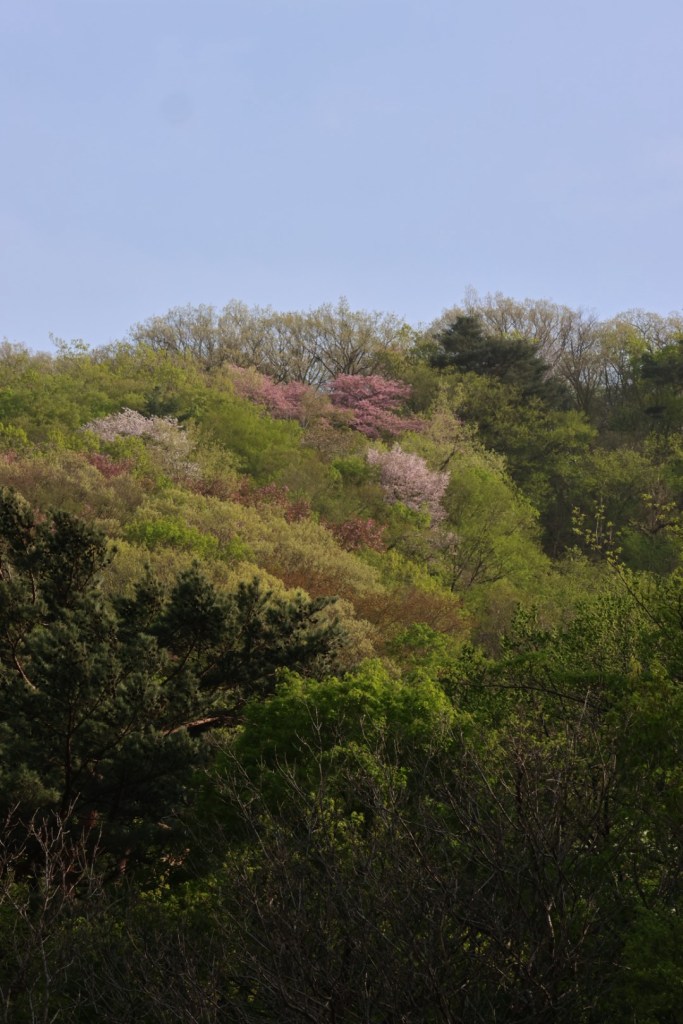
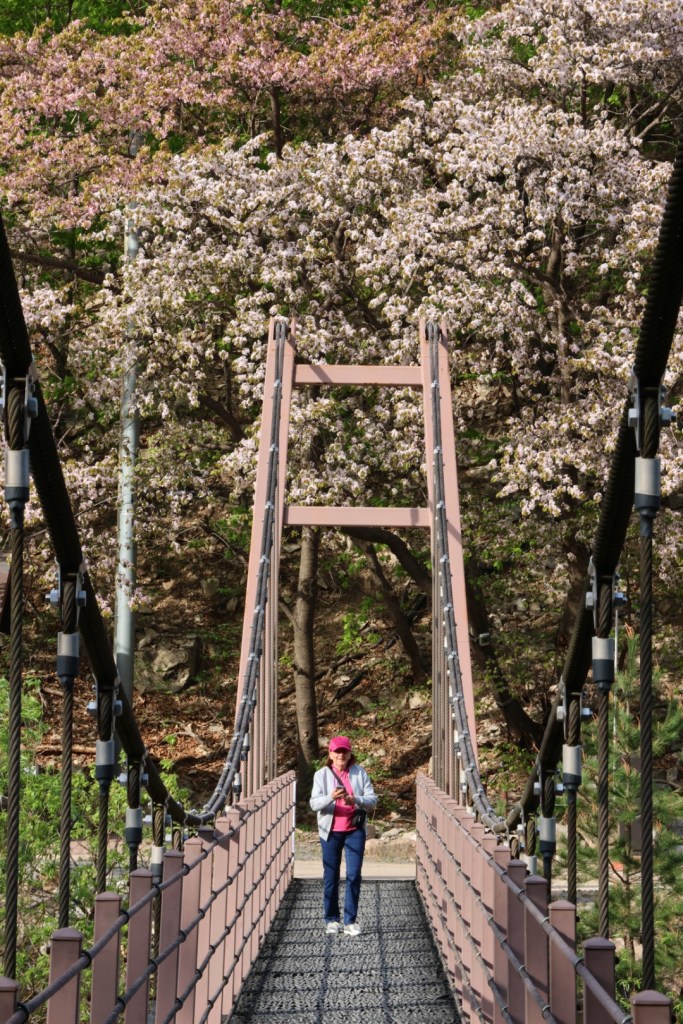






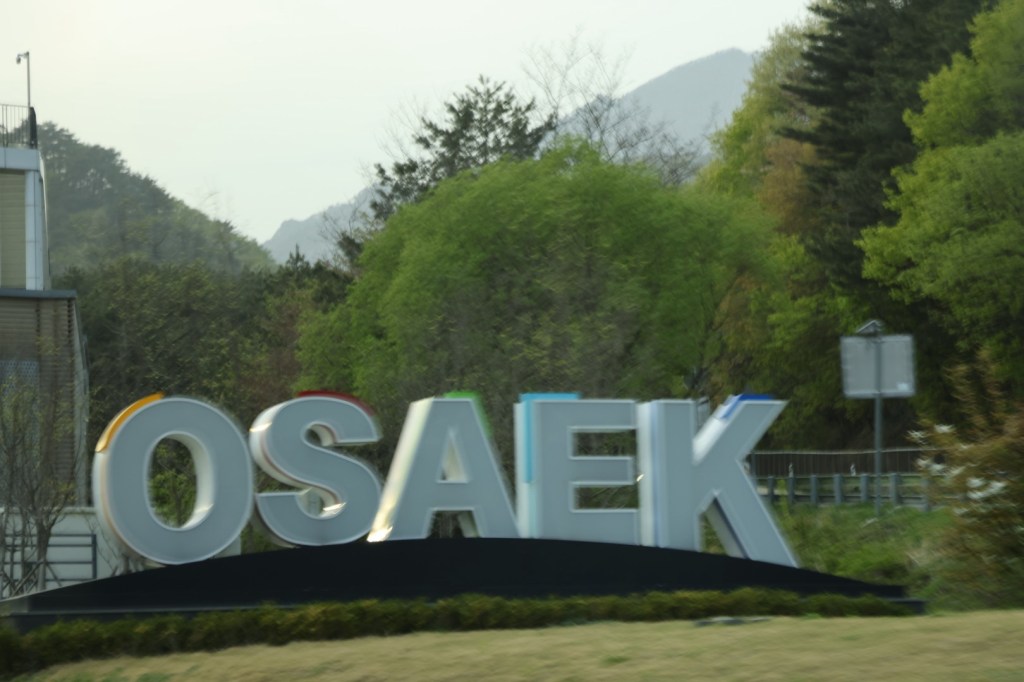
Then the final leg into Sokcho beside the sea to check in a Lotte resort. Big seems to be the size of these resort hotels. There was a huge Cassia and Lotte was closely rivalling it for largesse.
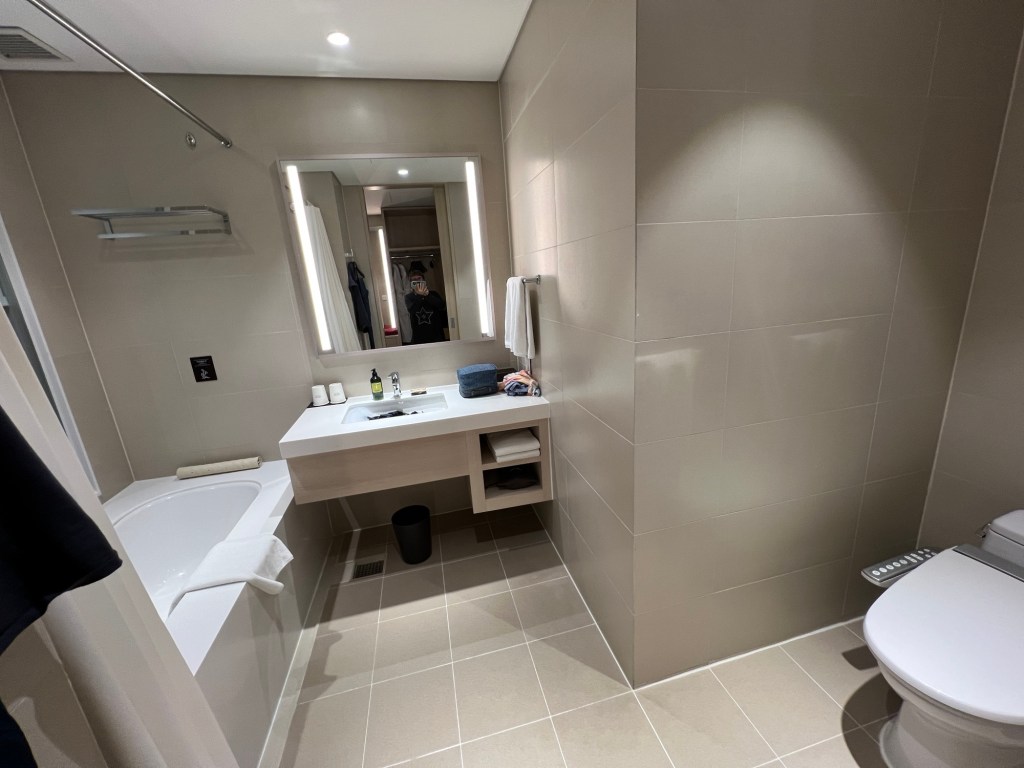
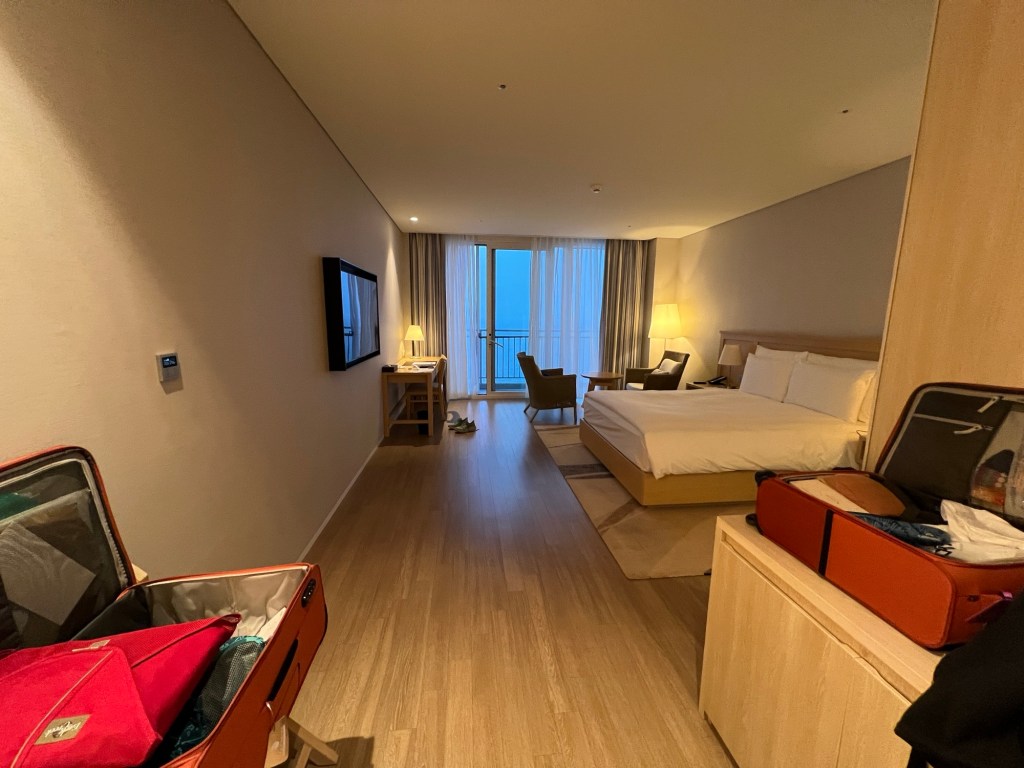
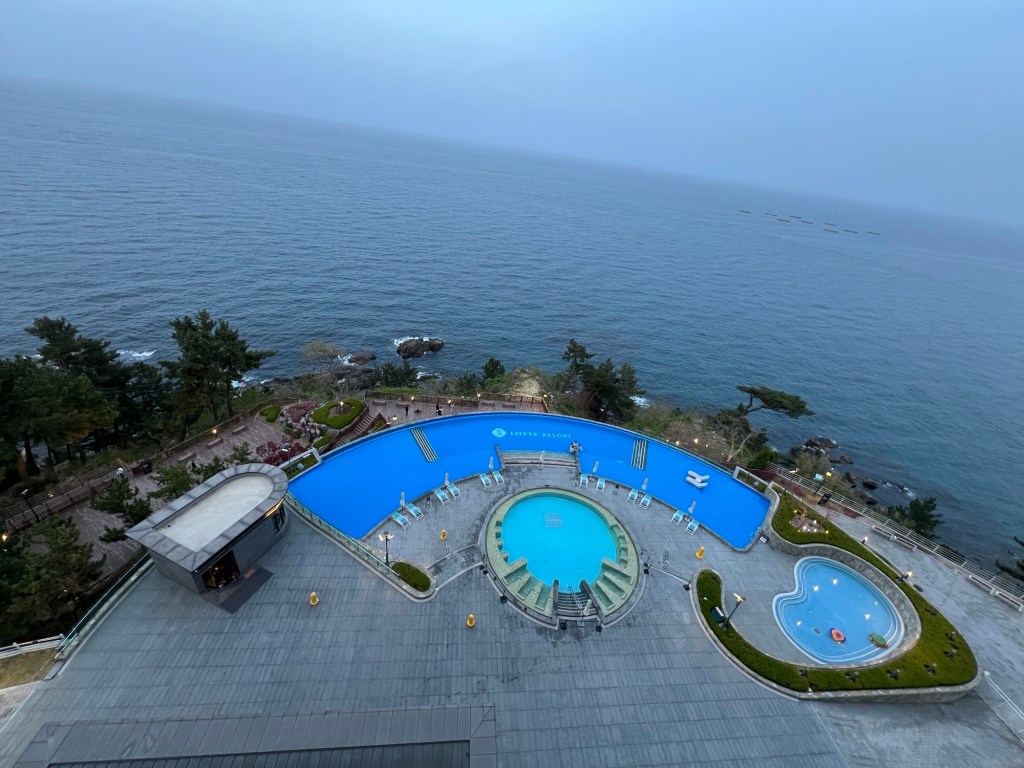
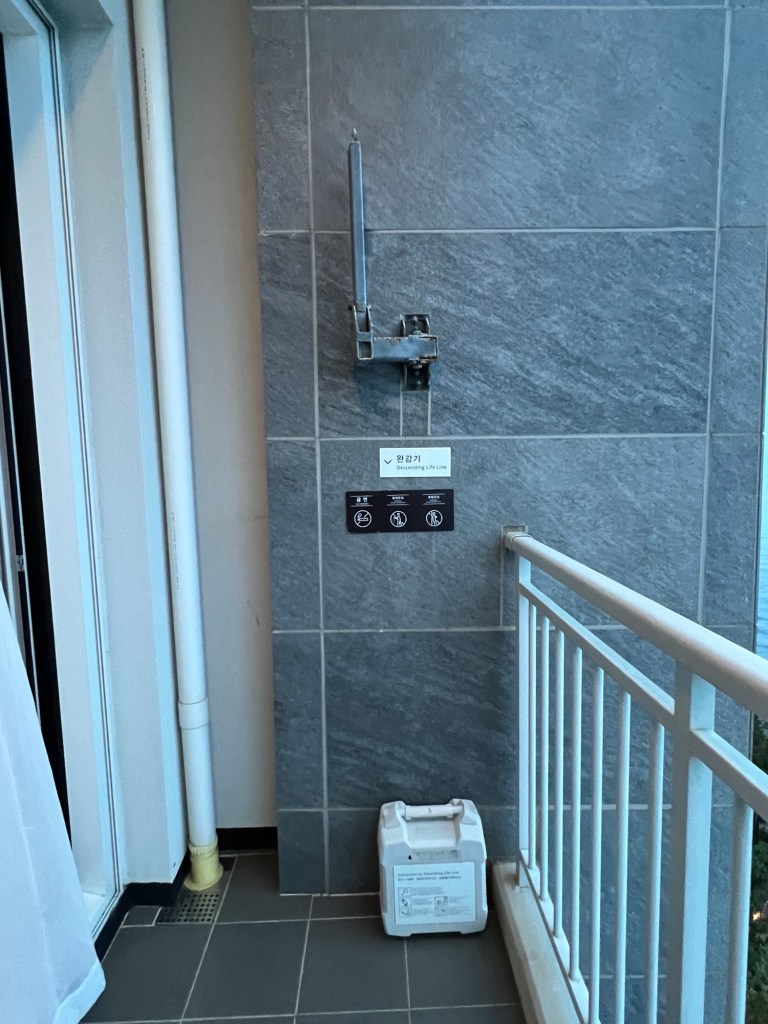
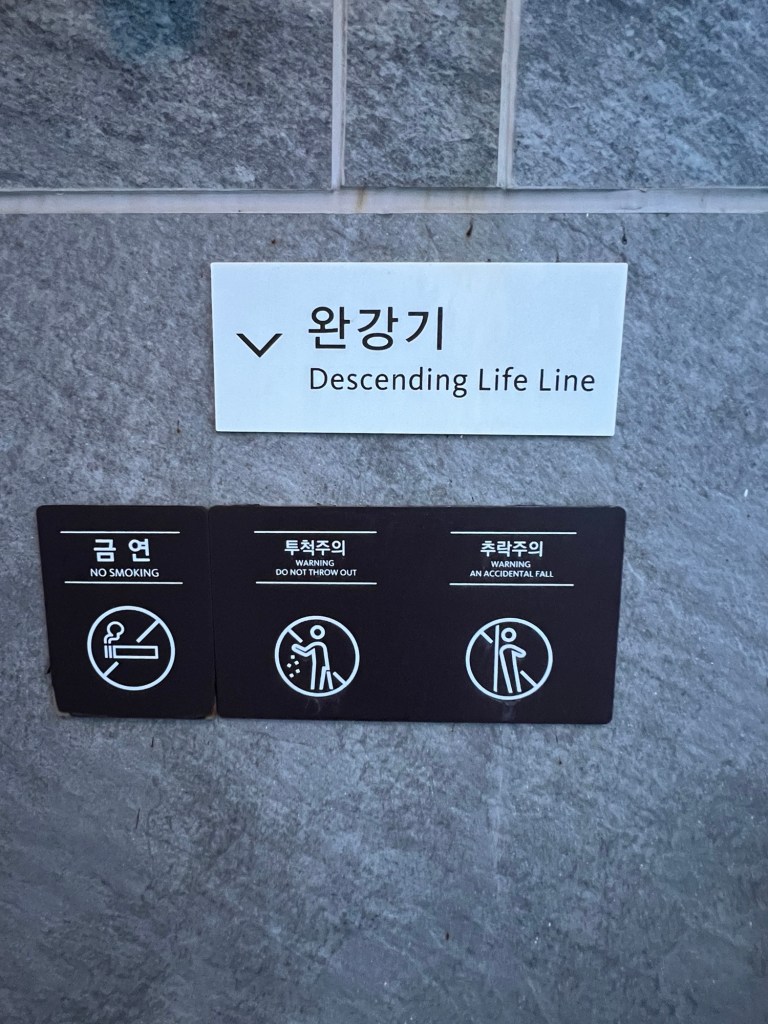
After a break to get changed we consulted the front desk for a seafood restaurant nearby. We were keen to try the crab that is prevalent around here. Good tip and taxi to Myeongga sashimi restaurant, whose brochure promised fresh crab and live fish sashimi at the lowest price in Sokcho.
We will impress you with the best service AND they did.

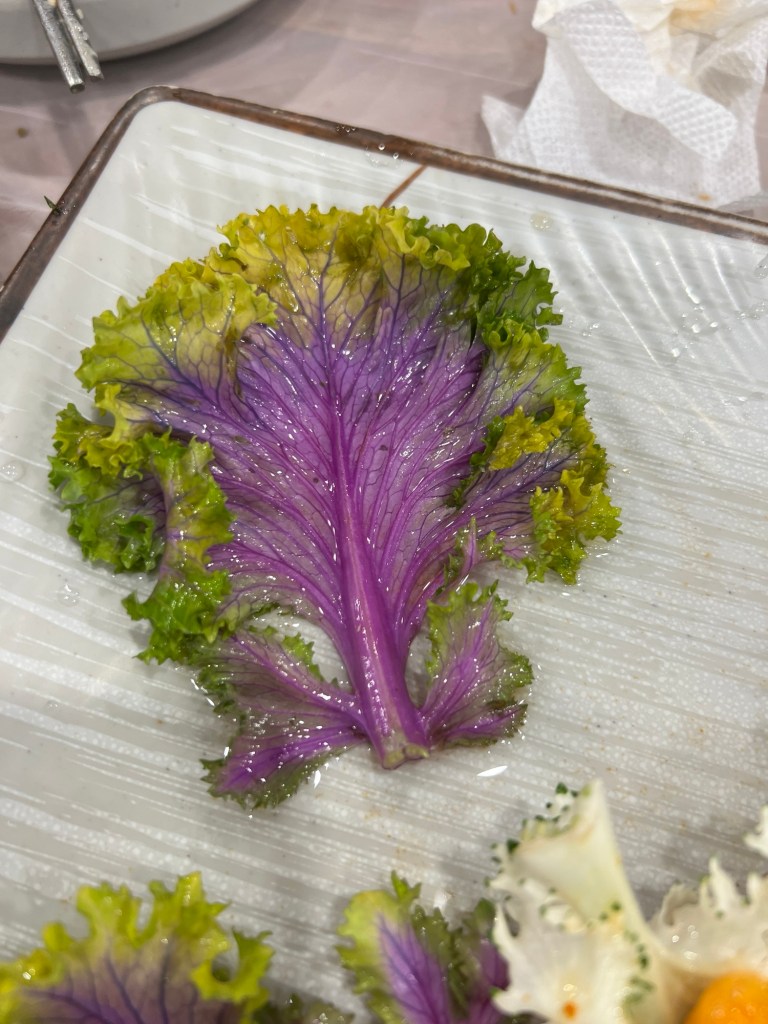
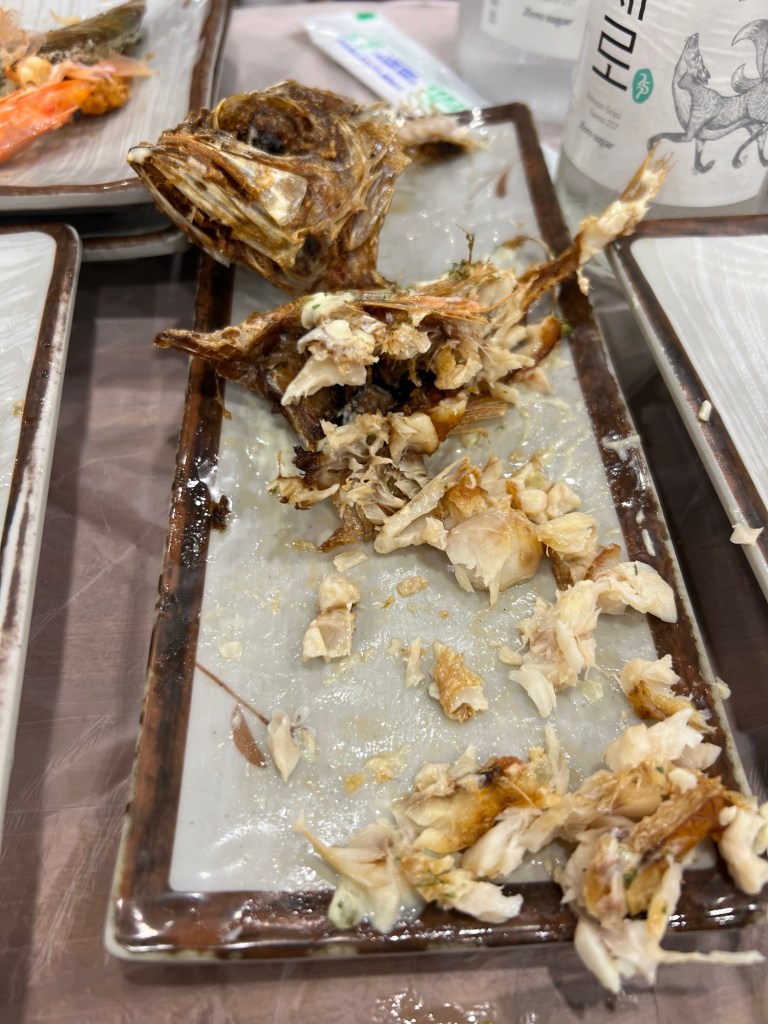
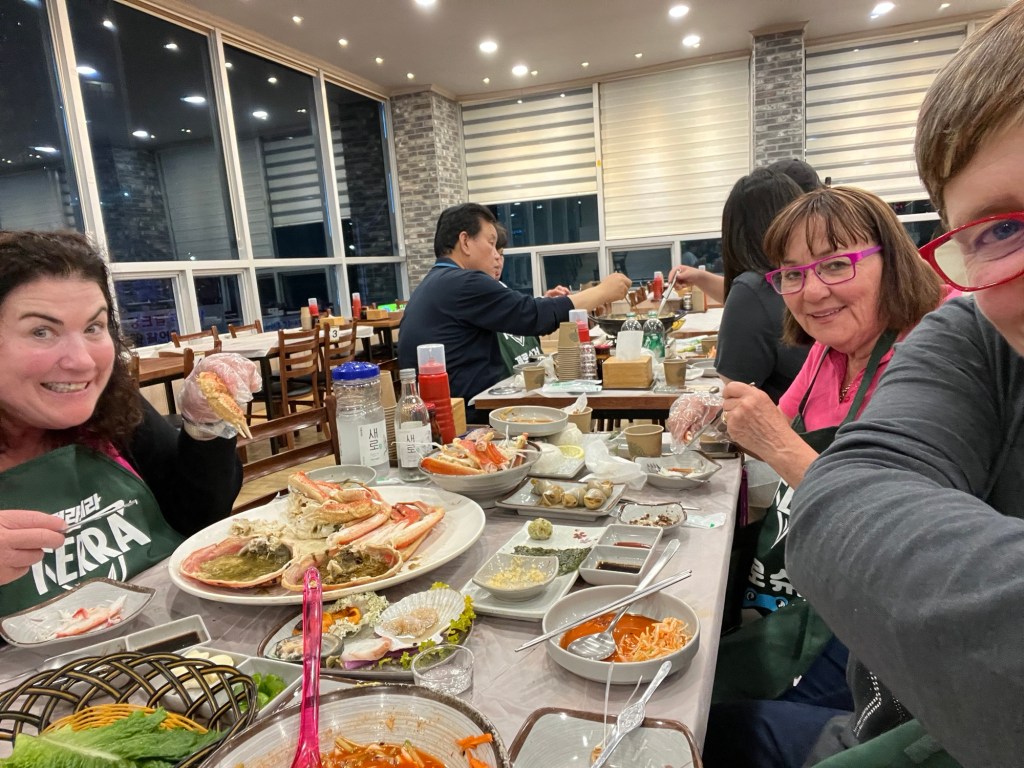
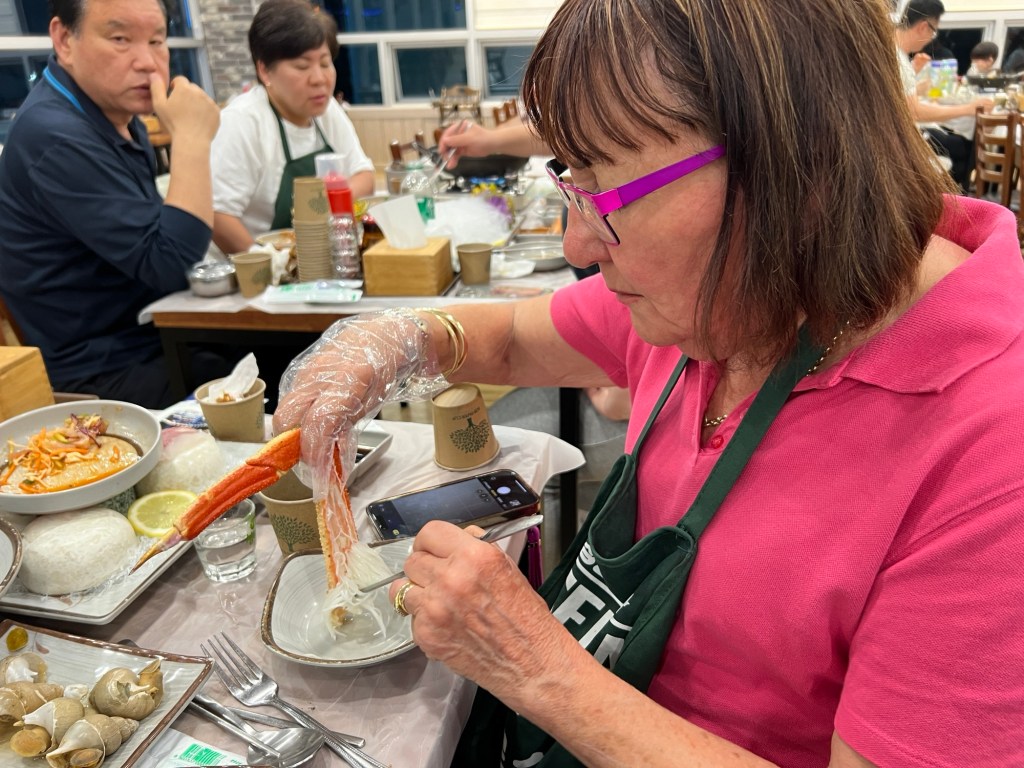
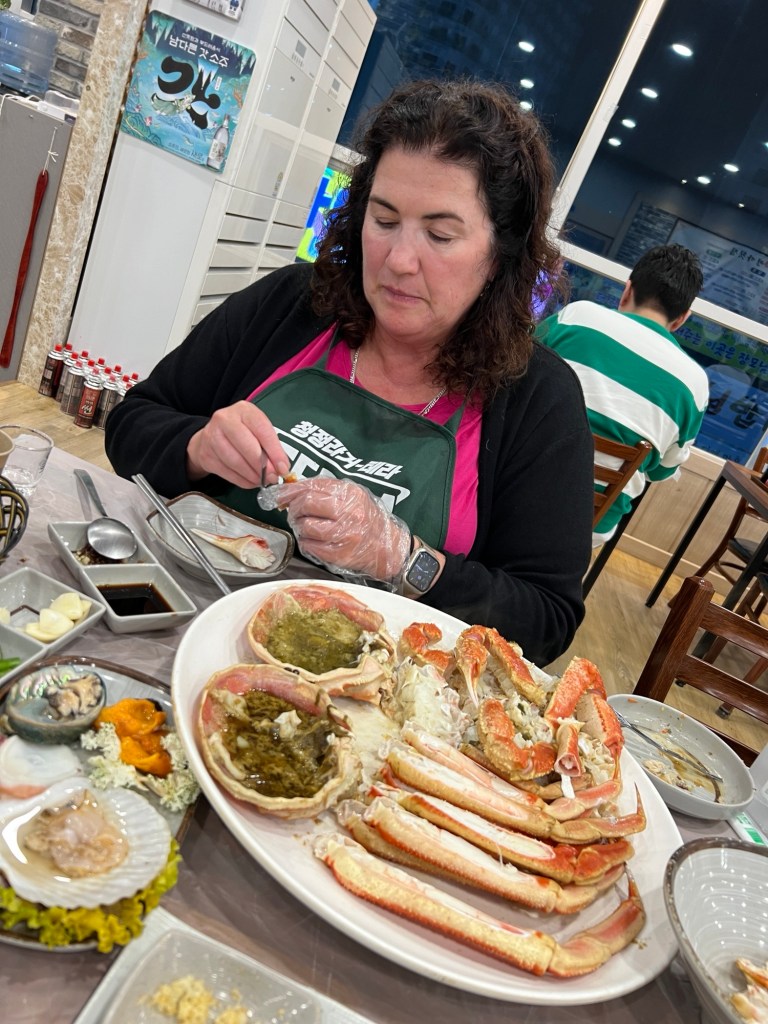
The taxi driver said something to a lady outside the restaurant and she shuffled us upstairs to a table and the most lovely waitress -Suji- with good English was able to help us order. We ordered snow crab for three expecting two crabs. We got more than we bargained for. Firstly a few sides arrived, followed by a plate of seafood prawns octopus, scallops, squirts, shells, and then half dried fish, crab, fried crabs, and then a plate of sashimi, a bowl of soup, and still no sign of the crabs we were expecting. We gave the first stage a red hot go after some advice and coaching from the lovely Suji. Somewhere along the line landed a plate of 4 different types of sashimi. Not sure we got a pic of that we were so cosy dealing with the rest.
Then arrived the crabs and another coaching session. We needed a plastic glove on our left hand to break the legs and dice into the carapace – all of which has been broken up and the claws had been cut open along one side to make accessing the sweet meat easier. We thought we were done, but no, then came a bowl of soup and rice. Aunty Sue started to ladle
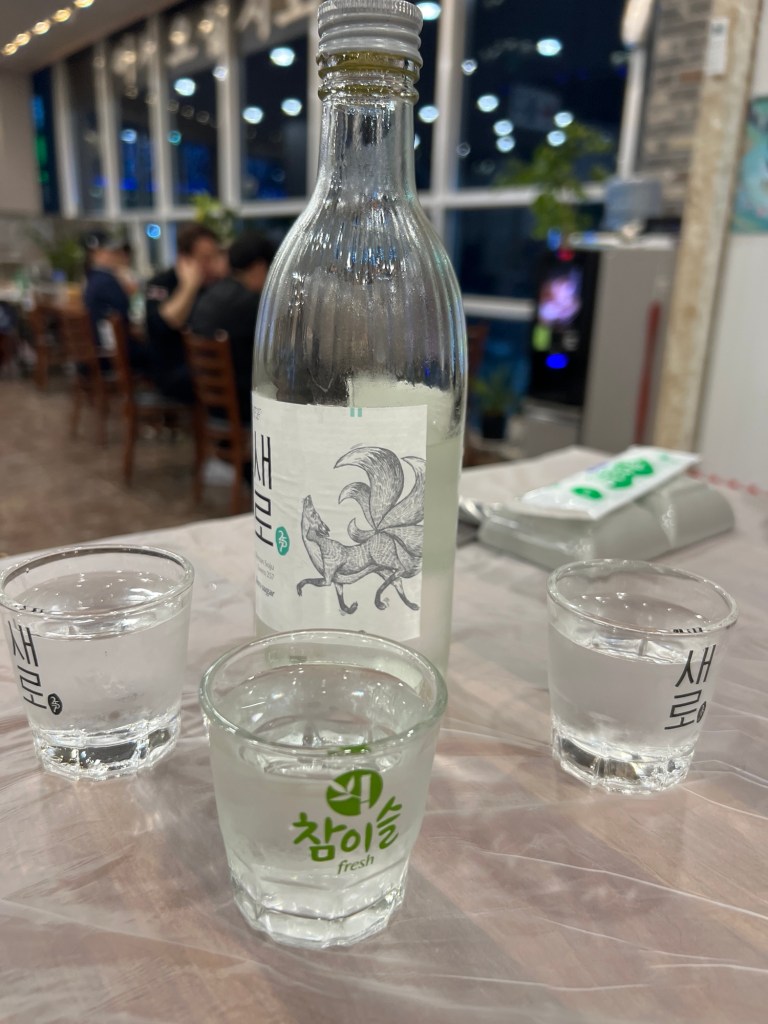
the soup only to be told by Suji that we needed to wait five minutes for it to cook on the butane cooker. We washed it down with an obligatory small bottle (375ml) of Soju shared between us.
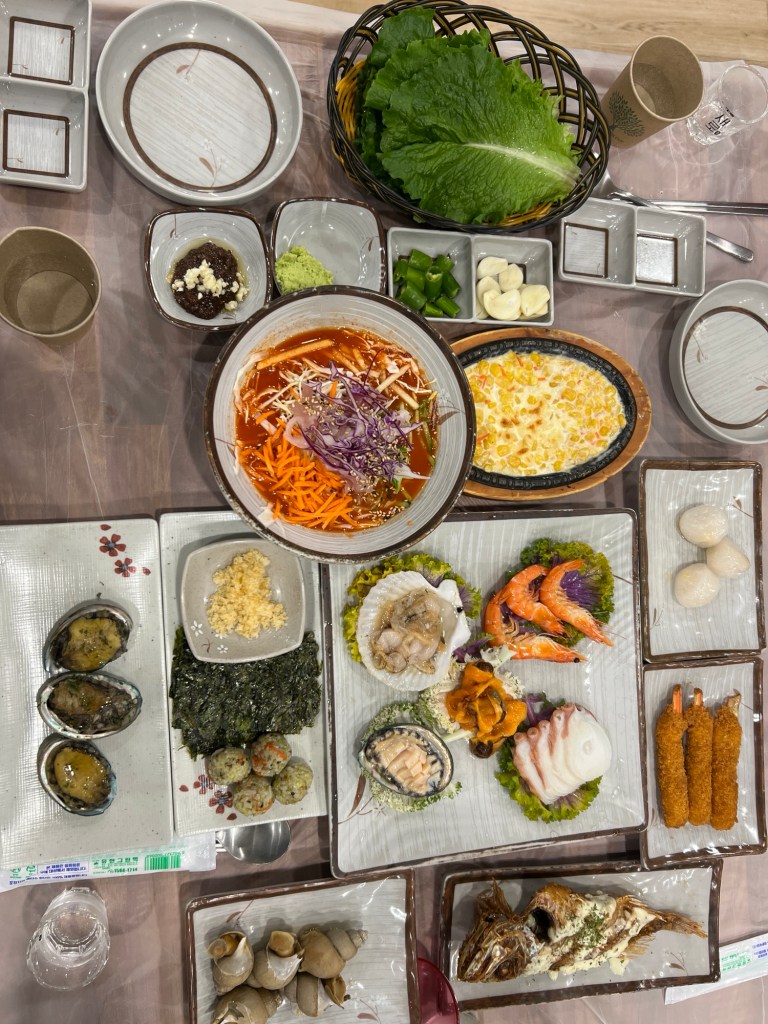
Susie and I were both very impressed by the crab.
Overall we tried a lot of what we’d seen at fish markets over the past week or so.

Home to the hotel by cab and off to bed. There is a model of the hotel/ resort complex.
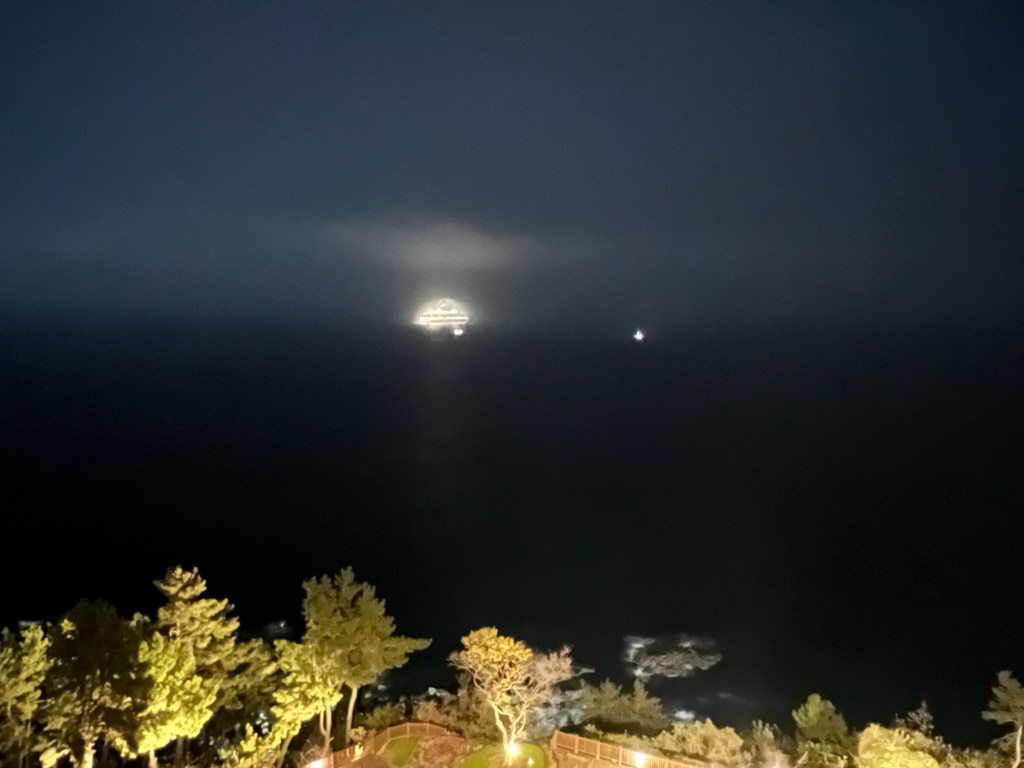
I noticed a tree cruise shipped anchored offshore. And the lights looked good.

 Travel adventures with Nicola & co.