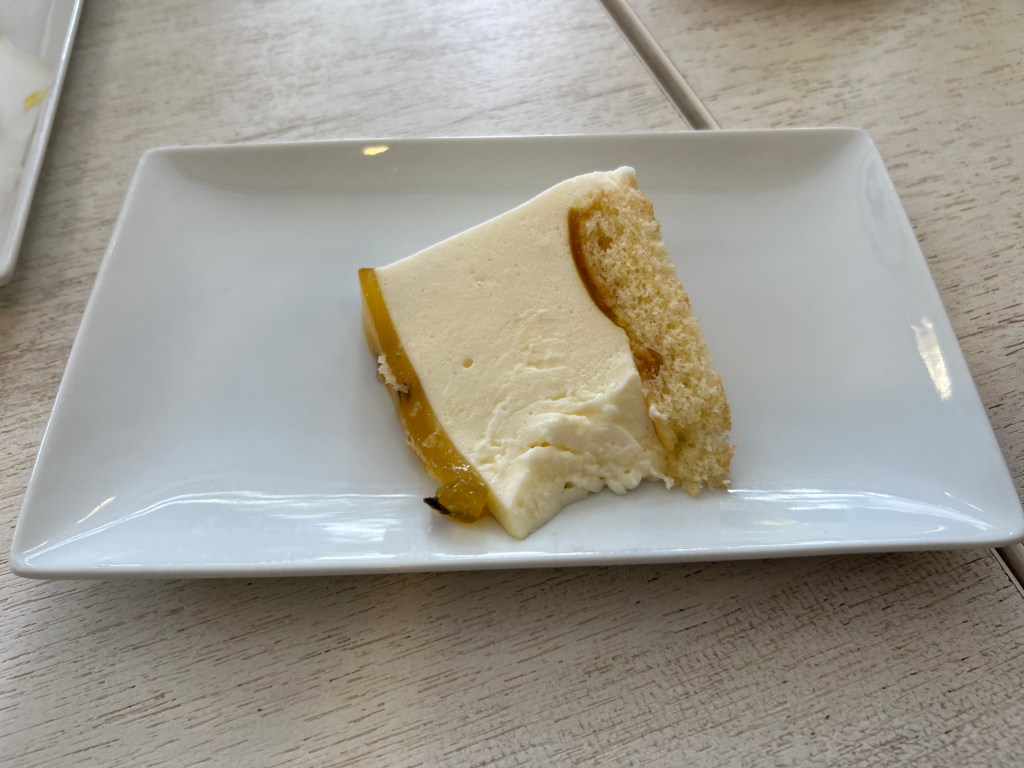
Breakfast with views over the bay. Lots of sweet pies and mousse type options. The pancakes were just like Mum used to make. Poached egg was good too.
Today our paperwork says a full day tour but Isabelle, our guide. tells us it’s two half day tours today and a full day tomorrow. As always in South America things change and flexibility is the name of the game. We think this will give us two free days which would be good – it’s a matter of wait and see.
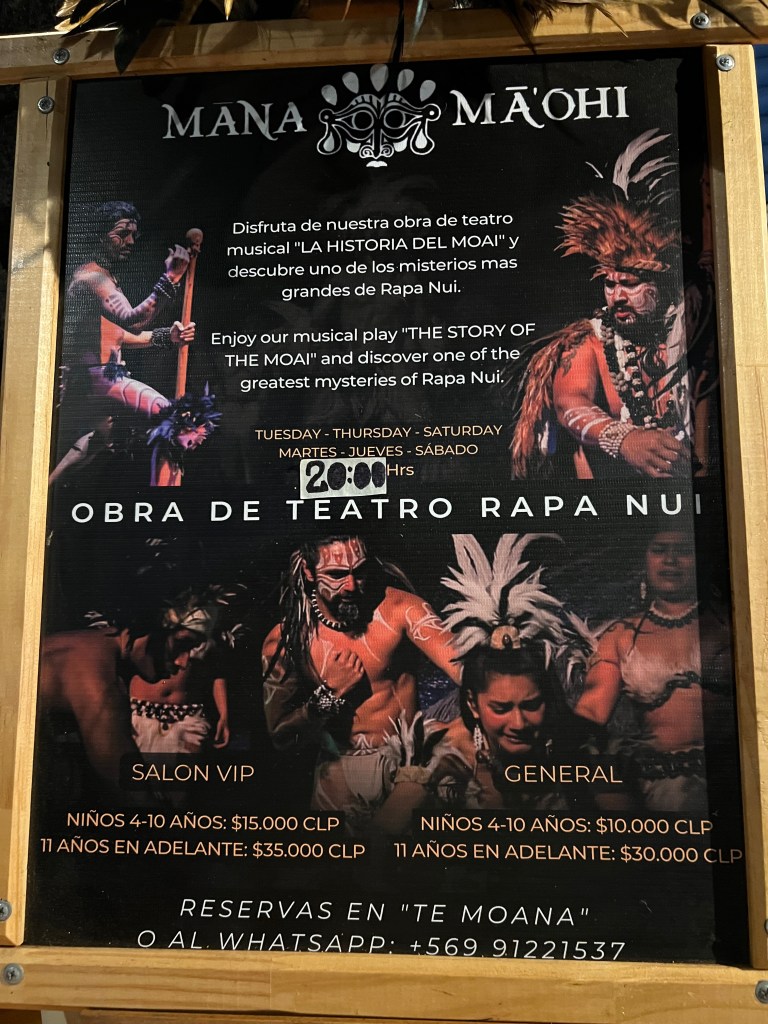
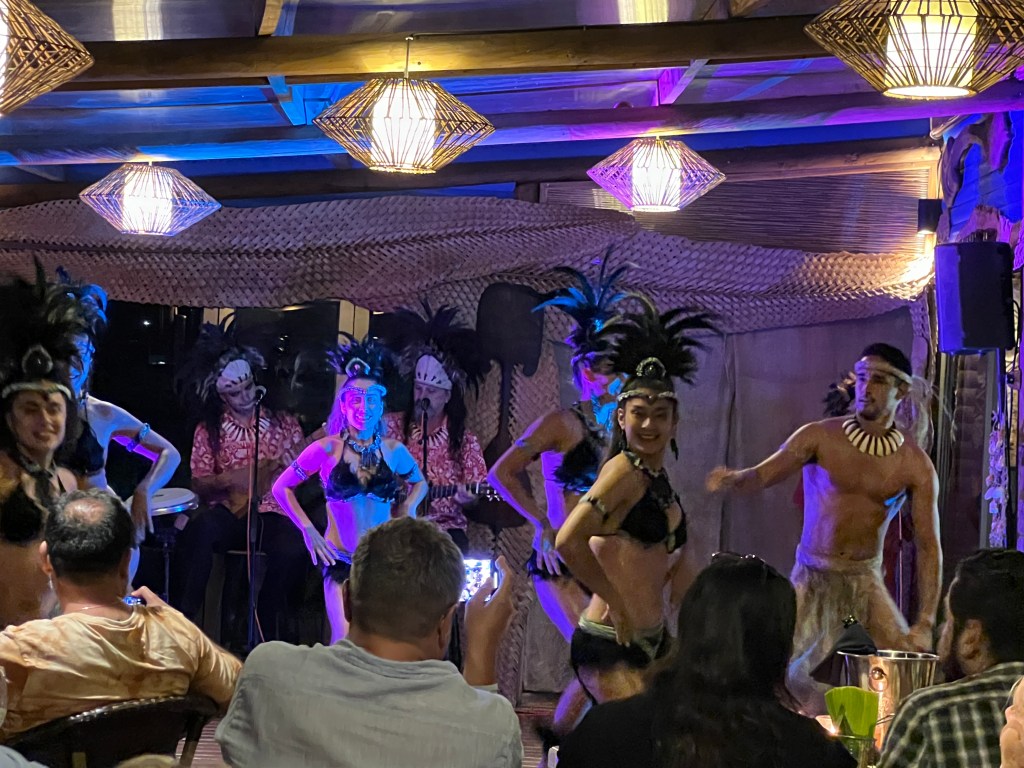
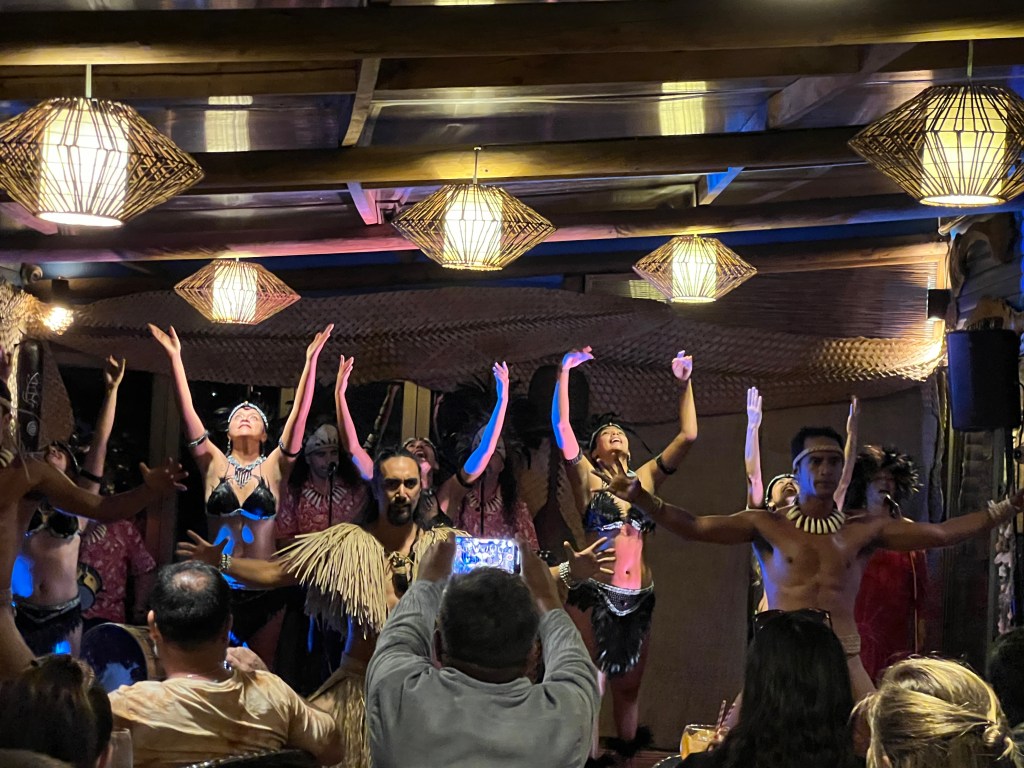
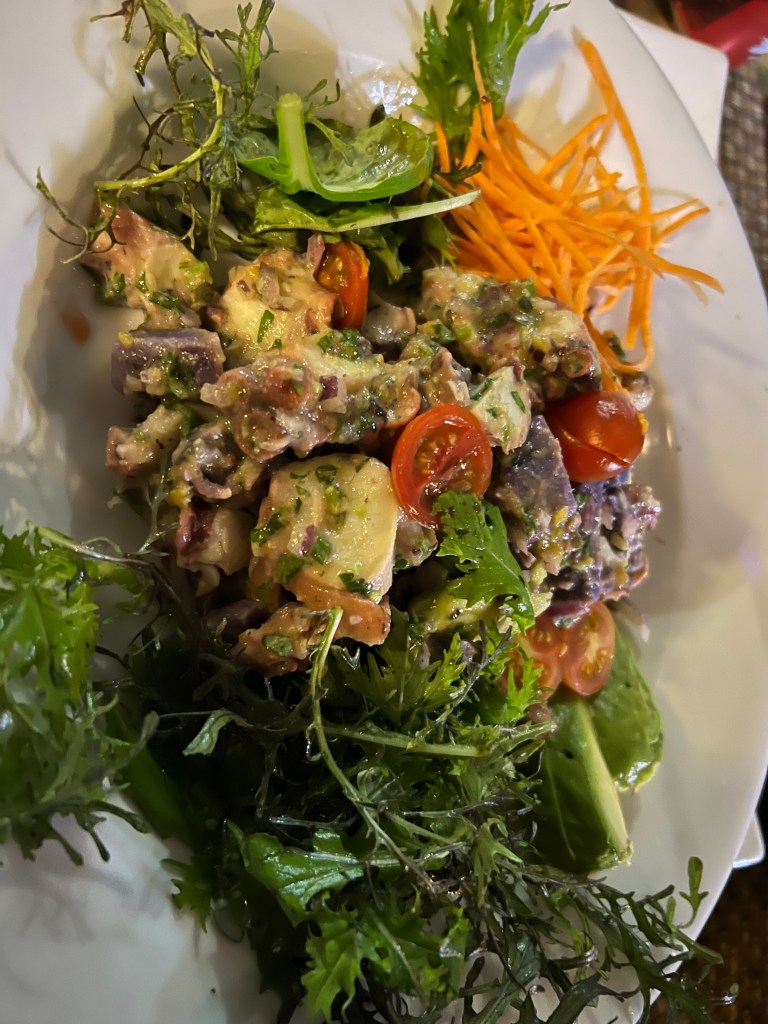
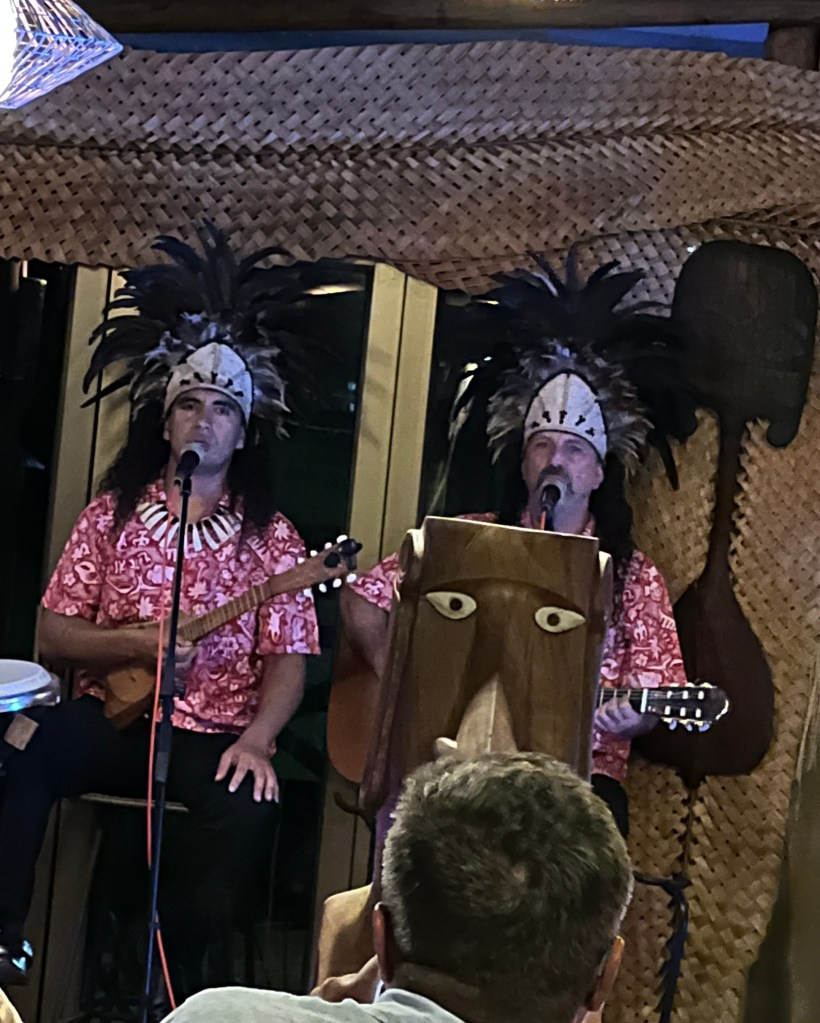
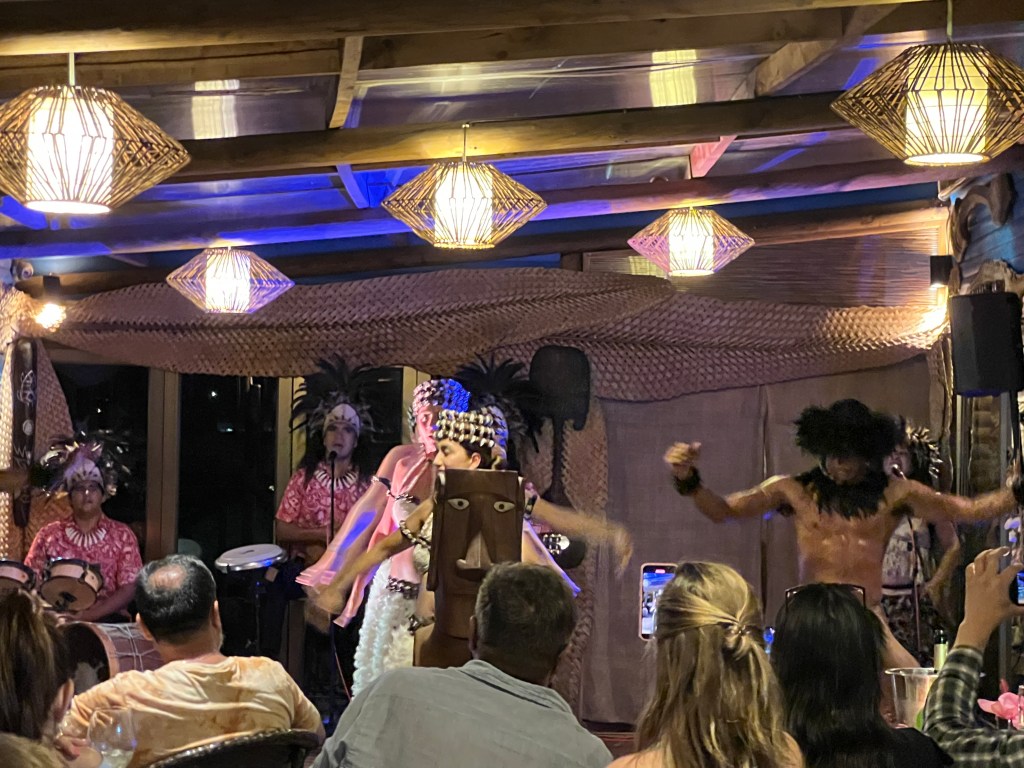
We have had Jose at the hotel book us into a dinner and cultural show tonight.
Today for first half day tour we were picked up by Isabelle our guide and Rodrigo our driver and then collected a few more passengers:
• Ivy and Candy
• James from Sydney who we shared our transfer with,
• Sophia from Dubai
• Berry/Barry from America
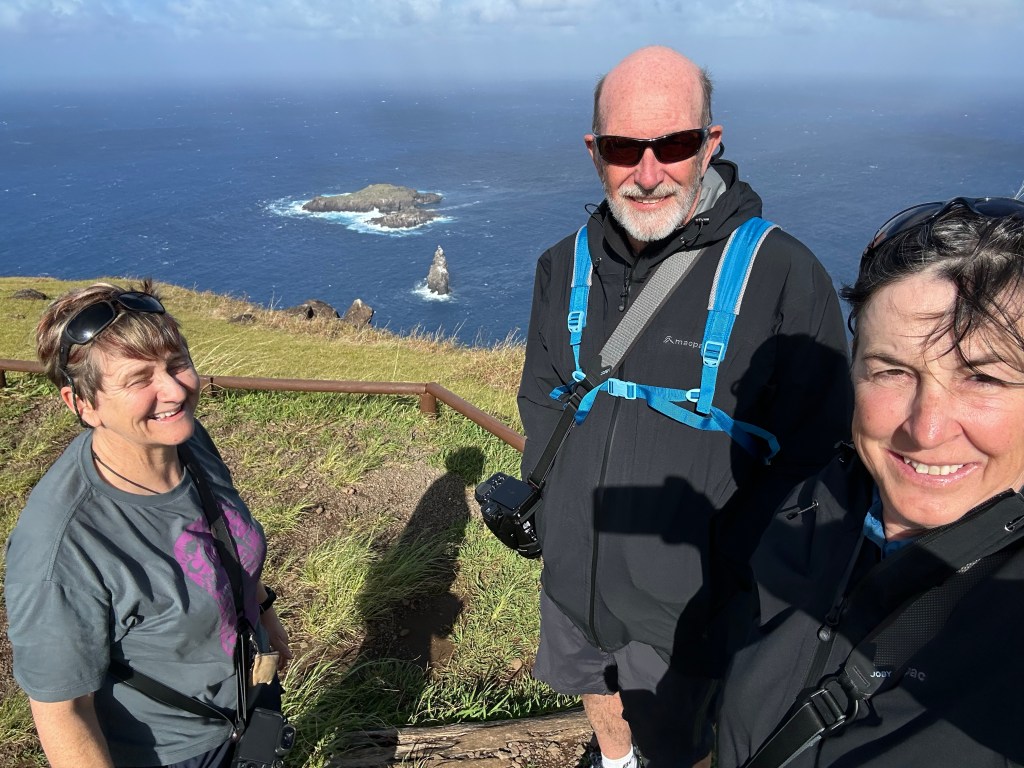
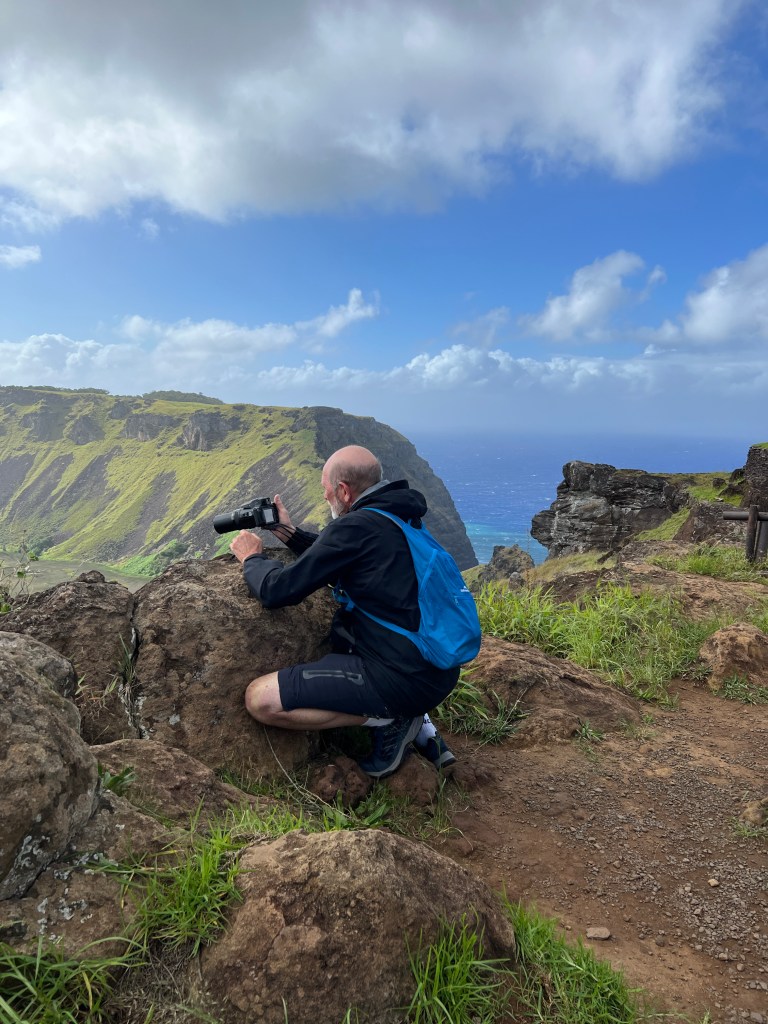
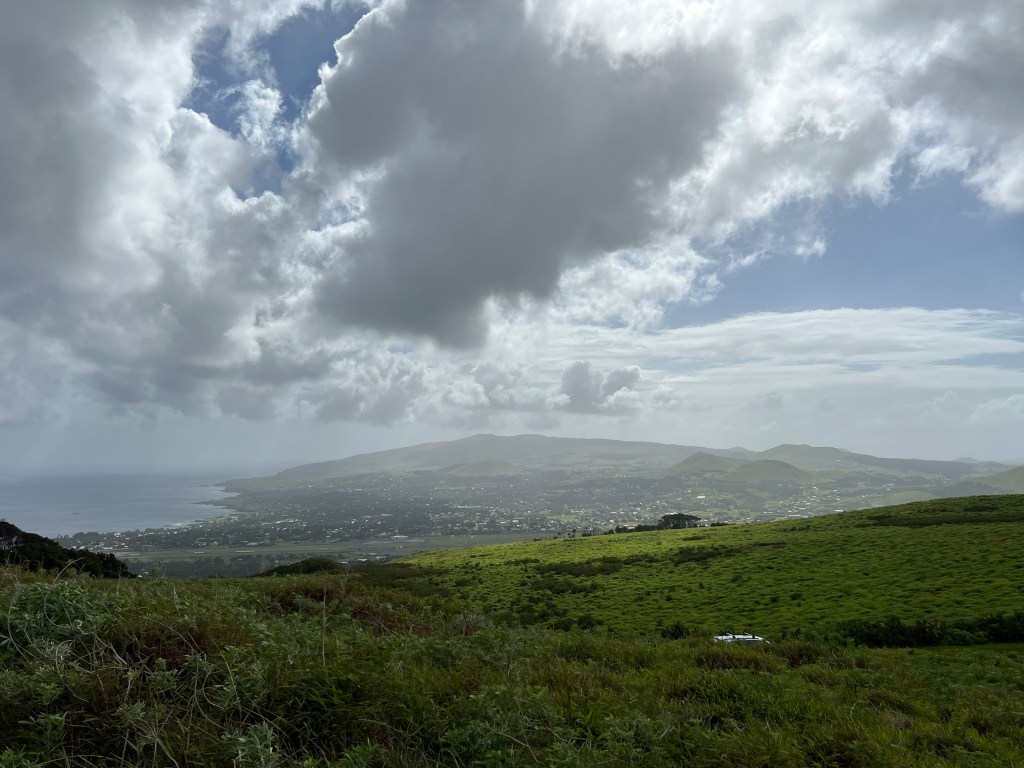
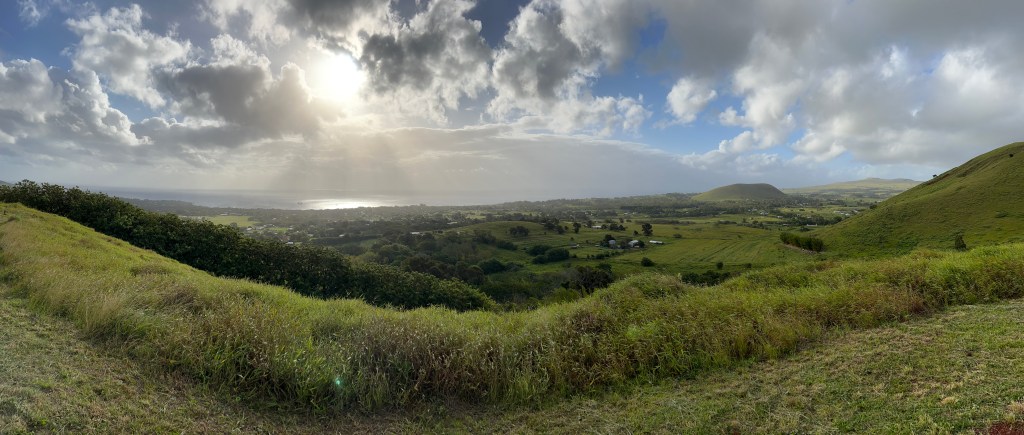
We headed south out of town to a hill which was an old volcano overlooking a spectacular south coast and some islets.
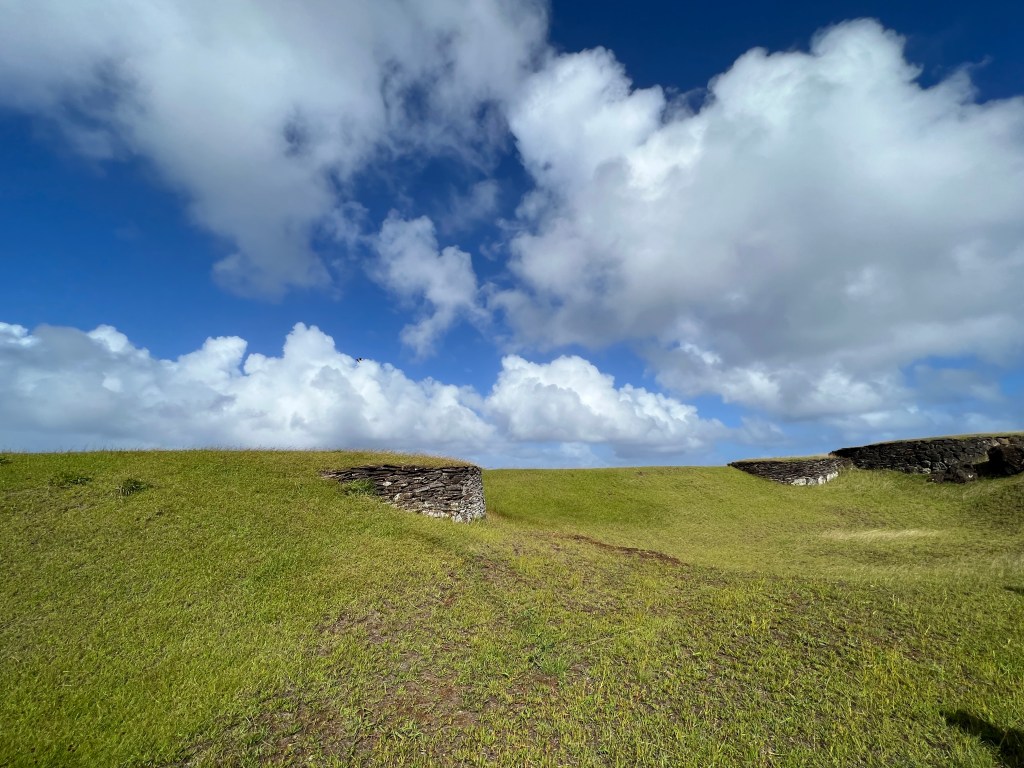
Atop the cliffs was the restored village of Oroŋo or Orongo.
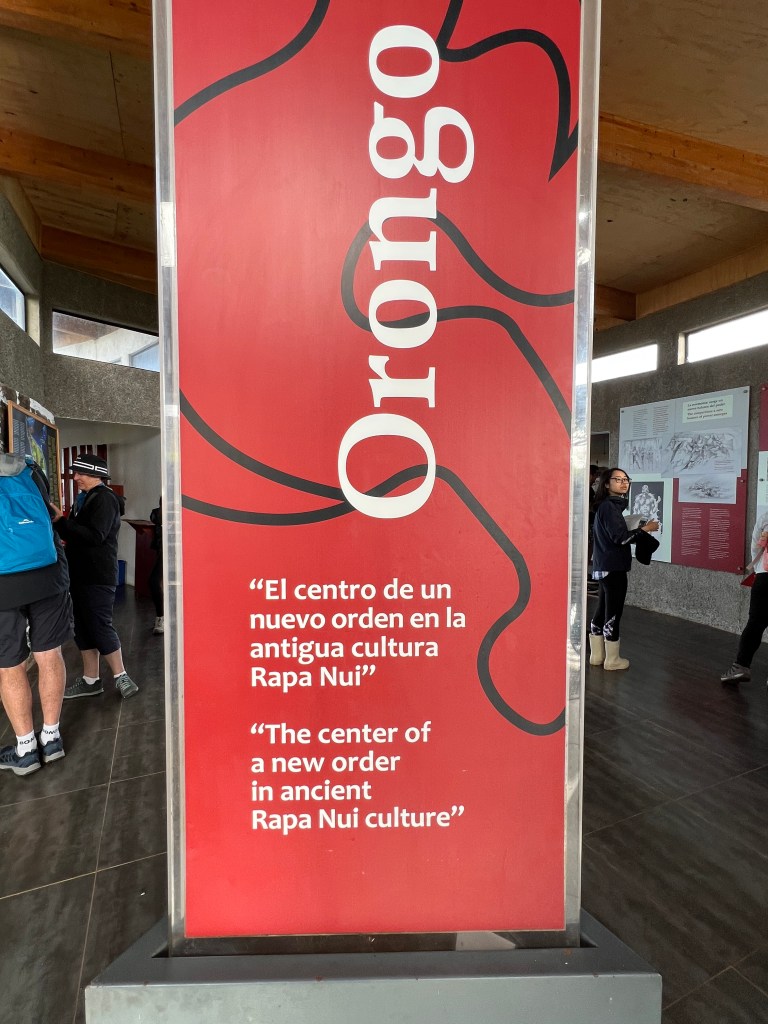
The history of Easter Island or Rapa Nui has two key and different eras and each has its own story.
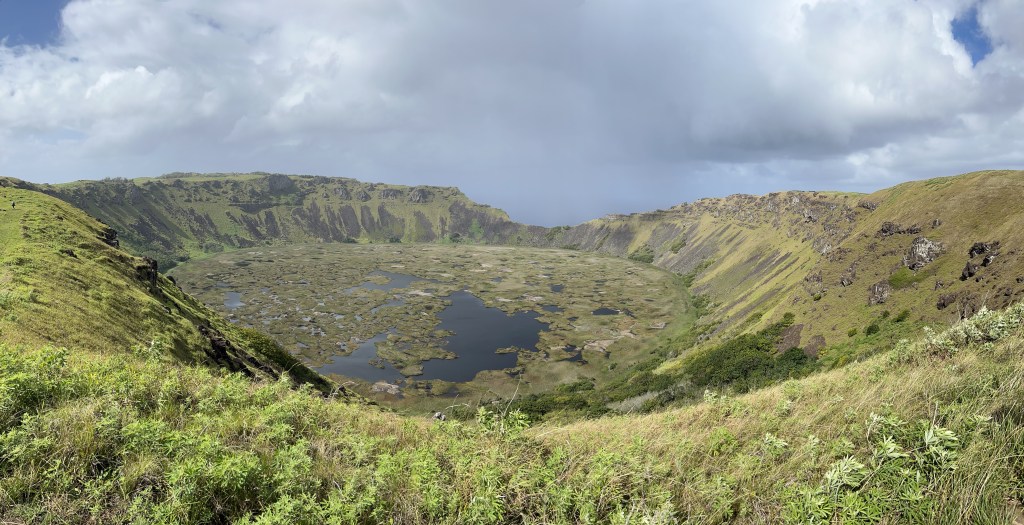
Today’s visit to Orongo and the crater of volcano Kotepokuiri Rana Kau was an important location for the story of the second era for the island which took place between 1600 and 1800. This era was marked by The Birdman Competition, among other things. The whole area was considered sacred since ancient times. The village of Orongo originally consisted of a couple of houses built in the 15th or 16th centuries and over time the village expanded. The houses were only for the Chiefs, priests and others of importance. It was built on the rocky cliffs overlooking the islets of Motu Nui.
The islet was the breeding and nesting home of the Sooty Tern or Manutara.
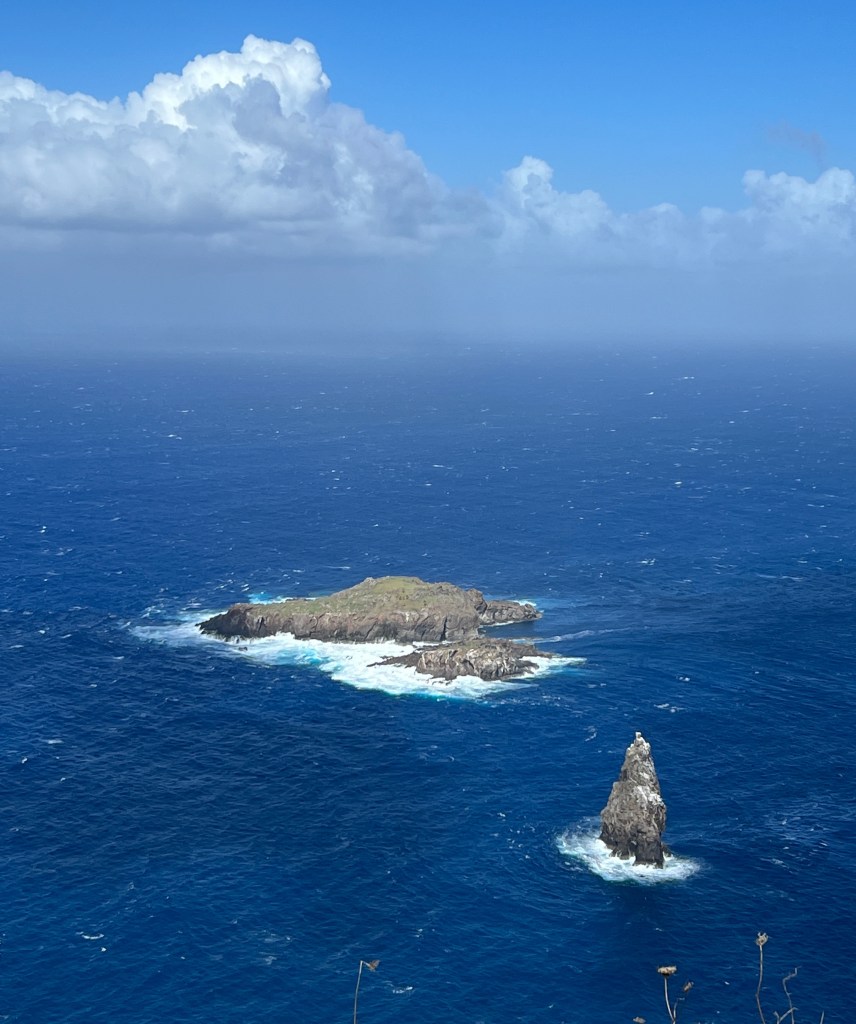
The coastline is ruggedly beautiful and overlooks the Islets set in water of beautiful blue and some of the clearest waters in the world.
What I gleaned is that during this period the chiefs of the various tribes would select a tribesman to represent the chief. Their task was to climb down the rugged cliffs, swim to the islet of Motu Nui and wait for the arrival of the migratory Manutara (Sooty Terns) at which time they needed to take an egg and swim back to Orongo, scale the cliffs and present the egg. If broken they needed to repeat the whole thing. The winning competitor was named the Birdman or Tangata Manu.
The wind was blowing so strongly it was hard to walk into it. This is a regular occurrence and has caused damage and degradation to the village and the petroglyphs in the area.
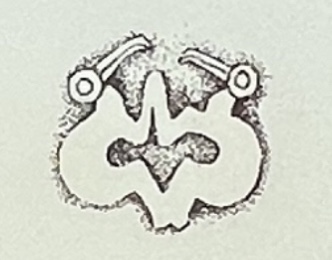
Oroŋo is home to the greatest proliferation of rock art or petroglyphs- I don’t seem to have any iPhone pics so here are some from the info centre at the village.
1. Make Make – represents the god Make Make who was the inspiration for Birdman ceremony.
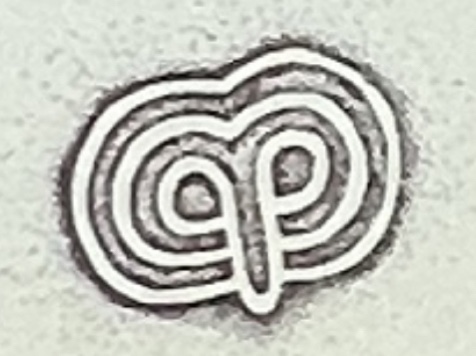
2. Komari – a sign of fertility represented by female genitalia
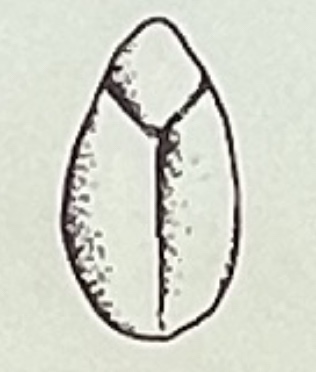
3. Tangata Manu – consists of human form with a bird head, thought to represent the different birdmen
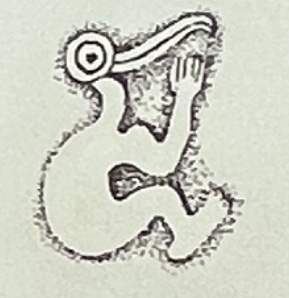
4. Manu Piri – two Tangata Manu opposite each other joined by hands and feet
Oroŋo was also home to one Moai – carved in basalt and unique for the petroglyphs carved into the back. This Moai was named Hoahakanai’a or Stolen Friend.
Hoahakanai’a, along with a second, smaller moai known as Hava, were removed and given as gifts to Queen Victoria in 1869 by the captain of HMS Topaze, Commodore Richard Powell. The Rapa Nui people are seeking the return of the statue from the British Museum who Queen Victoria gifted them to.
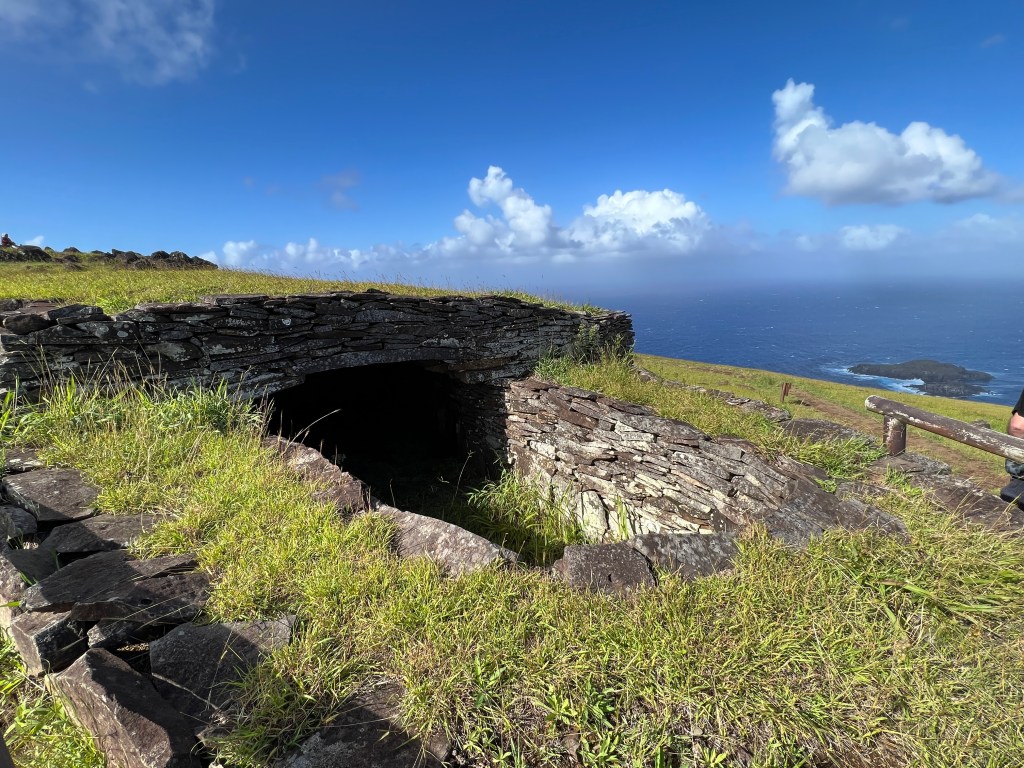
Some of the houses have been restored after destruction from both the natural element (wind and rain) and sadly from people who ransacked the buildings to remove and pilfer petroglyphs in times past. We viewed these restorations built from rock into the land – skilled workmanship indeed, both by original architects and the restorers.
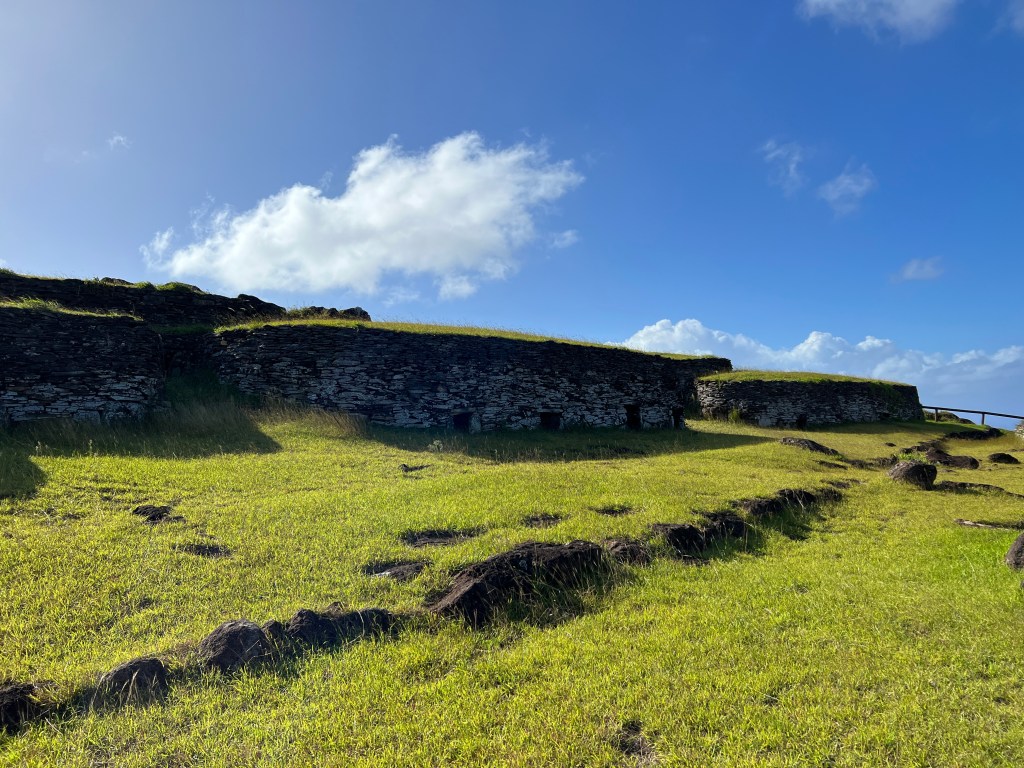
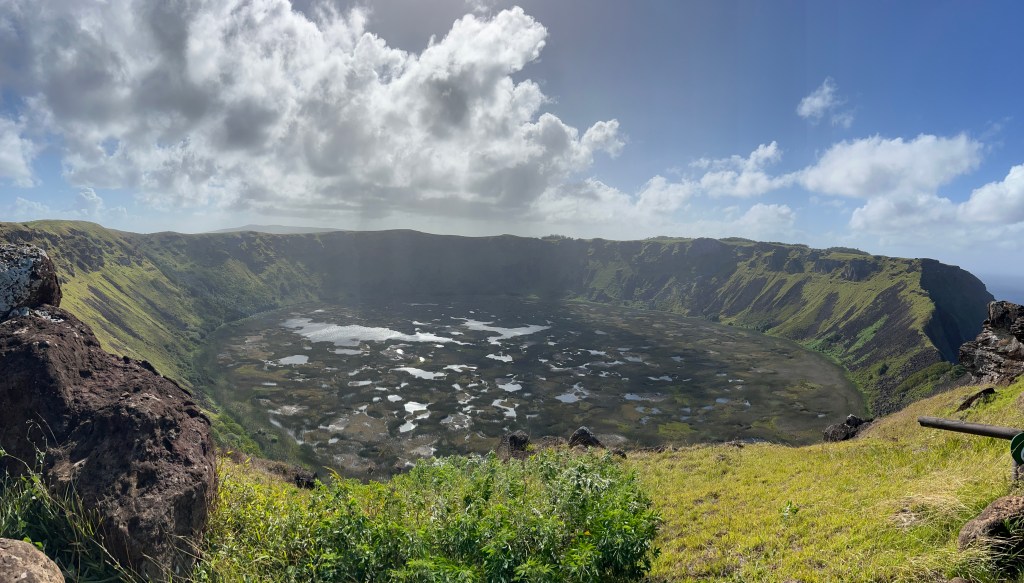
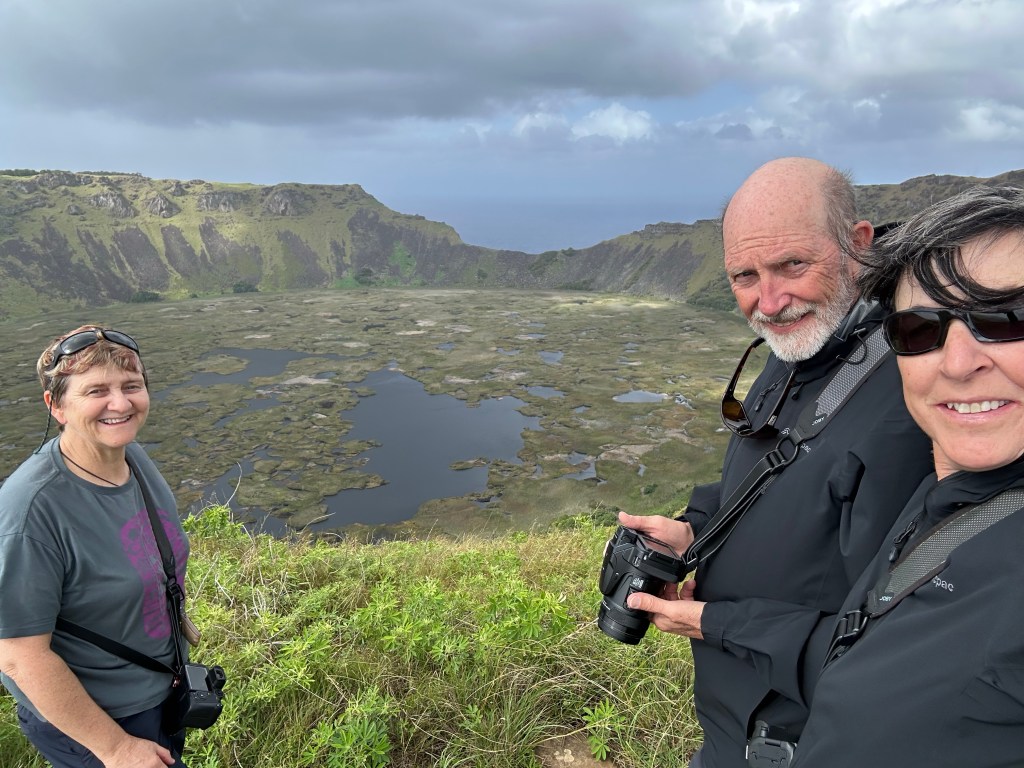
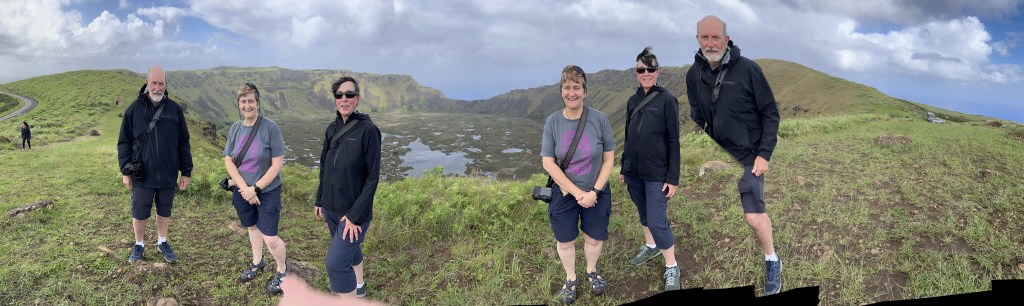
From here we continued onto the edge of the crater. It was quite stunning looking down into a Lake filled with floating islands of reeds in tones of green.
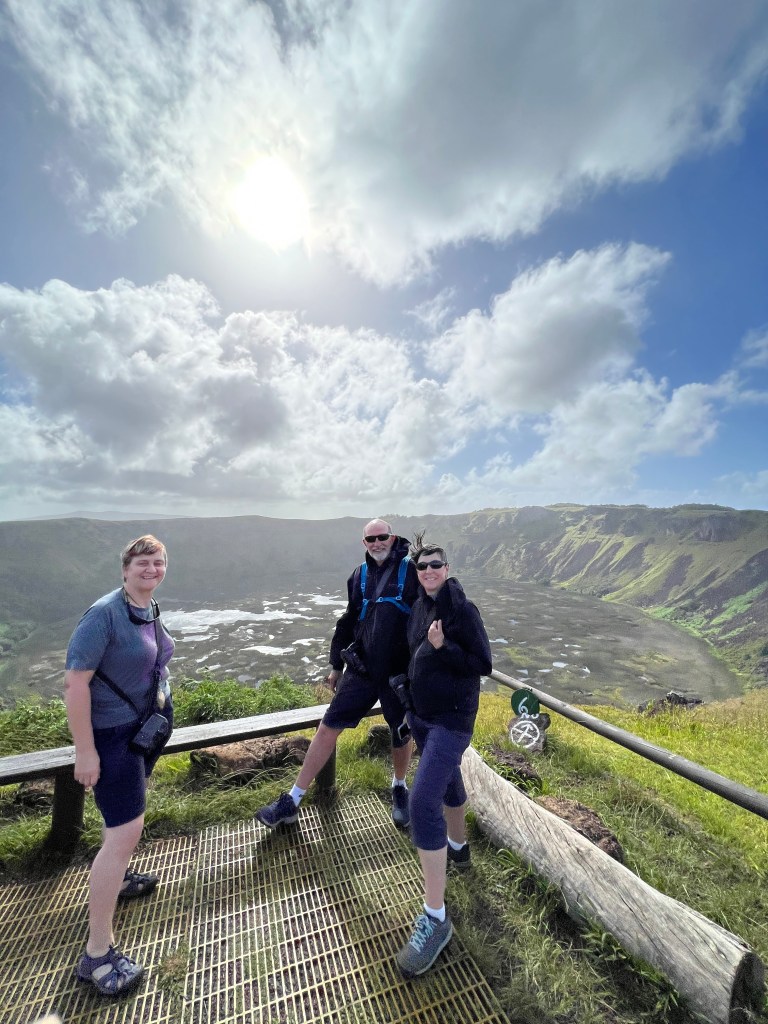
Back onto the minibus, and out of the wind, which was absolutely rocking being buffeted by the winds. Not like any wind I’ve experienced.
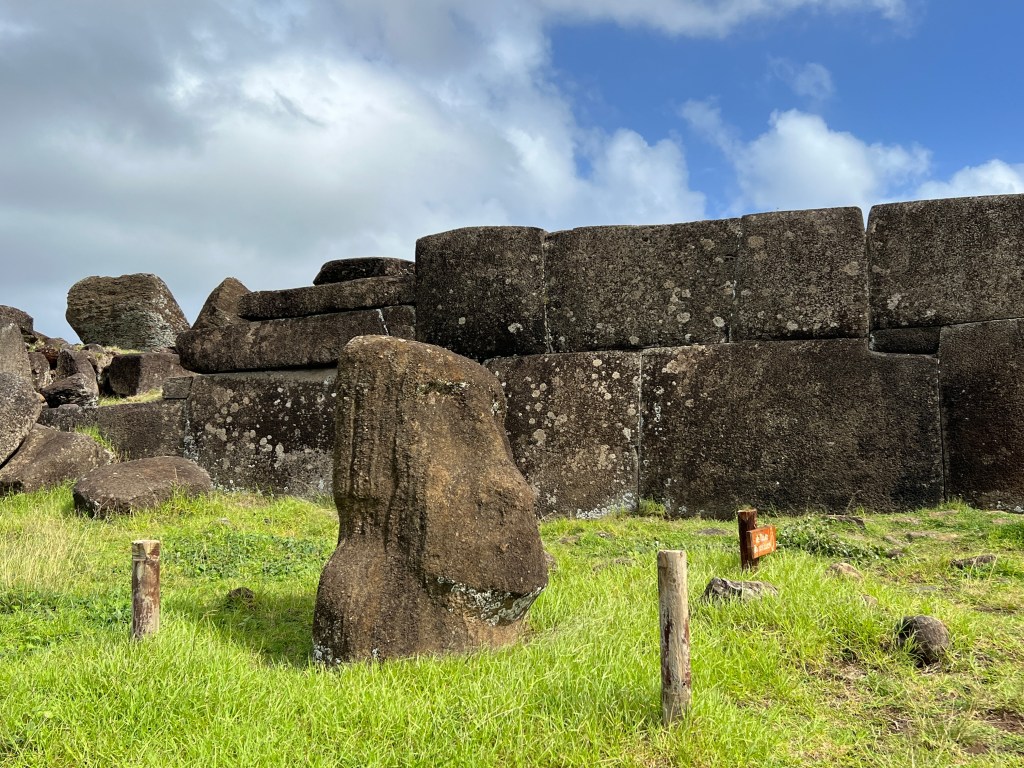
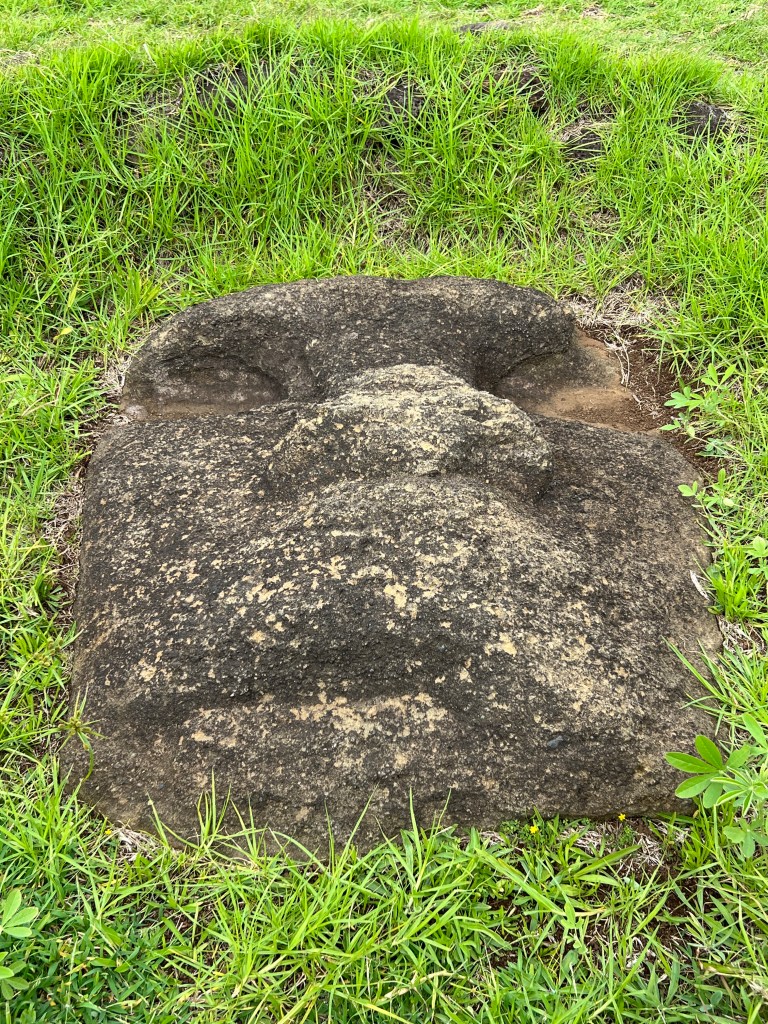
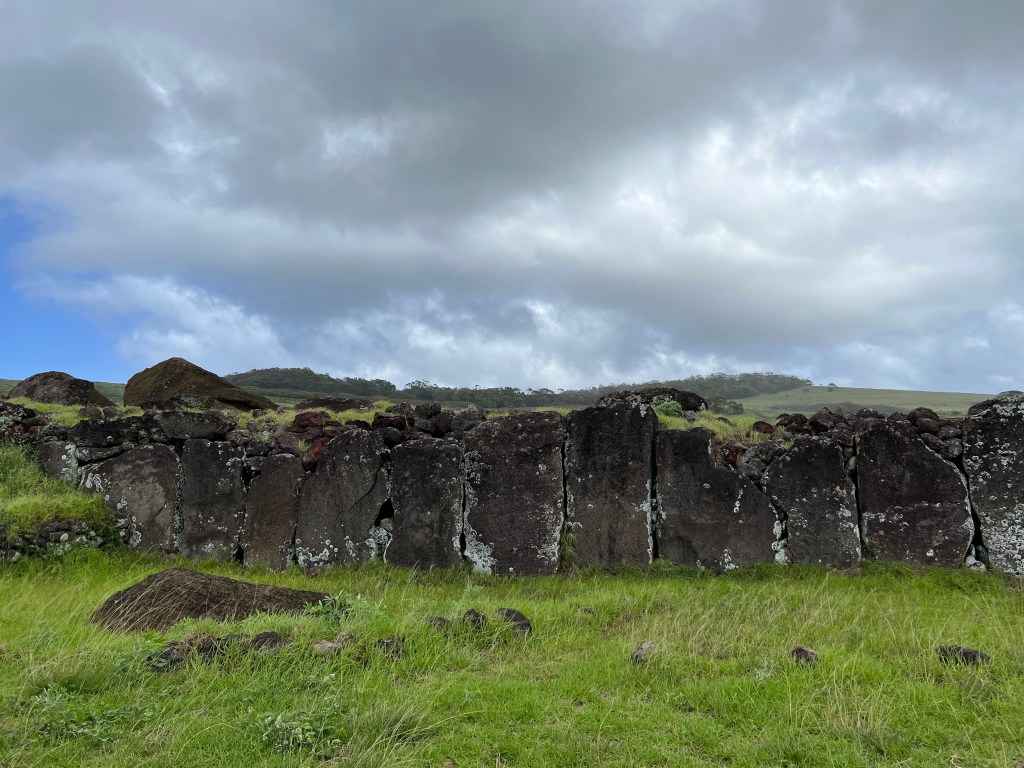
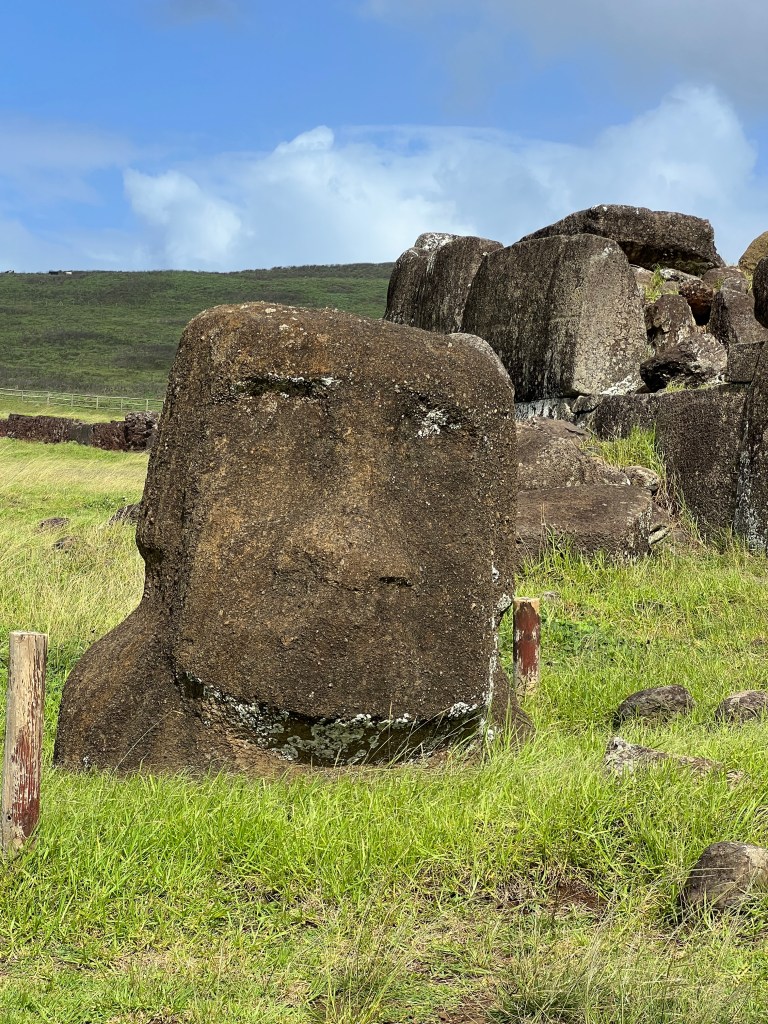
We then drove down from the volcano and along the coast to visit Vinapu, the site of an unrestored Moai Platform (Mwai is the best way I can figure to pronounce it).
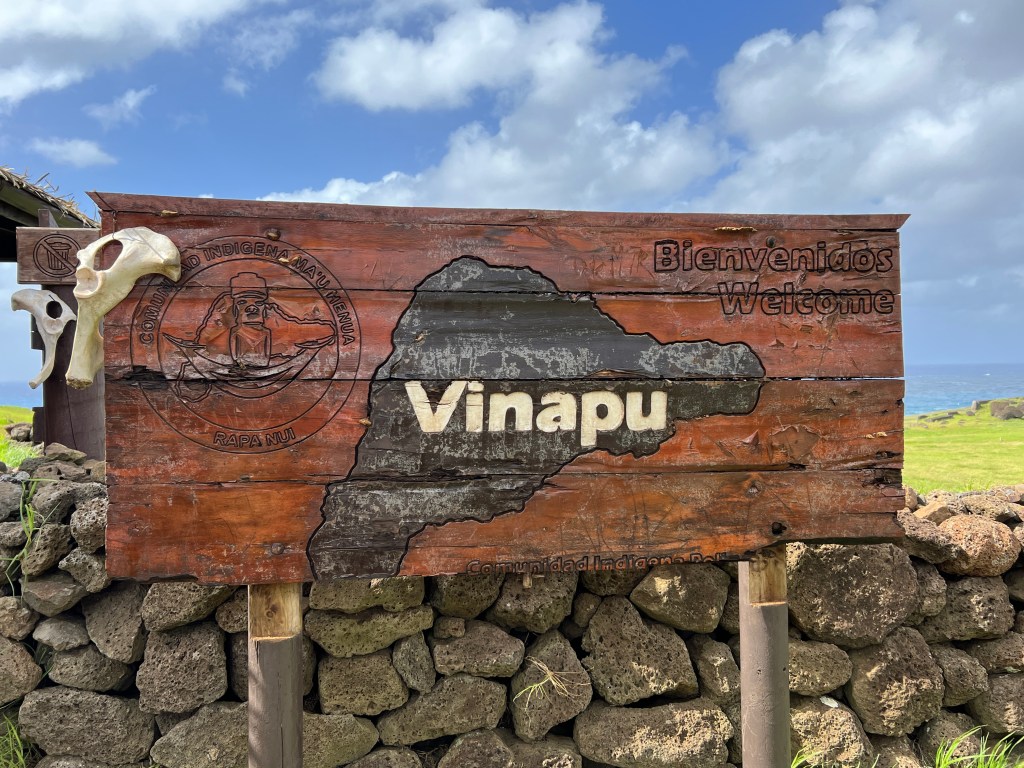
The Moai are the first era in Rapa Nui history.
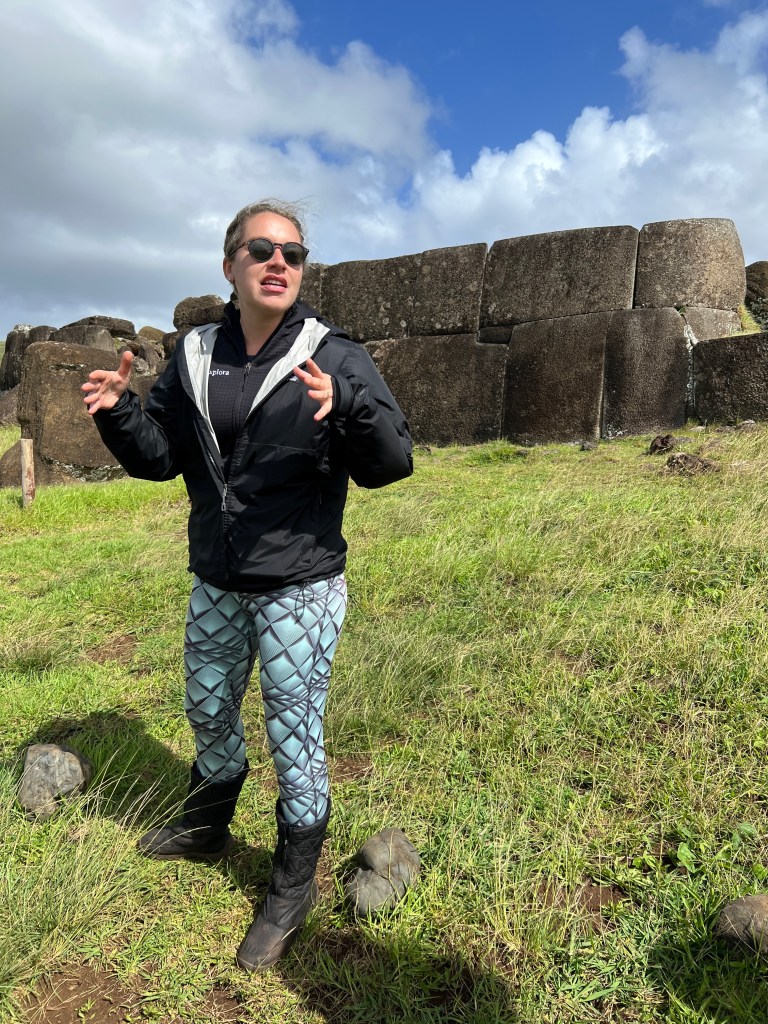
At Vinapu Isabelle pointed out two very different styles of workmanship in the remaining platforms- one looked EXACTLY like the stonework at Machu Picchu – so precisely stacked. How? Is there a connection? Were the Incans here? Did the Rapa Nui teach the Incans? No answers. The other platform was more roughly built.
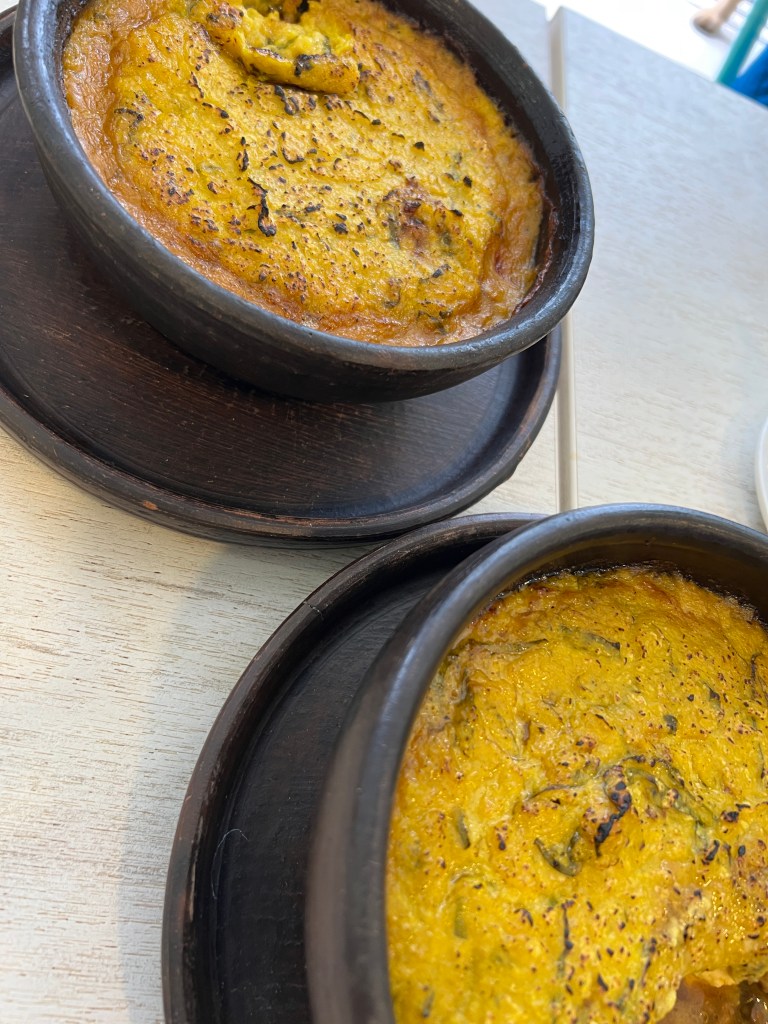
At the end of the tour we opted to get dropped off in town at the information centre and headed back to our new favourite Mana cafe where we had a typical Chilean pastel del choclo which is a chicken, meat and corn and egg thing – it was yummy. Here is a recipe https://www.goya.com/en/recipes/chilean-corn-and-meat-pie
We walked around town for a bit before heading back to the Info centre to meet the bus, the bus met us enroute and picked us up for second half day tour with most of the same crew from this am who we picked up at their various accommodation again.
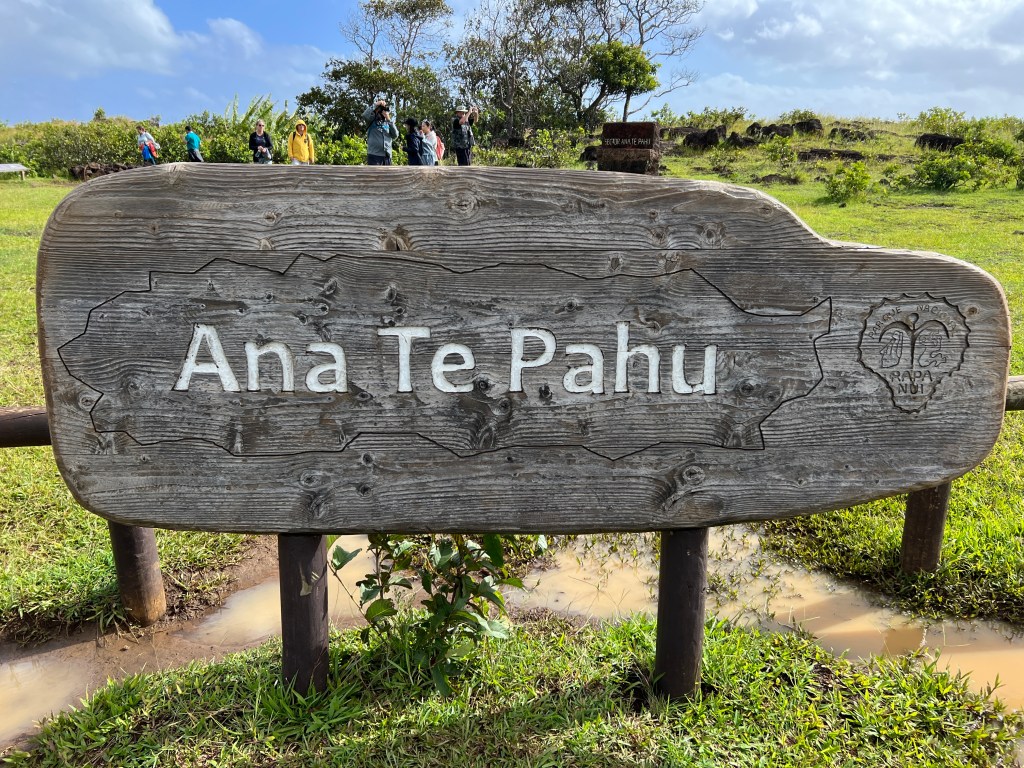
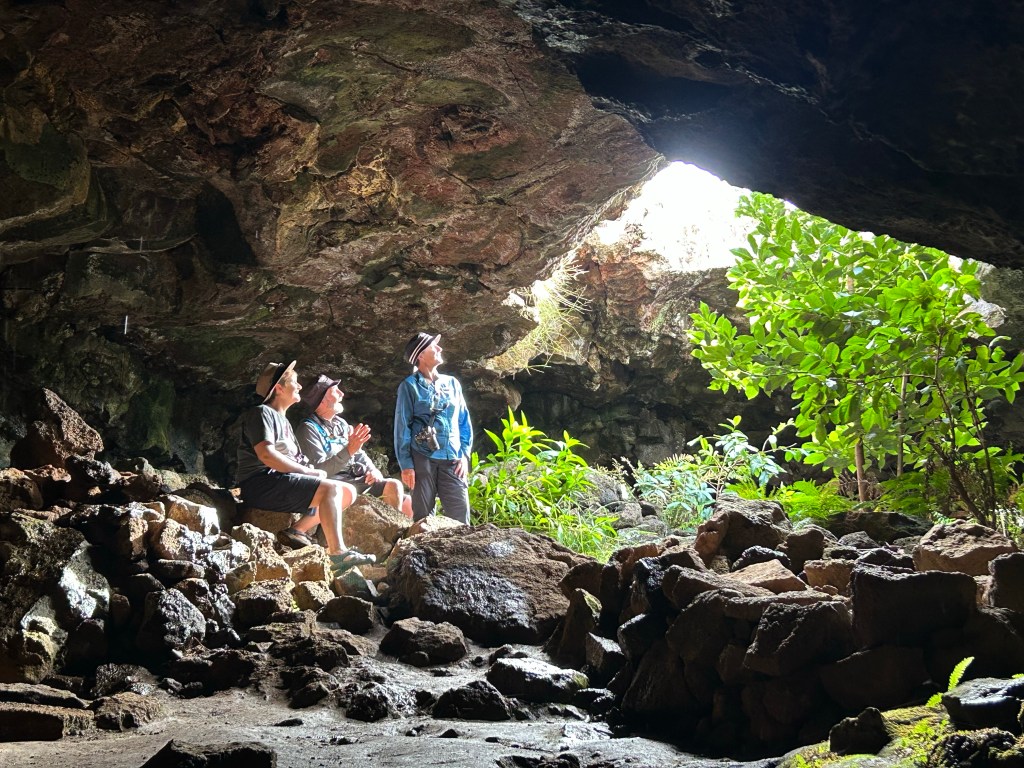
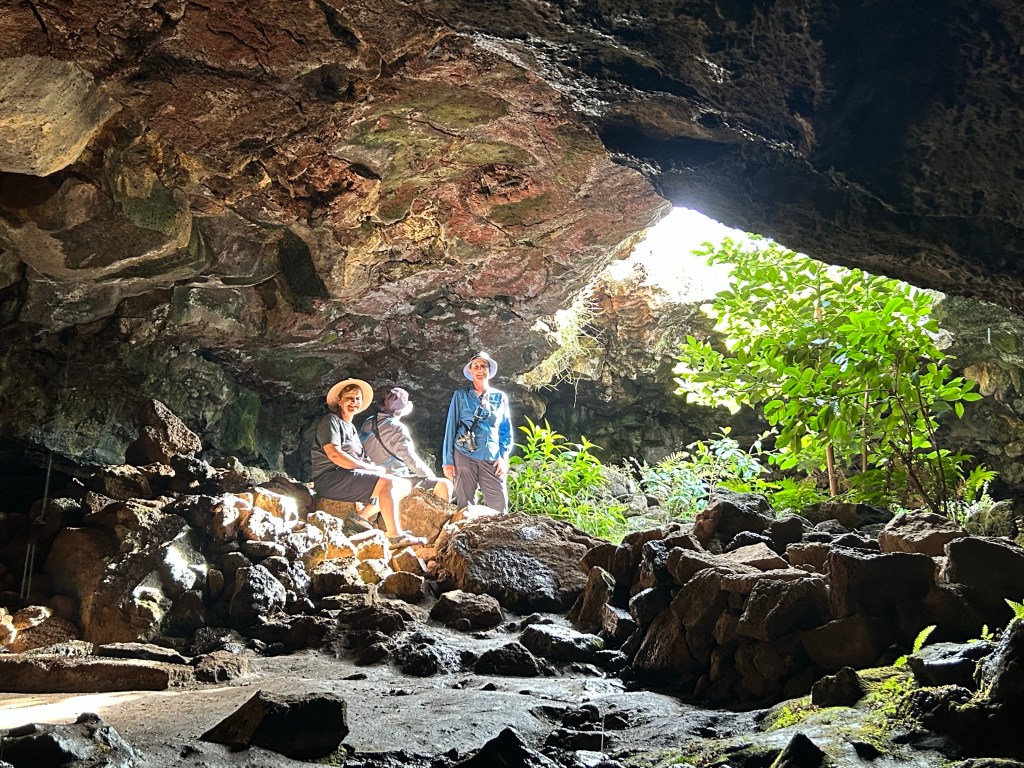
First stop was back into National Park to Ana Te Pahu – the Banana cave – lava tube area. Here we once again had to show our NP pass and copy of passport to enter the area.
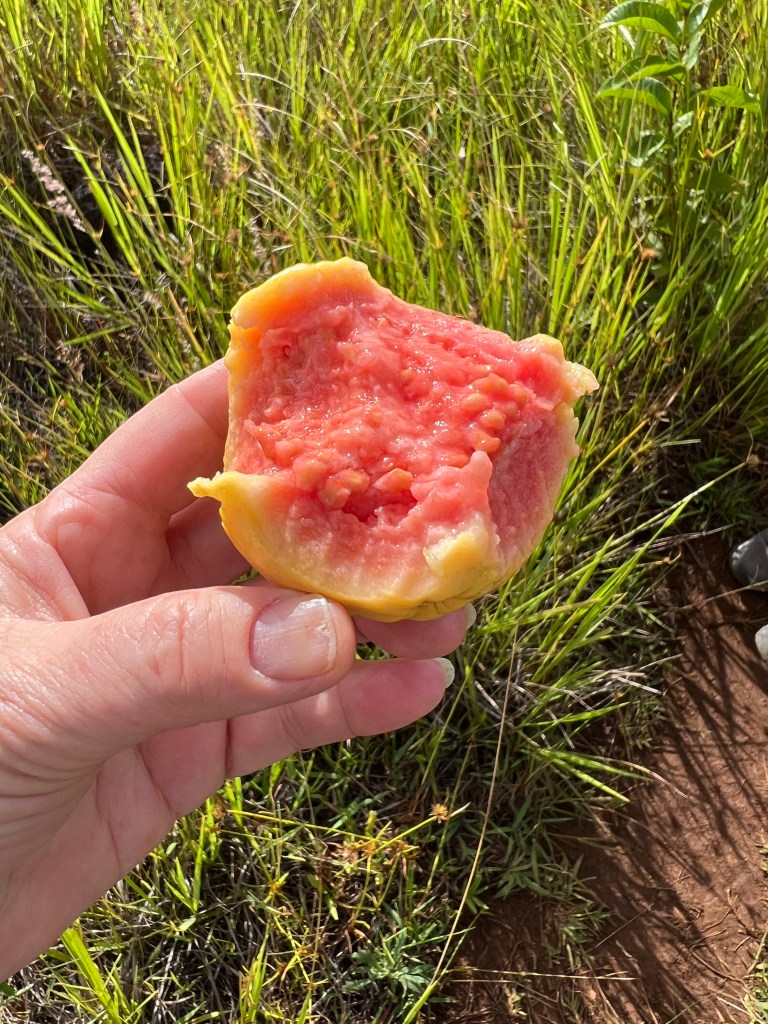
We walked through paddocks with guava growing wild – we could pick them to eat – delicious.
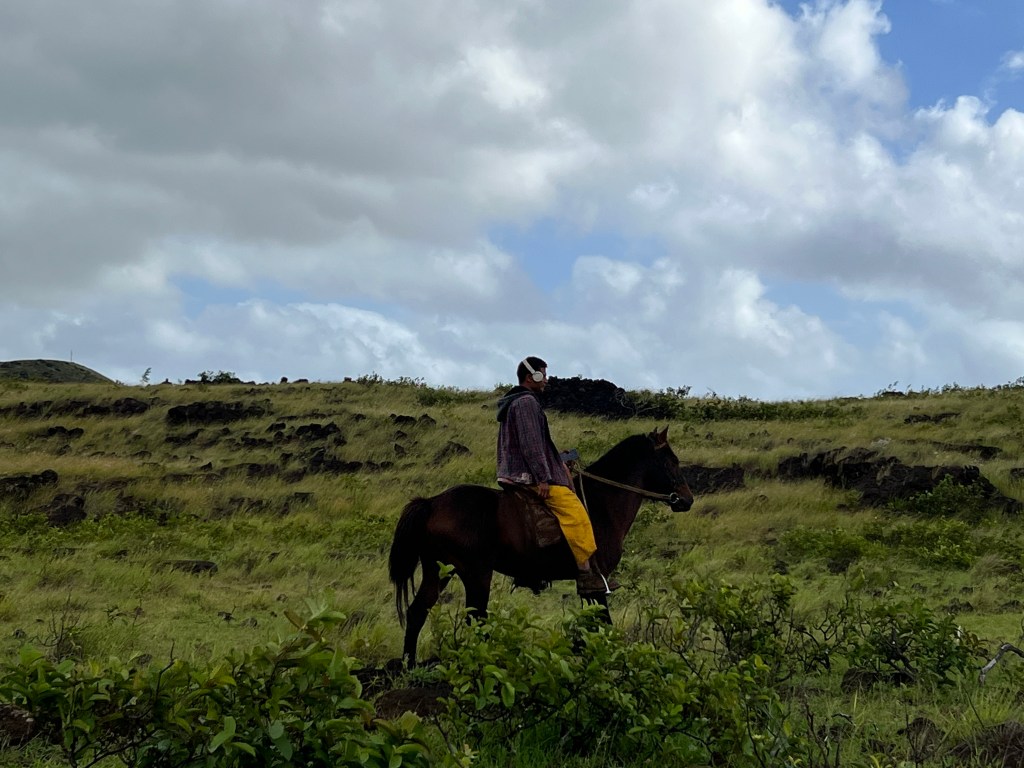
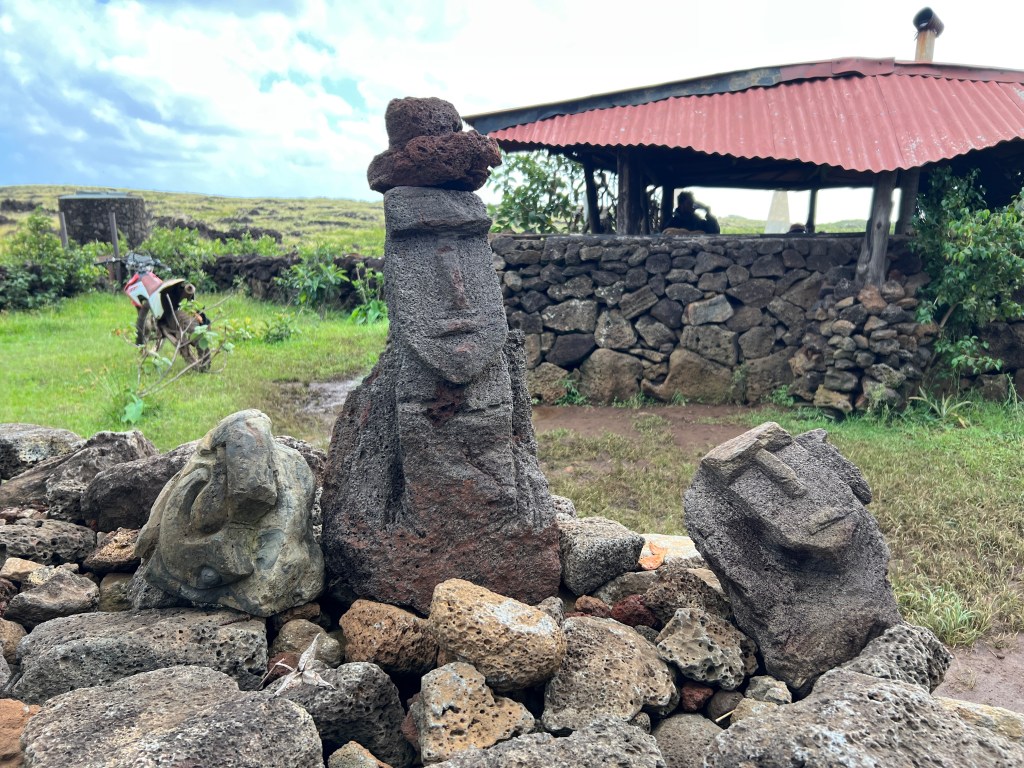
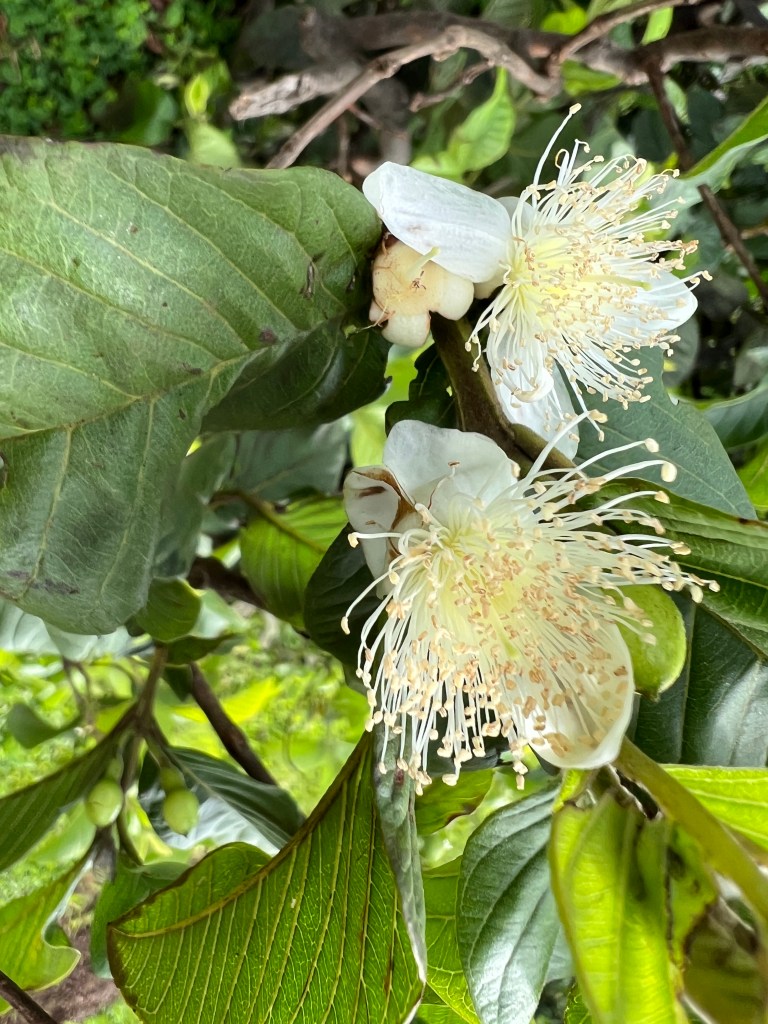
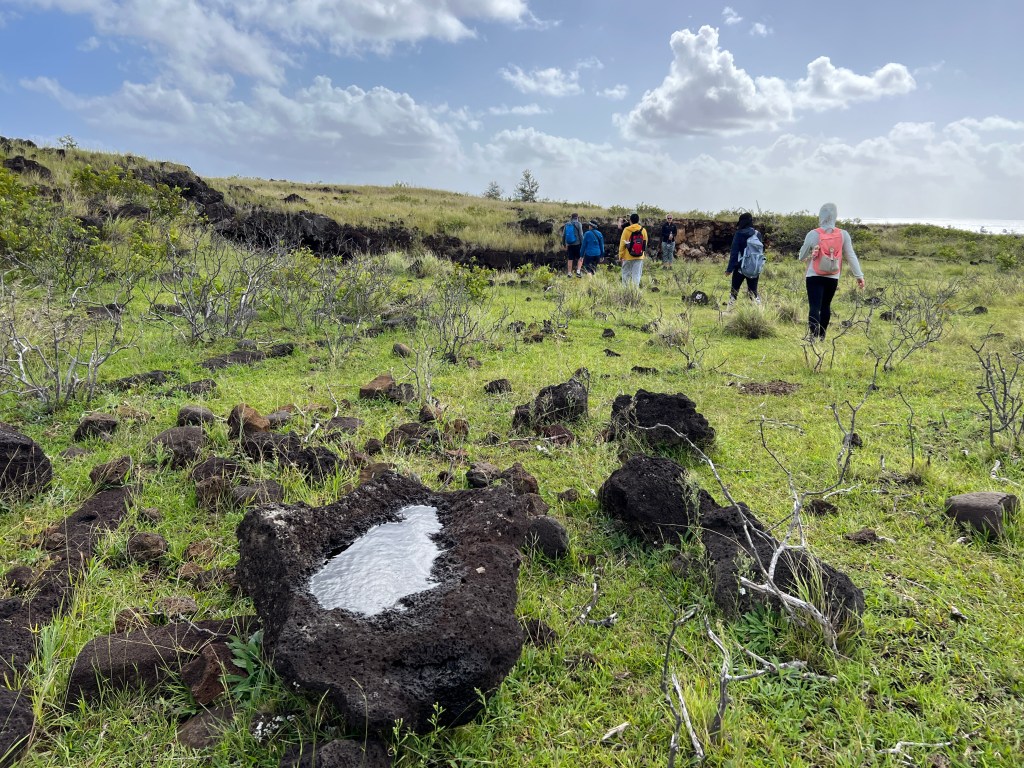
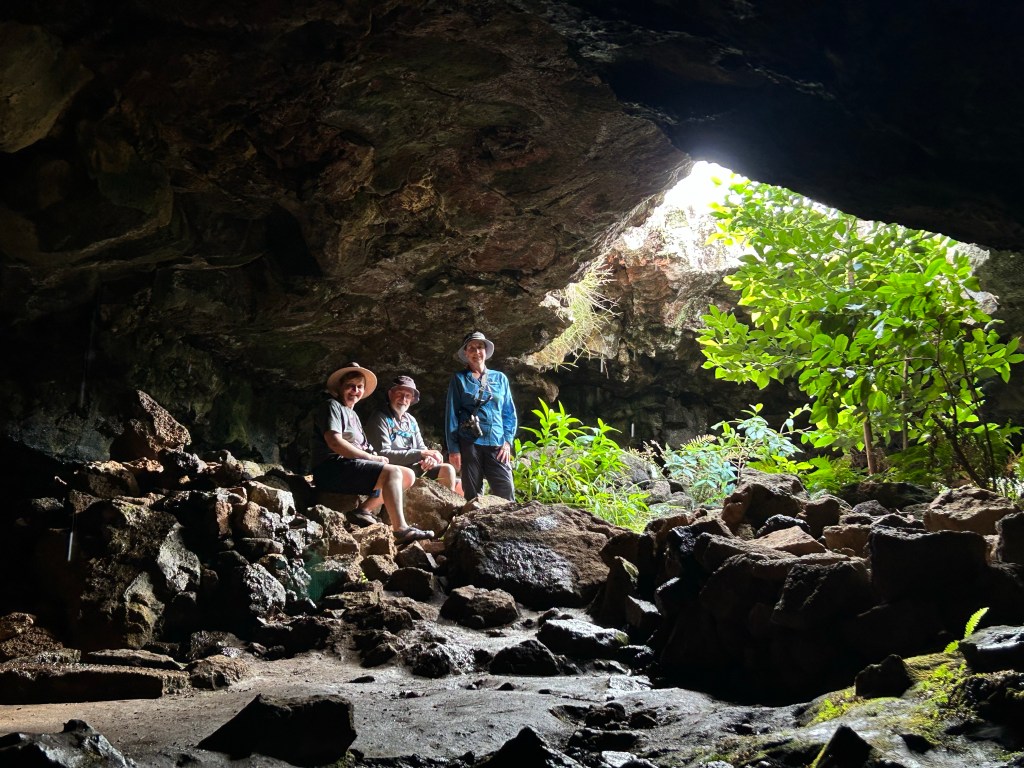
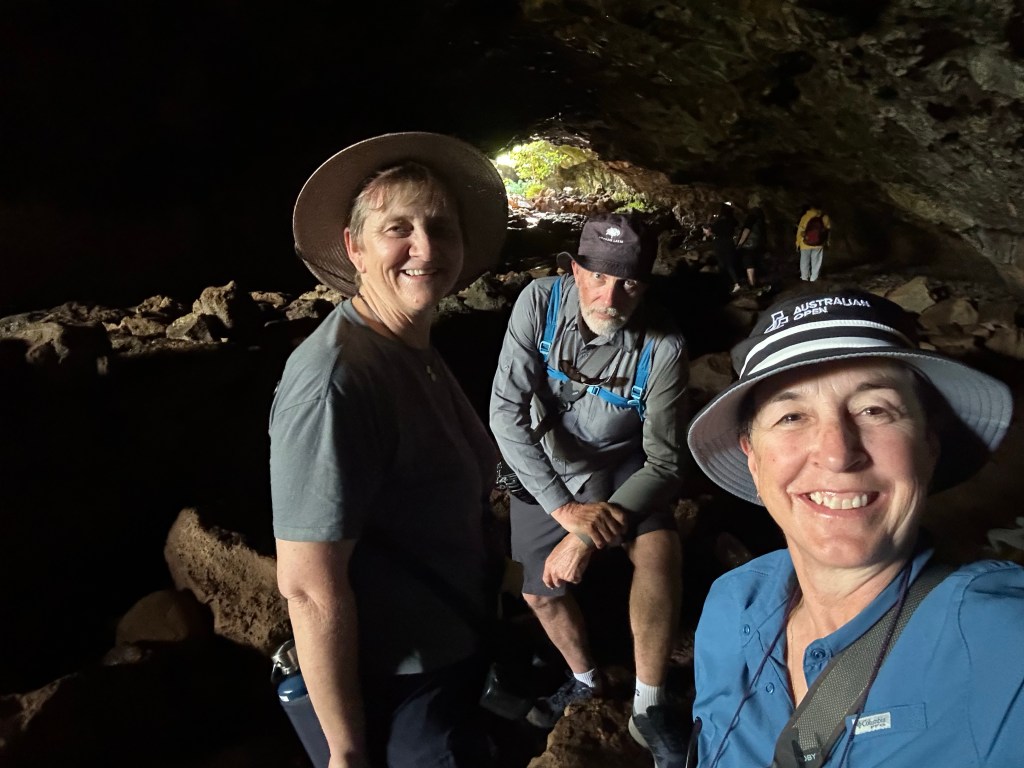
Isabelle showed us some caves which were all part of the lava tubes (tunnels created by volcanic activity). Some of the caves had petroglyphs beside them and fruit trees growing in the rich volcanic soil – avocado in one and banana palms in another.
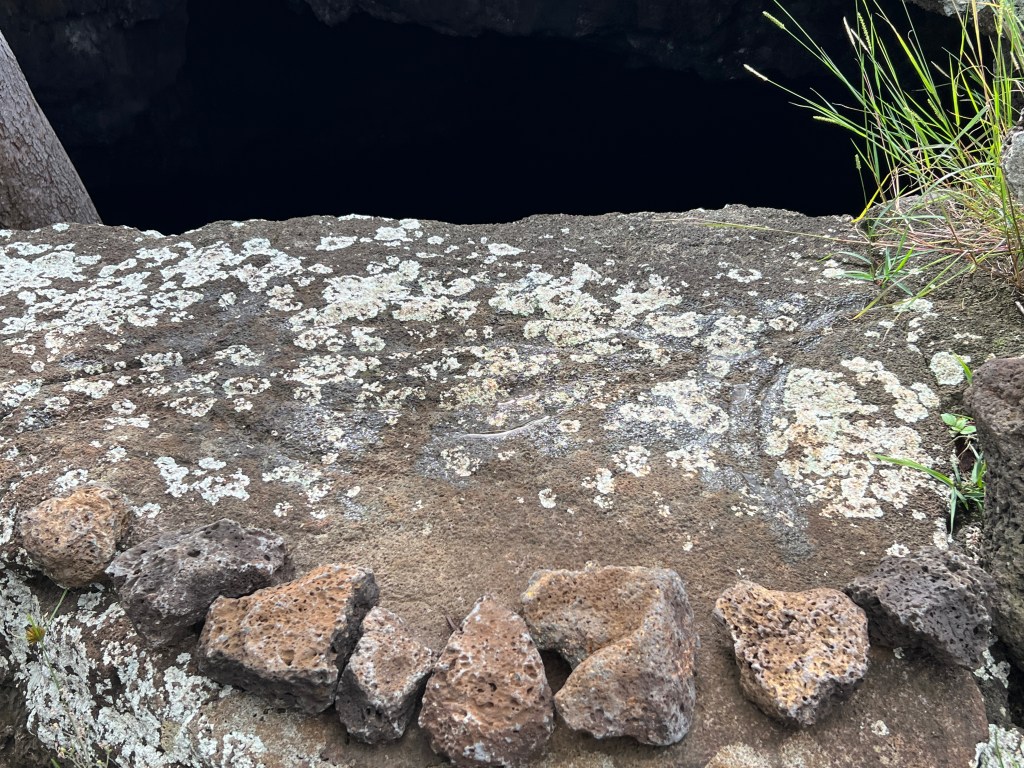
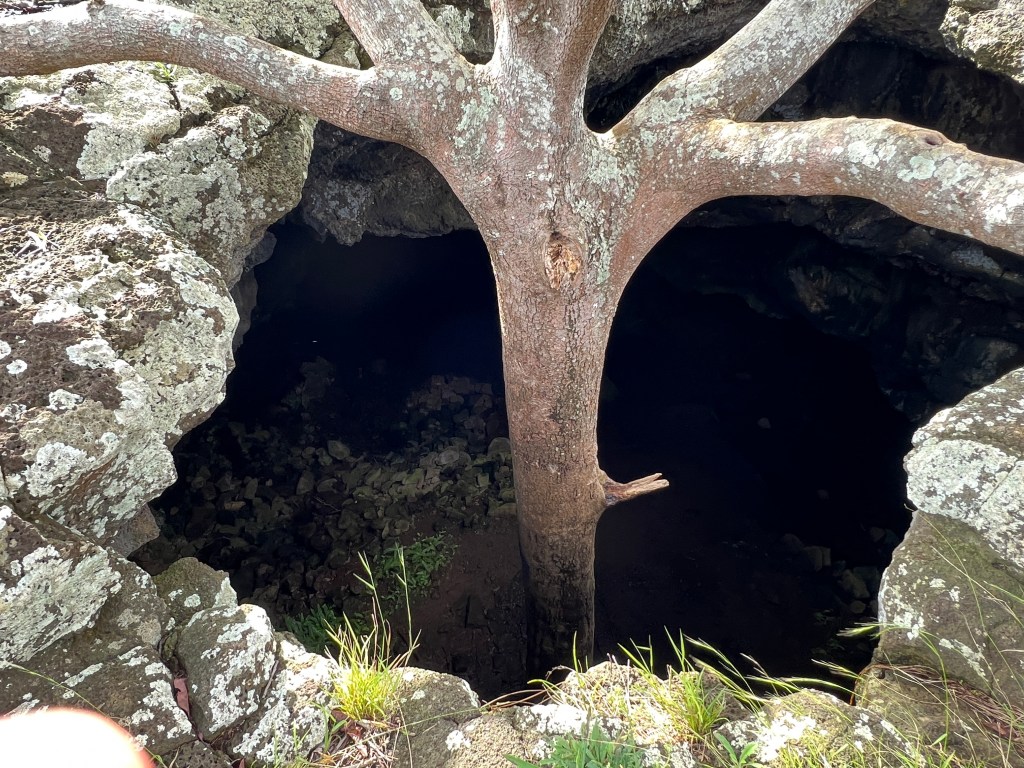
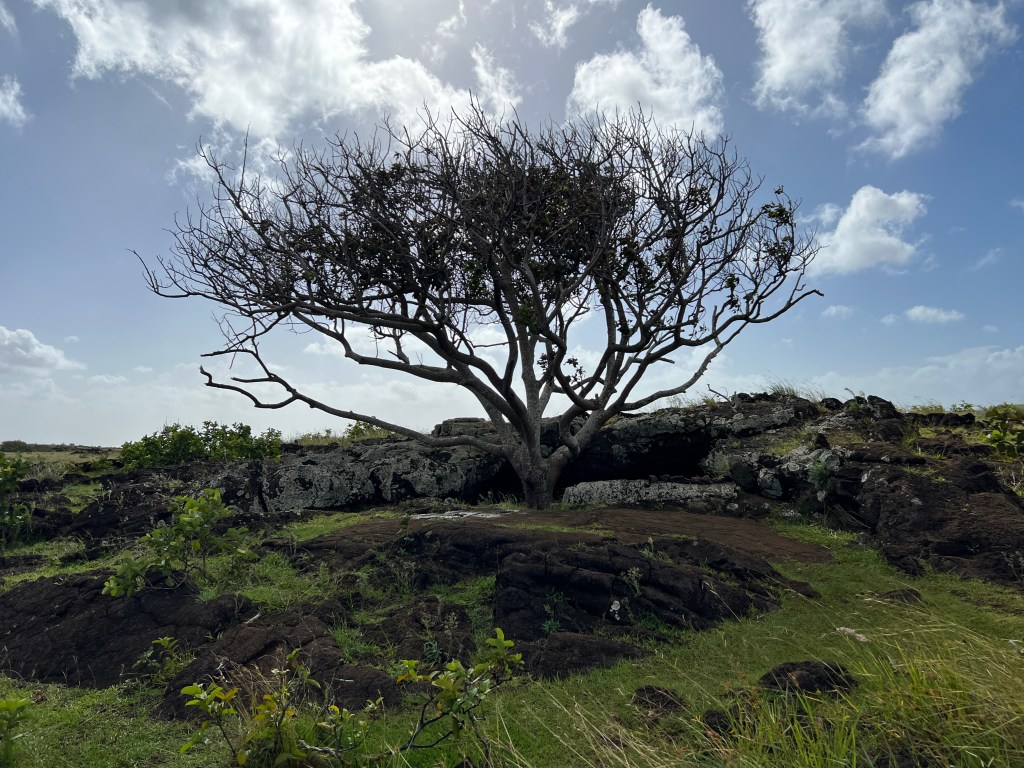
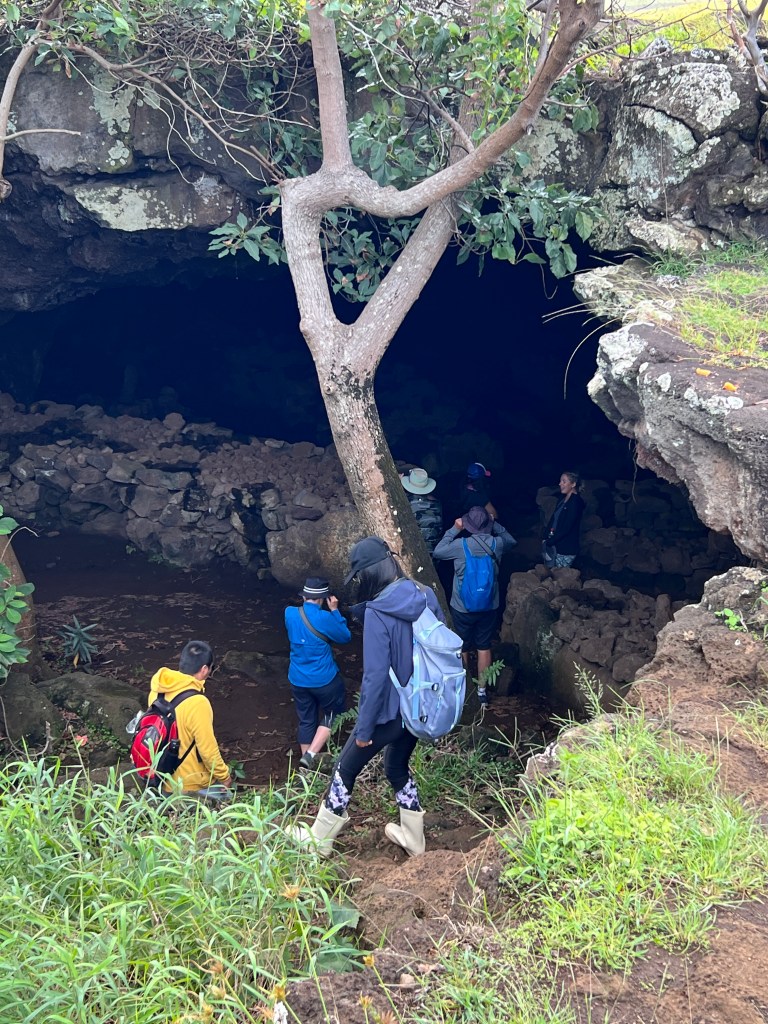
We were able to walk into one of the tubes – pretty cool.
Back to the bus to head on to our first real experience of restored Moai.
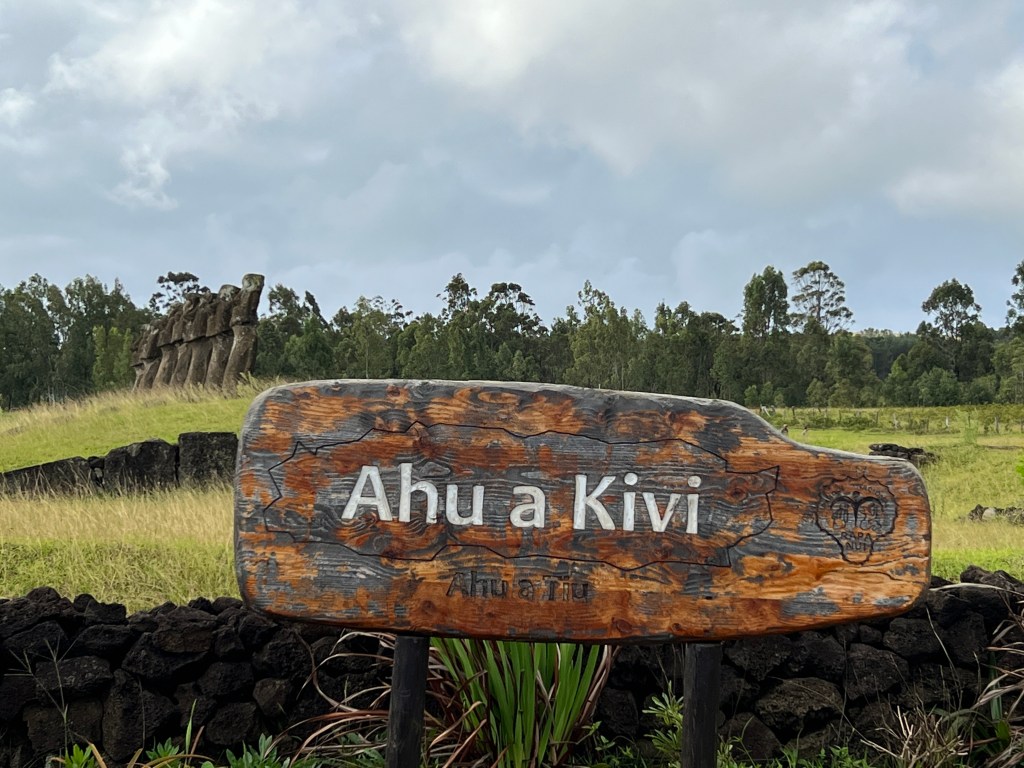
The Moai are central in the first era of Rapa Nui and were carved by the island’s indigenous Rapa Nui people to embody the spirit of a prominent ancestor, with each considered to be the person’s living incarnation.
Here at Ahu a Kivi there were 7 moai. They stand on their platform facing inland to look over and protect the village and its people. The platforms serve as ceremonial areas and also for burial.
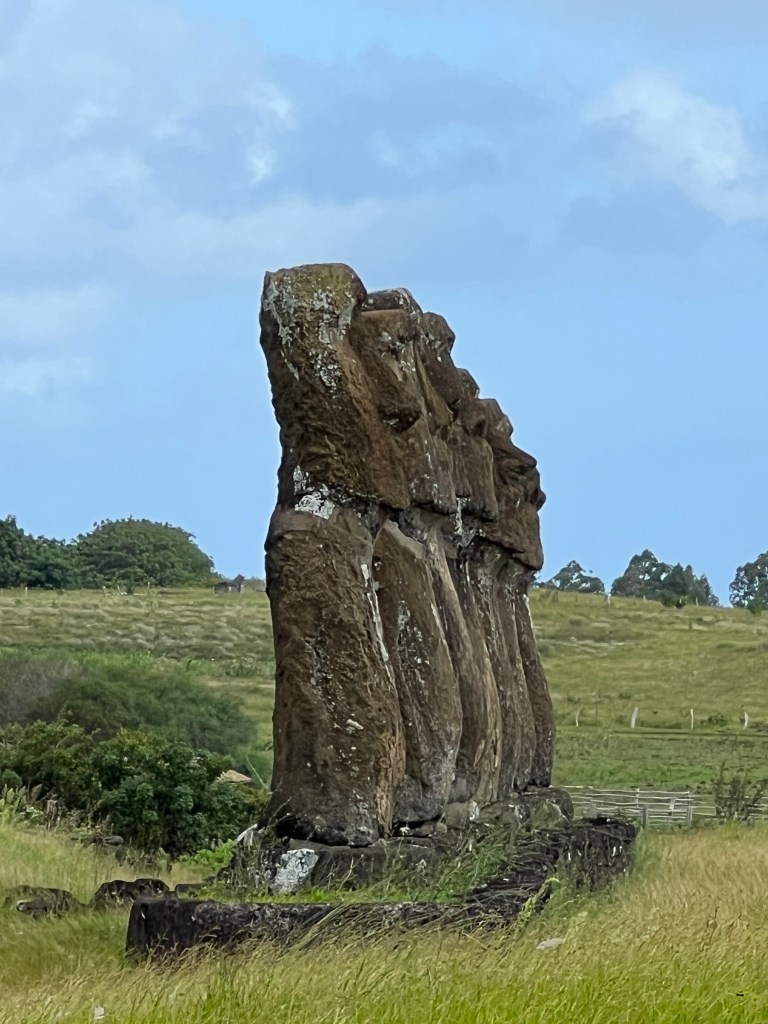
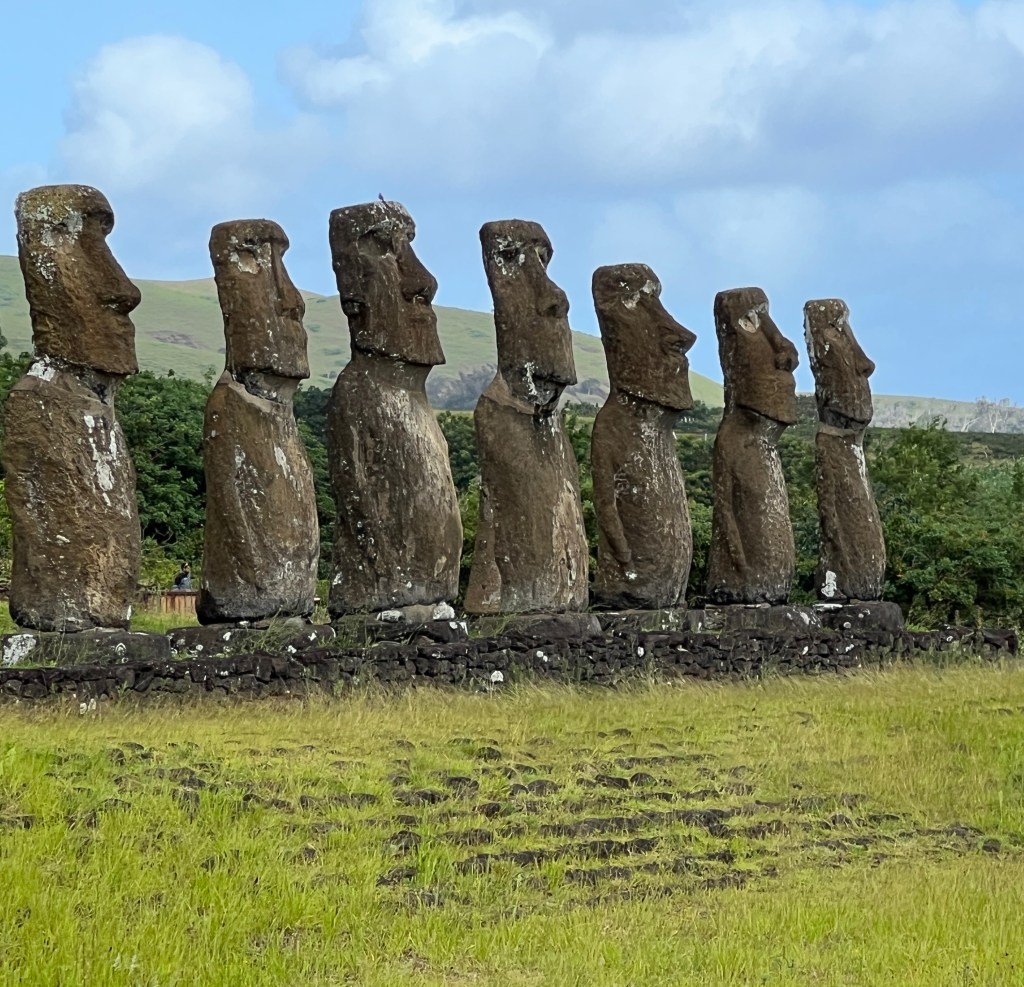
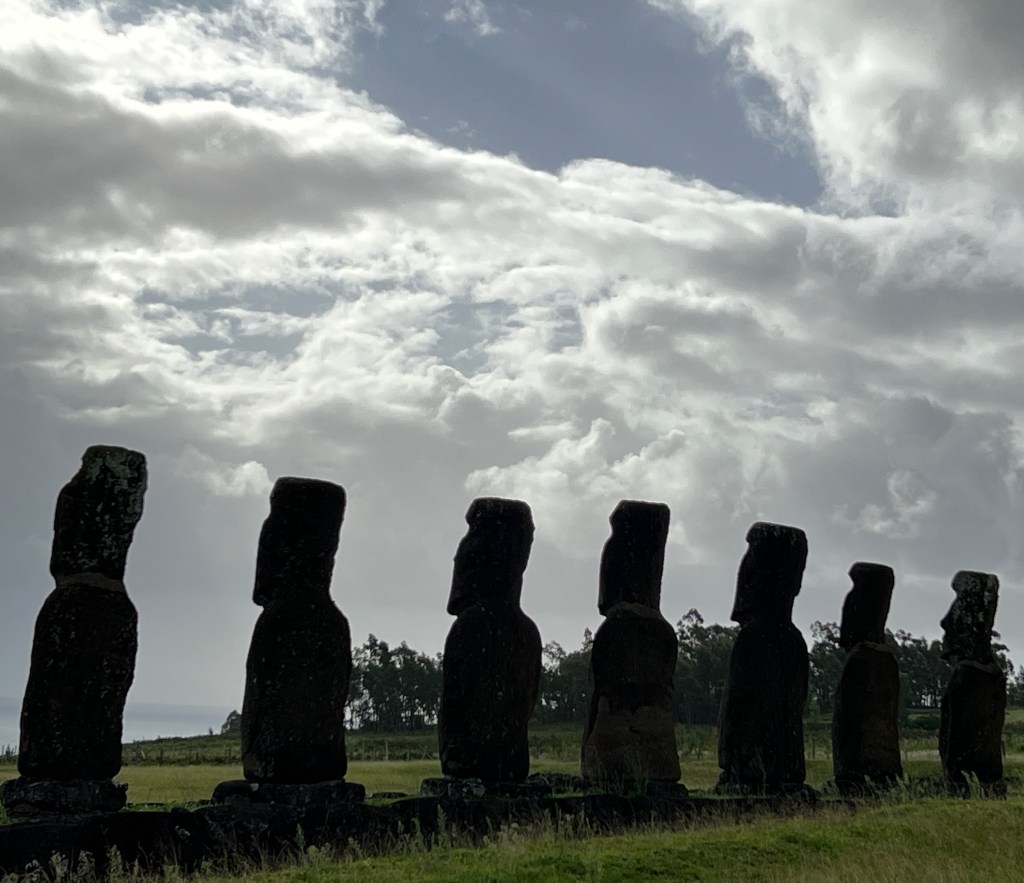
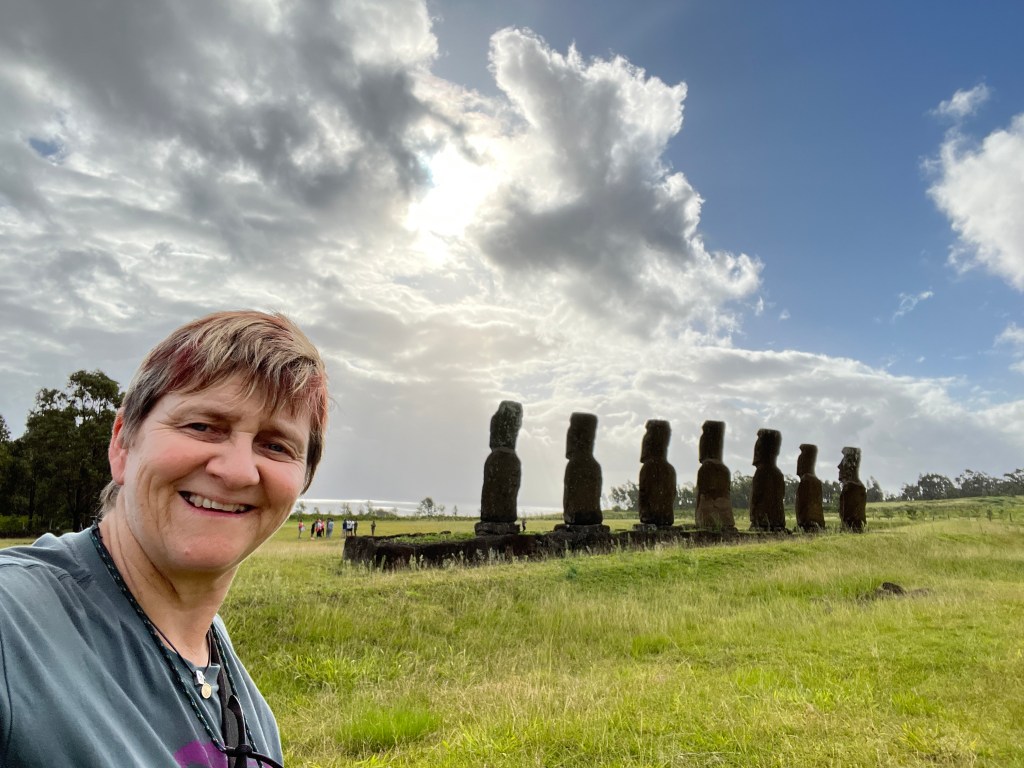
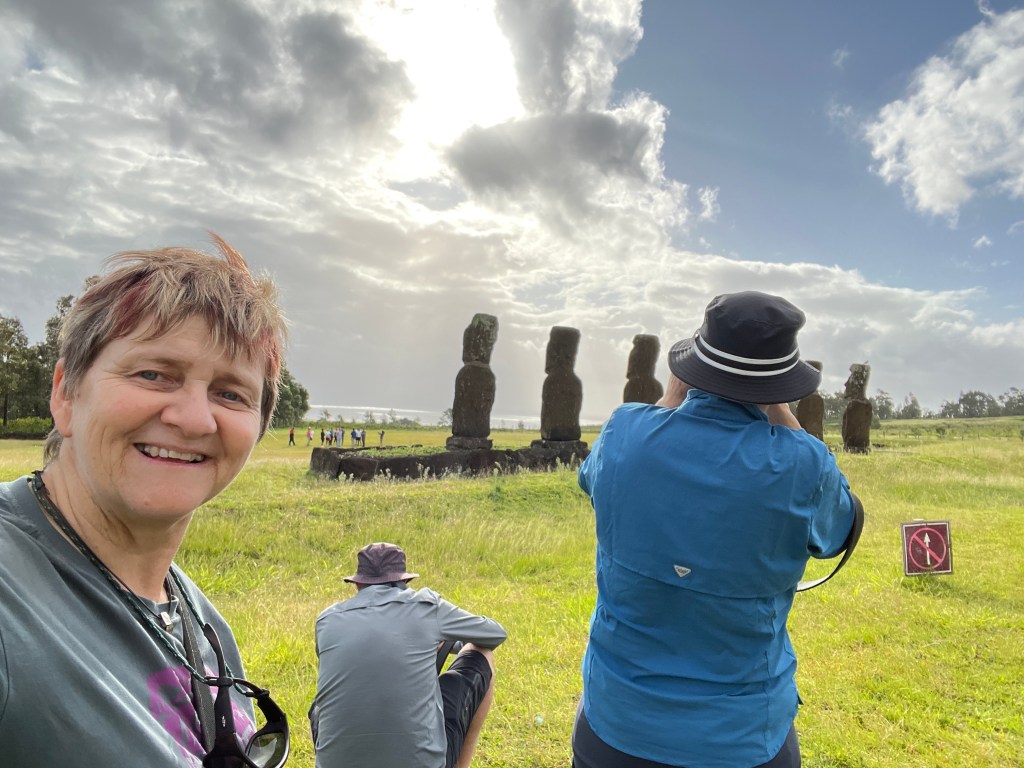
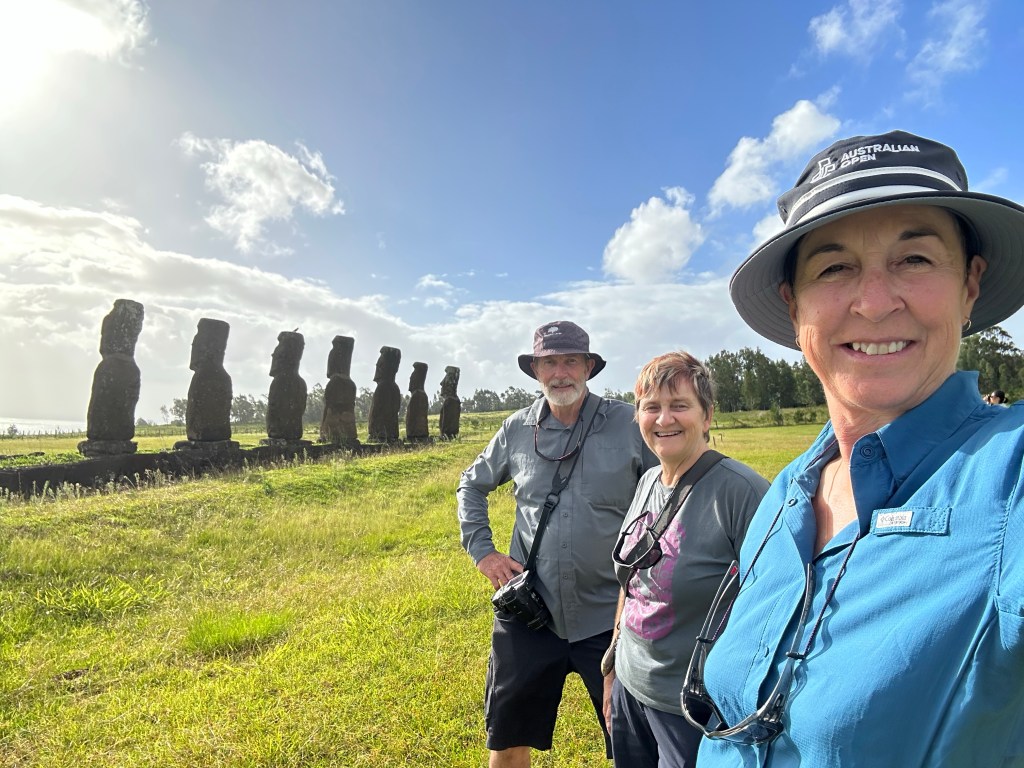
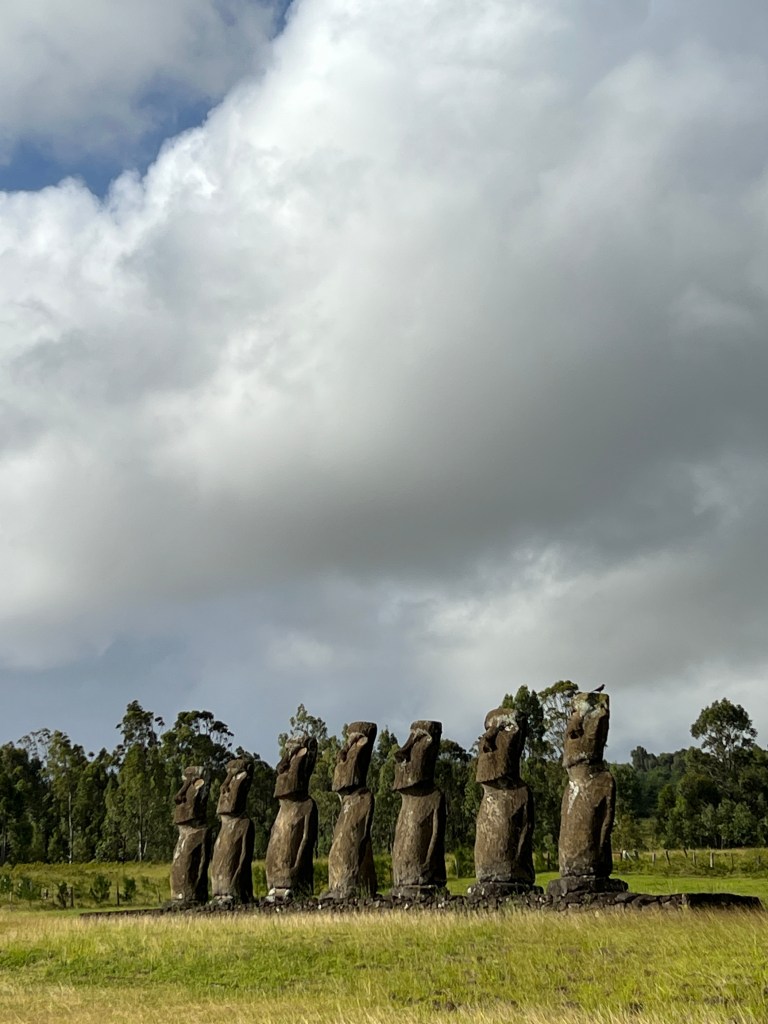
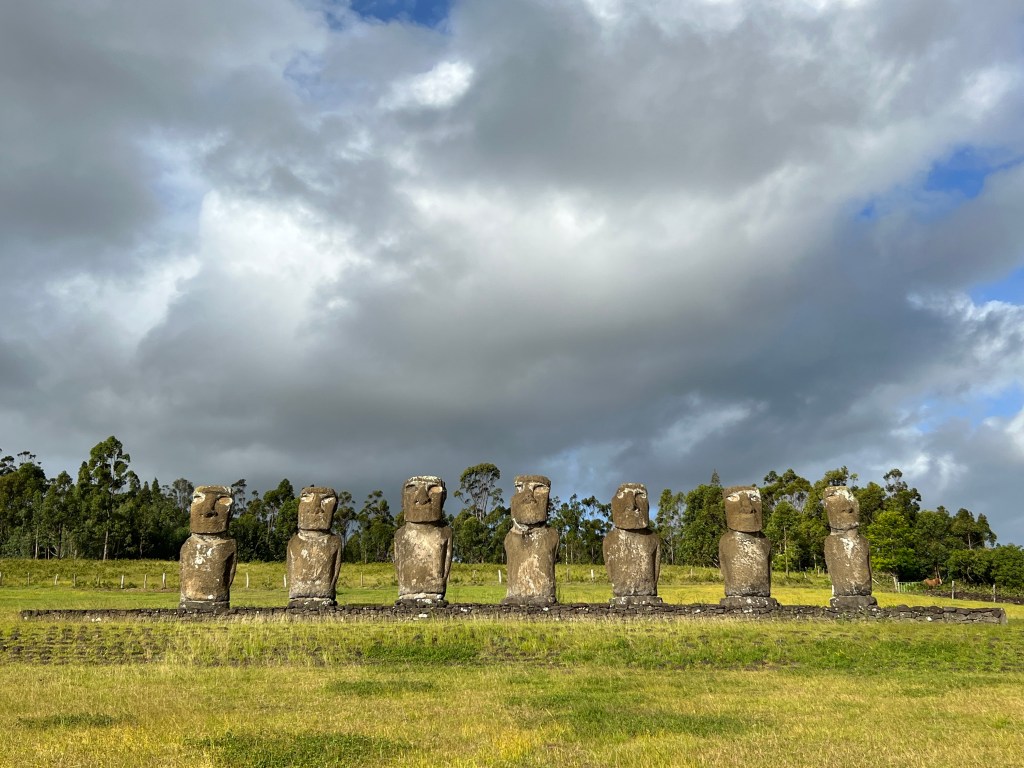
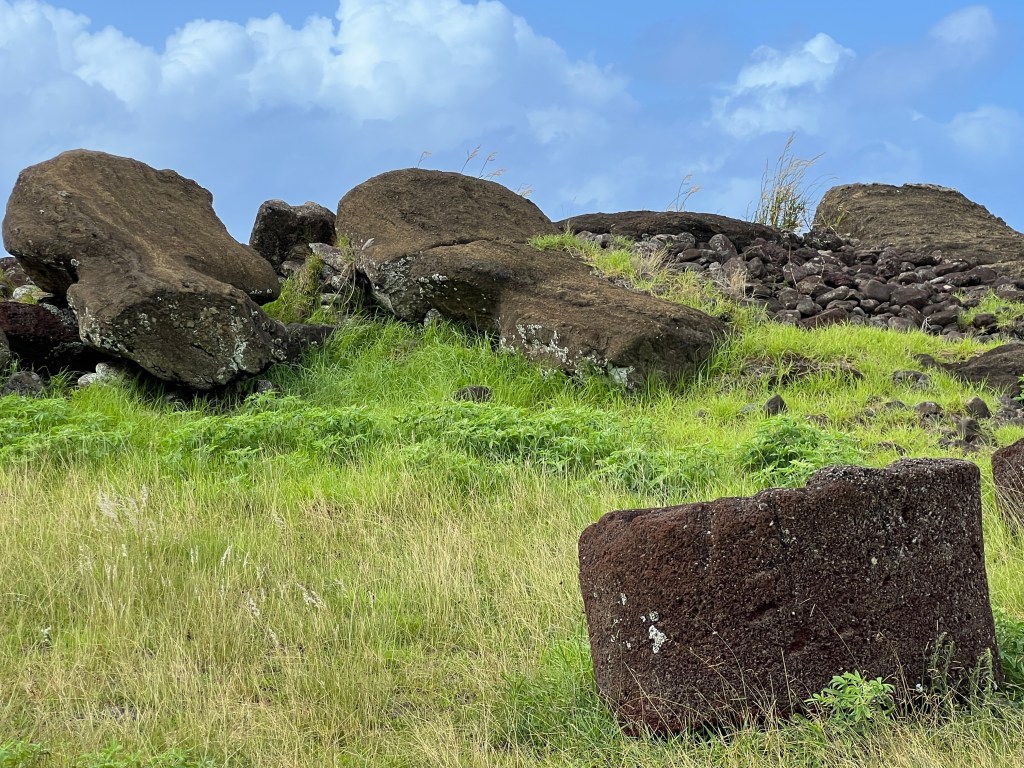
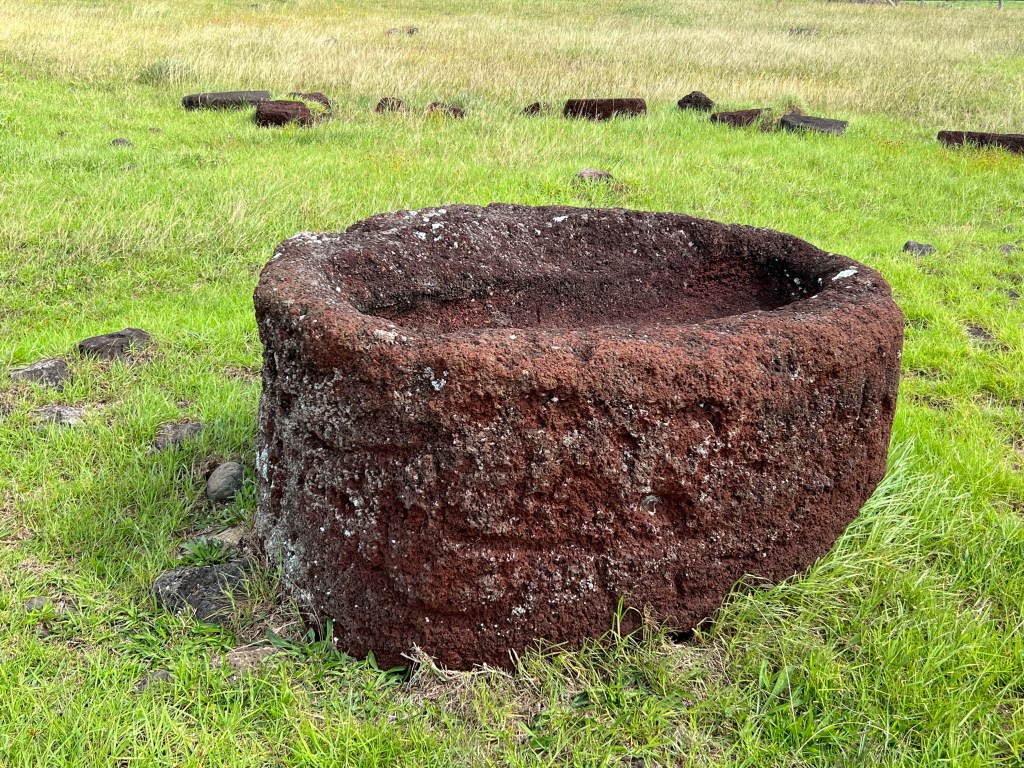
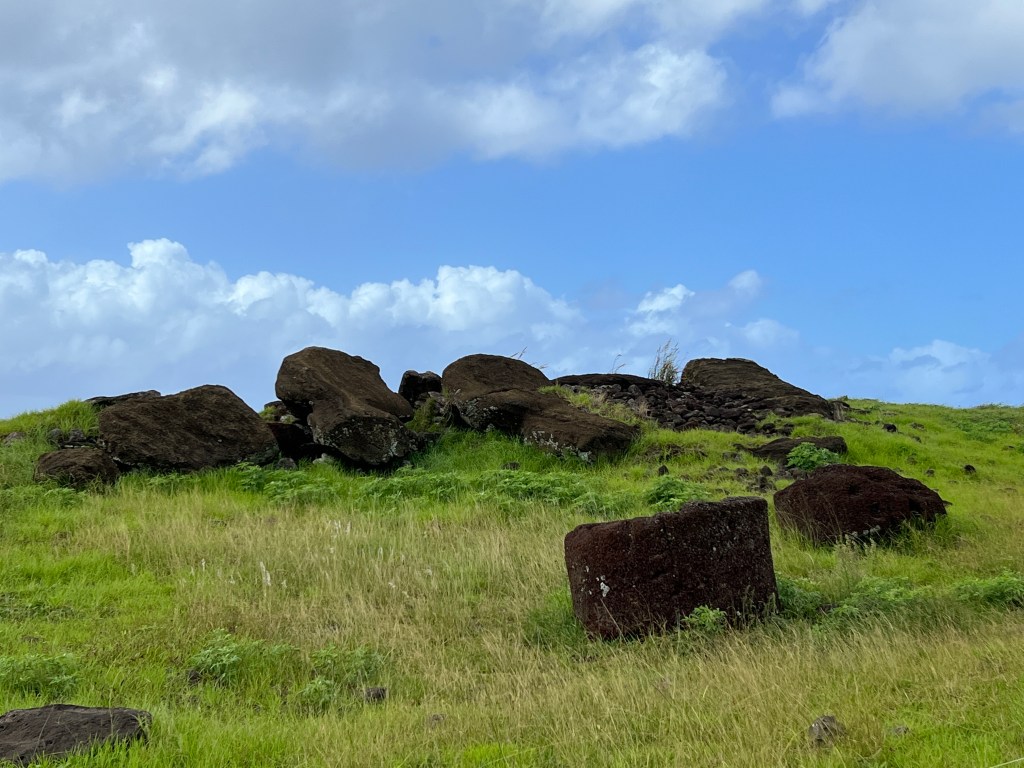
After marvelling at the Moai and taking way too many photos we boarded the bus again and headed to another hill. This one was home to Puna Pau – the quarry of the scoria topknots.
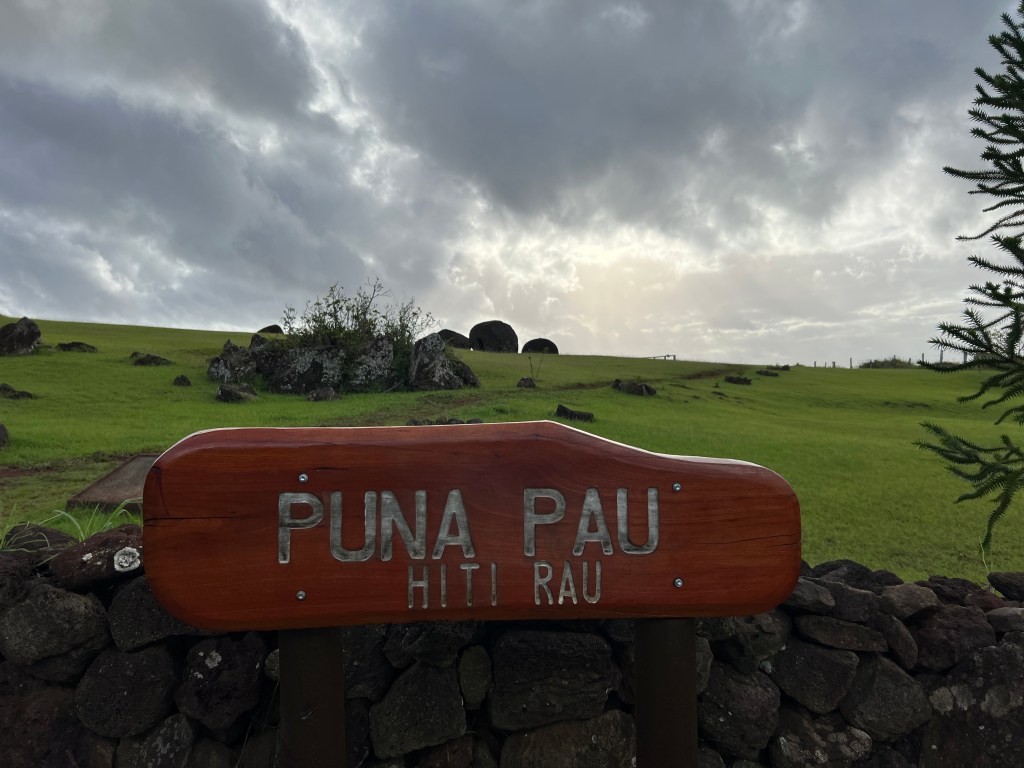
Some of the Moai have a red rock on their head. This is a topknot carved from scoria and represents hair.
Here in this ancient quarry lay a smattering of the huge carved topknots that never made it to the head of their Moai. More Amazing!
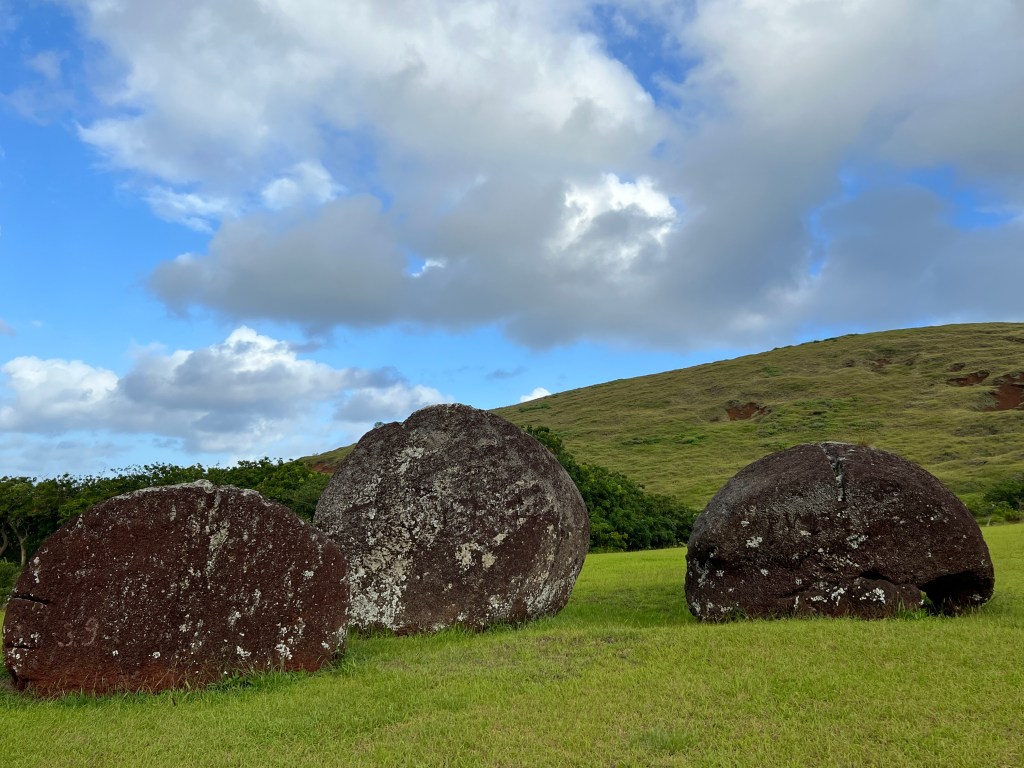
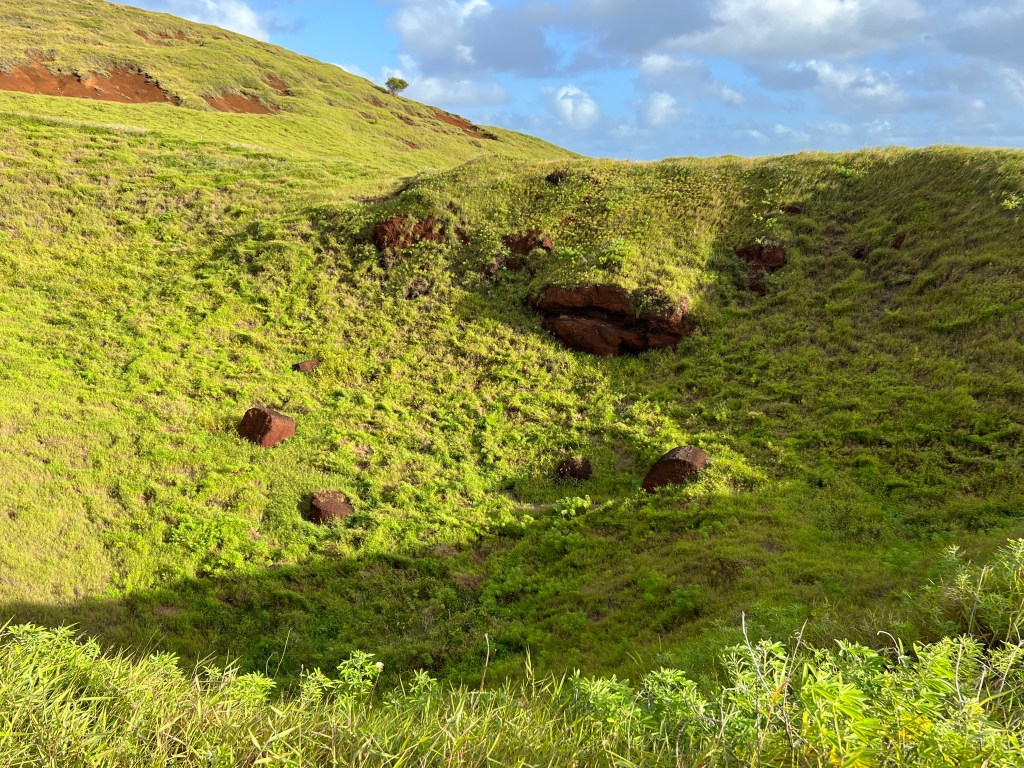
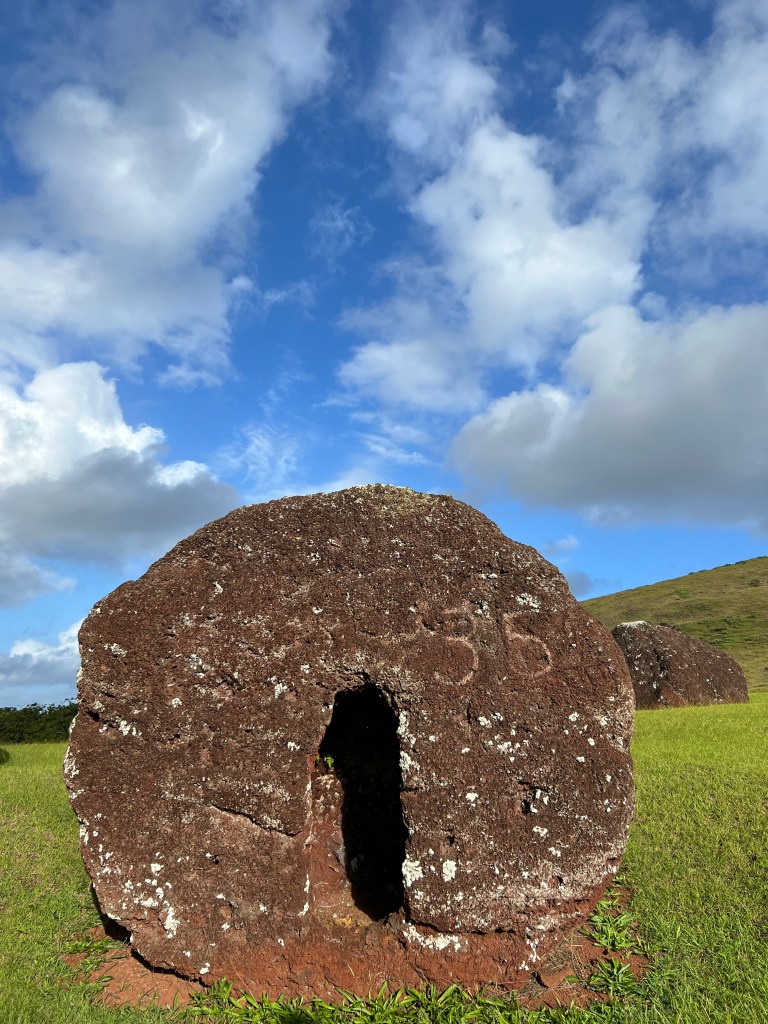
It’s another wonder of the world – how did these people manage to carve the Moai and get them to location and how the heck did they heave the topknot up that high and ensure it fitted its head??? A few theories were shared but no one really knows. Did they roll the statues on logs or walk them using ropes? It remains a mystery.
The quarry was the end of the second half day tour. We opted to return to our hotel.
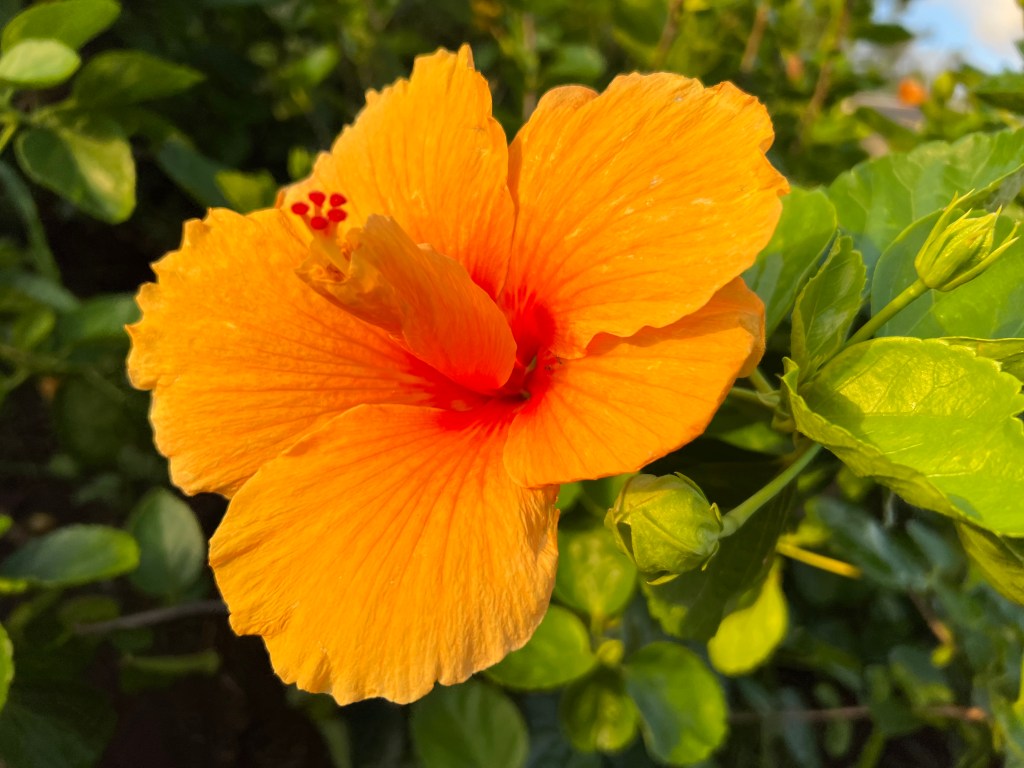
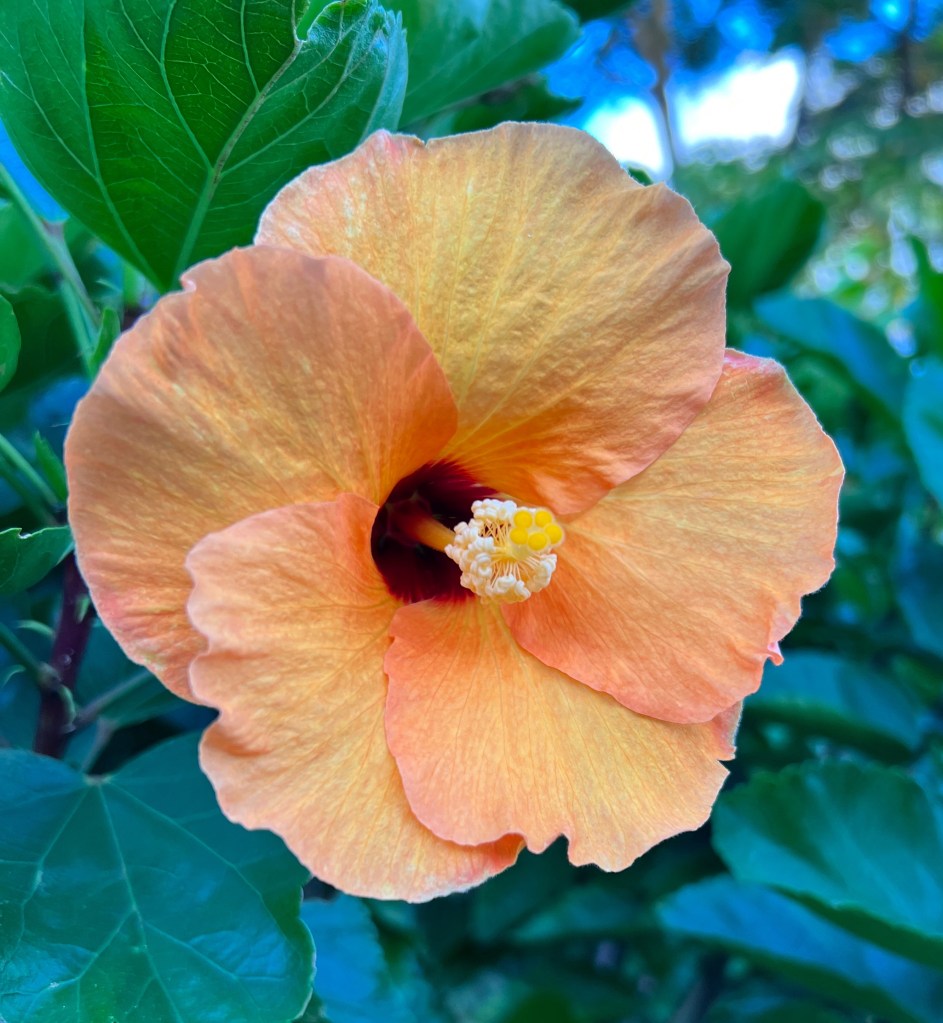
Hotel Altiplanico is made up of a main building housing reception, bar, restaurant, small gift shop, outdoor pool and verandah overlooking the bay. The rooms are all separate hut shaped buildings scattered amongst gardens filled with hibiscus and other tropical vegetation, they have some of the traditional rock gardens too. Looking at the Garden also gave me a chance to get something organised for Mary’s birthday tomorrow!!!
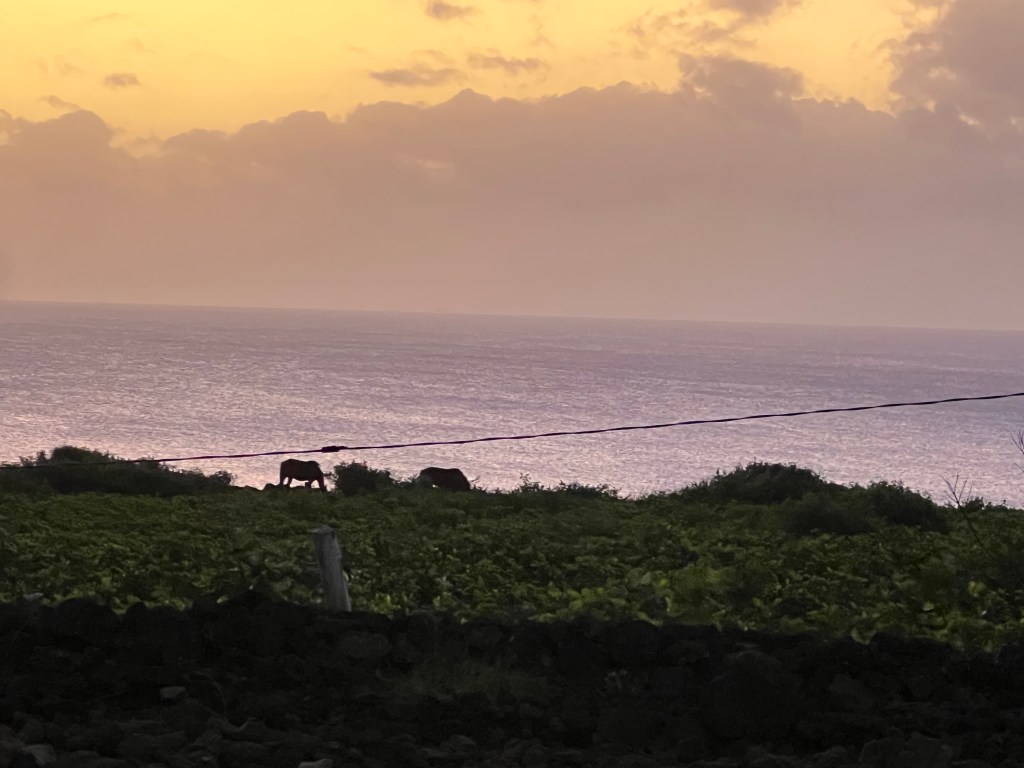
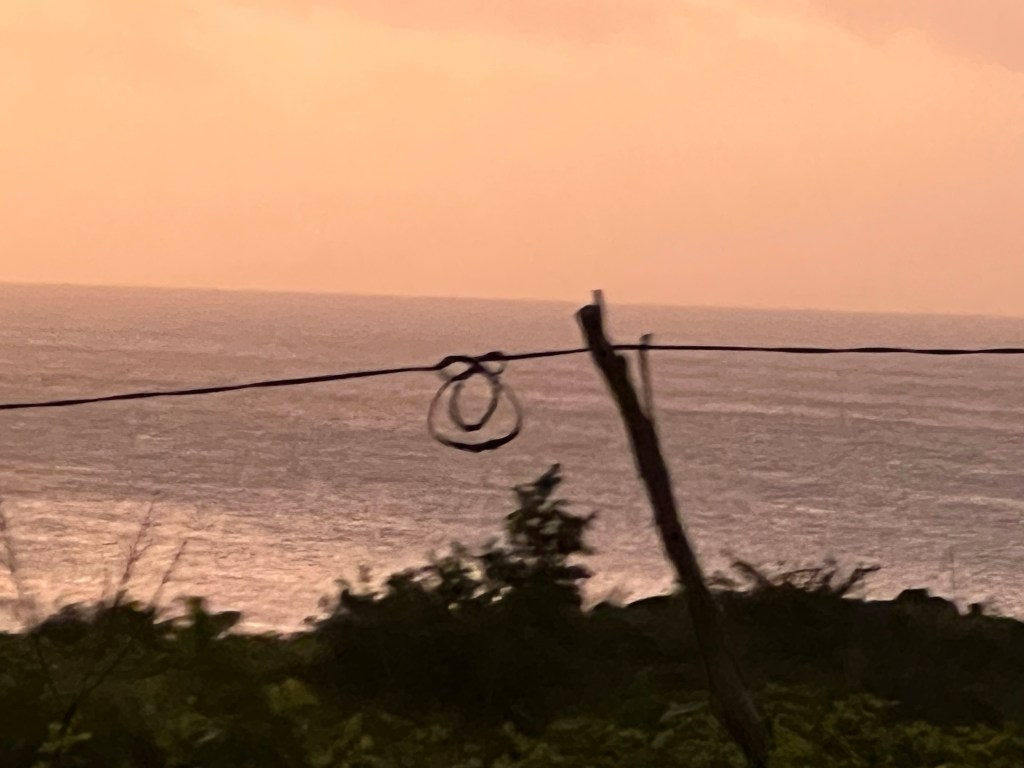
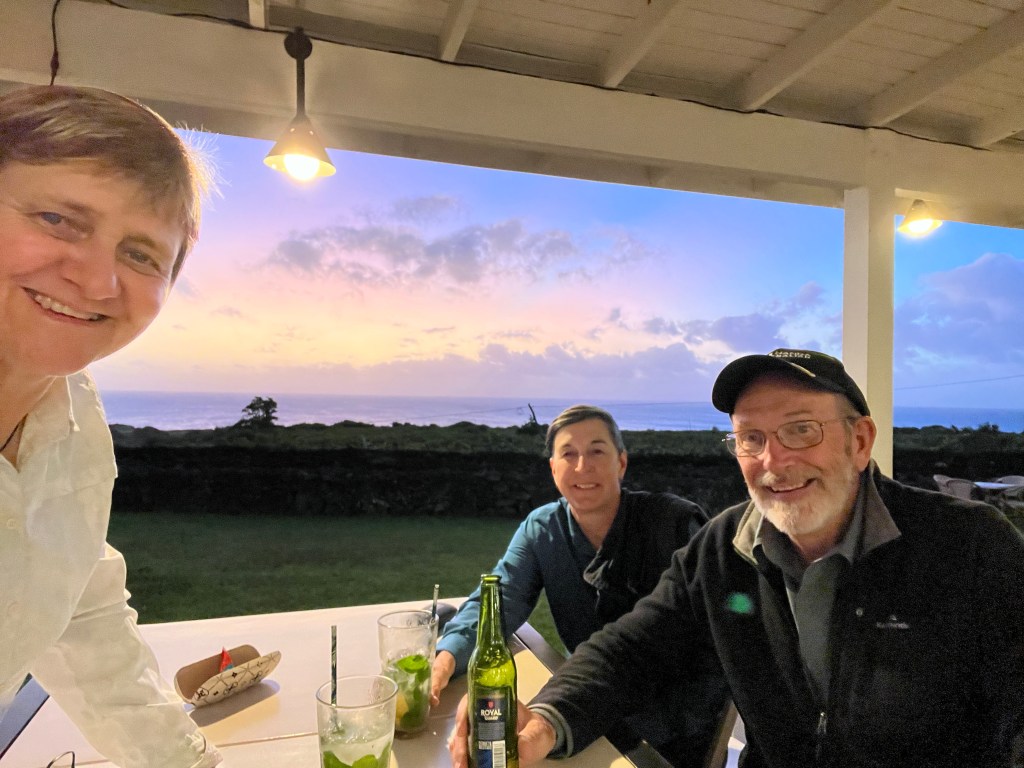
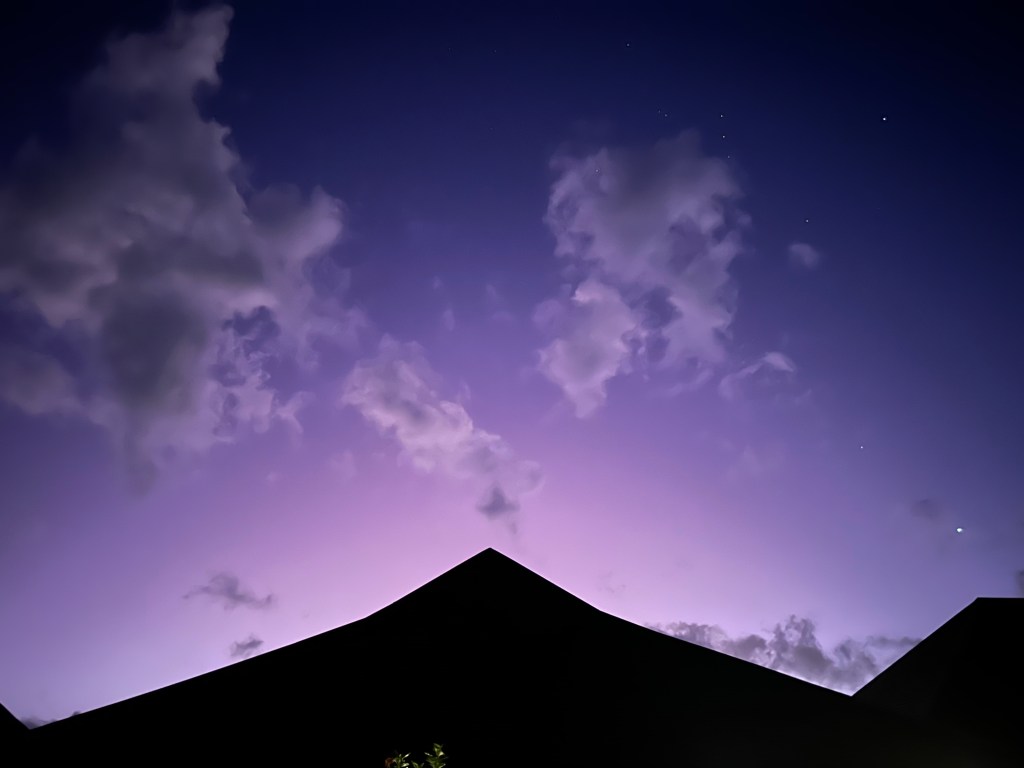
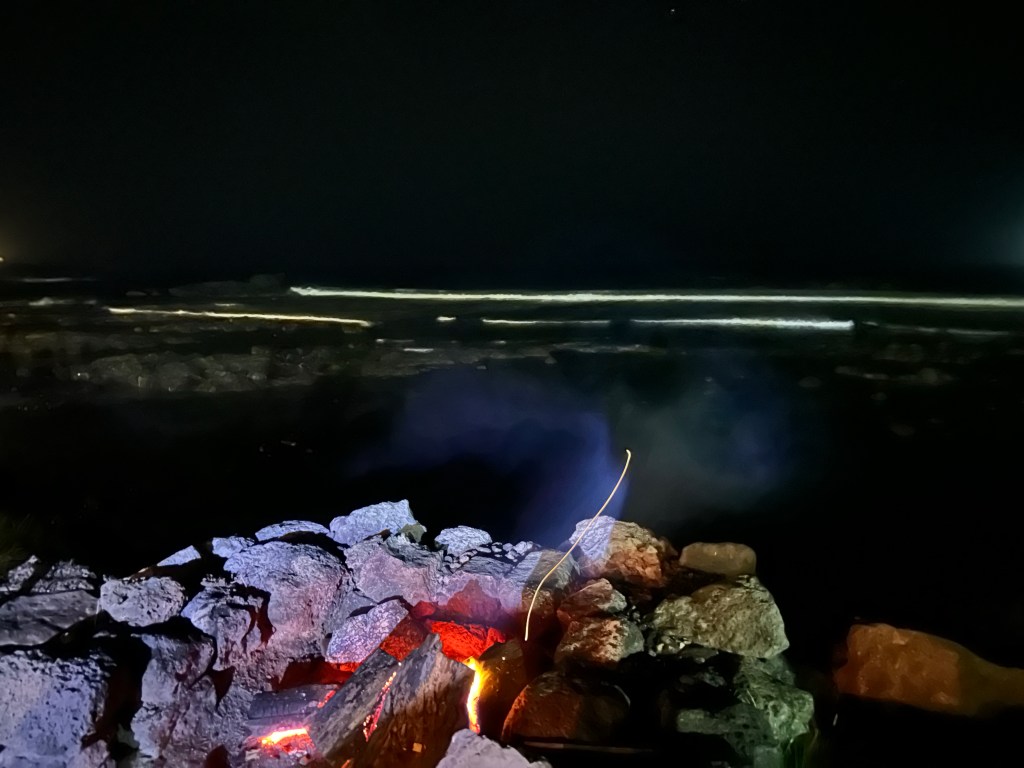
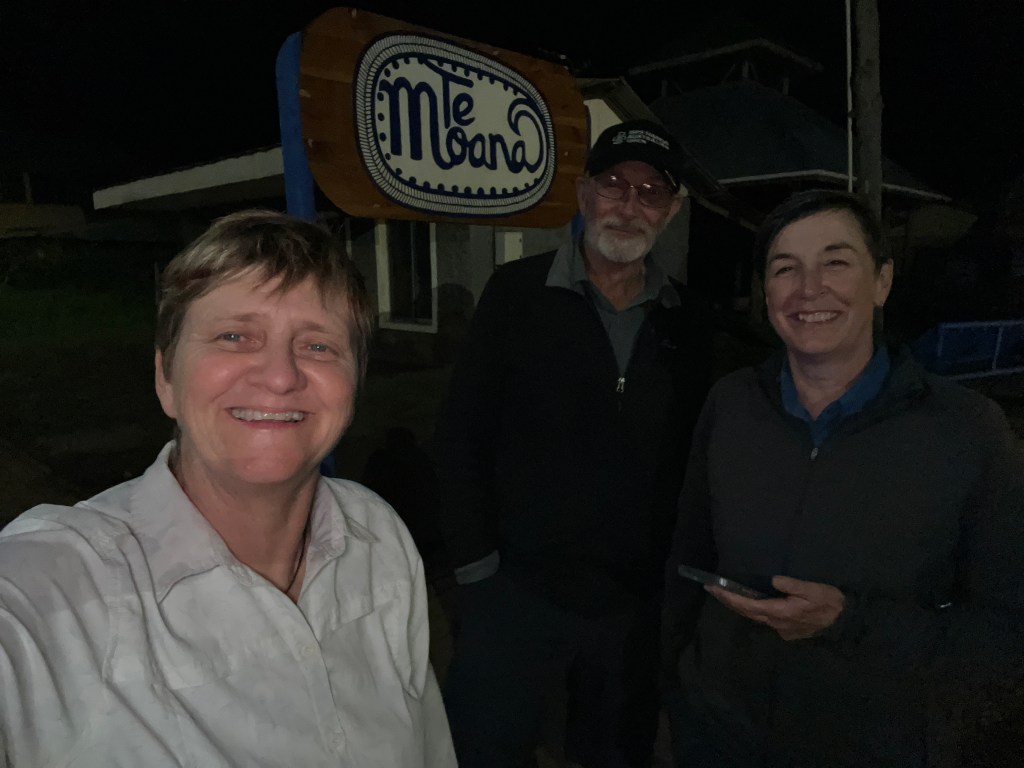
We took some time for a drink while watching sunset before being picked up for our dinner show at Te Moana.
Home to bed – what a day!!! This place is amazing!
 Travel adventures with Nicola & co.