A veritably late start to our day this morning with our half day city tour and Tigre Delta cruise not kicking off till 10.
Our guide Claudia and driver, Pablo arrived close to our scheduled 10am pick up. We had a small 20 seater Mercedes bus just for us. Claudia was an absolute font of knowledge all day.
She informed us that our boat trip was at 1:30 so the city tour revolved around getting out to the neighbourhood of Tigre which is outside of city into the province of Buenos Aires.
There was so much info I just couldn’t retain the detail.
Here’s a smattering of what I can recall.
City centre – San Nicholas/San Telmo.
There are 49 neighbourhoods in BA. Palermo is the largest – we came home via some of Palermo.
The country of Argentina and City of Buenos Aires have been the scene of much unrest, violence, coups, uprisings etc and each is marked in various ways around the city.
We started off along July 9 Avenue which is the widest in the world at 144m wide and at times has 14 lanes of traffic. This commemorates Independence Day – the 9th July 1816 which resulted from San Martin declaring independence from Spain.
Porteno, or Portenese are the Buenos people. (Named as such because the city began as a port town)
Trees along the Avenue are native from around the country.
The ones with Pink flowers we saw yesterday are called Drunk trees and are used in the north for cotton which comes from the huge seed pod and is used to stuff mattresses. They also retain water a lot like our Boab trees.
Teatro Colon is their Opera House with perfect acoustics, it holds 3000 people. 3 architects were used, the first one suicided, the second was murdered and Tamborini was hired to finish it.
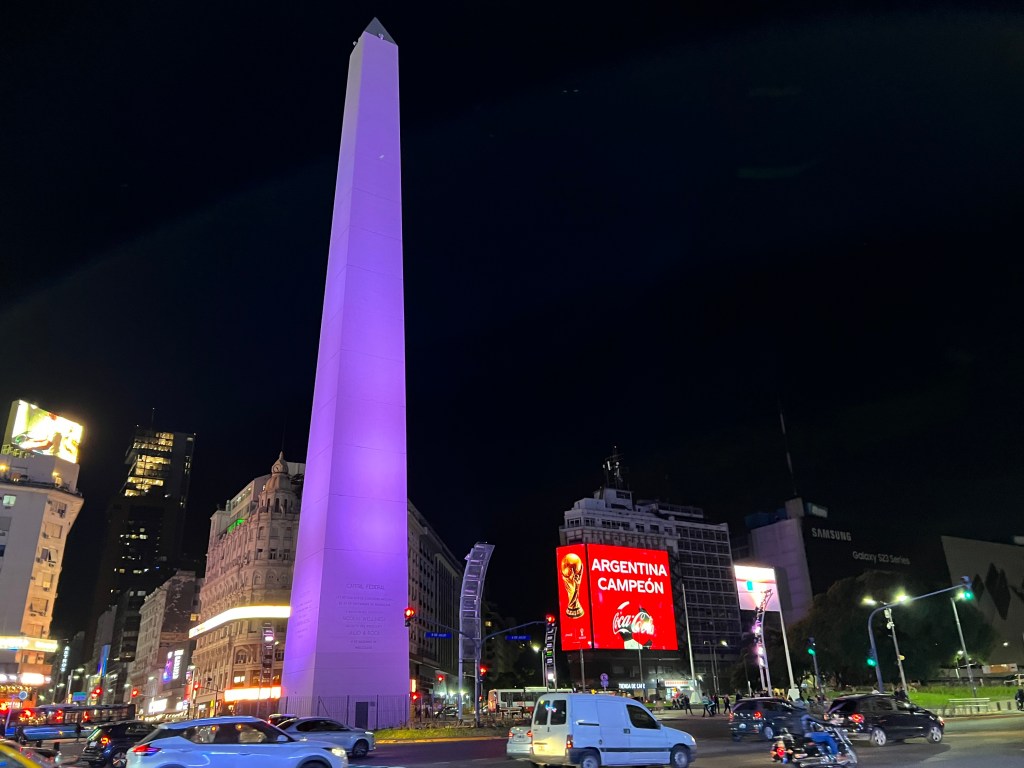
El Obelisco is a key feature of the city centre and place of celebration (you may recall scenes of celebration following Argentina’s success in the World Cup on the news)
We visited the Main square – Plaza de Mayo which houses all the important government and administrative buildings. This area is popular for protests given the proximity to Govt buildings.
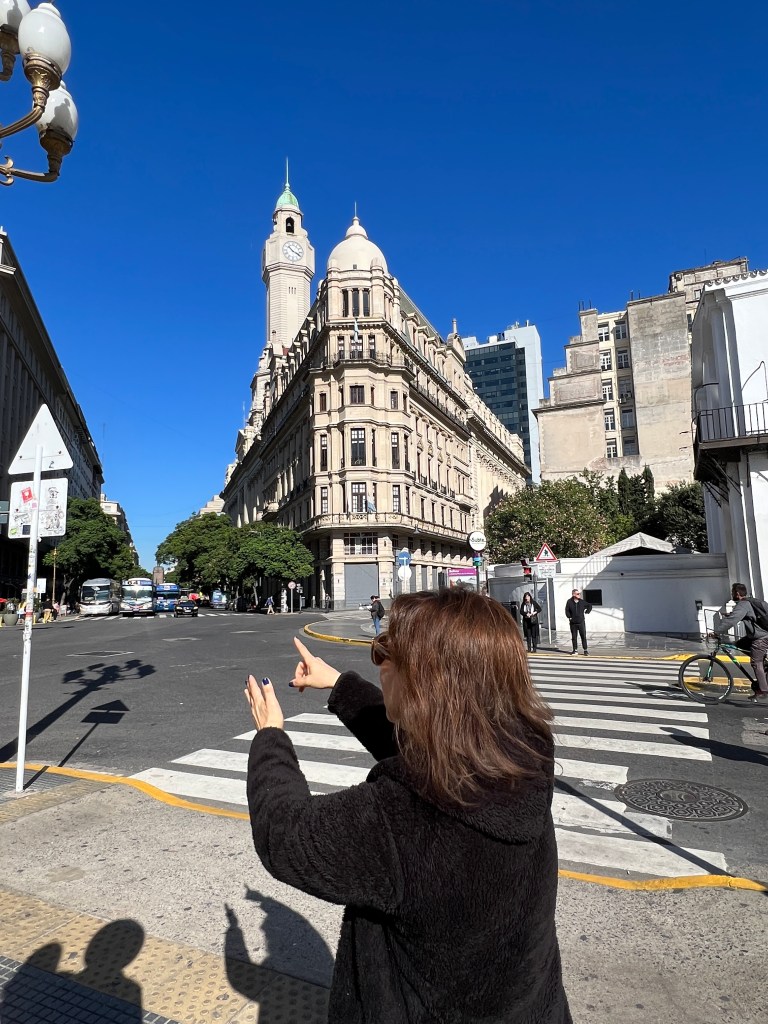
The Plaza de Mayo is named and commemorates the Argentine Revolution of 25 May 1810.
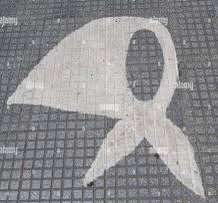
There was two very moving things here. Firstly white hankerchiefs were painted on the pavement around the Pyramid de Mayo monument. These signify the headscarves made from diapers that the mothers and grandmothers of ‘The disappeared’ wore to mourn and protest the loss of their children during the last military dictatorship. This occurred in recent history back in 1977 to the early 80s when over 30 000 young people disappeared as they were speaking out against the military regime of the day. No one was permitted to gather in groups in the Main square, so the mothers and grandmothers silently gathered, covered their heads and walked in a circle around the monument to mourn and pay tribute to their disappeared children. The Mothers of Plaza de Mayo meet and walk every Thursday at 3:30 where anyone can join them.
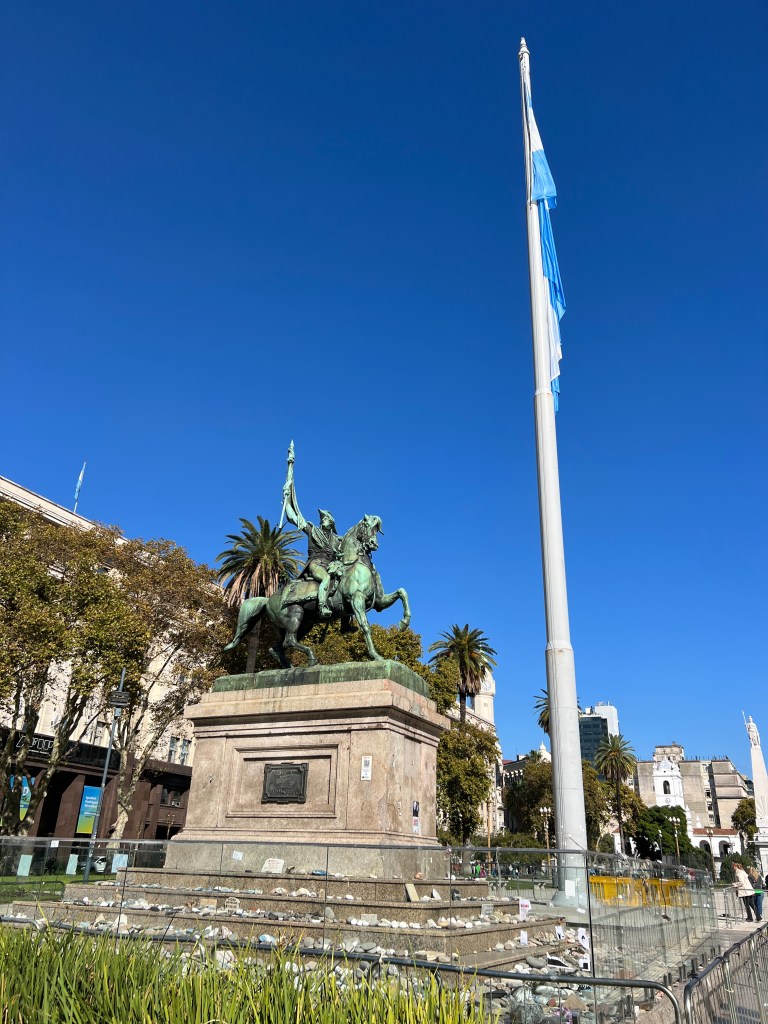
Also around the General Belgrado monument were thousands of rocks and stones – each with a name. Each rock signifying someone who died alone during COVID. As the people were in lock down and unable to seek treatment or spend time with loved ones so many died alone.
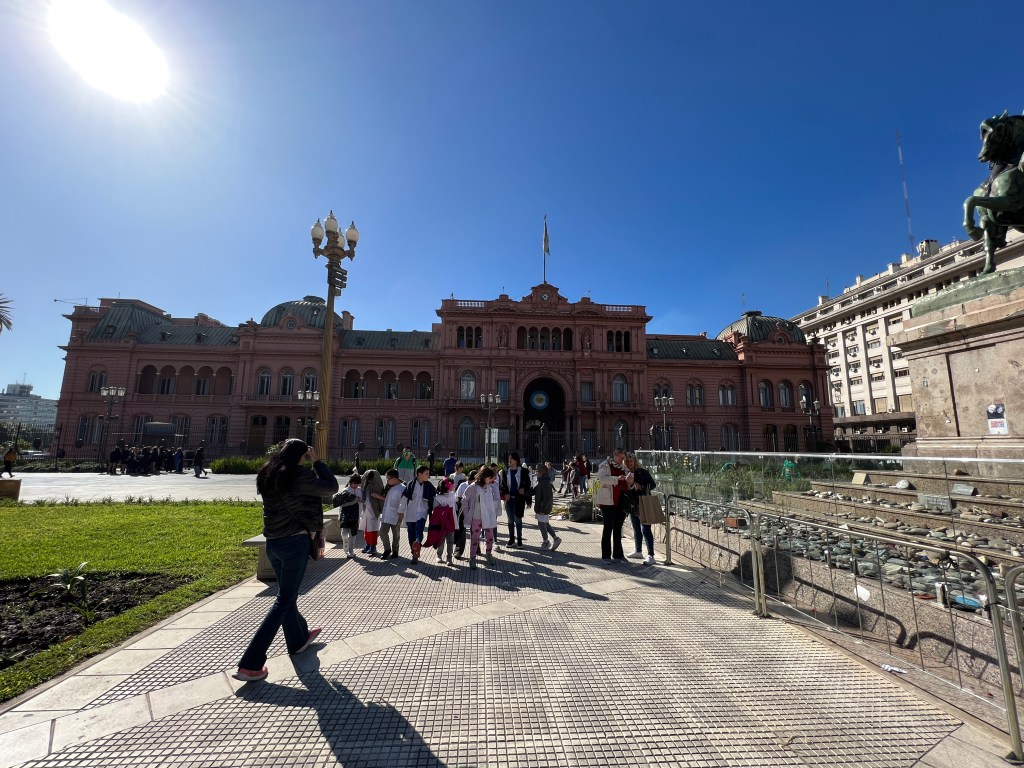
Along with the Government buildings around the square there are two churches – The Cabildo – a colonial building from the days of spanish rule and secondly the key Catholic Church – Catedral Metropolitana de Buenos Aires – is here too – the main focus was Virgin Mary rather than Jesus. This one has a lack of solid gold and sliver and marble as Argentina is devoid of such natural resources. Much of the decoration is painted to look like gold and marble. We went into this one.
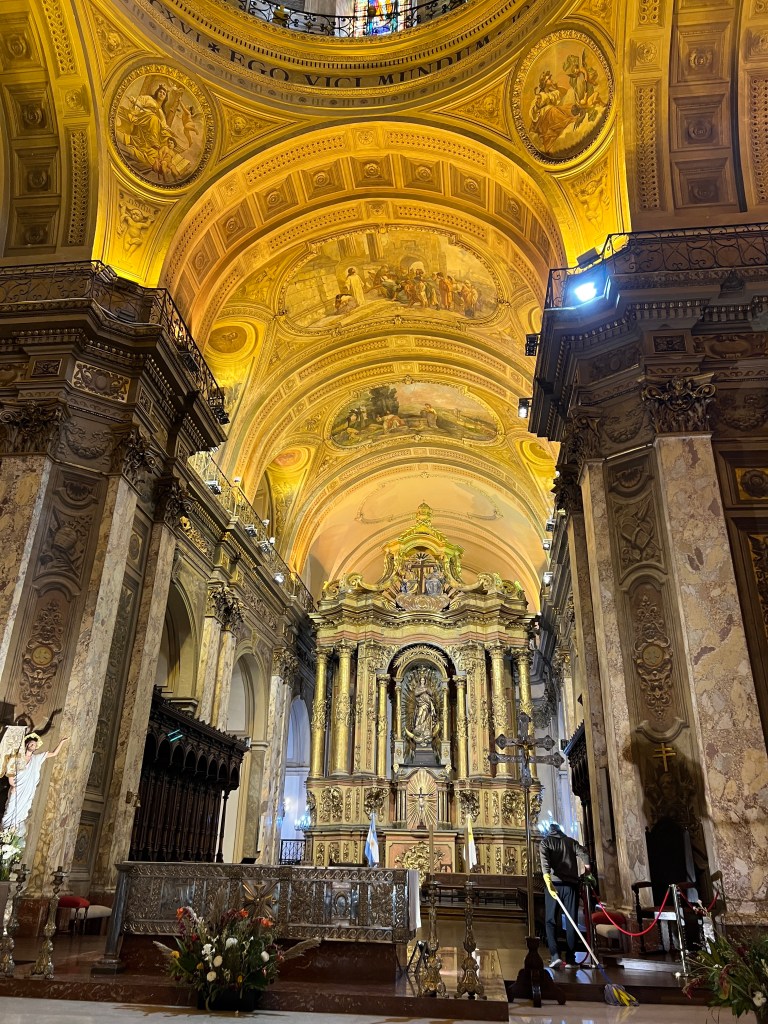
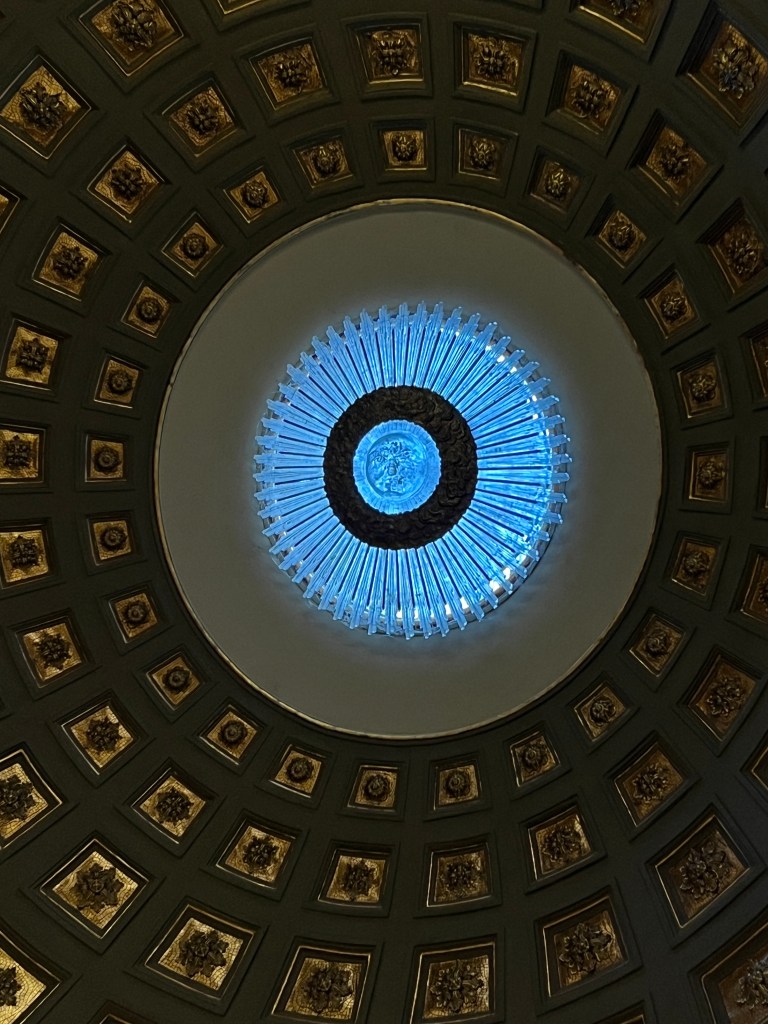
It seems the Catholics here are far more liberal – paying homage in this church to the Jewish holocaust and the Armenian genocide. They are also accepting of abortion and gay marriage.
Argentinean history is dotted with revolutions and take overs with Military rule, the Spanish and other political leaders who were also deposed. I lost track of all the dates etc
Our next stop was in the South – San Telmo. An old residential area. Here we saw the influence of the French in the housing. Now it’s noted for its Market and antiques.

La Plata river surrounds the city.
The Casa Rosado (pink house/government house), located in the Plaza de Mayo, used to be a fort on the coast. A lot of BA had been built on reclaimed land.
Every block in the city is a 100mx100m square.
The Economy is based on working of the land. Economy is unstable.
Single women were not allowed out alone so used balconies after dark to socialise and meet their friends and lovers, hence the large number of balconies.
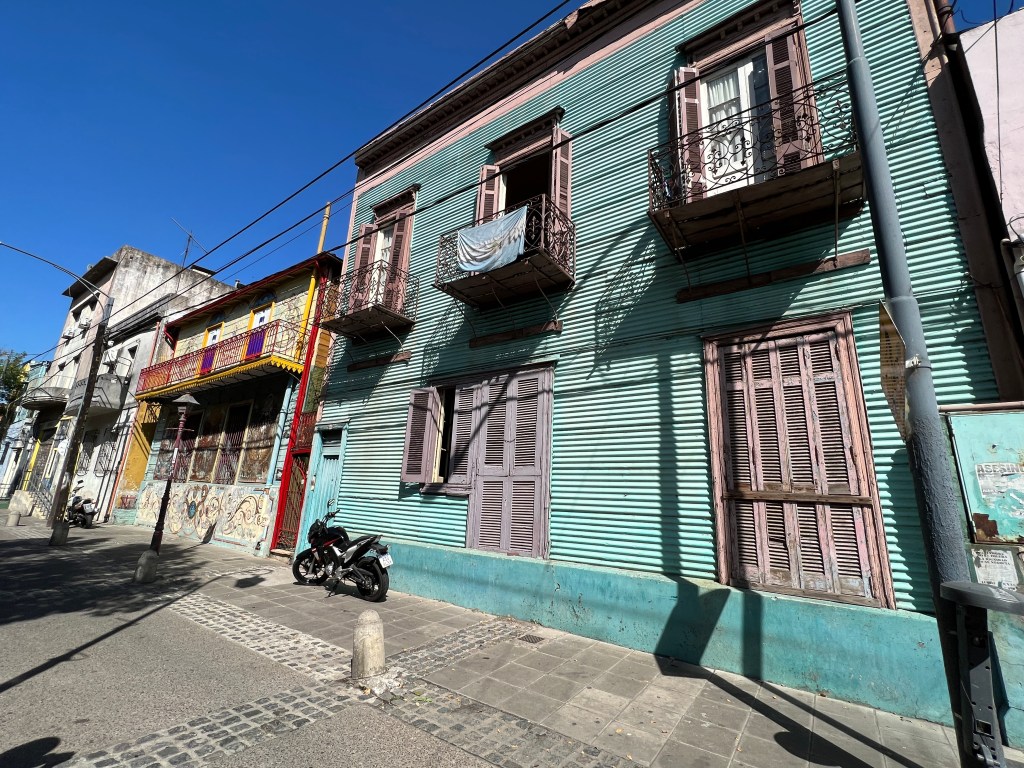
In San Telmo we wandered through Solar de French an example of the French influenced l housing. We also had 15 minutes or so to look the market stalls. I think we all bought something. Back on the bus to head to Caminito and La Boca – a poor area near the port. It has an Italian history too.
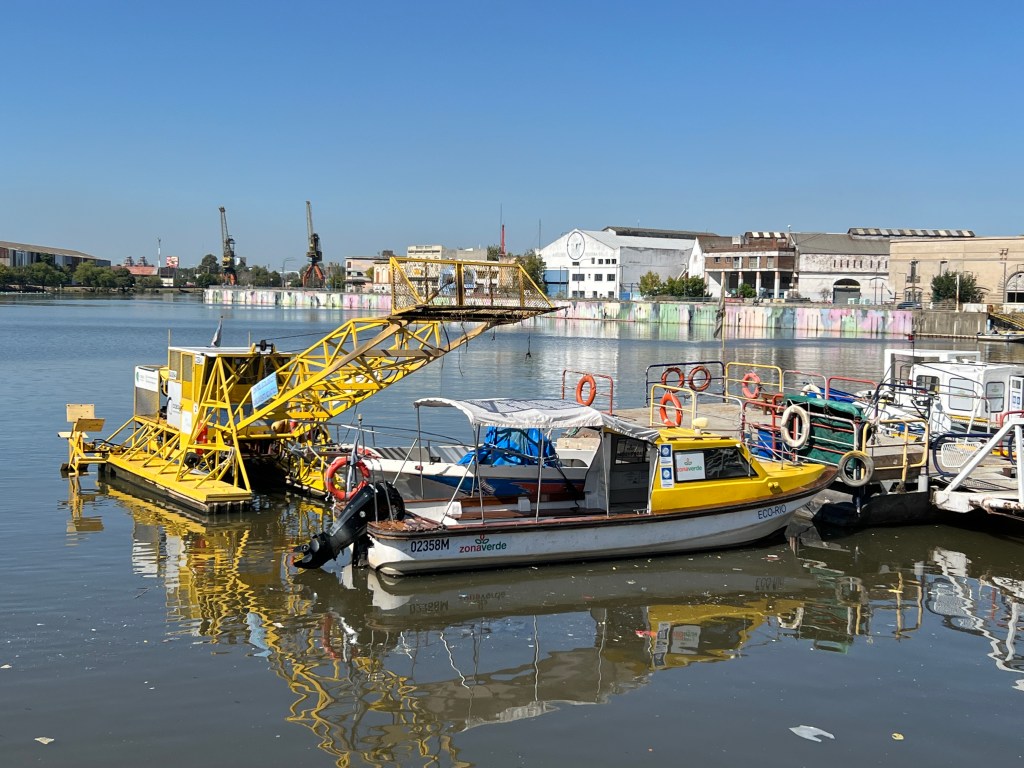
Port workers of the day had no funds for housing, so they used scrap iron and left over paint from the port and ships. They had many families living together, as in a Conventillo (convent) style with many rooms with shared kitchen and bathroom.
Students now live here in cheap and shared housing. Bohemian style of life.
Lots of corrugated tin and wood construction. Now streets are filled with market stalls targeting the tourists.
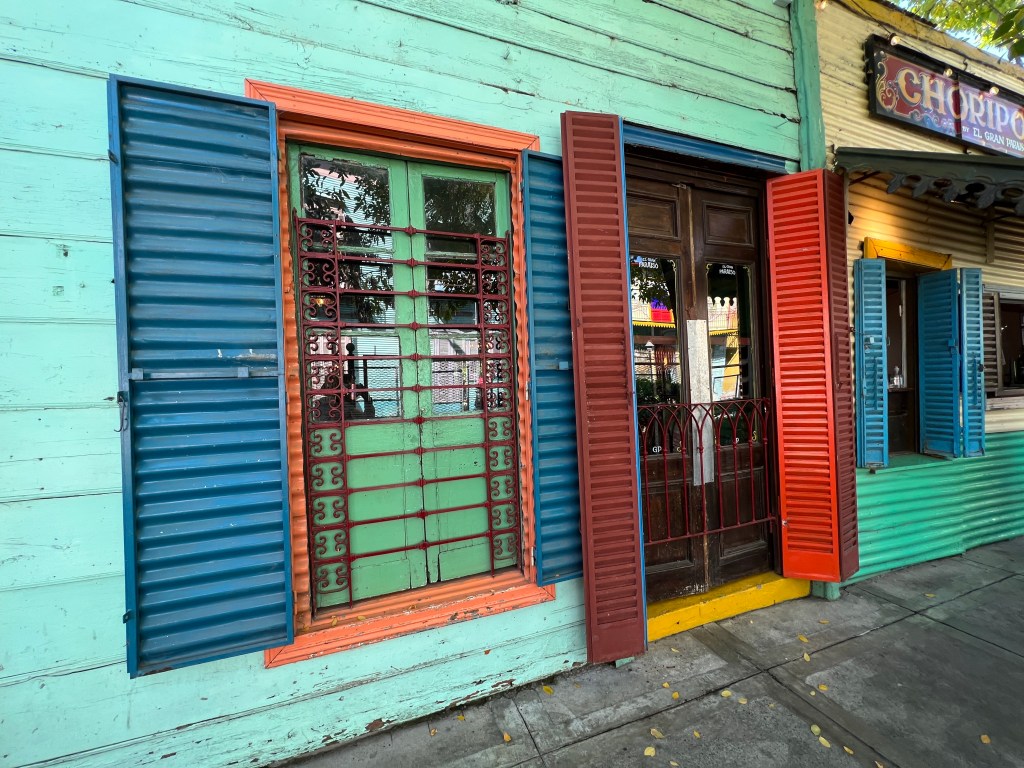

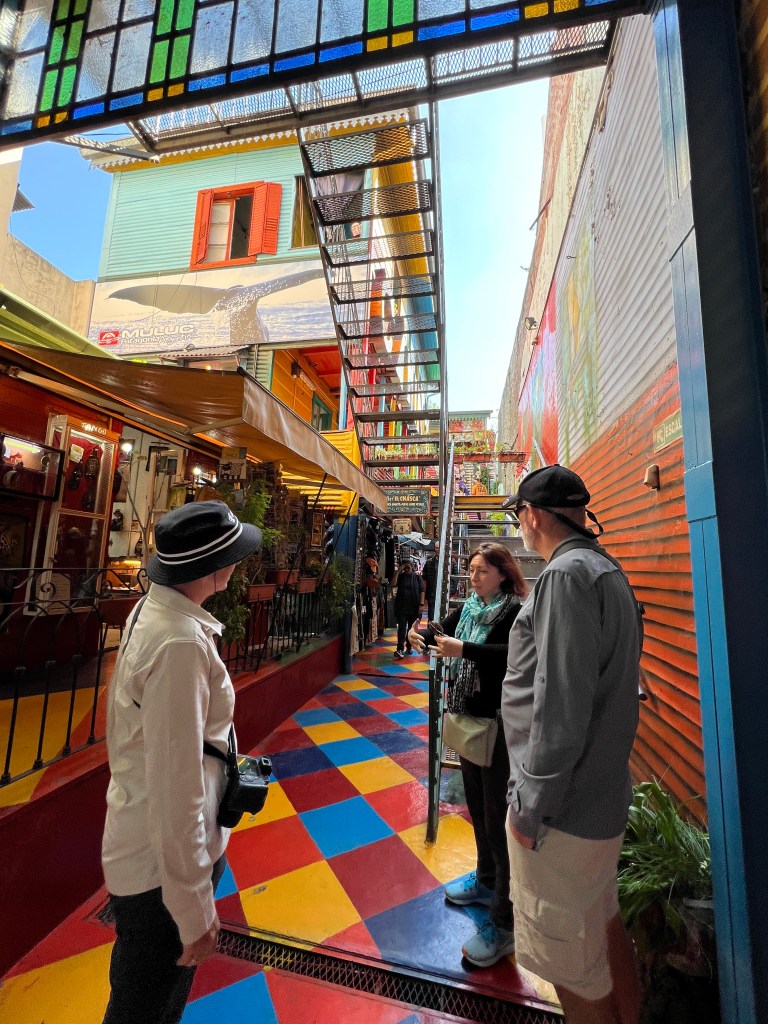
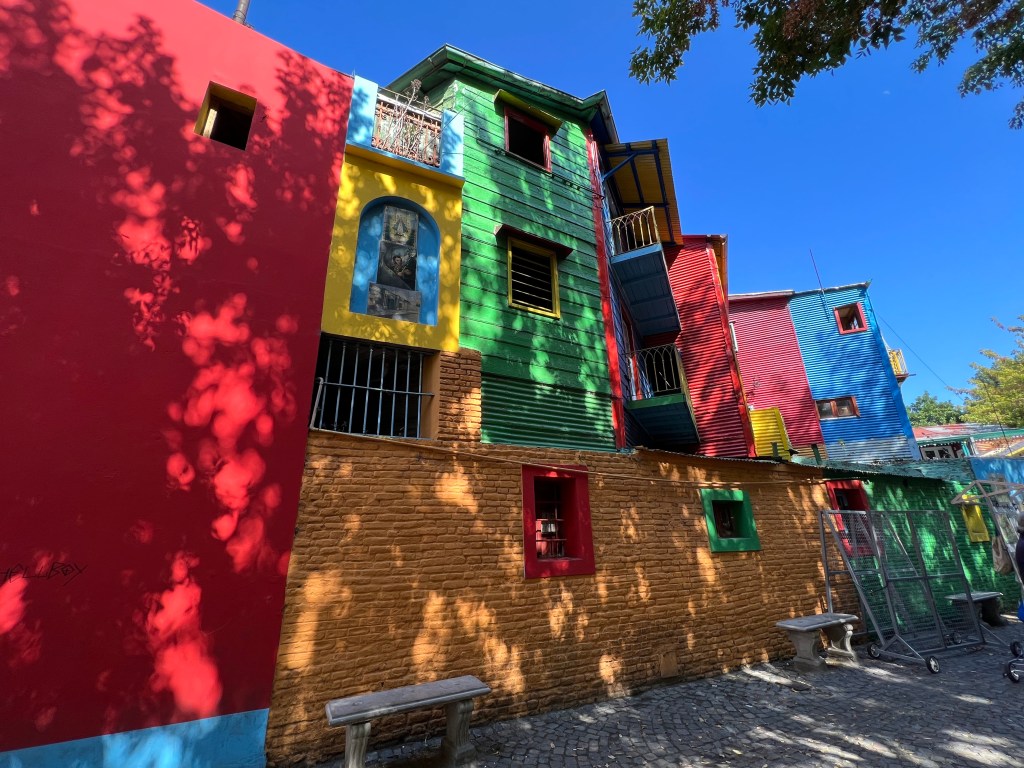
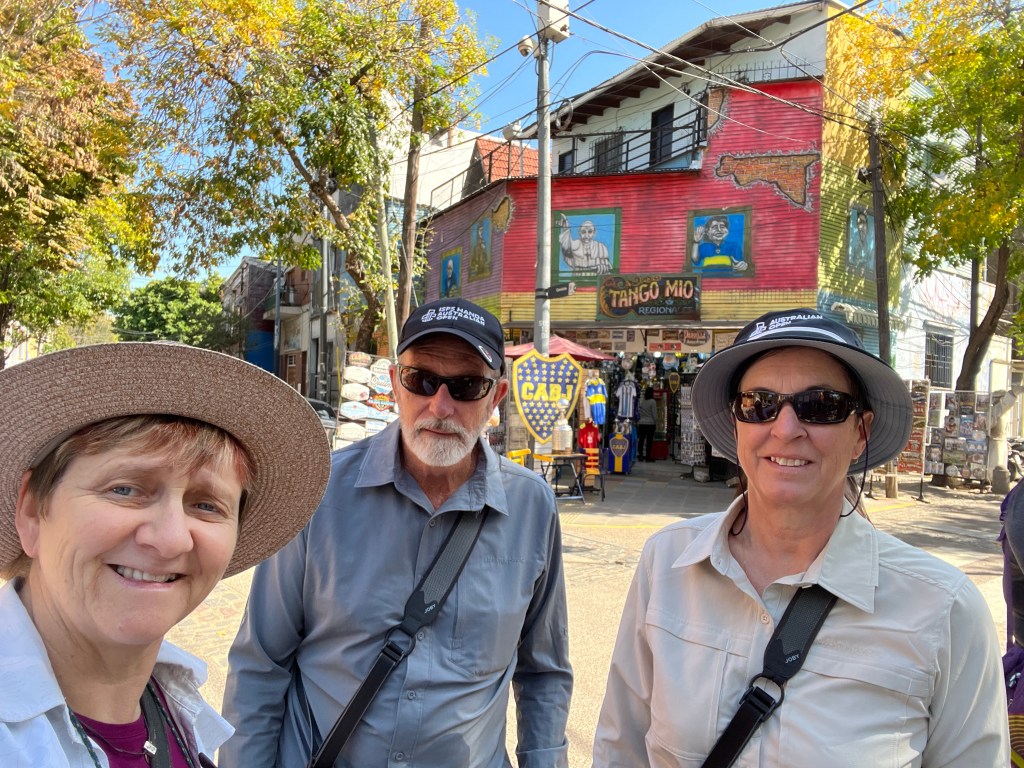
Also home to famous CABC – BOCA juniors Football (soccer) stadium and Team. Their blue and yellow colours were selected by taking the colours of the flag of the first ship the owners saw sail into the port – Sweden, hence Yellow and Blue.

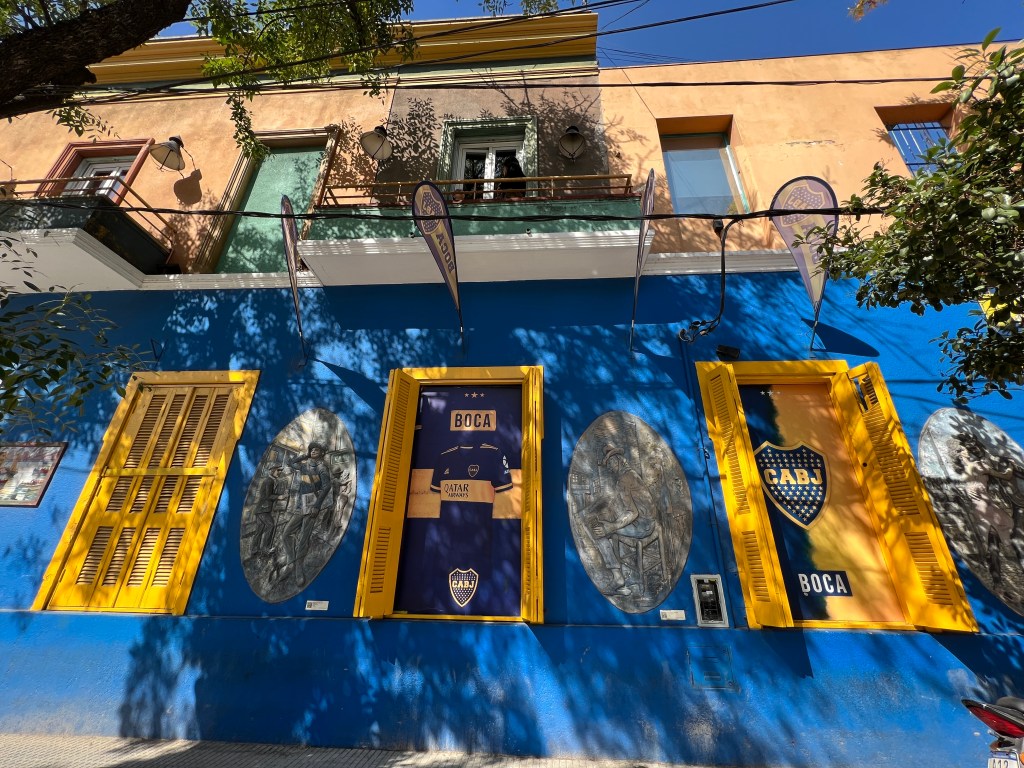
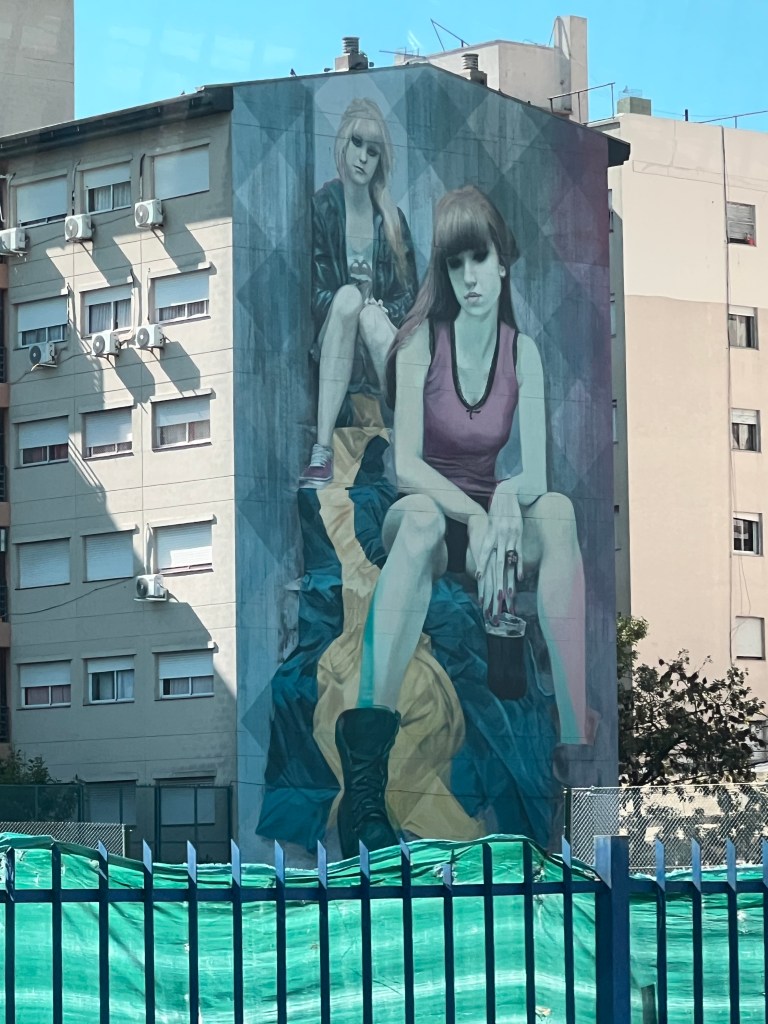
Quite a bit of street art in the area too.
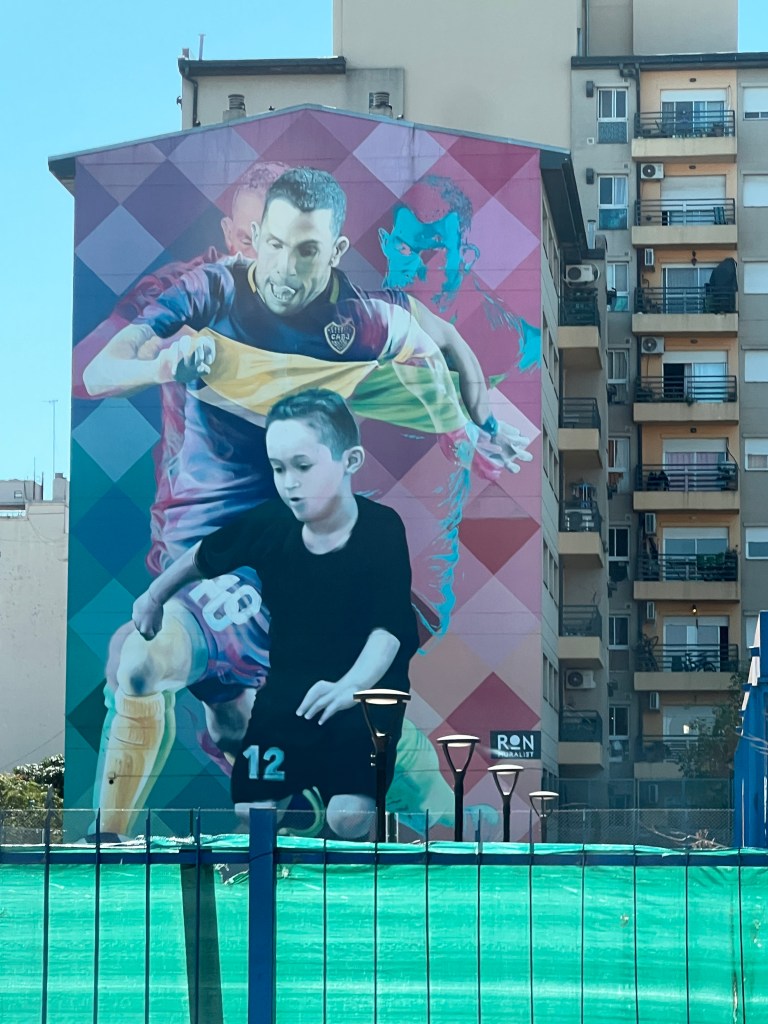
William Brown Avenue named in honour of an Irish sailor who established the navy here. A national hero.
There was lots of items depicting a cartoon figure similar to Lucy from Charlie Brown. She is Mafaldra, a cartoon character from the 70s who was outspoken against the military at the time who has come back into fashion.
Claudia referred to 20 different exchange rates, which we think are subsidies for different people. Eg. Agriculture which is really having a hard time with weather and climate change.
The time came to head out of City centre into the province of Buenos Aires and onto the port area, Tigre, to catch our boat.
(Suffering a bit of Bali belly today so struggled to take in all the info)
Really fascinating boat ride along the Tigre river out into the Paraná Delta. The river was very high as the Easterly wind was blowing the water into and up the river.
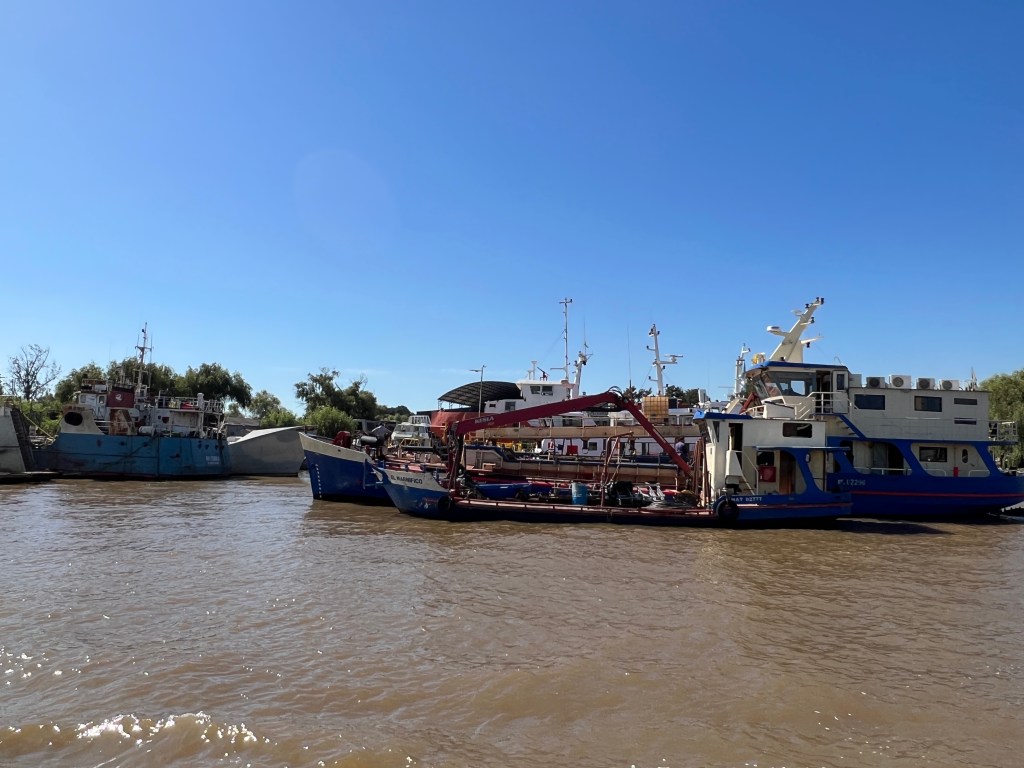
Initially there were lots of waterside type buildings, boatyards, docks and quite a large number of abandoned and rusty vessels.
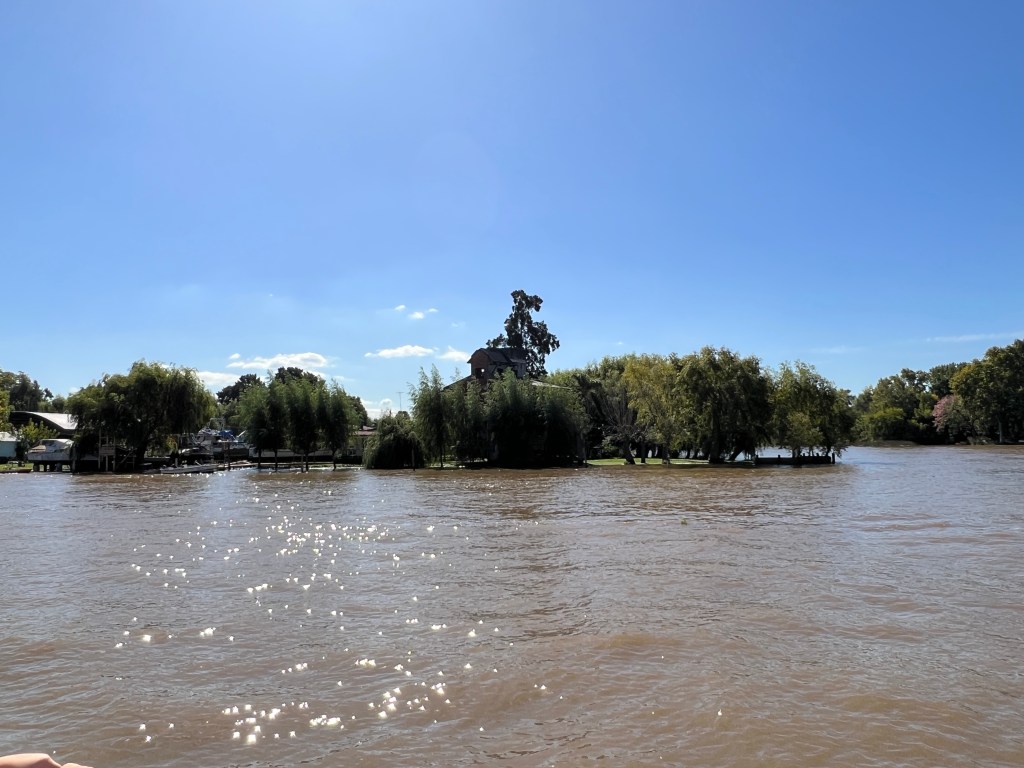
Then as we headed further out there were houses and clubs and lots of them – each with a jetty. It seemed to be a mixture of residences, rowing clubs, university clubs, some restaurants/ resort style too. The water was under many of the houses on stilts – being a day of high water level. There were lots of islands with lots of vegetation.
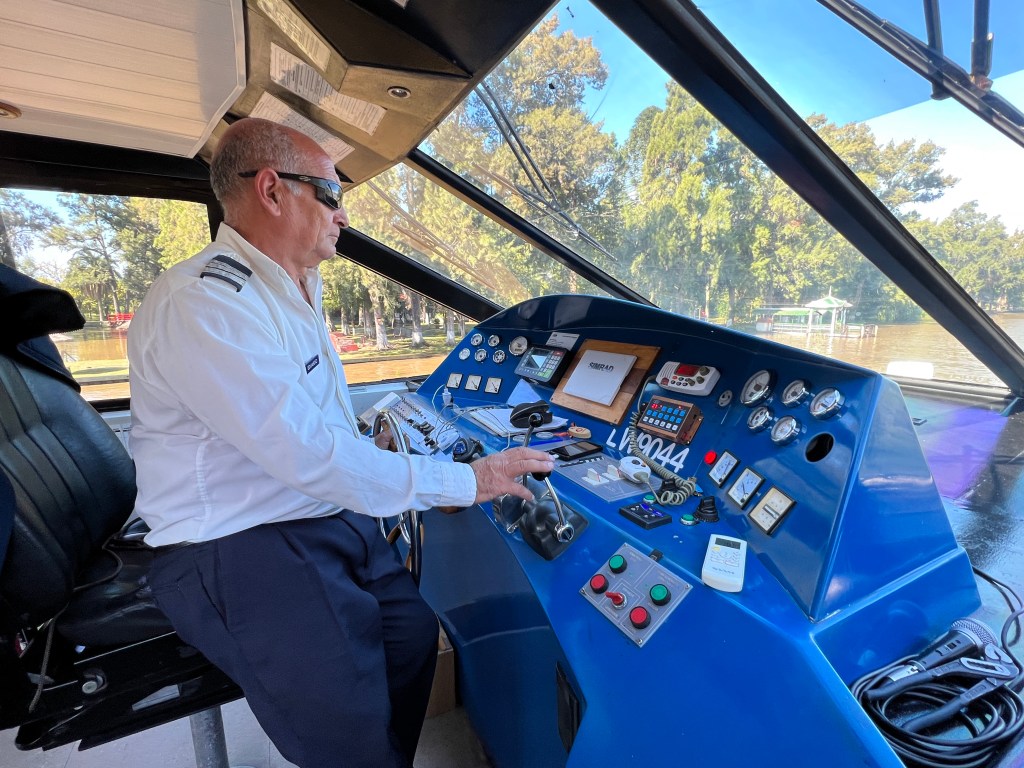
Also some primary schools and a secondary college.
The river and delta can be almost dry or high like today depending on the wind.
There were lots of boats of all shapes and sizes.
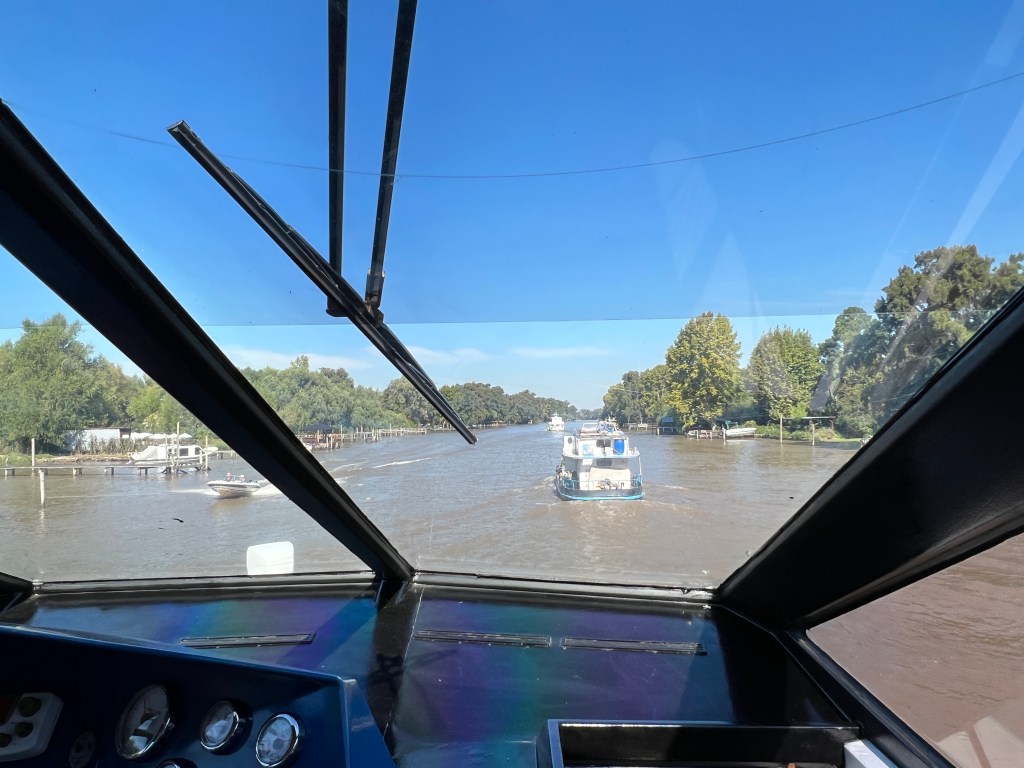
In some places there were canals running off into the bush with more houses and marinas.

Supermarket boats ply the river to provide goods and services eg. Gas bottles to residents.
It was a very interesting ride.
On return to Tigre, named after the Juguarte -jaguar- that was seen in the area by early inhabitants and incorrectly called a Tiger, hence the name of the Town/area.
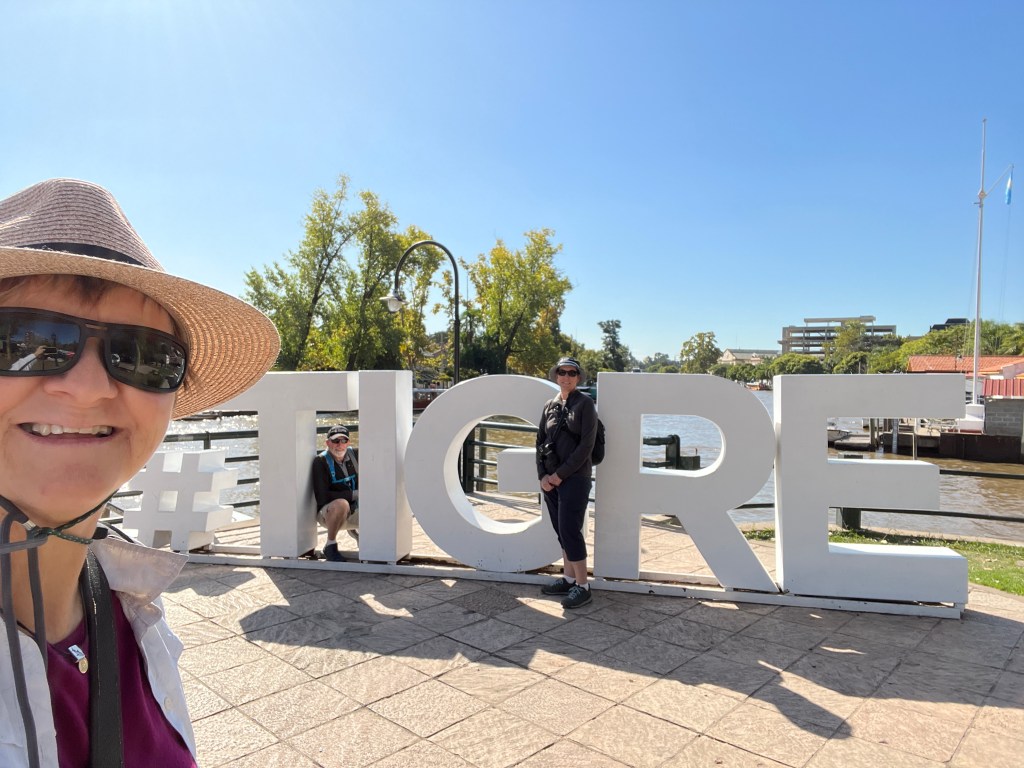
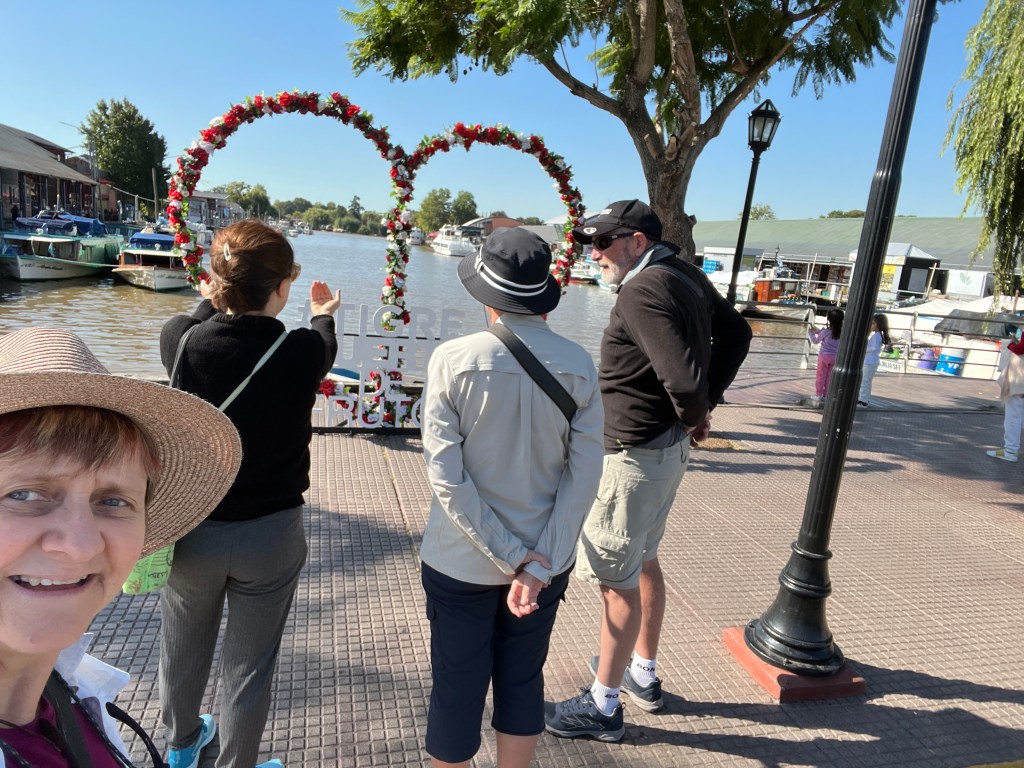
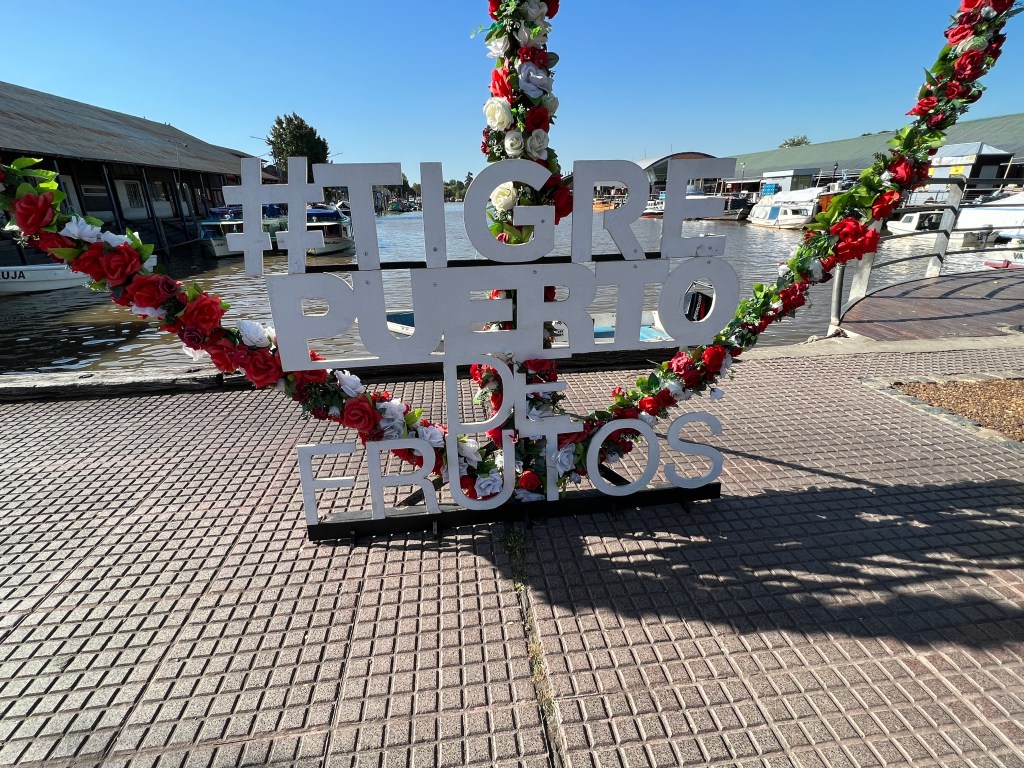
We wandered through the old fruit markets area which is now a market with lots of household goods and some aimed at tourists.

We had waffles on a stick for lunch. Mary and Phil ham and cheese and me banana one, which was weird.
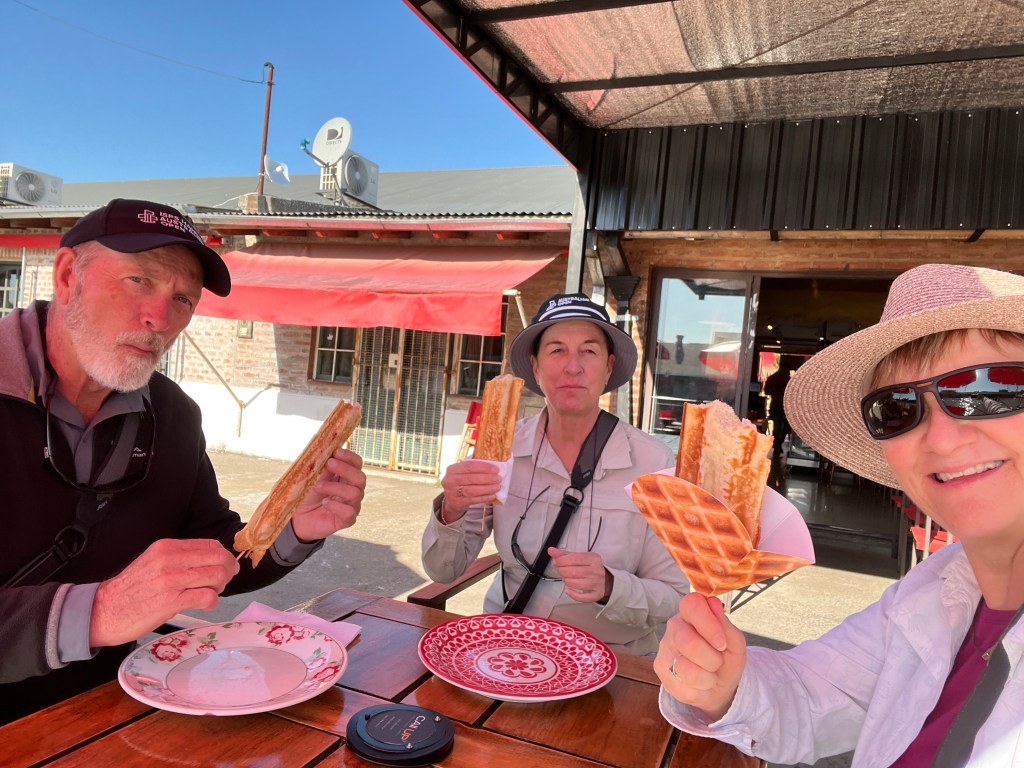
All day Claudia shared information- as we walked around our destination and as we drove in our minivan. She was very good.
Pablo would stay with the bus and watch our gear which was handy to walk light with camera and bag only.
We were returned to hotel about 5:30. We had a short stop before going out to see the renowned El Ateneo bookstore housed in an old theatre.
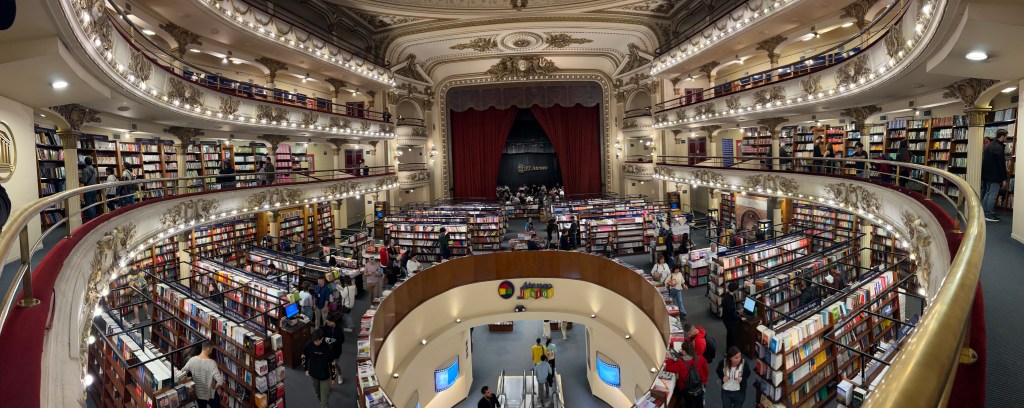
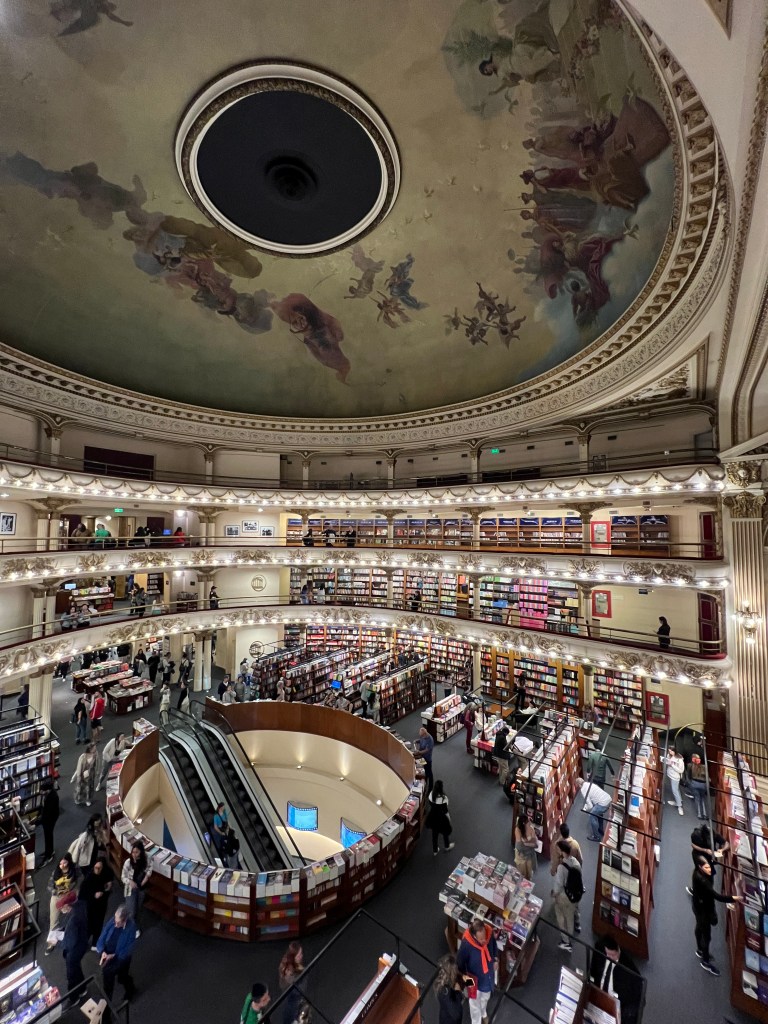
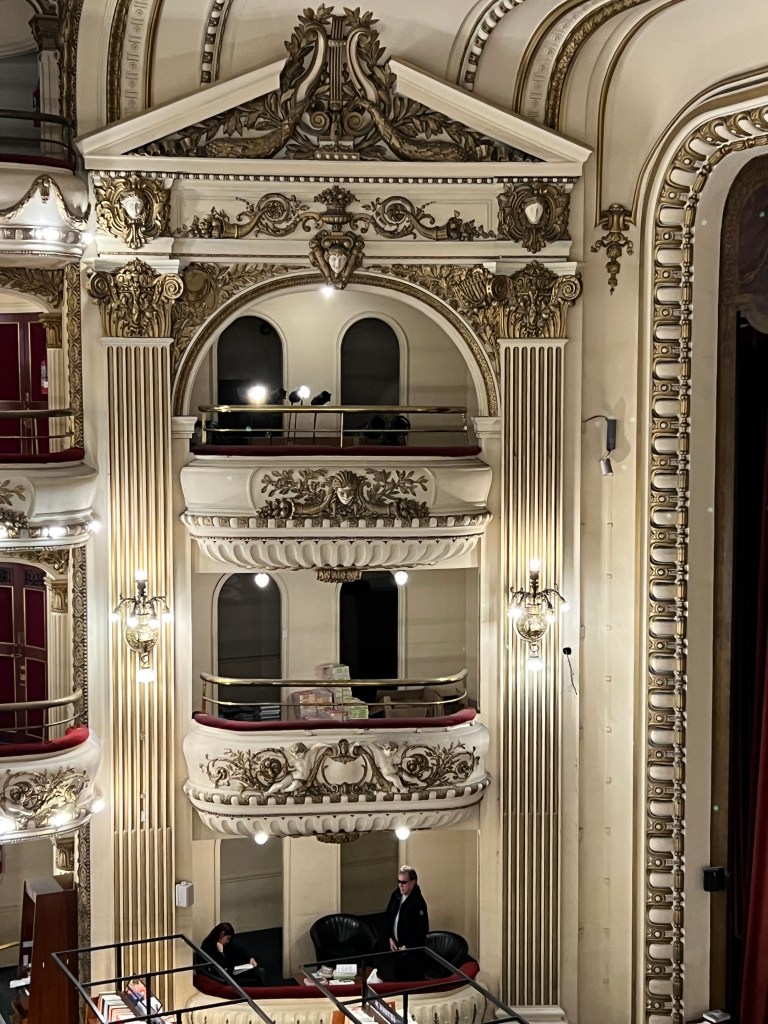
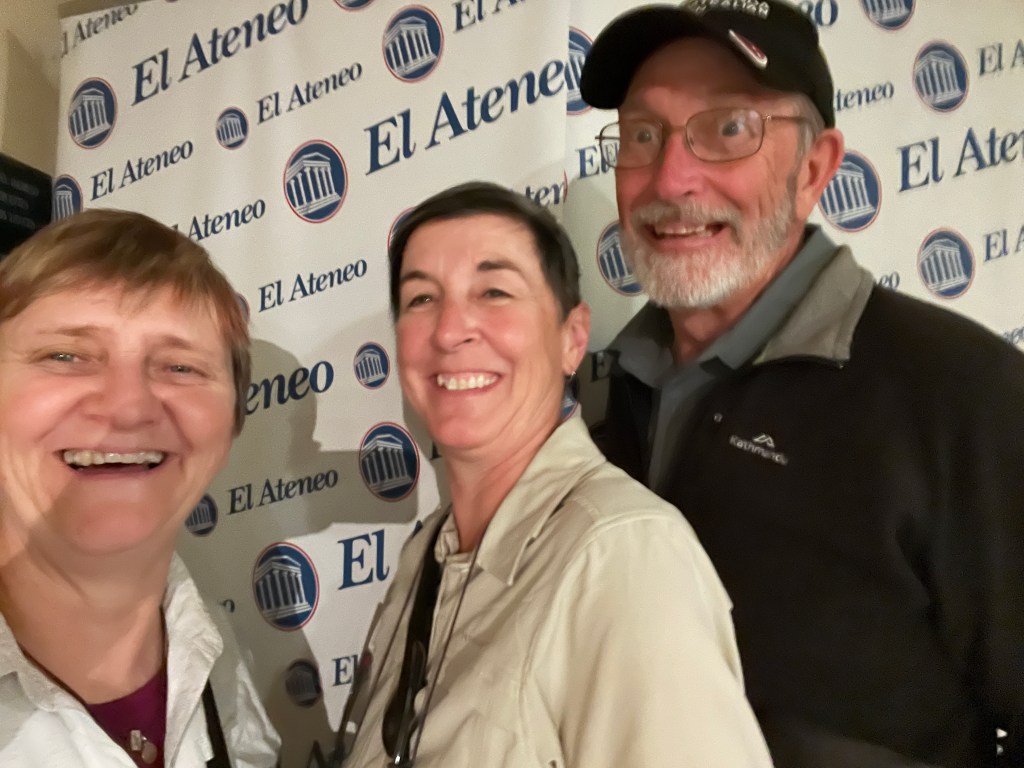
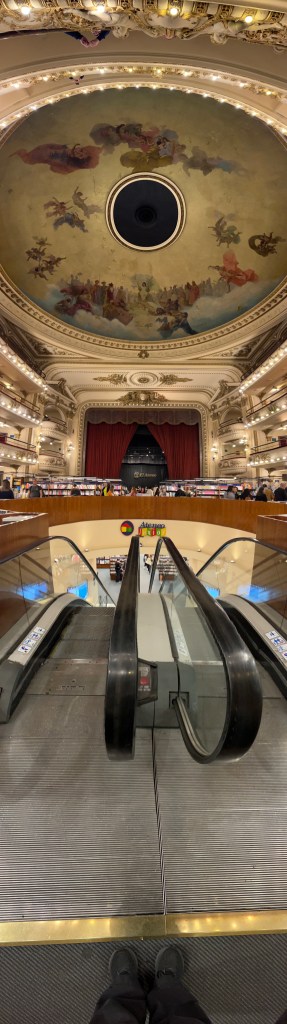
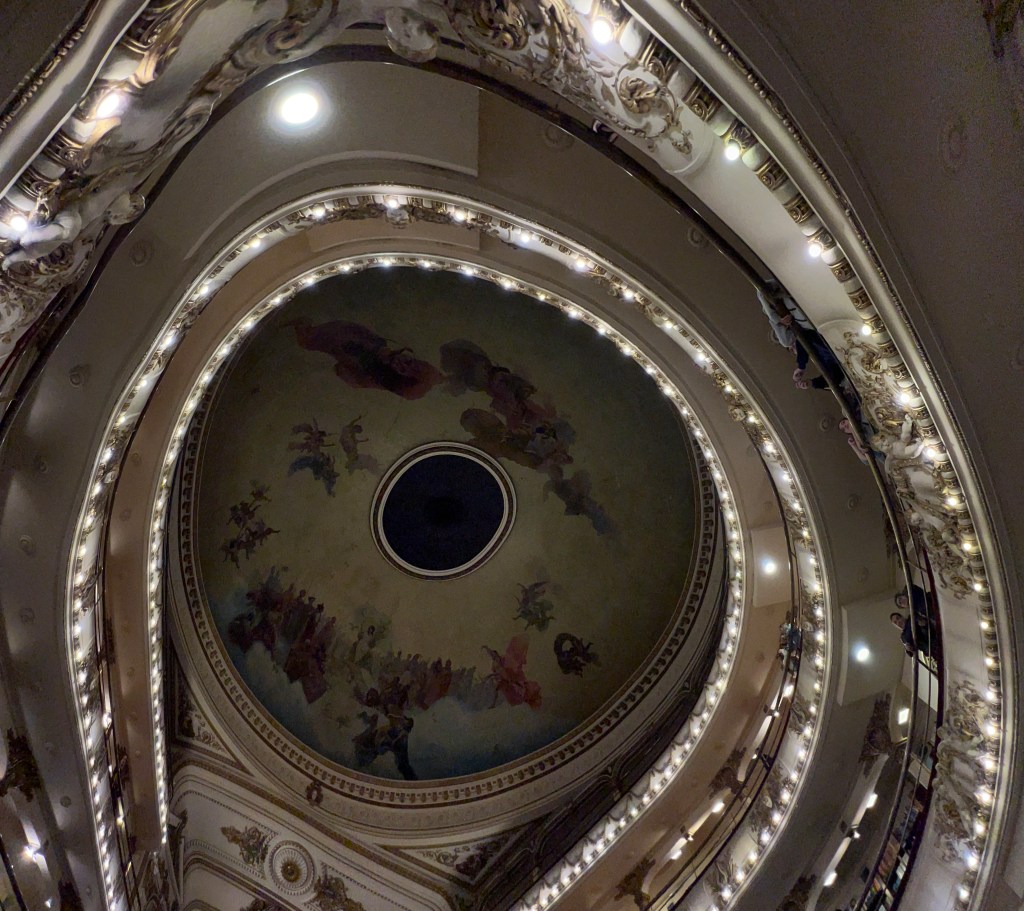
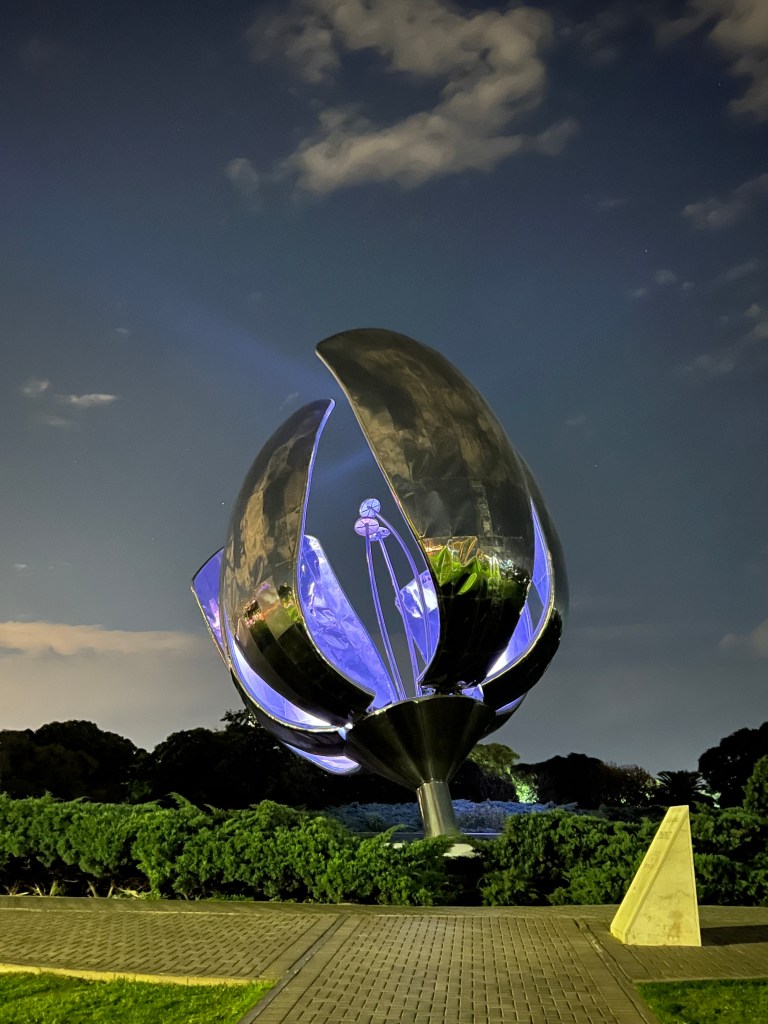
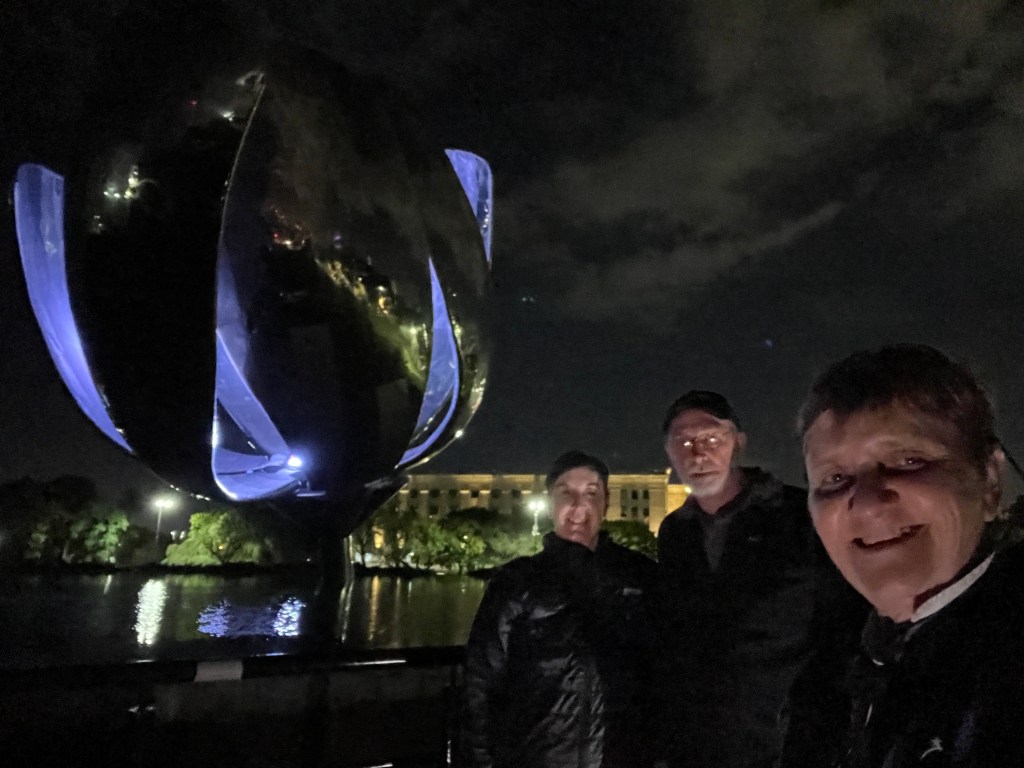
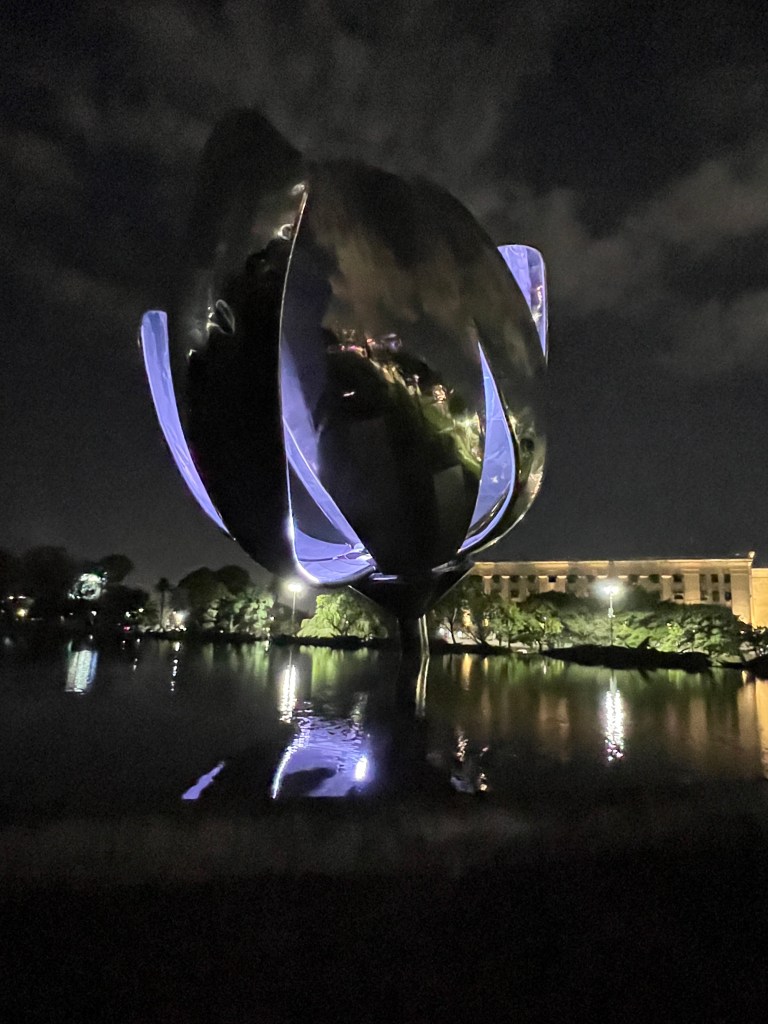
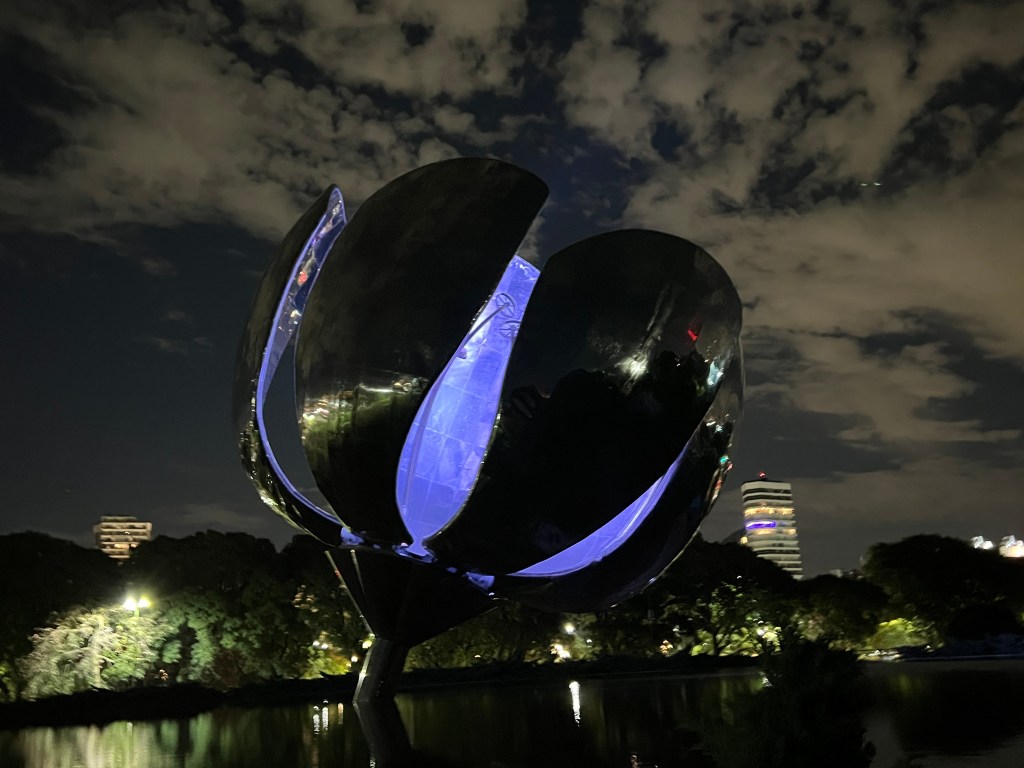
We then walked the streets to view the Obelisk in an area that’s a bit similar to Times Square New York and the Floralis Generica by night and grab a bite to eat. We saw more of the old buildings that were nicely lit.
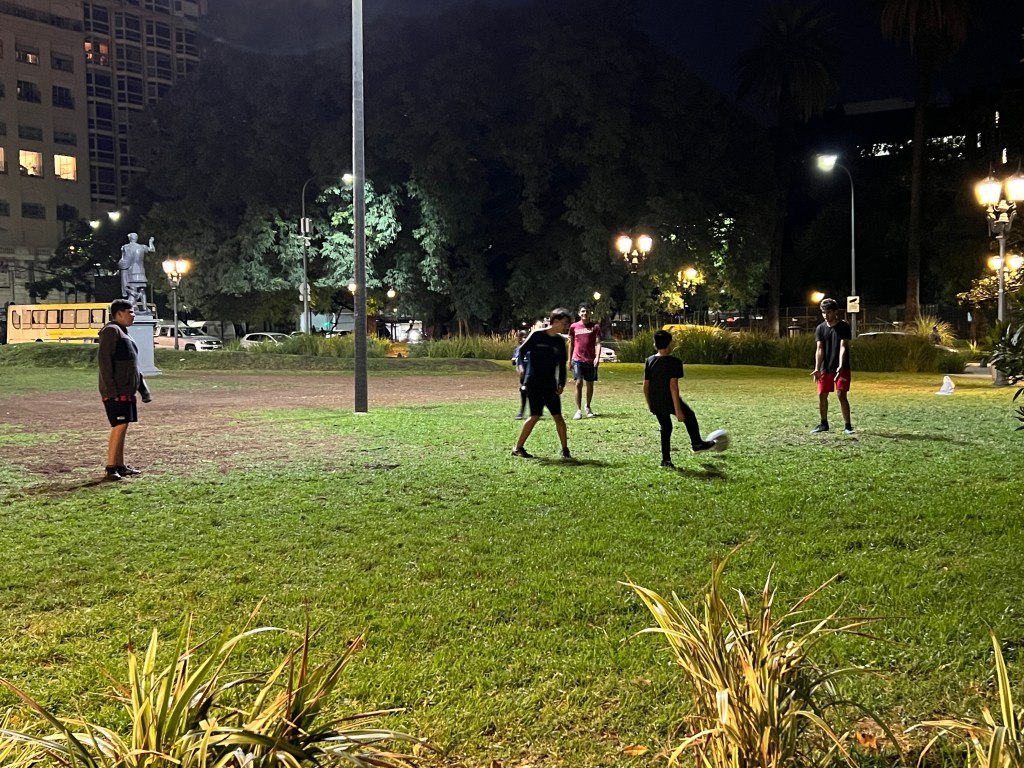
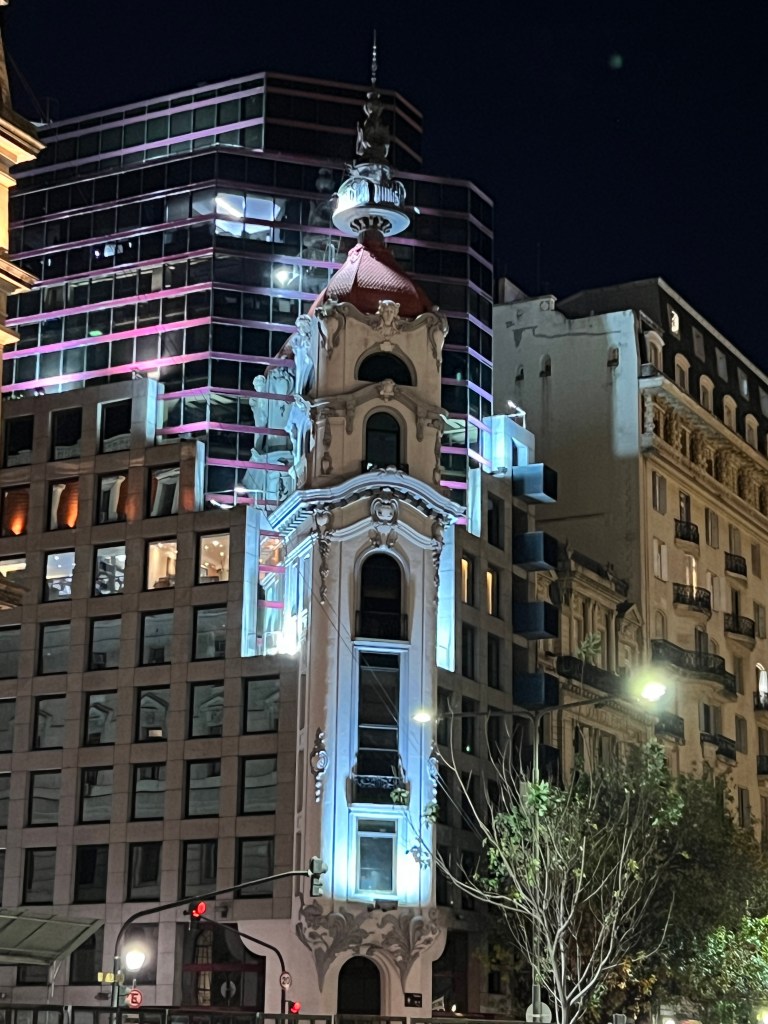
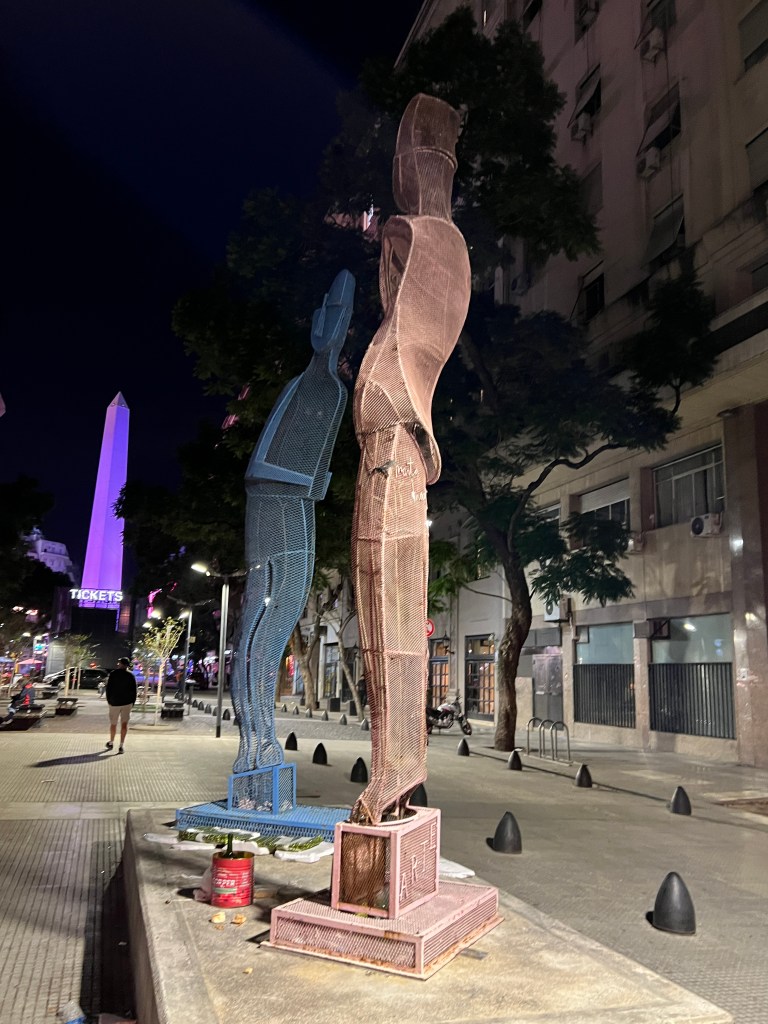
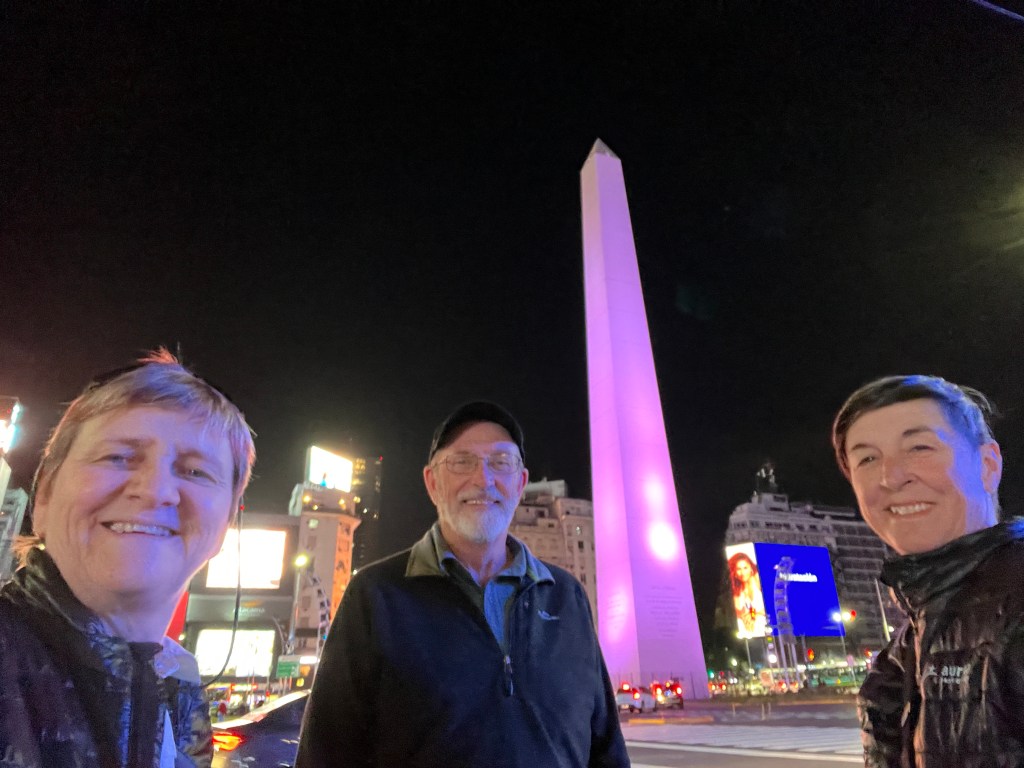
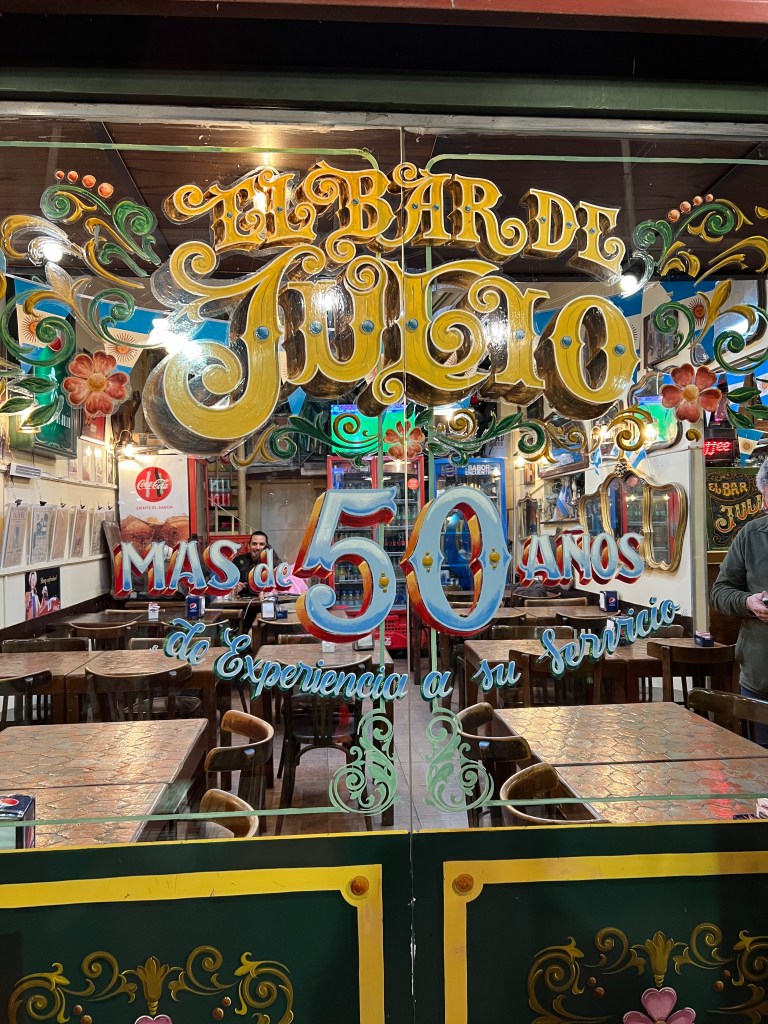
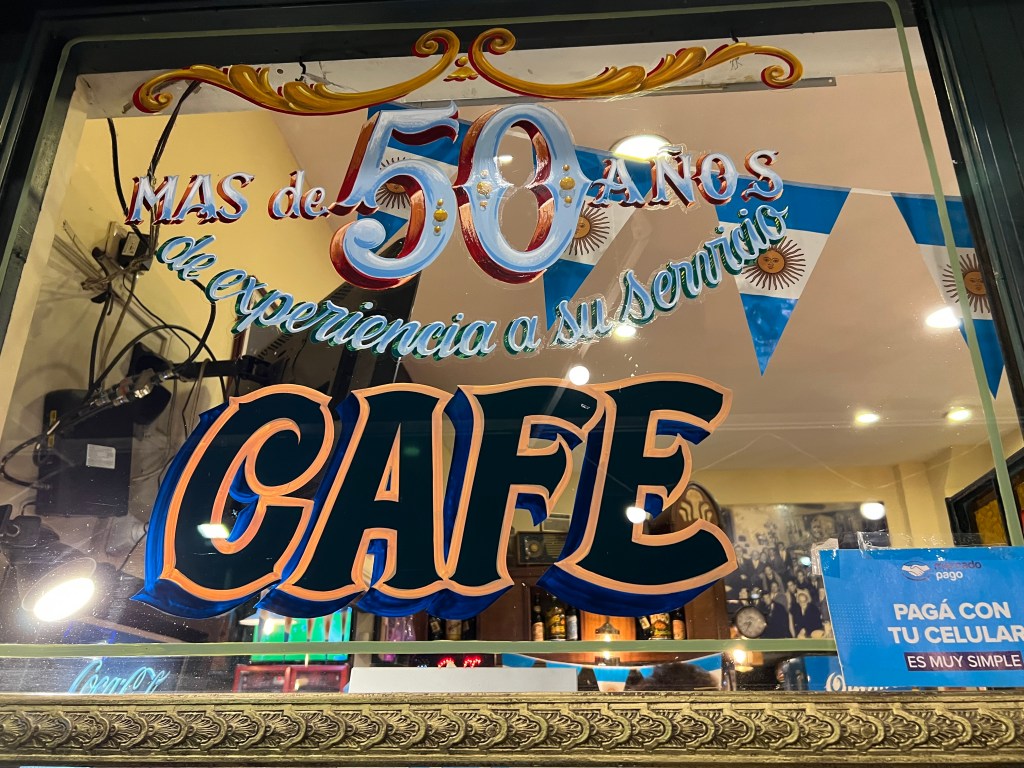
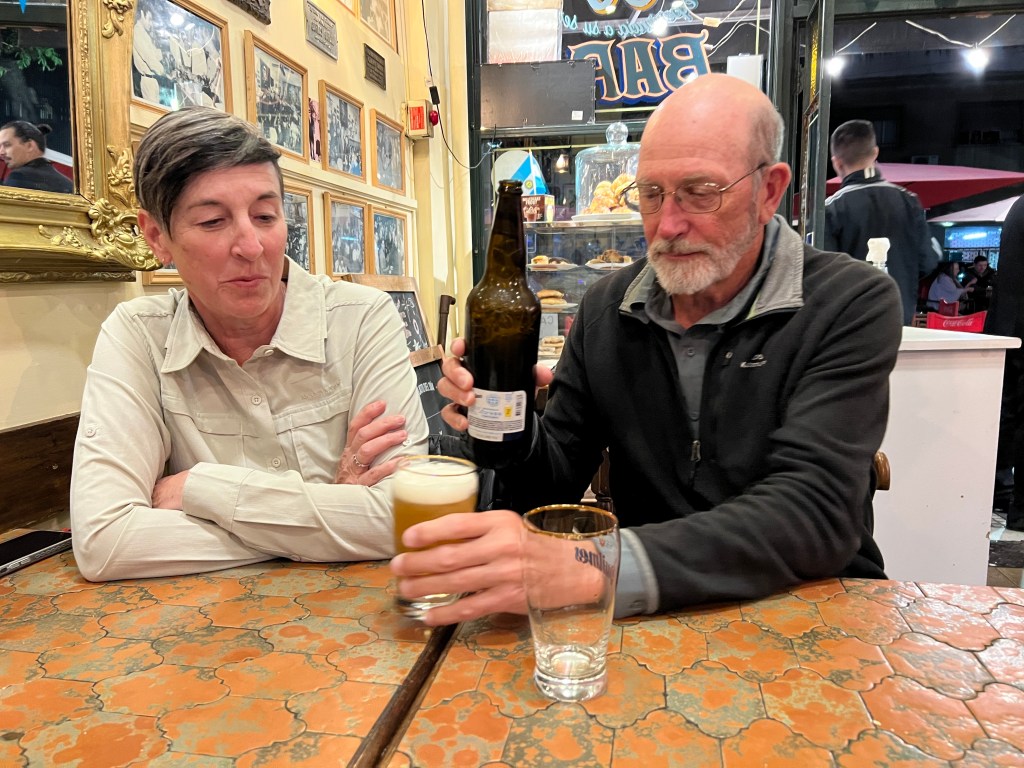
We lucked on a little cafe that was 50 years old and had a lovely pumpkin, cheese and spinach tart, before heading on to find the tulip like Floralis Generica installation.
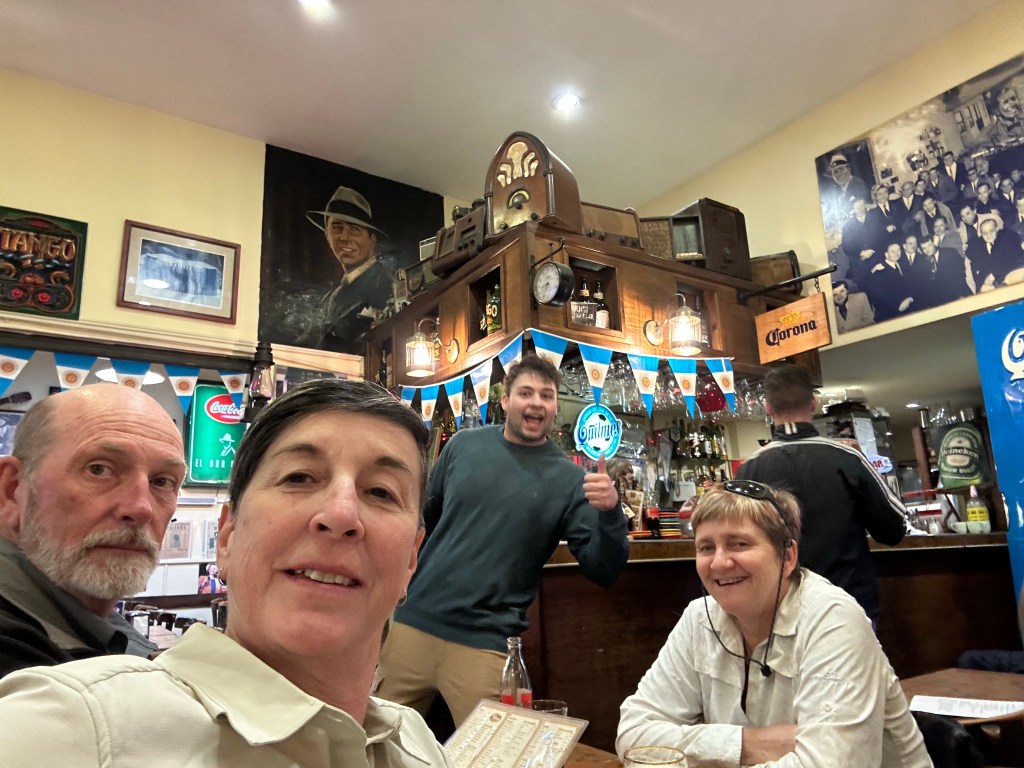
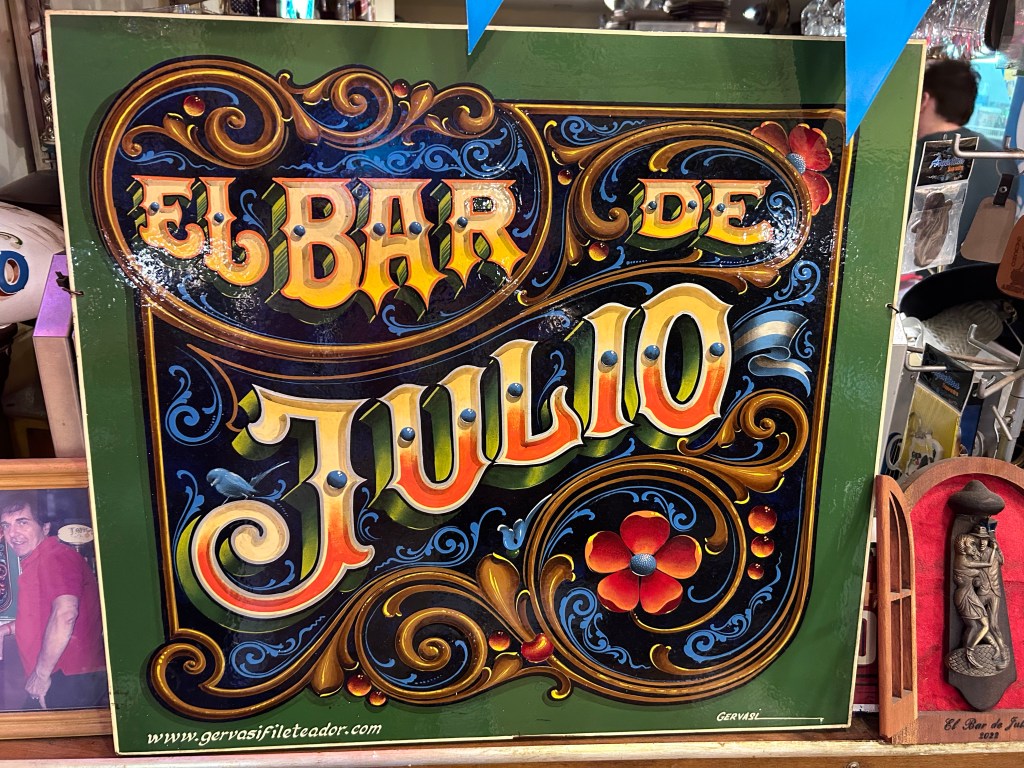

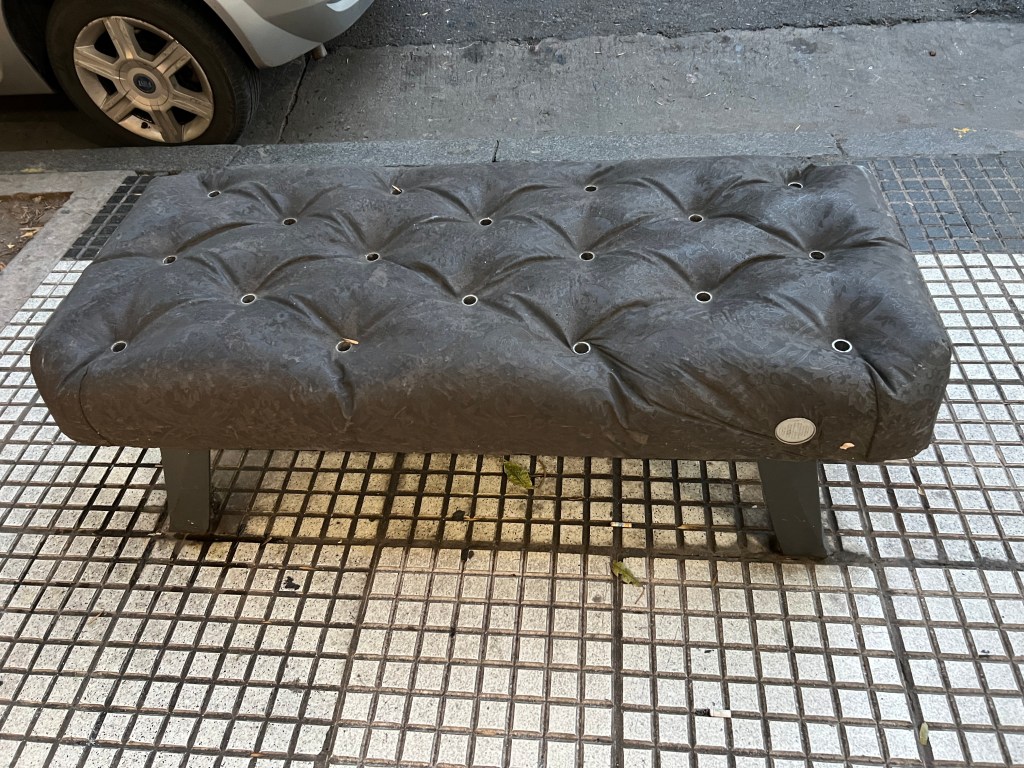
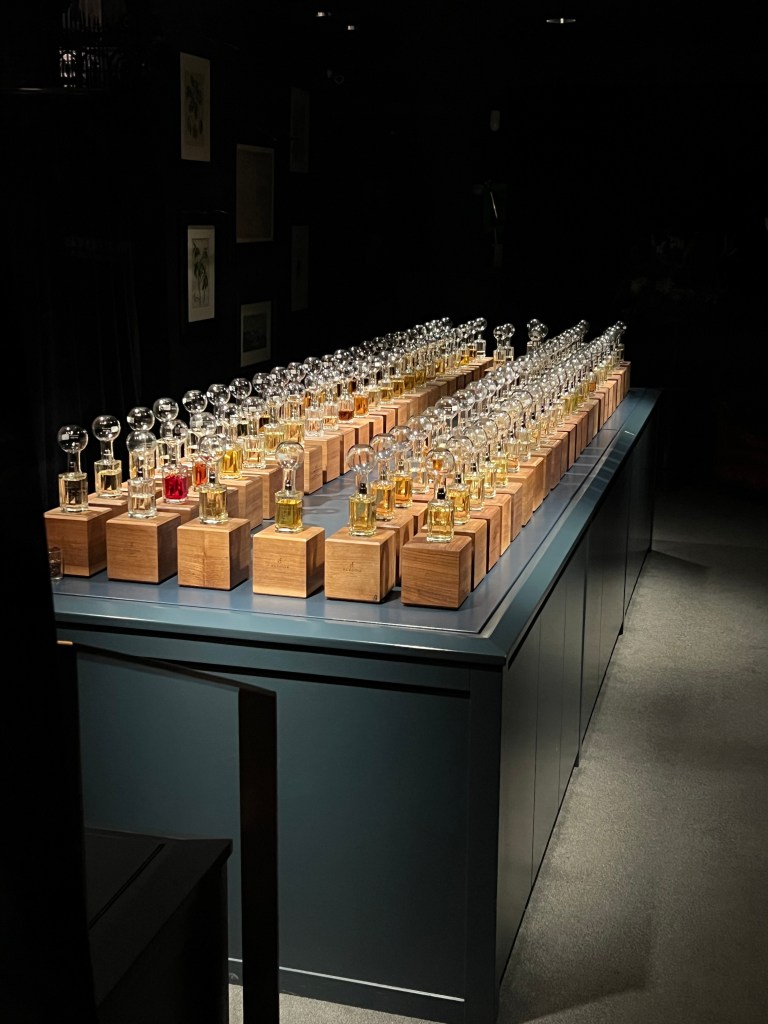
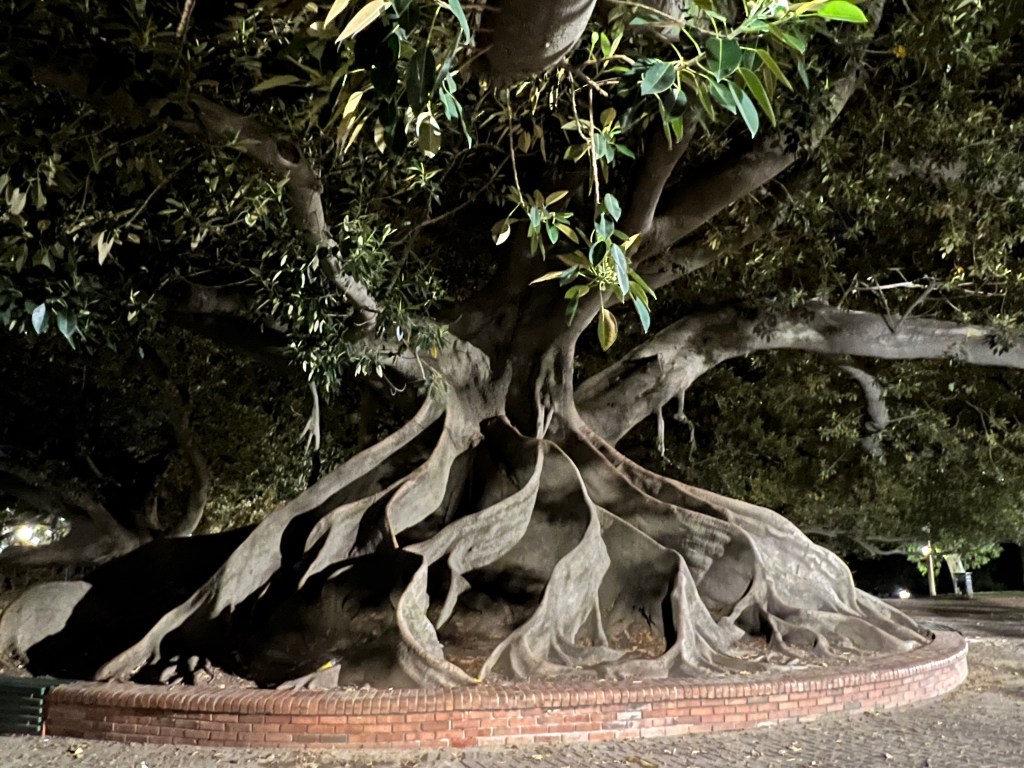
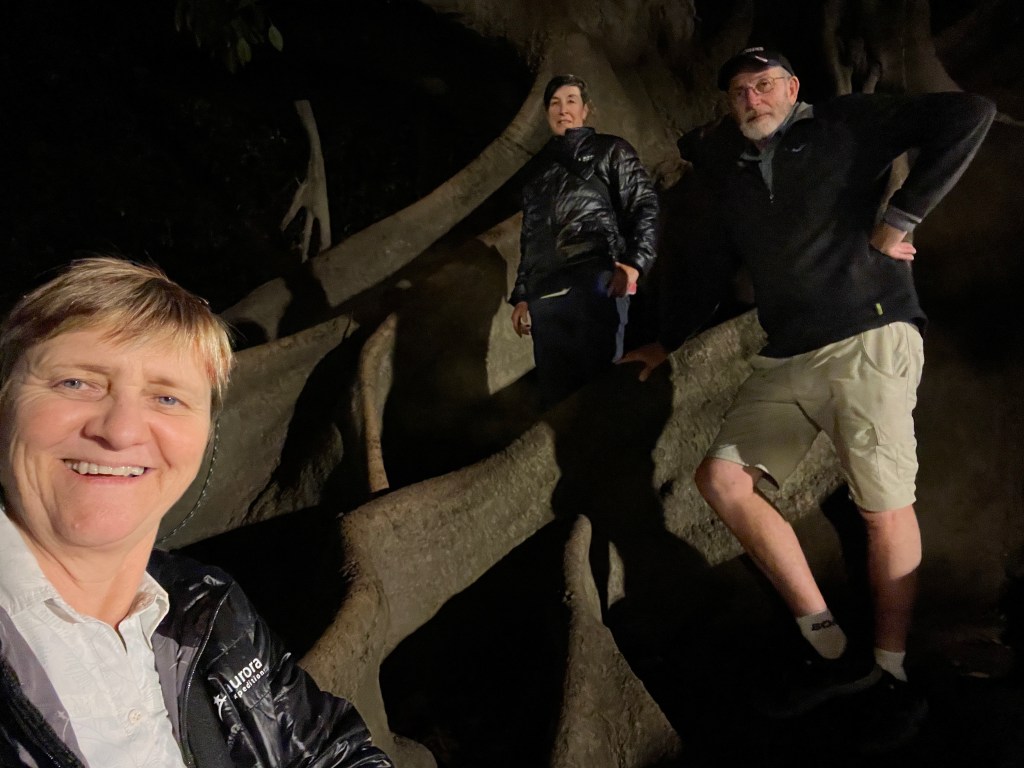
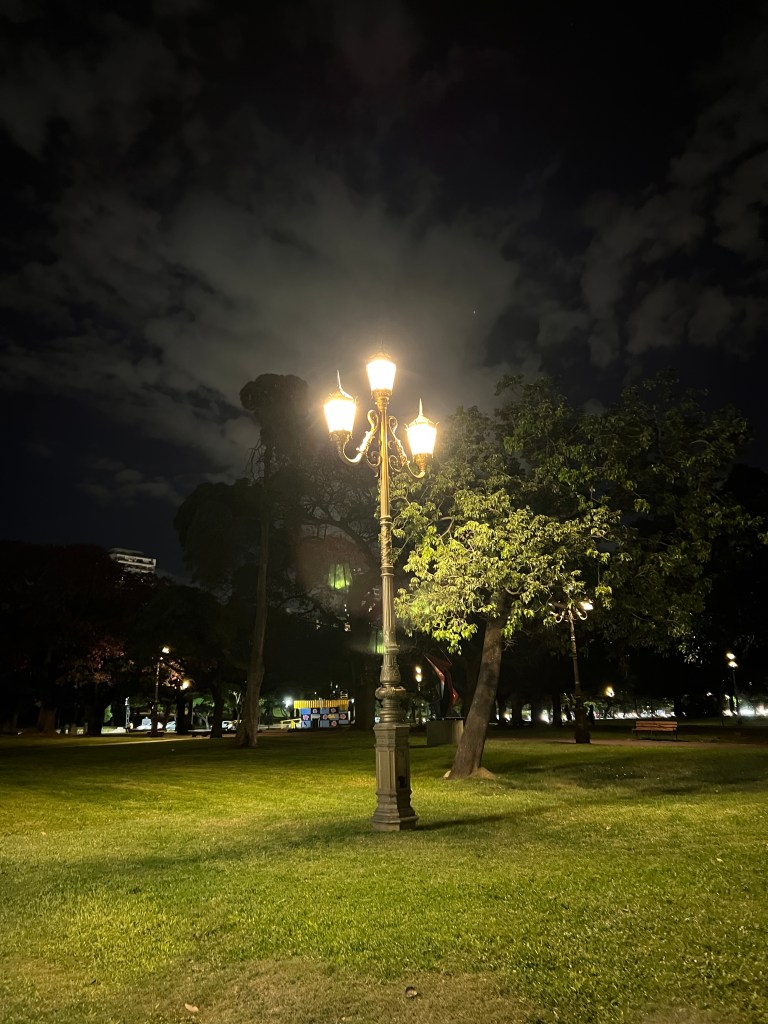
Walking the streets we saw random interesting things – shop displays, manhole covers, trees,
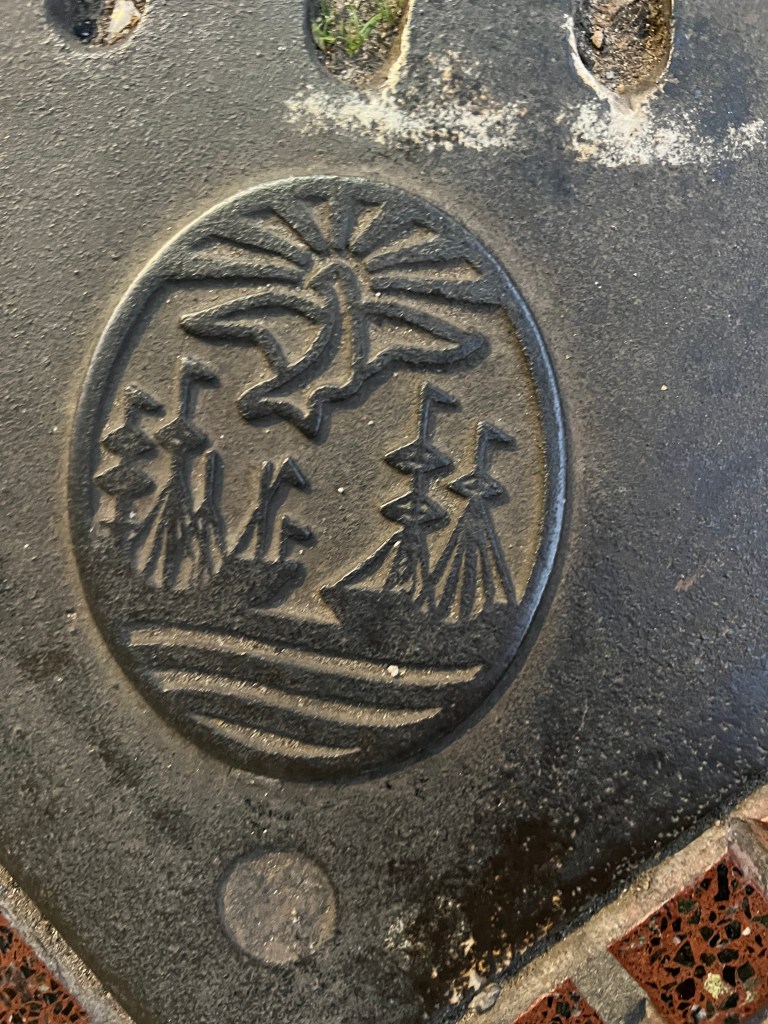
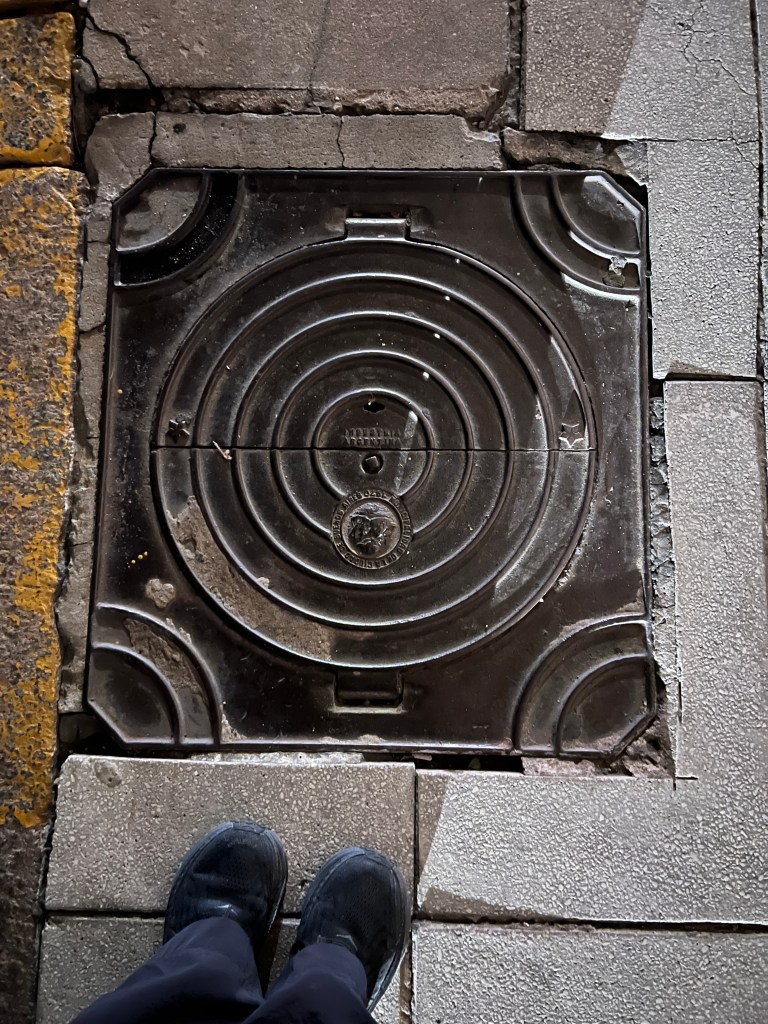


10 or so kilometres later we were home to pack and sleep.
 Travel adventures with Nicola & co.